A Masterclass on Brand Awareness | with Madison Baker & Madison Cole
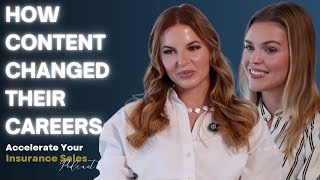
Madison Baker and Madison Cole, insurance producers from Texas, explain how posting on LinkedIn built their credibility and brought in business. They pushed past imposter syndrome to share content mixing personal stories with technical knowledge, finding that visibility with the right audience matters more than chasing impressions.
Chapters
The opportunities outside of just winning business have arguably been bigger than winning business, which sounds crazy to say. Just crazy things that I would have never thought was possible and would have never been possible if I didn't take the leap of faith and start putting content out there.
That's awesome.
Madison's. Welcome to the show.
What's up?
I am joined by Madison Baker, formerly Madison Erzo, Madison Cole, formerly Madison McKenzie. See, I knew you guys in a previous life. Here you guys are mixing things up on me. Welcome to the show, guys.
Thanks for having us.
This is gonna be fun. I've had you on before. It was in a virtual setting. This is our first time live. I wanted to bring you guys on because you guys have had a lot of success in business, and I think there's a bunch of different ways we could take this. Definitely want to talk about brand building because you guys have. Are doing a phenomenal job of that. And I also want to talk about brand building at what I might say as a young age. Right. Because we talk about that when you're young in this industry, you can have your battles too. So, yeah, we're just going to have fun with this episode. So let's start with Madison Baker. A lot of people know you on LinkedIn, but for the folks who don't take a second to introduce yourself, it's.
Nice to meet everyone. Madison Baker, born and raised, Dallas, Texas. I have been in the insurance industry for 11 years now. And one of the weirdos that actually studied risk management in college.
You are the seventh person I know.
Yeah, I knew I was getting into the industry. I actually grew up neighbors with one of the founding partners of mhbt, which is now mma, where I'm currently at. So my first job in insurance was with MHBT. And now I'm back home 11 years later, which is really cool. And I love partnering with business owners to solve their complex risk programs. And part of the way differentiated myself in the industry is building my personal brand on LinkedIn. So I'm excited to dive into that today.
Definitely. And I want you to share your journey. I know you started in insurance. You had the intention, but some of that came from working for your dad's business.
Yes.
Yeah.
So initially, my first experience with insurance was actually working for my stepdad's consulting firm. And the reason why he brought me in as an intern when he did is because it was around his insurance renewal time and he knew that I was studying it in college, and he candidly knew nothing about insurance. It was kind of one of those things that he just auto renewed every year. And so I sat in on his renewal meeting, which was in the summer. And I remember vividly it was four days before his renewal. We're sitting in this meeting, last minute decision.
Yeah.
The agent comes in with the donuts and coffee and he presents this renewal, which my stepdad had no idea before, before being in this meeting, what it was going to shake out to be. No insight. Had no idea what was going on in the market. This guy delivers bad news late. The tinge of red in my stepdad's face was something I had never seen before. And he was just screaming at this guy, like, where are the other options? Why didn't you tell me this was coming? And I just remember this guy sitting across from him, like, basically, I'm sorry, this is what it is. There's no other options. You've got to buy in this coverage or else you'll go without coverage. And here's your offer. And sign. And I remember thinking, even as a young kid, I was like, there's no way. That's how it is. Right? Like, there's no way that this really expensive line item on the balance sheet is decided in this manner.
Yeah.
Because that's a broken process. That's terrible. I don't want to be like that, guys. I was almost questioning, do I want to get into this industry like that? I don't. I don't want to be on the receiving end of what my stepdad just put this guy through. So from that point forward, I kind of committed myself to doing things differently. And now I get the benefit of doing that and talking about it with people that have experiences like that of my stepdad.
The story when your advisor comes in with renewal bearing gifts, that means.
Yeah, exactly.
How about you, Madison?
So my name is Madison Cole. I am actually a transplant. I'm from Houston originally.
So kind of a transplant.
Yes. And I actually have a little bit of a similar story to Madison. So although I did not study risk management, I actually studied professional selling. So I got a degree.
I didn't know that was a degree.
Yes, that's usually what people say. I went to Baylor, where I studied professional selling with an emphasis in B2B consulting. And I've been in the industry for almost eight and a half years now. I've worked for Marsh McLennan Agency since I was 16 and similar to you, which I'm now realizing in this conversation. So it's funny, you always learn something new people, you know, but my mom has her own Business. And that's kind of how I got my foot in the door as well. She works in a similar industry, and she brought me in when I literally got my learner's permit, and she said it's time to start building a resume. My suggestion to you would be something that has an emphasis in consulting and can go in a lot of directions. So I started with her, and then I worked at a small benefits agency. And then When I turned 16, I started working for Marsh, and I kind of bounced around the Houston office. I was the first and the youngest girl they'd ever hired for a sales intern role and then kept the relationship all throughout high school, college, and I've been full time for about four years now. And I specialize in helping business owners eliminate cookie cutter programs. I think something that I've seen watching my mom build a business from scratch is just how much hard work and effort and initiative and thought and consideration goes into building something. And so if you're relying on a program that's going to protect you, it's my opinion that similar consideration, thought, and strategy should go into your insurance program as well.
Well, and I wanted to ask you guys that both growing up with entrepreneurs, do you think that has shaped you guys at all and what you're doing today? Because I always. It's my belief in our industry, though you guys don't own the agency. Right. You're the best producers are intrapreneurs. Even though you work for somebody else, you think like a business owner. So do you think working having a stepfather who owned a business and a mother, do you think that shaped you guys to have success in what you're doing today?
100%. I think that the most successful producers are entrepreneurial, spirited, and so it's people that could step out on their own, but they choose to run their business within the business, and that's what we're all doing. You have to take ownership over your book of business and the clients that you serve, because that's the only way you're going to scale and actually provide an experience that's worth the value transfer that these people are paying into insurance. Right. So I think personally, for me, it absolutely shaped how I go about doing business because I have ownership in my book and ownership in my client success.
And I assume that's the same for you, having your mom.
Absolutely.
Yeah. So, okay, you went to Baylor. That makes sense. You went to Georgia. How does a Texas girl go to Georgia?
Matt Stafford. I'm kidding.
So.
Well, it's. It's funny Dallas, specifically is the second largest metropolitan area area that kids go to college at. Georgia. And that happened because of Matt Stafford when he was quarterback at Highland Park. Yeah.
Yeah. So he.
He was the quarterback at Highland park goes to Georgia. And that was really what started that, that shift. And initially, it's really funny. I knew I wanted to do business, and so I sat down with my dad before I went to school, and we looked at the majors at uga and he saw risk management. And he was so excited by that because my dad led the risk management practice at Accenture. But the risk management practice at Accenture is like, interest rate risk and hedging utilities and oil and gas, like, not selling insurance. But he thought that it was a major now. And so he's like, oh, you can follow my footsteps. And I get to school, have all my intro classes in the first, like, Intro to Risk Management class was a homeowner's insurance 101 class. And I called my dad and I was like, hey, dad, this is an insurance degree. And he said, change your major. He's like, change to finance. I'll get you an internship at Accenture. It'll be fine. And I said, actually, there were 30 people in my Intro to Risk Management class, and there were 350 in my intro to Finance class. I think the opportunity is here.
Yeah.
So I'm going to. I'm going to stick with this because all I have to do is beat out these 30 idiots and I'll have a lot of opportunity. And I'm so glad I recognized at 18 years old that there was opportunity in this business because there's so many routes you can go. We are desperate for talent. The impeding retirement, mass retirement that's about to happen, and transition of books of business. And all of those things play into the vast opportunity that there is in this business.
Well, and what's unique about having this conversation is it is rare that I am interviewing somebody who is in the industry by design, by intention. You went to college, your mom was in the business. Right.
And I love what you just said, Madison, because my business exists simply because I believe how we train people in this industry is outdated. And a lot of that has to do with the fact that people still training.
Were selling 15, 20 years ago when things were a lot different. And that's really where I want to go today, is the brand building. You know, and one thing I. I'll be honest, what I've been impressed by with Marsh, we've worked with plenty of people, plenty of producers at Marsh is they give you that ability. Not every big firm lets you do what you two are doing. For you. Madison, what was, you know, when you decided you want to start putting yourself out there? Right.
Was there any hesitation?
100%.
Yeah.
I think it's probably just the way I was raised. And you can probably deduct this from the fact that I went to Baylor, but I just come from a very conservative upbringing, and I'll never forget it. The dean, and she's still the dean at Baylor, and I think the world of her, but the dean of the professional selling program was very strict. I mean, she had expectations on how we were to dress, what type of shoes we were to wear, and what style we were to wear our hair, what color scheme was appropriate. And so the thought of balancing professionalism with the very much necessary element of vulnerability and personalization in branding is such a tricky balance. I think it's hard, and it's something that took me a little bit of time to learn when I was first thinking about the brand.
That's interesting, you bring that up. So is it true? I gotta ask. I had heard in Bail in Waco, it was illegal to dance in public.
It was really once upon a time.
It was, yes, now.
But here's what's interesting about that. You saying that you're dean, very conservative, Waco, very conservative.
Was there pushback against a female wanting to step up and build a brand like that? Would that be seen as outside the norm in an environment like that?
I'm sure. I mean, the dean that stepped in, I mean, she completely built the program from scratch. I mean, there was a little bit of an existing professional selling program, but when she came in, it was definitely groundbreaking for what she's built. And, I mean, even since I've been out for four years, I still get the treat of going back and mentoring and being a part of the program. I mean, it is incredible to see the growth and the opportunity, like you said, to really just step into a brand and step into initiatives and leave a legacy.
Yeah. How about you? I know when we first connected, one of the things you were challenged with was that imposter syndrome, right, Andy? I get the door open and then I get in. And sometimes, you know, imposter syndrome hits me. Why am I here? Do I belong here? When you decided to start building your brand, what were some of the hesitations you had?
Honestly, I think I had always been a passive.
Content sharer, if you will. So in the past, before I joined mma, I had zero brand presence. I maybe reposted some just already company wide posts that were curated by my company at the time and I would reshare them and that was pretty much the extent of my LinkedIn presence. So I think the uncomfortability was putting myself out there and showcasing my personality and my writing. You know, what am I going to write about it? Is it going to stick? Is this going to be valuable to people? Are people going to read this? Is it going to be received well? And I'm so glad that I overcame those thoughts because it has been one of the most fruitful investments in my personal career, but also in in my book of business and my client success and all the things that have that have led out of me putting myself out there. I think it can be a little bit scary too as a woman, to be honest, because there are always going to be the people out there that say, oh, she's just posting pictures of herself and getting indoors because she has a nice smile or whatever it is that they say. But I've realized over time by really authentically putting myself out there and being vulnerable and getting a seat at the table, that getting in the door is one thing. Winning the business is a completely other thing. You don't win business based on photos that you share, or your smile or how polished you look. You win business based on strategy, authority, credibility, all of those things that you build on the front end before you even get in the door.
This episode is brought to you by True Captive Insurance. What if you could take full control of your healthcare strategy without the financial burdens of traditional insurance? At Trucaptive Insurance, they make that possible. As the only captive in the nation that puts up the majority of collateral on your behalf, they provide financial flexibility from day one, making them an advocating partner for their customer success. True Captives fully customizable plans and cost saving strategies ensure you never have to choose between affordability and quality care. It's time to break free from the limitations of conventional insurance.
Take the next step today. Visit trucaptive.com and discover a smarter way to manage healthcare that is truecaptive.com well and I. I think there's something about branding people don't understand. I it's, it's ironic I'm talking you two because I've actually had, I've been, I've coached women before and shown your profiles to them and the pictures you guys are posting and I it's not uncommon for them say I. I couldn't do that. And what people don't understand is when it comes to building brand There's a formula that is true to the core, which is we trust people we see, we trust people we know, and we trust people we learn from. And there's a reason when you are posting pictures, it's important you include pictures of you. It's not vanity. We trust people we see. The more I see you, the more I'm going to start trusting you 100%.
I completely agree. And I've actually shifted my content a little bit recently. I don't know if you've noticed, but I started posting more pictures of me just on the go in the office, writing a little note and posting something that resonates with whatever story I'm telling. And by showing up authentically myself in a less curated way, there's even been more success with that. I think you're absolutely right. You have to show your face. You have to make people know that you're not just this robot pushing out words and content. You have to show them like, this is me. This is who I am. This is who you're getting when you accept a meeting with me.
Well, and you're not just another producer hiding behind exactly an MMA logo. Right. How about you, Madison? You know, there was a point, I think you really jumped all in, and then we started seeing the same kind of content, professional shots, things like that. When did you make the decision, like, all right, I gotta lean into. Because there were hesitations at first. When did you say, all right, I'm coming in, I'm committing, and I'm doing this?
I actually, to tell you the truth, I remember sitting in my office and hearing you say that exact sentiment that people do business with people they know like, and trust, and in order to accomplish those things, they have to see you. And I think I even went to Madison and I was like, I. So out of left field. For me, like, to take a photo of myself and then post it is just. It was a big leap for me, for sure. But I. I also just came to the conclusion that I had nothing to lose.
Yeah.
Because ultimately, being young and being in the business is a challenge. And unfortunately, or fortunately, I'm not at the stage where I have the network that some of my counterparts at MMA have to build their business. And so the reality of it is, is that when people look at me, they have no idea what my story is. They have no idea that I know what goes into building a business. They have no idea that I've been with my company for almost 10 years. I mean, all of that is lost. And so the only way for me to translate that to potential buyers and those in my network is to put it out there and to associate those things with my face. So for me, I wish that I was there. I'm trying to be there. I'm trying to consider doing videos and whatnot. But I think the baby step for me was taking some professional photos.
Yeah, but to your point, I think what's important for people to hear. I'm curious. You guys are both in a generation where social media has been there your whole life, Right. For the most part. So have. Did you find content coming easier to you because of that you grew up? You know, I hear it all the time. On the flip side, I work with 60 year olds who are starting to try to get into the content game, but their argument is, I didn't grow up with this, Andy. I don't know how to do this. Right. You grew up at a time when it was a part of your life. So did content come to you easier?
I think so. And I think the perspective of putting content through the lens of real life conversations that you're having or real life scenarios is so impactful because what I'm seeing on LinkedIn, and I think you may have even posted something about this the other day, but there's so much artificial intelligence content out right now.
Yes.
And it's just, it's so inauthentic. It is such a sales campaign.
Yep.
It's really just like, here's some information and then boom, call to action. And then you're just kind of like, all right. And so if you can pivot and think about a conversation you're having frequently or something that you read that was really interesting, that kind of has a storytelling factor with your audience. I think that that's a really great way to naturally look for content. And also something that I found is it really holds me accountable in my business when I'm thinking about what kind of content I'm going to put out there. I'm really having to take a minute and think about what's going on in my book of business. What are some of the challenges? What are some of the triumphs? And like, honestly, what do I think about that? And what do you think about that? And let's talk about it.
Well, and I think that's one thing you two do a really good job of. Where people get trapped with content is they get stuck in the dopamine trap. They post a personal story, they get all this love and then they do. They do it again and they want it again. And they want. And they never build any credibility because now they're so worried about getting the love and attention primarily from peers, they're not focusing any of their content on business and actually trying to drive business. And I think you two play a good mix of that. Now, I'm curious.
Being that you both are still young, have you found content to help you overcome that potential? You look young. I don't know if you could help us.
100%. Content is instant credibility. When you create authority in your space, it gives you a leg up on the front end because buyers are able to go to your profile and see what do you talk about, what stories have you shared, what's your expertise? In my industry, they can see all of that if you are putting the content out there. Right. And if you think that these people aren't checking you out beforehand, you're wrong. They are doing all of the groundwork on the front end before they even accept a meeting with you. And if something that you shared resonated with their business, they are that much more likely to accept that meeting or have that conversation or not be as much guarded. In that first interaction, for example, I was looking for a new cpa and the first thing that I did is I didn't go to my network for recommendations. I went to TikTok, I went to Instagram, I went to LinkedIn and I searched people that were creating content in the CPA space, people that were talking about new deductions and the new tax law and implications and considerations. And the people that I was most impressed with from a content perspective, I reached out to and I set meetings up with them.
Yeah.
People are making business decisions differently. They just are. Millennials make decisions differently. And as they're emerging into these decision making roles, us as salespeople need to adapt to that. Right. Adapt to what they are looking for, questions that they are asking themselves. It's no longer this business where you just get deals done on the back of a cocktail napkin or on a golf course. Relationships are important. And I don't mean to downplay that.
Yeah.
But I also think people want credibility. They want people that know what they're doing, that have expertise in their respective disciplines. I think that's more important now than ever. And putting content out there is a way to overcome that on the front end.
Yeah. In business is not just about who you know anymore. It's about who knows you.
Yeah.
Right. And that's where I think a lot of the veterans in our industry are missing the boat. They still think the ROLODEX is the most important thing you can have, but it's the attention.
Yeah.
And I remember hosting a webinar last year with Jake Rushton, who. I know.
Yeah.
You know. Do you know Jake?
I don't.
I know you know Jake. And he said something that I thought was very wise. He said, here's the deal. For all the veterans on this webinar, in the next 10 years, we're going to have a bunch of young Gen Z coming to this business because you're going to see the revenue opportunity and they're going to understand one thing you don't. Content. And they're going to start taking your business and you're going to be mad because you're. You can't understand why. Because you're so smarter than. So much smarter than them and it doesn't matter.
Yeah.
They're getting the attention.
Yeah.
It's about who knows you today.
And to your point earlier, about chasing the impressions. I got caught in that trap.
We all do.
Yeah. I got caught in that trap initially in the beginning, and then I realized I have to get crystal clear on, on who I'm trying to attract here. It's great to get praise from my fellow insurance professionals, but I don't really care what they think. I need to start really attracting the right decision maker. Psychographically, how do they think? What problems do they have?
How am I solving story brand?
And so once I had that mindset shift and I was like, I am not trying to just have a network of a million insurance professionals and I shifted the way I think about my content before I put it out. It was like the floodgates opened. And that's hard to unlearn because I think when you're putting content out there, it's easy to measure your success based on impressions in those things, but actually you should be measuring it by how many inbound leads you're getting, how many outbound leads are getting or accepting that meeting.
And I see. It's funny you say that, Madison, because I see a lot of people who coach LinkedIn focus on, well, I'm going to help you get so many impressions. And I'm like, cool. How many leads?
Yeah.
Lead to.
Yeah. Impressions mean nothing.
Means nothing. There's a lot of people out there in our industry, especially who are follower rich, revenue poor, because they're doing a lot of great content to get love from their peers, but it's not driving any business.
Yeah.
Speaking of business, you had a nice win last year. I want you to share where LinkedIn content.
It sure did.
Played a major role, and I'm going to have you share yours as well. So talk to us a little bit about that nice, sizable win last year. How did that come about? So I.
It came about in a lot of ways, definitely stemmed from a relationship, and the stars kind of aligned in terms of some shifts that were going on outside of LinkedIn. But then it was also about the same time that I had started to really build my brand on LinkedIn. And a lot of what you're saying, right, it's who is the target audience and what's something different and unique that I can bring to the platform that maybe they're already thinking, maybe they're already frustrated about, maybe they're already experiencing it, and maybe even just maybe they're looking for solutions for that exact problem. So I got very clear on who my target audience was, what industry they were in, what job title they were in, what kind of assets they were acquiring, et cetera. And I started to target my message around that. And I had been putting some things out on LinkedIn and mine was more of an outbound lead that got accepted. I had sent a message on LinkedIn.
More from Andy




If you want producers to succeed faster, help them create a sales message that creates confidence.

Sales isn't a zero-sum game! You can have tough competition and still grab a beer after



Option 1: Meditation, a fast walk, a podcast, and protein. The ultimate morning routine!

How you do one thing is how you do everything. Ill elite producers fuel their body.


Stop living in the gray of maybe! Your job in sales is to get a clear yes or no