AI, Offshore, US: The 3-Tier Staffing Model for Insurance Agencies
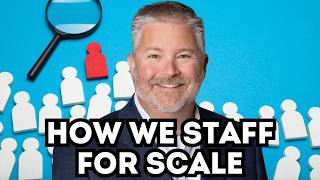
In this interview, Andy Neary talks with Mark Rogers, CEO of Trailstone Insurance, about how the agency transformed from a modest $7‑8 million premium operation into a $51 million premium business by adopting a three‑tier labor hierarchy, aggressive automation, offshore staffing, and a human‑focused relationship model. Rogers explains the early realization that competing with tech giants like Amazon required a technology‑first mindset, leading to documentation of processes, RPA and AI automation, and the creation of a hierarchy where tasks are first automated, then offshored, and finally handled by U.S. staff for relationship‑centric work. He shares practical offshore lessons—addressing accent concerns with AI IVR, the necessity of clear processes, and the importance of training virtual employees. The conversation covers the implementation of the Entrepreneurial Operating System (EOS) to enforce Level‑10 meetings, People Analyzer, and an accountability chart, which improved communication and performance across the entire team, including offshore staff. Rogers also details their content strategy based on Marcus Sheridan’s “They Ask, You Answer” (rebranded as Endless Customers), their move to HubSpot which cut their tech stack from 17 to 9 tools, and the development of a fast, AI‑driven quoting system called FIDO. Throughout, he emphasizes a leadership philosophy of “launch, fail, learn, fix,” the need to document processes, reinvest profits, and maintain a human advisory role even as AI capabilities expand. The interview concludes with practical advice for agency owners seeking growth and contact information.
Chapters
The hierarchy of labor, we always, the whole team here now, the leadership management always thinks about any task that can be done through automation, now AI or APIs, needs to be done there. And then anything that can be offshored, we do. And then anything that is left that is really about relationships needs to be done here in the United States, especially if you have to have an insurance license. But really the US-based people, they're paid well to build those relationships and that's what they have to do.
Hey, welcome back. Welcome back to The Broker's Voice. Andy Neary here, CEO and founder of Complete Game Consulting. I am excited today. I am joined by Mark Rogers, CEO, founder of Trailstone Insurance in Denver, Colorado. Mark, welcome aboard.
Thank you, Andy. Thanks for having me.
How are things out in Denver these days? I heard a couple days ago you guys had 100-mile-an-hour winds.
Yeah, half the city was shut down on power. And so like our HR director didn't have power at her house for 2 days. Fortunately, no fires, but I think they were trying to avoid repeat from the Marshall Fire about 4 years ago.
And it was actually about the same time.
Yeah, that was— I know the day well. It was December 30th.
Yeah. I have an employee who lives in Longmont and she said in Boulder, near Boulder, they clocked 109-mile-an-hour winds, which is insane.
There's supposed to be some high winds again today. But anyway, we hope everybody's going to be safe from the fires.
Well, thanks for taking the time, man, to be on here. What I, what I'd love to talk to you about— you and I have met offline once before, and one thing I was really impressed with was just how you've built your agency. And if I were to start an agency from scratch today, I would probably deploy a lot of the same strategies you have to scale your agency. And so I would— that's kind of where I would love to go with this podcast if you're open to it. So let's just start from the beginning. Um, let's take us back about a decade. When you think about the traditional— and I'm putting air quotes— ma and pa agency, what specifically about that model did you realize, okay, this isn't going to work in the future and I got to do something different?
Yeah, the big realization kind of came along. Um, you know, we had— we started in 2013 scratch agency, grew to about $7-8 million of premium, about $1 million of revenue. And in late 2017, early 2018, I was watching Amazon and Google try to get back in or not back in but into the insurance industry. And that kind of freaked me out a little bit. We know what Amazon has done to the retail market, the brick-and-mortar market. And they have the best technology, you know, available for retail. And so that kind of was a concern. And so my wife and I kind of had to make a decision. Do we keep the business mom and pop and, you know, with the 5, 6, 7 employees that we had, do we grow bigger? Do we sell it? Do we strip it of cash and buy more real estate? Whatever. So we decided to go big.
Talk about that because that was where I was going to go right away. You know, yeah, conversation I'm having a lot with agency executives and owners right now is the agency is going to grow based on the level of the thinking of the owner. And I think you're, you're somebody— you hit that pivotal moment. Do we stay like we are or do we go big? At that time when you made the decision to go big, where did you feel like you had to make shifts either between the ears or just strategically to make sure the agency could scale?
The, the number one thing that I was feeling like is we needed to look like an Amazon with the technology and the convenience and all the things that people expect from Amazon, but we still wanted to have the heart of a teacher. We still wanted to have the heart of a human behind it. Where, you know, if you try to get hold of somebody at Amazon, it's very difficult, and if you do, you're going to talk to somebody in the Philippines. Well, that probably doesn't work so well for insurance, and we know that now But at the time, they had a full team going there. But for us, our first thing that we wanted to do was modernize and build out automation and really build tech that would emulate or be a close second to Amazon. We would never be able to beat them, we didn't think. But so the goal was really for me to have $1 million of cash that I could invest. At the time, I was thinking we were going to have to go to Salesforce and hire engineers and all that stuff, and the $1 million would just be to develop it. And that, that was kind of like you know, what I was thinking every day, how do we get to $1 million cash of development on top of it, on top of operating needs? And so, it was to scale. And so, we started scaling. First, we documented all of our processes, then we put them into automation. So, the automation reinforced our process. And then we started to look at what we call the hierarchy of labor and try to offshore. And we can talk about that more in detail. But those were the steps. And in January of '19, a lot of automation, They helped us a ton with that. And, you know, 6 years later, you know, we've written about $50 million of additional new premium in those 6.5 years. The agency— and we've sold about $9 million of that. So, we're currently sitting around $51 million of premium, about $8.1 million of revenue for 2025. And, you know, that's kind of— where we're at now. I'll let you lead the conversation where you want to go because we moved to HubSpot. We did not go to Salesforce. And then the, you know, the hierarchy—
well, there's a couple things you did along this journey that I really want to dive into. And the first thing, let's go back when you started deploying the strategy of where do we automate. What year was that?
Uh, 2018 is when we started to look at it. We deployed in January of '19.
Okay, so AI wasn't even as, you know, not a— it was a, a distant thought compared to what it is today.
Yeah, OpenAI wasn't there.
Exactly. But go into— you talked about the hierarchy of labor: AI first, offshore second, US-based last. Talk about that model, because I think more and more people are starting to leverage that. Some are still pushing against it, but why, why has that been so helpful for the scale of your agency?
Well, back in 2019, like we just talked about, there was no easy-to-access AI. So it was all about automation and RPAs or bots, and, you know, very kind of dumb automation. We had to program it right, then watch it to make sure that it wasn't breaking or doing things that we didn't want to do, like send out 3,000 emails or texts in the middle of the night, which it did once. But that's part of part of the process. So, yeah, the hierarchy of labor, we always, the whole team here now, the leadership management always thinks about any task that can be done through automation, now AI, or APIs, or RPAs, needs to be done there. And then anything that can be offshored, we do. And then anything that is left that is really about relationships needs to be done here in the United States, especially if you have to have an insurance license. But really, The US-based people, they're paid well to build those relationships, and that's what they have to do.
Yeah, I'd be curious of your thoughts. It's a question I didn't intend to ask, but when you said it, it triggered it, which was I think a lot of people have hesitations going offshore. Um, we just started doing that here, and I probably had my hesitations at first. Why do you think— what are some of those maybe misfounded hesitations people have about going offshore that you've obviously learned just aren't true because they've really helped your business?
Yeah. And just so the audience knows, we have 16 currently, 16 offshore. And we've tried, we've tried a number of different companies, probably 7 or 8. We've tried a number of different countries, including India, Pakistan, South America. And now we've kind of landed in the Philippines. But the big hesitation, I think, for a lot of people is, I don't want those folks with an accent to talk to my clients. And so we mitigate that as well. We use AI to answer our phones. More like an IVR to drive that. So, we don't have an accent there on the phones. The other— the real problem when I talk to agency owners all the time, they don't have process themselves for the task inside their agency. And so, they expect these folks, these VAs, we actually call them virtual employees, to come in and figure it out all on their own. They're not. You have to have processes. And you have to be willing to train them just like an employee that would be sitting there with you in the office. And that's probably the number one— it may not be the biggest fear, but it's the number one reason that I see for failure when people are offshoring.
Yeah. Oh, keep going. Sorry.
Yeah. So the, so the biggest fear I think is, oh, they're not going to understand our culture or whatever. They're going to have a bad accent. And that can be true. But you can hire for that and mitigate it. You can find folks that you would never even know live outside the United States. Based on their, on their accent.
You brought up the agency leaders and assumptions and bad assumptions. One thing I'd love to hear from you with this path you've taken, you said right now the agency sits at about $8 million in revenue.
In revenue, yes.
Where do you feel like other agency owners are defaulting to people in their process when it, when it should be automation? Completing that task.
It's any— it's a lot. I see a lot of agency owners using US-based staff, even if they're minimum wage, what have you. They're doing auto ID cards, they're doing EOIs, changes on mortgages. COIs can be automated now, and with AI they can be accurate so they're not an E&O issue. So those are time-consuming things that most US-based people really don't like. Just doing an EOI. I mean, you know, what's the mortgagee clause, blah, blah, blah, put it all in there. It's a waste of their time. They don't feel fulfilled at the end of the day when they go home and say, "Yeah, I did 32 tickets for auto ID cards and EOIs." They do feel fulfilled. And that's the whole key to that hierarchy is give them work that fulfills them. Let them give advice, you know, about insurance, have the heart of a teacher and advise people. And Obviously, because we're moving most of that stuff into the first two tiers, we're paying less for those nominal tasks to get done. So we can pay a little bit more through US-based staff, but they also feel fulfilled when they have a good conversation and somebody says, "Hey, thank you. I never knew that," or, "I feel better. I can sleep that I'm protected." That's more fulfilling as well.
Well, and I think what you're getting at too, Mark, is it's allowing your US-based staff to spend time on what matters most, which is the relationship with the client.
Yep.
And I think that's something that's never going to go away.
You've done some—
or do you disagree with that?
No, I agree. But I think, you know, right now our leaders are highly concerned, you know, what's going to happen in 5 years, 10 years? Yeah. You know, Mark, what happens when you're not here? You know, and I do think right now about 60% of the U.S. market does want to talk to a human. They want to hear and see that. I think 5 years, 10 years down the road, that may fall to 30%. And so we want to be a very big fish in that smaller pond, but the only way we do it is still be that advisor. AI is going to come in and give the factual technical answer pretty well in the next few years, but it's not going to have the heart of a human. And I think there will be some backlash. People are already getting tired of AI answering systems and things like that, deepfakes. And so if you overuse AI, that's going to create backlash as well.
I think the other area I'm starting to hear some pushback on it is in, in social media content. I think everybody assumed there'd be a day where all content's AI-driven, but now there's like, it's this, there's this little mini revolution going on where people are pushing back saying, I know that's AI, therefore I'm tuning out.
And one of our current rules, if we're going to use AI for social media, or we use it in our marketing funnels, we send, you know, hey, Gen Digital avatar to somebody. But in the first 5 seconds, "Hey, it's Mark." Actually, "It's my digital twin" is one of the lines that we use so they know that it's AI.
Transparent.
We're still trying to— yeah, we're trying to give a little bit more of a view into the eyes. You know, we can send an email that says the exact same thing. We can put dynamic content on that avatar. "Hey, it's, you know, after hours. We're not working right now." Well, we could send out an email or we can send a digital avatar. We have found our Google reviews are proving it out. Our customers are responding at a higher rate and scheduling with us after hours because they can't see that digital avatar.
That's great. Well, that's where I wanted to go. You know, when I look at an agency, you've got marketing, sales, and customer service, right? And got to do all three well to grow an agency. And you've done a lot of great work. First place I'd love to— I think first thing I'd love to ask you about is I believe you guys operate Entrepreneurial Operating System, EOS, from Traction. And for those that aren't familiar, it comes from the book Traction. It is a model for, for running your business. How is We Run It Here How has EOS helped your agency or supported your agency as it has scaled over time? Because I think if you're not deploying EOS right now, you're missing a big opportunity.
I agree. You know, we used to, you know, one of the key cornerstones of EOS, once you get it going and everything, is what they call Level 10 meetings. Scale of 1 to 10, 10 being a great meeting, 1 being a poor meeting. Most people would rate their meetings as a 4 or 5 before they start using an L10. Now we're consistently in between 8.5 and 10. And they're on— every employee, including our offshore team, is in an L10 every week. And so there's communication from the top down constantly. It's consistent. It's formatted. It doesn't ramble like a lot of meetings do. And so, yeah, we consistently score higher there. But that helps with that communication from top to bottom. But The other big thing about EOS that I really like, they talk about there's 6 areas, but one of them is people. And people are the hardest things, I think, to really understand and help and do well with all the time—culture, right? And EOS brings that to the forefront with the People Analyzer. You know, what are your core values? Are you—and we have quarterly conversations with folks about their People Analyzer—are you plus or minus on the core values. And then I really like the GWC. Do they get it? Do they want it? Do they have the capacity for the role? That's a yes or a no. If anybody has a no on that, they go on to a 30-day plan to try to correct that. And so EOS talks about one of their lines is harnessing human, the power of the human. And so that's what we're trying to do is, you know, instead of having somebody only be 50% effective on their daily job, Get them to 80%, more fulfilled, more income, better response for our clients and for our teammates. So, the other thing on the EOS accountability chart versus an org chart. An org chart, you just take everybody in your organization and you stick them up on the board. You give them their roles, whatever they're good at or whatever they want to do. Accountability chart says structure your business the way that it should be. And then you have the visionary, the integrator, Sales and marketing can be 1 or 2. We break it into 2. And then you have some type of service or fulfillment. This really fits any business. And then the 3rd or the 4th, depending on how you break it out, is accounting or how do you account for the money and the bills. And that's what we did. We structured it. Everybody came off the board, so to speak. We all were unemployed for 3 hours when our implementer helped us build our accountability chart. So, It gives us a systematic way to watch everything. The scorecards are great. I don't want to even get into that right now, KPIs. But the thing is, is now we can identify when somebody is really— something is going on with them and we don't know why. Now we can spot it either with the scorecards or everyone has a number, Eihan. And so then we can talk to them and see what's going on with you. What can we help with?
Yeah, for those who are listening who might not be familiar, oftentimes agencies will use an implementer, an outside implementer, to help them implement EOS. I actually started EOS when it was me and an executive assistant, Mark. I read it and I'm like, I know, I know I'm not the ideal, I'm not big enough to run it, but I'm going to run it anyways. And one thing, if I had to do it over again, I probably— we didn't do it, we did it without an implementer, and I kind of wish we would have done it. And I still think about it, me, even though we've done it now for a couple years, it probably would be a good idea to actually bring an outside implementer in to help us truly implement it.
Yeah, I, you know, and I, I don't know how, how big you've scaled, but, you know, we, we've had some change in leadership and we are still doing the implementer even though our implementer has kind of said, you guys have graduated, you don't need— but I have a leader that's only been here now 6 months. I want them to have that full experience. And yeah, we did try to self-implement for about 6 months. It didn't go well. We didn't fully understand. And so Rachel's our implementer. She came in and kind of tuned us up. And, and, you know, I think it's going on 2 years now. That's great. Yeah, that's great.
Another philosophy, I'll call it, that you've adopted that I'm a big fan of is the "they ask, you answer." And I had Marcus Sheridan on the show. For those unfamiliar, Marcus Sheridan is the author of a book called "They Ask, You Answer," which is a phenomenal book about creating marketing content, effective marketing content. You actually have implemented— I believe you work with his team. Where has that had a big impact on how you market yourself to the public, to your prospects, and what kind of results have you seen from that?
Yeah, you know, it always— what they teach and they ask you answers now rebranded to Endless Customers if you're out looking for it, if the audience is out looking for it. But it always— we always kind of— our primary thing was treat other people the way you want to be treated, our clients, our teammates, vendors. That's trust. And Endless Customers has 4 pillars and it's telling people what other people won't tell them, sell differently than other people sell, and always build trust and be human. And so, we adopted that very early on. And then we said, "They ask you answers about any question they ask us, write down the answer, script it, and then put it out there on the internet." And so, we started doing that with our YouTube channel and social media. We've also, yeah, all the leadership, I think we've all been to like 3. Impact Plus is the company that Marcus owns or is part of that helps train it. And so we've all been to several of those now. And everybody from the top down is bought into that, that process. So we never want to do anything that's going to break trust with the customer. We want to be more human and it fits right into the AI stuff. It all really organically fits in or holistically fits in very easily.
Well, and I think what you've done so well, Mark, if I could just chime in, is this is what's impressed me. Taking all the stuff we've been talking about with it, whether it's hiring offshore, using AI, implementing EOS, the they ask, you answer, all those philosophies that you've adopted over the years. The reason you have scaled is because you've made things so simple. We try.
Sometimes we say we're too complicated, but we try.
But I think a lot of people think scale means just do more, right? Sometimes it means getting so damn good at what you do and simplifying that, that you're unstoppable.
Yeah, and we have definitely done that. You know, we have moved to HubSpot now for our automation, and that has simplified everything. It took our tech stack from over 17 pieces of tech down to about 9 now, and we're We're working on a couple of things to get that even lower where now you can just log into HubSpot and you make your phone calls, your emails, and everything else. There's another book, I think we talked about it before, Dr. Benjamin Hardy, 10X is Easier Than 2X, and his new book, Science of Scaling. He talks about simplifying and then scaling. And then 10X is many times easier because it's, it's something that is so radical. I mean, if I wanted to quote faster, At 2x, I could hire another 10 VAs and quote faster, but it's not efficient. Or I can build out what we're calling FIDO to do an agentic quote that's issue, issue, issue, a bindable within 3 to 5 minutes. And we're actively pursuing that right now. That's a 10x. Everybody's telling me it's impossible. We'll have it by the end of the year of '26. Yeah. Now that's awesome.
That is simplify. Yeah. Well, that, that, that is, you know, again, any agency owner right now who's tuning in, I use this analogy, Mark. I, I know agency owners who've been around for 20 years and their book is still, that is still under $500,000. Mm-hmm. And I can remember sitting next to Adam Bregman, who's the CEO of OneDigital at an event I spoke at, and he told me the story of, of, of how OneDigital became to what it is today, which literally started as one agency. And I'm like, what the heck separates Adam Bregman from somebody who's got an agency at $500,000? And often it's just what's going on between the ears. How are you thinking? At what level are you thinking? And what do you think is possible? I know something you believe in. You don't like hearing the word impossible.
No. You know, I mean, there are impossible things out there, but right now I know there's all the— for Fido, for instance, I've been told by quite a few AI companies in the insurance space right now that it's impossible for us to do FIDO, at least in the next 12 months, it'd probably be 2 years. I'm like, 2 years from now, everybody's going to be doing it. We need to get this in the next 3 months. So, yeah, impossible, you got to be careful you're not chasing stupid things. But another thing that really gets mated to that is one of our core values is launch, fail, learn, fix. I talk to agency owners almost every week, 1 to 2 of them, and so many of them will never take that first step, and that's launch. They're afraid of the failure. They're afraid of the financial loss, whatever. There's a book, Bezos Letters, and if you haven't read it, it basically talks about Jeff Bezos would write a letter at the beginning of each year to his board. And one of the key things is we're going to experiment. 3 to 5 projects, and if any one of these projects would fail, it would probably bankrupt our competitors. But they expect 3 of the 5 to fail. So they're investing tons of money, time, effort to— with the plan to fail. And we do the same thing. I can remember I wanted to do a service ticketing system outside of our AMS because the AMS was just not great at it. And so I put Freshdesk in and I didn't have the $18,000 to implement it for the first year. I mean, this is back in 2019. We only had $1 million of revenue. It failed miserably. And I learned from it that I'm not going to do that again. I'm not going to go outside, you know, and try to do a Freshdesk or Zendesk for ticketing. But I wanted a better experience for my clients. And so, yeah, if you don't launch, you will never fail. You'll never learn and you'll never fail forward.
Yeah, launch, fail, learn, fix. It's a good lesson for anybody. If I have an agency owner listening to this right now, Mark, they're sitting there, maybe they're about to break through their first million, and they're sitting there going, but how the heck could I ever get to 8? What would be your advice?
Um, really make sure that your process is documented well. Then you basically lather, rinse, repeat. But really also, yeah, if you want to grow, you're going to have to invest some time in the business as well as reinvest your profits. For the last 6 years, we're running about a 1% or 2% EBITDA before contingency. And it's purely because I'm trying to grow it to the point we want to get to $20 million in revenue as soon as possible. And so that is our plan. And you have to be humble, you have to be patient, and you got to You got to have some delayed gratification. But the toughest part is, man, so many times I want it faster. I want it now, you know, whatever. And good things, you know, people say that, you know, we're an overnight success. Well, no, we've been doing this for 6, 7 years and nobody really knew about it other than a close circle of friends. And so, really, really focus on serving your clients, serving your team. And then, and then invest time and money.
Yeah, I think one of the best pieces of advice I got from a mentor of mine was you got to, got to grow horizontally before you grow vertically. Yeah. And so I think that's great advice. Well, if you— I'm sure you inspired a few people with this conversation, Mark. But if somebody is listening and they want to follow you, reach out to you, what's the best way to do that?
LinkedIn is great. My emails are there. Check out our YouTube channel. You'll see, you know, You'll see They Ask, You Answer in motion there. So, follow our YouTube channel. That's Trust Zone Insurance. But yeah, grab my email, shoot me an email. I make time for anybody that wants to reach out and talk at least for half an hour or so, and then we'll decide if we talk again. If you don't launch, we don't talk again.
Well said. Mark Rogers, everybody. Mark, it's been a pleasure, man.
Yep. Thank you, Andy.
It's impressive to watch what you're doing.
Yeah, I appreciate having you, having us on. Thank you.
All right, be good everybody.
More from Andy




If you want producers to succeed faster, help them create a sales message that creates confidence.

Sales isn't a zero-sum game! You can have tough competition and still grab a beer after



Option 1: Meditation, a fast walk, a podcast, and protein. The ultimate morning routine!

How you do one thing is how you do everything. Ill elite producers fuel their body.


Stop living in the gray of maybe! Your job in sales is to get a clear yes or no