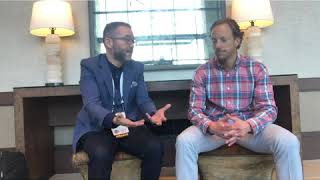
This YouTube interview (Andy Neary with David Contorno, founder of Epowered Benefits) argues that US healthcare is "working as designed" for incumbent beneficiaries, and that employers should shift mindset: separate insurance from care, and treat employer healthcare spending as a business line (P&L) to control cost and quality. Practical recommendations include asking different procurement questions (costs, quality, incentives), setting budgets/guardrails for care (analogous to travel policies), and protecting employees by steering them toward better-value care.
Chapters
Hey guys. I am excited to do this interview. I'm here with David Contorno, founder of Epowered Benefits. David, great having you, man.
Thank you, man.
You are doing some game changing stuff. A lot of people in our industry as advisors, employers out there talk about health insurance being screwed up. And we know health insurance isn't the problem, health care is the problem. But you have a unique perspective on that.
I do. I actually don't believe that the system is broken at all. It's actually working exactly as it was designed to work. The problem is it wasn't designed by the employers who foot the bill for half of the care in the US it wasn't designed by the doctors who provide the care. They're really beat up by the system and it certainly wasn't designed by the patients who are receiving the care. But if you follow the money, if you look at where the money's going and that's very hard to peel back, both in health insurance and health care, it is working really well for a lot of people.
Absolutely. So with that being said, we know the healthcare system is working the way it's supposed to be. As weird and screwed up as that is. Where do you see both the insurance and the healthcare industry moving in the next year or two?
Well, the first thing is we need to have a bifurcation of those two entities. We intermingle those two things. If you ask someone, the average American, who their healthcare provider is, they're going to give you the name of their insurance company, which is as silly as asking them what kind of car they drive. And they say, I drive a Geico. And so we need to separate those two, just like we do in every other type of insurance. And we need to realize that the insurance is a reflection of the care. So stop focusing on the insurance. The insurance will get better and less expensive if the care gets better and less expensive. Focus on that.
Take care of one, the other. It takes care of the other.
Exactly.
Okay, cool. So you've been doing a lot of work with companies, you know, in the much larger space who often smaller mid size, employ great. They get access to all this. That's awesome. But we can't do that. If you have an employer. They're watching this. They have 50 employees, 100 employees. 150. What is a strategy or two you would recommend they deploy to get the same results we're seeing up here with Fortune 500?
It's actually a really easy answer. I am asking them to look at that healthcare spend on their P and L Exactly as they do every other line item above it, every other line item below it. They need to realize that they're in the healthcare business. They may not have wanted to be when their grandfather started making widgets. They never thought they would be, but they are. And when you start to think of that spend as a business unit, it should lead you to ask different questions than the typical employer is asking. How does my broker get paid? How does my insurance company make money? How much does it really cost for that knee surgery that my employees can get? What's the quality of that new surgery they're going to get? Employers do this all the time with hotel rooms when employees travel, right? They don't want them staying at a Ritz Carlton, but they're not going to.
Put a budget right? So they say you can get a.
Good Marriott for 150 bucks. That's your budget. We need to do this in health care. It's not employers telling employees how to get health care. It's employers protecting every employee to ensure that they can continue to provide health care.
Well, guys, you've heard it from one of the best our industry has. At the end of the day, it's mindset shift. You have to unlearn so many things you've been taught in the past and start challenging what you're being told. So, David, thanks for having me, man. Thank you for being on. I should say that's it, guys. Now go out, fix your healthcare, fix your health insurance and make your employees happy.