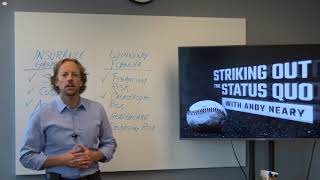
A short YouTube video by Andy Neary advising employers to stop treating healthcare as an insurance-shopping problem and instead manage it as a risk-management problem. He outlines three risk areas to control healthcare budgets—financing risk, catastrophic risk, and healthcare purchasing risk—and offers an assessment viewers can access via a link for deeper guidance.
Chapters
Would you like to bring control to your health care budget and use the health plan as leverage in attracting and hiring the top talent in the market? But you struggle because year in and year out you find yourself playing the insurance game where you're being taught that the best and only way to control cost is to shop the insurance companies, shift cost to your employees or just accept less bad rate increases every year. If this sounds like you, I want to help. Because when you realize that you no longer want to play the insurance game, you and you should be playing the risk management game. You give your organization a chance and there's three areas of risk you need to manage inside the health care budget. Number one, financing risk. How are you financing your health care budget? Because the more you manage risk, the more financing options you'll have. How about catastrophic risk? Who are the 20% of your employees and dependents that are driving 80% of your cost? Focus there. And number three, health care purchasing risk. How are you helping your employees buy high quality care at low prices? Now, if you're still watching this video and you're finding the information beneficial, I want to share something with you. I have an assessment. So if you click the link above, you can get access to my assessment that walks you in depth. How you can integrate and effectively utilize these three risk management strategies to help your organization not only bring control to your healthcare budget but but use the health plan as leverage in attracting the top talent in the market today. Alright, till next time, bear down, focus on the target and strike out the status quo.