Broker's Voice: Dennis Hartin - President, Hartin Dynamics
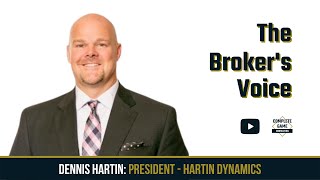
A YouTube interview (Broker's Voice) where Andy Neary interviews Dennis Hartin about his insurance career, founding Hartin Dynamics (a division of Peel & Holland) after 25 years with Aflac, the role of mentors, pivoting toward healthcare solutions, early struggles and eventual momentum (including effects of COVID-19), and advice for advisors. The conversation also touches on Hartin’s community/charitable work (mental health, neurodiversity) and contact info.
Chapters
Hey. Hey. Welcome back to the Broker's Voice. I am super excited today to have on Dennis Harton with Harton Dynamics. He's doing some really cool stuff down in Florida and I just want him to share his journey with you. I think it's pretty cool how he established the organization and what they're doing today. But before we get there, I do want to make two quick plugs, one for our sponsor agency Annex. If you are an insurance agency, let's face it, your website could probably use a little upgrade. It could use a little tweaking. And Agency Annex has built a program design specific specifically to help insurance agencies build a website that attracts the right prospects. They built mine. I couldn't be happier. So if you know your website needs an upgrade, reach out to Steve. I put his email address right here as well as if you are an insurance broker listening in. I want to invite you into my text community. I share coaching content every single week. The list, the community is growing. It creates content. It builds strategies to help you grow your business, especially in today's evolving world. So if you want to become a part of that community, do yourself a favor. Text broker. Right now to the number 414-622. 1462. That is broker to 414-622-1462. You will get in the complete game community and you'll get some awesome coaching content every single week. All right, let's dive into today's episode. Dennis Hartin, welcome to the Broker's Voice.
How are you, Andy?
Good, good. You are down in Tampa. I have to. I wanted to ask. I forgot to tell you. I was going to ask you the sports question. Hey, if the Tampa Rays win the World Series this fall, it's going to be one hell of a year for you guys.
It's. Listen, it already was like, you know, I'm, I, I'm sort of one of those fans that I pay attention when it starts getting close to the championships and it makes it easy around here. Man, we just got done like we've already forgotten that we, we control the Stanley Cup. Right. It just two years in a row, which is a huge deal. So, you know, we find out, I think the Rowdy's actually lost a game. That's our soccer league. They won. I mean that whole Champa Bay thing has just. It really does create a lot of enthusiasm in the community.
Well, and I find it even more impressive. The Bucks win the World super bowl, right?
Yeah.
And they return all 22 starters. That's unheard of.
Yeah. No, it's. It's amazing. And clearly we're expecting another incredible year.
Well, you got Tom Brady. He's a magic. Let's be honest. Whether you like him or not, he's a freaking magician. At this point, you have to just agree with that. I, I agree with you. I come in late today. The day we're recording, Milwaukee Bucks are playing in game six tomorrow night to win the title. I'm from Wisconsin. I haven't watched the game, but I will admit I'm going to watch tomorrow night's game.
I will share with you quickly on that, that my good friend Dr. Mira actually has one of the Rays championship rings from last year. Because he's actually the. Their. I don't want to call it a head coach, but he's there. He owns a company called the national center for Performance Health, so he works with the Rays. And so he showed me, you know, he's got just a little tiny hand, and it's just this giant. I mean, it's. It's amazing.
So that's awesome. That's awesome.
You ever hear me reference him? That's our guy.
Absolutely. And I could have you on this entire time. Talk sports. But let's, let's dive into what we're here to talk about. Insurance. You know, the question I love asking people right off the gate, Dennis, is how did you end up in the insurance industry? Most of us did not get here by design.
Sure.
Did you end up in insurance?
No, I, you know, I was super young. I was in Kentucky. I was about 20 years old. I knew about myself that I loved working with people. I don't necessarily like working for four people. So I'm kind of a, you know, let's do this or figure this out together. But at that time, you know, I didn't come from Gates money. I mean, I have great parents who taught me good values, but at the end of the day, they weren't going to be able to fund my startup. And I really have always viewed myself as an entrepreneur. Right. And so for me, the insurance industry offered a really good design. And so I got pulled in. Like, there's a ton of us in the industry that started our career with, you know, either a door to door company or life sales. I just happened to choose the Aflac route and, and I had a lot. I had 25 years of great success with that company. And then somewhere around 2017, you know, I had gone through a few years where I was sort of frustrated. I was doing well, went in making a lot of Money. But I was just kind of looking forward, going, hey, where's this boat headed? And so for a long time I just thought I didn't know where the boat was headed. And then I got high enough up in the company, I figured out that maybe there were some people at that time that didn't know where their boat was headed. And I just wanted to get off on my own boat. And so, you know, I wrote about that a little bit in a book this year called the 25 change makers. That's a little bit about, I think, what we're going to touch base on today. So. But yeah, so I left that career, started my company, Heart and Dynamics in January of basically 2018 is kind of when we officially put everything together. And I had had a friend that tried to get me to go down this path four or five years prior. And I said, if I'm ever going to do it, I, I'll come partner up with you. So a lot of people know I'm, I'm a division of, I operate as Heart and Dynamics here as an owner, but I'm a division of Peel and Holland, which is a 100 year company that's got some great, some of my best mentors, some great friends. And so we're trying to duplicate what they've done well in Kentucky for years here in the Florida market.
And I want to talk about that because, you know, one, it amazes me in these conversations how many people started their career with Aflac and it's gone on to other, greater, you know, other great things. I didn't say greater, but other great things. But yeah, I want to talk to you because Peel and Holland, obviously their roots are back in your home state of Kentucky. And you and I were talking offline. One of your mentors who I think is, you and I both agree is probably one of the smartest men nobody knows about if you know about, in this industry. Greg Carlton, talk about those mentors you had at Peel and Holland and how they have influenced who you are and what you're doing today.
Well, if I had to list all the mentors I had, we wouldn't have enough airtime. But specific to the reason why I partner with them, you know, at 25 years working with multiple agencies, even in my last years in my AFLAC career, I worked with agencies across the entire Southeast and all the way up really to Michigan. Ultimately, I just saw what Peel and Holland did as an agency aligned perfectly with my approach. Right. Do the right thing by the client because it's the right Thing, take care of them.
And.
And I saw that emulated because when I would have conversations not in front of the client, but behind the scenes with certain people saying, what should we do here? I knew that they had two or three different paths they could go. Right. And what we see here in Florida is that I love this state, but it's largely full of pirates, and a lot of them happen to be in the insurance industry, you know, so I just. Not all of them. There's some great people here, so I don't want to bash them all, but there's some that you just know when a push comes to shove and the decision comes down. With Greg, it was about, how are we taking care of the client? How are we taking care of our customer? With Roy Riley, he expects that of his organization, right? And it emulates through the entire organization. So Roy's the CEO of Peel and Holland Holdings. We have a couple of partners. Keith Riley, his brother, is very heavily involved with them. And then another mentor of mine that I don't talk a lot about is Kelly Harding. He's actually in Western Kentucky, and he and I used to work together closely back in the day as well. So I have great guys that I can lean on. And now Greg has gone on to form his own company. He's doing a ton of underwriting. He's literally genius. Like, that guy does stuff with spreadsheets that I will never figure out on my best day. And so, you know, Andy, we joked about this in the past. You know, you hear a lot of talking heads in our industry, and I tried to pull myself out of that and get back to the client, because my first couple years, I spent a lot of time learning and listening, but I wasn't. Not all of it aligned with my value set. And so what I've learned with Greg is that if you. If I need to know a real answer, I can say, here's what I see. This is what I think. This is what I understand. What's your perspective on it? And he's always given me good guides. I actually had to call him Friday and said, this is one of the more complex issues I've dealt with on minimum value. It's a complex group, but it's a great opportunity. How do I keep myself and my client out of trouble? And Greg said, well, I think this, this, and this. But here's an attorney. You can go and see if you can get legal guidance. And it was beautiful. Like, in. Within minutes, I had an attorney on the phone and getting exactly what I needed.
Well, and I think what you said is anybody listening? And this is a great note to take when it comes to time to finding a mentor. Find those that are practicing not just pontificating because there's a lot of people saying the right things, but who's out there actually executing on what they're saying. And, you know, you got. You and I were talking offline. I've had a chance to be in the same room with Greg a couple times, and you said it so well. When most of us are sitting at 25,000ft, Greg's at 50,000. It's. It's pretty impressive to listen to and a lot to be learned from that man. So cool. You now are on your own. You got Heart and Dynamics division appeal in Holland. You and I were. You came on the clubhouse session, Eric Silverman and Eric Silverman and I run a couple weeks ago, and you said something that just really piqued my interest. I want you to share.
Talk about the journey since the day you started Heart and Dynamics, because I think this is such an important, important message for any insurance advisor who's thinking about maybe going out on their own or has, and they've hit that spot where they feel like they're kind of pushing the boulder up the mountain a little bit.
Yeah, well, I mean, I've had the benefit of watching, literally at this point, thousands of people in our industry shift gears and go a different direction. Most of my peer group I saw go directly to the competitor. Right. I worked for one company. There's other competition. I'm going to take exactly what I do and go there. I made a little bit different shift because I knew I had a lot of intellectual capital when I left the role that I was in. We had 8,000 payroll accounts. We were. I was in charge of $100 million book of business. And so I did not want to step on the toes of the people that I had asked to work hard for me for the last five years. So I literally said, okay, I need to go a different direction. So that caused me to look in some different places. And when I got to the healthcare piece, one of the things that I was able to see is that, you know, there's a huge shift coming. A lot of the people that were buying the products that I had made a career selling weren't buying those products anymore. Or if they were, they were only buying them because they couldn't afford health insurance. And I'm like, that's not a sustainable model. Something's got to give. So I really started Digging into the healthcare piece, trying to figure out what is the problem and what could I potentially do about it. It's a huge issue. It's huge budget dollars. And so for me, I got all excited when I read Dave Chase's book and, you know, the CEO's guide. And I mean, I thought this thing is like the Bible when nobody knew there was a religion out there. I mean, just people were pumped. I was so excited about it, and there were so many talking heads about it. And so I started listening and connecting and reaching out to people. And so I pulled in a couple of other mentors. You know, people like Dave Cantorno did give me some early insight, and Carl Schuessler is another one that I saw was having some success. And so I started listening to some of that content, and I joined up with great people like Kevin Troche at Q4. I helped me kind of hone my message. And so when I pulled all that stuff together and I went out and I'm starting to preach it, what I found is that a lot of the employers in Florida I was talking to, they probably thought I was a crazy person. I was going to start talking about, you know, the grassy knoll and aliens. And I'm not like this conspiracy theorist guy. Like, people don't believe healthcare is that messed up behind the scenes. And so I really had to pull back the message. But it took me, probably, Andy, a year or two to realize I had sort of blazed over some clients and just shotgunned them to the face with content that, honestly, they didn't care about. What people want is affordable insurance that is not going to break them, that makes their problem go away and helps them attract the best people. Right? They want the solution. Nobody that I've met yet wants to know how to. How to make the sausage. No way.
Well, and it's funny you bring up Dave's book. I. Dave changed my perspective. I think I started reading his LinkedIn content in, like, 14, 15 or he posted it, but it was from, like, Entrepreneur magazine. And I was like, what is this guy talking about? Like, this is totally different. So I have to admit something. Like when I saw my name in the book, his book, that as somebody he has learned from, I was humbled because I'm like, dude, I learned from you. What are you talking about? Yeah, okay, but here's. Here's where I want you to go, if you don't mind. So everybody thinks, okay, successful story. Dennis goes off on his own, and in a matter of a year or 2, he's 5x this thing, it's out of control. He's scaling. He doesn't know. He can't find people fast enough. But that wasn't the case, was it?
No.
Talk about that journey where you hit that moment, like, yeah, we're doing the right thing.
So when I. When I talked to Peel Holland about getting going, you know, we ran some proformas, we said, here's who we're gonna go after. I had clearly had a successful track record. You know, I had worked in the industry for a long time, so I sort of felt like locally I knew a lot of what was going on, so I had a lot of competitive insight that I thought was going to be extremely valuable. I had hundreds of reps that had reported to me. And so I thought, well, between all of that, I mean, it was kind of all of those components that made me feel like, how could we fail? Right? And yet here, after two years, we still. I felt like we're struggling. We had spent way too much money. We got the brand off the ground. We were starting to see some highlights. But I'll be honest with you, I went into December 99, let's see, no. 19. And I was going into that New Year's Eve, and I had put some parameters for myself and said, okay, if I don't close these cases, then I'm gonna have to seriously look at this model again because I'm either gonna have to put some more money in or, you know, cut salary off or potentially, like, shut it down. And I didn't. I. Honestly, Andy, I'm not a guy. Like, I'm. I'm. I'm too bullheaded to put the shovel down right? So. So. But I was trying to take a real hard look at myself because it wasn't just my money. I had partners involved, people that I respect that I just literally refused to let down. So my grit is up there, I think, at very high levels. Like, I don't quit. That's just not me. But when you're running out of money, you know what I mean? Like, it's. You may. You may. I maybe I felt real close to the point that I'm thinking, okay, it's not that I want to quit, but it's going to be forced into doing something. And what does this look like? And having to go to my wife saying, should we borrow more money? And without the results that I really thought to back it up, I just thought, man, there's a lot easier ways to, one, burn a ton of money and two, make money. So I thought, I'm going to have to do something different. What was really cool, Andy, is that I went into New Year's Eve and I didn't close those cases. And in our business, in December, when you don't close in December, man, it's not likely going to happen in January, right? That. That doesn't happen. But for whatever reason, you call it God, you can call it luck, you can call it grit, you could call it, I don't know, the stars align, whatever you want to call it. But even pre Covid, all of a sudden, January 2nd, before I even was able to call my partners and say, maybe we need to do something different and just apologize and find a way to pay back a bunch of money, I got a phone call that I needed. And that phone call was just. What? It wasn't a bunch, Andy. Like, I'm not going to get rich. But it was what I needed. Then another one happened, and then another one happened. And all of a sudden I started to see this. It was just enough, right? And then Covid hit, and I'm like, you have got to be kidding me. It's already hard enough to get people to make the transition or a change when you add Covid on top of it. Introducing a new idea with health care. I just thought, this is a nail. And I was really upset. But what I found is more people reaching out. It was either the flywheel or it was Covid. Or like I said, maybe it was just God saying, hey, Dennis, you've worked really hard. I figured out maybe you're going to stick with this and help some people. So I'm going to help you, whatever it is, right? All of that stuff lined up, and the flywheel started to spin, and I found people saying, you know what? I knew what you were talking about I probably needed to do, but I needed that shove off the cliff because, you know, we now more than ever, we have to understand where our money's going to. Right?
I love that story, Dennis. In fact, I make it a practice every year. I read a book once a year, repeat every year. It's called the Alchemist. I don't know if you've ever read that book, but it is the perfect book for any entrepreneur that is on this path. Because the book is about finding your personal legend, chasing your personal legend, and they reference it in the book just when you're about to give up on your personal legend.
Yeah.
It's when the universe, God, whatever you want to call it, tests you. And when you. When you stick with, reveals the answer, and that's what happened to you, and that's what I absolutely love, is you stuck when you could have quit, you stuck. And it's not fate, it's not luck. But here, for anybody who doesn't know what Dennis was talking about, the flywheel, Dennis, is because it's all the work you put in up front, the grinding, the. The, you know, just the. The day to day, hand to hand combat. You stay consistent with it. Every day, the flywheel starts spinning, and before you know it, you've got all this momentum, and that's when things start coming in, and that's when you experience that hockey stick growth. And so that's all I. I'm so glad you told that story. So here's my question. We're going to end it here, Dennis. If there's advisors out there listening, we were talking about this offline. You know, they know they want to be doing things differently, but maybe they just don't know how to execute. And let's face it, we have people in the industry who don't want to share how. How to execute. How can somebody make those appropriate changes and take that path to being the different advisor? What advice would you give them?
Well, instead of listening to my industry, what I started doing was listening to my clients, right? What did they need? What did they want to hear? And I started figuring out there were some things that I could do for them that we could execute quickly, that would get and show some proof of concept and build my relationships. I did lean on a lot of mentors. I do quietly, behind the scenes, try and absorb all the good content, really the best content. There's a lot of good content. Andy, that's. I'll give this back to you. And even Eric, right? Eric has tagged me for this clubhouse thing on the regular. Right. And I love him. He's. He's literally. That guy does some amazing things. And because of that, I jumped on. Partly because you were there, because you're. Some of the content that your content, you put out, I pay attention to. And you probably didn't even know that, because behind the scenes, I see guys that I think I respect and that do a good job and play a significant role in our industry, and they're pushing for positive change. Right? And that's what I want to see. That's part of the reason my work at Fayhoo is important. Anybody who knows me knows I'm involved in a lot of nonprofits, a lot of different. Mental health is a huge piece for me right now. So I'm so passionate about those components that somebody's got to help solve for them. And I believe I've been put in this place in time to solve for those, because I've got better tools and better equipped to help make those things happen than anybody else. But if you don't keep it going with some people that you can bounce legitimate ideas off of and say, is this working or is this not? Because there was a moment where I might have needed to shut it down. I'm so glad I didn't. And I'm so glad I had partners that say, I have faith in you. You're doing the right stuff. Like, I knew how to run sales. Right. I'd run huge teams, so I knew what to do. And then, more importantly, if you can't take a real hard look at yourself and say, am I putting in the work that I know is required to succeed at this, then maybe you're on the wrong path. Right?
Yeah.
No, no, you're. I wanted to share this with you because this is something I think you and I believe in a lot. We have the same mindset here. I don't know if you recall this, but you talked about how you. You get. You catch people behind the scenes. Right? And I. I call it catching people getting great. And last year, man, I was up in Crested Butte, up in the mountains, enjoying a start of a long weekend. And I remember I was in a place where you had those moments. Like, I felt like I was pushing a boulder up the mountain. You sent me a message and you said, hey, man, I just want you to know your content makes a difference. And that message was like. It lit me up like a fire. And I don't think I ever got a chance to thank you. So, one. Thank you. But what you just said, Dennis, is so important. If advisors out there struggling or wanting to be different, but they don't know where to start, I go back to 2015. I started putting myself in the right rooms with the right people. You've done the same thing. I mean, the mentors you have surrounded yourself with are unbelievable. And then you have to give back.
For sure. We didn't even talk. You're involved with what's called Growth 10, which is. Isn't that an entrepreneurial, like, mastermind to help out to other entrepreneurs? Like, stuff like that? Man, it's amazing.
Yeah. Growth 10 is a thing. I do a lot of work with mental health, with Dr. Meer and his national center for Performance Health. I mean, I'm on the board for Autism Shifts Just because I feel like that's a group of people that are underserved. Right. Like, the next movement I think you're going to find in diversity is going to be the neurodiverse, which is our ADD ocd. And, you know, most of us in the industry probably have some of that in our system, so we need to be looked after. Right. But it's also this huge population of amazing, talented people that just aren't in the right workspace. So we're trying to help in that front. I mean, it's, you know, schools and kids. I mean, there's. There's a ton that I am trying to do to give back. And I don't put it out there for the whole world all the time, Andy. Just because it's really. It's my passion. And if I'm. If I can help, if broadcasting it will help, I broadcast it. Right?
Yep.
So that's usually where it's at. But no, I, It's. I think you do help follow people that you align with, that you believe in, and, And, And I think ultimately the answers will surface. Right. But I do believe people get put in your path, and when that happens, I don't think you can ignore it. Like Dr. Mira, there is no doubt I am in his path. And he and I work together because what we're doing is important. This emotional vaccine thing that we're doing is very cool, and I think it's saving lives. And that's. That's more important to me than any of the money that we can make. But, you know, I'm not entirely an idealist. I do have to make a profit. Right. It doesn't. It's not free to put this logo up everywhere that I want it to go. And so it takes a lot of hard work and a lot of collaboration, a lot of people. Otherwise I couldn't get it done.
It's that hard work and having your heart in the right place, Dennis, that makes the revenue the natural byproduct.
Yeah, it's starting to happen and so had some successes.
If. That's awesome. If somebody wanted to reach out to you, they're listening and watching this, and they maybe have never met you before, but you are definitely one of the mentors of our industry, Dennis. How could they get in touch with you?
So the easiest way is probably just to email me. Dennisartand dynamics.com I'm pretty accessible. You know, we are starting to grow. We are a little bit in the weeds. We brought on probably one of the biggest clients we've seen recently for our own company, so we're excited and onboarding them. But I'm always happy to help somebody who's genuine, that wants support and wants guidance. And I have all these random connections. Andy, I don't know about you, man, but I'm able to connect the dots for things sometimes that I have. I never knew in a million years it would ever matter. So, you know, so that's very helpful. I've learned from guys like Eric Silverman. He just connects people, and I think stuff happens for him. So that's all been very beneficial.
There's power being a connector. And so I put gang. By the way, if you're listening, I put Dennis's email right here. If you're watching this, I hope you took a lot of notes. Like, this is a message that Dennis, I can't wait to share because it's so many I think are in that spot where they want to be better, they want to be different, but they don't know where to start. And they're not reaching out, they're not surrounding themselves with the right people, the right mentors. And so this was just a phenomenal conversation. So thank you for taking the time to do this.
Thank you very much. I appreciate the work you're doing, man. It's great stuff.
Appreciate it. That, man. Likewise. And if you're an advisor, you know what happens, man, when clarity and connection collide? Massive action happens. Go make it happen today.
Thank you. Appreciate it. Bye, guys.
More from Andy




If you want producers to succeed faster, help them create a sales message that creates confidence.

Sales isn't a zero-sum game! You can have tough competition and still grab a beer after



Option 1: Meditation, a fast walk, a podcast, and protein. The ultimate morning routine!

How you do one thing is how you do everything. Ill elite producers fuel their body.


Stop living in the gray of maybe! Your job in sales is to get a clear yes or no