Broker's Voice: Whitney McDannald
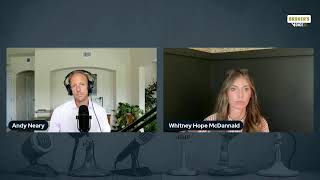
This content was created by Andy Neary. This content was uploaded by Andy Neary. This is a YouTube video titled "Broker's Voice: Whitney McDannald" created on August 16, 2022. It features a conversation between Andy Neary and Whitney McDannald, discussing Whitney's journey and experiences as a female powerhouse in the insurance industry. They explore topics such as workforce strategy, personal branding, and the challenges and successes Whitney has faced in her career, particularly focusing on her role as a workforce strategist and her efforts to empower women in the industry.
Chapters
Hey.
Hey.
Welcome back to the Broker's Voice. I cannot tell you how I'm excited, how excited I am for this one. I have got a female powerhouse in the insurance industry on today and I'm excited for her to share her story. Many of you may know who she is. I have the one, the only, Whitney McDonald joining us live on the Broker's Voice. Whitney, welcome aboard.
Hey there. I'm so glad to be here, Andy. It's been a long time, overdue.
And Whitney is a workforce strategist. And I really like that because I'm going to let her explain what that is, because when you hear me, she's. When you hear me say she's a woman in the insurance industry, you'd be like, well, is she a producer, account manager? No, no, no. She's a workforce strategist. So let's just get out of the gate. Whitney, what the heck is a workforce strategist?
So, okay. People ask that all the time because they're used to seeing people in my capacity and it's kind of like one of those things. They're like, oh, you're an insurance. And then I kind of chuckled to myself because, you know, times have changed. Oh, boy. So I grew up in this industry. I've been around for 20 years, you know, which is a long time in my life. And my mom was a broker and she really did have that title of like insurance agent and that kind of deal. And, you know, one thing I really realized is that this industry is severely broken and I didn't think I would be in this industry, but I went on to get my master's in public health. And then I really started doing a lot of engagement with just organizational leadership. Adam Grant is like one of my favorite all time heroes. So that world just has really fascinated me and what it takes to attract and retain talent. And so benefits is created to do that, to attract and retain. Right. But with the complexities of where the world is today, it's so much more than just shopping for benefits. It's really having an all encompassing strategy that connects pretty much all the things that touch the people part of your business. Whether that's, oh, we need wellness or we need engagement or we need a, a progressive option to have a DE&I strategy that's actually working and not checking a box. And so that's why I've really kind of coined that title of workforce strategist and not just really being a insurance broker. Right. So I'm like taking it a step further because it's so needed.
I'm glad you said that because I. I remember I just gave a talk this morning down in Denver for a industry event. And I remember back in 2015, everybody at that point was a benefit advisor, consultant, broker, you name it. Right. And I read an article by Dave Chase. It was article titled the job that could Save America. And it was talking about our job as an advisor and how important it was. And it was the next day I went on my LinkedIn profile and I changed my job title from benefit consultant to healthcare strategist.
Yep.
I'm like, I gotta be different. I gotta do something different. You've kind of done the same as a workforce strategist store. You know, when you think about what now we failed to mention, you're down in Atlanta.
Yeah.
And working for a large insurance firm. And.
How have you. I really want to go here with you today because you have built a really cool brand and we're going to talk about that. And it's built upon your own story.
Yeah.
So maybe we just start there. Let's go back, you know, maybe three, four years.
Right.
You were kicking ass.
Let's challenge it. I'll even go back a few years prior to that.
There we go. Because. Because I know since I've known you, you've been kicking ass. Everything looks great on the outside, but. But that's not always the case on the inside. So. Yeah. Let's go back six years and introduce us to Whitney McDaniel back then.
Absolutely. So when I got my start.
It. I mean, this is a boys club. It really is this industry. And so when I saw my mom really, like, taking charge and just really being this awesome, you know, just force, I was like, oh, I want some of that. Because I saw that there was a need for it. And I'm a huge proponent of, like, women advocacy and just really making sure that we have a different lens on all things because I think it's so important to be able to, you know, serve everyone. And men don't make up the whole workforce. Women do as well. And actually, numbers are showing that there's going to be some shifts in that coming in the future. But, you know, when I started, it was a boys club and I thought in order to succeed that I really needed to kind of encompass the things that they encompass. I was like, ah, I'm gonna have to learn how to play golf and all this kind of stuff, because that was really how people were winning business. And I was like, I really don't know how to do that. And so you know, after many years of really trying to do it their way and being almost embarrassed to like have a voice of a different perspective, I just woke up and I was like, you know what, I can't do this anymore. I need to share where I'm coming from because I think that's important and even more so in today's world. And so after running myself ragged, that's when I kind of met you and figured out that I wanted to take a different approach. And I think I participated first in a Mastermind, but I really wasn't like all in on that. I was just kind of like, oh, I'm going to try this thing and maybe I'm going to see what happens with it. But there was a time when I really kind of hit the bottom. I was like, you know what? I'm burnout. I've got two kiddos under the age of two. I've got a husband that works in the film industry and that's extremely demanding. And so I really wanted to be able to take what everyone thought. I was so successful on the outside because I was writing large cases and I was getting in the door with all these really great employers, but I was dead inside. And really, Andy, that moment where I decided to truly invest in being totally okay with me, totally okay with having a different approach, showing up in my. All my hair and my lipstick and the whole deal and not knowing a damn thing about golf. Then I was okay with saying things were not right or maybe we should look at it this way. And I started getting a different kind of client and I started really winning even more so. So I think to your first question of like, let's go back to the Whitney a few years ago, that was the moment where I knew I was done with where I was, but I didn't really know what to do next. And that was a hard moment. I think a lot of us.
And let's go a little deeper there because there might, you know, there's probably a lot of women from the industry listening to this and you know, it is a, it is a truth that this, for, for a long, long time this has been primarily a male dominated industry.
Sure.
And let's not, don't kid around. I don't want you to be humble. You're talking about winning base big cases. These are massive cases. So let' about, you know, the success you've had. Because I think a lot of women in the industry, even when they are successful and everybody's success is defined differently, that outside success does not always Match the inside happiness as. As you talked about. So talk about the fact that even. Even though you were winning, like, and again, let us. What, what are, what are some of these cases? We're talking about sizes.
I mean, I tend to jump in the jumbo space, so I like working with those several thousand life groups. You know, complex has always been something that I do well. I like to really figure out how to fix something that's broken, and I find that there's a lot of holes in that area. So while I do feel that small group has a lot more complexities these days, that's just kind of been. You know, what lights me up inside is being able to unpack the pharmacy plan and figure out how to draw you away from the bucas and really make something progressive for your employees. And so that's what I mean by the big cases is those several thousand life groups.
But at the same time, okay, as good as they were for your paycheck, sure. What was going on in the inside? How did you feel? Describe the Whitney McDaniel from the inside out.
Yeah, I.
Back in those days when I was winning and, you know, we've got these big cases, right? That is great for the paycheck. But you know what? I could not do my best job for that client because I was so stuck in just trying to help them see things differently, that that wasn't the right mesh. They were fine checking the box. And God, you've known me long enough to know that checking a box makes me, ah, I can't take it. And so while I was glad to, like, share all these innovative ideas, they were so afraid of change that they're. They couldn't get past or out of their own way. And so in my world, I felt like I was failing. You know, I felt like I was failing. And I also just didn't feel like, though, that I could do anything about it because I was like, well, what am I going to do? I've got, you know, great income coming in. I'm providing for my family. I'm just running around like a chicken with my head cut off because I'm, like, handling kiddos and all this kind of stuff, right? But something that I realized is that you can't go through life like that. Sometimes you have to be willing to lose it all to be able to get past where you're stuck. And, you know, I saw this thing the other day where someone said that, you know, balance is actually just being stuck in the middle. So if you've got extreme balance, you're not allowing yourself the ability to grow. And so I started pushing myself out, outside my comfort zone and just being willing to share, you know, just, hey, today sucked. Or, like, you know, as a woman, coming from this, this really was not okay, or, you know, whatever. And so I started being more vocal about the way I felt and about, you know, if I had a client that challenged something and we're like, oh, yeah, that sounds really great, but I really don't know if that's something that we can do, then instead of just saying, all right, let's work together anyways, then I would be more strategic about saying, you know what? Maybe we're not a right fit. Because I do work with those that like to impact their workforce. Right. So it's like, I want to be able to share all of that. So I started dreaming way bigger than I even thought I could. And that's when I started getting in the jumbo space, because I thought, you know what? Where can I go to get out of this little stuck position? I don't think I can get past this. But I was willing to lose it in order to chance it because I believed in myself enough.
I love that you said that you got to be willing to lose it all to get past the hurdles. Yeah. And, you know, you've built a brand, and I can't wait to talk about it, because what you're doing for other women executives sure is so dang cool. But let's talk about when you're at your rock bottom. You walked through your own journey right to now to get to the point the Whitney McDaniel we see here today in 2022.
That's right.
And it started with recognizing you had a problem.
That's right.
Walk us through. Because I love the process that you. The evolution you went through from realizing you had a problem to get to where you are today. Because what we see today now is a confident, happy, still extremely successful advisor. And so let's. Let's. Let's start walking through that journey you took to get to where you are today.
Absolutely. So I think in order to know where you're going, you've got to kind of test the temperature on where you're at. And the thing that made me feel like I was stuck was that I didn't really have the time or resources to do anything different. I thought. And most people, when they think about investing in themselves, they think about, oh, God, how am I going to fit that into what's going on currently? Right. So I literally just sat down and Had a meeting with myself and was like, all right, Whitney, what do you want to do in five years? But I started backing that out, and I'm like, in five years, I want to be here, but what can I do right now that's going to get me to that next phase? And that's when I started realizing, like, the, you know, everyone is just a person. Everyone successful people are just people. And they were just able to figure out a way to not hold themselves back and to start allowing for the things to come in. So I have a rule for myself that I don't do anything that isn't headed towards the direction of where I want to be even five years from today. Because while I have been successful, I have so many more dreams. And you kind of mentioned a little bit about my brand, and we'll talk about that in a second. But that. That's what's given me the ability to really thrive forward. Because I'm doing things that are getting me to the next phase. And then once I've done that, I'm going to do the thing that gets me to the next phase. So it doesn't matter about the time and the resources and all that stuff that you think you have to have, because now we're opening up room in our life. Because I'm not going to argue with some client I'm trying to convince to do the things that they really need to do. I'm not going to do that anymore. I'm going to back up and I'm going to say, well, all right, if you're not the right fit, who is the right fit? And then I go after that and I find the right fit that fits with me. Because while, you know, some other group may not like that I'm who I am or do things the way I do, There are plenty of people out there that are a right fit for me, you know, and. And I'm a right fit for them. And so why don't we be more strategic about what we're allowing in and what our input and output is? That's kind of the way I go about.
You know, you're preaching my language because.
Yes, yes.
When you're trying to be all things to all people, your message is boring and vanilla. You have no brand. It's. It's, it's. It's. It's deaf people. It's falling on deaf ears. And so you've got to pick who. Who are the right fits with for you by just being you and lean into that, which is really what you've done with your brand. This whole the I'm in movement. Right. It's. It's really, really cool. So talk about what you're doing with Whitney Hope Whit. Hopefully. Sure. And who you're trying to impact and bring it that tie into not only who you're trying to impact, but how that is also impacting your consulting business.
Sure, absolutely. I, you know, over the years, I've kind of found a really great network and community of just women, business owners and people that are, you know, either entrepreneurs or CFOs, you know, just in the benefit space. And I've recognized that women need that community and need that tribe together so that they can start learning how to thrive in their industry or thrive with their workforce. And so one thing I wanted to do was really, you know, I wanted to launch something so that I could share my story and share how I too, at one time felt overwhelmed and under utilized and like, I couldn't do the things that I had the ability to do because I had so much bogging me down. And I think so important to share that story with other women so they can dream bigger than they thought they were able to dream as well. So I have a podcast that's getting ready to launch coming out where I've interviewed some really incredible women in all areas, from just mental health to social impact to workforce strategy, in different capacities than what I do. And I mean, it's been so amazing to meet all these women and we all kind of share that common thread of feeling like, you know, life is just a lot to handle. So how are we ever going to focus on ourselves to get to those different places? So the podcast is coming out soon. The website's already getting ready to launch next week, and it's also going to have a retail line to it because I love my fashion and stuff too. So, you know, those insurance boys aren't carrying those great bags maybe, but us women love them. So I'm going to start selling those as well because I think it's important to give yourself those pieces of happiness and pieces of joy just through all the crazy things of life.
If you don't mind, speak to a little because somebody might heard what you just said and said, well, okay, I'm confused. Whitney, you, you are part benefit advisor, workforce strategist, but you got this brand. I don't, I don't see how, why, how one's impacting the other. Talk a little bit about what you're doing, how this brand I'm in, the movement, can actually Impact your business as, as a workforce strategist. Because there is a tie there. And I don't think a lot of people in our industry are able to make that tie. It's when I built my brand a few years ago, they're like, what are you doing?
What are you doing? Yeah, I got that a lot kind of in the beginning and I mean, most stuff hasn't launched yet. It's just kind of out in social media, like there's certain little things that are popping out. People are like, what are you up to? But I really think it boils down to this. Pre Covid, we always felt like we needed to compartmentalize all the different things in our life. Like right now I'm going to wear the mom hat. Now I'm going to wear the benefit consultant hat. Now I'm going to wear the wife hat. Now I'm going to wear the just me being me hat. Right when Covid happened and we all came together on these nice zoom calls and things like that, our life started kind of meshing together. And I'll never forget two things. The first time I saw a CFO that I literally could not see at any other capacity than a suit, I saw him in a room where his child came in and the dogs were running around and he was a human. And you know what, I used to kind of not like that guy, right? But then after I saw him as a human, I thought, God, there's something there. And we had a great relationship from that and he's a great client of mine. And you know, so that was something that was really important to me, is that I think we all tried to hide in these compartments and then we needed to really integrate because that really helps you find where you fit, right? Where you fit, where that right fit is. And so while some people may not understand what this personal brand has to do with benefits, it's all just letting people know what I'm about and what I stand for and finding those like minded individuals out there so that we can come together and we do our very best work and very best job because we know what each other's expectations and who we are to our core, right? Like that trust value that I get to have now with those individuals that know me because everyone I do business with I think of as a friend now. I really do. And so having this, everybody that has a business has a workforce, right? So if I'm connecting with all of the business owners that are women out there that are really trying to level up, I want to help them do that, but I also want to help their employees do that. Right. So that's kind of where it all ties in together. Because not only from a women, you know, just badass out there, it's important to also give that to your employees, no matter what walk of life they're in. Woman, man, black, white, it doesn't matter. It's just everyone deserves the ability to really have that voice and shine it. And if you're allowing your employees that space to do that, just like I like to allow my women the space to do that, we can all be our very best.
No, you're absolutely right. I mean, that's what a brand is. A brand is an opportunity to let your prospects, your audience align with you.
Yep.
And get to know who you are. And the ones that like it and align are going to do business with you. And the ones that don't. Well, it is one of the greatest sales equalizers I've ever seen. And it's. It's giving people a chance to feel like they're. They're just like you.
Yeah.
And you are so right about the pandemic. If it's did one thing, it humanized us, humanize your marketing. You got on a call, the CFO that you could never get in front of, and he or she is sitting in their sweats or whatever, you know, in their sweatshirt in their living room. I mean, it made us equal.
It did.
And so talk. There's two more questions I have for you. Number one, I think a topic that has come up a lot, especially in our league of their own community, is this topic of mom guilt. Because for many women in the industry, right, they're outselling, they're running an agency. But they're also, mom, how have you been? What challenges have you had with that? And how have you been able to navigate those waters successfully?
You know, it's really funny because in the beginning, like, even with COVID like talking about the CFO with his kids, I think all of us moms got really good at the under table snap while still talking. And because our kids are all running through and we're like, no, no, no, don't do that. And nowadays, like, we're. That's such a normalized thing. So I think the environment as a whole is kind of made that easier because it's acceptable now. But that doesn't mean that we still don't have to go to pickup line and do all these things. I mean, you know, the other day we were talking and in the community, I Shared kind of a struggle I was having and said, hey, guys, like, this has been a hell of a day. And I just really, you know, I've done all this stuff and had successes and. And I just want to say, like, you can do that, too. And so being able to get past.
Feeling guilty for being invested in yourself, because my daughter gets to see me do that every day, it doesn't diminish or take away from her life or my son's life. It helps them see that I'm invested in giving to this planet, really everything that I was given the gift to do. And so I think it's my duty to share that with the world, whether that's with the large firm that I work with, where I know I've got some of the most incredible consulting teams, et cetera. It's my duty to share that with the world. And it's also my duty to share the things I stand for, for my personal brand. Hell, it's my duty to share that really cool bag that I was talking about earlier. Right. Like, that's just what I'm supposed to do. And so for my kids to get to see me be invested in that, they're going to be invested in that for themselves. And it's so important in today's world for you to have yourself top of mind, because like they say, if the plane's going down, if you don't have your mask on first, then you can't give everyone else what they need to help.
You're absolutely right. If you're not at your best, you can't help anybody else do the same. Yeah. So, last question. Women listening in right now in the industry for a year, been in the industry for 30 years. What advice would you give them if they're, if they're at that point where they're. They feel like they're burnt out, they feel like they've maybe had to be a little more masculine than they like just because of the industry dynamics. What advice would you give?
I would say take a step back and have that sit down meeting with yourself and really move through that process of knowing what you want. And if you don't know what you want because you've never thought about that before, maybe don't go five years out, go three years out, go tomorrow. And if you could have the success that you want for those future times, then start waiting out the things that aren't getting you there, because that's going to loosen you up and put you in a better position to be able to accomplish the Goals that you have for yourself. Not what your industry has, not what your organization has, but what you have for yourself. Right? And to take it even a step further.
Don'T be afraid to be you. Because I think a lot of times we really try to hide behind these masks.
And when we do that, we're not giving ourselves or people what they should have. You know, like, if you've got something that you want to share, but you're afraid because everyone at the table is a man and you feel maybe different because, you know, I used to. I used to wear this raincoat when I dropped my kids off because I had a baby. Baby. And I was carton to Atlanta, fighting that traffic. Everybody who knows about Atlanta knows the traffic is terrible. And one time my kid threw up on my shoulder, and I didn't have the time to run back home and go grab a shirt, so I always kept shirts in the back of my car. And so I put a rain jacket on, and I got really innovative. And you know what? Women are innovative because we have to be. We have to be in order to survive motherhood and wife and juggling all the things, right? We have to be innovative. So sometimes we look at circumstances differently than some of the other people at the table, because by nature, we have to. And so now when I have something that sounds really crazy, I'm not afraid to say it anymore. Because you never know who you're going to impact and how that's going to change the way you approach a certain complex situation. So wear your raincoats and be okay with it.
There's our takeaway for the day. Where? The freaking raincoat. You know what I love about that, though? Whitney. And we'll wrap up. I'll share a quick story. You know, I do branding exercises with my clients, and the question we ask is, you know, when we. What? How do you want your prospects and your clients talking about you? Right? And inevitably, the women I do this exercise with go right into the business part, right? Subject matter expert, thought leader follows through all that stuff. And it's so interesting because when I hear it, I'll pause, I'll stop them, and I'll say, okay, hold on.
If you're to show out, if you're gonna show up as the best version of yourself, who are you? I want you to use words to describe who you are. And that's when we start hearing words like witty, cheeky. Yeah, sarcastic. And I'm like, that's your brand. One of yours that I will never forget. Gritty as hell.
Yeah.
Right. That's your brand.
Yeah.
Don't build a brand off of what you think others are going to think should be. Who the heck are you?
Right.
And I think for more women in this industry, if they were able to do that and take that step into that, they would unlock. I've witnessed it with you. I've witnessed it with other female clients of mine. When they step into themselves.
It'S like this whole new world just unravels in front of them. Yeah.
When I was okay being gritty as hell, to your point, because that. That was when we sat down and did that exercise, I was like, you know what? That is what I am. And it's key because the type of clients that I work with, we sometimes we have to go to battle because I'm in there saying, no, you know what? We're not going to accept this. We are going to change it to this. God, I almost feel like I'm in a courtroom sometimes. So I have to be gritty as hell because I fight for my clients and I fight for what is right. And those that don't know me well, they kind of think of me as like a rebel because I'm kind of pushing the envelope in a lot of ways. But damn, really what's happening is I'm so invested in doing what is right for my people that I'm willing to fight tooth and nail to give them that and deliver that. So if I didn't show that to people, then my clients would have never gotten that. There's so many people that would have been impacted as a result of that. So I'm so glad, even with myself, I'm so glad that we started having those conversations. And I think some of the other women that we've come across kind of through these journeys and through the league of their own community, I think being able to take who you are, not the commercial, but the who you are and find the client that needs that. Oh, my gosh.
Game over. Game over. Whitney, this has been a joy. I know you are an open book, and this is why I wanted to have you on. If. If there was a woman, a man, whoever in this industry wants to reach out and just get to know more about you and connect with you, what is the best way to do it?
So I absolutely love connecting with others because I love to kind of help any way I can. And my. If you want to get in touch with me, you can find me on LinkedIn under Whitney McDan Hope. And if you want to email me, you can email. I'm in at with Hope Calm.
And you got it right here, folks, if you're watching the video. So, Whitney, this has been fantastic. Everybody else that's listening in, especially if you're a female, this is a woman to look up to. She's a powerhouse because she's not only winning a lot of business, she's doing it being the best version of herself. That's why I love what she's doing. So, Whitney, one last time. Thank you.
Thank you so much, Andy, for having me on. It's been amazing.
You bet. And for everybody else listening in, when clarity matches that confidence, you know what happens? You take massive action and you do big things. So go take that action today.
Nice.
More from Andy




If you want producers to succeed faster, help them create a sales message that creates confidence.

Sales isn't a zero-sum game! You can have tough competition and still grab a beer after



Option 1: Meditation, a fast walk, a podcast, and protein. The ultimate morning routine!

How you do one thing is how you do everything. Ill elite producers fuel their body.


Stop living in the gray of maybe! Your job in sales is to get a clear yes or no