Build Your Brand In 2025 without Cold Calling!
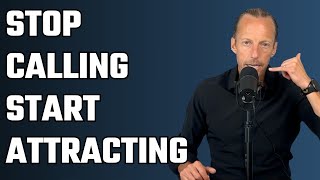
Andy Neary, CEO of Complete Game Consulting, shows insurance producers how to build an attention blueprint using LinkedIn, email, speaking, and podcasting instead of cold calling. He shares a five-year journey that included an email campaign generating substantial revenue and explains how consistent content brings prospects to you.
Questions this video answers
August 14 (year implied by episode timing).
$500.
Andy Neary, CEO and founder of Complete Game Consulting.
Accelerate Your Insurance Sales podcast.
Trucaptive Insurance — trucaptive.com.
So sit down today and ask yourself, what's my brand? How do I want the market to be talking about me? What is going to be my differentiator? Who's my ideal client? What is the message I am going to put out there to get their attention? And then what channels will I leverage to get their attention fast, far and wide?
Hey. Hey. Welcome back to the accelerate your insurance sales podcast. My name is Andy Neary, CEO and founder of Complete Game Consulting. How you doing today? Today we're going to talk about how to grow your revenue without having to rely on cold calls. Now, I know just saying that is going to get a few of you to go. Andy, quit telling me cold calling is dead. That's not what I'm here to talk about today. I'm going to teach you though, how not to rely on it and why you shouldn't rely on it. And I'm going to teach how to fix it. But heck, I'm going to help you grow your revenue today without having to pick up the phone all the time. Doesn't that sound great? Now, before we get there, I do want to dive in and I want to make a big announcement that I'm excited to share. Coming up in a month from the recording of this episode going live, we are hosting our next social media sales seminar on August 14. It is a half day virtual session taught by yours truly and I am teaching you our LinkedIn strategy. I think it's one of the best B2B strategies out there. If you are targeting employers, you are targeting centers of influence. I am going to teach you our step by step strategy to grow your business on LinkedIn. You see, the vast majority of insurance professionals out there today are not using LinkedIn the right way. They're targeting the wrong people. So I'm going to teach you how to do it the right way and I'm going to teach you for a half a day. You are getting access to our playbook in one day. That is going to give you the tools to grow your business effectively. Plus, you get the recording and you get the playbook. You're always going to have access to it. And I don't think I could make the investment any lower. It's 500 bucks, so make sure to get yourself signed up. The link is in the show notes. We go live on August 14th. This is a strategy that can help you grow your business more effectively by bringing prospects to you. Which leads us to today's episode. How can you grow your revenue without having to rely on cold calling? Now Again, I understand just by using those words, some of you are going to be rubbed the wrong way. One of you might say, andy, I'm having a ton of success with cold calling. I don't know what you're talking about. I've Grown my business 30% this year on cold calling loan. Great. You're one in a million. But for the vast majority of you listening to this episode, I guarantee you are finding cold calling to be not as effective as it used to. And the math is just working against you. That's just the truth. Let me share a story, a little analogy that drives this point home. I got in the business in 2002, and so go back a little before that. 30 years, 1995. If I were prospecting in this industry in 1995 and I were using cold calling as my number one method of prospecting, here's what that would look like. I would have a phone on my desk with a bunch of push buttons, right? And I would pick up the phone and I would make a call to a prospect. And on the other end of the line, that prospect would see their phone or hear their phone ring and they would not be able to see the number calling. Therefore, they would have to pick it up just to identify who the heck is calling. That alone made cold calling more effective back in the day. Now, fast forward now. We have cell phones now that we can identify every single number of the person who is calling us. The numbers, when it comes to cold calling statistics are not working in your favor. Number one, if you make a cold call today, they can see the number calling. And I don't know about you, if you're like me, I do not pick up a number that I don't recognize. That's number one. Number two, if you're calling cell phones, which we are today more than ever, there are decision makers who put their cell phone number right in their email signature of their business card. That's giving you access to use their cell phone. And there's a decent chance your number could come across as potential spam. So those two facts alone just make cold calling harder. Now, how about email? Think about email. When I was in college, email had just come out and you got so excited when you got an email, you answered every email. In fact, I've talked to business owners who leveraged email marketing back in its early days, and they had open rates north of 90%. Fast forward to today. We get over 100 emails a day. We hate email. We don't open email unless I recognize the name or it is an extension of an existing email thread. Right? These two modes of prospecting are just harder than they used to be. Now you want to still lean on them. That's great. Guess what? You're just going to have to put more work in. You have to put more hours to get the same result. So my goal today in this episode is I want to help you build a prospecting blueprint a little bit without having to rely on cold calls. I'm going to share my journey with you. That helped me realize I don't need cold calling to be successful. Now, I'm not saying don't do it at all, but this is going to help you not have to rely on it, which is where so many producers still are today. I watch far too many agencies who still preach to their producers that cold calls and emails need to be the thing they have to focus on every single week. In fact, I know a large national house in this industry that has their producers come into the conference room once a week, sit around the table and one by one they go around and have to make cold calls in front of everybody else. Worse yet, they do this on a Friday afternoon. You talk about being ineffective. So let's just break this down. How can you have more sales success without relying on cold calls? This episode is brought to you by Trucaptive Insurance. What if you could take full control of your healthcare strategy without the financial burdens of traditional insurance? At True Captive Insurance they make that possible. As the only captive in the nation that puts up the majority of collateral on your behalf. They provide financial flexibility from day one, making them an advocating partner for their customer success. True Captives, fully customizable plans and cost saving strategies ensure you never have to choose between affordability and quality care. It's time to break free from the limitations of conventional insurance.
Take the next step today. Visit trucaptive.com and discover a smarter way to manage healthcare. That is true. Captive.com 2014 I moved to Colorado. I know you've heard this part of my story, but let me share where this comes into play. When I got to Colorado, I made a very important decision. I was starting from scratch, right? I was in a market. Nobody knew who I am. Up until that point. I was taught on the traditional methods of prospecting. Cold calls, cold emails. In fact, I can remember my first job in this industry was with a was selling financial instruments, life insurance, retirement planning. And I was in our company's bullpen, right every evening making calls to households trying to get people to either understand why they need Life insurance. Maybe I was calling an orphan policy to try to get them to meet with me. It was just grueling. Then I went to Federated Insurance where they taught you how to go to your territory, drive to your territory, park your car in an industrial park and go door to door, business by business, trying to get an opportunity to give them a quote. I can't tell you how many businesses I was chased out of by the business owner, the CFO cussing at me, pointing at their non soliciting or no soliciting sign. So I was taught under the methods of the cold traditional prospecting channels. But when I got to Colorado I'm like I do not want to build a business that way. I know if I do I'm going to hate it, not going to enjoy it. At the time I sucked at cold calling and I just admitted it. So I had to build a different platform and I realized I wanted to create a platform, a strategy that allowed prospects to come to me. And the foundation for this platform was attention. If I was going to have success not picking up the phone or not sending cold emails, I had to grab a lot of attention. And where it started was understanding how I wanted the market to view me. And fast forward today to complete game consulting the business I have today. This is why module one of our complete game marketing playbook is identifying your personal brand. I had to work decide how I wanted the market to view me. And at that time I had what I believe to be a little bit of a differentiation. I had come from a different market Wisconsin where we had been practicing or leveraging self funding for quite a while. In Colorado it was a newer concept. Most most businesses in Colorado were leveraging cigna's level funded plan as their self funded plan. And you and I both know that that is a form of self funding but it's definitely not partial self funding. And I knew I could come in or I thought I could come in with that differentiator and come a different brand. This is where I also leaned into my backstory as a former professional baseball player because I had to build some kind of differentiator. That's where my attention blueprint started. And then the next step was identifying who I wanted to do business with which is module two of our complete Game marketing playbook identifying your ideal prospect. After taking over a book of business in Colorado I realized who I was best positioned to serve and then who and also who was not a good fit for me. And I had several clients within my the existing book I was given that were not a good fit for me. So it really helped set the stage of all right, who do I want to do business with? What does this buyer look like? And I really started to uncover the kind of business professional that I thought I was the best fit for and vice versa. Which led me to creating a message that I thought would really grab their attention. Hence module 3 of our complete Game marketing playbook, how to craft an effective marketing message. And I decided that I was gonna lean into being the self funded guy. I was going to lean into my backstory as a former professional baseball player now selling health insurance. Which by the way, the irony in that side note, I had that distinction for quite a while in Colorado until a peer of min who's become an acquaintance, actually a client of ours at Complete Game Consulting at one time, Tim Olson was hired by, I want to say locked in. I can't remember who he started with, but he actually had made it all the way to the majors with the Colorado Rockies. So here was another former professional baseball player selling health insurance. Tim, I love you man, but you stole my thunder a little bit. No, I'm giving, just giving you a crap. But anyways, so I leveraged my backstory plus my differentiator to really craft this message for the right buyer who wanted to create the result that I was looking to create for them. Which by the way, came with about a year of failure because I was directing that message at the wrong person. I want you to hear that too. My first go around with identifying my ideal client profile was actually a failure, was wrong because I, I thought, I thought these HR professionals were going to want to spend a lot of their time talking about self funding and they didn't, right? They, they, they're not hired to reduce costs or control the bottom line. So I spent an entire year pivoting my message at the wrong people. And anyway, so with this in hand, my understanding of, of my brand, my ideal client profile, and the message I want to throw out to get their attention, I went to work developing an intention blueprint to bring prospects to me. And this is when I uncovered a strategy that I don't think a lot of people in the insurance industry were using at the time, but it changed my career. In fact, I argue it is the reason I am standing, sitting here, giving you this talk, recording this podcast and sharing these ideas with you as the founder and CEO of CompleteGame Consulting. It's because of this strategy I uncovered what we know today as exponential awareness. I started using channels of prospecting that gave Me the opportunity to get one message out in front of a lot of people at one time, channels like social media, which in 2014, 2015 was still relatively new. I mean, if you go back and look at LinkedIn in 2014, it was still very much a recruiting platform. Very different today, right? In 2015, I leaned into my first email marketing strategy, which I have talked about in previous episodes, where I turned one email campaign into $180,000 a business. In 2016, I leaned into public speaking, hired a coach, joined the Speakers Speakers Academy, because I knew if I could find my way to stages where my ideal client profile stood or sat, I could really grab their undivided attention. And today, I'm thankful and blessed to be able to say I speak around the country now. And then I started a podcast, right? The goal of the podcast was not to become the next Joe Rogan or Tim Ferriss. It was no, I wanted to get a message out in front of a lot of people quickly. And what took me a good four to five years became the foundation of my attention blueprint. Because when I blocked time into my calendar for prospecting, it was no longer about sitting down and checking off, you know, that I made 50 or 100 calls in a given day. It was, am I connecting with prospects on LinkedIn? Am I posting content that they find relevant? Am I looking for opportunities to speak at organizations and associations where my ideal client profile hangs out? Am I writing campaigns for emails that are going to put a good message in front of a list of ideal prospects? Am I hosting webinars where, when, when will be my next webinar that I can use to bring ideal client prospects to me so I can continue teaching them. You see, number one, I no longer had to rely on traditional cold methods for prospecting. Number two, I was actually starting to bring prospects to me. And what I realized in building this attention blueprint is not only did my prospecting become more effective, it got a hell of a lot more fun too. Because when I would enter a new week, I wasn't looking at the fact that I had to make 200, 300, 500 phone calls or send out 100 cold emails in hopes somebody would read it. I realized, no, I am just going to pump out a bunch of content through these channels. And though it may take a little longer than I want, it's going to create a level of attention that I cannot get anywhere else. And lo and behold, through a lot of hard work, a lot of consistency and persistency, which is why these words exist behind me. What started happening became, quite frankly, a bit magical. Number one, I started having prospects reach out to me through LinkedIn asking for my help. I started getting prospects replying to my email saying, hey, we'd love to meet with you. Our renewals coming up. I started speaking at events where I was getting attention from Fortune 500 companies. Heck, a Fortune 50 company. In all of this while, I was just a producer with an independent agency out of Longmont, Colorado. But what I had stumbled upon was a strategy that allowed me to love prospecting. It allowed me to grab a ton of attention in a short period of time, and it allowed me to continue growing a book of business working with people I wanted to work with. So not only did I hit my sales goals, I hit my sales goals with people that let me do my best work. I don't know if there is a better way of doing business than that, but let me make one more point about this. Throughout that four to five year journey, did I still pick up the phone once in a while? Did I still send that cold email once in a while? Absolutely. I didn't cut out cold calling or cold emailing altogether. But what I will tell you is because of the attention I had built, cold calling and cold email was no longer as cold as it used to be because people knew who I was. It actually made the calls more effective. It made the emails more effective because I had built an attention blueprint that allowed prospects to come to me. Now, as an introvert, a guy who doesn't like to be out in front of crowds and shaking hands and kissing babies, I don't know if there's a better way to prospect by bringing people to you. So as you listen to my journey, I want you to reflect on your own. When you look at what you're doing right now on a weekly basis for prospecting, what channels are you leaning into? Are you still the producer who is solely reliant on the cold channels of calls and emails? Heck, you might be going door to door, door. I'm here to tell you you're just not going to have as much success moving forward as you may have had in the past, number one. Number two, building an attention blueprint is going to help you grab more attention faster than you ever have before. It's going to help you build more credibility before you ever walk in a prospect's door. It's going to help you build thought leadership with the right kind of prospect. So what I ask you to do after this episode is over is I want you to sit down And I want you to think about three pillars. I started this episode with what's your brand? How do you want the market talking about you? We just had a webinar yesterday that's focused in on this very topic. How to leverage your personal brand. Number two, who is your ideal client profile? Who do you want to do business with? And number three, what message are you going to put out across these channels to grab the right prospects attention? And then you just have to figure out what channels are most appropriate for you. I went all in on all of them but it took me four to five years. Social media, email, webinars, speaking, podcasting, wanted to get the message out far, fast and wide. What are your channels? This will change your career in ways you could have never imagined. Not only has it changed my career, I have seen what it has done for so many of our clients. Just had a client two weeks ago, he's only been in production for three years, just won a 1700 Life Group and it's because of the hard work he is putting in to building his brand. He is becoming the go to in his market for he's becoming the go to with his own teammates when it comes to cross sell opportunities. He's becoming the go to with centers of influence. Why? Because he's putting himself out there. Because he's got a solid attention blueprint. He's not relying on cold calls anymore, he's not relying on cold emails. Anybody can do this if you're willing to put in the work and do it consistently and be persistent in your efforts. So sit down today and ask yourself what's my brand? How do I want the market to be talking about me? What is going to be my differentiator? Who's my ideal client? What is the message I am going to put out there to get their attention? And then where? What channels will I leverage to get their attention fast, far and wide so I don't have to spend hours anymore picking up the phone. Now if you're a validated producer, you already had a million bucks trying to continue growing. You really need to leverage this because you don't have as much time as you used to. What got you here will not get you there. This is the key to taking your business to the next level and scaling it to a million and beyond. Trust me. Now you don't know where to start. I'm going to say it again. August 14th. We got our next social media sales seminar coming up and in that seminar you will not only learn our LinkedIn strategy but you are going to get help from me in uncovering your brand, identifying your ideal client profile and the message you are going to use on LinkedIn to get their attention. 500 bucks. Go sign up today. It's in the show notes. Let me know if you have any questions. Otherwise, please use this episode to turn your brand into a lead generating machine. It will change your career forever. I know it did for me. That's all we got for this episode of the Accelerate your insurance sales podcast. One of the most valuable things you can do to help us and other new people, potential listeners find our show is for you to rate the show and leave a review. So as a special bonus for you if you leave us a review, take a screenshot of your review and send it to me as a DM to my LinkedIn profile. I will send you a free copy of our LinkedIn Diamond Playbook, our proven four step strategy to grow your business on LinkedIn. So go right now, leave us a review, screenshot it and send me a DM on LinkedIn. Also, please share this podcast with anyone you think would enjoy it. That's it for now.
More from Andy




If you want producers to succeed faster, help them create a sales message that creates confidence.

Sales isn't a zero-sum game! You can have tough competition and still grab a beer after



Option 1: Meditation, a fast walk, a podcast, and protein. The ultimate morning routine!

How you do one thing is how you do everything. Ill elite producers fuel their body.


Stop living in the gray of maybe! Your job in sales is to get a clear yes or no