Community Owned Health Plan with Niko Caparisos | The Broker's Voice
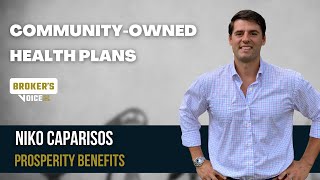
A recorded interview (The Broker's Voice) between Andy Neary and Niko Caparisos about community-owned health plans (COHPs). Niko (founder of Prosperity Benefits, ~15 years in benefits consulting) explains COHPs as locally focused health plans whose goal is to keep healthcare dollars in the community via plan design, vendor choices, and education. He describes key tenets (advisor alignment/education, optimizing local provider relationships, bolt-on solutions like bundled surgery/centers of excellence/pharmacy consulting), distribution via collaborating with retail brokers (wholesale model), network options (national PPOs, regional networks, RBP/wrap arrangements), and practical employer engagement tactics (educational events, aggregating groups under ERISA self-funding/stop-loss). The conversation also includes personal anecdotes (Brazilian Jiu Jitsu, stoicism) and contact cues for brokers/employers interested in COHPs.
Questions this video answers
November 30, 2022
15 years
About two years before the interview
He references 'nicohp.infox' on the screen and says he is active on LinkedIn.
Chapters
All right, welcome back to the Broker's Voice. Apologize. We're starting five, six minutes late. I'm jumping off a coaching call, so we weren't able to get right on time. So hopefully we got people. Nico, joining us on LinkedIn watching this. I know I got some, a couple messages from people that were interested in this, so this should be good. Now, if you guys can't tell, I've got Nico Caparisos on the on today's Broker's Voice from Prosperity Benefits. Nico's a stud. Just a cool dude from Savannah, Georgia. How can you not be cool from Savannah, right, Nico? I mean, I'm hoping so, but I'm excited to have you on. We're going to talk about community owned health plans, which is a concept I think not many advisors know quite about yet. But before we get there, I. Somebody watching might see the shiner on your lip. Nico, you want to talk about that? What happened?
Sure. So part of me is that I do Brazilian Jiu Jitsu and yesterday we were going a little hard, so I had a younger than myself gentleman who was very athletic and jumping all around, and he found himself on my back. So he was kind of scraping my face trying to get the choke. It almost bled through, but it's just a bruise at this point, but I won.
There you go. Do you follow Jocko Willink?
You know, loosely. I mean, I've gone down so many tears of podcasts and, you know, YouTube videos, and he's been one of the people that I've listened to, you know, on occasion. Him and Echo Charles. Yeah, obviously. Black belt, Both of them, black belts, Jiu Jitsu, you know, studs, they love.
Talking about that stuff. I got a quick question before we get into cohps. Being a business owner and having a hobby of Jiu Jitsu, how is Jiu Jitsu helped you with business, if at all?
Oh, goodness. Problem solving, perspective, you know, having a humble mindset when you approach anything and there's just so beautifully consuming. It's just crazy how, how many ties you can find if you actually look, it's like, here's a problem, you know, I can't, I can't defeat this person or this problem. Like, I need to think outside the box. I need to consult other people. And like, same thing with Jiu Jitsu. I mean, you can't work through certain problems without, you know, pivoting and being fluid and learning specific techniques. And it's just, it's, it's helped to get, you know, my mindset into a different Place where I don't just get, you know, defeated and frustrated. I just kind of realize, hey, some things will take time. Um, I do need to think on my feet oftentimes. I need to get creative. But there's, there's a lot of just wonderful tie ins. And it's also great because when you're done, you know, with, with Jiu jitsu training, the rest of the day is super easy. Because, like, what else do I have? Oh, like a hard email to write. Like, I was just getting choked. Like, this is not even on the same plane in terms of difficulty and taxing, you know, on your, your body and your mind.
You might be the first person I've ever heard say, like, when I deal with a problem, how hard this could be, I just got choked.
Yeah, I mean it's, it can be painful.
So that's actually a really good, good perspective. I do that with the cold showers. I now do a cold tub every morning where I just lay in cold water. And I do that after my workouts because it's like you said, especially right now when it's literally a high of 10 degrees today in Colorado. What else is going to be hard today after that?
I know, and it's, I mean, you know, all the benefits and all that stuff. But they say to move around in the tub too, not just to sit there.
Yeah, you can't sit still. No, you're exactly right. So before we get into chps, just tell us a little bit. I know a lot of people in the industry know who you are, but tell us a little bit about your agency. Prosperity benefits. You're down in Savannah. You know, people don't know who you are. Introduce yourself.
Yeah, what, what made me me today? Right. So I've been doing health and Welfare Consulting for 15 years. I was kind of thrown into the deep end with my first job at a small regional agency which happened to be a peo. So I got knowledge of different areas of business, which was kind of cool to be well rounded and know about payroll and HR and compliance and then obviously benefits and administration, all the rest. So I'd been doing that for four years. I then bought my book of business and production and started Prosperity Benefits and really kind of again, self taught and went down so many rabbit holes with respect to self funding what Fortune 500 level employers do to control their costs and their risk and tried to just consistently scale those disciplines down to smaller groups. So that's kind of, you know, what cut me into what I am now, because small groups, you really have to be pretty sharp because one bad thing that happens, you need to know what to do at renewal, how to usher them through underwriting, how to continue to control their costs year over year. And I've gotten pretty adept at that just on the retail basis. And then a couple of years ago I started building health plans for other brokers and consultants. Just given my breadth of knowledge in that specific kind of under 100 space level funded and structure but cost contained, unbundled, piecing things together on my own because I found there was a little bit of a lack of knowledge in that space. There's a lot of great other Health Rosette advisors, namely other very forward thinking innovative advisors too in other parts of the country. I just found that if I can impart my knowledge and ability in the market with someone else in collaboration to help them and their clients, it was going to be a wonderful thing. So that's kind of what brought me to establishing community owned health plans two years ago now and working with brokers and things have started to speed up, you know, which is, which is good.
We're helping more and more people and I think you're a good example of somebody too has built a really efficient agency where you don't need a ton.
Of employees or any sometimes. Yeah, I mean I just hired, you know, my first part time person to do mostly graphic design work because that's been her strong suit and background. And we're going to transition into, you know, doing account management, licensure, you know, perhaps even selling. So yeah, kind of inching, inching into that. But that has been again something where I've been really unique, building something from the ground up 5xing it not having had to hire anybody to help me manage it. So I've kind of, I can give advice as I go, you know, as it relates to agency management practices and being well organized and maybe to the nth degree sometimes being able to find any document within 10 seconds that just helps, you know, to create an efficient machine. And sometimes you don't have to hire somebody to scale. Right?
Yeah, exactly. Let's talk about, okay, cohps Community owned health plans. My first obvious question is what the heck are they? And how did you become interested in diving into the concept?
Yeah, so it's funny, I joined Health Rosetta as the second cohort and so I had been a big believer, drinking from the fire hydrant, reading all the books, learning from as many people as I could who have done it before. Obviously I think that's just a great path to try to walk in where other people have already done it. Well, right. So in that vein though, I was reading all the books and then Dave CH came out with Relocalizing Health, which was all about community on health plans. And this was, I believe in late 2020, maybe second or third publication industry in terms of the industry. Anyway, and I read it and I was just so inspired. I said, you know what, using these tenets, I mean, I'm doing a lot of this already when I build custom health plans for my clients. What's also great is that I can start a company and establish it and that is focused around building cohps. And so to answer your question, you know, that's. It's a general agency kind of program structure of a company. But what a COHP is is, you know, a health plan that's focused more just generally speaking locally as opposed to nationally. And some of that. And there's a continuum with everything that we do. Right. Some of that is just breaking away from being fully insured, you know, with national carrier, even to, you know, a level funded. Maybe it's a national based solution or maybe it's totally unbundled. But anything that brings dollars back into the community that the employer can either save on the premium side or reinvest within their plan, I mean that's helping the community. So there's no real one mold of saying, hey, it has to be a direct contract. It has to have XYZ components to it. You have to partner with a local pharmacy and that's the only thing there because it's all local. Right. Anything that can help local populations and bring control back, that can be done in a variety of different ways. Which is why what I do is more like architecture. Right. As opposed to saying, hey, it's one thing, one product, because one size doesn't fit all and you know, you have to be again, fluid and meet the clients where they are.
Yeah. You know, I like how you describe that because I so many questions come off the back end of that. But here's what I'm curious about. You use the word tenants before when you describe a community owned health plan. Okay. Bringing health care back locally. But what are some of the tenants like? When you read Dave's book, what are some of the tenants that make up the community owned health plan concept?
Yeah, I mean there's even, there's an acronym. I wish that I could pull it up right now on the spot, but I'll go by memory. So it's, you know, making sure you're aligned with an advisor that's aligned with you. I mean, that's kind of again, the bedrock of just the help Rosetta principals making sure that the employer is educated as to what the options even are. And that's part of the foundation. It has to be. Because otherwise if you don't understand something, you're never going to go forward with it. And it's a little bit too scary. And that's been a path of resistance for a lot of employers. They just think, hey, risky. Right. So having someone who's aligned with your needs as the employer, that's part of the foundation. Certainly being able to educate. Right. Being able to optimize local relationships and helping providers to understand, hey, this is a new type of health plan. It has a new, different kind of card. Right. Here's how you file a claim. Again, so much of it comes down to education because you can build a really fancy program that no one knows how to use and then it's not going to be very effective. And so again, a lot of this is just having cut my teeth year over year trying different and different things, but, you know, optimizing all the pieces of the health plan that you can, you know, adding in bolt on solutions that are high quality, that are designed to just be part of the plan design to mitigate risk as the plan is used. And, and that can be by way of bundled surgery being included, centers of excellence being included, having a pharmacy consultant baked in to automatically source drugs so that the broker and the group isn't having to. Or the member, their responsibility is minimized to that effect in that process. So a lot of it's just putting the pieces in the right place. And most of it does come down to educating the client and communicating.
Yeah. Here's what I'd be curious. Cause I know you and I remember you and I had conversations about the program at the early stages. Right. And you look at even a state like Georgia that you're in, you've got pockets where this can work really well. How do you. What advice would you give at the employer? So not so much the advisor, the employer who's sitting there and saying, you know, they, they've looked at their health plan in a vacuum for years. Right. Not as a community type thing, but just my company. How do we get more employers to view this as a comp. A community.
Type initiative almost where the goal is to take the savings we're going to help generate and put it back into the local community. How do you get employers to buy into that?
Yeah, I mean you have to, you have to come, come from a place of wanting just to educate and to raise the tide. I mean, because otherwise it's very contentious. Right. Because what's the first thing an employer hears? Oh, I'm a benefits broker. Oh yeah, we have one. Sorry. And so that's, you know, that's what most, most folks in our shoes, I mean, they just frankly hear that nine times out of 10, you know, but if you say like I would just like to educate you on a new, a new concept or come hear a speech or I'm promoting a luncheon or we're going to have a get together where we're going to discuss how we can come together as a community and how we can do something special and unique, how we can get the DPCs all together to standardize their services and capitate a model for us. All right? So I mean, I've gone down several of these exercises where we're talking to, you know, nonprofit groups or a manufacturer type group of folks. And the idea of wanting to come together is something that people have continued to grasp towards for a number of years. The way to do it is obviously through Stop Loss and erisa based self funded health plans that allows for an aggregation without dealing with the Department of Insurance and being at risk of creating a MEWA or something that's much more elaborate to try to prop up. Right. But you know, it's getting people excited about something new, I think, because frankly they just haven't heard anything besides the same thing for 20 years, most of them. And the questions you ask are, you know, they're telling, right? It's like people ask about what's the network, you know, or what are the rates, benefits, premiums. And that's kind of surface level, right? Like I remember when you went to consult, you know, employers when you were on this side of the fence, you know, the conversations ran way deeper than that. It was how do you reduce the cost and frequency of claims? Right? Like that's a popular phrase that a lot of people use and they just look at you and they're like, what do you mean? Or like we've been told claims are claims and it's like, okay, well you know, let's, let's back up a little bit and let's, and let's just talk about what's possible out there. So I think coming at it from an educational angle is always useful. Getting a lot of people in a room encourages, you know, people to think and ask questions openly. And there's not a sales Push or pressure to hire or fire a new broker. And you know, honestly, if you're a subject matter expert and you know how to do what you want to do, the opportunities will come, you know, whether it's keep the same broker, but, you know, maybe I got a great idea from this person I heard speak at a luncheon one time. Great. You know, the rising tide is going to lift all the boats, you know, and.
Yeah, well, you have. I love what you did with the concept because you bring up a really valid point that our industry at large is still very contentious. You know, there's a lot of advisors that view every advisor as a competitor. Right. And I don't want to share anything, nor do I want to collaborate on anything. But I think you recognize that the one challenge you would have by building your own program is the apathy of, oh, we already have a broker. So when did you make the decision that, okay, maybe it's time to go more wholesale with this than retail and actually try to offer this through brokers?
I knew that was the distribution model. That made sense and it didn't take much thinking, right? Because I mean, I have two hands just like you, right? I mean, to do something that impacts more people than just who I'm able to directly sell to was something that I was interested in. Because obviously the more lives you have in specific types of programs, the more the ability to standardize and make something again, truly unique for pockets of people in different geographies. So in that vein, I said, you know, well, look, this doesn't have to be something that just I can sell. I mean, if I can convince a broker that I'm not a threat to their book of business and maybe if I have a different knowledge base and market, you know, set of vendors than they do, then we can work and collaborate together. Right? And that's been met with most typically open arms. I mean, people see them in Savannah, Georgia, you know, I have no need to want to go call on companies in California, where, or Illinois or Ohio or name your state, right. It doesn't make sense to be a retail broker serving a client from that distance. But it does make sense to say, hey, Texas based broker, you used to be in the ancillary space for 10 years. I know a lot about self funding for small groups. If you want to be intentionally different, then let's talk. Right? And so people have been drawn to that and they understand, how did I learn what I did from being a broker for 15 years and counting now and then, now wanting to say, hey, I just only want to help you and I'll be a pit bull to that effect. I'll say if you bring a case like let's win this together, let's either keep it or let's earn it for the first time. And whatever I can do to help you, I'm going to be your advocate. And if it works, wonderful, you know, and if it doesn't, then there's no love lost, right? It's hey, we tried and maybe they learned something in the process, maybe I learned something in the process. But that's the distribution model. That just makes sense, right? That's what TPAs do, that's what gas do, that's what health plans do. They know that they can't just sell direct to the market. You have to have a conduit to do it easily.
So what kind of maybe give some people who will see this some clarity. What kind of advisors are you trying to find, you know, who is a good, what kind of advisor is a good fit to offer a CoHP like model like plan in his or her own market?
Yeah, it would be primarily, I mean someone who, who is aggressive, wants a point of differentiation from their competitors. You know, wants to learn more about self funding, wants to hear potentially if they're interested the horror stories of what can go bad with a tpa that's not fulfilling promises. You know, vendors that, that play games on the back end, things like language that's hidden in the ASAs, you know, things that are not readily apparent by way of, you know, doing the traditional diligence of health plan. So I would say someone who wants to be different, someone who is interested in collaboration, someone who's maybe been in the industry for a little while but they haven't done too much of self funding outside the, you know, the level funded kind of ether options out there and you know, folks are, I guess they like to have fun, right? I mean most of my emails have an exclamation point and it's because I love what I do and I love being, you know, reliable and turning back quotes on a timely fashion and being able to explain what the benefits are. Being able to send a PDL with the proposal to say hey, if there is a point of diligence here on the pharmacy side, guess what, you can just take a look at this PDL and we could try to run through everything. So that's my ideal fit and folks that are drawn to me in return, right? It's younger producers typically I'm going to.
Ask a naive ask a Naive question here when I think of local, right. One of the first thoughts that goes through my head and it probably goes through a lot of advisors head is networks. Because when we think about networks, PPO networks, you immediately think of national networks versus local. Are a lot of these programs being designed with more of a local network.
Mindset?
Yes and no. And the reason why I vacillate there is because most of the time, I mean we know the this, you know, there's a large starts with a seed network that's rentable by so many different CPAs there. It's national, it's a PPO and it's wonderful in a lot of ways in terms of ease of use and getting, you know, decent stop loss rates generated too in terms of the actual fixed costs. That said, I mean, you know, I typically lean on the underwriters, right, because it's not only do they have their, their pulse on the risk of the group, they have a financial stake and how that performs and they know how to rate it appropriately. I typically say based on where this group is, you know, what are the best network options? And then sometimes, you know, they will show me something that I don't know, right. In a given population they say hey, this is a high performance network in just this part of the state. You know, the broker probably already knows that, but let's just price it with MED cost or First Health plus or you know, the EHN employers health network. And so some of these are again smaller, more regional ones. And that's how I approach every case. I typically say, hey broker, what does the group want to see? Do they want to be a little faster and looser and go with an RBP and a WRAP type arrangement? Would they rather go more traditional and have a national PPO that we have some bolt on programs around or would they rather be okay with a more regional network? And once I get that appetite for what the group wants to do, then I'll quote it a couple of different ways and then I'll make the presentation say hey, here are the rates using the network solution that you wanted as well as what generated a favorable rate in underwriting.
Yeah, what I love about this man, you know, my head starts going, you know, who's the right advisor? What type of company is the right type of company for this first right there, that's big, right? It's not like you're saying no, you're going to have a narrow network and it's going to, it's going to, we're going to limit options and things like that. But when I think about who's a good fit, right. How many advisors today want to have the, Want to have a product or a program nobody else has, right? So working with somebody like you could give them some of that exclusivity. And I, I'm a big believer today that better does not win, different wins. So if you have to come in, if you come in with something different, you got a good chance at winning. And this is an opportunity to come in with something different here. The other area I see a big opportunity right now, Nico, with it is think about the Amazon effect we've had in this country. Everybody buys everything on Amazon now because of convenience. However, as a result, I feel like you're seeing a bigger push these days of supporting local. It's a concept we've heard in coffee shops all the time, all these local retail shops in your town, wherever you live, this push of support.
Local.
Why can't your health plan be any different?
Yeah, you're right. I mean, we just had small business Saturday, this past weekend, you know, nation, nationwide, and there is, there is a push for that. I just, I think a lot of times people just don't know what, what is available, Right, correct. And so again, it just comes back to education, doing diligence, saying, hey, there is a plan that's easy to use, has an ID card that providers are going to know what to do with, right? And it could save you money. And you know, when those things line up, it's, it's a great thing for everybody, you know.
Well, and I say that because if you're listening and you're an employer who sees this or an advisor, and you are somebody. Amy and I support local as much as we can. This is a good fit for you. It just happens to be in the realm of health insurance.
That's it. That's it. I mean, it feels good. So I had a client of mine a city away, right? And we did a nice little, you know, Friday afternoon get together and there was this huge, you know, parody, comical check, right? It's like literally 4ft long and 3ft tall. But they had a huge surplus back from their health plan. I think we called it like a health plan bonus or something. But I mean, you better believe that that is money going back into their community, back into their coffers. And what they did with it, I mean, you know, who knows, they could have given raises, they could have, you know, just again helped to stabilize their costs longer term. But it was significant. And things like that do Help the community. And it's not a non sequitur. It's directly related to, you know, everything they do with their business, operationally speaking. So it all ties together which is, which is nice.
And that's, that's awesome. That's, that's it right there. Why not save some money, put a few more dollars back in your bottom line or your employees pocket so they can go support local more. It's a great concept. So if I'm an employer listening to this and I'm intrigued, Nico, I'm a broker. What, what's the best way to get ahold of you?
Yeah, so, so this, this avenue, you know, nicohp.infox thank you for that on the screen there. I'm, I'm all over LinkedIn. Yes, you are some of the best in the industry.
Get a lot of good life lessons from Mr. Caparizos.
I try. I'm into stoicism and jiu jitsu and fasting and you know, everything benefits related. So I nerd out on that platform as well. But I love to connect with new people, share ideas, collaborate again. So I'm on LinkedIn. You can find me there and via that email address and you know, that's it.
Well, I'll tell you what man, you inspired me to go get the Stoic, the Ryan Holidays Journal. So I, I, I fill that thing out every morning, every night.
You have the poster yet? That's the scary one. I've yet to take the plunge on it.
I actually bought the book, the actual stoicism book that I think.
Oh my God, Cicero wrote.
Yeah.
Or no, Marcus Aurelius. Hard read. Very hard because it's written almost in that, in that Latin tone and it's, it's a, it's a good read. But yes, yes, not an easy read.
No. And, and you know, I mean maybe I'll, I'll knock myself down a couple of pegs. I bought Satiricon, which was a book, you know, back in the era and it came and it's all in Latin. So I'm, I'm now going to give it to the Latin teacher at my former high school because he could do something with it. I bought an English version after, after it came in the wrong language. But.
Well, dude, we're all about building, building brands at complete games. So you being a part time benefit advisor, jiu Jitsu lover and now maybe a man of Latin, you got some unique traits, my friend.
I'm trying. And you're Greek. Yeah, guitar and all these things. I mean I go down so many different rabbit holes, but I have a.
Lot of fun, you know, keep pushing yourself. Guys, if you're listening to this and you and you are looking for something to become a little differentiator in your market, check Nico out. Get a hold of them. If you're an employer listening to this and you're looking for a new program for your. For your health plan, this is a great, great option. But, Nico, I want to thank you for taking the time. I think this, what you're doing is really cool and it's been, it's been fun to watch your progression of idea put it in and put into action and you do it consistently.
I appreciate it, my friend. This is always fun knowing you. Five years now. So we'll continue on this road and you know, know it's a fun ride, that's for sure.
And John heel chimed in and said, two of the brightest guys right here. Cheers, John, thank you. I doubt that. But. But we appreciate that. But this is awesome, Nico, thank you. This is going to help a lot of employers and brokers.
All right, thank you, Andy. Good.
Everybody else have a good day and we'll see you next week.
See you.
More from Andy




If you want producers to succeed faster, help them create a sales message that creates confidence.

Sales isn't a zero-sum game! You can have tough competition and still grab a beer after



Option 1: Meditation, a fast walk, a podcast, and protein. The ultimate morning routine!

How you do one thing is how you do everything. Ill elite producers fuel their body.


Stop living in the gray of maybe! Your job in sales is to get a clear yes or no