Finding A Purpose In Your Insurance Profession with Akua Smith
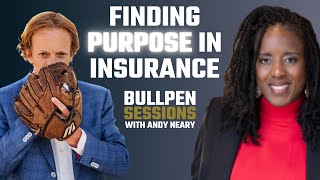
Akua Smith, a senior benefits advisor at Acrisure, spent seven years doing nonprofit work in Uganda before moving into insurance. She treats her benefits career as funding for her servant-leadership work and brings the empathy and relationship skills from that fieldwork into advising mission-driven nonprofit clients.
Questions this video answers
Episode 317.
December 27, 2024.
Senior benefits advisor at Acrisure (in role ~7 months at time of interview).
13 years.
Seven years (frequent travel and extended residence).
Chapters
Hey. Hey. Welcome back to the Bullpen Sessions podcast. My name is Andy Neary and this is episode 317. Today I am joined by Akua Smith. Akua is a senior benefit advisor with Acrisure. You are going to absolutely love this conversation. I wanted to have Akua on because she is one of the few advisors I've met that has really tied up passion to the profession of insurance. And once you hear Akua's story, you're gonna fall in love with her. From being born in very humble beginnings in one of the toughest projects in Brooklyn, to the nonprofit work she has done around the world and how that has inspired her to reach new heights as a benefit consultant with Acrisure. So it's just, it's awesome conversation. She shares her stories, her journeys of all the work she has done around the world, how it inspires her work she does in the boardroom as she helps mid sized companies in America build better benefit strategies. And so yeah, you're going to take away a lot. You're probably going to be inspired to do more nonprofit missionary work yourself. But most importantly, I think you're. This episode is really going to help align your purpose behind what you're doing today, if that's something you struggle with. So here we go. Kua Smith, episode three seven. Welcome to the Bullpen Sessions podcast.
Thank you, Andy. Happy to be here. Thanks for having me. I'm super excited.
I think this one's going to be one of my more fun conversations in the podcast because of all the stuff you're doing outside of the business of insurance. So here's where I want to go with you today. You know, the topic I have in mind for today's podcast is tying passion into your profession. And I think you're one of the few who does an absolutely amazing job of, of doing that. And we're going to get into that with your non profit work and just how much you've traveled around the world doing nonprofit work, what you were doing before you got in the insurance industry. But before we dive in, why don't we just start with for the folks tuning in who are like Akua Smith. Akua Smith, you're a senior benefit consultant with Acrisure. Give us a little bit of your background.
Yeah, so you said it. Senior benefits advisor with Acrisure have been, been there for seven months as of right now. Prior to that, I was at a top five carrier and was with that carrier for 13 years, so health insurance and was moved to actually several different places. I started in Tyler, Texas, where I was raised commuting up to the Dallas Fort Worth office. They moved me at one point to Denver, moved back to Dallas, and then ultimately ended up moving in Vermont, working for that carrier and in the state of Vermont, worked for them for three years before I transitioned over to the carrier up to the benefit advisor role that I'm currently.
Yeah. So, Akua, you're in Burlington, Vermont, today. One thing that I love about your story is you shared with this with me offline. You know, going, taking it all the way back to the beginning where you were born. Your parents instilled such inspiration in you, in your siblings, and I would love for you to talk about that. You know, you're born in Brooklyn. Take us back to the beginning and what life was like for you and how your parents just again, inspired you and your siblings to strive for more, even though they might not feel like they fit the mold. Strive for more because people are going to be really impressed when they hear what your siblings have all gone on to do as far as professions go, including yourself. So take us back.
Yeah. So, Andy, great question. First of all, I will say that, yes, I was born in Brooklyn, New York. My mom was raised in one of the toughest projects in Brooklyn called Brownsville, if anybody knows New York or Brooklyn. And my dad is from Trinidad and Tobago. And my parents met because they both loved education, and so they met in university. My dad's from Trinidad and Tobago. My parents ultimately had seven kids, so I'm number two of seven. And we left Brooklyn when I was about five years old. And our whole entire lives, for all seven of us, education was the thing. It was the most important thing. It was that thing that was going to get us to our end goal, both for them and for each and every one of us.
I have a really great story, if I can share. So you know, my name is Akua. Probably many people who are listening to the show has never heard the name Akua before. And so my Akua means born on Wednesday. And my middle name means gift of God. So my parents who were into education, also thinking back in the 70s, African Americans were very involved in the civilization civil rights movement, did marches and everything. And part of that was going to Africa. And so they took several trips to Africa when they were younger. And my dad was in Africa one time, heard the name Akua happened to come back to the United States. My mom was pregnant with me on a Tuesday. I was born on Wednesday. And he loved the name and was so excited that he was able to Use it. So my name means gift of God, born on Wednesday. And so when you talk about my parents, like from the beginning, both them and, you know, whether you believe in a creator or kismet or destiny, joined forces and named me Akua, which means gift of God, born on Wednesday. And the interesting thing about that is that having that name has been such an important part of shaping me throughout my life, right? I'm in elementary school, middle school, high school, and no one had such a name. Most of the kids didn't even look like me. And so when a substitute teacher would come in, you know, all the boys in the class would be Achiwa, you know, or whatever it was to make fun of my name. And so always as a child, I would say to myself, man, one day I'm gonna find people that have a similar name as I do, and I'm gonna go and hang out with them so that people don't make fun of me over my name. But then that grew into this desire to go to Africa, to go to the nations of the world, and to help people who, for one reason or the other, that they were challenged in their identity and in their purpose, whether it's because of their name, what they look like, what resources they had access to, etc. So in partnership with each other, with the creator, my parents really instilled in me from a very young age that identity of who I was and who I was going to be.
Just because you were curious minds. Want to know, what's your middle name?
My middle name is Namashe.
So Akua. Namashe. That is awesome.
And my last name, folks, might be.
The coolest name in the insurance industry today. I'm just gonna say that. Akua.
Yes. Last name is Smith. And last little tidbit is my husband's last name is Tumasiji. So whenever we got married, I was like, listen, if it's okay with you, I' going to retain Smith because my name is already a mouthful. So once I add that on.
What.
Would people do with that?
One thing that really captured my attention when you were telling me your story was, you know, being born in that same Brownsville project, your parents always said, hey, just because you're from here doesn't mean. Doesn't need mean you need to stay here. And I think that has really defined your life. And, you know, you said you're one of seven. Share with us, if you don't mind, because when you told me, I. I was blown away. Kind of the share the accomplishments of all your siblings.
Yeah.
And, and again, folks, remember, this is a family. These are kids that were born in one of the toughest projects in Brooklyn, if you don't mind, share the accomplishments of some of your siblings. Yeah.
So first of all, say, and my dad was born in Trinidad, which is another difficult place, and left Trinidad as a teenager to come to the United States of America. And so that thing of just because you were born here doesn't mean you have to stay here, was lived out in their lives every single day of their lives. And that my dad ultimately said, you know what, I'm going to go into the armed forces and I'm going to move our family to a place where we, where the kids have access to better education. Right. And some material benefits that they wouldn't have. So as I said, seven children out of them, three attorneys, two boys, two girls and one boy are attorneys. One doctor, she's a hematology oncologist currently at Stanford with a research lab. And then I have a brother who is just so super intelligent, knows technology like the back of his hand, has started a couple of different startup technology firms as well as worked in venture capital. I have a sister who worked for the railroad, retired in her 50s, and is now just traveling the world, having fun and running a travel business. So I think I mentioned all of them. Hopefully that was six. If I left anybody out, I'm sorry, but all of them. What's funny, even for me, I have two master's degree, one master's degree in health science with a focus on public health, which is kind of, you know, driving towards that desire to go to the nations and then an mba. And so one thing about my parents is that they never let you stop until you maxed out in whatever it is. So my mom, even still to this day, is like, you know, you were supposed to be my first doctor. Even if you don't become a medical doctor, when are you going to get your PhD? Like, it was always like, you have not achieved it until you maxed out in whatever area that you were focusing on from an educational perspective.
I gotta tell you what if I'm an in law, if I'm a, a son in law or a daughter in law coming into that family. Wow, Talk about the pressure being on.
For sure. I'm gonna, I'm gonna ask you this though. You know, again, you, you've said that growing up in, you know, being born in Brooklyn, then your family moved down to Tyler, Texas, where you, let's be honest, probably saw the opposite. You didn't feel like you fit the mold. There's not a lot of African Americans. Do you feel like that? Always feeling like fit the mold. Has that driven you to become the success you are today?
Oh my gosh, yes, absolutely. In everything that I do, whether it is, you know, being on a stage with other people that don't look like me, sitting in a corporate boardroom where, you know, again, in most situations I'm the only person that looks like me, it is, it drives me so hard. As a matter of fact, as a result, I have, you know, taken the time to learn techniques, even to deal with things like nerves and setting like that so that I can step up, don't allow myself from the very first time I opened my mouth to let the nerves or the feeling of not being, not fitting in, et cetera, show and really being, you know, feeling like it's so important for me to present from the very beginning like, okay, whether you think I belong here or not, I'm here and going to show up and I'm going to bring what it is that I have. Not just for me, but for others that follow.
Yeah, I love that. And not to mention, you're also a female selling insurance in an industry that's often deemed male, pale and stale, let's be honest. So that's another form of, of feeling like you don't fit the mold. Let's, let's gravitate and transition now into the non profit work. Because before you got in the insurance industry, you actually spent time in Africa running a non profit. What led you? I know maybe you know, the background, the family, the fact your parents were able to have had traveled the world. What inspired you to take that step? That's another big risk, right? To go live in a continent like Africa and do non profit work. What led you to that decision?
Yeah, it's so funny. So back to that original story. It's like I always knew when I was a little kid and people would say, what are you going to be when you grow up? And I would be like, I'm going to be a missionary doctor. I'm going to go to the nations of the world and I'm going to help people. That was just my driving passion ever since I was a child. Going back to the name, going back to being in school and seeing other children that may not necessarily have had everything that their peers had and you know, just wanting to be a helper, a supporter, a promoter, a networker. And so when I graduated from high school.
I went to college with a focus on doing Just that. And it's funny, I think of this young boy when I was in college who said, so what are you going to do when you graduate? And you know, at that point I loved singing and so music was part of it, but then also just going on the mission field and serving people. And he was like, oh, okay, well, what countries have you been to so far? And it's funny, nobody had ever asked me that question before. And I thought for a second and I was like, oh my gosh, I've never been to India, any country in my life. And he looked at me and he was like, well, what makes you think you're going to be a good missionary if you've never even been outside of the United States? And I thought to myself, I am going to prove this guy wrong. And it's funny, I love school. And over the course of a few years, ultimately ended up meeting a missionary that was in Uganda and still telling everybody, I'm going to be a missionary, I'm going overseas. And so she invited me to come and visit. And she was running an orphanage. And it's like as soon as I stepped foot on the ground, I was like, oh my gosh, this is, this is it, I'm here, I'm doing it. And so I spent seven years in Uganda going back and forth obviously, but a good portion of that time living there and doing everything from teaching both English and teaching in a school, in a faith based school. And then ultimately ended up seeing the, the difficulty of the women. It was a very patriarchal society and wanting to support them and help them to be able to be the people that they wanted to be and do what they wanted to do. And so we started some women's groups. The.
Organization started something called Women Endeavoring to Eradicate Poverty. And so I worked very closely with these women to do just that, eradicate poverty. Start these groups that were recognized by the government and help them to be able to fund their projects as well as with my public health background, do training and education and projects focused on sanitation, safe water and hygiene.
Give the listeners a perspective. I'd love to hear it from you. You know, we live in a country where, let's be honest, sometimes our stress is because there wasn't enough oat milk in my Americano. What was it like living in Uganda on a day to day perspective? Because I think we take, in the United States, we take a lot for granted, let's be honest. But living in a country like that, day in and day out, you know, off and on for Seven years. What was that experience like?
For me, it was simplification. Oh my gosh, Andy. There is so much that, that we do that is unnecessary. And you hear it all the time when people say things like first world problems. I mean, it really is a situation where, you know, being able to just invest in relationships, in people sit around and talk for hours. It's first at heart. I mean, it's hard at first as an American thinking, okay, well, you said this was going to start at 10 o', clock, it's 12 o'. Clock. We're not doing what we, you know, or. One thing that's interesting about Ugandan culture is like, the greeting process takes a while. Right. How are you? How's your family? How are your kids? Like, those things that we tend to gloss over. And it's so that simplification and the value and the meaningfulness of just in relationships and investing in those relationships, and that's one of the big things that has carried over to me is the relational part over the striving for things. Right. Which is what I find that we spend a lot of time here in the United States doing is, you know, ultimately ending up our survival is about the next thing that we can get and not really taking the time to invest in one another.
I love hearing that. That is just hearing the whole introduction. The greeting process takes time because you actually care about how people are. Right?
Yeah.
You know, it's interesting. One of my. One of the most favorite podcast interviews I ever had was I had the fortunate opportunity to interview now Dr. Sam Con Gato. And for folks who don't know, he actually was a former running back in the NFL. He played a little bit with the Green Bay Packers. So as a Packer fan, it was a really cool experience. And I remember him telling me he's from Nigeria and. Or he's not from, but his family is. And so his whole mission now as a doctor is to help improve the health care system in Nigeria. And it was just interesting hearing him talk about. He said, andy, I actually never wanted to play professional football. I just wanted to become a doctor. And, and here, here he is, you know, after taking a bruising for years as an NFL running back, he is a doctor today. I just thought that was a really cool story. So talk to us a little bit. You know, you spent seven years in Uganda, but that's not the only place you've been to share some of the other journeys you had as, as a missionary and your nonprofit work. What other parts of the world has your Work taken you.
So one thing that some people who know me think is kind of crazy is that one of my life's goals is that I want to step foot in every country of the world. So, you know, and not just as a tourist. I actually just recently listened to a podcaster and he was talking about the three kinds of travel. Being the tourist, the traveler, and the pilgrim. And just that the fact that, you know, you have an opportunity not just to, you know, take pictures for your Instagram or your Facebook, but to really go and immerse yourself in cultures, even if it's for a week or two weeks or whatever. And so in that, obviously my heart is.
To engage with people and to build relationships. But a lot of times when people go overseas and do work, they're thinking, oh, I'm going to help these people. Well, my perspective is completely different, right. The transformation happens mostly in me. I, as I go and do the things that I do overseas with people. And so every year I try to take several trips, you know, certainly to some to this last year I went to Nicaragua, to Guatemala, to Honduras, over the last few years to Colombia, to Portugal. And so usually going and partnering with other organizations that are on the ground doing work and really just helping to fuel whatever it is that they're doing as they partner with native people. And that's so important to me is that we as Americans are not going into other countries and saying, oh, the savior is here, let me fix all of your problems. But no, really going in and saying, hey, listen, you're doing amazing work for your people, for your culture. How can I help? Is there anything that I can do? Really asking the questions.
And then being a background figure, helping to support the change. So everything from working with kids to digging water wells. But again, all of it is always in partnership with people who live in the country who are doing the work, who have a heart for, for their people, for their environment, for their land, and supporting that, you know, talk to us.
I'd love to hear, hear it from you because you've done it so much. And I think there's others who probably just haven't had the opportunity to donate time. I think that's a big thing about let's call it giving back, right? Non profit missionary work, whatever it might be, it's all about giving back. And I think a lot of people just feel it's, it's, it's often just about donating money and they don't really think about donating time when you're in these other countries, Whether it's building houses in Guatemala or supporting women in Uganda. What is that experience like? I'll just ask you, selfishly, that experience for you, as far as filling up your cup, when you see the work you're doing to support these people and the gratitude they show.
Yeah. So, you know, if I may quote a verse, it says that if you want to be great, learn to be a servant of all. And so the organization that I'm actually on the board for and co founded does what's called Servant Adventures. So think about. You want to go and see the world, but yet you want to be a part of something bigger than yourself. That's what fills my cup. Right. Is the serving piece of it. I don't have to be on anybody's platform or be the front pace, the face or picture for anybody's magazine or even take pictures of what I'm doing. Sometimes my team is like, you have no pictures of what you're doing. People need to see this kind of thing. I just want to be there and be a servant. And so, yes, you're absolutely right. It does completely fill me up. And. And it's just a driving force to who I am. I tell. I say quite often that I work. I do my day job for a couple of reasons. Also because I love to help people, but also because it helps to fund the work that I'm doing overseas. As a matter of fact, when I left Uganda to come here, part of the reason why I did that is because I didn't. I no longer wanted to be a line item on the budget. I wanted to come and find a company that I could work for and then help to fund what's happening. And so whatever I do overseas, and even what I do here in the United States with our organization, we just threw a Christmas party for people that we work with here in the US and completely paid for it. Didn't ask anybody for anything, just because we wanted to be able to do something special for people in our community and to, you know, give people an opportunity to network, to engage, to enjoy, but then also not for it to be a financial burden for them. So everything I do is all about that, being a servant.
I want everybody to hear what you just said again.
Your profession is what funds your passion.
Yes.
And I think that is why you will always be successful. When you have a North Star that is bigger than what you do for a living, and you view your living, what you do for a living, as a funder of that passion, of that North Star, you will always Always be successful. That's what I absolutely love about your story. So with that, you know, I got, I got a two part question here because I know my listeners, when they heard how many places you traveled to in the last year, the first thought was going to be Akua, how in the world do you have time to do that when you're supposed to be selling insurance? Especially as we record this in Q4 when everybody's cups are way overflowed, right? Way overfilled. The second part of that I'd be curious to know is how does the work outside? So the nonprofit work, the missionary work, how does that fuel what you do in the boardroom? So let's start with Akua. How do you have time to do all this and still reach your sales goals?
So, first of all, my clients are my friends. They're people that I have relationships with that know who I am and what I'm about. And that's what draws them to me, is the work that we're doing overseas. But then in addition to that, I am working wherever I am. That's the great thing about the industry that we live in, right? You can prioritize and with time management and et cetera, like, you can still work. I can still work while I'm traveling. As a matter of fact, I was standing in line at the Eiffel Tower and got a phone call from a client and paused and had that conversation because they were so important to me in that moment as well as what I was doing. And so, you know, as long as you lay the foundation for yourself, make sure that you have a great team, build in that time management structure. And then, you know, again, we talked about this before, but that, that passion is fueled and you are energized to do whatever it is that you're doing in both spaces, right? So the energy comes from both spaces. But certainly I know, and the people around me know that if I'm doing this work that I'm going to come back even more energized to also do the work that I'm doing here in the United States for my clients and my customers, et cetera. Because it spills over. It spills over. Andy. Right? You know, even as I'm looking at the industry, the healthcare industry here, my servant's heart and my desire to see what's happening, look at my clients, identify their issues, their needs, etc. And serve them and, and getting from where they are to where they want to be still, I'm getting energized by that. So Each one of them is fueling the other, which is what I love about my life.
Talk a little bit about that. How does your work outside of the world of insurance inspire you when you are in the boardroom in front of a CFO or an HR director who's trying to make a decision about their benefits?
Yeah. So, you know, in each arena there are specific issues and specific needs. Right. That, that I walk into a room feeling like, hey, I'm equipped to help support with whatever that need is and whatever that issue is. Not as a lone ranger, because I believe so much in the idea that, you know, bringing experts to the table. Right. I have an expertise, but I'm also really good at identifying the people who really have the expertise and can speak to that. And so that's one of my skills and my giftings is drawing in and bringing in the right people to the table. And so as I think about my time in the boardroom and how sort of, you know, the juxtaposition between what I do on the day to day and that time, for me, it's like I look at the work that I'm doing overseas and draw from it. Sort of those same skills and giftings that I use over there, those translatable things, those that empathy, that compassion, that drive for better, you know, that mission driven way of doing things. And I bring that to the boardroom table as I identify what is the need, what are, what are you working towards? Let me partner with you to help you achieve that need, whatever it may be.
Yeah. I think if I parallel the two, it's really clear. You know, when you're down in Guatemala building houses for a village, right. What are they missing? They're missing knowledge and, or resources. And that's what you're bringing them is the knowledge, the skill set, the resources, the people to support them so they can build those homes. It's no different in a boardroom. When you're working with a mid sized company with 300 employees trying to fix their benefits, it's often the knowledge and the resources they're lacking to create the results they want. It's no different. But where what I think you have absolutely hit a home run with, and this is what I want people to really hear. Because of your work outside of the world of insurance, traveling the world, serving other communities and other parts of the world, it's no surprise one of your niches in the benefit space is nonprofits. And all the while you're traveling around the world supporting others, you're building your brand. I'VE got to believe the work you're doing outside of insurance has created an absolute brand, a relatable brand that any non profit in the United States would love to have advising them. Am I correct in thinking that you're absolutely right? Right.
Because as a nonprofit, similarly, we're mission driven. It's like there is something that we're trying to do not for ourselves as individuals, not for the for profit sector, but for the world and whatever we see the world as our target audience. And so you're absolutely right as, as a mission driven individual, whether our missions, meaning the nonprofit that I'm working with, align the fact that they or not, rather the fact that they are going after something wholeheartedly and pulling together all the resources that are necessary to achieve that is what makes us great partners.
And I think it comes back to the beginning of your story that that through line of your life which has been just because you came from here doesn't mean you need to stay here.
Right.
Just because you started here doesn't mean you need to stay here. That that was true of your life. That's true of the people, the communities, the villages you're serving around the world and that's true of the prospects and the clients you're working with when it comes to health insurance. Right. Just because you're here doesn't mean you need to stay here. And I think that has been a theme throughout your life which has inspired so many people. You said it earlier, your prospects are all your friends. They have connected with you in such a way that it's no longer just about business. This is about life. And when you have a client portfolio of people who view as more than an advisor, as a friend, that's a sticky portfolio that any advisor would love to have. I'm curious Kua going into next year, if you're willing to share, where in the world is going to say where in the world is Carmen Sandiego? Where in the world is Akua Smith going next year?
Indonesia, Malaysia, Thailand. So my targets are set for that part of the world. I always, always go to Africa, so Uganda, Kenya, Tanzania. I would love to hit the southern part and or the western part. My name is actually from Ghana. And it's funny because for Christmas this year my husband was actually trying to put together a trip to Ghana for me because I've always wanted to go and yeah, so definitely those places over the last couple of years we've spent a lot of time also in South America. We're for sure going to Trinidad. So Yeah, so I've got a nice list that's building for next year. I've actually started looking at my calendar and going, okay, wow, we gotta slow down and start thinking about pushing some of these to 20, 26.
And not to mention, on top of that, I'm gonna guess you probably have a pretty lofty sales goal as well. So for. For my producers who are tuning into this episode, what do you have on that? Not only is she going to hit her sales goal, she's traveling the world to support others. So, Akua, you are an inspiration. Last question before we wrap this thing up. If there's somebody listening in right now who is feeling stuck in their insurance career, you know, going back to your. One of the themes in your life, which is never fitting, you know, feeling like you fit the mold. If we have somebody tuning in who's kind of feeling that way, maybe in this. In their career right now in this industry, they're trying to get unstuck, get back on track. What advice would you give them?
Yeah, first and foremost, it's okay to live outside of the box. That's what I do every day of my life. And so when. Even when it comes to things like what kind of solutions are you offering your clients? Right. What type, what amount of time are you investing in getting up to speed and doing the research, in talking to the experts and getting to know the experts, in working with people like Andy, like, all of these things are key. You know, our industry has kind of stagnated to a certain extent, and it's not good for our clients, it's not good for our customers. It's not good for the utilizers of insurance in the United States. And so we need a lot of people like you and I that are saying, you know what, I'm not going to stand for the status quo and anymore. And so that means that I'm going to be an outlier, doing things differently than anybody else. But that is a. Okay. Because in order for us to have the change that we need in our nation that benefits our clients, our customers, and just generally our industry, we have to be looking for different solutions and driving to be a part of helping to find those solutions and bringing those things to our clients and customers.
Okay, I lied. I do have one more question for you. How about purpose? If somebody is trying to find their purpose, I think I see a lot of our clients struggle with that. Right. Is they've been so wrapped up in insurance, Insurance, insurance. Making money, making money, making money. I think they've lost sight of what their purpose is in the first place. If somebody also is trying to maybe regain clarity on what the heck why they're doing what they're doing. Do you got any advice on that?
Go back to the beginning. That's how I started this conversation. And I think, you know, for any organization or any person period, go all the way back to when you knew what the purpose for your your organization was or or individually, right? We there was always a point whenever anybody starts anything there's always a reason why you're starting it. And so so when you lose that thing, keep going back to it. The why why am I doing this? Why am I here? What is it that I am attempting to accomplish? Go back to that and stay there until you figure out your next steps to get there.
Perfect timing. Because when this airs there are going to be a lot of people who are planning their 2025 and I think that's a very important question they need to ask themselves going into next year. Why are you doing what you do? And it can't just be the money. What's bigger than that? And I love that advice. Aku, if there's somebody tuning in that's been inspired by your message and I can't believe why they wouldn't be. Oh heck, there might be a non profit tuning in that wants to reach out. What are the easy what is the easiest way to get get a hold of you?
So several things. LinkedIn is great. You can certainly use my LinkedIn. My personal email address is Akua Smith at acrisure a c r I s u r e dot com are the key. If you're interested in the nonprofit work that I am doing or want to go on a servant adventure trip, you can also go to www.gokairos.org kairos spelled k a I r o s dot.
Org and we'll make sure those are in the show notes as well. Well Akua, thank you for taking the time to be here today. This was an awesome conversation. This is exactly what I was hoping it would be. So you're what you the work you're doing both again outside the boardroom and inside of it is very inspiring and I'm sure there's a lot of people tuning in right now, especially over the holidays, that have been inspired going into next year what they can do to be better. Getting back to why they do what they do. So thank you again for taking the time to do this.
Hey and Andy, thank you so much not just for this but for everything like my our time together has has been so valuable and meaningful to me. And the ongoing accountability that you bring to me, I'm so thankful for it. I'm so thankful for you. I'm so thankful for what you're doing for our in our industry.
Anytime, anytime. Akua Smith acresher Folks, take this. Run with this one. This is an inspirational one. Be good. That's all we got for today's episode of the Bullpen Sessions podcast. One thing that would really help us both and other new potential listeners is for you to rate this this show and leave a comment in itunes, Stitcher, or wherever you tune in to listen to the show. Also, make sure to link up with us@completegameconsulting.com on social media. And please share this podcast with anyone who you think might enjoy it. Until next time. Remember, clarity creates confidence. Confidence creates consistency. Consistency makes you unstoppable.
More from Andy




If you want producers to succeed faster, help them create a sales message that creates confidence.

Sales isn't a zero-sum game! You can have tough competition and still grab a beer after



Option 1: Meditation, a fast walk, a podcast, and protein. The ultimate morning routine!

How you do one thing is how you do everything. Ill elite producers fuel their body.


Stop living in the gray of maybe! Your job in sales is to get a clear yes or no