From Cop to Commercial Advisor | How Jimmy Blair Bet on Himself Twice
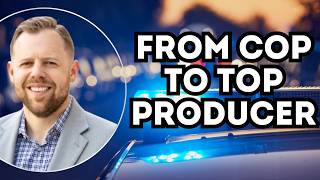
In this Accelerate Your Insurance Sales podcast episode, host Andy Neary interviews Jimmy Blair, a commercial insurance advisor at the Mahoney Group. Jimmy recounts his ten‑year career as a Tempe police officer, describing how family influence, the allure of fast cars and guns, and a desire for a stable income led him to law enforcement in 2016. He details the emotional toll of the 2020‑2021 protests, the sense of hopelessness from stagnant pay, and the impact on his family life. In 2021 he made a first transition into commercial insurance through family connections (cousins Guffy Wright and Jeff Arnett) at Mahoney, earning $100k in his first 18 months and winning Rookie of the Year, yet battling imposter syndrome, low commissions, and a lingering pull toward policing. After 18 months he returned to the police force, realizing the move was financially motivated rather than a true calling. In 2022 he negotiated a second entry into Mahoney, using a “Prodigal Son” email, and for a year worked both full‑time police shifts and full‑time insurance sales, enduring grueling schedules and a “Wednesday pit” anxiety that persisted even after leaving the force. He eventually left policing in late 2024, focusing on insurance full‑time, where he now serves multifamily property owners, drawing parallels between police crisis response and insurance risk management—emphasizing empathy, clear communication, and setting expectations. Jimmy discusses his upcoming book, The Overlooked Line in the Capital Stack, aimed at educating owners on how insurance structures affect their bottom line. The conversation closes with a lightning‑round about his daily routines, fitness (running half‑marathons), family life, and recent reads (Matthew McConaughey’s Greenlights and Chris Voss’s Never Split the Difference). The episode highlights themes of career reinvention, mindset shifts, work‑life integration, and leveraging transferable skills from policing to insurance sales.
Chapters
Hey, hey, welcome back to the Accelerate Your Insurance Sales podcast. Andy Neary here, CEO and founder of Complete Game Consulting. I'm excited today, I am at the Mahoney Group offices in Chandler, Arizona with Jimmy Blair, commercial insurance advisor.
Jimmy, welcome to the show. Thank you, Andy, great to be here.
I've had a chance to work with a lot of advisors helping them craft sales messages that are uniquely yours, and I think Jimmy's story is one of the more unique ones that I've heard. I think you're going to absolutely love it, so So Jimmy, why don't we just dive into it? We're not even gonna start with how do you got in the industry? Because I will ask that, and that's typically where I start. But let's go back to pre-insurance career. You were in a career probably most people weren't before they got in insurance, and that was you were a cop.
Correct.
Let's start with how the heck you became a cop. Why? What was that experience like?
Sure. So prior to my time here in insurance, I spent almost 10 years as a police officer for City of Tempe. I got into, you know, the law enforcement. I grew up with a father who was a prosecutor for Maricopa County, a criminal prosecutor. He would come home and tell stories about different cases he was working on and sometimes read police reports that he had that had come across his desk. And so I grew up kind of knowing a little bit about policing and thinking it was pretty cool. As I got into, you know, my younger adult life, I had some friends and contacts who were involved in law enforcement, both local and federal. Shortly after getting married, I needed a job. And so going to law school had been a plan of mine, but after finishing my bachelor's degree and thinking about doing 3 more years and getting into a lot of debt to then just spend a lot of time reading and writing, the, the option of becoming a police officer and chasing bad guys seemed like a lot more fun.
I think the way you described it to me offline was shoot guns, drive fast cars.
I wanted to shoot guns, drive fast, and chase bad guys. Yeah. Yeah.
Now you got in, what year was that?
2016 is when I was hired.
Okay. So you were in the police force when things got really hairy over 2020 and 2021. Not to get in too much detail, but what was that experience like? I mean, obviously police, I felt like there was amazingly somehow overnight police officers went from hero to zero. But what was that experience like being a police officer and you're there to serve the community, but let's be honest, it's almost as if the community has turned on you.
Yeah, it was really interesting. And a little bit more about my assignment at the time is I was working on our department's bicycle squad where we patrolled our downtown area, Mill Avenue.
Very famous part of Tempe.
Famous part of Tempe. And so I was a bike cop on Mill Avenue. I'd been in that assignment for about 3 years when, 2020, 2021 happened. And because of our unique assignment and skillset for handling large crowds, whenever there was a protest or a demonstration, we were on kind of the front lines along with our tactical teams and emergency response teams and things like that. So I did kind of have an up close and personal experience dealing with a lot of those situations. And it was like you said, I mean, you know, there's always your group of people out there who don't love the police. Typically they're criminals.
Well, the best way to say they're typically criminals.
Yeah. And, and that's okay. But it was interesting at that time where a lot of people in the community who had been very supportive of the police wanted nothing to do with police.
Yeah.
And they were now the ones that were shouting at you and turning on you and, and thinking that you were a bad person. So it was. A real unique time to be a police officer.
Yeah.
And it was, it was hard, you know. I mean, it wasn't, it wasn't fun being in those environments.
Well, you, in, in working on, on your message, I mean, we talked about it at length, that stress that you took on every night where you, you called it— we're going to get to the, the gut, the pit in your stomach on Wednesdays. But when you, when you have that, you describe it as almost like a hopelessness a little bit. You hit a point in your career as police as a police officer where you had that hopelessness of, I'm going home tonight, but tomorrow I gotta get up and I gotta do the same thing all over again. My pay's not changed. Talk a little bit about that, because that's what ultimately started landing you down the path of trying, you know, seeing insurance as an opportunity. Sure. But talk about that when you realized at that moment as a police officer where you're like, man, I don't know if this is what I'm meant to be.
Yeah. And, you know, I guess I should start by saying there are a lot of guys I worked with and a lot of current police officers across the country who would do the job for free. I mean, they absolutely love it. They were born and raised since the time they were a small child that they wanted to be a police officer.
Well, and I think with 2020 and 2021, you know, that whole time period, there were a very, very small few cops who made some bad decisions, but I got to believe 99% of the cops out there are good people trying to serve their community.
Yeah, you know, I mean, in the city of Tempe, I think there's about 350 sworn officers that I worked very closely with, and I can't say that I ever met or knew one that I felt had bad intentions or weren't trying to do their best. And so for— and what I wanted to say was, while there are police officers out there that absolutely love what they do and wake up every morning with that desire, I don't know that I ever really was that guy. Um, like I said, I wanted to drive fast and shoot guns You learn real quickly that really isn't what happens ever, you know, in the job. But for me, especially after that time in 2020, hopelessness is a great way, or hopeless is a great way to describe the feelings I had because you looked, I looked at the department, there wasn't a lot of assignments or any assignments that I really wanted to go do. You're, I knew what my pay was always going to be for the next 20 years of my career. There really wasn't a way to increase that or change that unless you wanted to work a lot of overtime, which I did already. And so it— the, the future just began to look bleak.
Yeah.
And I wasn't excited about what I was doing on a daily basis. I wasn't excited about what my future looked like. My kids were getting older, and when they were little, it was easy for my family to revolve their life around my schedule. You know, I would work, I pretty much worked a graveyard shift my whole career. And again, when kids were little, it was no big deal for the family to revolve around my sleeping. And when I was, my days off being Tuesday, Wednesday, Thursday, we could go do things. But as the kids got older and they now had to conform into more of a traditional society as far as school and after-school events and sports and things like that. Where I was now missing these things or becoming even more sleep deprived than I already was because I didn't want to miss them, it just became really challenging and not fun.
Well, you said something to me during the workshop that I thought was interesting, you know, about how desensitized you can become as a police officer. You made the comment you fortunately didn't ever have to kill anybody in the line of duty, but you said, "If I did," you got so desensitized to it that I'd probably go to McDonald's afterwards and have a burger.
That's how I felt, you know. And it's— and it's— I never want to say that because I never had to do it.
Yeah.
But there, for the— for almost all of my career, at least after, after being a police officer for a short amount of time, I truly felt that had I been forced to be involved in some sort of a situation like that, that I would have been just fine, that I, I, you know, wouldn't have had a lot of serious issues internally battling what, what I had to have done.
I—
you just, you're around so much, you're around so much violence, you're seeing people at their absolute worst, and they're doing horrible things to, a lot of times, to good people. And yeah, you just feel like If I am placed in a position where I have to make that decision, I'll be just fine living with that.
Well, and you just hit the— you hit upon the thing we're going to talk about. You're the cop, a police officer's there on somebody's worst day, right? We're going to talk about what you do today, how that actually applies in many ways in the insurance world. So for a lot of people who don't know the backstory of The Mahoney Group, they're going to learn where the tie is here very soon. But I'm sure people are going, okay, so how does How in the world does a police officer end up selling insurance? So, so talk us through that transition.
Sure. So I have two first cousins who are here at the Mahoney Group and have been for 20 and 25, 26 years. Both are partners at the agency. One is a board member. And, you know, Guffy Wright, who is about— been on the podcast, he's about 4 years older than me. And so close enough in age that we kind of grew up together, but also older enough that I always looked up to him. We were never quite in school together. He was always my cool older cousin who I, you know, who would beat me up sometimes. And then Jeff Arnett, who's here, Jeff's been here about 26, 27 years. Jeff is about 14 years older than me and has a younger brother who's my best friend. So I grew up in their house where Jeff was like an older brother to me. And so Fast forward to my adult life, I knew that Guffy and Jeff sold insurance. I knew what the Mahoney Group was by name. I really didn't know what commercial insurance was, how it worked. They just both seemed to live pretty nice lives and they weren't staying up all night dealing with homeless people. So that was kind of my introduction, was through Guffy and Jeff.
Yeah, well, and I think we talked about it too, it's kind of You sought the opportunity of freedom and flexibility that you just didn't have as a police officer. But what I would love for people to hear, if you're okay sharing it, your, your early, your first journey, because there is a second, your first journey into the insurance industry wasn't successful.
No.
And it ultimately landed you back in the police force. Talk us through that a little bit.
Yeah. As if my story isn't unique enough, becoming, coming from police to insurance. I did it twice. So at around 2020, 2021, I reached out to Guffy and I said, hey, what do you, what do you think about the Mahoney Group? You know, me coming over to the Mahoney Group. And Guffy said, well, I think we're in a place where if you want to give that a try, we could, you know, look into that. And so I got licensed. I then had interviews here with, you know, Brad Rucker, who's our CEO and president, and ultimately was hired in February of 2021. To sell insurance. And I did that for about 18 months, and, you know, by all metrics, I was fairly successful for a new producer. I think my book at the end of that 18 months was around $100,000. I had won our agency's Rookie of the Year award, and I had proven that I had the ability to, to do the work, to be successful in the business on paper. Internally, I was struggling because Insurance pays slow, and, you know, taking a risk on a new guy with no experience, I wasn't making a lot of money. I didn't feel like I really understood the business that well, still being pretty new, and I got a real severe case of imposter syndrome. A lot of people do. And that was, that's what was going on here at the Mahoney Group. Well, now internally, I was having thoughts of, you know, I really think I miss being a police officer, and I never worked this assignment, or I never got an opportunity to work in this area of police work, and I really wanted to do those things. And I think I am— I think my calling is to be a public servant. I think I'm meant to be a cop. And so after about 18 months, I made the decision to go back to my department and be a cop again.
You got out of the insurance after how many months? 18?
About 18 months.
Back as a police officer, back in the line of work you were desperate to get out of only 18 months ago previously. And then you ultimately realized that— I think it didn't take that long for you to realize, yeah, I think I realized why I don't— didn't want to do this anymore.
Took about a month for me to realize.
You kind of said it was cool at first to come back and have the gun and have the fast car.
Yeah, I remember my first, my first couple nights back, you know, working a graveyard shift and stopping people and arresting people and feeling like you're doing good work. And I was like, man, this is awesome. And then I got tired.
And then you remembered why.
Yes. Yes. And, and ultimately I think what I realized was when I was, you know, here at the Mahoney Group and I had those feelings, it was a lot more, I knew if I went back to being a police officer, my income was going to double. Yeah, there was that safety and security, which, you know, which you do have with a job like, you know, government work, a police officer or something like that, where you know that I'm getting, I'm getting, I'm getting a paycheck every 2 weeks. I know exactly when I'm going to get a raise, it's going to be 3%, and I know that when I clock out, the city can catch on fire and it's not my problem.
Yeah, that's another— that I think that's a big difference between like what we do and that when You don't clock out here.
No. And that was something that I had a hard time with the first time is, well, I feel I'm on vacation with my family and I'm answering emails. And I had told myself all these things that to convince myself that being a police officer is what I wanted to do. In reality, it wasn't. It was a money situation where no doubt I knew the upside and the ceiling for insurance was unlimited and uncapped. But in the immediate, in my immediate time, I was having trouble paying bills and putting food on the table.
Well, yeah, and I think you brought up something that I just kind of was telling to me. I think there's a lot of people who seek the safety of a job like you had. And I say safety in air quotes because there's a lot of risk that comes to being a police officer. But the job itself, you're going to get paid, you're going to get a raise. But like you said, when you're, when you're off work, you're off work. But there's a, there's a, there's a limit to that, right? You can only get paid so much, you can only elevate so much in your career. Whereas you come to an industry like insurance, there is more risk because you're never really off the clock, but you can make more money, you can have more freedom and have more flexibility.
Yeah, and I enjoy the ability, you know, when I'm on vacation, and there have been some times where I've had to deal with, you know, insurance things that are a little annoying, and you're away from your family and whatever. But I like being able to bring my laptop wherever I'm at, and I'm not going to sit there and cold call for an hour in the morning time. But if something comes in, I can deal with it. I can do that from anywhere in the world.
Yes.
And there's something very freeing about that.
It's a work-life integration.
Yeah. And I've learned how to enjoy that and feel like that is a freedom and not a restriction.
I love that. Well, you came back to the Mahoney Group. Now, we won't get into the story, but they were They didn't just let you back in easy.
It took about a year.
That might have been one of the best sales you've ever made.
Well, it definitely was the best email subject line I sent. I sent an email to Brad, Guffy, and I think Dave Comard, the chairman of the board, and my subject line was "The Prodigal Son." And I mean, you know, I had—
You were betting on yourself.
Yeah, yeah. And luckily, I had left on good terms. You know, I mean, I don't know if anyone had real bad feelings about me personally. But it took quite a bit of convincing and asking and several attempts for Mahoney Group to bring me back.
Well, you're here, you're back. You've been back now 3 years?
I'm in my 3rd year back now, yeah.
What would you say, I'm curious, do you feel like you've made any, outside of I'm 3 to 5 years older and wiser than I was, do you think you've made any mental, any mindset shifts? Because you've had a lot of success, part 2. Have you made any mindset shifts in part 2 of your career at Mahoney versus maybe the first time you were here?
Yeah, well, I think there's been a couple. So when I first came back to the Mahoney Group, I knew I couldn't let what happened the first time happen again. And so what I did was, for about another 18 months, 15 months of coming back, I worked both jobs full-time. And so my schedule was—
full-time police officer, full-time insurance Correct.
And so my schedule was Monday morning, I would wake up, come into the office, and I would do that Monday, Tuesday, Wednesday, a normal call at 8 to 5. Wednesdays is when my police shift would start at 8:30 PM. And so I would work Wednesday night, Thursday night, Friday night, Saturday night from 8:30 PM to 6:30 AM. And what I would do on Thursdays and Fridays is I would get off of my police shift at 6:30 in the morning. So Wednesday morning I'd come and work at the Mahoney Group.
Yeah.
I'd then go into try and catch a nap that afternoon, go work my police shift Wednesday night. Thursday morning I'd get off at 6:30, I'd go home and shower, and then I'd come into the office.
No sleep.
No sleep. And I would be here as long as I could. Typically it was till about 1 or 2, and then I would usually fall asleep. At my desk, and that's when I knew it was time to go home. So I'd go home, I'd sleep from 3 to 7, and then I would start my police shift over again Thursday night.
This episode is brought to you by True Captive Insurance. What if you could take full control of your healthcare strategy without the financial burdens of traditional insurance? At True Captive Insurance, they make that possible. As the only captive in the nation that puts up the majority of collateral on your behalf, They provide financial flexibility from day one, making them an advocating partner for their customer success. True Captive's fully customizable plans and cost-saving strategies ensure you never have to choose between affordability and quality care. It's time to break free from the limitations of conventional insurance. Take the next step today. Visit TrueCaptive.com and discover a smarter way to manage healthcare. That is True Captive.
3 kids at home, 3 little kids at home. And so I would do that. That was my Monday through Friday, where Wednesday, Thursday, Friday, Saturday, I was working the police shift. And so you mentioned on Wednesdays, I get a pit in my stomach. Yeah, it's funny. I've now— I was able to leave. And I— so let me circle back. I did this because, again, I knew I couldn't let what happened the first time happen the second time. And so I kind of gave myself the safety of the police income while I built up my book here until December of '24 when I could replace— yeah, fully walk away. And so on Wednesdays, still, it's been, you know, 15 months since I quit, but every Wednesday I knew I was going into a job I didn't want to do. I knew I wasn't going to sleep for about 48 hours. I knew I was, you know, just continuing to— I knew why I was doing it, but it was going to be 4 days where I didn't really see my family. And I would get this pit in my stomach Wednesday afternoons, knowing what was ahead of me. And still to this day, you know, Wednesdays, usually Wednesday afternoons, I start to feel sad.
Even though you're not a police officer?
Yeah. Yeah. I start to feel sad or depressed or anxious. And I'm like, what? What is going on? And I have to remind myself almost every Wednesday, I don't have to go be a cop anymore.
That's actually, it's amazing how our bodies get naturally acclimated to that. So even though you're not doing that anymore, your biological clock still feels like it's Wednesday.
Yeah.
Time to get anxious.
Yeah.
Yeah. Yeah.
Unbelievable.
Yeah.
It's, it's a funny reaction that I, you know, I, I, I like, I, I like it because it almost reminds me where, what I did, what my family did to now get to enjoy the life that we—
There's so many sacrifices you made, your kids made, your wife made. I mean, I just, I hope people go back and literally replay what your schedule was like when you were doing both, not part-time, full-time.
Yeah.
The fact that you would go home on Wednesday evenings, take a nap, serve the community from 8:30 in the morning, take a shower, and be at the office a couple hours later. I mean, yeah, most people listening to that probably just— that made them cringe.
It makes me cringe.
But it's an example of you got to do what you got to do because you said that thing that drove you is, I don't want it— I'm not letting what happened last time happen again.
Correct. Yeah, I knew, I knew what— I was able to identify what had happened. It wasn't this calling to be a public servant. It was a calling to provide for my family, and I knew I no longer wanted to provide as a police officer. I wanted to provide in this industry, but I had to earn the right to do that.
It's awesome, man. Well, you work with multi-family, multi-property portfolio operators and owners today, so a lot of work in the real estate business. When you look at like what you did as a police officer How do you compare it to what you're doing now for that owner-operator who has 500, 1,000 doors they own and they manage? Where do you see similarities in the work you did as a cop and the work you do today, even though serving the community, protecting it versus selling insurance seem to be two very different things?
Yeah, and I think it took some time to really be able to identify the, you know, to bridge that gap, right? Because it does, it is two very opposite on paper industries. Yeah. Number one, as a police officer, again, I've already said I, I wanted to be a cop so I could drive fast and shoot guns, right? But what you come to find is the real sense of satisfaction you get is when you are able to actually help somebody.
Yeah.
And you know, in modern day policing, the actual help you're able to give is maybe few and far between, but there are opportunities where you do get to, to help and serve. And you do get to serve your community and the sense of accomplishment and the sense of satisfaction you get when you're able to help someone, you can't describe that. Now, similarly, working with multifamily owners and operators, especially those who have grown to a portfolio level of 500 or more doors, a lot of times what I've found is they've just outgrown their old insurance strategy. And so Again, the ability to come in to identify areas where you can really help improve their insurance structure, not only from a coverage standpoint, but just from, from their life. You know, if they have multiple properties and multiple policies, they're dealing with insurance all the time. And so when you're able to come in and provide that service to provide them either the same or better coverage, to lower their price or their premium, and to simplified their life. It's that similar sense of accomplishment and gratification that I got as a police officer when, you know, you have to help someone in the community.
Yeah, you said something too that, that I thought was really pertinent about, you know, as a police officer, your job is to be there on somebody's workday. And in that realm, in that line of work, that could be life or death. When you own multiple properties and your insurance is just jacked up because you've been buying it like you did the day you bought your first property, and you have— you find out one of your buildings burns to the ground only to learn you don't have the right coverage. That's going to be your worst day as a portfolio.
Yeah, yeah, you beat me.
It's no different. That— the definition of worst day is only defined by the end user.
Yeah, yeah. And you beat me to it. My second point was, like you said, as a police officer, you are responding to someone's worst day, and that can be something that is really horrible that would be any of our worst day. It can also be something as trivial as a bike got stolen.
My cat's in the tree.
Correct, correct. And that can be their worst day. And on the insurance side of things, yeah, I mean, someone's worst day might be I'm talking about insurance for the 10th day in a row and I'm going crazy, and that might be their worst day. Or we just had a building burn down, We just found out we don't have proper coverage, or, you know, we just had a claim come in for an assault and battery or firearms-related issue, and our policy has an exclusion for those coverages, and that might be the worst day. And so being able to come in and respond, whether it's with lights and sirens and guns, or whether it's with some industry knowledge and expertise, is Again, that sense of accomplishment and gratification is very similar.
Well, and I don't want to make the parallel too dramatic here, but at a day and age when I think there are people screaming that the police aren't there when we need them, I think there's a lot of businesses out there who are dealing the same with their broker. You know, when proverbial shit hits the fan, is your broker there to respond?
Yeah, and something that, as a police officer, it's easy to lose a lot of empathy. right? But something that we were constantly reminded of and coached on, and something I tried to do was respond to circumstances as if it was my own. You know, am I the cop that I would want responding to me if I was in a situation, right? And so, you know, a challenge that Brad Rucker gave all of us the beginning of this year was to really understand our clients, to understand our prospects, to understand their business, and to provide insurance solutions that we would want if we were on their side of the table. And that's something that, you know, I've tried really hard to do, just understanding that for multifamily owners, every $15,000 in premium that can be saved at a 6% cap rate is an additional $250,000 in increased property value or loan proceeds. And I don't claim to be an expert in owning and managing large multifamily portfolios, but understanding that and increasing my own business acumen for that very specific target niche group is the same thing as responding to a call as a police officer as if it was my family member who was—
I think what you're getting at is it's You got to understand the situation. Yeah, you got to bring empathy to the situation. You got to understand the situation.
Yeah.
And I— and we talked about that as well, is I think people think being an expert means you're the smartest and you've been around the long— yeah, it's do you have a message I resonate with and do I believe you're the one who can help me? And if I see you enough, you lead my thoughts, you're my thought leader.
Yeah, yeah, completely, completely.
I, I'm curious, you— is there anything you apply to your insurance career right now that maybe comes from your days as a police officer, whether it's how you handle pressure, stress, things like that?
Yeah, I think that that is something that I've— I have somewhat of a natural ability to do that was just enhanced by my time as a police officer. You know, something I always kind of prided myself on was when I was in some sticky situations, whether I was in the middle of a fight or whether I was responding to a chaotic scene, I felt like I was always able to be pretty cool, calm, and collected on my microphone. I was able to put out clear instructions on my radio. I was able to, you know, clearly articulate what was happening, what I needed, where I needed it, and keep a cool head while I was in a fight for my life. Or, you know, that, that may be a little dramatic, but we'll, we'll say that. It sounds good. You know, similarly now when I'm dealing with, you know, some of the complexities when it comes to placing insurance for these larger portfolios for multifamily property owners, things can kind of come down to the wire. You know, lenders can come out with, can decide that they don't like certain parts of a policy. There's a lot of pressure situations where, you know, you promised your client certain things, certain prices, certain coverages, and what initially the lender was fine with, and if they've now decided they're not, and how are you going to resolve that? How are you going to be able to navigate some of these difficult situations and keep your client happy and also make the lender— give the lender what they are wanting?
Well, I think you've said it so well. As a police officer, when you are thrown into chaos, what you needed is calm and confidence and good communication. No No different. When you're thrown into a situation, chaotic situation with somebody's insurance, non-renewed or dealing with a loss or whatever, you need an advisor who's gonna be calm and confident and communicate appropriately.
Yeah, and I think also, you know, setting proper expectations. You know, as a police officer, you arrest somebody, oftentimes just either getting them into handcuffs without having to—
Negotiation, I'm sure.
Without having to physically get there, because you never— you don't— that's the worst thing you can do. Yeah, but it's communicating clearly, setting proper expectations, letting them know, listen, you're going to get arrested. Yeah, this is what's going to happen. We're going to go here. This is how long you're going to be there. This is when you're going to get released. That can go a long way.
Yeah.
And similarly with, with, you know, my clients and, and people I speak to regarding their, their insurance. Hey, can you get me a policy today? Well, no, you have 500 units and 40 different policies. Like, I can't do this today, so here's the timeline, here's what it looks like, here's how we do it. And just setting those expectations and communicating clearly goes a really long way.
At the end of the day, that's what clients want—
clear expectations.
And, uh, well, can we talk about the book?
Yeah, absolutely.
Coming out with a book, you're writing a book specifically on this. Talk a little bit about that.
Yeah, so beginning of this year, I wanted to do something that I could provide my clients, provide, you know, to some prospects and ways that I could kind of help and give back to property owners. And so currently in the process publishing a book, it's called The Overlooked Line in the Capital Stack. And really it's all about how your insurance structure affects your bottom line as a property owner. And so it's, It goes through several different examples about this is why insurance is the way it is. This is why property owners overpay for insurance. And here are the ways that we can get around this. Here are the ways that we can make sure you're still covered adequately while decreasing your total out-of-pocket premium.
I love it. What I love about it the most is you're not writing the book to make a lot of money. You're not writing the book to get famous. You're writing the book for your prospects. This is going to become an unbelievable lead magnet for you. So I commend you for doing that. It requires a lot of work. If all goes well, when does this go public?
Hoping for a 6/1 publish date.
Publish date, awesome. Looking forward to seeing that. Well, it's been an honor, man, to have you on this show. I wanted to have you on because of the story. I think there's a lot of people who are going to be inspired with what you have to say. But before we're done, we go through a series of lightning round questions I don't prepare you for. But I am a man of habit, discipline, and ritual. So I'm going to ask you a little bit about yours. You cool with that?
Sure.
So what does the typical morning routine look like for Jimmy?
So typical morning routine, my alarm goes off between 5 and 6. I, depending on what—
pretty wide range.
It's a wide range. And I do it that way because 5 is when I prefer to wake up.
Okay.
But with kids, with life, we have a golden doodle who is needier than our 3 children.
Yeah.
And so depending on what the nighttime looks like, I give myself a little wiggle room in that. But between 5 and 6, we're up and a workout is happening first thing in the morning. For the last year or so, I've been into running.
And I was going to lead to my second question. You get one workout to do, what are you doing? Is it running?
Right now it's running.
Yeah.
Yeah. I've done 3 half marathons. I haven't taken the bite out of the full marathon yet, but I enjoy the half distance. I enjoy the training for the half, and so that's what I'm doing right now. That's awesome.
Anything else in the morning routine?
And then morning routine, so what, you know, 3 kids in school, by the time 7 AM hits, all 3 are up. My wife does 95% of that, but if I can be there to help put on some shoes, help cook some breakfast, just make that morning go a little bit smoother, I'm kind of there as a backup to what she's doing.
Good family teamwork. You got an afternoon to yourself, what are you doing? No kids, no wife, no work, just Jimmy. What are you doing?
So it doesn't happen often, but afternoon to myself, I'm home. I really enjoy being home, and it's— I'm watching something on YouTube, or I'm listening to some book or podcast. For the long time, this is how I know I'm old, is I'm doing things that can further my knowledge.
Your knowledge junkie.
Yeah, yeah, yeah, yeah.
I like that. I do that too. I think I get excited when I see like somebody I follow releases a new video on YouTube. I'm like, yes, I got something to watch tonight.
Yes. Yeah. And I'm the same way. And I spent a lot of time getting lost into TV shows, right? You know, I mean Breaking Bad or Mad Men or Succession, some of the greatest shows of all time. But like I said, I know I'm getting old because now I'm focused more on—
but the fact you can just pull YouTube up on your TV if you wanted to, right, and watch YouTube from TV, right? I think this makes it all the more better, which leads to a good segue to my last question. Books, podcasts, any you've listened to or read lately that you recommend?
Yeah, so again, referencing the golden doodle, he requires 2 walks a day. And that's not— it's not— it's a non-negotiable in his mind, which means it happens.
Yeah.
And so I walk him typically twice a day, usually they're, you know, 15 to 30 minutes. And so that's when I get most of my book and podcast time in.
Any, uh, you recommend right now?
So my favorite book of the last year was Green Lights by Matthew McConaughey.
Did you listen to the audiobook? Yes. You've got it. You— if you read Green Lights, you've got to listen His voice is just—
it's incredible. Yes. Yeah, and that's all I do is audiobooks. If there's a book that's physical, I'm not going to do it. Okay, so Greenlights was number one, and then I just finished Never Split the Difference by Chris Voss, and that was incredible.
I've already read that with your police background.
I didn't read a lot as a cop. I was just focused on shooting guns.
That's also a great book too. That's also a great book. Well, man, it's been an honor, Jimmy. It's a joy working with you, but the story like I said, is very impressive. And I think your line of work before is mad respect for what you did and the risks you took, but the ability to come here, actually go back, but then have the courage to do it again, but now have success, I think is very, very, very remarkable. So there's gonna be a lot of people inspired by the story.
So thank you, man. No, thank you very much. I really appreciate it.
Hope everybody listening in took a lot of notes from this or got inspired by what Jimmy, uh, not only what he used to do but what he's doing today to have success in the insurance business. Great episode, guys. Be good. Awesome, man. Sounds great.
No, thank you, man. Really appreciate it.
That was great.
More from Andy




If you want producers to succeed faster, help them create a sales message that creates confidence.

Sales isn't a zero-sum game! You can have tough competition and still grab a beer after



Option 1: Meditation, a fast walk, a podcast, and protein. The ultimate morning routine!

How you do one thing is how you do everything. Ill elite producers fuel their body.


Stop living in the gray of maybe! Your job in sales is to get a clear yes or no