From The Battlefield to The Boardroom: A Marine's Approach to Benefits
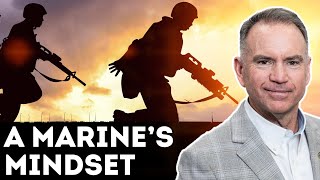
A YouTube interview on the Broker's Voice with Andy Neary and Rich Hess (Plexus Group). Rich recounts his Marine Corps service (Desert Storm, artillery unit, front-line experience) and connects lessons from combat—decisiveness, training, overcoming fear—to his career in employee benefits. Discussion focuses on consumer education in healthcare, employer plan design, fear of change among CFOs/HR, and practical examples (e.g., cash pharmacy pricing).
Questions this video answers
405-823-1127
ourhouse@plexusgroup.com
Licensed in all 50 states; offices mentioned in Oklahoma City, DFW, Tampa, Chicago, Memphis (Tennessee).
Chapters
In the Marine Corps, we had the combat boots that have speed laces and you can literally just yank them out. They were always laced left over right. As a 19 year old boot, you think, how stupid. And sometimes people would take shortcuts. The problem is in combat, when somebody gets shot in the leg, you have to be able to yank it out and know that you can use that as a tourniquet. In healthcare, when the CFO or CEO is afraid to make the change, it hurts. That single mom who's trying to fill a prescription and the prescription is 30 bucks, when in reality she could have paid cash of 7.
Hey. Hey. Welcome back to the Broker's Voice. I am excited today. I am joined by Rich Hess with the Plexus Group out of Oklahoma City. Rich, welcome to the Broker's Voice, my friend.
Thanks, Andy. Appreciate the invite.
We had some technical difficulties coming into the podcast. We figured it out though. So here we are. Rich and I spent, what, 25 minutes.
Problem solving that we did way longer than we should have. And poor Andy, you were on the other end trying to point and direct me on how to fix it.
Yeah, no. No worries. Well, I wanted to have you on Rich for a couple of reasons. One, you know, you've got a pretty cool background in employee benefits, and so I definitely would love to talk to you about that. But you also have a military background, which, you know, thank you for your service. I want to talk about that too, because I got to believe that your military background has had a big impact on what you're doing today. Is it safe to say?
Yeah, I think so. I think anytime you spend time in the military, you probably take that with you in both your personal and professional life.
Yeah, well, let's. Let's talk about that. Let's start there. You know, I. You fought, I believe, in Desert Storm, correct?
I did, yeah.
What was that journey like when you made the decision I'm not, you know, to enter the military? I'd love, you know, if. Did you enter the military coming out of high school, coming out of college? And what was that journey like all the way up to finding yourself fighting in an overseas. During Desert Storm?
Yeah, in the desert. So it was actually pretty interesting. My father was Air Force. He was in the Korean War. But I. I really had no aspirations necessarily to join the military. Always admired it. Was a fan. I love the United States of America and everything that the military is about, but I actually went to college to.
Play baseball and I knew I liked something about you, so I was always.
A huge baseball Guy. In fact, some of my favorite life memories were coaching both of my boys teams growing up. But I went to college, played baseball, and I got a partial scholarship to play, but also academics. And so I chose the school. It was a junior college for two reasons. One, because it was inexpensive. Right. Almost all of it was covered. And two, I wanted to go pro. I certainly had aspirations of playing professional baseball. So I thought two years of juco, get drafted and that would be my college career more than likely. Well, my second year of college, I had had two professional tryouts and no chance I was going pro. Like it was, welcome to the real world, you're not good enough, you're not going to make it. And about the same time, two of my high school buddies came by my apartment and said, hey, we're joining the Marines, come with us. And I was in that weird space of what am I going to do my junior year, am I going to keep playing baseball, go to a different school, etc. And I go, sure. So literally the three of us went down to the recruiter's office, signed up for the Marine Corps, and six months later we were in Desert Storm. Wow. And as it turns out, like so many things in life, I absolutely loved my time in the Marines. Was going to make a career out of it. When once we signed up, I went reserve, they both went active duty because I was going to finish school. So I had signed up for OCS Officer Candidate School in Quantico, Virginia and I went through some flight testing, height, weight, physical ability, etc. Written tests for flight school in Pensacola. So I had this plan of officer school, graduate college, etc, have a career in the Marines. But then Desert Storm happened, so my reserve unit got activated, we got attached to 310, I was with Fox 214, we ended up in Desert Storm. And long story short, I missed my OCS window. It pushed everything back. And as a 1920 year old, a year or two is a long time. And so I ended up pulling out of the OCS candidates and just finished college and my senior year started going on job interviews like so many do. And I ended up taking a position with a third party administrator, tpa. And that's how I ended up in the insurance business.
Wow. So did you while in the, while in the military as a Marine, did you did serve time over in the Middle east, correct?
We did. In fact, again, one of my, you know, favorite things about my life and career and time in the military was we ended up on the front lines. We were actually our unit was artillery. So we were firing artillery missions before the ground war technically started. We would go up to the front, we would fire and our targets were ammunitions, dumps where we had intel that Iraq had ammunition storage, arms, et cetera. So we saw lots of action before the ground war actually started. And then when it started, we were one of the first units through the breach. So it was, it was very interesting. I have vivid memories to this day of some of those. You've seen the oil well fires. We would travel at night, shoot and move. So it was, it was a very interesting couple of weeks. We were over there probably four or five months. I don't remember exactly.
Yeah, you know, it's funny, I was probably 13 at the time. Was it 90? 91? Yeah, I still remember, you know, as a kid at the time, you and I kind of both grew up, we didn't ever see war right then in 91. I still remember being in my basement and the news was on and then that first air. Air fight that you saw, the missiles, you know, the missiles starting to get is like, holy cow, we're at war.
Yeah, this is real.
I still remember we're sitting in my, in, you know, in my basement at home and seeing that and going, holy cow, at war. You know, at 13, 14 years old. So my question for you, you talked about that was like pretty much a six month period, right from playing baseball to.
Enlisting to here you are serving. Did you ever have that moment? I was, and probably didn't even have any time to do this. But you thought you were going to be on the baseball field. Here you are on the battlefield. Did you have that moment while you were in the Middle East? Like, holy, this is not what I expected or where I expected I would be.
That's a great question. Looking back, I don't know if that's exactly how I saw it. I can remember vividly one day in the desert being in a fighting hole, Literally a fighting hole that I dug because anytime we got into a new position, we would all spread out and create fighting holes. And then after the fire missions, we would end up moving to a different location. I can remember vividly we had called in an airstrike because we had been shooting our fire missions and they had locked on to us so they were returning fire. And anytime that happened, we would call in air. Air superiority is a big deal because a few minutes later they would come over and nobody was shooting at us anymore. And I can remember vividly to your question, being in my fighting hole, thinking I Was made for this. This is great.
Wow.
I'm sure a lot of people don't see it that way. Right. There's. There's fear, there's adrenaline, there's all sorts of emotions. But I can remember vividly. I think about it from time to time. I'll be running. Right. I'll be exercising, or I'll be chopping wood. One of my favorite exercises. And that moment will come back to me. I can remember vividly where I was, the planes going over and thinking, this is great.
Wow.
So, for what it's worth, that may not be a great thing.
Yeah.
I don't know psychologically if that's. But I remember loving being there and thinking, this is my destiny.
Well, I got to believe, you know, not to quickly parlay it over to what you're doing today with insurance, but that mindset, being in a very strenuous situation where you're like, yeah, let's go. I've got to believe that has had a huge impact on your insurance career. When, you know, I don't know, those moments of discomfort for you, it's probably like, let's go. Game on.
That's a great point. I don't know if I've ever looked at it that way. My. My sons will tell you that, because I've heard my oldest son many times, people will ask him, hey, what's it like? You know, what was it like growing up with Rich as a father? And his response is typically pretty intense. Right. And I'm always like, I don't know if that's good or bad, but I.
Can make you feel. Anybody Rich. I often get accused of being too intense, too, so.
Really? Okay.
Oh, yeah.
Well, I should probably lean into that, what you're saying, Because I do find. So my wife will tell you, I'm like the eternal optimist. Right. I just. Nothing's ever too big. And when something seems like a crisis for her, I tend to take it up a notch. Like, yeah, this is not a crisis. This is an opportunity. And I think that's what. One of the things that I've instilled in my sons, or at least hope I have, is when others see a problem, I just look at it as, this is a new opportunity, and there's got to be a solution. And so it can be. It can be frustrating for my wife. I can acknowledge that now we've been married 34 years, and she will be stressed out over something, and I just get excited. And again, I don't know if that's a Good thing. But that's actually my personality.
Think about how many different areas of your life that actually comes in as a benefit. For example, what you do today as a health insurance advisor. Right. Crisis is come in all the different shapes and forms, but that could be a huge asset for one of your clients who is in the moment of crisis in their world with benefits. Having an advisor like you who thrives in those moments has got to be very beneficial to the client.
You know that. That's very true. Again, never really thought of it from that angle, but I can see now as you're saying it, looking back, I can see many times where I've had a CFO or an HR person who was in crisis in their mind. And to me, I was just looking as well. It's not a crisis. All we have to do is make this adjustment or have this tough conversation with someone, and it's not really a crisis. So you bring up a great point that I don't know that I've ever really thought about.
Yeah, I mean, people are tuning in, getting. You're getting some live coaching because I tell you honestly, when you think about your brand, that piece of the military is a big piece of it. Because of that fact, when you found yourself in tough situations there where it is life or death, you thrived. Today, it's not life or death in the health insurance world when a CFO or an HR director is dealing with a stressful situation. But if I were them, I would want an advisor who doesn't stress out in those moments, who's willing to have the uncomfortable conversations and is very clear about how he or she communicates.
So it's funny that you use the term life and death. Just a week before last, we had a situation at work, right, where somebody did something they probably shouldn't have done, sent out an email that probably shouldn't have gone to certain people. And we had some folks pretty wound up over it. And I literally tilted my head on the call. We were on a video call and the person who did it was very apologetic. And my comment was, listen, nobody died. This is fixable. Let's do this. And so to your point of life and death, there's been numerous times in my career where I have said to people, typically, put my hands up and go, hey, this is not life and death situation. Let's think of some ideas that we can turn it into. Good. So I should probably lean into that more.
Well, you're my. I can tell you my fiance would love hearing that because I am one who can tend to stress out about things that, that don't require stress. Yeah, her number one comment all the time is, anyone die? Then we're okay.
We're okay. Well, and I think Andy, again, I can remember in college when we came home from the war, there was a period of time I struggled with the normalcy of life. You know, people had problems that I didn't view as problems anymore. And I didn't much care if my phone bill got paid on time. As an example, I just remember writing an article for the student paper at the time at my alma mater, University of Central Oklahoma, about how we in America take so much for granted when really our problems aren't problems. There's people starving to death, people who don't have fresh water, and people living in life and death situations every day across the globe. So I just, I have a different perspective, I guess, having been there and sitting in those fighting holes and having rounds fired back at us, knowing that in the next few minutes it might be over for me.
Yeah, well, that's okay. What you're referring to is what we deal with as problems in this country we should be honored to have because the proverbial first world problems, that's what we often deal with. With.
That's right.
Understanding what other people around this rock we're spinning around actually go through.
That's right.
That's a really good point. You know, I'm curious, if you don't mind, I'm going to switch it over to the, the insurance side for a second. You're very passionate about what you do and you're in the health insurance industry. And I know your career has been a little bit like mine. You know, today I coach, I don't sell insurance, but I, I've been both on the retail and the wholesale side. And what, what motivates you? What drives you? Because you are definitely one that is out, you know, to try to fix what's going on in this country. What motivates you when to helping your clients with health insurance?
Man, I, I'm glad you asked about what motivates me because I have to remind myself often. As a matter of fact, about 10 years ago, I got out. I was done. I just felt like it was too big for me. Who am I to think I'm gonna fix it? And so I got out of the business, went and bought a franchise where I met some great people and learned a lot. But it was only two years outside the business before I got sucked back in, if you will. And I'm Glad I did. The person and the company that brought me back in are fantastic. But what motivates me is the end user. The end user, the general consumer. The guy who's trying to support his family working nine to five, the lady who's working two jobs and she's got a sick kid at home who needs her prescriptions, and she's just trying to figure out how to keep it all together. I ultimately work for them. And our system has become. This is nothing that you haven't heard and don't already know, but it's become so broken. And we have all these cottage industries that pop up that make money or are trying to make money or are making billions. Right. Some of the cartel, as I like to call them, off of people's health care. And that's not okay with me. And so my whole story is if we go back to the consumer days and what insurance was meant to do, which is avoid catastrophic loss, and we all pool our funds for the few who need the big ticket items, things would get better. And somebody has to continue to tell that story. Now today it's gotten tremendously better as far as the amount of people who are out telling the story. I mean, there are independent TPAs, there's Health Rosetta, for example. Direct primary care is taking off. But that's what motivates me is the fact that you've got so many Americans, middle class, lower class, et cetera, who just flat can't afford it. And we live in the greatest country on earth.
We presumably the greatest healthcare, which we know is not actually. Yeah.
That's what motivates me is to truly make a difference at the end of the day, because I can. We can all do anything for a living. But I just felt like 10, 12 years ago we were no longer helping the clients, which ultimately helps the end user. It was all about making more and more money.
Yep.
Which ultimately separates the wealthy from the middle class. And so I'm in it for the end user.
Well, it goes back to what we've been talking about for the end user. Dealing with health insurance in this country can often be a crisis. Right. Typically. Sometimes a access crisis, sometimes a financial crisis, sometimes both. And they need to know that they have somebody on their side that is going to help them through that process. And you know, I love when I see advisors who rip on the other advisors who aren't doing these things to really help fix the health care. But it's like they have to be reminded, guys, at one time we were all brokers, spreadsheeting 100% and thanks to people like Dave Chase, shed a light on what was really going on. That's how we've built this new ecosystem of people who are trying to help fix the health care because we realize that's what's driving the health insurance premiums. So what would you say? I'm curious. I want to spin it a little bit. And let's imagine there's an HR director out there, CFO out there struggling with their health care, their health insurance, and they're like, rich, I have no idea where to even begin. What would be your advice to that decision maker who is trying to do something different and make a difference? Where do they start?
So it depends, unfortunately. Right. And I hate it when people answer me with it depends. But I am going to start there briefly. It depends on the size of their company, right? How many employees do they have, geography, where are they located, are the employees centralized or are they all over the country, etc. Are they regional? So it starts with quite a few questions, but in general it's all about creating consumers of their employees and the members on the plan. If we. So it's education and communication and it's really that simple. I often struggle, like daily, I go back and forth between, this is a bottom up issue. Let's start with the employees and the members of the health plan and when they become consumers, it will to an extent fix itself. And then the next day I'm like, well, it really starts with the employer and the executives making the decisions they have to buy in because then it'll filter down. Neither one's wrong. But if a CFO today or HR said we don't even know where to start, like we've had the same insurance company or two or three for years and we've thought about doing something different, but invariably our prices just keep going up. I would start with educating your employees on how to be consumers of health care. And an example that I give, which you've I'm sure heard and probably used, is when we book a hotel room, we always price shop. Whether it's an Airbnb, we're using Priceline, Expedia, Travelocity. We price shop. When we go to a restaurant, the prices are on the menu. We know what we're going to pay. But for whatever reason, probably 30 or 40 years ago, we kind of got away from that. In health care, everything's hidden behind curtains. And so we have to teach employees and consumers, members of the plan, dependents, how to shop for health care and when we do, then it's supply and demand and the market decides how much we're willing to pay. And I could give you a million examples.
Yeah, of course. Yeah, yeah, I think you're right. I mean it's, that's the piece we're missing right now is I think one of the things people have to consider as part of the problem is employers just aren't making the changes that are necessary. Right. We can fear cut on the health care system and the carriers all we want, but it also comes down to that employer making the right decision to do something different. And we're still, by and large seeing employers choose to stick with that logo they recognize on the medical ID card. Yep. Even though it's, it's causing a lot of problems and sometimes harm financially and physically to their employees.
Yeah, for sure. And, and I get it. Right. But it's like anything in human nature, it comes down to fear. And so the conversations that I've started having with CFOs for sure is you really have to design your plan based on the culture of your organization. I see daily plans that don't fit the culture of the company. So they've bought an off the shelf plan from a carrier because that's what everybody else does and yet it's not what their employees want or need. And so you have some employees in the organization who don't ever go, they don't have medical needs, they don't take prescriptions, etc. Yet the employer's paying 8 and 900amonth for their coverage when really they just want access to a local doctor to ask a question now and then maybe go see them once a year. So it really is about designing the plan to fit the culture. 1. And then 1 of the most successful health plans I've seen, company has several thousand employees. So I get it. It doesn't help the little guy. But they have built their health plan over years of communicating with employees on why it's important. I don't see very often where employers communicate why they have thoughtfully put together the health plan. Because once employees understand it and buy in, well, now they know to call around and shop for an MRI or an X ray. They know that they can use good Rx or just ask their pharmacy for the cash price. And so when they truly understand how that affects the bottom line and affects raises and profitability of the organization, then they become better consumers and then the health plan itself tends to do better.
Yeah, I'd love to hear your advice. Couple more questions. You said fear Right. What's keeping a lot of employers from doing the right thing is fear of change, fear of disruption. So I want to hear it from the guy that found himself in the foxhole. When you realize the war is on and you found yourself actually ready to go, motivated, what advice would you give a decision maker right now who knows what they're doing is not working, but is paralyzed a little bit by fear?
So it's one of the age old. Can the outcome truly be worse than doing nothing? And I heard a guy not too long ago in front of an employer say the employer made a comment about how the prices are too high, it's too expensive, something, same old, same old.
Right.
And he said, well, apparently it's not. I think it needs to be higher. Well, obviously that caught the attention of the room and his explanation was, until the pain is enough, you're not going to do what we're recommending. And so which pain is worse? Right. It's fear of the unknown. But. And that's why these, the health. Rosetta is Chris Deacon. That's why these are so important. Because now employers are having examples to look to. So again, communication and education. If you talk to your employees about why you have thoughtfully put together this health plan and you project that it's going to reduce costs over time instead of escalate and teach employees how to use it well, then the fear comes down. Because it's much like a Marine being trained in battle. Right. It's why boot camp is difficult. Needs to be. In my opinion, it's gotten too easy. But it used to be very difficult because in those moments, it is life or death. If we don't know what to do in a critical time, then people die in the military.
Yeah.
So now I'll give you an example. We used to. I don't know if you've ever heard this, but. And I don't know if other branches do it. In the Marine Corps we had the lace up boots, the combat boots that have speed laces and you can literally just yank them out or pull them up tight. They were always laced left over right. Every boot, every time. Left over right. No. As a 19 year old boot.
Right.
Incoming. You think, how stupid, why am I doing this? Who cares? And sometimes people would take shortcuts. They might put it through three or four laces and then tie it and just wrap it behind. Right. Any number of things. The problem is in combat, when somebody gets shot in the leg, you have to be able to yank it out and know that you can use that as a tourniquet, and there's a number of other uses. But I use that analogy because in health care, when the CFO or CEO is afraid to make the change, it ultimately hurts people down the road. It hurts that single mom who's trying to fill a prescription, and. And the prescription's 30 bucks, when in reality, she could have paid cash of seven.
Love that. That was a great analogy. Let's wrap up. Rich, this is a great conversation. You know you're with the Plexus Group in Oklahoma City.
Yeah.
Somebody's listening to this and says, all right, I want to know more about how Rich could help my organization. Or maybe it's an advisor saying, hey, I'd love to connect with this guy. He seems like a good dude. What is the easiest way to get a hold of you?
So I have my email, LinkedIn, cell phone. They'll all be in the link. My cell phone is 405-823-1127. Had it my whole life. Our house@plexusgroup.com.
We'Re in any group that's group with an e at the end. Correct.
Group with an e at the end. We're a national firm or independent. Okay. So we don't have shareholders that we report to. We're not publicly traded. We're licensed in all 50 states. And the beauty of what we do is we work for the employer. So the employer hires us and directs us what to do so that the incentives are aligned. We want their health plan and their employees to thrive versus how much can we make?
Yeah.
So, yeah, that's who we are. Again, all 50 states. We have offices in Oklahoma City, DFW, Tampa, Chicago, Memphis, Tennessee. Yeah.
We'll pull your contact information in the note in the show notes. But this was a great conversation. Thank you for coming on. Rich one. Again, thank you for your service. Love. As an advisor who. Who's dealt with a lot of fear in his life, especially life or death kind of fear, I think there's a lot of employers out there who would stand to work with an advisor like that who sees problems as opportunities. And in helping help these companies overcome that fear of change and realize that it is actually an opportunity. Well, I appreciate it, Rich.
Yep. Thank you, Andy.
More from Andy




If you want producers to succeed faster, help them create a sales message that creates confidence.

Sales isn't a zero-sum game! You can have tough competition and still grab a beer after



Option 1: Meditation, a fast walk, a podcast, and protein. The ultimate morning routine!

How you do one thing is how you do everything. Ill elite producers fuel their body.


Stop living in the gray of maybe! Your job in sales is to get a clear yes or no