From Venezuela to Miami: How a Family Agency Reinvented Itself
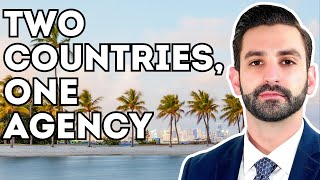
YouTube interview (host Andy Neary) with Andor Toboloma of Miami Insurance Brokers about the agency's evolution from mid-1950s Brazil to Venezuela and then Miami (moved ~1994), product mix (international health, life, kidnap & ransom/K&R historically; P&C emphasis from ~2008–2009), and company rebrand to Miami Insurance Brokers (circa 2011). Andor shares his personal path (mechanical engineering, motorsport aspirations, joined family agency 2014), agency culture (entrepreneurial, producers treated as partners, white-glove service), staffing (~18–20 producers), and observations on market cycles (hard market with big rate increases through early 2020s; stabilization and rate decreases beginning 2024).
Questions this video answers
Mid-1950s in Brazil.
Around 1994.
Circa 2011.
Around 2008–2009.
2014.
Chapters
What you refer to as K and R insurance or kidnap and ransom insurance. Just talk real briefly about that.
So in the 70s and the 80s, and even in the 90s, it was definitely more common product to be able to offer. A lot of times, I'll explain that to other agents or producers or even other clients. I'd be like, hey, we also offer kidnapping ransom. They're like, really? They don't want it. They want to know more.
Hey, welcome back to the Broker's Voice. Andy Neary here, CEO and founder of Complete Game Consulting. I'm actually really excited for this conversation. You know, when I post these broker voice episodes, I am always looking for a unique story. Something that we are big believers in in the industry is how are you going to make yourself different? And I think we definitely have one of those today. So I want to welcome Andor Toboloma from Miami Insurance Brokers, andor welcome to the show, man.
Andy, thank you for having me. I'm excited.
Yeah, it's gonna be a good conversation. I'm excited because, you know, again, as I said there in the intro, I'm always looking for a unique story, and if you don't mind sharing one, you were born in Venezuela, but the agency itself, Miami Insurance Brokers, was founded in South America. Is that correct?
You got that right. Yeah. We started in the mid-50s in Brazil, believe it or not, and transitioned over to Venezuela in the 80s, 90s, well before my time. And then we were primarily focused at that time with. With life insurance and kidnapping ransom insurance. You know, I know we discussed a little bit about.
I'm gonna ask question about that. Yes.
Yeah. And of course, in Latin America, that is a much more popular product than here in United States. But. But, yeah, so we. We started there and then moved over to United States in the early 90s, around 1994. And again, we were still focused on just international health, life insurance, KNR. And around 2008, 2009 is when we started kind of focusing more on PNC.
Interesting. Just out of curiosity, coming from Venezuela, how did the family find and land or end up choosing to land in Miami?
Yeah, there was a lot of a big community here in Miami. As you can imagine, there's a huge Latin presence. I want to say more Latin presence than American here in Miami. And Miami is huge. So a lot of our clients from the 80s were all transitioning themselves and moving themselves over to United States. So it kind of found that we. Half our book or the majority of our book was now in the United States. So our clients have moved and we kind of had to, of course, move with them.
Yeah, I imagine that wasn't an easy transition.
I was very young, but I could imagine as well. I don't think it was the easiest transition, but it was a lot easier then as it is. I can imagine now.
Yeah.
Of course, Venezuela has gotten a lot worse in the 2000s and when the agency had moved over, it wasn't too bad.
Yeah. Yeah. Well, and, and I know I'd be curious about your journey. Obviously when I talk to most advisors, I'd say most of us in the industry did not get in it by design. Now you have a family, right, that, that was in the industry. What, how did, how, what did your path look like? Was it something you knew you were going to get into the insurance industry? Or is that something that also kind of found you by happenstance?
Oh, yeah, no, not at all. I almost was trying to not get into it.
Smart man.
Yeah, it's just I'm not a desk job type of person. I'm an adrenaline junkie type of individual. My dream was to race cars, right. To do motorsport. I know. And when I, let's just say when I graduated college as an engineer, again, nothing to do with insurance or risk management, but some form of like motorsports background. I always, I am really good at numbers and everything. So for me that was like the easiest path to a degree. I tried to get involved fully as a race car driver. Unfortunately, I was 20 something at the time. And if, you know, in order to really make it in racing, you gotta be racing since you're like seven, which I wasn't. I was good, but way too late. And that's when, at that time, which was around 2014, our agency was, it was starting to really like boom. The market here in South Florida was super soft. There was capacity every carrier wanted to write with, every wanted to ensure every different home. And that's when I was approached by my family and was like, look, I know you want to race, I know you have dreams, but the reality is how about you work hard and you will, you'll be able to make your dreams like you're racing a hobby. And they sat down and said, what is your plan if you want to race in how much money do you need? This is how much work or money you can make in the insurance industry and this is how you can get there. And for me, I joined because I was like, okay, well I want to race. And I think this might be the fastest way to make sufficient income to be able to race. As a hobby. And they weren't wrong. So it's. Yeah, the journey with insurance. You know, insurance is a very entrepreneurial type of occupation where there is no cap in income because you got residual income coming in year over year. So that's a beautiful thing that we can take advantage of. And that's what I didn't know about that. Right. I had no knowledge. Even though my family was in it, I kind of was not interested about it. And once they opened up my eyes, I was like, okay, this is something I could take advantage of and grow. And I think a lot of people are like, oh, you think you are where you are because of your family? And I'm like, I think I am who I am, but not where I'm at. Because they definitely made my life a lot harder. Yeah, they, they, they would give me more strict and harder goals and higher goals because we're family versus another individual who might have not been in my position. But I'm grateful for that. The steep learning curve is important.
Well, that's a really good point though. You know, I think of it the same way. So I grew up having a father who was my high school baseball coach. And I think a lot of people would think, well, it must have been easy with your dad as the coach. Right. And it's like, no, he actually was harder on me than anybody else.
Exactly.
And I think it's just. That's a great point with the insurance industry people. Obviously there's a lot of family run agencies out there. And don't get me wrong, I'm sure there's some where the second third generation got the easy path, but there's probably a lot of family run agencies out there like yours, where. Yeah, just because I'm part of the bloodline, they're actually harder on me than they are the other producers.
Exactly.
Yeah.
Yeah. And when we started, we had maybe five, six producers. Our whole employee staff might have been 18, 20. And the goal, he was like, look, we're going to be growing exponentially and we need someone to trust to be able to learn and grow with the company. And yeah, we, we've, I guess the first five years we basically doubled each and every year. And we're almost a big learning curve.
But how many employees do you have today?
Employees?
Yeah.
How about producers?
I would say about 18 to 20 producers.
Okay, that's awesome.
We do have a lot of support for each producer. A lot more than, I guess, the traditional agency, which makes the employee count even higher.
Yeah.
But it's important for Us because that support is what allows the producers to be able to scale as well as the end consumer to be able to receive exceptional service. Right. You know, we pride ourselves on white glove service. Yeah. So it's. So I am gonna ask more. More employees.
I'm gonna ask a really ignorant question and I apologize because I'm not a big car guy. So when you had the. The goal of becoming a race car driver.
Yeah.
What type of race cars are we. Are we talking about like indie type racing?
Yeah, exactly.
Okay, that's awesome. Who is. It was an IndyCar racer from South America that was really well known last decade or so. He actually did some Ironman racing too. And I'm forgetting who it is. Oh, okay.
Is it Castro Neves, Juan Pablo, I mean, Tony Canaan, maybe?
That is Tony Canan.
Tony Canaan. He's in Miami.
Okay. He's from South America, isn't he? Brazil, maybe?
Brazil. Brazil, Yeah. I did a friend was like, do a triathlon with me and I like, I haven't trained. It's been two weeks. Let's do it. I love doing men, you know, things that really challenge you mentally and you can push through it. So I did it. It didn't do too well, but Tony Canon flew by me and I was just starstruck. I'm like, holy crap. You know, it's super cool that you met. That's the reason I know that I wouldn't know that if he wasn't there, because I knew who he was decked out in gear and he was obviously really good.
That's awesome. I love that. Oh, I'm curious. You said something. So you went to college for mechanical engineering, right?
Yeah.
And you know, one thing I've always said about the insurance industry is if you're going to have success in this industry, you've got to know numbers pretty well. And I'll be curious with that background. Right. Mechanical engineering degree does not say you're going to end up in the insurance industry, but has an engineering background had a big impact in what you do today from an insurance perspective because of your ability to think very tactically and the numbers that are associated with it.
Yeah, strongly agree. Because. And I tell a lot of people that, you know, one of the biggest takeaways that I've got from my degree isn't necessarily the knowledge, like the actual information, but it's more of how to approach a problem and how to think outside the box in order to obtain a solution. So that for me is the biggest tool that I've Been able to use from my college career, right from my mechanical engineering degree to my insurance. So there's. The insurance industry is changing and evolving, and we have to as well. And there's a lot of times where a risk might not fit the product that's available. And what can we do to think outside the box? And I found myself to be able to come up with a lot of really neat and intuitive ideas that helps me win the business and build the trust and share the knowledge with everybody else in our team.
Yeah, that's awesome. That's actually a really good point. Being that problem solver with the engineering background has to have a big advantage for you from a prospecting perspective and just even a client dealing with a problem, your ability to break that problem down into probably digestible steps in a way that can be solved has to be a huge advantage.
It is.
Yeah.
And again, I might not be the best at speaking or writing an email, you know, like vocabulary and literature, but I'm really good with numbers, and sometimes I can catch a lot of mistakes. Or when I see an insurance company do an audit, I go, hey, something's off here. Because numbers speak to me. So, yeah, that's one thing that really helped me.
I worked for a employee benefits agency years ago, and when he would hire people not fresh out of college, but even, you know, just any of his tone exacts producers. He was looking for people who had the finance backgrounds, math, something that told him, these guys, this man or woman knows numbers because we were selling health insurance. And if you don't understand the numbers around health insurance, you're going to be. You're going to struggle, and you're going to confuse your clients. And so I. I get it, man. Knowing the numbers and insurance is very important. You know, one thing I really admire about you guys, in the short time that I've, you know, you and I have connected, and I've learned a little bit. When you guys made the move from South America to the United States, you also rebranded at some point. And one thing we preach in marketing is be clear, not clever.
Yeah.
And I love the fact that in. I think it was. Was it 2011, maybe?
Yep.
You guys rebranded to Miami Insurance Brokers. There's nothing more clear than that that tells me what you do and where you were.
Exactly. And a lot of the time, someone's like, insurance in Miami, Boom. You know, we show up. Right.
I Google that. Guess what's coming up.
Exactly.
Whoever gave you that idea or whoever's on your team that did it. Genius. I, I think that's great. And honestly man, when you and I first connected, one of the things I was impressed with is whether I was looking at pictures of you and your LinkedIn profile, your uncle who is the CEO, you guys are sharply dressed. And I, I think that you know, in a day and age today, 20, 25, where the dress isn't as maybe important as it was before, do you find that, that professionalism like that is still an important piece of doing business, especially in a market like Miami?
Yes, I do. And for many different reasons. Right. For the client side, I would say.
We as an insurance agency, we are more on the younger side. And when you have a 60 year old insurance agent who has been in the insurance industry for 30 to 40 years, you know, it's not to say that they have earned wearing casual clothes, but it's more of like they already have a respect from another 50 year old business owner. Right. But when you're speaking to a 28 year old insurance agent who's dressed normally, how that first impression or just any impression from a multi million dollar business owner, you know, they might not trust that individual so much. And I found that dressing, you know, to impress or to give that opinion that you are professional in what you're doing does help at least get your foot through that door. And also what I've learned because of course when I started from in 2014 till the pandemic in 2020, where we were dressing all really good and well at, and then we were home for like six to eight months where you weren't really dressing, then office opened back up, dressing up again, getting dressed makes you get to the right mindset as well. And that I found out is very beneficial as well. You get to work, you're ready to grind, you're looking like how you're going to perform and, and that really helps out. And we don't necessarily have a dress code here, so we have a lot of producers that you know, wear a white shirt and a white hat and they kill it. So it's, it's more of whatever works for you.
I think it's a good point though. I, a guy that I follow, Ryan Sirhant, who's became well known from one of the real estate shows that was on tv. I read one of his sales books and he, he made the comment that, you know, when I put my suit on every day, that's my costume. It's almost like his, he said he calls it his superhero costume. Right. Like when he gets that on, he's like it's game time. And I'll admit, somebody coaches. You know, I run my business from our home. It's easy to get lulled into. I'm at home, I just put a nice shirt on. Everything's. Everything else is fine. But you're right, I mean, there, there is a loss of that. All right, I'm in business note mode now because I'm not wearing a suit every day.
Yeah, you sacrifice more time and getting prepared where, you know, when you're at work, it's time to put your head down and grind and take care of business.
Well, I'd be curious, man. You know, you guys having the beginnings in South America have, I gotta believe, a very good pulse on what we would define as international insurance. And I believe, you know, international insurance is one of the things you guys do provide for the folks that, that need that kind of guidance. What is that like, if you have an opinion on it, you know, selling a commercial policy to a business in Miami versus selling somebody international, whether it be health coverage or whatever that might be, how is that different from what most producers would probably be used to here in the States?
Yeah, I mean, you also have to think about where we are located. Right. We're in the heart of Miami, we're in South Florida. The amount of international individuals, I would say is definitely above 50%, I would say maybe 70% here. So the majority of individuals aren't from here or have some form of international presence. And we have to cater to our audience, cater to our clients. And international health or traveling is something that we have to make sure to be able to continue to know about the product and be able to offer it to them. So, yeah, it's, it's. And having the background where we started in Latin America definitely helps out.
Yeah, that's great. I am going to ask because we did talk about it offline with the beginnings in South America. One of the things you said at the beginning of the show that I don't know if anybody caught was what you refer to as K R insurance or kidnap and ransom insurance. Know if. If you're a producer in the States, who's born and raised here, grown up in this market, you probably don't aren't familiar with that, but just talk real briefly about that. Being a South American born agency, that is something you used, I mean, primarily used to offer because of geography and things like that, right?
Absolutely. Yeah, it was, it is still the beginning products that we had offered. And I know I was speaking to my grandmother who still works with US every single day. And she's the one who sold policies for K R. And she was telling me we still have a handful of policies that have been in effect for 30, 40 years. And it's incredible, right? These policies are more common, of course, in Latin America. Here in the United States, kidnapping and ransom isn't so common as it is internationally. So in the 70s and the 80s and even in the 90s, it was definitely more common product to be able to offer. And yeah, it's not a product I have the pleasure of selling. I definitely had studied up on it, and I've reviewed policy wording and stuff and claim scenarios, and I think they're really, really interesting and how they perform. But it's not a common. A lot of times I'll explain that to other agents or producers or even other clients. I'd be like, hey, we also offer kidnapping ransom. They're like, really? They don't want it, but they want to know more. You're just interested.
At the beginning, heard it and went, huh? What?
Well, and I think that you have.
People who still have policies in place.
Yeah.
From the 80s and. And I find that fascinating as well. What I would love to learn. Andor you've been. So you've been in the industry since 2014, right?
Correct.
So last 11 years. One thing again, I'm going purely off my observation, going to the Miami Insurance Broker's website. I feel like the culture I see just from an outside view is an agency that is definitely young, aggressive and looking to scale. And. Oh, you know, I just. The word that came to mind when I. When I looked at the site and especially the team was just sharp. How would you describe the culture at Miami Insurance Brokers?
Oh, that's a. And you're spot on from the very beginning. So I would say that here at Miami Insurance Brokers, we are very entrepreneurial type of mindset. Every producer that is here is a partner with our agency. Right. So anything they need, anything we can provide to them, we are a partner in growing the book. So that's definitely something that sets us apart from a lot of other agencies where we give the ability for that producer to be able to scale and grow. And we're both partners. Right. We both have skin in the game. So that's definitely, you know, cultural that we have here, where everybody that is on their team, they are basically like their manager or their boss or they are employees of that producer that we like to explain it.
Put your thought leadership cap on for a second.
Okay.
Looking at the. The Market, you're in South Florida and correct me if I'm wrong, you are primarily selling commercial insurance. You yourself.
Yes, I do a little bit of both. I do everything. Both Everything personal and home. Yeah.
Okay, what are some of the trends? I mean, geez, you could probably spend a whole episode talking about the challenges of personal and homeowners in South Florida given hurricanes and things like that. What are some of the trends you're seeing in the industry right now and as far as, you know, impacting Miami insurance broker clients? You guys see anything right now that's really top of mind or where trends the next trend could come from as far as offering commercial or personal auto.
Yeah. So if you were asking me this question two, three years ago, I would be able to give you an hour long podcast about how the market is gone horrible. The upside down it's been since 2018. Basically 50 year over year increases on liability and PNC board all throughout on personal lines and commercial lines. Thankfully, knock ON WOOD, Since 2024, I would say last year the market has started stabilizing and this year we're finally starting to see rate decreases. Right. And in 2020, when the rate started doubling and tripling, everybody was pissed, everybody was unhappy. You know, the tone of all of the clientele to all our producers, there was no satisfaction. There were, they have no one to vent to, so they were venting to us. So we were taking everything that they were saying, trying to explain to them how hard and complicated everything is. The there are no alternative options. This is the best they have, we have remarketed and everything else is still coming in higher. And while that wasn't the best, while retention numbers might have gone down a slight bit, revenue increased because the rates were going up. So that was really cool to acknowledge that after the fact. But now while markets are improving, it's the tone of the clients are all happy. So their renewal, auto insurance renewal was twelve hundred bucks. The renewal came in at $1,000. We think it's going to be all great. Yeah. And then they go, hey, I got something for 800. We're like, oh my goodness. So now it's not as easy as we had thought because now we have to remarket out all our clients because there is great competition out there. While the tone of our clients are a lot better, the work is definitely a lot higher while the revenue is also seeing a little impact because the premiums are seeing a big decrease. So we do have the capacity. You know, like I was saying, we do have a lot of employees. We do have the capacity to be able to ensure that all of our renewals are being remarketed out and we are presenting best proposals to our client.
But interesting though, with expectations, you feel great because you're delivering a 20% reduction and their reaction is great, I want more. I got 800 over here.
Yeah, you know, exactly. And it's usually more on the newer clientele. When you have a clientele that's been there for, for, been with us for five, six plus years, that's when there's more of a open communication versus like, hey, I found something better. Don't renew. They're like, hey, I received another option. Would you please remarket it out? Because I would love to stay with you or can you offer me the same proposal? So, yeah, it's.
So I got a couple of questions on that I'd love to ask you about, about the customer. So if I were to sit down and I were to interview some of your best clients, yours personally and, or how would they, how would your best clients talk about Miami insurance brokers? How would they describe you guys?
They would. And this is something that I had a few clients tell me and now I use it. And they say that your insurance agent is almost the most important person that you need to have a good relationship and trusting relationship with that. Your insurance agent should also be on your speed dial. You're going to have three individuals in your life that is going to be on your speed dial. It's going to be an attorney, right? It's going to be your doctor, it's going to be your insurance agent. Now if you get hurt, God forbid you go to the hospital, calling your doctor, calling your insurance agent. If you get sued, you're calling your attorney, you're calling your insurance agent. We're a common denominator in every aspect, right? So we know A to Z of everything about our clients. And our clients, of course, is going to know all that about us. And trust is basically going to be the most important word between our clients and us.
That's a great point. Yeah, I, I think it sounds so simple in practice. But, you know, I sit in a chair today where I get to work with a lot of agencies. And I think there's still a big gap between what an agency promises and what their clients actually get. And that gap is where a lot of trust is dissolved because what was sold is not being backed up by execution. And man, it sounds, again, sounds simple, but so many are not following it right now. With that said, I would love to hear from you, I'm going to put you on the spot. Are you okay with it?
Absolutely. Let's go for it.
If I sat you down, you're in a finalist meeting right now. You're. You're looking to win the new business, and somebody says, all right, and. Or why should I hire Miami insurance brokers? What would you say?
Most of the time, I mean, so most of the time we don't even get that question. So that's one thing. Correct? Well, because we're already, you know, presenting ourselves a way that that question shouldn't even be brought up. And if it is, then we didn't do our job correctly. But what sets us apart is all the contingencies and everything of our agency as a whole that we have, right? Not only have we been around half a century, we can say we're not an agency that's just going to go away. Like, a lot of agencies get bought or they're a small agency. Also, we have a lot of teams and like, we have a lot of teams and contingencies in place, such as the claims department, such as the satellite office. If there's a hurricane and every single homeowner here in South Florida is without power or business is without power, and you call our agency, you're going to get a call, you're going to get an answer. Someone's going to be able to help what you need and file a claim versus you call 75, 90% of the other agencies during a hurricane, of course they're going to be without power. So that definitely sets us apart. Our knowledge bases of the industry is top tier. Our ability to be able to explain the product to go to you. You could come to our office. We pride ourselves on how nice our office is, is how great our coffee machine is. So clients come in all the time saying, look, I just want to pay for my policy, but your coffee is amazing. Like, appearance is everything. Right?
Man, you just said it.
Yeah, exactly. I love that. And, you know, there's a lot of tactics. There's a lot of tactics that we can throw into play that I've used and it's helped out. And I just tell this is one of the most important tactics that I'm trying to also teach a lot of our producers is when a customer is trying to decide between an agency they need to do their. Don't ask the agency or that agent. Why should we go with you? They need to do their own auditing. They need to do their own background. Right? If that agent makes a mistake, how much you know, coverage does that agent have? Is that a question that any business owner ever asks an agent? No. Should they? Absolutely. If they're, you know, have a $10 million home and that agent only has a $1 million E&O policy, is that agent or agency in the right capacity to be able to insure such a big business or a home? Right. So that consumer should be taking, you know, doing their due diligence and asking, hey, you're insuring my assets of high value. Are you and your agency in the capabilities of being able to protect, you know, in case there is an error or you know, that you omit does your insurance policy cover sufficiently my asset? And I would say that never happens and that I've used many times that has helped me to win over businesses. When I'm competing with a company, I'm like, ask another agency what their UNO is, you know, and there wasn't sufficient for that company and that unfortunately dropped their, their bid.
Well, and I got to believe that is important in a market like Miami where you have a lot of, on the personal lines, probably a lot of high net worth and a lot of expensive homes and cars and. Yeah, yeah, that, that is really interesting. Well, we're going to wrap here by getting to know andor a little bit. You cool with this?
Let's go.
I'm, I'm big on habits, rituals, discipline, things like that. So I'd love to, to, to hear yours. So first we're going to start with morning routine. I'm a big morning routine guy. What does your morning routine typically look like?
It has changed. Right? Because I used to live five minutes from the office. It was much easier to be able to go to the gym and then make it to the office. Now I do live quite far from the office, so traffic now plays into everything. So now I make sure to avoid traffic at all costs. So I'm either coming into the office really, really early or coming into office at 9:30, you know, to avoid traffic. But wake up, go work out, get the mindset right, get a good sweat in, even if it's just 15, 20 minutes. Then get ready for work, drive to the office, listen some of your podcasts in my 45 minute drive. And then yeah, when I get into the office, I always say there's, there's so many things going on that we have to get in order. And yeah, after that I do work a good amount.
Yeah.
So by the time I leave the office, it's already 8 9pm oh wow. Again, after. Well, for multiple reasons Right. I'm also avoiding traffic and I have a handful of clients out in the west coast. It's five o', clock, six o' clock there. Gotta make sure it's always be available for them at home, dinner, spend time with family and do it again.
Awesome, man. I love hearing that you said podcasts on the way to the office. What are any books or podcasts you're listening to right now?
Man, YouTube algorithm is always fantastic, right? I hop on one, then I get another one is really good, then I like it. I go to that channel and end up listening to. But not only just podcasts, but just understanding the market and what's going on. I really take advantage of the 45 minute ride that I have in getting acquainted with changes in the market and all useful podcasts that are available. Like YouTube is such a powerful tool and all the podcasts that are out there. So it's really important to get that.
Well man, it's been an honor to talk to you. Like I said, I wanted to have you on just not only about because of your story, but the agency as a whole has a unique story and from the international beginnings to what you guys are doing today in a market that has a lot of uniqueness in itself, you guys are doing some great things and I've been again the little that I have met, known or met you, you guys, it's been impressive to see what you guys are doing andor thank you again for taking the time to be on the show.
Of course. Thank you so much for having me. It was lots of fun. Hopefully we can do it again soon.
Yeah. Everybody else be good, go check out Andor on LinkedIn Andor will put your LinkedIn profile in the notes as well as Miami insurance broker's website. So go take a. That is a team that has a sharp culture and it is built for the future. So keep doing great work man.
So much. We'll be here.
More from Andy




If you want producers to succeed faster, help them create a sales message that creates confidence.

Sales isn't a zero-sum game! You can have tough competition and still grab a beer after



Option 1: Meditation, a fast walk, a podcast, and protein. The ultimate morning routine!

How you do one thing is how you do everything. Ill elite producers fuel their body.


Stop living in the gray of maybe! Your job in sales is to get a clear yes or no