How a Wharton Grad Runs a 108-Year-Old Insurance Agency | with Bill Rue, Jr.
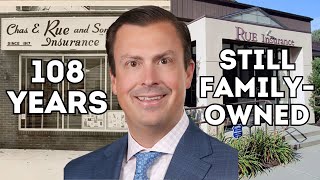
Bill Rue Jr. runs Rue Insurance, a 108-year-old family agency he transformed from a feed mill supplier into a structured firm with two core niches: employee benefits and P&C construction. A Wharton MBA and former investment banker, he credits peer groups like Intersure and selective technology adoption, including rapid AI use, with letting producers spend more time advising clients.
Questions this video answers
1917
108 years
Hamilton, New Jersey (near Princeton)
Over 70 employees
Bill Rue Jr., president of Rue Insurance
Chapters
And I think it's very hard to be a hunter in the, in the world that we have right now. We can do more to help those producers who are fantastic at building relationships, explaining product, getting examples of where we can really make a difference and show our value proposition. If I can help them get in front of as many people as possible, we all win in that scenario.
Hey. Hey. Welcome back to the accelerate your insurance system sales podcast. I'm excited. Today I am joined by Bill Rue Jr. Bill is the president of Rue Insurance, a fourth generation family agency founded in 1917, 108 years old, located in Hamilton, New Jersey just outside of Princeton, with over 70 employees. Today I'm excited. 108 years is a hell of an existence and a hell of a run in the insurance industry. So Bill, welcome to the podcast.
Yeah, thanks Andy. I appreciate you having me on. It looked pretty good for 108 years, right?
Well, I'm a little, I have to. 108 years is. Yeah. To be around that long fourth generation. So would that be your great grandfather?
So it's my great grandfather, yeah. So he started the agency. I mean it was a pretty small operation back then. He owned a local feed mill. So most of the area around here, which is hard for anyone to believe in New Jersey was all farmland. And so he, he started out working with farmers, local farmers, and while they picked up their feed, they needed to pick up some insurance for, for their, their farm. So it's a way to kind of have two businesses going at the same time.
That's cool. I love, I love the, the founding stories, especially when they go that far back. It usually involves something to do with helping local farmers and providing life insurance or some form of insurance to, to local farmers. I have to tell you, I'm a little intimidated because I believe you went to the Wharton School. Correct.
So I did, yes.
This is always intimidating when you're talking to somebody who has that level of business acumen. What was that experience like? I, I'd be curious. Going to a school like that that's so well known in the world of business and finance. How does, how has that helped you in your insurance?
Yeah, I mean it, it's certainly an unusual career path. I was an investment banker before doing this. And you know, that's what sort of is amazing about this business is just the great opportunities that are available to individuals. And coming out of, of Wharton, I was looking to join a business. I had spent a summer working at a venture capital firm. Thought maybe I'd go into technology looking for a business to run and actually had a bunch of friends who said to me, what? Why would you look at someplace else? You already have a family business. Why don't you check that out? And at the time I called my father up and had lunch, he just happened to be in Philadelphia for another work appointment that he was on. We didn't really know what I was going to do or what I could do, but figured there's got to be something that I could do to help the agency out. And on a whim, started out, and it's been a great experience ever since.
So I'm guessing you probably went through a phase where as a family member, you're like, oh, heck no, I'm not getting in this insurance game.
Yeah, most of my life was spent that way. It was like, I, I, I've got to show that I can do anything other than this and do that. And it was just good because it gave me some outside experience doing something completely different. And then when I joined, I, I needed to understand what everybody did. So I started out checking policies and doing some real basic work. And it's a little bit humbling. I had an MBA from Wharton at the time, and I was doing, you know, your basic administrative work at that point in time. But I think that helped shape my sense of what it is that people do on a regular basis. Gave me an appreciation for what that's like, and then I think makes it easier for me to relate to everyone, which is important as a leader.
Well, and I think you're going to get, you're going to get this more than most. You know, we get to work with a lot of agencies around the country, and there's definitely a difference between selling insurance and growing a business. And I think there are a lot of agency owners out there who have just grown a business by happenstance because they can sell a lot of insurance.
Sure.
Coming from Wharton, I've got to believe that gave you a really good scope to how to run the business of insurance from an agency perspective.
Yeah, we're really intentional and run our business much more similarly to a much larger business. So we have a really defined management group. We have very defined goals and objectives and operations and processes. So we're pretty rigid in a number of things that for a small family business, you wouldn't necessarily find all the time. But I think that's helped us build consistency and make it easier for new employees to come on board and for us to grow as well. So we're, and we certainly look to other outside Advisors and people to help us out in order to expand the organization and enables us to take on some more roles and positions that other agencies may not be willing to spend the money to do.
That's awesome. I'd be curious. You've been around for 108 years, four generations. What core values or practices have remained consistent throughout those four generations that truthfully allow you to be independent still today? Because you rarely see a company last this long in the insurance industry without some kind of M and A activity?
Yeah, no, and I mean I. So a couple of different things. I think one core piece is the why we do what we do. And as an organization we really care about the financial well being of our clients, employees and community. And those, those three aspects. Our tagline is Be ready with Roux. And so that's our whole point is we want our clients, our employees and our community to be ready. No surprises. We're here to help you. And that that consistent message has really helped us as an organization. It enables people that, that want to be a part of a message like that and a mission of that nature to really be champions for us. And being a champion, both for our clients, the people that are here working with us, and for our community as a whole has really helped us over the years because those around support those that support them. And that's really been a great win for us.
This episode is brought to you by True Captive Insurance. What if you could take full control of your healthcare strategy without the financial burdens of traditional insurance? At True Captive Insurance they make that possible. As the only captive in the nation that puts up the majority of collateral on your behalf, they provide financial flexibility from day one, making them an advocating partner for their customer success. True Captives fully customizable plans and cost saving strategies ensure you never have to choose between affordability and quality care. It's time to break free from the limitations of conventional insurance. Take the next step today. Visit trucaptive.com and discover a smarter way to manage healthcare. That is truecaptive.com so you brought up the Be Ready with RU. I love that when it comes to what you do. So risk identification, risk management, profitability. How have you been able to operationalize that philosophy in order to help you guys continue to scale the agency?
Yeah, I mean one of the things with anything is that language builds culture and I think a lot of advisors will tell you about that. And that's a lot of why we came up with that tagline and Be ready with Roux. And that really is ingrained throughout the Organization. And we regularly talk about that as a group. And during every month, we have an employee meeting where we share our financial results, but also really talk about what's going on and what we need to be doing. And so that institutionalists, or institutionalizing that philosophy has been really important for us. And then that makes sure that everyone here is thinking about, all right, how do we help our clients? How are we protecting them? And so last few years, ruclient protect has been a theme. So, all right, in order to make them ready, we've got to protect them and help them with that. And so that advisory push protection, making them aware of what's out there and what could happen. Again, it's something that just has to be constantly repeated in order to become part of who we are.
Yeah, I. I tell our clients all the time. Even if. Even if you have clients who aren't leveraging what you're sharing, the strategies and things like that, they need to know that you are constantly looking around the corner for them.
Yeah, yeah. You've got to be there. You have to be talking. I mean, and it's harder. I mean, in a time when people want to be remote and you want to offer that flexibility, because there's certainly plenty of benefits of that. But it's also being able to go around and talk to people and hear and listen to what they're doing and give them advice and say, hey, this is. This is another way to approach that. Or, I really wish you had talked about it this way. And then for them to hear that from other people, really make sure that that's part of who you are as an organization.
Yeah, I couldn't agree more. You know, one thing I'm interested in about Bill, with your personal journey came from investment banking into the family business. But you weren't just put at the top. Right. You didn't come in as a family member and then were named president of the agency. I believe you had roles in sales. You oversaw sales, employee benefits. You kind of had your hand in a lot of things. How did that or how has that played in impacting your leadership today? Because I think a lot of, you know, being able to work your way up through the organization is definitely important.
Yes. Son of boss is not a title you want in those cases. And so that's.
My life was about the son of the coach. I kind of know how that feels.
Yeah, exactly. So. So I mean, that. I think that was a big part of my fear coming in of. All right, how would this work? How would I be viewed One of the things that really helped quite a bit was that we did not have much of an employee benefits practice at the time. And so when I came in, I did go around and really learn how just about everybody did everything at the agency. But recognizing that there was much more of an opportunity in the employee benefits side than we had tapped into, that became my focus because no one else really had taken the lead on that. And so by jumping in there and getting that department growing organized, putting structure to it, that made a big difference because I wasn't in competition with those that were here before me or my father in his role, I was able to do it completely my way, use what others in the organization were doing to help out. But no one really knew that world very well. And so that was a real opportunity for me to do that. So once that was up and running and successful and going well, then I moved into sales management as a whole, because I had already done sales there, built a book and understood the challenges that go along with building a book and developing relationships and being a networker. And so that was what I was able to bring on the sales development side. And then that being the biggest part of how we grow as an organization was kind of the logical next step into a overall leadership role.
Yeah. Yeah. Thank you. From the. I'm going to thank you as somebody. You know, I've sold everything in the industry, but spent the last half of my career selling employee benefits. You see a lot of commercial agencies dive into the world of employee benefits because somebody probably told them they're missing a revenue opportunity.
Absolutely. Yeah. Why not?
They don't build out the department the way, like the right way to give it the support it needs. And I see a lot of benefit departments struggle because of that. And it sounds like when you guys made that decision that we are going to build a more structured employee benefits practice, giving it the structure it needed from the. From the get go was very important to you.
Yeah, and it's hard. I mean, as a property and casualty agency, our focus and biggest niche is construction, which is not a great opportunity for employee benefits. I mean, most. You're either really big union organizations or you're. You're small and not in terms of your private. You don't have much of an employee benefits program, so you're looking at an ICHRA or something like that. So the good thing for us was that it really forced us to go out and find new areas of opportunity and expand who we were as an organization, which helped quite a bit. And then also really, to learn selling that way and on that side of the business was different than selling on the property and casualty side. So. Absolutely. Two different animals. I think there's lots of overlap in terms of the benefits that you can provide and the value that you can provide to a client by working together and having that all under one roof, but certainly not something that you can take up a broad brush approach to everything.
Yeah, I would. I would agree with that. The agencies I see that arguably have probably taken more of a broad brush approach may have benefits business, but it's. Without that structure, a lot of those teams struggle. Yeah, yeah.
You just need different. Different ways of operating. The team structure isn't exactly the same. You have different services that you need to do. Absolutely.
It's a different level of team structure and a different level of. Maybe even of service. If you're trying to apply one philosophy across everything, it can be tough. Yeah, yeah.
And we. We struggle a little bit with it. I mean, the. We use applied Epic. So trying to use everything in one system is never ideal. And there's always been some. Some challenge of putting all of that together. And I think we make it work well. But yeah, if we try to run the two exactly the same way, it wouldn't be successful.
I'd love your opinion on this. Something I hear a lot from executives and sales leaders right now that I talk to is Andy. One of our biggest challenges is with our producers. If we give them leads, they're great. We're having a hard time finding producers who want to go hunt their own business. As you look to continue and grow, are you seeing those same. You know, when you look at producers from a recruiting perspective, what challenges are you seeing from the perspective of finding people who have the desire to go hunt and find business and just the challenges that may present themselves with the new generations we're dealing with. Do you guys recruiting challenges with that?
Yeah, absolutely. I think it's very tough, and I think it's very hard to be a hunter in the. In the world that we have right now. And frankly, from our perspective, we want our producers to be true advisors. And we've been spending quite a bit of time and effort on finding ways to make things easier for them to do that advisory piece by investing in marketing programs, having a marketing manager who's really responsible for getting our name out and making sure our producers are creating intellectual property to be put in the hands of the right people. And whether it's emails, snail mail, publications, podcasts like this, or doing short videos to post on LinkedIn and then even helping with call support and doing telemarketing as well. And so what I believe is that we are a marketing organization as a whole. I mean, we're a sales and marketing organization and that's our role for our, our carriers as well and in that partnership side. And so if we can do more to help those producers who are fantastic at building relationships, explaining product, getting examples of where we can really make a difference and show our value proposition, if I can help them get in front of as many people as possible, we all win in that scenario. And if I just keep trying to say go out and make more phone calls and get more appointments, it's a losing battle and no one's happy at that point.
Yeah, I, you know, I think the, the insurance sales cycle has changed a lot in the last five to 10 years. And I think what you're getting at is there's an extra step now between a suspect and an appointment. And that's brand awareness, which is what are you doing to make a prospect aware of who you are? How are you delivering value to that prospect so you're actually building credibility before you walk in the door and thought leadership so that when the doors open, there's already a level of trust built.
Yeah. And especially at an agency of our size, I mean we, we need to be specialists in order to win those deals and to separate ourselves from the big national players. And so we really spend a lot of time with certain niches and specializing our teams so that we have a unique product to go out and deliver to those clients and prospects to get them to understand. Gosh, I get all of the resources and benefits that I would have at a much larger firm with the personal attention and knowledge of a local organization that's right here and able to help me out. And so that's been a winning formula for us.
That's awesome. I love hearing that you're speaking my language, Bill. Thank you. I'm going to go back to again. I'm still so impressed with the 108 years of independence that that is a very unique thing these days. We've had the fortunate opportunity to work with a couple agencies that can call themselves 100 plus years old and still independent, but those are few and far between. We're going to give a little plug to our mutual connection. Ruth Manka at Intersure. How have organizations like Intersure, which you're involved with and you might even be involved with a couple more, how have organizations like that allowed an agency like Rue continue to Continue to evolve and innovate and expand while at the same time remain independent.
Yeah. One of the things, I think one of the unique things about the insurance world as a whole is as much as we're competitors with one another, I think in general people do a great job of sharing and having that peer sharing group is really important as an agency owner. And being a part of Intersure gives me the opportunity to speak with 30 plus agency owners that are facing the same problems that I am, but are doing it at different levels in their sort of corporate evolution. And so some of those organizations are significantly larger than us, some are slightly larger than us, and some are a similar size, maybe a little bit smaller. But having that multitude of perspectives and ideas really helps helps me figure out, all right, where do we need to go? What should we be thinking about and what can we be doing to continue on the path to stay independent? And it's hard because the competition is significant. The technology investment that everyone's going to have to make over the next few years is really significant as well. And then you combine that with the challenges of, of an aging workforce. So there's lots of headwinds. The flip side is that I think as a smaller organization, we can really deliver that personal customized approach that it's difficult to do the bigger the organization. So I think there's still quite a bit of opportunity for us, but it is helpful to have that peer group to work with.
Absolutely. I think Ruth calls it coopetition. Yes, everybody's competing, but at the same time contributing to each other to help each other win. And I think the sign of any good agency, executive agency, you know, sales leader, is putting themselves in a room with other high level thinkers who might even be playing at a level higher than them that are going to challenge them to think differently and think bigger, to keep growing. The second you feel you're the smartest in the room, it's time to get the heck out of the room.
Yes, definitely. Yeah. And I mean, again, if, if you're not growing, you're probably shrinking. And that's, that's what's always on our mind is that yes, we, there are lots of things that we could be doing from a financial perspective that would be nice for us individually. But when I look at the longevity that we've had and the team that we have here and just the lives that we've touched, just merging with somebody else or selling right now, there's just too much great opportunity for everyone so that all can rise under that scenario that we're really happy to keep going on our own and looking for ways to continue that path.
I'm going to ask you to put your. Grab your crystal ball for a second. And as we look ahead at the industry, maybe the next five to 10 years, where do you see challenges, call it AI opportunities. As you look at the landscape of the insurance industry, whether it be commercial benefits, life insurance, you name it, where do you see some of the biggest changes coming down the road in the next five years?
I think the rapid adoption of AI is going to have a significant impact on all of us, and it's happening much quicker than I would have anticipated. And you just see that the rate of adoption is significant and the power that it can have is significant as well. And so I do think there are tremendous opportunities to agencies that can utilize the AI to their advantage in order to make processes easier for their team, more productive, greater efficiency. But along with that goes to moving people to more of that advisory, personal, proactive touch that needs to be there to really to help justify what you're doing is that there are only so many things that a computer can do, and that's plentiful. I mean, trust me, there's a lot. But at the end of the day, people still like dealing with people and having that relationship is critical. And so being able to free up our team's time to develop those relationships, spend time with our clients and be proactive in ways that they never anticipated is really where we can thrive. And I think that's going to be the biggest challenge, is that many people in the industry are used to being able to come in, do what they always did, and feel like they had a good, productive day. And I don't think that's going to be as easy because many of those routine tasks are going to be done automatically by AI. And so now it's going to be a little bit more of think on your feet, provide advice for a client, really helping those individuals accomplish their goals, which should be as important to you as to them.
Well, and Bill, I've had a lot of interesting conversations with agencies in the last three to six months around AI. I've had a couple, you know, as recently as a couple months ago, say, you know, we're still, we're still evaluating our position on AI, and I'm like, evaluating your position like it's here.
Yeah, it's too late.
It doesn't care what you think.
Oh, that's the problem. Yeah. But, yeah, I mean, I think you got to evaluate how it can help you So I think there are lots of challenges that you can have. I mean, you could spend all day trying to train new bots to do different things and really never get anything productive out of that. But I, I do think there's lots of opportunities there. It's just how do you deploy it properly and to your advantage as an organization?
And I think a lot of people, the fear is the replace. Right? It's going to replace people in my organization. And I'm reading a book right now called the AI Driven Leader and he makes a really good point in the book. He's like, the point is not to replace. It's to make your people more effective. It's to allow them to work on the 20% that drives 80% of the progression of your agency. So use AI as a thought process partner, not a thought leader. Don't use it to replace your people, use it to make your people better. And I think that's the point you're making is all those day to day things that an account exec or an account manager might do or a producer that they may think is important is stuff they could probably be automating now so they can spend more time in front of the client or the prospect.
Absolutely. I, I think that again, we've, everyone in this business will say it's a relationship business, but if you're not spending the time to develop and smooth over that relationship, or build that relationship, or cultivate that relationship, I guess is the word that I'm looking for, then that's where other people are going to come in. And I think the benefit of AI is that it can really enable you to enhance that relationship by what you can deliver if you're willing to reallocate your time to spending it in front of the client and that a lot of this other work will get done on the back end so that your, your results will be ready and be there for the client at a much faster pace and a much faster rate, which definitely will, will challenge us from an expectation perspective, but should be able to enable us to deliver some nice wows to clients that they never would have expected before.
I think what you said was spot on. We are a relationship business and I think a lot of people are worried that AI will replace the relationship when what you just said is if we use it right, it allows us to spend more time building the relationship.
Yeah, I mean, I think any relationship that's sort of left to dangle on its own will fall apart. And so the same way, you know, with a, if you Use a plant as an analysis. I mean that that plant can just be left of water on its own and maybe it won't go anywhere. But you cult you, you nurture it, you spend time with it, you grow it. You've got a much more, a much bigger result that at the end. And I think that's what happens with our relationships is that we just can't rely on showing up once a year and claim it's still a relationship.
So take an agency like yours 108 years, you look ahead. What does an agency like RU have to do, have to be prepared for and leverage to be around for another 108, especially independent for another 108.
Yeah, I think there's lots of challenge there to make that possible. But I do think that leveraging technology in a smart way and we as an organization, we're never going to be cutting edge, but we don't want to be falling behind either. So making sure that we're, we're staying on top of technology, hiring for the future and developing those future leaders, they're already going to be developing in a world that understands AI and is accustomed to using it on a regular basis. And so now if we take that advantage of the new people in our organization and in our industry to show our clients what we can do now versus what we used to do, then I think we can really survive and thrive. But you gotta be willing to adapt. And I think it's pretty obvious and everyone kind of knows this doing it the same old way isn't going to produce the same result in the future. So you really need to keep changing.
I am guilty, Bill. And I get blamed for saying this once in a while. We are an industries that can get really proud of the past. Absolutely. And put our blinders on to where we're headed. And so your comments have been very well received on this episode because I think you're hitting a lot of key points. One more question for you and then I'm going to go, we're going to go into a little get to get to know Bill a little bit, if you don't mind.
Sure.
If there is an agency executive out there, maybe they're new to their position within their organization or it is a, a new independent agency out there who's tuning into this right now and is saying, okay, what advice would Bill give me to help me continue grow my agency? Or maybe I had just stepped into the role as president of a good sized agency. What would you, what advice would you give that, that executive to ensure not Only can they thrive in their position, but help their agency thrive overall.
Yeah, I think there's so many resources to go to, whether it's your local insurance organization. So maybe it's a big I or PIA as a way to just meet other executives. Groups like Inersure Assurex there, there are organizations that are peer group exchanges and then talking to people like you, Andy, that know the industry and know other leaders in the industry, I think getting that outside support of other people that have been through similar scenarios or dealing with similar challenges and asking them for help is, is greatly important and very valuable. And I think in the most part people are willing to help when asked, but without being asked, they're probably not going to volunteer it.
Yep. Don't, don't wait for people to reach out and help. Go ask for the help. I love that.
Correct. Yeah. I don't think they're going. I mean, they will happily do it when asked, but I don't know that they're necessarily even going to think about offering it.
Well, it's the same strategy, same philosophy in sales. Right. Don't assume your prospects know you're trying to sell to them. Sometimes you got to ask for the business.
Absolutely.
Yeah. Well, let's get to know Bill a little bit if you're open to this. So I'm a big believer in, you know, discipline habits, rituals. Bill. So I'm going to ask you a small series of questions just to get to know Bill a little bit. And I know I didn't set you up to this, I don't set any of my guests up for this. But I'm a big believer in morning routines. So what does Bill's typical morning routine look like?
Yeah, I don't have a great morning routine, but one of my favorite parts is that, well, right now I'm down to my. My third daughter is in sixth grade and so driving my kids to school has always been a favorite part of my morning routine because getting to send them off and spend that quiet time in the car just right now it's just my 11 year old and I. Just the two of us together is some real quality time and valuable. And so then that, that's also a reminder of what I'm doing every day and why I'm doing what I'm doing every day and it really puts things in perspective and really helps get me energized for the morning.
That's great. So you said my third daughter. Are you a girl? Dad?
So my oldest is a. Is a freshman in college daughter and Then my middle guy is a junior in high school.
Okay, so you have a boy in the middle. Not all girls. Okay, okay. Okay. How about this? You got an afternoon to yourself. What are you doing?
Yeah.
What are your hobbies? If you had an afternoon to yourself?
Yeah, no, absolutely. I mean, if I'm feeling ambitious, going out and playing some golf is great. You know, I, it's. It's a painful process sometimes just because I don't play enough on a regular basis. So I. But when I do play, I enjoy doing that. And then, and even just I'm trying to be better at reading now and, and exercising.
So it's actually my next two questions. Those are great segues. Any books you're reading right now that you're very interested? Any books we recommend?
Yeah, and I'm going to mess up the title, but I just got recommended this book and it's. It's the Five Strategies of Wealth. Okay. And it just talks about, you know, just different priorities in life. And I think at, at 50 years old now, it's, it's starting to kind of hit a little bit harder as to where things are and where things are going. And so, so that sort of is a reminder of. All right, what are priorities at the end of the day, am I maximizing all of those? And then am I spending enough time taking care of myself to get there over the long term?
Which leads me to my last question. You got an hour to exercise? What's your go to choice?
Yeah. So now, so having a junior, he's a big baseball player and he played.
Like him already this fall.
And so, so I had him create a workout regimen for me so I could lift some weights to make sure I get some muscle mass to myself. And I'll tell you, I've been doing it. I've never been in so much pain in my whole life, so. But it's been really good and I, I know that I need to do.
It, so that's awesome. I love that Leaning. Leaning on the high school son to put the workout together.
I mean, he knows it much better than I do.
That speaks my heart. Well, Bill, it's been an honor to have you on. I know you're a busy man. Thank you for taking the time to be here today. If somebody's tuning in, hey, if there's a producer tuning in saying, I live in the new tri state area and I kind of interested to learn more about what it's like to work at Rue, what would be the best ways to reach out to you?
Yeah, so on our website we have lots of information@ ruinsurance.com I mean, we really focus on culture as an organization. We've been a best place to live to work in New Jersey for 14 different times in a row now. So certainly a big part of who we are and what we're all about. And I really appreciate the time today, Andy. I mean, this is a great industry to be in and I'm lucky to be a part of it and to found it. And I hope that we continue to have more individuals join. I think a younger generation is realizing the benefits of it right now. But, but yeah, I think there's lots of, of great opportunities here and I'm, I'm excited to be a part of it.
Yeah, well, four generations, Bill. That's impressive. 108 years. I'm excited to see what the next 108 years looks like for you because not too many firms can say that today. And I, I guarantee it's the consistency of your principles and philosophies that you've applied throughout your agency over those sent over a century of time that this allows you guys to continue thriving independently. So if you're, if you're an agency owner out there, sales leader tuning into show, or a producer who wanted some inspiration, look to a firm like Rue, who's done it well and done it well for 100, 108 years. So, Bill, thank you everybody. Everybody else, take what Bill has had to say today, apply it to your own business, and it's that consistency applied over time that creates success. Be good. That's all we got for this episode of the accelerate your insurance sales podcast. One of the most valuable things you can do to help us and other new potential listeners find our show is for you to rate the show and leave a review. So as a special bonus for you, if you leave us a review, take a screenshot of your review and send it to me as a DM to my LinkedIn profile. I will send you a free copy of our LinkedIn Diamond Playbook, our proven four step strategy to grow your business on LinkedIn. So go right now, leave us a review, screenshot it, and send me a DM on LinkedIn. Also, please share this podcast with anyone you think would enjoy it. That's it for now.
More from Andy




If you want producers to succeed faster, help them create a sales message that creates confidence.

Sales isn't a zero-sum game! You can have tough competition and still grab a beer after



Option 1: Meditation, a fast walk, a podcast, and protein. The ultimate morning routine!

How you do one thing is how you do everything. Ill elite producers fuel their body.


Stop living in the gray of maybe! Your job in sales is to get a clear yes or no