How Texting Will Change Virtual Healthcare with Wil Trohanis.
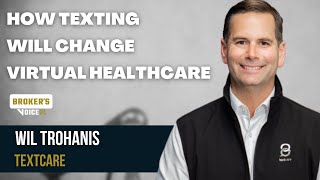
Wil Trohanis explains how Text Care, a product from One to One Health, uses texting to make virtual healthcare more accessible and convenient. The conversation covers why text is a better communication channel for healthcare than existing platforms.
Chapters
Hey. Hey. Welcome back to the Broker's Voice. I'm excited today. I get to have a new guest on somebody I've just met recently. And it's, it's going to be a fun episode because anytime I see a product, you know, a health insurance product that I think is going to make waves that I think a lot of people need to know about, more people need to know about, I am going to highlight them on the show. So I'm excited today to have Will Trehanis on, who is with One to One Health. But we're going to talk about one of One to One Health's products, text care. So, Will, welcome to the Broker's Voice, my friend.
Thanks, Andy. Great to be here. As a recovering broker, I'm thrilled that you'll have me.
Well, let's talk about that for a second, because the question I always love to ask people is you used to be a broker. Now you're on the wholesale side working with brokers. But before you started working with One to One Health, before you became a benefits advisor, how the heck did you even find yourself in this industry?
You know, at elementary school, at a career day, I went and talked to the. The insurance salesman and walked out with, like, a critical illness policy and like a best friend for life, like all of us did. No, I, I honestly got in the business through relationships. So it was through a. A neighbor of ours that I viewed as a mentor of mine who was very entrepreneurial but also had just this incredible network of people. He always knew people wherever we went. And, and, and that's when I really got a flavor for the nature of relationships in our business. And so when I was talking to him about leaving school and what I was going to do, my dad wanted me to pursue a path like him in consumer packaged goods. And I said, gosh, you know, I love what Roger does. I mean, that sounds really interesting. And so that was when I started my career at UNUM as a group sales rep, slinging life and disability insurance and voluntary benefits, gosh, almost 20 years ago. And I've just, I'm so fortunate what this, what this space has really provided me for my family, but also experiences where I've been able to go around the world kind of of under the banner of group benefits, really trying to improve access and financial security for all different types of employers with all different types of solutions.
And I can tell you've been in the industry for a while because you definitely used an industry term to represent sales slinging. I was slinging benefits. Yep. That's what we used to say. No, I think you're so right. Will I, I, I still believe a lot of people don't recognize how important this job is. I think back in the day it was easy to say, hey, I'm a health insurance broker, which means I provide health plans with quotes and rates to companies and their employees. But as US Health care continues to take a main stage when it comes to both cost and quality, I hope more advisors recognize how important their role is. So what, I'm curious, what made you decide to.
Move away from the retail advising side and join a company like One to One Health?
Yeah, you know, that's, that's a great question. I think my, my, my previous role, it was with one of the, one of the big three consulting firms, a national house in a strategic partnerships role that I absolutely loved. I mean, when I think about a job title that was built for my strengths, with the ability to cultivate all different types of relationships and then also have a look under the hood of the largest health plans in the country or all different types of emerging solutions, the role was just outstanding. But inside of me, I'd always had a desire to kind of bet on myself. And all throughout my career I'd worked for know big corporate behemoths and kind of had this calling within me of really wanting to be a part of.
Building something. And so I think it was kind of this, this entrepreneur calling that I've, I've always had within me and wanting to respond to that, but with a solution that, that, that truly I was passionate about. And I think that's what, what really came down to it. I met Dr. Helton, who started our company 10 years ago and heard about how he's improving the path to care for all different types of companies and the types of results that he's able to deliver, controlling cost and just these glowing patient feedback. And I said, man, I mean that would be something that would be incredible to be a part of. And so, yeah, I mean, I think it came back to the opportunity to be able to help build on this incredible legacy that Dr. Helton started when he began One to One Health 10 years ago with a pedigree of just incredible clinicians that we really wanted to continue building something special and really expanding how we serve employers of all sizes in all segments, which we've especially done with Taxcare.
Yeah, no, I like that answer because I think a lot of people I know I had it when I went out and started this company, Complete Game Consulting. The natural reaction from a lot of advisors is oh, you can't hack it as an advisor. And the reality is you, what you said, sometimes it's the truth. No, I want to make a bigger impact and I know what my passion is and I want to bet on myself. And so you went and joined a startup started by Dr. Helton. Now before we get into text care, let's actually back it up and talk about One to One Health, which is the parent, the, you know, the owner of text care. Talk to us a little bit about why Dr. Helton started One to One Health in the first place.
Yeah, so I mean it's a, it's an awesome story. And Dr. Helton.
Is, was a multi special, a partner at a leading multi specialty practice, had served as senior vice president for physician services for one of the largest health systems in the Southeast. And Dr. Helton loves to describe himself as a, as a frustrated primary care physician. He was being told to see, you know, 30 and 40 patients a day and just got to the point where he was kind of frustrated with how his patients would come in. They were complaining about how expensive care was to receive. He knew the process was not really built around the patient. But Dr. Halton was kind of really unique.
In thinking about, look, my role as a primary care provider is to treat what's, what's in front of me. But I'm going to be with you wherever you need to go. If, if it means that, you know, you actually do need to go see an orthopedic surgeon, I'm going to, I'm going to call that orthopedic surgeon. I'm going to have a conversation with him and I'm going to be here and be accessible for you every step of the way. And that was, that was so foreign kind of for a lot of providers that are in the fee for service landscape just to continue to be accessible whenever for your patients. And, and so I think innately he, he'd always had that wiring where he was just incredibly patient focused. And one of his patients who was a county mayor came to him and said, look, we're just getting crushed. Our employees are not getting taken care of. Our costs are going up 10 to 12% a year. Can you fix it? And so one to one health was not started like a lot of healthcare, you know, growth stage healthcare companies in this space. They weren't, there's not a whole bunch of investment bankers or, you know, MBAs that got together to try and IPO and build the next unicorn. One to One was started by A provider that was asked for help by one of his patients. And so Dr. Helton helped this particular patient, who was the mayor of the county, put in an on site clinic, develop a high quality network to send employees, you know, beyond the provision of what could be done right there within the clinic. And within the first year their trend went from, from 12% trend to flat. And they're one of our longest running clients and, and have not gone beyond, I'd say probably 2 to 3% trend for the nine years that we've been working with them. And so that just, I think light bulb went off in Dr. Halton's head saying, wow, this is pretty profound. I think there's something unique here. And so fast forward to today. We operate on site clinics throughout the southeast, Midwest, really all around the country, close to 200,000 employees, really with the idea of creating a very agile, bespoke clinical model specific to the clients that we work with.
Well, and fast forward even more Pandemic hits. And now we're all talking about this thing called virtual care. And what I love about Dr. Helton's story is he realized that the patient's journey throughout healthcare is inconvenient. Right. It's the whole entire system works against the consumer. And when you and I were talking offline, we had, we talked about this problem of inconvenience and even some of the cost containment solutions out there today that are good, they work. Are they convenient to the consumer? And the answer more often than we want to believe is no.
Yeah, yeah. I mean, it's, it's, it's unfortunate that in order to kind of bend the cost curve, it usually hurts. And with that.
You'Re going to have employees where that's going to bubble up to hr. And I think to your point about the pandemic, you're exactly right. HR and benefits teams have been overrun with dealing with the pandemic and labor shortages. There's so much. And when you think about some of the things and some of the levers that they have to pull in order to try and control benefit costs, I mean it just creates a lot of noise. And so I think that's, that's where we felt like there was, there was really an opportunity to come and reimagine what that front door to healthcare looks like. And really through the lens of convenience and quality, which is what we've built with Taxcare.
Yeah, and that's what I, let's, let's dive into text care because you read some stats offline that I thought Were pretty eye opening. You know, some, somebody could hear this and say, oh great, text virtual care. You're just another virtual care provider. Got it. But when I saw what you guys were doing, I said, okay, this seems to be something different. Let's talk about some of the stats before we even get into how tax impacts healthcare. Let's just talk about some of the statistics around text and why texting is going to be a very mainstream channel of communication even in an industry like healthcare.
Yeah, yeah. So, I mean, at its highest level, texting is the most widely adopted form of communication in the world right now.
Within America, Americans are twice as likely to text than to call. Over 90% of all text messages are read within three minutes. Think about that. I mean I've been in distribution and marketing for a long time and I think about all of the emails that we send, things like that, and all the, the follow ups. It's unbelievable to think that over 90% of all text messages are read within three minutes. And I mean I, I get it. The open rate of all text messages is over 80%. So you know, if you text, it's going to land and there's, there's a tremendously high probability that it will be read. So Andy, I think what we were wrestling with is in this world of all these apps, I mean there's an app for everything. Why not take a step back and think about how are people communicating right now and how can we really build something that is convenient? A lot of our original client base, public sector blue collar manufacturing workers, a lot of trucking and logistics, these folks are on the go. So text is especially attractive when we're trying to get to those employees that we can impact the most. So that's really what led us to pursue that channel. And it's funny, I'll never forget when we were discussing a lot of the feedback that we heard from our clients about just general input on telehealth and kind of the market as it was. We had one of our NOW clients that said, I'm going to tell you something, if you bring another app that my employees have to download, I'm throwing you out of my office. And I love it because that was a real call to action. And when we were all discussing it, Dr. Helton held up his phone. He said, trohannis, I've saved more lives through this than I've ever done, than I'll probably ever do in a waiting room or in an exam room. Because being accessible and being there for my patients whenever they need it. And there's 3,000 of his patients that have a cell phone number. He said, that's when I'm at my best being able to really help or guide my patients where they need to go. And so we really went to the drawing board to develop that in full compliance and in a scalable fashion.
Well, and I'm even looking at some other statistics I wanted to read off. You had said people prefer text over phone calls. Two to one.
Yeah.
By 2025, 6 billion people will send and receive text messages. We have maybe almost 8 billion on this planet. Yeah. This one I thought was very eye opening. People are actually more willing to share more information via text than they are in person.
Yeah.
Think about that as a doctor, people, a patient would probably be more willing to share something via text than when they're sitting in the doctor's office.
Yeah. And we see it all the time where.
We'Ll be having conversations with patients and it might be something sensitive and the provider will say, hey, I'm happy to hop into a video visit if you'd prefer. And they're like, no, I'm good. Here's what's going on. And I think there's especially as we think about, I mean, you know this, Andy, the generations in the workforce, you've got four, sometimes five generations across a workforce force. And especially with some of the younger generations, even millennials, they're just more comfortable texting than having a conversation, feeling like they're going to be judged. I think there's just a sense of comfort that comes with that. And so we absolutely see that with how text care serves our patient base now. And it allows kind of the open line of communication with their providers. So it's not so transactional. I mean, you think about all the virtual care solutions that are out there right now, you'll get six or seven minutes with somebody and then you'll never see them again. And so we really wanted to lean into that, that relationship and having an open line.
So let's dive into that. And by the way, you know who else texts? My 76 year old parents. So despite the generations, everybody is texting today. Yeah. So go into that. So what makes what, how does Taxcare work and what makes it unique? Talk to us about that.
Yeah, yeah. So in its most simple form, TX Care is a dedicated phone number by employer and we'll work with the employer to communicate, communicate out the benefit, all that it entails. But essentially we put the full functionality of a primary care office in the palm of your hand. So you can text, talk to, video chat with your clinicians 24, seven and under five minutes. So literally, when we bring on a new group, there's a dedicated care team. So they'll have a lead primary care provider that they can build a relationship with, that they can work with on an ongoing basis. But also you have the ability to be supported by a team 247 for anything acute that might come up. So, so it's, it's really powerful. Andy, when you think about being able to manage chronic conditions or kind of a persistent episode we had, you know, it's, it's funny when the weather starts to change, people are active again. It's like sometimes they've, they've forgotten how to play soccer, how to ride a bike and sometimes walk. Yeah.
A lot of instances of people right now like, oh my gosh, I just fell, or I've done this to my ankle. And you get to guide them through. All right, look, you don't need to go to the emergency room. Let's get you set up at an imaging. I'm going to be here with you throughout this episode. And you know what? Two days later, you're going to get a follow up from that provider, checking in on you, seeing how you're feeling. And so it's just a completely different level of the continuum of care of being able to have someone there alongside your journey, which, which we think is, is, is so powerful and is a, is a Throwback to, to Dr. Helton's original model of being there, being accessible to his patients, whenever, wherever.
Well, a couple things that also stood out for me were, number one, I heard you say you get a, you have one dedicated team throughout the entire journey. You don't get passed off from one virtual provider to the next. Number two, you get, you get responded to within five minutes. Like within minutes. That's huge. And then the last one that I think is overlooked because it goes back to the convenience thing. Your team, the provider team, is reaching out to the member. It's not requiring the member to reach out to the team, which, again, let's. Talking about convenience. That's convenient.
Yeah. I mean, and when, when you look at, I think the two fundamental flaws that we see with traditional telemedicine, it's the, the path to care and then it's the actual model. And so when, when you build a model that really leverages analytics and through the platform of text, we're able to get employees to use it and to come back frequently. So when we take over from kind of traditional Telemedicine solutions, we'll typically see seven times an increase in monthly visits. Seven times. I mean that's staggering when you think about a lot of those are avoided urgent care emergency room office visits that you're able to handle through kind of a fixed cost solution that is just has made a dramatic impact for a lot of the different populations that we serve. 81% of our patients have said they've avoided the ER urgent care because of text care. So, so we, we know that we're making a big impact when it comes to controlling cost as well. So we did an analysis of the actual engaged employee and Savings. It's over $1,100, $1142 a year is the projected savings for, for a user of Taxcare.
Well, and talk to us quickly about the, the statistical utilization difference between what we might refer to as the traditional telemedicine and what you guys are seeing with text care. Because I thought that was pretty staggering as well.
Yeah, traditional utilization for telehealth, I mean you'll get to maybe 20 or 30% of employees. But through our approach of targeted outreach and for anybody that we don't actually activate, we have a team that will go back and work to get those employees engaged with the platform so that, so that they'll actually use it. So almost really across the board we're getting to at least 80% of employees where they're activating, interacting with us, having a conversation. They know we're real people and that we're there to help so that when something comes up, we're the first place that they're going to come. And so that's, that's, that's really kind of reframed a lot of how employees think about. Oh my gosh. Like, you know, I used to have a dear friend of mine who's a pediatric nurse practitioner and I would always cringe when I'd be like, oh my gosh, I've got something going on with my kids. I want to ask her. But you know, I'm kind of uncomfortable with it. And you think about this, this is literally the, you know, that, that access to a full doctor's office right at the palm of your hand, where you're going to get a response in under five minutes, which is super powerful.
Yeah, that's why we have text, we use a text platform in our marketing because people have smartphones, it is their TV station, it is their news station, it is their newspaper, it is their go to for everything. So why not leverage that as well? So yeah, I love this. Well, for the brokers watching this because if you are a broker listening to this conversation, I, I would be having this conversation with your clients as often as I can because text is one of the most leveraged mediums we have today. Just listen to the statistics, Will. Just read comparing it to the traditional model of telemed telehealth and I hope you're seeing the value that providing a text based virtual care platform can do for your clients. So Will, if somebody is listening and they're like, all right, I have got to learn more about this. What is the best way to get a hold of you?
Yeah, best way to reach me is through email or LinkedIn, Wiltrohanis or my email address is WTOHannestone to One Health and would love to talk more.
That's awesome. I put your email right here below my window. So if you're listening in, get a hold of Will asap. This is a pretty, pretty impressive product.
And again, I love the fact that it was built by a doctor who's just trying to solve his own problem.
Amen.
You know, like you said, in our industry it's easy for people to look from the outside in, say we've got a huge opportunity to disrupt and make a lot of money on the health insurance healthcare system. This was a guy who was part of the system and had a problem that he was frustrated with. So those tend to do very well in the long run. So Will, I want to thank you. This was awesome.
Thanks Andy. Appreciate all that you do great to be here with you today and look forward to having a conversation with, with many of you moving forward every.
Yeah, no, you. The pleasure is all mine, my friend. When I see a product again that needs a spotlight shined on it, I'm going to make sure the industry knows about it. So thank you again. Everybody else, take this seriously. This is a really good product, text care. You're going to learn a lot more about it in the months ahead. And get a hold of Will so you can get your hands on it early. All right, everybody else, be well.
More from Andy




If you want producers to succeed faster, help them create a sales message that creates confidence.

Sales isn't a zero-sum game! You can have tough competition and still grab a beer after



Option 1: Meditation, a fast walk, a podcast, and protein. The ultimate morning routine!

How you do one thing is how you do everything. Ill elite producers fuel their body.


Stop living in the gray of maybe! Your job in sales is to get a clear yes or no