How to Achieve Sales Success With an Authentic Brand with Ragan Edwards
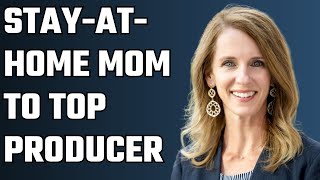
This is a podcast-style YouTube interview (host Andy Neary with guest Ragan Edwards) about Ragan's path from prior pharma sales to a 2018 start in commercial insurance at the Mahoney Group after a 10-year period as a stay-at-home mom. Major themes: translating parenting skills to sales (multitasking, calm under pressure), leaning into authenticity and personal narrative when building a brand, persevering through a sink-or-swim sales environment, and niching into healthcare and human services (motivated by family experience working with developmental disabilities). Practical advice includes "lean in", find your why/your niche, build relationships at the speed of trust, and be resilient through rejection. Personal facts: Ragan joined Mahoney around 2018 (about seven years tenure), graduated college in 1999, has three children (one daughter headed to University of Oklahoma), and uses reganedwards.com as contact; she prefers LinkedIn over other social media and practices daily morning walks/fitness as a grounding habit.
Questions this video answers
Around 2018 ("Almost seven years" tenure referenced).
About 10 years.
1999.
reganedwards.com (given as her contact).
Healthcare and human services (motivated by family/nonprofit experience; brother has cerebral palsy).
Chapters
When you're a stay at home mom, you're a CEO, Right. You are a multitasking boss. And some are so nervous to re enter the workforce. I always say lean in because you have so many skills you didn't realize that you had.
Reagan Edwards, welcome to the accelerate your insurance sales podcast.
Hello. Hello. I'm super excited to be here.
Is this your first podcast? This is my. Oh. For the two listeners tuning in, this is going to be pressure.
I'm a newbie.
We're going to have fun with this. So Reagan, let's where I want to go with this conversation today is you're with the Mahoney Group. Yes, I am selling commercial insurance.
I am.
So we're going to go a lot of different paths with that from how you got in the industry because you were a stay at home mom previous. I was to what it's like to sell in, let's call it a male dominated industry.
Yeah. Excited to talk about it.
So let's start at the beginning. How before you, you've been with Mahoney for how long?
Almost seven years, so.
And before that you were not in the insurance industry?
No insurance experience.
So for the, the women who listen to this, this might be a little good nugget. How did you go from stay at home mom to I think I'm going to get in the insurance industry.
Yeah.
Because most of us do not get in it by design.
Right. Well, so I did work before. So I, my first career was I've kind of always had some kind of sales capacity. So I was in pharma. So I sold an oncology product. And I knew when we moved, we were in LA at the time. And when we moved to Tucson, my kids were really little. I only had two at the time. And I was grateful enough to be able to stay home with my kids for 10 years. But at that 10 year mark, I kind of started getting the itch to go back to work. And I think it's because there's something inside of me. I'm a pretty goal oriented person. And as much as I loved staying home with my children and got so much satisfaction out of that, there was something calling me back to something a little bit bigger. So I definitely like to challenge myself and I was calling it my back half career.
2.0. Right. And so I just wanted something that I didn't completely disappear from my kids that allowed me to set goals and achieve things for myself.
And then also have something that I could do for a really long time. And so I looked At a couple different things. I looked at real estate, I looked at commercial real estate. Um, but one of our good friends actually works for the Mahoney Group. And I was kind of talking to him about this and I was kind of asking him some questions about commercial insurance. And the more I started talking to him, I realized like, wow, this actually could be a really good industry for not only me coming out of being a stay at home mom, still being able to be present for my kids, but also being able to carve out for something for myself. Um, so I started interviewing and everything kind of just fell into place. So that's how I ended up here. And I did look at a couple other agencies, but the Mahoney Group really felt like the right one.
Well, and it's an interesting choice because you had said you also looked at possibly real estate and things like that. And I think one thing you see in some of those other industries is people get in. But let's be honest, it's part time, right? You can't do this part time, you.
Cannot do this part time.
And, and so you really gotta go ahead, you know, jump in feet first. I am curious though, because you were in sales before you took the break, you said 10 year break to be a stay at home mom and now you came back. Were there any lessons from being a stay at home mom that actually made you better at sales when you came back into it?
Sure. I mean, when you're a stay at home mom, you're a CEO, right? You are a multitasking boss. And so I think you have the skill set. I think so many moms have a skill set that they don't even realize they have. Right. And some are so nervous to re enter the workforce. And if you don't want to, I mean, kudos to you. Whatever path you choose, right. It has to be authentic and right for you. But for those that are interested in reentering the workforce, I always say lean in because you have so many skills you didn't realize that you had. So yeah, the ability to multitask, the ability to handle a lot under pressure, I mean I. You juggle so many balls when you're a stay at home mom. And I mean in insurance you have to juggle a lot. There's a lot coming at you at many different times. So the ability to stay cool headed through that I think is a really good thing.
Cool headed. And do you find that you are just more efficient now with the multitasking? I'm sure there's days I would Say.
Yes, some days are a train wreck. Right. Like, some days you can.
Welcome to parenting.
Well, that is true. Thank you.
And I've never been a parent, so I can't comment.
No, but you are right. That is very accurate. But, you know, you get one phone call on a claim one day, and your entire day is blown up sometimes. Right. And that's just insurance. But again, like, you're right. That happens with parenting as well. So the ability to be able to switch gears really quickly and efficiently. Right. And moving back on task, like, not letting that blow up your week. Right. Because you do have to get back on task.
Yeah. Well, you know, I'm sure it was, you know, coming back in. When. When did you join Mahoney? 2,015?
I don't know, 20? 18. 18, 18.
Okay.
You made me do math.
Was there a moment, I'd be curious, you know, that you came in and I'm sure there were moments where you're like, is this really what I want to do? You probably had the doubts, but was there also a moment early in your tenure back in sales where, I don't know, maybe had that moment that said, I can do this. I'm gonna. I think I can be successful. Can you recall that?
Yes. First off, to acknowledge what you said first, though, there were so many moments where I'm like, what am I doing? Why did I do this? I mean, I completely ripped myself away from my kids. I mean, I was able to be there. But in those first five years, let's be honest, it is a grind, and it is a sink or swim grind. And I think that's the hardest part of it. But, yes, it was probably about year three when I'd gone back after a prospect that I didn't win the first time. And not only did not I not win it, like, they rolled me hard. And if you've been in insurance before, you know what that means. And I, you know, a valuable lesson. They called me back in and I ended up landing the count. And I asked them why, and they said, listen, we. I don't think we're ready for you round one. But we realized with everything that you're talking about, we needed you at some point and we wanted what you were offering. And that was that moment where I'm like, okay, I think I can do this. And I think I bring something that might be a little bit different than other people.
Such a good lesson, too, on, sometimes it's okay to be in second place.
It is.
You gotta have that delayed gratification that Persistency. But the day is gonna come where the first place is gonna screw up and now they're ready for you.
Absolutely.
Cause you could have easily given up after not getting it the first time around. Right.
And I think that's the hardest part about this job. Right. Is not. You do have to be able to handle rejection.
You have to handle, be able to handle rejection. And I was talking to Guffey teammate of yours earlier about the fact that the best thinking years, not days and.
Weeks, it's a marathon, not a sprint.
That desire for instant gratification is going to kill you in this industry because every, every loss is devastating then. And that, that tells me you're, you're thinking with your paycheck and you're not thinking long term.
Right.
And so. Well, let's, let's take a quick step back. Even before that. We're doing this recording in Arizona.
We are.
You're not from Arizona. You're from North Carolina. You're a Tar Heel.
I am proud Tar Heel.
How the heck did you end up in Arizona? In the Southwest.
Yeah. So I think this kind of says something about me. So when I graduated college and 99 that's dating myself, I graduated.
No, I'm actually 2,000.
Okay. So we're about same age.
Yeah.
I wanted to take a leap. I'd always lived in North Carolina and I wanted to move not far, far away. Just wanted to experience something different. So a small group of friends and I moved to San Francisco.
Oh wow.
In the height of the dot com boom, which was so fun and a lot of great memories but you know, kind of sowed my seeds and kind of stumbled a little bit along the way and had a really good time in San Francisco, but ended up meeting my future husband there. He was in LA at the time. So then I relocated to la.
Okay.
And got my job in pharma and we started family raising kids and obviously got married at somewhere along the way.
Well that says a lot about you. You know, now I go, okay, jumping in to the insurance industry as a mom, being a single stay at home mom for 10 years. It seems like you are somebody that's not afraid to put yourself in uncomfortable situations.
I was just about to say that I sickly kind of like I think putting myself in uncomfortable situations, which I didn't know that about myself until there was a pattern. I'm like, why do I do this? But I think there's just a challenge that makes life interesting. Right. I think I know that I can first off, I know I can Move anywhere. I know I can always make a life somewhere. I know that I can put myself in a tough situation and I can get out of it. Right.
My dad passed away when I was 10 years old, and so I think that just builds resilience.
Right. It probably made you grow up pretty quick too.
It did.
Yeah.
Yeah. So I think that's probably what created that inside of me, just knowing that I really can put myself in challenging situations and get through it. Which is kind of a superpower in this job too. Right?
Yeah. And now you're in Tucson, Arizona. Shout out to the Wildcats.
So now I divide my loyalty.
Well, now they're. They're in the super regional for baseball.
You're a baseball player, Right.
And North Carolina might be in the super regional.
Okay, so this is fun. So North Carolina and OU are playing today. My daughter is going to OU in the fall, and then whoever the winner is of that team will play the Wildcats. Isn't that funny? Ah.
And is it going to be at Arizona or North Carolina if they win? We know.
I don't. I haven't.
The pressure's on unc, because you're the number one. Whenever you're the number one seed and they've. The team's already beaten you once now. Now they got to come back and beat again. The pressure's on you.
Right.
And so. Yeah. So that's awesome. This episode is brought to you by True Captive Insurance. What if you could take full control of your healthcare strategy without the financial burdens of traditional insurance? At True Captive Insurance, they make that possible. As the only captive in the nation that puts up the majority of collateral on your behalf. They provide financial flexibility from day one, making them an advocating partner for their customer success. TrueCaptive's fully customizable plans and cost saving strategies ensure you never have to choose between affordability and quality care. It's time to break free from the limitations of conventional insurance.
Take the next step today. Visit TruCaptive.com and discover a smarter way to manage healthcare. That is TrueCaptive.com. all right, so let's have a conversation about this. You're a female in a male dominated industry. What we like to call male pale and stale.
Yes. Oh, that's funny. Okay, I'm gonna. I'm gonna copy that. Male pale and stale.
Average age is still about 59, 60. Let's be honest. And it's mostly. Mostly dudes. What's that like? What's that experience been like?
Yeah, so I don't think I knew that was. It was like that I knew it was male dominated. I mean, I was looking at, obviously I think I mentioned commercial real estate, which also is a more male dominated industry. I don't shy away from challenges. So I didn't think that was really going to be that big of a deal. I think sometimes you don't know what things are going to look like until you get there. Right. I mean, the background that I come from was very female. In fact, almost more like 60% female, 40% male, except unless in leadership.
And so I kind of was attracted to this, like, okay, let's go blaze a trail here. Let's see what happens. I don't think that it's been something that has been a bad thing. I think it's been interesting being a female who's achieved. Right. So even going on a producer trip, like an award trip last year, I was the only female that went on the trip. So it's just kind. That's kind of interesting, right. It's not bad, good or indifferent, just interesting. What I know is that it can be a superpower. And that's what I'm realizing more and more. And so now I think when I started, we had two females that were validating and we had two kind of more seasoned females that were more towards the end of their career. And it was funny how different we were. Right. Like, I'll go ahead and say this. The ones kind of nearing the more seasoned ones had experienced something that we had not. They had experienced like probably sexual harassment. Right. And I'll go ahead and say that I think they, they were hardened by a lot of the things that they had experienced and they rose through and survived it. And both of them were million dollar producers, which is amazing.
Very different outlook though, than the gal and I that had just started.
Yeah.
And so my co worker and I really leaned into each other and I will say part of the reason that we've been successful is because we really did support each other through this and we both realized we show up differently. I show up probably like a mom, right. I show up like a nurturer. I show up being able to handle tough situations. My personality, I research the heck out of things before I go at them. So when I'm walking in a door, I kind of know where things are going to go. Right. And I know where I need to steer conversations.
And I probably mom accounts, right. Like I, you know, I just, I can't. That's just the way I am. So at times in my career and even recently I've been asked to.
Or people have stated like, this is the way we're going to do things, we're going to be this way. And I've just realized I'm not. I'm going to be my way. Relationships are built at the speed of trust. And I heard someone say that two years ago and it really stuck with me. And I think for me, it's really important to establish that right away.
Well, and.
There'S a phrase that's often used in the world of marketing. Building a brand, you call it, you name it, whatever you want to call it is you are best positioned to serve the person you once were. And what they mean when they say that is the people you are meant to do business with will often have a lot of commonalities with you. Right. We talked about psychographics when we did the ocademy.
Right.
You personally, without knowing a lot about your business model, probably would attract the type of business executive a, that might also be a mom, maybe, or a male executive who has a spouse and he understands that importance of the fact maybe his spouse runs the household or whatever it is. Right. If we don't think.
Our.
Our life experience doesn't have an impact on who we do business with, we are ignorant. And I think going back to what you said, we are an industry where I've seen behavior towards women be less than ideal. And I'm being very kind when I say that. And I think a lot of women then feel they have to play the quote unquote, man's game. And unfortunately, then they're not who they are. They're not showing up as themselves 100%. And I think one of the proudest moments I've had in our business, complete game consulting, is doing brand work with a female, helping her build out her brand that is authentically her and showing up as herself. I've had women, Regan, when I reveal. So when I do a private workshop for somebody, we'll do a brand kit which is like, here's your blueprint. They'll cry because it's the first time they go. It's the first time. Now that I can look at that and go, that's me.
Yeah, yeah. And I think I so agree with everything you said. And I think as females, we have to remember we don't need to mold ourselves to anyone else. And if you're being asked to do that, you're not in the right job. And thank goodness I'm not being asked to do that. I mean that you need to be in a place where. Or a job where it allows you to show up as you and understanding what your superpowers are. Right. Why you would be someone that someone else would want to work with. And if you know that walking in the door and you're your authentic you, you might not be the person for everyone. I'm not everyone's cup of tea. I'll be the first person to say that. But for the people who I do work with and that value me, that's who I want to work with. That's my ideal matters. Right.
So what advice would you give? Maybe we already answered the question, but what advice would you give another female that might be listening who is struggling with that, that may be feeling a little out of place? You know, maybe she's on a team that is all men selling commercial insurance, heck, selling benefits. What advice would you give her?
I would say the biggest advice is lean in. So no matter how uncomfortable you feel or how.
Maybe that you haven't showed up to the right place that you feel, really hone in on what you do best and what your strengths are and where you feel best. Right. I think that's the other part is like, what makes you feel the best. Once you've identified that, lean into it. And I would say working with men is great. I mean, I think all the guys around me, I wouldn't be here without the support of a lot of the guys around me. And once, I mean, they will respect you for showing up as you. Trust me, they will. You don't have to be them.
That's a great way to.
I mean, they all golf. Listen, I don't golf. I am the outcast on every single one of those things. But that's okay. I do other things really well and show up in a different way.
Well, I think what you're getting at is one of my hopes is to forever rid this industry of the phrase, well, this is just how we've always done it.
Right.
And that's not true anymore. And I love the fact we have more women in the industry now. I love the fact some of the younger generations, the Gen Z's, are coming in going, why are we doing it this way? That's dumb. Now we're questioning the way things have been and I'm glad that narrative is being challenged.
Well, at the end of the day, I think it's going to serve our clients better. Right. Like, I think the insurance industry, from what I've noticed, is being flipped on its head in a really good way. Right. Like we are starting to serve clients. It's no longer. And I'll tell you this, I think coming into this.
I think it can be mistaken as a sales job. I don't look at this as a sales job. I look at this as a job where I get to go, yes, there's a sales component to it, bring in clients, but then I get to really serve them. And I think you and I have talked about this, but I work with a lot of nonprofits and human service organizations, so I get to help my clients serve their mission, really do their job better. That is satisfying.
Why did you select because you have a niche in human services and healthcare?
I do.
What led you to the. To coming to the conclusion that those. That's where you wanted to niche your business down?
Sure. I didn't know what I wanted to be in insurance when I grew up. When I first started. No one does. Right. And I felt like there's kind of a sink or swim. There's not this. This here anymore. But there was kind of a sink or swim mentality when you got here.
I would have written anything that said yes to me at that point in time. It didn't matter.
By the way, I've had advisors say that when I say, so who's your ideal prospect? Anybody willing to say yes. Right.
That was very much me in the beginning. If you had a heartbeat and said yes to me, you would be my client.
The other phrase I love that I've heard is, who cares if they're weird as long as their check clears?
That's another good one. I mean, when I look back at what like, not only me, but some of the other validating producers put up with in the beginning. Yeah, I don't think I would have. Would have worked with a lot of those people now. But I quickly fell into healthcare and human services. One, I have a background in healthcare. Right. So I just kind of speak that language and understand it, understand how to navigate all of that. Right. And it's super challenging and very interesting and complex. So I think I like things that are complex. Right. For the human services side, I've always had a background in nonprofit, so I grew up with a brother with developmental disabilities.
He is two years younger than me. And it's just, you know, we're close family, and so I always grew up volunteering with Special Olympics. He has cerebral palsy. So we worked a lot with the UCPS in North Carolina. And so that was very much a part of my upbringing. And then when I stayed home, I helped found a charity in town in Tucson that raised money and Did a lot of service projects for families suffering from pediatric illness. Anything chronic, because we have a pediatric research hospital down in Tucson. So I think I've just always gravitated towards that. And so I just, it feels right for me. That's where, that's where my passion lies. And I think that's another thing about female or male, it doesn't matter. You need to find what moves you. Right. Like I always tell people I started off writing a lot of contractors. They, they are not my people. Right. Like, I have a lot of friends that are contractors, but I realized, like, that's not who I want to work with. I don't really actually enjoy working with.
Well, you have a personal tie. I mean, the moment I heard you just say that my brother, right. Oh, now I know why you're passionate about it. Right. And that's going to fuel you to success. And I know for my, my learn my people who tune in every week, I use this guy's name way too much, but he has so many good examples. Chris Hamilton's a client.
Yes, I've heard his name.
And I remember the day I was doing a workshop with him and he's very successful benefits producer. But we sat down, I said, what, what problem are you out to solve? Like, what makes you do what you do? And he started to give me some answers. I'm like, it's not good enough. I know there's more. And we kept peeling back the layers of the onion until he said, you know, I watched my brother have to file bankruptcy because of a medical bill.
And he didn't get to pick his insurance, his employer did. And worse yet, right down the street is one of my clients who has one of the best health plans around.
There's your lie.
And I think the moment he said that himself, because I don't know if he, he really had ever said that out loud. You saw him take off. So you have in that my brother. I've watched my brother go through this his whole life. Now that all makes sense.
Well, you're passionate about it, Right. You speak their language and they know that you're there for the right reasons and that you're there to help. I mean, I think one thing I do when I first meet people is I lead with how can I help. Right. Which is so different.
Well, I think too with that goes back to you being a stay at home mom. Can we agree? Stay at home mom is a very underappreciated job.
It's a very underappreciated job and I.
Think insurance can be a very underappreciated job. Oh, you're an insurance broker. Right. That, that, that phrase is about as closely aligned with a used car salesman. No offense to the used car salesman, that connotation. But you take what you do very seriously. And now you've tied it to an industry that is very near and dear to your heart. No surprise you're going to show up every day. Passionate.
Absolutely. I do love what I do, and I think if you show up that way, you're going to get your clients over time.
Yeah. Any advice for somebody who is struggling maybe to find that niche?
Yeah.
I mean, how they can go about selecting one.
Absolutely. I mean, I think there are a lot of people that are generalists in this industry. I think that's also one thing that's changing. I think this industry is moving from being a more generalist industry to a more niche, focused industry, which, again, I think just helps serve our clients even better.
I think if you're struggling finding that, I think you need to go back to what's your why.
Why are you here? What motivates you? Right. And I think when you really do the work and understand that the other will come. And I think you can have a major and a minor. I think that's okay, too. I'm all about, like, being smart and diversification. Right. And so you want to have something that, I mean, if you look at the market over time, for example, you want to have something and, well, insurance is somewhat recession proof, but I mean, your book can suffer during recession times. So I think it also is good to have not. You could have a major and a minor.
Yeah. I love the fact that you said that because I think I was of the mindset selling benefits years ago that, well, why should I have a niche? Everybody has employees and they're all unhealthy. Anybody can be helped. Right. But I do think now, today, I preach it harder than I have ever had, that no matter what you're selling in this industry, you have to have a niche. Especially with the onset of, you know, obviously I'm a big believer in content. We, we've, we've talked about creating LinkedIn content. That's how you build thought leadership. And, you know, I think a lot of people get the, the phrase thought leader wrong. They think it's, you're the smartest. You're sharing ideas nobody else has ever shared. No, no, no. It just means you lead people's thoughts. So if I see Reagan showing up every day talking to me about healthcare and human services around insurance. Guess what? You become my go to thought leader.
Right.
Oh, by the way, I don't care that you were a stay at home mom nine years ago.
No one cares.
Nobody cares.
No. And I think it's funny, I don't talk about it all the time to everyone. Obviously. I don't go into my clients saying, oh, I was a stay at home mom before. It's not that I'm not proud of it. Right.
But I own it. I mean, if someone asks about my background, I'm certainly, listen, you don't have to be 30 years in this career to be successful. In fact, you hit it when you said some of these younger guys are coming in with new, fresh ideas. I think it's better. I think I came in at the perfect time in insurance, to be honest.
And it's part of your story. Why hide from it? I've had, I've heard sales leaders tell their team, don't let people know that you were doing this three years ago. Or don't let people know you've only been in the industry two years. One, you can't hide from it. It's in your LinkedIn profile.
Own it.
But it's part of your story.
Right?
And if they don't like your story, they weren't meant to do business with you.
Well, listen, people buy from you. They buy from people. Like I said, relationships are built at the speed of trust. They care what you know. But listen, you can form a team around you and you can ask a lot of questions and figure that out. So I, in the beginning, same fell to that trap, like, oh, how long have you done this? And it was very obvious in your year one that you don't know what you're doing right or what you're talking about. My biggest mantra is fake it till you make it. You just get in the door. I mean, don't think of being young in this industry, female or male, as being bad. You have resources behind you to back you up. Just be you and show up and understand what you do best.
Well, and I think that piece, for all the female advisors tuning in today, one thing I want them to hear is, and we've worked with several who've had this challenge, they know that there are times they get in the door because of their looks.
And I hate to say it, but it happens sometimes. But then that's when the imposter syndrome sets in.
Am I here because of my knowledge or am I here because I'm a female? And that's where you have to be able to walk in confidently going, I know what I'm doing. I know more about what I sell than you prospect, and I'm here to help.
Right, Right. I mean, I think imposter syndrome, unfortunately, most females at some point, and they're life. I'm not even gonna say career, just life. Have that.
Right. Do you have imposter cinema as a mom?
No.
Maybe after kid number one.
Thank you. I made it with that. You're in the trenches. You're like, I don't know. No, it's one day at a time. That's what I would say. Never had imposter syndrome there. I think I was just so grateful to be able to do that.
Right.
And my. I. I can't say if my kids feel the same way. No, I'm sure they do. But. Yeah, no, I. I definitely had imposter syndrome a few times here. You know.
The first time I won, you know, earned our trip. Earned our, you know, whatever. I validate our producer trip. I thought, wow, I wouldn't have gotten here of X. And then that year, two, Oh, I don't know if I really earned that. I think I got that because of X. And then I had to sit myself down and say, okay, third year in a row.
No, this isn't luck anymore.
This isn't luck. Like, you've arrived, you're doing really well, and I am different. I mean, I don't have. I mean, I might not be the killer. Right. I would never describe myself that way, by the way. And some people in this agency are.
I'm not. I mean, I am probably more like. The slow and steady wins the race. Right. But the book that I'm building also is not as vulnerable. They don't. Easy come, easy go.
Yeah.
The book that I'm building is very sustainable.
Y.
And that's the other thing that I had to realize, like, no, you deserve this. You've earned this, and you're doing it differently, and that's okay.
That's awesome. And most important, you're showing up as you.
Right, right.
Yeah. Let's get to know Reagan a little bit. Okay, so three kids.
Yep.
I believe you just had a daughter graduate from high school. How does that feel? And your oldest. Right?
My oldest.
How does that feel, Mom? Are you proud?
Surreal. Super proud. Yes. Super proud. Surreal, I think, is the word I'm feeling right now. Right. Because I think I put this in my post that you read, but when they're born, it's like, 18 seems so far away.
Yeah, got 18 years. That'll be.
I got 18 years. And all of a sudden looking back at all the pictures and the moments and the videos and it just. Yeah, it's surreal. And now you, like, you cross your fingers and you hope that you've done your job. And you know, I was never my daughter's friend. I don't really believe in that. As a parent. I don't think you need. As you're, as you're their parent, you are not their friend. But I can see that that might be coming someday now. Right. And she's turned in such to a wonderful human.
She's going to Oklahoma, which is a little.
How does, how does a girl from Southern Arizona choose to become a Sooner.
Right. I know. Well, first off, she's going to be.
A changing landscape for her. Norman, Oklahoma is a little different than Tucson, Arizona.
By the way, I'd never been to Oklahoma before and I got up like, oh, we're literally not in Kansas anymore.
It's. Yeah, it's different. But Norman is a great town. You know, I think she has Southern roots, that girl. So everywhere we were looking at was somewhere in the south in the sec and it's a great school. Here we go. Boomer Sooner.
You know, one thing I. It's been interesting with college is watching because I'm of the age now, friends, our children are going to college. Right. I'm from Wisconsin. And so back in the day when social media wasn't a thing, the Internet was in some cases not a thing. Most kids went local. Right. They'd go to Wisconsin or Minnesota. I think now with the advent of social media, I should say Advent's been around for a long time, but because you get to see pictures from everywhere now. I can't tell you how many friends I have in Wisconsin whose kids go to the SEC now.
Well, it's a magical experience.
Tennessee, Ole Miss. Right. Because I think they just. Now we have such easy access to see what that school is like. And it, let's be honest, looks a lot more fun than going to UW Milwaukee.
Right. Well, here's. Here's one thing I'm gonna say and you're gonna laugh, but it's true. The south is trending right now.
Oh, yeah.
Oh, it is. I mean, it's. It is totally trending. And started. It started in Covid because guess what? They went to class.
Ah, good point. Didn't think of that.
So that's. That is really when everyone started kind of looking more at those schools. Not all of them took off completely. Some did, but I think that was the catalyst. But yeah, it's like the full college experience, man. It's, you know, the weather's nice.
If I were a high school senior all over again, that's where I'd be looking.
Yeah.
You know, weren't playing sports or anything, or lucky enough to play sports in the sec. Yeah, absolutely. What are some of your. When you look back at your life and especially since you've gotten in the insurance business, who are some of the mentors, whether you've met them or not, that has really helped shape who you are today as an advisor?
That's a good question. You know, I have a few just within the agency. Right.
There's some just around the country and believe it or not, and I guess maybe more peers than mentors, more support network, I guess.
And then actually some centers of influence have been really big mentors for me. I have one in particular that I knew before I started insurance, basically through nonprofit work. And she really has been someone who's kind of mentored and carried me through this whole human services venture.
And we're a podcast that like to give shout outs. So feel free to share their name.
Yeah, so no, this person's name is Susie Huhn, and she's just a great.
Individual here locally in Arizona.
Right, Cool. Yeah. Yeah. But, yeah, just some. Some powerful women and I think I gain a lot of inspiration. So right now, within healthcare and human services specifically, it's not just unique to Arizona. That industry is really turning over from, like being led by a certain type of person. Right. And now these powerful females are starting to come up in this industry too, that literally have worked their way up from social worker on up to CEO. And it's really cool to watch. So, like, I really kind of gain. I don't know if they're mentors per se, but a lot of inspiration and support from that. I don't know if that really helpful.
How about. How about.
Books you're reading right now? Okay, I'm gonna want to get inside your head here. What kind of books are we reading?
It's funny you say that. So do you know what my goal every year, Andy is, is to read like one. I'm going to start reading again this year.
All right, all right. I'll give you that. You're not a reader.
I have started reading Let Them because the rest of the country read it. And I felt like.
What's it called?
Let Them by Mel. Mel. Mel. Mel. Oh, I'm going to get that wrong too.
Not Mel Robbins.
Mel Robbins.
Okay, okay.
Yeah, yeah.
Okay, okay. Yeah. She's a very powerful female influencer for sure. How about social media? Anybody outside of work you follow on social media as. And you. And because you view them as a thought leader. I noticed in your LinkedIn profile you had Brene Brown as somebody you follow.
Yeah, no, I do like Brene Brown a lot. I think. I gosh, that is someone who, I've read their books. She has had so much great content for females coming up and it's relatable on any different level. Right. Just on improving yourself in general and also just keeping true to yourself. Right. Like, I think she really spoke to me when I was a stay at home mom because it's really easy to lose yourself. And I think as you're asking me these questions, and this is what I struggled with thinking about today was.
You. When you're a mom, like especially mom of three kids, and this is me getting really vulnerable here, you kind of give up a lot of yourself, right? Oh, sure you do. And it's not that you lose your way and who you are, but I will sacrifice 1000% of myself for anything my kids need. Right. So for me it's faith, family and then everything else behind that. And so my, my kids and my husband really do are they, they come first for me. And yes, I probably have lost a little bit of myself along the way and maybe, maybe me going back to work was regaining part of that. Right. Because I knew it was something that I just needed to fuel inside myself in order to be happy. But yeah, I mean, you know, I'm a reformed runner. I love exercise.
Talk about habits. You know, I think, I hope one thing you've, you've taken away is after your third trip that you've earned with the company here, that this isn't a fluke. No, it's not what you're doing that is leading to repetitive success or repeated success, which I love. So let's talk about habits and rituals. What are some of the things you do on a daily basis that help drive your success?
So with work specifically?
No, just work or what you do, what I call off the field, that helps you be successful on it.
So pretty much every morning, I would say six out of seven days of the week, my one thing that I have to do is I just like getting up very early like before. And sometimes like in the winter, literally I'm walking in the dark with a flashlight. And it's less about walking my dog, but it's more about having. It's kind of like a moving meditation.
Oh, yeah.
And it is literally 15 minutes, but it's quiet. There's no cars out. You can hear the birds. And it's just a way to ground myself a little bit each day before I get into chaos. And, you know, our days are pretty, like, busy. Right. Um, it's controlled chaos, but it is a little bit chaos. Right. Um, so it's just my thing that I have to have every day. And I didn't realize I needed it until I think this year. I was like, wow, this is like, this is my one. This is my moment. I've flirted in and out with actual sitting down with meditation, and I do like it when I. When I do that for several months. But I think that really just works for me the best. Right.
A lot of people say that whether it's walking or running, that's their meditation. And you also said you're a runner.
I'm a reformed runner. So, yes, I love. I love running. So running has been in my life for a very long time. My body does not love running anymore. So I have switched over to more weights and a lot of, you know. Yeah. I don't know if you know about F45.
I think everyone I know of the model.
Yeah, it's pretty structured, but it's, like, easy to get and you don't have to think someone tells you what to do. But I have to have some kind of exercise in my life.
Well. And I think we underestimate the importance of strength training. Training as we get older.
Oh, well, that's why I switched. I mean, that's why I had. That's the other reason why I had to stop running. I just realized I'm not really, like, I'm not really that strong. And you do start losing so much strength. So it's been. It's been important.
Absolutely. I watch people who do a lot of exercise, but not strength based. And they look, in many cases, they look frail.
Oh, for sure.
And yeah, when you get in your 40s, 50s, then obviously into your 60s and 70s, you look at what causes the majority of the accidents at that age. It's a. A lack of strength, hands down, and balance.
Yeah, yeah, yeah. I know you're pretty in shape. What do you do?
But I tell people caveat. Anything I'm about to say, I have no kids, so I can be selfish with Amy and I can be selfish with our time. But yeah, I love. Actually, my perfect week with exercise is I do a mix of a lot of things. Strength, train, run. I Actually still love to do track workouts.
I like the fast stuff. And then I even do, like, I'll try to get out on my bike once a week maybe, and then I'll try to do one hy Rox workout, which I don't know if you're familiar with.
Okay, I am.
Is that kind of. It's, it's. I, I tell it. I, I describe it as cardi or CrossFit meets cardio.
And maybe you need to add the word torture in there.
Now, I don't do it like you see them, the competitive people doing it.
Sure.
But it's that mix of running and then doing something else, like wall balls or running and back and forth, back and forth. I try to mix that in once in a while. I just like to try to mix things up.
Yeah. I think one day when I get some more time back, I would like to have. Right now, I just need someone to tell me what to do. But I.
But that's very important. My strength training. I hired somebody to give me the workouts so I don't have to think.
I think I realized what my shortcomings were like. I will not kick my own. You know what? I need someone to tell me what to do. Yeah, yeah, yeah. I need that pressure.
This has been awesome, Reagan, you know, looking at your. Your career, your insurance career, which is now, what.
2000? You said 2018.
So about seven years.
Seven years.
If you could go back, knowing what you know now, what would you tell your. Yourself back in2018, when you got in this business?
Yeah. I would say you made the right decision. Right. I would say even more. So jump like, you're going to be fine. Right.
You have to lean in.
And if somebody's listening and says, okay, Reagan, what does it take to be successful in this industry? Either I'm new, or I feel like I've plateaued a little bit, which a lot of people in this industry do. In your opinion, what does it take to succeed?
Yeah, I think you just have to have that resilience, and you have to be willing to ask yourself the hard questions, like if you are stuck. Right. And I think we all hit those moments. I mean, I'm actually having one of those this year. I've just had, like, a series of events that kind of have made me stray a little bit, and I think that's. That happens in this industry. You're going to have good years, and you're going to have great years, and you're going to have some not so great years. The Power to take yourself back out of that and really introspectively look at it and challenge yourself to either get back on track or ask yourself the hard questions of why. Because we're not perfect. Right. And you have to hold yourself accountable.
And there is no straight line to success.
There's not.
I can remember the day early in this business when I started Complete Game Consulting. It was a day where everything went wrong. I lost a couple clients. One of my big clients had let me go because they were getting acquired so hard. It was. And I said it was a moment where I said, is it. Is this the moment where I needed to say, go back and sell health insurance? But I remember going to bed that night, and I'm not kidding, I was down like four clients, coaching. And I said, I went to bed excited to get up and do it again the next morning, regardless of feeling like I got punched in the face so hard that day. That was the moment I realized I think I got what it takes to grow this business because I really love get. I want to get up and do it again. And I think that's. To your point, that resilience, let's face it, there's not a lot of people in this industry that like what they do. And it's why they don't invest the time, the money, whatever it is, to get better. And it's the moment they get punched in the face, they're down for the count, and it's the ones who can say no. I know this is part of the deal. I'm thinking long term here. Today sucks, but it doesn't mean tomorrow has to suck. Those are the ones. Those are the folks that are separating themselves.
Yeah. And you're so right. And it's also being willing to be humble and know that you don't have all the answers. You don't. None of us do. And I think that's another cool thing about. I think that. That I think women do really well is that you can. I have no problem asking someone else. No problem. In fact, the only reason I've been successful is because I asked a lot of questions. And I think, like, even talking to you this year, that has changed my game. Right. And now I'm leaning into a new skill that. And you asked about social media. I hate social media. I hate it with such a passion. I don't follow. I mean, there's some things that I lightly follow and I. But you know, I don't like Instagram. I mean, I'm sorry to everyone who probably is booing me out there, but, you know, it's just for me. I don't have time and I don't love the way that I feel after I have doom scrolled for 30 minutes. I actually really do like LinkedIn. Once I figured out how to use it and like the content to get out of it and what to seek out of it and then how to exit out of it.
Learn how to get in and get out.
Yeah, I really like it. So. And I'm looking at social media in a different way now.
Yeah, that's awesome. Well, if somebody was inspired by today's episode and wanted to reach out, what's the easiest way to get in touch?
Absolutely. So first off, if they're your follower, they can totally get my contact info from you. I'm happy to give that out. Right now it's reganedwards.com is my email address. But for if you are a female sitting here and you're listening to this and you want support or you want an accountability partner, I mean, please reach out to me because I would that that is my biggest thing right now. And I'm not saying that I'm some powerful executive where I'm like madly successful. Although I feel like I'm getting there. I just think it's really important to build connection and support and just know that you can do it. Right.
Reagan Edwards, everybody. Reagan, this was awesome.
Thank you, thank you, thank you for having me.
Everybody else, be good. That's all we got for this episode of the accelerate your insurance sales podcast. One of the most valuable things you can do to help us and other new potential listeners find our show is for you to rate the show and leave a review. So as a special bonus for you, if you leave us a review, take a screenshot of your review and send it to me as a DM to my LinkedIn profile. I will send you a free copy of our LinkedIn Diamond Playbook, our proven four step strategy to grow your business on LinkedIn. So go right now, leave us a review, screenshot it, and send me a DM on LinkedIn. Also, please share this podcast with anyone you think would enjoy it. That's it for now.
More from Andy




If you want producers to succeed faster, help them create a sales message that creates confidence.

Sales isn't a zero-sum game! You can have tough competition and still grab a beer after



Option 1: Meditation, a fast walk, a podcast, and protein. The ultimate morning routine!

How you do one thing is how you do everything. Ill elite producers fuel their body.


Stop living in the gray of maybe! Your job in sales is to get a clear yes or no