How to Become a "One-of-One" In Your Sales Career
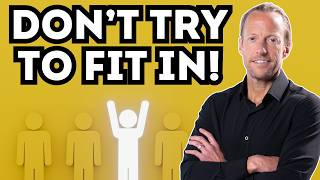
In this solo podcast episode, Andy Neary shares a personal narrative that moves from his childhood as an overweight kid, through his success as a high‑school and professional baseball player, to his current role as an insurance sales leader. He uses the story to illustrate why trying to fit in leads to being overlooked, while embracing a "one‑of‑one" identity attracts attention and premium pricing. Neary explains the psychological barriers (fear of judgment, comparison, failure) that keep agents from standing out, and introduces the 20‑60‑20 rule to frame audience segmentation: 20% already love you, 20% will never buy, and 60% are undecided and must be won over. He then presents his core framework, the Brand Authority Blueprint, consisting of four pillars – zone of genius, ideal prospect, problem to own, and teaching framework – as a step‑by‑step method for agents to differentiate themselves. The episode outlines the traits of high‑performing "one‑of‑ones": they do different things, invest heavily in personal development and coaching, seek feedback, measure against their own ideal, chase personal records, and focus on creating the future rather than replicating the past. Real‑world examples (his own baseball story, a competitor who hired another ballplayer, Usain Bolt, Bill Gates, Steve Jobs, Jensen Huang) reinforce these concepts. The episode ends with a call to action: listeners should answer the four Blueprint questions, leave a review for a free LinkedIn Diamond Playbook, and consider True Captive Insurance as a sponsor solution.
Chapters
Are you willing to do what it takes to become a one of one? Because I'm here to tell you, it will change your career. My story starts with the fact I was a fat kid. Yeah, I was chunky when I was a kid. May not look like it right now as you watch this, if you're watching it on YouTube. I'm 48, I'm in shape, I'm happy to be in shape. But when I was a kid, I was fat. And when you're a fat kid, you do not be— you do not want to be a one of one. No, no, no, no, no, no. You just want to be one of many, because one of one is, uh, typically negative. When you're a chunky kid, kids pick on you. Girls are definitely not attracted to you. And I was a child of the '80s, so mental health wasn't quite a thing yet. Um, jean companies had actually built or made a jean size just for me. It was called size husky. Yes. So if you're tuning in and you are one of those men who wore husky jeans as a boy, I'm with you, brother. So was I. When you are a fat kid physically, all you want to do is fit in. And I can remember in, in grade school, my enemy wasn't the, the bully on the playground. No, no, no, no, no, no, no. My enemy was the annual presidential fitness test. Remember those things? You know, I actually think they created that for two reasons. One, yeah, They wanted to assess the fitness level of the youth in America. But number 2, it was their way to remind the fat kids just how overweight and out of shape they were every year. I actually heard the annual presidential fitness test has come back. Is that true? I don't have any kids. I don't know. Anyways, I can remember walking down the hall into the gym at Park Lawn Elementary here in Oconomowoc. I'd see the ropes hanging from the ceilings, the pull-up bars, sit and reach box on the floor, and sweat would just start pouring down my face. Why? Because I knew what lay ahead. I could barely do any push-ups. I couldn't do any pull-ups. My sit and reach could be measured in centimeters, not inches. Climb the rope? Hell no. There I stood, all attention on me, and all I wanted to be was anybody but me. I just wanted to be one of many. See, as a kid, when I look back at my childhood, it could be summed up pretty easily. I feared judgment. I feared comparison. I feared failure, 'cause all I wanted to do was fit in. And when all you wanna do is fit in, you look like everybody else, it's even easy to get overlooked. Now, there's some good news to this story. When I got to the middle school, I started to grow out of my childhood chubbiness, and I went to— went on to have a lot of success on the baseball field in high school. I became a standout baseball player here at Oconomowoc. I don't share that to brag. I share that to make a point. When you're a standout athlete, you become a one-on-one and attention finds you, right? Recruiters talk to you, collegiate recruiters, pro scouts maybe are coming to your games to watch. And when you're a one-on-one, attention starts to find its way to you. And I was okay with that. I actually thrived in that on the baseball field. And it was that attention, that feeling of being a one-on-one that I think gave me the opportunity to go pitch collegiately at the University of Wisconsin-Milwaukee. Had a pretty good career there. Ultimately allowed me to sign a free agent contract with the Milwaukee Brewers. But it was pro ball where the fat kid came back, and it wasn't physically this time, it was mentally. Because when I got to pro ball as a free agent, I made the biggest mistake you can make as a free agent, and that was trying to fit in. If you're a free agent, you have to be a one-on-one, a one-on-one, if you're going to have any chance to make it all the way. And I did. I— that bully that I had on the playground in grade school. Yeah. No, no, no. It was being measured against others. That's what killed me in pro ball. I feared the same judgment, same comparison, same failures I did as a fat kid. And it cost me in my pro baseball career. And when I look back at that journey from fat kid physically to fat kid mentally in pro ball, there is a very, very clear message. And that is, if you look like everybody else, you will be overlooked. However, if you become a one of one, attention will find you. And that's what I want to talk to you about today. How do you become a one of one in the insurance industry? Because you have to today. If you're going to stand out in a market that is crowded, you have to find a way to look different than the competition. If you look like your competitors whatsoever, it is going to be very difficult to grow a successful book of business. It is going to be very difficult to create a consistent stream of organic growth. The first thing I want you to understand with why becoming a one of one is so important is people pay a premium for scarcity. So as a one of one, if you are a one of one in your market, people will pay a premium to work with you. This is why it's important for you to go all in on what makes you unique. When I made that big move from Wisconsin to Colorado in 2014, and I found myself in a new market selling health insurance with no network, I knew I had to find a way to stand out. And at that time, I decided that my unique sales message, my unique story, my one of one was gonna be former pro baseball player selling health insurance. And it worked. It allowed me to garner a lot of attention fast in a new market. Now, funny side to that story is it worked for a while until one of my competitors locked and decided to hire an actual ballplayer who made it all the way with the Colorado Rockies, Tim Olson. I had a competitor now who had the same story as me. So Tim Olson, if you're tuning in, man, you ruined my vibe of my brand in Colorado, bro. I'm kidding, I love you. I've actually had a chance to work with Tim, good guy. But that was my one of one, that's how I stood out. It's how I became unique. And so you have to go all in on what makes you unique. By the way, everybody has something that makes them unique. No matter how long you've been in the business, 3 months, 3 years, 30 years, I don't care. There is something that makes you unique because when you go all in on you, your prospects will also do the same. But if you look like everybody else, you're gonna get overlooked. Now let's talk about why people are so afraid to stand out, why you might be afraid to put yourself out there. Let's go back to my fat kid, physically and mentally. Could be that fear of judgment, comparison, and failure. I get it. I lived a lot of my life there. But I want you to remember a rule I was taught by one of my mentors, Jerry, and that is the 20-60-20 rule. He taught me this, uh, he's currently working with me on this, uh, as I have re-engaged Jerry as a speaking coach. When I walk into a room to speak, in any given room I walk into, there's gonna be 20% of people in that room that already love me. Maybe they follow me on LinkedIn, they've been following me for years, or maybe they already know me. Heck, maybe they're already a client. 20% of the room loves me. So no matter No matter what I say or do on stage, they're all in. However, 20% of that room is going to be a group of people who will never follow me no matter what I say or do on that stage. For some reason, they don't resonate with me. Maybe they don't like me. Heck, maybe it's my man bun. I don't know. There's just something that gets them to say, I don't like this guy. I don't care what he says, what he does. I'm not listening or following. And that applies to any room you walk in. But there's 60% of that room that is undecided. And your job is to build a brand to become a one of one that makes that 60% decide whether or not they like you or not. This is how elections in politics are won. 20% are gonna vote one way, 20% always gonna vote another, and then there's 60 who are undecided. You gotta win the undecided. This is what it means to build a one of one. In your market right now, you've got 20% of the people who love you. They include clients. No matter what you do, they're always gonna love you. There's 20% of your prospects who will never come up, never hire you. They're never hiring you. But there's 60% that are undecided. That this is the place you need to win. And looking like everybody else, you're not gonna win. But the fear, the judgment, and the comparison comes from the fact you're trying to get those 20% who will never come on board to come on board. You gotta let go of that. This is why you're afraid to put yourself out there on LinkedIn. You're afraid there are people who aren't going to like you. Newsflash, there are, but those are the people who are never going to hire you anyways. This is why advisors flinch when I tell them, you got to give a good— you got to share the good stuff today. You got to teach everything you know. The reason they're so afraid to do that is they fear that some of their prospects are going to take their information and give it to the broker. They are, but that's the 20% you're never going to win over. Let it go. You have 60% of your prospects right now who are undecided about you. You've got to win them over. How? Become a one-on-one. And when you go all in on you, you have a chance to win 80% of the quote-unquote room. This episode is brought to you by True Captive Insurance. What if you could take full control of your healthcare strategy without the financial burdens of traditional insurance? At True Captive Insurance, they make that possible. As the only captive in the nation that puts up the majority of collateral on your behalf, they provide financial flexibility from day one, making them an advocate partner for their customer success. TruCaptive's fully customizable plans and cost-saving strategies ensure you never have to choose between affordability and quality care. It's time to break free from the limitations of conventional insurance. Take the next step today. Visit trucaptive.com and discover a smarter way to manage healthcare. That is trucaptive.com. This is why it's important to stand out. Now, how the heck do you become a 101? Well, this is one of the core frameworks we teach here at Complete Game Consulting. In fact, it is our core framework. We call it the Brand Authority Blueprint. I am not going to go in depth on this. We actually have an exclusive podcast we've released where I go through the entire Brand Authority Blueprint in depth, in detail. The link to it is in the show notes if you want to grab a copy. But the Brand Authority Blueprint has 4 pillars. If you want to become a one-on-one and stand out in the market, you have to figure out the following 4 things. Number 1, what's your zone of genius? What's your niche? Now, niche doesn't necessarily have to be an industry. It can be an industry, it can be a skill set, and can be a strategy. What's your unique niche? What's your zone of genius? What do you do better than anybody in the market? Number 2, who is your ideal prospect for it? Who's the ideal buyer for your niche? 3, what is the problem you are going to own for that buyer? And number 4, What is the framework you will use to teach your ideal buyer how to fix the problem you are best positioned to solve? That's how you stand out. That's how you build thought leadership. You become a go-to expert they lean into. That simple. But this is what I'm talking about when it comes to becoming a one-on-one. Leverage the Brand Authority Blueprint, but you have to let go of the fears of judgment, comparison, and failure. Now, let's walk through some of the traits that separate one-of-ones from everybody else? If you have the chance to become a one-on-one, how do you need to operate? How do you need to act? Well, we've had a chance to work with enough producers, some of the most successful people in the insurance industry, individual producers with books well north of $5 million. And I look at what they do. They are one-of-ones. What separates them from everybody else? Well, number one, one-of-ones don't merely do things differently. They do different things. Let me say that again. One of ones don't merely do things differently. They do different things. They don't do more of the same old cold calling. They don't do more of the same old cold email and networking. No, no, no. They completely change the way they prospect. Two, one of ones invest in themselves. Ooh, do you need to hear that one again? One of ones invest in themselves. They don't sit back and wait for others to invest for them. I hear this so often in our industry. Andy, I want help, but I just hope my boss pays for it. And your commitment to becoming a one-on-one all rests on the fact whether your company will pay for it. Come on now. I look at the one-on-one of ones we get to coach. They have coaches for everything. Coaches for business, coaches for mindset, coaches for fitness, you name it, because they know they need that help if they're going to reach their full potential. Most importantly, one-of-ones are open to feedback. If you're going to hire coaches, you better be open to feedback. You don't hire coaches to validate what you're already doing. You hire coaches to give you feedback, to show you where your gaps are, your weaknesses, so you become the best version of yourself. One-on-ones don't measure themselves against others. They measure themselves against the ideal version of themselves. Whoo! Lions don't compare themselves to donkeys. If you're comparing yourself right now to all your peers, this is why you're not standing out. You're not willing to be a one of one. When I look at the coach, uh, the people we work with who have huge books of business, they're only comparing themselves to themselves at this point in the game. Remember this: met needs don't motivate. Met needs do not motivate. There's a lot of producers in this industry that have gotten to the point where their financial lifestyle needs are met. Therefore, they have taken their foot off the gas. Now, if that's you and you are in that place, hey, you've earned it. But I'm here to tell you, you are not a one of one. One of ones don't stop when they— when they're fed. No, one of ones keep chasing and trying to compete with the best version of themselves. Here's a great real-life example of what it means to no longer compare yourself to others. Usain Bolt. If you've watched the Summer Olympics for the past 20 years, you know who Usain Bolt is. He has dominated all of the track and field sprints for over a decade. I know he's retired now, but hey, by the time it was all said and done, he wasn't even comparing himself to others. He held every world record there was in the 100, the 200, and the 4x100. He wasn't even chasing world records anymore. He was chasing personal records. When he ran that— what was that, a 19.19 200, which is humanly insane— he was only chasing himself at that point. That's what one-of-ones do. Last thing, last trait that makes one-of-ones who they are. They're not here to recreate a better version of the past. They're here to create the future. And we operate in an industry that loves to talk about the past. We are very proud of the past. I hear so many veterans talk about the good old days of selling in the '90s and the early 2000s when we were just slinging policies and making coin. One-of-ones don't recreate the past. They write the future. Let me give you an example. You might know these three fellows by name: Bill Gates, Steve Jobs, Jensen Huang. Bill Gates founded Microsoft. His mission: put a computer in every home. At the time, all we had were pencils, paper, spreadsheets. He didn't try to make better spreadsheets. He reinvented the way we used spreadsheets. He put a computer in every home. And then along came Steve Jobs. He didn't just try to make a better version, he put computers in every phone. He completely changed the way we used a computer. And now we've got Jensen Huang at NVIDIA. He's not trying to make a better version of the computer that Gates and Jobs did. He's now teaching computers to think for themselves. This is what 101s do. What I'm asking you to do is, if you are committed to rewriting the story of your future in this insurance industry? Are you willing to do what it takes to become a one of one? Because I'm here to tell you, it will change your career. It will help you sell with more confidence, more conviction. You'll have more fun than you've ever had in this industry. Why? Because you're a one of one. You are the only one like you in this industry. It is not about doing more of the past. It's about recreating the future. If you are going to become a one of one, you have to leave the masses behind. Stop doing the shit you've always done. Stop making excuses for why now is not a good time. Stop hoping somebody's going to do the investing for you so you can become a one of one. Yes, you can hear the energy in my voice right now because I know what this has done for my career. The only reason I am sitting here hosting this episode as the founder of my own company is because I decided to become a one of one, thankful for the people in my life who helped me do it. That's what I want for you. So as you leave this episode today, I challenge you to sit down and walk through the 4 questions I gave you. Number 1, what's your zone of genius? What makes you unique? 2, who is your ideal prospect? 3, what problem are you gonna own for that ideal prospect? And 4, What is the framework you will use to teach your ideal prospect how to fix the problem you are best positioned to solve? And if you need help, this is what we do best. We create one-on-ones. But I leave you with this: one-on-ones. If you're willing to step up and stand out, that's how attention finds you. It will change your career forever. Be good. That's all we got for this episode of the Accelerate Your Insurance Sales podcast. One of the most valuable things you can do to help us and other new potential listeners find our show is for you to rate the show and leave a review. So as a special bonus for you, if you leave us a review, take a screenshot of your review and send it to me as a DM to my LinkedIn profile, I will send you a free copy of our LinkedIn Diamond Playbook, our proven 4-step strategy to grow your business on LinkedIn. So go right now, leave us a review, screenshot it, and send me a DM on LinkedIn. Also, please share this podcast with anyone you think would enjoy it. That's it for now.
More from Andy




If you want producers to succeed faster, help them create a sales message that creates confidence.

Sales isn't a zero-sum game! You can have tough competition and still grab a beer after



Option 1: Meditation, a fast walk, a podcast, and protein. The ultimate morning routine!

How you do one thing is how you do everything. Ill elite producers fuel their body.


Stop living in the gray of maybe! Your job in sales is to get a clear yes or no