How To Build A Personal Brand In The Insurance Industry with Madison Baker
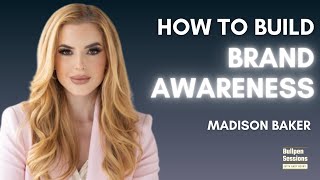
Madison Baker, VP at Marsh McLennan, built a personal brand in insurance through LinkedIn content and a newsletter that grew to 2,500 subscribers. She shares how professional photos, video follow-ups, and consistent posting led to internal recognition, speaking invitations, and more confidence in her role.
Questions this video answers
Episode 280.
March 29, 2024.
Risk management consultant and VP at Marsh McLennan (Dallas–Fort Worth market).
About 2,500 subscribers.
University of Georgia (degree in risk management) and a six-month study-abroad program at Oxford.
Chapters
Hey. Hey. Welcome to the Bullpen Sessions podcast, a podcast for driven insurance professionals who are looking to reach their full potential in their insurance careers. This is the place where we help motivated insurance professionals build the right mindset and tools to create more credibility with their target prospects. I'm your host, Andy Neary, former professional athlete turned insurance advisor. Each week, you will learn tips and strategies to help you execute a clear prospecting game plan every single week. Clarity creates action. When you're clear, you're confident. When you're confident, consistent. When you're consistent, you are unstoppable. All right, let's dive into today's episode. Hey. Hey. Welcome back to the Bullpen Sessions podcast. My name is Andy Neary, and this is episode 280. Today, I am joined by Madison Baker. Madison is a risk management consultant and VP with Marsh McLennan in the Dallas Fort Worth market. I wanted to have Madison on to talk about how to build a personal brand in the insurance industry. And this episode is a masterclass on how to build a personal brand. What Madison has been able to do to establish awareness, trust, and credibility for who she is, not only with her target prospects, but within her own firm. Marsh McLennan in the last 18 months, has been unbelievable, and not only has building a personal brand changed her career, it has completely changed confidence. It has helped her overcome the hurdles that many deal with with imposter syndrome, and it's now giving her that credibility to walk in rooms with big opportunities and know she belongs. And so if you are an insurance producer tuning into today's episode and you want to learn how to build a personal brand, like I said, this is a masterclass. She is going to share three absolutely golden nuggets on how to build a personal brand in the insurance industry. So make sure to listen to the finish of this episode, because this thing could change your career. All right, let's dive in. Welcome to Bullpen Sessions. How are you?
Thank you, Andy. I'm doing well. It's so fun to be back on here with you.
Yeah, you're actually. I. I thought about this. You were on the Broker's Voice.
Yes.
The show I. We had run a little bit last year, but now we're. We're on the big enchilada here. We're on the Bullpen Sessions podcast. So look at me now.
I made it.
You're going to bring a lot of insight to our audience. You know, our audience is made up of mostly insurance producers, young and old alike. And, you know, a couple weeks ago, I had another Young producer Hayden Partain on and I think it's, I think some of the young producers in this industry shed can bring some really good insights that anybody could glean value from. And because you guys, you're grown, you grew up in a different time. Meaning like things like social media were just part of what you grew up with.
Yeah.
And so I'm really excited about this conversation. But before we dive into some of the insights I want you to share on social media and some of the things you're doing there. Let's start here. You know, I know you, I've worked with you. You have talked about the fact you grew up with a father who was an entrepreneur. What was that like growing up like that as a kid? Having a father with who was that aunt who had that entrepreneurial spirit?
You know, to me it was normal because that was my world. So I really didn't, because my mom was a stay at home mom, my dad was an entrepreneur. You know, I thought that that was the norm. So corporate America was, was not necessarily something that I saw myself being a part of. I just always thought, you know, I'll be a business owner and I want to be like my dad, he's my hero. And, and so to me, that path was already paved and I thought that I was going to join that path. And in a way I have, but it's just a different mechanism. Right. My dad was working 24 7, but it didn't feel like work because he had fun and because he was building something that was a part of something that was much bigger than himself. And so when we sat down and looked at one of my dad's requirements was that we went to college. And so it was never going to be, you know, turn 18, graduate high school, start your own business. It was, you're going to go to college, get an education, find your path. And whether that be corporate America or building your own business, I'm requiring you to go to school. And so I sat down with my dad and and we went through all of the majors in the business school. And one of the majors was risk management. And my dad's business inherently was a risk management business. But what he didn't realize was that the risk management degree at Georgia was an insurance degree. And so it wasn't hedging commodities or interest rate risk or those really sexy financial mechanisms. It was insurance. And so he, once he found that out, after my first week of school, he wanted me to change my major. But ultimately, what I learned, Andy, and I think a lot of People have experienced this. There were 30 people in my Intro to Insurance class, and there were 300 in my intro to Finance class. And so the opportunity was in the insurance field. And I saw that on the first week, and I was like, this is. This is the path that I'm taking. So, like, well, my dad certainly wanted me to follow in his footsteps. I paved my own way and ended up doing something a little bit different.
Yeah. That's funny. Your dad thinks he's sending you into a degree where you're gonna learn the insides and outs of growing a business. Little did he know. No. She's gonna learn how to sell insurance. Now, remind me, did you grow up in Dallas? Fort Worth? I know you lived there now.
I did, yes.
Okay, you did.
Born and raised.
When you look at. When you back growing up, though, with a father like that, I'm curious, are there, you know, knowing what you do today, sell insurance, are there a couple things you took away from watching your dad grow his business that have impacted you in growing yours?
Absolutely. One of the things that comes to mind first is my dad was always a giver before being a taker. And so what I mean by that is, while he was selling himself and selling his business, before he even asked for something in return, he was always giving something. And so whether that be.
You know, a baseball memorabilia for a prospect of his that was a huge baseball fan, which he would resonate with. Right. But he was always giving something. Free advice, free consulting and experience, whatever that may be. And from that, I learned that you can't go into a conversation with someone expecting to get something in return right off the bat. You can't expect the outcome to always be something that benefits you. You have to detach from that outcome. You have to give of your time, give of your resources, give of your knowledge. And ultimately, if you do that, the business will come eventually. So he helped me learn very early on that you can't be a taker when you're building your business. You have to be a giver. And that's a hard thing for a lot of people to learn, because I think as you're under the pressure chamber that is building a book of business and insurance, the desperation can get to you, and that can cause you to.
Hold your knowledge resonant to yourself or, you know, be a little bit afraid to share resources or consultation or whatever it may be. And so flipping that switch in the dynamic of how I view business as a whole, he taught me to kind of flip it on its head.
Yeah, I like that because I think there's a lot of producers in the insurance industry who honestly to no fault to their own. It's how we've been taught are going into every conversation with the prospect wanting something in return. Right. Ultimately the agent of record their business. And there's always an ulterior motive. I think that's something that's. That is. It's why our industry often has a similar perception to, say, a used car salesman. No offense to the used car salesman out there, but it's. People have this perception that we're always trying to sell them something. We're always trying to take something from them. And so I think having that lens, watching your dad grow his business is so important. And fast forward to today. We live in a more of a giving economy than we've ever have before.
Yeah.
And I think it's important for producers to understand you've got to give before you receive. And we're definitely going to talk about that when we get to your thoughts on social media and content, what you've done to build your brand. Now I am curious. Okay, so you go off to the University of Georgia to get your degree in risk management. You notice there's 30 people in your class instead of 300 in the business school. First question, though, because I'm a college guy, college sports guy. How does a girl from DFW end up in Athens, Georgia? How did you choose the Georgia Bulldogs?
You know, it's a funny story. I went to a small Catholic school at the time. It was one, I think, if not the smallest, one of the smallest in dfw. And so as you may not know, the University of Texas is a school in which automatically accepts a certain percentage of kids based on class size. You know, you have to be in the top at the time, top 10% when I was in high school, but now I think it's top 6%. And I really wanted to go to the University of Texas, but I went to a very small school that didn't rank. And so my application was automatically going to go into a different pool to be assessed on whether I would be accepted or not. And at that time, my college counselor, he thought he had a certain degree of confidence that I would get in, but he just couldn't. He didn't want me to be without backup plans, of course. And so what we did is we looked at several schools throughout the country and he recommended UGA to me because it felt a little bit like a mini Austin. And he knew that I loved music and I loved sports. And I. He thought that Athens would be the perfect place for me. And it's hilarious to think that UGA could ever be a backup plan for anyone because it's, it's a very good academic school as well. But then I visited Georgia and it was around right after Stafford's time there. And so a lot of people from Dallas were actually looking at UGA because of that. And I just fell in love with Athens. I. It was a college town feel, which was different than Austin, but it did still have those key points that were really important to me. And ultimately I did get into Texas and decided to go against my childhood dreams of going there. Even though my dad tried to bribe me because he wanted to pay in state tuition, I ended up choosing Georgia and never looked back. And I think what that did for me though, was it allowed me to really step outside of my comfort zone. And even though I never thought I would be in sales, I started out in sales when I went to UGA because I didn't know anyone. I had to make new friends, I had to make new connections and I had to create a whole new life for myself. And as an 18 year old girl, that's a pretty tall feat. And so I think that was kind of my first sales job. And now here I am today, never thinking that I would be here. But yeah, so that's how I ended up at Georgia.
Well, there's so much to unpack there. Number one, you broke Matthew McConaughey's heart by deciding to go to Georgia, not Texas. Two, it's going to get really interesting for you now with Texas in the SEC conference. So you're gonna, you're gonna be a hated, A hated fan and Longhorn country. But three, I think what you just said is important and very impactful. I wanted people to hear this. You came from a very small Catholic school, which, hearing that, you could argue. Okay. You lived a sheltered life.
Yeah.
And now you find yourself in a new part of country, huge school compared to where you were in high school, surrounded by people you don't know.
Yeah.
And you're right. I mean, when you're, when you find yourself in that position, you have to sell yourself. You, a college student, has to build their brand in a way. And it's interesting because I think when you said that, it made me, reminded me when I moved out to Colorado, already 10, 12 years into my insurance career, but I found myself in a place nobody knew me. And it was scary but exhilarating at the same time. That's when I Realized I'm selling myself. I got to build a brand. So that's really cool that you recognize that at that age. Now, I do have a question. I'm curious because I'm impressed. While you were at Georgia, you spent six months going to school overseas at Oxford, which, by the way, no, no small college there. We're talking pretty legit status. Talk to me about that journey, spending time overseas at Oxford. I think you were studying international business and international conflict.
Yes, that's correct.
What was that all about? Talk to me about that.
Yeah, so I actually.
Never thought that I would be accepted to that program. I applied on a whim. A lot of my friends were applying to different study abroad programs, but my dad only agreed to pay for a study abroad if I were accepted to Oxford. And so I, you know, kind of, again, detached from the outcome because I thought that I would never get accepted because they only accepted the top 30 applicants from the business school. So. So it was a very competitive program. Ultimately, I did get accepted. And that program was specifically for those people that wanted to study international conflict and international business. And so we go over there, and Oxford is completely different than how universities and schools operate in the United States. So they don't give you weekly grades. You're not taking multiple choice tests. Everything was graded on how you interpreted and digested what you were taught. And so at the end of class of that semester, you wrote an essay, and it was a culmination of all of the things that you learned over the course of the program. And then you got one grade on that essay. And throughout the course of the program, you're having conversations in class with your professor and with your classmates, and they are grading you on those conversations. So how you ask questions, how you digest the information and the key points that you make in those discussions. And so all the while.
But it's not on any sort of test mechanism. It's just simply based on how you talk, how you write, and how you converse. And so that program really opened up my eyes to a different way of learning, but also a different way of applying. What I learned. It was one of the most amazing experiences of my life and actually made me a little bit sad for students in the US that don't get to learn in that method, because I think it challenges you in a way that the United States just simply doesn't challenge people or teach people. And if that makes sense.
Yeah, no, makes a lot of sense. I think it, you know, it's impressive. You know, the key takeaway I heard from you just sharing that excerpt was, again, it was stepping outside your comfort zone and applying to a school like Oxford, not knowing if you ever had a chance to get accepted. And here you are, you get accepted and you find yourself studying abroad at one of the most elite universities.
Into a room because they recognized me from those photos, and I even made a joke about that when I was on stage doing the panel. But it shows the power of the visual aspect of your brand. I think it's critical to help people understand who you are and who you stand for, but also see your face in those photos as well. So when you're sharing on LinkedIn, you don't want to just post an inspirational quote, you know, the photo of the quote and that be that it. Right. You. You want to post a picture of you and your dog, post a picture of you and your family. Help people know who you are and what you stand for. And when you meet them in person, it doesn't feel like you're meeting someone for the first time. So it's really, really important to have your face out there to show people that you're investing in yourself with great professional photos, but also help them get to know you a little bit.
Yeah, there's so much to unpack there. This is where I get a lot of pushback. You know, I have advisors who say, oh, I'm so sick of these people sharing personal stories on LinkedIn. That's not what it's for. Wrong. LinkedIn is more like Facebook today than it's ever been. And then you have people who are willing to share stories, but then they hide the stories behind these stock images. Yeah, that doesn't give people a chance to get to know you. And you know, something I learned from a mentor that is so important when building brand, it's we trust people we see, we trust people we know, and we trust people we learn from. We trust people we see is an important piece of that. That's why you have to post pictures of you. And we all have people we follow on social media that we trust. We've never met these people, but we trust them. And one of the reasons why is we see them all the time.
Exactly.
And that's why it's important that you have photos of you in your content. And if you're going to really want to, if you're going to want to leverage this, go get professional shots done. It's worth the time and the money. Worst case, these dang iPhones and Androids cameras are amazing. Have your spouse or your, your loved One or somebody in your family take pictures of you? Yeah. It's important people see you. And I think one thing I want you to touch upon because at the end of the day, the goal is to make money. You want to use this to grow your book of business. However.
It'S also built some brand recognition within Marsh McLennan. Like, talk about that just for a little bit about where you've seen this brand building impact. Your just your career within Marsh.
It has been.
Absolutely life changing for me to have this brand, Andy. I have never in my career brought value to my company outside of my sales. My measurement of value has always been encapsulated in the revenue number that I've hit for that firm. And this brand that I've built now has given me value that I'm bringing to the company completely separate from the revenue that I'm bringing to the table. So I have been asked to speak speak on national panels, on regional panels. I've been asked to speak to our top producers about how to build a brand, the importance of content creation, creation, marketing strategies. I would have never had these opportunities, Andy, if I did not take the time and effort and investing in building my personal brand.
It's. It's pretty wild to think that it only took me about a year to garner this credibility and make this much of an impact on my company. And it's really unlocked inside of me a new passion. Sitting on that panel last week at our regional sales summit, I was energized, speaking in front of that room more than I have been in a very, very long time. The fact that I can bring value to industry leaders that I've looked up to the past decade in this, the fact that the CEO of our entire company went as far as to reach out to our chief sales officer, you know, suggesting that I speak to our national top producers. These things would have never happened if my value was solely only derived from the revenue that I was bringing to the company. So I really can't overstate how much it's done for me, both personally and professionally. And just to your point where you always preach to us, it's not about who you know, it's about who knows you. The CEO of our entire company knows who I am. And I'm not sure if many of.
My peers can say that you said something number one. If you're listening to this, you're hearing Madison's computer notifications ding quite often. Tells you how busy she is. She's probably getting some emails from inbound leads because of this Brand. But what you said is very important. It was the same epiphany I had when I started building my brand out in Colorado. When you put that work in, you become an invaluable resource to your organization and your value is greater than the sale you make. And I think too many producers right now, their only value they bring to their agency is selling business because they're not doing anything else. They're not building any brand recognition. Brand helps you become an invaluable asset to any organization. It's like athletes. Athletes have brands. Why do they get paid millions? Yeah, they catch footballs, they hit home runs, but they put butts in seats. People want to come and see them. And that's the same thing when you build brand within the insurance industry. So here's where we're going to wrap up Madison. We're going to share three tips on how to grow your brand to grow your business. You ready? I'm going to guide you and I want your insight. These are things I think that are important in building a brand. I would love your thoughts. Number one, to build a brand you have to understand or get clear on what makes you unique.
What was that like for you? You know, being a younger professional insurance producer in the industry, female, especially in a male dominated industry.
Building a brand that looked unique.
Was that important to.
100%. I think that the age old saying that insurance is male, pale and stale very much rings true. And I knew that I could bring something so opposite to that, right? And I leaned into that. The skill set and the value that I bring to a client relationship looks completely different than what it looks like for the typical producer in our industry. And so I leaned into that. A lot of people think that that is a disadvantage, but in reality, the people that are going to work with that person would never want to work with me anyways. So I want to work with more of the people that want to work with me and that want the experience that I'm going to bring to the table. So getting clear on that vision of who I am, what I bring to the table, and the ideal client, what that looks like for me, has been transformational in building this book. Because originally when I built my first book of business in this industry, I wanted to work with anyone and everyone. I wanted to be everything to everyone. I would be a chameleon. No matter what room I was in, I would try to be that person. I'm not a golfer, but I would pretend that I was a golfer and try to throw terms out that I thought would resonate with said buyer. And it was so. It's so painful to think about myself in that manner, because authenticity now is. Is at the heart of. Of who I am and how I do business. But I was the complete opposite of that. And I was always nervous that I was going to be losing clients. I was always nervous they were going to find me out because I wasn't being true to who I was. And I was trying too hard to be everything to all different types of people. And so now zeroing in on.
What is my person and who. Who is that ideal client that I want to work with has been critical this year.
I love that, because I think the first step in building a brand is to know who are you? What. What does the authentic version of you look like? The real version of you? Because I think there's a lot of people in the industry who fake it till they make it or they're trying to be somebody they're not to win business. Then it's recognizing who your ideal target is and knowing who you're for and who you're not. And what you said is very important, because you're not. You can't be all things to all people. And so you have to understand, when you build a brand, some are going to love it, some are not. But the ones who are going to love it are going to be your ideal prospect. If you're clear on who that is. How about this tip? Building a brand requires creating content. Talk to us about how important creating content on LinkedIn has been to your business.
It has been everything for my business because it's the mechanism that I've used to build the brand that I have today. And if you'll remember, Andy, when we first started working together, I felt really uncomfortable with content. So much so that I told you that I would never make videos on LinkedIn, I would never do podcasts. I would never do anything that. That had me, you know, visually speaking in front of people, and now look at me, which is hilarious. Never say never. But I started out.
Leaning into what I was comfortable with, and that was writing. So I've always been a writer. I've always enjoyed that as an outlet. And so I started with a newsletter. And that newsletter now today has 2500 subscribers that are getting my newsletter every month. It's been such a powerful method for me to grow my brand and grow my network. But then as I was seeing the success with the newsletter and writing the weekly posts and sharing the personal stories, I started getting more comfortable. So I Started putting out video and I started, you know, speaking on podcasts and having, you know, keynote speaking opportunities and sharing those. And it's just built on each other. And I think now more than ever, having multiple methods of content creation and sharing those consistently has made my brand so much bigger and better than it was when I was just doing the bare minimum of sharing, you know, written stories every week. So content is absolutely everything. It's essential. You can't have a brand without it.
That's what you did so well. I think when you wanted to start creating content, you leaned into your gift. You liked writing. That's how I started on LinkedIn in 2014. And you built your Risky Business newsletter, which has grown to 2500 subscribers, which is phenomenal. But it's building that brand. It's putting yourself out there. You're throwing the pictures up of you, which is not comfortable, but it's how you establish trust and credibility. Now, my last tip, I want to get your insight on, on building brand. This one's a little deeper.
What are your thoughts on the importance of your brand? Or call it maintaining your brand deep into the sales process? So we started with what's your brand? What makes you unique? Who are you for and who are you not for? How do you use that brand and content to generate awareness and interest? But now you're getting leads, you're meeting with people. What's how, what, what are the important steps to maintain your brand throughout the sales process?
So you and I worked on this a lot, actually. And implementing your system and process that you taught me has become so integral to my brand that I don't deviate from that in the sales process. So things that I felt very uncomfortable with in the beginning, like suggesting to me to send out agendas ahead of meetings and always confirming meetings and using video follow ups after meetings, all of those things have become so ingrained in the brand that I've built that I have decided every time with each prospective client to never deviate from that. Because if I were to deviate from that, that's creating holes in my brand. And lack of consistency, as we know, is the killer of any brand.
A way in which I can consistently show up each time, no matter who the prospect is, no matter what industry it is, no matter how far along the deal is, I stay authentic to who I am and the process that I've built. And the success, the success comes from that. Because ultimately, if you are being authentic to who you are and you have built a brand that is true to what you bring to the table. The people that want to work with you will always work with you. And so you want to attract more people like that. And the way in which you do that is by being consistent with that brand, never deviating, and never trying to mold yourself into a version of what you think that prospect wants to see.
I love that. I. I didn't know where we'd go with that last one, but I think what you said just nailed. Nailed it on the head. If you are putting yourself out there consistently, I call it authentic consistency.
You are going to walk into more sales opportunities with credibility. And just that alone is going to build confidence from you, for you. And I think that's what's changed for you the most, is walking into these doors with more confidence is what makes it easier for you to continue displaying your authentic brand throughout that process. And, and displaying that authentic brand is what makes you look different. It keeps you in control of the sales process, and it just puts you in a better position to win 100. So I think these three tips, Madison, are unbelievably invaluable. Number one, when it comes to building a brand in the insurance industry, you got to know who you are. What is the real version of you, what is the authentic version of you, what makes you unique, and what do you do better than anybody else? And who are you for and who are you not for? For. The second thing is you have to put that brand out in the form of content to build awareness so you can build trust and credibility. And then it is imperative when you open doors with the trust and the credibility, that that brand stays consistent. I absolutely love that. So we're going to wrap it up with this question. You have done an absolutely phenomenal job with building your brand. The awareness people in this industry have of you now, compared to two and a half years ago, is night and day. The awareness your own, in your own firm has of who you are is night and day. If you could go back, I know you've only been in the industry for seven years, but if you could go back to your rookie year in the insurance industry, knowing what you know now, what advice would you give Madison seven years ago?
Oh, gosh, I love that question. It's a hard one.
I would tell her to put her in more herself, in more rooms where she was uncomfortable. I would tell her not to shy away from speaking up at the tables where she felt uncomfortable speaking up in. And I would just encourage her to.
Have confidence in the person that she is and what she brings to the table. Because there is always going to be someone that can benefit from the story that she has to share. And I always say this visibility is our responsibility. And so even if you don't think that your story or your struggle is going to benefit a large amount of people, what if it benefits one person? What if sharing your story can change the life of just one person? It is your duty to be visible. It is your duty to share that story, and it is your duty to make that impact.
Well, and I think putting yourself in the. In the rooms where it's uncomfortable and speaking your mind is exactly what you're doing. You're on Stage at Marsh McLennan Sales Symposiums, on stage in a panel, speaking your mind. I mean, I don't know if Madison two and a half years ago would been. That would have been as comfortable doing that.
She would not have.
And so I hope everybody listening, and I hope you're listening into this right now. This was a masterclass on how to build a personal brand in the insurance industry. And for an industry that still quite doesn't understand what that means, in my opinion, Madison, what you just shared, I hope gives so many people the inspiration to go out and put themselves out there, build that brand, because that's what prospects want to do business with. And if you're listening in, you know what happens. I mean, when you create clarity, you will be more confident. When you're more confident, you will be consistent. And when you're consistent, you will be unstoppable. And today, what Madison just gave you is going to help you be clear on what it means and how to build a personal brand. So do yourself a favor. Go take action. Put yourself out there. Get in uncomfortable rooms. Madison, thank you.
Thank you.
And for everybody else, you know what happens next. When you're clear, you're confident. When you're confident, you're consistent. I almost said that wrong. And when you're consistent, you are unstoppable. Go get after it today.
Thanks, Andy.
That's all we got for today's episode of the Bullpen Sessions podcast. One thing that would really help us both and other new potential listeners is for you to rate this show and leave a comment in itunes, stitcher, or wherever you tune in to listen to the show. Also, make sure to link up with us@completegain consulting.com on social media and please share this podcast with anyone who you think might enjoy it. Until next time. Remember, clarity creates confidence. Confidence creates consistency. Consistency makes you unstoppable.
More from Andy




If you want producers to succeed faster, help them create a sales message that creates confidence.

Sales isn't a zero-sum game! You can have tough competition and still grab a beer after



Option 1: Meditation, a fast walk, a podcast, and protein. The ultimate morning routine!

How you do one thing is how you do everything. Ill elite producers fuel their body.


Stop living in the gray of maybe! Your job in sales is to get a clear yes or no