How to Build, Scale, and Sell an Insurance Agency on Your Own Terms
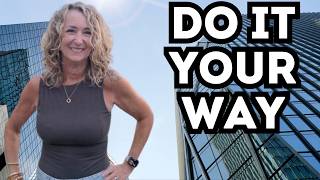
Nancy Giaccolone built Olympic Crest Insurance from scratch with minimal capital, then sold it to Levitt. She emphasizes that most agents start agencies to avoid commission splits, not to run a business, and stresses the importance of operational efficiency, clear processes, and planning your exit from day one with a perpetuation plan and cultural fit criteria like kindness and accountability.
Chapters
I think a lot of people in our industry go out on their own for the primary reason they want to— they don't want to split commissions anymore.
And that's not the right reason.
And then they quickly realize there's this whole other side to insurance called running a business.
You better be able to run a business. You better be able to manage employees. You need to understand your liability risks. You need to have leadership qualities because just starting a business doesn't guarantee you any of that.
Hey, hey, welcome back to the Accelerate Your Insurance Sales podcast. I am really excited for this episode. This is somebody who I have admired for quite a long time, somebody who I believe has always done it the right way as long as I've known her, and I think got very handsomely rewarded because she's always done it the right way. And Nancy, you're somebody who, when I look at how you've built your career, the thing I admire, I think of the Frank Sinatra song, I Did It My Way. I think that's something you really model and a lot of people could, could really take to that, to, to how do I create a business on my terms? So with that, Nancy Giaccolone, uh, recent acquisition to Levitt. Founder of Olympic Crest Insurance. Nancy, welcome to the show.
Thanks, Andy. It's a pleasure to be here, and thank you for the, the, um, great words of, um, compliment, recognition. I really appreciate it.
Yeah, no, it's, uh, every one of them is deserved. And if you're watching the video, you know, Nancy is somebody who's admitting offline she loves control. You might see her pup pop in from time to time behind her as she's letting go of that control. And, and she, she has children who love attention, right, Nancy?
That is right. They do.
And we're going to talk about attention today. So let's talk, let's, you know, being a female in the industry, you had Olympic Crest for what, 30 years, 35 years?
Just shy of 30 years.
Where was that moment? If you could take us back to the moment you realized as an insurance professional, it was time to go out on your own, because I know we've talked about this in the past. It wasn't the easiest transition. But when did you make that decision that, you know what, I've got to, I've got to take my own path here?
Sure. Um, that's a great question. So I was at the time a partner in an all-lines insurance agency. I was young, I was female, and they decided that they were going to sell or merge with another agency. And the two primary shareholders of each of the agencies, so, um, they came to me and said that they didn't think it would be a good look to have a female owner. Or producer, but it would be okay if I wanted to run the girls in the office. And, um, there wasn't much of a decision for me. It was pretty much instantaneous. Um, I knew that it was time to go out on my own. I really hadn't thought about it. I really didn't plan for that. I liked the agency I was part of. I liked what I was building and where we were going, but that was just not That wasn't for me. So I very quickly figured out how I was going to make that transition with very little capital, how I was going to take some of my accounts. I basically cashed out my 401k to buy my accounts so that I could take them with me. And I think I started with a book of, I don't know, $50,000-$60,000 in annualized commission because that was all that was agreed upon that I could take with me. And probably, to be quite frankly, that was probably all I could afford at that time to buy off of them. So I went and rented an office. I was the producer, the account manager, the receptionist, the janitor. I was all the things. And I sat in that little tiny office all by myself for about a year before I got over the shock of realizing that I needed to change the way I was used to doing things, and I needed to have— I needed to create a new reality for myself.
I'd be curious, you know, when you, you know, that when you're now— you realize you're out on your own now. And to your point, I, I, I heard somebody say this last week at a, a summit I was at. One thing about the insurance industry is it doesn't punish laziness. So people can kind of just hang out in the industry for a long time, be complacent, still make some decent money. But it's definitely a different mentality when your name is on the line. You're, you're the one owning the risk. Were there certain things early in building the agency where you had that epiphany of like, oh wow, this is all on me at this point?
Oh yeah, very much so. And I think one of the first things that I did when I realized Okay, I'm in control and I can build this the way that I want to, is I knew from the very beginning I was going to need to be as efficient as possible. The insurance industry does not reward efficiency either. But very true. But when you're one person, you better be efficient. And so I really leveraged every tool that was available to me to be able to run my tiny little one-man office as if I was bigger than that. And everything I did, every decision I did was based on that I would grow. And I created job roles. I created processes that were based on people I didn't have hired yet, positions that were not filled. But I would create a process where the producer did this, the account manager did this, the next person did this. It was just my name in all those slots in the beginning. But when I was able to hire people, I knew what their role was. We didn't have to try to figure it out. It was already defined and we were able to slot into that process quite easily.
Well, and we're gonna, we're gonna talk about that today too, because I think something you've done a masterful job of, which ultimately led to a successful acquisition in my opinion, was how you set up processes within your agency, even when it was just you. Yeah. Setting up the processes to say, no, this is going to be the process when we have 3, 4, 7 employees.
And then, you know, like I say, I kind of sat there. Other than creating my processes, I was a little paralyzed for that first year simply because my self-esteem had taken a hit. I was used to carrier reps calling on me. They didn't want to— they didn't do that anymore because I was just a little one-man agency. And it was just literally one day I walked in the office and said, well, it's time to get your butt in action. And Let's write some business. And that's what changed.
Were there any moments early when you had that, maybe this isn't for me, maybe I should just go find another agency and go back to just selling insurance?
No, I didn't. Once I left, I knew that that was the path for me. Despite as many difficult times as I've had over the years, I never once considered being a carrier rep or going to work for another agency. We did mention control earlier, and, you know, that had a lot to do with it. I wanted to, I wanted to build an agency. I wanted to run an agency and sell insurance in the way that made sense to me. And I had a very clear picture of that, and I didn't want to compromise that. I didn't want to put that at risk.
You, from an efficiency standpoint, an operational standpoint, I think you did a masterful job with the way you designed and set up Olympic Crest. I think you, the thing I admire a lot too is you set it up that it also supported, how do I say this? You didn't just chase revenue for the sake of revenue. You wanted to design a business that also supported how you live your life. So my question, I'd love to hear from you, 'cause we have a lot of people who are thinking about going out on their own, right? If you had somebody tuning in right now who's like on that precipice, maybe just made the jump, what would be your advice to them if they want to have success starting their own agency? What are some core things you think they must consider?
Well, you need to determine what you want out of the agency. You want to, you need to determine how willing, how willing you are and how hard, how hard you're willing to work, how much you're willing to give up, what's most important. I think that's a really key thing, is most people have never taken the time to really define what's most important in their life. And you need to have a very clear understanding of that. And for me, my family was most important. It still is to this day. And I built the business to accommodate the way I wanted to live my life. Now, you hear the term lifestyle business, lifestyle industry. I wasn't concerned about going out and hitting the golf course or any of that other stuff. I was concerned about taking care of my business and taking care of my family in kind of the same way. So my clients, I care deeply about them, and I treat them as if they're my family. Well, most of them anyway. Um, but so it all made sense to me. It all, it all came together. But I had, at the time, my son was in, um, in school, and I built it so that I could do the things I wanted to with him at school, go on the field trips, do those things. I was willing to not go after accounts that would have jeopardized that for me. I focused on accounts that I could bring value to, and they brought value to my life. So it kind of had to be an even exchange.
Well, and I think you bring up two very important points there. You know, I think a lot of people in our industry go out on their on their own for the primary reason they want to— they don't want to split commissions anymore.
And that's not the right reason.
Exactly. And what happens is they, they go out on their own and then they quickly realize there's this whole other side to insurance called running a business. And I'll say, Nancy, I have worked with insurance agencies as large as $10 to $15 million where you look and you say, wow, you've probably grown to that level because you know how to sell insurance. But watching you run the business, I have no idea how you're at $15 million. And it is two very different parts of that coin. It's one to sell insurance, one to run a business. And if you're going to go out on your own, if you can sell insurance, great, but you better be able to run a business.
You better be able to run a business. You better be able to manage employees. You need to understand your liability risks. You need to have leadership qualities, because just starting a business doesn't guarantee you any of that. Yeah, you have to work at those things. You have to continually— just because you started a business doesn't mean, or started your own agency, doesn't mean you get to stop learning and growing. Because if anything, you need to learn and grow more. I know I have over the years, and I've, I've made big investments in those, in those areas because I would recognize that this was an area of weakness for me. And so how do I work on that? How do I develop that? So it's good not only for me personally, but for the team I work with and for my clients.
Yeah, I would love your opinion on this because another thing I'm seeing a lot with new startup agencies is they go— somebody goes off, they break out on their own, and it's almost like right out of the gate they're trying to elevate themselves out of the sales role as quickly as they can. And they either do that by trying to hire a producer as quickly as they can or just go buy books of business. And I've never— I've always thought, why are you— why are you doing that? You're— you've got to be the number one salesperson at the beginning if you're going to grow. I have to believe you took that similar— that similar route.
1000%. 1000%. And again, anybody that's going out on their own because they don't want to split commissions, let me just give you a word to the wise. That is 100% the wrong reason. You're going to have a huge amount of expenses you didn't anticipate. You're going to have challenges. You're going to lose business. You're going to gain business. But make sure you know your why and you're crystal clear on it and committed to it. And have a path forward. Otherwise, it's not going to succeed.
Couldn't agree more. I hope everybody who is tuning in that is at that phase or thinking about it just heard what you said. It's, it's very, it's not just, I can just keep going and selling insurance the way I do. And now I get to keep all the money. Now, there is a very different way that the business operates when it's all on you. Fast forward. Okay. I've known you Since what, 2017, '18?
Yeah, somewhere in there.
At that point, you were in the back half of your career and getting closer to that moment that we're going to talk about, which is you ultimately made a decision to partner with Levitt. And you've earned a lot of recognition in the back half of your career. You were Benefits Pro Broker of the Year. Uh, you won the Lifetime Achievement Award at the UPOWER Symposium, and I think a lot of people have recognized the work you've put into your career and why you were getting recognized for it at the end of your independent part of your career. We talked offline, you made a really good point I'd love to come back to, which is chasing recognition. And we see a lot of people in this industry chasing recognition, and I know you have a very clear opinion about that. What would be your advice? Because you get a lot— we— I think most of us have been there. We get the dopamine and then we start chasing that recognition. What are your thoughts on that?
I think there's a difference between building a brand and building, um, and building recognition based on what you do versus chasing recognition for recognition's sake. I think that anybody in my industry can tell you I am solicited all the time to be recognized as whatever, the top 10 female producers in blah, blah, blah. For a mere $5,000, I can make this list or I can be in this publication. I think that that is 1,000% the wrong way to go about it. If you are recognized based on your body of work, based on your values, what you bring to the industry, how you give back, that's a wonderful thing. And it's well-deserved. But if you're chasing recognition for recognition's sake, it's hollow and there's nothing really there.
Yeah, I would agree with that. I think most people listening, I know I can say I'm guilty. I was probably guilty of that one time, right? I always think, you know, take us back to 2013, 2014. Most of us didn't know who you were, right? Unless you were involved with NAHU, you probably didn't know who brokers were in different areas of the country. And all of a sudden, social media comes around, LinkedIn comes around, and our industry gets really small, really quick, and everybody knows everybody. And I think there's a lot of people out there who are chasing industry recognition. You just have to be clear on what your goal is. You know, if you want to build a business, be financially successful, you have to let go of that. I need recognition from the industry.
You do. You need recognition for the work that you do, and that's going to generally come in the form of compensation and additional opportunities.
I love how you said that. Be recognized for the work you do, not just how loud you are.
Yeah. And, you know, a lot has changed since, you know, since you and I connected. I remember you were doing work on LinkedIn and you were doing some video work, and that's the reason I reached out to you in the very beginning. I'm like, how do you do that? I'm interested in, in learning more. And I think one of the other things that— it's kind of off topic a little bit, but I'd love to address it— is I've had a long career in this industry, and I think part of the reason I've been able to have it and remain relevant and successful is because I've always stayed curious. I want to know how to do— I want to understand what's next. Why is that important? Should I be trying that? I've tried a lot of things, and I've tried it because I want to understand it. Is that, is that a valuable tool I should be using? And if so, how do I, how do I learn more about it? So I think that that is really vital if you're going to have an extended career in this industry.
It's a great point. I was at that same summit I was at last week, uh, there was a presentation on what separates good from elite, and it's elite are curious. Elite are curious every day. They're constantly trying to get better. And that's something I admire about you. I think you're a student of the game. In fact, the one thing I was gonna ask you, and I don't mean to hop back and forth here, but you know, post-acquisition, you're now part of the Levick family. You could have easily kind of slowly started to walk in, you know, towards the sunset here and off into retirement at some point here in the near future. How do you stay curious? Right now when you arguably have hit the finish line?
I don't think it's how I stay curious. I think it's how I'm wired. Um, honestly, it's— I am just not wired to sit back and not continue running the race. It's interesting to me, it's challenging, it's rewarding, it's mentally stimulating. So I will always find a way, whether it's today or post-retirement, to continue to challenge myself, to learn new things, to get better, to do better.
Yeah. I think for you, again, as, as long as I've known you, by the way, as you're tuning, as you're listening to this, take note of what she's saying. We're talking about Nancy's journey, but there's a, there's a core set of principles here. That are in play that have allowed her to have the success she's having. Curiosity is definitely one of those that tie elite producers together. But now let's go back, Nancy. So, okay, we talked about you got a lot of industry awards towards the end of your career, but let's talk about the financial award that waited for you at the end when Levitt came to you and said, hey, we want you to become a part of the Levitt family. When did you realize that you were probably ready, and I'd say more mentally ready, for the opportunity to see through the acquisition and, and, and take what was Olympic Crest and, and sell it to an organization like Levitt?
Um, I had a pretty firm strategy in my head. I always, had recognized the fact that I had to have a perpetuation plan. And once it was solidified that my son did not want to buy the business, I knew that I was going to have to come up with a different, a different plan. One of the things that I had seen in this industry and continue to see is people that hold on for too long. They're, they're afraid to let go. They're afraid to sell their book of business. And what happens is they end up with nothing of value by the time that they're ready to actually make a change. So I was really clear on that. And I had a timeline. And in my head, I thought, okay, I want my agency to be sold by the time I turn 62, because typically it's a 3-year earnout, and that puts me at about the right spot. So that was my goal. So starting at about age 60, I started having conversations with potential partners, and I talked to pretty much all of the, the large agencies or aggregators, and was halfway down the aisle with one and became a runaway bride. And then, of course, as things would have it, the Levitt opportunity literally showed up like 3 days later. And for me, part of the reason it was an easy decision at that point in time was because I had been mentally preparing myself for it for 2 years. And it was the right fit culturally.
That's what I was going to ask you.
They were going to allow me to continue to use my strengths And I couldn't, I don't think I could have made the sale if that hadn't been in play.
I think a lot of agency owners out there, that's what I wanted people to hear is what were your set of, let's call it core principles, values that you were looking for in an agency? Because you're somebody who's not going to settle.
No.
And I see a lot of agency owners chasing the biggest paycheck without regard to what is that going to do to the culture of my team long after the sale happens? But I think you were very set on, I'm looking for these kind of core pillars to make sure I'm making— I am joining the right team.
Yeah, I ran my agency and my life, quite frankly, on the, you know, my core values, which are kindness, accountability, honesty, and respect. And I needed to find that in a partner. And Lovett demonstrated all of that. And I have to say, I'm getting close to 2 years in. They've not, they've not deviated from that. They have, they have done everything that they said they were going to do. They are who they said they were. Is it perfect? Of course it's not perfect. But there's not a lot of people that can say that post-acquisition about the agency they joined. I still feel very good about my decision. And I know that when I am ready to finally, you know, hang it up and walk out the door, that my clients will be in good hands, my team will be in good hands. Those things are important to me. Um, it was never— like I said, even from the beginning, it was never just about the money, because money does not keep you warm at night. You might put a big roof over your head and some of those other things, but I have to be— I have to be satisfied. Um, that I'm living my life the right way.
What advice would you give? So imagine there's an agency owner out there 5, 5 years from this opportunity, but he or she have just had their head down so much and all of a sudden now they're popping up, they're 57 years old. They're going, wait, I'm, I'm closer to the end here than I realize. What advice would you give them to help them get more prepared for an opportunity like this? So they're not going in blindfolded and one, just chasing the highest dollar amount, but two, possibly not getting what they should because they're not prepared.
Right. That's a really good point. That was another thing that I had going in my favor is I'm extremely organized. And so I had asked other people what, you know, what documentation is being looked for when they, when you go into this process. So I had 90% of my documentation already gathered and organized so that when I did get to these conversations, I was able to just hand it over. And that was, I think that elevated my value to them because they could see that, again, I was organized, I knew what I was doing. But I would say that anybody that's depending on your timeline as far as when you want to retire, but if you're 55 and older and you own your agency, you better have a perpetuation plan. It could be selling to your employees, it could be selling to another agency, it could be selling to a family member. But you need to decide on what your perpetuation plan looks like and set a timeline to it. Okay, I want to sell by X date, then work backwards from there. How long is it going to take for me to get there? How many people do I need to talk to? How long is it going to take for me to get my documentation together? What's a fair multiple? Let's find out what a fair multiple is. Not the highest multiple. What's a fair multiple so that you can have that when you're talking, when you're having those conversations. Does the culture align? Are they going to bring my employees over? Are they going to honor their, you know, time served, their vacation, their 401(k)? Are they going to do all those things? How is it going to impact my clients? You have to think all that through before you get ready to shake hands with somebody and say, okay, let's do this.
Yeah. Yeah, I'd be, I'd be really curious. I'm going to ask you a two-part question here if it's okay. You know, I follow enough people online through podcasts who've, you know, had success, exited a business, whatever the business was. Take us to the moment when it happened. So when paperwork signed, you sign, they sign. One, how did it feel when it was official? And two, I literally want to go to the moment when it was done. What did you do at the end of that day?
Me? Probably nothing. We might have gone out and had a dinner and a cocktail. I don't know. It didn't really— to be honest with you, other than seeing the money in my account, which, you know, had to be dealt with, it wasn't really real for me until they took my sign down. The sign of my building, when they took the Olympic Crest sign down and put the Levitt sign up. I had a couple of weeks where I really struggled with that. That was a loss of identity because I was so used to introducing myself to people. You know, oh, they say, what do you do? I own an insurance agency. I would— I've said that for my entire life. Oh, I run a benefits agency. And now I didn't get to say that anymore. And I really would stumble over my words as how to, you know, yes, I'm the benefits practice leader for Levene, and I'm very proud of that role. It's not that there's any But it was a loss of identity because for 30 years, that was who I was. And now I'm a slightly different version of that.
Yeah. Well, and bring it back to where we started. You're somebody who likes control. And now you're even out of— you no longer have control of the sign that's hanging on your building.
So yeah, it was— that was a, that was a challenging thing for me. But I wouldn't say that I had any overwhelming joy. Because It was something I knew I had to do. I loved running my business. I would probably still be doing it if, you know, there was just going to be a giant pot of gold at the end and I didn't have to do anything further. But that's not practical. So, I had to think, you know, I had to think in the practical terms and I had to find somebody that could continue what I had built up until that point.
Well, and I think that's why I really wanted to have you back. I know you were on an episode quite a while ago, but I wanted to have you back because I think the episode I had you on was presale.
It would've been, yeah.
And here we are now post-sale. Um, one thing I really admire about what you've done with that is I think a lot of people in the industry wanna scale for scale's sake to see how big they could get the agency to make a massive exit. And that quite frankly isn't everybody.
All right.
And I think what you have done such a masterful job is number one, you've planned the exit, so you were prepared for the exit, which means you got to exit on your own terms. And I think so many people in the industry that are at that position don't have that luxury because they're not prepared. Or their agency is not sustainably growing the way it should. So now they're selling out of need more than desire, which means they are not in control of that acquisition whatsoever.
I think it's really important to understand what your agency's strengths are as well. You need to understand, okay, what is my EBITDA? What is, you know, what are my annual revenues? And are there, are there numbers in that revenue that may be bonuses and stuff that are not that are not ongoing, they're going to take that out. So, it's really important to understand how it works. And because I had spent so much time planning for it, I was mentally prepared for it. It wasn't just a boom, you know, all of a sudden. It was boom and it was done. But I would already made that decision in my mind. It had been made a while before it actually happened. So, it wasn't such a shock. And I get the scaling. I mean, certain people are just serial entrepreneurs. That's their thing. I don't think that's most people in this industry though, but they see those people and they think, oh, I can do that too. Make sure you stay in your lane when it comes to what am I good at? How does this agency stay profitable? Because if it's not profitable and it's not running well, it's not going to be very marketable.
You know, it's literally before this, this episode we're recording right now, I was on a call with one of my partners that's helping us with some stuff. And we got an opportunity right now with one of the programs we're building out where it could be a very large opportunity. And he kind of called me out and he said, hey, are you prepared if this actually happens? Are you prepared? To support that. Mm-hmm. And in my head, my initial reaction was, it's still too far away. I'll worry about it when, and his point was like, no, no, no, no. You need to be prepared now. And, and that's your point.
Yep.
If you wanna make an exit on your terms, it's not, I'll worry about it when it's a reality. It's what are you doing now to be prepared when it happens?
Yeah.
I, um, great advice.
I, I do a little bit of non-promoted consulting on the side, and I worked with a, um, a woman recently that was thinking about selling her agency. And, um, she came into it very defeated, and she didn't seem to have a lot of confidence in her ability to negotiate. And, and we spent, um, I think we did 10 weeks. I don't, I don't recall exactly, but we've done a few follow-ups. Honestly, to me, she seems like a completely different person now in such a positive way. She actually decided she's not ready to sell right now, but she gained so much confidence going through the process of understanding the actual value of her agency, how it would be determined, and now she has a plan that will help move her along when she's ready. I think that's the main thing is that people have to put together a plan. Of what that's going to look like and they have to execute on it. Because you can't just wait till the last minute.
Yeah. I, you know, it's, I didn't intend to even think about this, but if I'm thinking about a topic for this episode specifically, it's, are you prepared for success?
And that's, you have to be as prepared for success as you are for failure.
Yeah. Last week, that same summit I mentioned I was at, we hit a milestone last year as a business. And the guy, one of the speakers at the summit posed a question, you know, You must act before you become it. And I was sitting there because we hit a milestone, but I'll be honest, I've struggled a little bit early this year. Like, how do we keep going from here? And it made me realize if I want to take this business to the next level, what is it we have to do to get there? And then who do I need to be now to make sure we get there? And that's kind of what you're saying is you've always been preparing. But at the same time, you've always been acting as that owner who is going to—
Act as if.
Act as if before it becomes. And I think that's something, again, it's like none of this you've created has been a surprise because you've been prepared for it.
And I think that's true. And I also think that's why people are sometimes surprised. We're like, were you so excited? I was like, In my mind, it had already happened because it already happened, right? And it was just the culmination of it.
Yeah.
And then it was just about how do I move forward from here?
Yeah, that's so well said. Well, let me ask this: what are you most proud of now that it's happened? You're obviously, uh, running the benefits practice for Levitt today. What are you most proud of when you look back on those 30-plus years running Olympic Crest?
I'm proud of how well I took care of my clients. If, and, and really that's what it comes down to because like I say, I've always cared about them. They were never just a dollar figure. They were never an employee count. They were people that I cared about and thoughtfully helped them put together programs so that their businesses could continue to be successful and their employees could be healthy and well protected. I think that's what I'm most proud of when it comes to Olympic Crest. I think what I'm most proud of now that I've made the transition is I don't think I had a really good grasp on the leadership skills I had because I didn't have to use them in the same way previously. And so I've learned that I'm actually very good at it, and that's been a little bit of a surprise to me because I just didn't know, and I do enjoy it.
That's great. Well, it's been an honor to have you on the show, Nancy. I think there's a lot of people in the industry who admire you. Um, I think they're going to get a ton out of this episode. But before we finish, I always end with a new lightning round. So you are completely— you're completely unprepared for these questions.
I like to be unprepared for this sort of thing, not for other things, but only for this.
I'm a big proponent of habits, skill, discipline, rituals. So What does the typical morning routine look like in Nancy's life today?
I'm going to scare people with this one. I get up at 4:45 AM and have coffee, clear my email. I like to start my day with a clean mind. And so for me, it really helps to clear the email, flag anything that requires immediate attention when I get into the office. I go to the gym for an hour. Get to the office and put in a full day. Now, mind you, when you get up at 4:45 in the morning, I also go to bed at 8 o'clock at night.
A good evening routine matters too.
Good evening routine as well. But, um, I do have a very scheduled morning routine, right? And, um, it's just a habit and it sets me up for success.
So you said you go to the gym for about an hour, so you got 60 minutes to do a workout. What's your go-to workout of choice?
Well, I do. So, um, I run on the treadmill, which is not my workout of choice, but it is a requirement. Um, but I also have a personal trainer 2 days a week. And so, um, the best part about that for me is I don't have to think about it. He just tells me what I'm going to do and how hard I'm going to work.
I want people to actually hear what you said though. You're not training for a half marathon, but you said, I run because it's required.
It is. It's required because I— well, there's a few reasons it's required. A, it's really good for my physical health, but B, it's amazing for my mental health. Exercising for me is about mental as much as it is physical. It really helps me reset. It helps me manage stress. I think I have a crazy dog.
Yeah, that's awesome. In the background right now, we have a dog vying for attention. I love it.
She's getting crazy. The routine also includes the dogs in the morning too. There's a feeding of the dogs and all, and all of that good stuff. But, uh, she wanted to make sure she was recognized.
Gotta make her cameo. All right, you have an afternoon to yourself. What are you doing?
An afternoon to myself? Hmm, I'm probably going to read a book. Okay, for pleasure. Okay, for pleasure. Nothing business related, nothing self-improvement. I'm going to probably read a book.
So this is the segue to the final question: any books you're reading today, podcasts you're listening to that you highly recommend?
That's a really good question. I read such a wide variety of things. And when I, like you say, I try to set time aside for pleasure reading. And I will say over the last 2 years, that's really suffered. So that was one of my 2026 goals is to carve out more time for myself for reading for pleasure. And And so, I have read a few good books lately. Depends on your, you know, your like, but I particularly like Lisa Jewell. She's an author and she wrote a book called "Don't Let Him In" that I just finished. I really liked it. One of my other guilty pleasures of reading, it was a series, it was called the Seven Sisters series. And, it had to do with the Seven Stars, the Seven Sisters. And, these were adopted girls that were from all over the world and it was about their stories. It was fascinating and I loved it. Um, and I, I could— I plowed through those. That's—
well, there's power, there's power in fiction.
There is.
It's, uh, I, I gotta get better at it myself. It's been one of my goals because I'm so apt to read self-help books. Yeah, you eventually realize all self-help books say the same stuff.
They say the same thing.
Um, fiction really gets your storytelling and creative mind going, and I think more people could benefit from reading fiction.
Yeah, no, I enjoy it. Um, from a podcast standpoint, um, I'm not an avid podcast person because I have so much noise coming at me all the time. That's why I do like to read a book.
Yeah, I love it. Well, Nancy, it's been awesome. You're awesome. Um, I hope a lot of people take your words to heart today. And like I said, if I could have put the appropriate theme song to this, it would be Frank Sinatra, I Did It My Way, because I think you are somebody who has achieved a lot of success in the insurance industry that ended in an exit that was on your terms and one in which you were prepared for the whole time. And I think there's, if we could have more people who run their business that way, we'd see a lot more people striving, achieving success and reaching their full potential in this industry. So if anybody wanted to reach out to you, Nancy, and just learn more about what you've done, or heck, you've got your consulting business, now's a chance to just talk a little bit about how they could reach out to you for help. How can they get in touch with you?
I'm on LinkedIn. Most people know that. Shoot me a message. You can also shoot me an email. I still do use my old email address, nancy@olympiccrest.com. It had been around for too long. It was too hard to sunset it. So we still have that email address. But reach out to Andy if you don't know how to get a hold of me, you don't know how to spell my name. He'll put you in touch. I'd love to talk to you.
Sounds great. Nancy Giacalone, everybody. Thanks, Nancy.
Thanks, Andy.
More from Andy




If you want producers to succeed faster, help them create a sales message that creates confidence.

Sales isn't a zero-sum game! You can have tough competition and still grab a beer after



Option 1: Meditation, a fast walk, a podcast, and protein. The ultimate morning routine!

How you do one thing is how you do everything. Ill elite producers fuel their body.


Stop living in the gray of maybe! Your job in sales is to get a clear yes or no