How To Develop The Leadership Skills To Run A Thriving Insurance Agency with Kareim Cade.
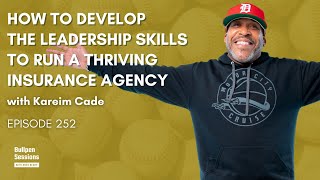
Conversation between Andy Neary and Kareim Cade on leadership and team-building for insurance agencies. Key points: prioritize attitude and coachable energy over pure knowledge, develop internal talent rather than only recruiting stars, build repeatable onboarding and sales processes (avoid personality-driven "follow me" training), adopt technology to scale efficiently, and emphasize work–life balance to prevent burnout.
Chapters
Somebody's promoted to the role of sales director, sales manager, whatever the job title is, because they have sold the most insurance. Does that make them a sales leader? Kareem Cade.
No, not at all. We look at sports all the time. We look at somebody who will lead from one team and go to another team where their skill set fit. And they're superstars. Yeah. And the other team, you never heard their name. They were riding the bench the whole time.
At the end of the day, you got to remember most of your prospects still put you on the same playing field as a used car sale.
They do. You know, one thing I look at is probably my major factor in developing a team is that I always say, I can teach you skills. I can't teach you attitude. Could have never won before, but if you believe that you can win, I can coach that.
Andy, any advice you could give a potentially new sales leader or agency owner where you're like, yeah, if I could talk to my younger self, I would have said, yeah, dream. Don't do that.
They can't be me. And so I, I didn't realize that.
Early on, you bring up an under underappreciated metric of. Of relationship building. How many times you been the best man in a wedding? That's a great metric to determine how good you are at building relationships. Hey. Hey. Welcome back to the Bullpen Sessions podcast. I am Steve stoked today because I am sending out a warning shot. If you are listening in and you don't like energy, turn this episode off. Because the gentleman I have joining me today is not only a good friend, an industry colleague, the man might have the most energy you will ever hear out an individual. So with that being said, Kareem Cade, welcome to Bullpen Sessions.
Thank you, sir. Good afternoon to my brother, man, my friend. It's exciting to be here, man.
Well, we're going to. We're going to get into some topics here about building solid teams within the insurance industry. But before we get there, let's talk a little bit about Kareem Kade.
Tell me about your childhood growing up in the Detroit metro area.
Specifically. We're talking teamwork here, Andy.
Well, here's where I want to go with this to set the stage. So for the folks that listen to my episode a couple of weeks ago where I announced kind of how the podcast is making a transition. Yes, I'm still interviewing folks that have an athletic background, but come from the industry or have some tie the industry. And then we're going to go into some, definitely some tactical things. Like today, about building a solid team with good leaders. But what I love about your story growing up from an athletic standpoint, Kareem, is here you are a kid growing up in the Motor City Motown, right? Yep. Kids probably say, oh, so, Kareem, what were you? Good basketball player, Good football player. Tell your story. It's not the case.
No, not at all, Andy. Contrary to popular belief, I'm a swimmer, man. Not only was I a swimmer, my daughter lettered in swimming. So we. We kind of got this black swimming family going on here. That's a. That's a little bit different than the norm. So I could not. So I played basketball recreationally, of course, played a little baseball recreationally. So, I mean, you hang out. But I was never good enough to make teams. I went out for teams in sixth grade, seventh grade, never. But I was always swimming. So I swam at the time for the ymca. So I started with the ymca, but my mother put me in the water. I think I was six months old when my mother put me in the water. And from there on, I always loved being in the water, but I started going to the ymca and I swam for the Fisher YMCA here in Detroit. No longer around, but I swam there and I started competing and I was being swim meets on the weekend, and, man, we would swim. And if you can imagine, especially back then, you're talking about, I'm 51 now. We would show up to these YMCAs and we'd be probably the only black team in the building. And we're looking at. And we had some great swimmers. Now, I was a good swimmer. I was not one of the great swimmers, but I swam. That took me to my freshman year of high school where I swam. And then I had this little thing called practice, something that a lot of us don't like to do. And that kind of kicked me out the game because I'm like, I don't want to go to swim practice at five in the morning, six in the morning. That doesn't make sense to me. I can't make that make sense. But I was a swimmer, man. I'm a swimmer, and I've got to throw this shout out because I got my daughter involved with swimming. She actually swam four years of high school and let her and was team captain in her final year of swimming, man. So it's a strong story for swimmers because usually don't see folks that look like me talking about swimming, brother. So that's my sport.
I hear you. Hey, I too, grew up swimming. We had a good local ymca Program. I swam for a team called Lake Country Phoenix, which actually became a very well known program around here. And I can remember, you know, it's funny, I stopped swimming swimming once I got into high school, middle school, high school, and then I started doing triathlons as an adult. And I'll tell you what, man, swimming does not come back easily.
Oh, no. Oh, no. Oh, no. But, but, but it's tough. I mean, just to get the breathing down, to get everything that goes along with it. It's a tough deal. But I still love it. Being in the water today. I mean, I'll go get in the pool in a minute, no problem.
Well, next time we're together. The next time we're together, we're gonna go swim some laps.
Oh, man.
What was your event? What was your event?
So I was breaststroke and freestyle. Those are my.
Okay, I got to share this because I need tips and I think anybody here who has a kid swimming at a young age will love this. So I swam on a very competitive team. As I just mentioned. Yes, my weakness was the breaststroke. No, I would get to the end of the pool.
Yeah.
And they'd say, son, you've been disqualified. Because I. Whatever I was doing was. Yeah, yeah, yeah.
And even tapping out, I mean, you got everything is, it's great, but it's back to the breathing like we were talking about before. Just the breathing. I loved it because I had to glide in between and I got a little rest. I mean, it was there, but I could get a little rest in there between freestyle. You're just, I mean, it's just non stop, right?
It's chaos.
Yeah, it's chaos, brother. So at least with breast, right, I get a little bit. I mean, you're going, but you got a little action. So, you know, maybe I was a baby frog and just didn't know it, man. I got my kicks down and everything in the place, so it was a great time. So I still love it. I still do breastfeeding.
I'll tell you what, man, I am a lover of certain moments in sports history where, you know, I can go back to YouTube and watch them over and over again. One of them is like Mariano Rivera's last, last.
Outing on the mound in Yankee Stadium. But the one I'll always go back to like I want to get jacked up is the 2008 Olympics when the US beat France. Yes, that leg, forgetting the guy's name, the swam the last leg, the freestyle to beat the French was still one of the greatest, greatest moment in history.
Yeah, because I'm thinking, who was our lock. He was on. Who was all on that team?
No, Lockheed was not. It was one of the guys from Wisconsin. And I'm forgetting his name. He had, he had a hyphenated last name, but then he had Michael Phelps.
Pat Phelps.
Yeah. I'm forgetting the other gentleman who. African American.
Yes.
And then the last guy. Dang it. I'm forgetting his name. But the time at which he's the, the he. The speed at which he swam that last 100. Yes, I still watch it. And they, and the announcers are like, it's over. The French are going to win. And then all of a sudden like, wait a second, wait. And that, that comeback was unbelievable.
And just think about the team in that piece. I mean, you know where everybody's strengths are and everybody's got to do their part. I just need you to hold your end because I'm gonna come back on the back end and grab this thing. Don't worry about it. That's something strong, man. We talking about it from a team perspective. That's awesome.
You want to know how to be part of a team. So when I was a kid swimming, I was on the best relay team we had, but we had two of the best studs. We had a kid probably at age 10 that was breaking times of 14 year olds. That's how good he was. He was on the back end of our relay. I kicked it, I kicked it off. Put the weak link out there first. I want a lot of gold medals that way.
I was the kickoff guy. I'm like, I'm gonna get us, I'm gonna get us in the game a little bit. I'm keep us close. But now the rest of y' all come on in and do what you do. Yeah, and my daughter was the same. My daughter was. And I thought, I said, well, she'll go to school the college and have a swimming scholarship. She's like, yeah, no dad, I'm not doing that anymore. I don't want to do any more wetlands, dry lands, none of that. I'm done.
Well, and you talk about sports that are time consuming. Swimming, the exhaustion. You talked about getting up at 4 or 5 in the morning to go to practice. Sometimes you have two a days and then the length of the length you're swimming at each practice is just non stop, man.
Non stop, man. It's so good to see you, brother. I'm excited about this.
Well, well, let's, let's dive into another. You're a sports fan. Like myself. And if you're listening to the audio, you can't see the video. This man is decked out in red. All things Kansas City Chiefs. Before we get into that. Before we get into that, how does a man born and raised in Detroit, Michigan become a Kansas City Chiefs fan? Understandable, because the Lions have been bad for a long time.
The Lions have the best.
How does. How do you become a Chiefs fan?
So here's what's crazy. I got crazy story. So. So I'm growing up my. My. Inside the household. My parents were not big Lions fans. Now, of course, Lions will be on, but my dad was a huge, and still is today, a huge then Oakland Raiders fan. And he loved the black in black and silver. That was his deal. And. And unfortunately, during that time, I didn't have the greatest relationship with my dad. I mean, it's much better today, but didn't have the greatest relationship with my dad. And so as a kid, what did I do? I rooted for the team that was against my dad and who had the most rivalry? Well, it was Kansas City. I mean, you could do anybody in the AFC west, but Kansas City and the Raiders just went at it all the time, from changing coaches to changing team members. I mean, you name it. I mean, we go through all the list of players that came from those two teams between each other, and it was always beef. And so at 13, here it is. I pick up the Chiefs and I start following the Chiefs. Then it's this little game that's probably, I'm out. I'm dating myself here. Andy called TECMO bowl.
Right? And so I would play with the Chiefs on Tecmo ball. I mean, that was my deal. I could get a little Christian Nikoyer in there. I could, you know, I mean, I can mix it up a little bit. And that was it. So from there on out, I roll with the Chiefs. So the beautiful thing about us having these wins now, man, is that all of my friends, my childhood friends, they're like, we can't say anything. This guy is not a bandwagon. He's been riding with these guys since 13 years old. He's never went back on. He's never doubled back, never been a fair with a friend. Took him all the way through. So right now he's got all bragging rights, you know. So now they. Now they don't like me anymore. They're like, man, we're tired of seeing you win. That's okay. I wait a long time for that, Andy. I waited a long time.
Well, you brought back some memories with tecmo Super Bowl. Yes, sir. I, too, liked to play with Christian Aoy. But you know what my beef was? He would get hurt by week three because then he would go down with an injury.
Bruising. He's taking the bruising. That was what he's there for.
We only had two rules, though. There were only two teams or people you could not beat whenever we played. You could not be the Falcons because they had Deion Sanders, and it was impossible to throw with Deion Sanders. And then you couldn't be actually two teams. You couldn't be the Bills or the Oilers, really, because they were so good offensively. It was, like, impossible to stop. If you were the Oilers with Warren Moon and all those receivers, like, yeah, you can't. You can't stop.
You can't stop them. And Buffalo, at that time, they were on the run. What was Buffalo? Four Super Bowls in a row or something like that.
Yeah. Oh, for four. Oh, for four.
And they still say that. I was just with some Buffalo fans the other day, and they're like, oh, here's the Chief guy. I'm like, well, one day you'll beat us. You keep loading up. Keep loading up one day.
Let's talk about this. That's a good segue because, Kareem, you got your Kareem Chiefs Jersey on number 50 because you just celebrated a 50th birthday. So happy belated birthday.
Well, no, actually, this is a jersey from 11 months ago because I started. So I'll be 51 this Saturday. So now I'm gonna have to get an updated jersey. Right. I'll be 51 this Saturday. But for the big five. Zero, I celebrate. And I had a custom jersey made.
So for those who want to get Kareem a birthday gift, we are recording this on this July 17th. So your birthday will be July 22nd.
Saturday, baby. And I think I shared it with you, too, Andy, that I'm born on my mother's birthday. So me and mom celebrate the same birthday. So, you know, mom and I are looking to hang out.
That is awesome. Well, happy early birthday. Make sure Amy Amy Essig gets a nice gift in the mail for you.
You had mentioned offline we were talking about the Chief super bowl win this year. This sets up today's top conversation. Yeah, one thing you said that was really good about this team, because I think a couple of years ago, man, they were stacked.
Yes.
But what you talked about this year was how this team wasn't full of All Stars. Yeah, you Got Mahomes and you got Kelsey, Kelsey and all those guys. But this team was a little different. They weren't filled with first round draft picks.
Yeah, you know what I think about it is that when, when, when the original trade came with Tyreek Hill, I mean, I had my buddies calling me, they're like, up. That's the end of your dynasty. It's over. And for one moment, you could begin to think along those lines because there was so much connection between Mahomes and he'll. And of course, always at the end of those games, it was always about, how do we move fast? And that was the fastest way to get it done. Right. You could change the course of the game in 13 seconds, you think you're winning, and hey, come home to heal. Game over. Done deal. And so it was interesting to see, and I think as we're talking about leadership and looking at teamwork, to see how Pat would evolve, how the team would evolve, because everybody counted them out from the beginning of the season. It was still like, okay, well, there's decent. And then if you recall too, Andy, the whole AFC west built their teams to beat Kansas City. I mean, so you started looking at what happened in the west, and I'm like, I got concerned. I mean, as a fan, I mean, you know, I am a fan, but you know, as a fan, you're kind of like, wow, they're stacking to beat us. They weren't even stacking to go to the Super Bowl. They were stacking to beat us such that we didn't get another AFC title, AFC title overall. But to look at what he was able to do. And I say as a team, because we know that comes from coaching. I mean, even now we're looking at people saying that Eric Biennami is gone. Now, what does that look like for us from offensive coaching standpoint? We don't know. I still know that we've got Big Red there and we've got Pat. And Pat, to me, evolved as a leader. And I think that that is what, as we begin to have this conversation today, looking at how do you bring out the best in other folks that are on your team? Because everybody doesn't show up as a superstar. But here it is. You had Pacheco, seventh round running back, you had Sky Moore, who was brand new to the team. I mean, you had Kadarius, Tony. That hadn't been. And so these guys were all guys that had not been proven in the league, but yet they came out and supported that. And so you look at, I think he was, at some point, 10, 11 different receivers in the game. Think about that. From when you've been used to one or two targets, that now you've got to see everybody. And so what I looked at, what was the evolution for me from a leadership standpoint is that how many people am I not seeing in my organization because I've just never paid attention to it because they weren't the Tyreek Hills. You know, who did I let fall? You and I talk about this all the time. Who did I let leave the organization because I couldn't see the potential and what they had. And as a leader, I didn't develop it. But I love what this team did this year. Pat developed everybody on that team, bro. It was amazing.
Well, and there's so much to unpack there. Number one, I got to share this. I am one of the worst fantasy football players in the history of the. Of the. Of the. Of that sport.
Okay?
I've played for more than 10 years, never made the playoffs until this year, and I made the Super Bowl. Now, get this. Get. Check this out. I lost the super bowl because the. The game that decided the super bowl came down to the Monday Night Football game between the Bengals and the Bills. When.
Yes.
And when that game got postponed, we made the decision that wherever the score's at is. Is the final score. And I was losing in the super bowl, the fantasy Super Bowl. And we. We stopped the game, you know, obviously, for. For justified reasons.
Right.
But I was going to share with you my secret weapon at the end of the year was Pacheco.
Oh, no question.
But. But, I mean.
And you think about seventh round coming out of records, but just ran with a purpose, man. Just. Just underdog. It's something about an underdog, Andy. And I've been there, and I love the underdog. Nobody. I mean, I'm coming in seventh round. Nobody believes. You know, I. I mean, just think about that. And here it is. I was the difference maker, and I come right in, and I get a championship my first year. I love it. I mean, those are just great stories.
Well, and. And. And I was gonna say one more thing and then bring it back to your. Your topic was, you know, as a. It's a guy who lived out in Colorado for nine years and talked about AFC west teams trying to build to beat the Chiefs. I can tell you, I don't think that was the Broncos case. I'm a conspiracy theorist, and I was convinced John Elway was literally trying to find the worst quarterbacks just to cement. Just to Cement his status as the greatest Bronco quarterback ever.
Oh, that's hilarious. Because Russ did not cook. I don't know what he did, but he did.
Russell Wilson has some. And I am a Russell Wilson fan, being.
No question, man. So far, he is not living up to that money he's been making. But you talked about. You talked about sometimes you're letting somebody go.
Yeah.
And you didn't take enough time. It's just like in football. How many guys actually can't live up to their full potential because they're. They're built for a 4, 3 defense and they find themselves in a 3, 4 ski.
Exactly. Exactly. And I think, again, you just don't notice people sometime on a team and that it's not that you don't want to notice them, but you get caught up on the shooting stars. So you get that one or two person that come onto the team and they're always producing and they're always doing everything else. And in our busy lives, we can be caught up on just simply looking at the lightning in the bottle and forget about these folks that need to be developed and that can actually go on to win championships with you and actually become even better. So now you look at this. Nobody's talking about Tyreek Hill anymore. I mean, you put that to bed now nobody talks about Tyreek. Nobody says will Patrick Mahomes doesn't have, you know, a number one. Number two, it may be part of the talking head, but clearly that didn't matter. And so when I think about that from an agency builder and looking at folks that have become those folks that I never thought they would be, it was just simply because I hadn't paid attention to them once I gave them attention and I looked and said, wait a minute, this person does have a certain amount of skill set that if developed and used properly and put into the right scheme, like you said, I mean, we look at sports all the time, and we look at somebody who leave from one team and go to another team where their skill sets fit and they're superstar. Yeah. And the other team, you never heard their name, they were riding the bench the whole time. And so that, I think, is the thing that we've got to be more aware of the people on our teams and the skill set that they have, because there's clearly people. First of all, I wouldn't have hired them if they didn't have some kind of skill set that they brought to the table. So I saw something there. But I just think if they don't get it Right away, or they don't just kind of shoot to the top right away. We're quick to look at the replacement as opposed to figuring out how do we develop.
Great. Great analogy, though, to the insurance industry when you have teams like the Chiefs, a Tyree Kill, and they feel now they should be the superstar. Yes. And they say, I'm no longer. I'm going to go out on my own, or I'm going to this other agency because this team doesn't respect me or whatever it is. And then they end up over there and they go, whoa, whoa, wait a second.
Right, right.
Because there's no Pat Mahomes here.
Exactly.
I don't look as good as I used.
Exactly, exactly. And I mean, I thought about that, and unfortunately, Tua had his situation last year, but even when Tyreek came out, he really kind of stoked the fire and said, well, look, this guy's more accurate. You know what I mean? And I'm like, wow, that's cold. But I think that, again, the last laugh comes in and says, well, it was great having you, but we want to make sure that everybody understands that there's nobody bigger than the team. And I think that we hear that statement all the time. But you get caught up on, oh, man, this team will continue to roll if they have this person or if they have that person. But to look up and for them to be able to deliver, I can tell you what, whether he admits it or not, Tyreek would have liked to have a second ring. I don't care what anybody said, because he was there. You know, when you're there, Andy, and you had the opportunity to get it, you know, it would have been great to get a second ring in three years. I mean, there's nothing to talk about. But again, the game is, how do we develop those other people, man. So I think that that is the thing that most leaders lose the sight of at some point in time. Because you like Tyreek, you like to speak, because that's the sex appeal. That's sexy. And then nobody, you know, just doing a regular blocking attacker. There's nothing sexy about that at all, Andy. It's simply just about being in space where you. You're looking at what, sales, and that's it.
Sorry.
Oh, no, you're good.
Yeah. No, you are absolutely right. You know, when you think about.
Skill set, like what. What I just said earlier about.
I think, how many receivers and skill players leave a team like the Chiefs or the Patriots, and they realize, wait, Tom Brady made me look pretty good. Pat Mahomes made me look pretty good. Aaron Rodgers made me look pretty good.
Yes.
You know, going now back to why we're here today and having a conversation about developing a team. You know, this year, the ESPYs, the awards ceremony held by ESPN, just named the Kansas City Chiefs the team of the year.
Correct.
For good reasons.
Correct.
And it starts with the fact they have an amazing leader, Andy Reid. Let's talk about building a team in the insurance industry, because I think this is one of the biggest struggles we have right now in the industry is if we're going to build an agency that's built to thrive for the long term, it starts with the people you're bringing on the team. And I think there's this propensity to want to go find All Stars, right? And get the best people, the veterans, the people who've been out there for 10, 20 years. And I've seen it far more often than not that that type of strategy backfires. So let's imagine we got somebody listening, Kareem, and they're like, all right, I am literally going to go out tomorrow and I'm going to start building a new insurance agency for the first time. Let's start with what you've done because you have built an amazing firm at Great Lakes Benefits. If you look back at the time, you know, the length of time you've had the agency, what would be some of the factors you would attribute to that have allowed you to build such a great team there?
So I'm start the starting point. And this may sound very cliche ish, Andy, but it's the fact it started with me, right? I mean, I had to really look at how I was going to work on me because how can I attract what I'm not, right? I mean, it's hard to go after Andy Neary if Andy Neary doesn't see that I bring something to the table that mirrors what Andy is about. And so if I'm looking at saying I want a superstar, well, one, I've got to think and believe as a superstar, and I've got to act and prepare as a superstar in order to attract them. And so that was the first thing I did. And so if I'm starting an agency today, I'm really starting looking at myself and saying, okay, how can I expect others to play in this league of mine? Because that's what it is, right? We've got our own league. How can I expect them to play on my team in this league? And yet I don't have the Talent or skill set that I'm asking them to come to the table with, why would they follow me? And so as a leader, I wanted to make sure that I was in position, that people would want to follow me, that I didn't have to drag them. I didn't have to. They weren't coming kicking the scream, but they were just naturally attracted to something you and I talked about from the start, one energy, right? But then also looking at the leadership and the vision of being able to go forward. So if I'm starting, I'm looking, first of all internally and looking at myself to say, what skill set do I bring and who is it that I want to attract from there? What I started, when I look back on the agency, is that I did. I looked for all those kind of the top shooters from other agencies, different things, where they were. But then I realized something real quick. As much as I had some of those folks that came onto the team, they brought their talents, but they also brought some of the garbage with them that they had been getting away with in those other agencies, as you just kind of alluded to as a pro, as a player. You watch these players, and I get it, they're holding out for whatever their financial situations are, what have you. But as the league always says, nothing bigger than the shield, right? The shield is. Is the business, right? So as long as the shield exists, there's nobody bigger than the shield. And so when I started looking at some of those folks, and I really believe that, I brought them over in those first couple years, and as much as they did come and produce, Andy, they also brought some cancer with them, right? They brought some bad habits with them. And the unfortunate thing for me as a young leader at the time was that I kind of encouraged that. I encouraged that because they were the winners. They were producing, we were putting up big numbers. But as a whole, I would look back at the rest, there was a lot of carnage being left behind that I was not addressing because of that. And so the other thing that I will look at in terms of finding that is that I don't need you to be a superstar. You know, one thing I look at is probably my major factor in developing a team is that I always say, I can teach you skills, I can't teach you attitude, right? So I'm first of all looking at what type of attitude do you bring to the table? You could have never won before. But if you believe that you can win, I can coach that. Andy, if you believe that you can win, I can coach that because now you just need the tactical pieces that we're talking about.
Right.
And in order for you to be successful, I need to give you some. Some how tos to be able to go. But if you come with that kind of thinking where you don't believe that you can win, you don't believe that you have the opportunity to win, that's something I look for. So that is one of my first traits that I look for in someone when they're coming on board with our team is what type of attitude are you coming to the table with? Because I don't want to spend a lot of time trying to coach you. And I found myself, when I had folks that had bad attitudes, Eddie, you know what I found? I found myself having to sell them in the business day in and day out, trying to encourage. And at that point, I thought I was encouraging them. I really wasn't. I was really wearing myself out trying to get them to think. And they were never going to do anything any different anyway. What they were going to do is to be what we talk about all the time. They wouldn't go into the transport portal and we already knew they're going to the transfer portal, they're going to ship out of here, they're going to go to somebody else's agency. Take their bad attitude with them again, take. And I had to become comfortable with that. And so I think that as people are thinking about building, if you're starting that, that would be my number one attribute right off RIP is do they come with the right attitude that fits the culture that you have created as the lead.
And I would actually say attitude is more important than knowledge because I think something that our industry puts a lot of emphasis on is somebody's knowledge. So that's what probably lends them to want to go find a veteran when it comes to an account manager or a producer or a sales director. Right?
Yep.
And they. Because they believe it's the knowledge that requires somebody that's going to allow somebody to have success. But at the end of the day, what they've acquired, to your point, is a cancer.
And I'll tell you, I mean, you and I talked about this before and I think I shared with you, one of my mentors heard me a long time ago that I'll take ignorance on fire than knowledge on ice any day. Right. And so when I had to think about that is that look, I'll take that fired up somebody who just wants to go get it. I can coach them, but somebody who's got all the knowledge in the world and they're sitting there, let's face it, most of our prospects, most of our clients. When I've been doing this 25 years and I'm talking about, I've dealt with companies, over 5,000 lives down to smaller companies, what I found is that in most cases, the folks that we're talking to, they don't know what the hell is going on anyway. I mean, they're so busy and that's not a knock on them. I'm just looking at, if I'm talking to an HR professional, he or she has 12 jobs. So I can't expect them to be the best at benefits. If we're talking about growing a benefits agency, I can't expect them to be the best on that because they're onboarding, they're firing, they're doing payroll, they're doing compliance. I mean, you tell me they're working on the payroll system. I mean, they're doing a thousand things. So for me to expect them to know all the things that I know and have the knowledge base is crazy. So when I look at these folks that have all the knowledge in the world about, they can tell you everything about how insurance came into play, what it does, how, yeah, you can get into all that stuff. They ain't selling nothing. They're selling absolutely nothing. Because the people they're trying to go in and talk to don't have the same knowledge space to even have that conversation engaged. I would probably go on the line to say if in 5% of the folks that I talk to that have that same kind of knowledge base, I mean, a quarter of what I know about the business, then that's a big thing. But the most of them are looking at you to be the advisor to come in and give them guidance. And yes, you got to have a great knowledge base, but you also have to be able to be engaging with them because this is a boring topic. Nobody gets excited to me about me talking, coming and talking about benefits, bro. I just have yet to see it. Yeah, I've been waiting for somebody said, man, I'm so fired up that my benefits guys here not happy. And I've got great.
Well, I've made a couple posts out on LinkedIn about that recently where I think we've developed this within the industry, developed this celebrity status of people in our industry. And I'm like, guys, at the end of the day, you got to remember most of your prospects still put you on the same playing field as a used car salesperson.
They do they do? I mean, they. Because if they did, if it was about knowledge, all the things that we've watched our industry evolve into over the last several years would be working. But how do you still find out that most people are still in fully insured plans, they're still doing the same status quo, they're still taking a spreadsheet and picking out what it is. And they're like, look, I'll see you next year. Because at the end of the day, we've gone to the celebrity status piece. But in terms of implementation of that, very rarely does it happen because the other person on the other side doesn't know what the hell you're talking about. They have no clue. And they're trying to get back to the business of ham. Whatever that fire is that's burning it, surely as hell, not the benefits.
Yeah. When you look back at your career running Great Lakes, is there, are there any, you know, knowing what you know now, are there any things you look back on and go, man, you know, as a young leader, I made a. That was a mistake. And that was any, any advice you could give a potentially new sales leader or agency owner where you're like, yeah, if I could talk to my younger self, I would have said, yeah, Kareem.
Don'T do that, man, I'll tell you. So there's a few things that I look at that I would have done differently. Right. And so one would simply just be in looking at the onboarding process, having a true process that connected people. So part of this, and you started this out, and I'll talk about my weaknesses, it's important to talk about is in having a lot of energy. People are attracted to a lot of energy. However, if I didn't have the substance to go along with it, they can't be me. And so I didn't realize that early on. And so my training mechanism, and you and I have talked about this in the past, was, hey, come jump in the car with me, watch what I do and replicate that. And that was the craziest thing ever. So there was no sales process. There was no sales cycle. It was simply, follow me, do what I do, and if you do what I do, you'll have the same type of success. And so what I realized early on is that I ran a very personality driven agency. So that is the first thing that I would say is that while personality had a part in it, that there was very few tactical things that were there because I just innately do what I do. I can't tell you how I do it, why I do. I'm just wired that way, right? So when I look at it, it is my gifting for God that this is how I move. And so what I realized is that everybody didn't flow like that. You, you know, they don't flow like, they don't function like that. So that's the first thing is that I would say I would have to have systems in place. And what I would have done originally would have had somebody who had tactical knowledge and systems ability to partner with me such that I could be the energy guy. But I had something to then be able to say, hey, here's how you go and do this. So that would be the first thing that I would say that I would do different than what I did before. The second thing that I would say that I would do different is that again, in building it, I would have been thinking a little bit more even back then on the technology side of what we could do to make ourselves more efficient. But I was so caught up, and I laugh at this, and we talk about this because at 51, I don't think I'm an old guy, but in the insurance world, I'm an old guy, right? I mean, I'm still looking at, here's your sales book. They'll take your sales book out. Here's what you'll do differently. And I just didn't see the technology play, even though it was there talking about 25 years ago. But still, had we embraced that a bit more earlier, it would have made a difference in terms again of how we moved and how efficient we moved, because I thought I needed a lot of people in order to get the numbers. And what I found out now is that I've got less folks and we tripled the numbers that we were doing back then when I had a ton of folks running around. So the other thing was been this really kind of telling my younger self like, hey, the technology thing, embrace this now, because it's going to make a huge difference and what you're going to do going down the road. And here's the third thing that I would have said to my younger self is back then, it was simply about the grind. The grind, the grind. I would have told my younger self to make sure that I was telling people about balance, right? Like, look, this as much as we do, what we do to go out is not such that you lose your family and your kids in the process because we're out grinding, right? And so I think that that is still something that I look at now is that there has to be that balance of, you know, if we're saying we're doing it for our families, then how's that? We're gone 200 hours out the week and I'm being facetious, but you know what I'm saying, where it's all about that and that's it. And we never put any emphasis on the family because now, okay, it's great that we make a ton of money, but. Ton of money and do what? I mean, what have we done if our kids are not spending time with us? So those are the three things that I think that I would look back at my younger self that I would have told those agents back then that, hey, we want to get. And I did a somewhat decent job of saying to them, get your spouse involved in what you're doing. Let him or her know kind of what the process is because you're going to be spending time. But I never really spent time talking on the balance. And it was just our generation of grind, grind, grind, grind. And I've watched that leave a lot of people in a lot of ditches and holes on the side of the road.
Well, and I think what you just said is very profound.
Because, number one, the just do what I do. That's one of the reasons we, we lack good training in this industry is I think a lot of it leaders who've been. Who've been around for many years try to train their advisors by saying, just do what I do. And listen, there's a reason Michael Jordan's not a coach. There's a reason some of the best players in sports aren't coaches. They can't just say, do what I do.
Correct.
You've got to be able to train based on where these are these people are at. But I also want to throw a word of caution out there because you talk about the balance, right. But at the same time, I think there's a lot of advisors coming in. They're so delightful.
More from Andy




If you want producers to succeed faster, help them create a sales message that creates confidence.

Sales isn't a zero-sum game! You can have tough competition and still grab a beer after



Option 1: Meditation, a fast walk, a podcast, and protein. The ultimate morning routine!

How you do one thing is how you do everything. Ill elite producers fuel their body.


Stop living in the gray of maybe! Your job in sales is to get a clear yes or no