How To Lower Health Insurance Costs Without The Noise with Nick Reber
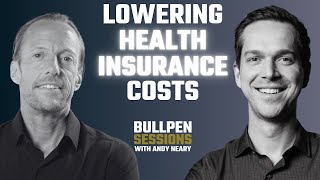
This is a Bullpen Sessions podcast interview (episode 316, Dec 20, 2024) where Andy Neary interviews Nick Reber, founder & CEO of Garner Health. Reber—previously on Oscar Health leadership and a former partner at Bridgewater—frames Garner’s mission around the idea that guiding members to higher-quality doctors is the highest-leverage, lowest-disruption way to improve outcomes and lower costs. Garner claims a large multi-payer dataset (320 million patients, ~60 billion encounters, covering ~75% of U.S. claims) enabling doctor-level measurement; the product layers incentives and an out-of-pocket coverage benefit (only for engaged members) on top of an employer’s existing carrier/network. Reber says Garner typically reduces fully insured medical trend ~8–10% in year one (some groups up to ~20%), while allowing employers to keep their carrier and network and gradually move toward more advanced funding models if they wish. The episode also covers why carriers struggle to steer care, how Garner scores providers differently from legacy methods, and practical advice for brokers/advisors on implementing Garner with existing clients to build case studies and win new business.
Questions this video answers
Episode 316
December 20, 2024
Approximately 320 million patients and ~60 billion encounters, representing about three quarters (~75%) of U.S. claims over the last five years.
On average 8–10% in the first year (some groups as much as ~20%).
Leadership team at Oscar Health (helped oversee growth to over $2 billion in revenue) and partner/co-head search analytics at Bridgewater Associates.
Chapters
Hey.
Hey.
Welcome back to the Bullpen Sessions podcast. My name is Andy Neary and this is episode 316. Today I am joined by Nick Reber. Nick is the founder and CEO of Garner Health. Prior to founding Garner, Nick served on a leadership team at Oscar Health. Oscar Health, where he focused on analytics and provider network development and helped oversee the firm's growth to over $2 billion in revenue. Prior to Oscar, Nick was a partner at Bridgewater Associates where he served as co head, search analytics. I wanted to have Nick join me today because I coach a lot of health insurance advisors and I was one myself. And for many of us, it's a challenge to get your clients and your prospects to make changes. If you're a health insurance advisor out there listening in, you've got fully insured groups that you're trying to start taking down the path to a better model. This is going to be a great episode for you because I view Garner Health as a solution that I call an HRA on steroids. It's a great opportunity to implement a good, effective solution that does not require a lot of disruption, which is one of the biggest challenges health insurance advisors go through is trying to get employers to make changes that the employer views to be too disruptive. It's why advisors keep coming in second place. It's why advisors implement these disruptive solutions and get fired the next year. It's because they may work, but they're too dang disruptive. You have to find a way to create positive change without all the complications, and that's what Garner Health does. So I'm excited for this episode. We dive into how Garner Health is helping advisors win business, how Garner Health works, what is it? How can you implement it into your group? So I think you're going to take a lot away from here. It's pretty tactical. We go right into how you can build a better health plan for your employees. So here we go. Episode 316. Nick Reaver, founder and CEO of Garner Health. Hey.
Hey.
Welcome back to Bullpen Sessions. Today I have got Nick Reaver. Nick, welcome to the show, my friend.
Thanks for having me. Appreciate you doing it.
I'm excited about this conversation. For those listening in, Nick is the founder and CEO of Garner Health. And for the health insurance advisors listening into this episode, Nick, which is the vast majority of our, our listeners, I think they're going to find today's conversation very, very intriguing. Especially from my standpoint, you know, coaching a lot of these advisors. I think Garner Health brings a solution that a lot of Advisors are, are overlooking right now to win some new business. So I'm excited to have the conversation.
Good. Awesome. Me too.
So. So, Nick, I'm curious. Before we dive into all things Garner Health, I want to take this, use this as an opportunity to let people get to know Nick a little bit. I, I tell people, you know, you come at our industry from a little different angle than most advisors and most, for most advisors, the industry found us. How did you end up, you know, I know you sat on the board at Oscar Health. How did you find your way to the health insurance industry?
Yeah, I. So really I was a patient going back greater than 10 years, 14 years, something like that. I had chronic back pain. I then saw a highly regarded specialist and had a surgery, got recommended a pretty serious spine surgery in my thoracic spine because that's where my pain was. And not only did the surgery not improve anything, but it actually had an infection and then had to have a revision and all that. And it turned out my issue is more in my cervical spine than my thoracic spine. So anyway, I had about, I had, I guess I'm on surgery number five now, and I got to be a patient. And I remember at one point getting rolled out in a wheelchair after a cervical spine surgery. And the hospital, I was like, hey, what do you want me to do with this wheelchair I'm about to get, you know, like, drive away or whatever, somebody's going to drive me. And they're like, no, no, that's yours. Now you have that for like a month or whatever because your insurance paid for it. And I was like, yeah, but I could walk. Like, I'm all good. And I looked at my bill and it's like, you know, almost $1,000 for this wheelchair. And I was like, but I don't need it. They're like, yeah, no, but you paid for it or your insurance paid for it. And I was like, but who is my insurance? And then I went through and, you know, it turned out we were self insured or self funded. So it mean that the company was paying for it, really. And then it. And then I was a shareholder, so it meant I was paying for the wheelchair. And I just got fired up about that. And I started to realize I was at the time an investment professional running quantitative trading at a big investment firm called Bridgewater. And I just did all the economic research on it. And I started to realize we had all of these huge macroeconomic and political impacts of income inequality. And what I started to realize is if we had Just given employees the cash instead of the not so useful healthcare benefits that we wouldn't have nearly the income inequality issues that we have in the country, which would have big economic, political, quality of life impacts.
So I just found myself reading about healthcare policy as much or more than I was reading about economic policy and markets and stuff. And so I figured that's a good time to kind of do what you're passionate about. And that's when I started, started at Oscar and joined the leadership team there.
Remind us again, I know it's, it's been a few years. Oscar's health. What was Oscar Health? What was their mission? What was their solution?
Yeah, so Oscar was and is a health insurer. One of the, you know, one of the earlier really bespoke health insurers, like new health insurers that got started around the Obamacare ACA exchanges. Initially their business was, you know, ACA individual market, then expanded to small business, then a little bit of Medicare Advantage, although I think that's now no longer the case. So mostly it's an individual insurance company that insured. You know, I think at the time I was there about a million people.
Yeah, I'm always intrigued. You know, I love stories from, of people who have gone on to start entrepreneurial journeys off of serving the person they once were. You know, I look at my business Complete Game Consulting. We now work with the insurance industry and I built it because I'm really serving who I was 10 years ago when I had to build my own brand to create brand awareness in a market. Nobody knew who I was. And in your case, you were the patient at one time and you said, man, this is messed up. There's gotta be a better way to do this. And so let's just get it out there right away, you know, for the folks, the few folks listening in who may not know Garner Health, because you went on, you served at a leadership role at Oscar. Now you have gone on to found Garner Health. What was your premise behind starting Gartner Health?
Yeah, the, the basic idea was running a health plan of a million people. And nice thing about having that many members is you get some reasonable sample size and it actually kind of looks like running an employer, you know, employer sponsored health plan, but at a little bit larger scale. And so we had, we were doing all the things that employers do, which is shopping for different point solutions and thinking about what our network design was going to be and thinking about intervening at prior authorization or different pharmacy solutions and PBM solutions. We were doing all that stuff and as a data and technology person, I was leading the charge to look at the data and think about, well, what can we really do to move the needle here? And we did this sort of bar chart of, of what is actually moving the needle for our patients. And it turned out what we saw was there was such massive variation in how doctors practiced even within our high performing narrow networks. And we built narrow networks with some of the biggest brand name hospitals in the country. And that what we saw was massive variation and that the only intervention that people actually wanted was help finding a doctor. So nobody really wanted to be switched off of medication. Nobody really wanted to switch their site of service or have their surgery kind of denied or rerouted when they were about to do it. Nobody wanted to switch their MRI center across town and burn a DVD and bring it back. But everybody wanted help finding a doctor, it turned out. And so our engagement rates on that intervention were through the roof. And then the other thing was that you could have such a huge downstream impact because the doctor decided everything. Every one of those other things I just mentioned, which drugs the patient's on, where they do their service, whether they need surgery, all of those things. So we started to realize it was both a huge lever and the easiest and best time to engage people. And it turns out in ways I can go into, there are a bunch of structural limitations that don't allow you as an insurance company to actually pull that lever, to measure it well and, and pull it really well. And so I got convinced that there, I got sort of frustrated and then convinced that if you want to pull the single biggest lever to improve health outcomes and lower quality, it's the doctor. And that health plans have structural limitations. Nothing wrong with them, but they just can't do it, given their business model, to actually drive patients where they really should be going to get care.
Yeah, I love that. I wholeheartedly agree. I was just talking with a client about this the other day. You know when, when you see a lot of the health insurance marketing brochures out there about wellness and access to good care, they paint all these pictures of healthy people on yoga mats living the best version of health and vitality. And what he was saying was, at the end of the day.
Employees don't want that. They're just trying to get one step better. They're just trying to get more convenient access to the healthcare system. They're just trying to make sure the care they're getting isn't so fricking complicated. And I think what you have answered in that Equation is if you can just help them get access to the right doctor, it kind of takes care of everything else.
Yeah, exactly. I mean it's interesting you mentioned like the yoga mats and the wellness, you know that stuff it does play out, but it plays out over if you are incredibly diligent and do it really well over a, you know, 30 year time period. Right. But who you get, your, you know, who you see for your knee pain, chest pain or stomach pain plays out over like three months, one month and has such a dramatic impact. And so, you know, that's what. Yeah, I totally agree that that's what I think the real critical thing is and given the issues with accessibility these days in networks and even just finding out who is the right person to treat your unique issue is hard enough. Not to mention finding one that has appointment availability and is in network, et cetera, into your house and all those things and paying your co pays and deductible bills and all of that stuff. There's so many barriers, information barriers and financial barriers that if you can just simplify it for people, they, you know that you can get people like beat their door to you on engagement. You don't have to go push it, I mean you have to message it. But it becomes so much easier if you give them something that they actually want that makes an impact in their, their near term health journey.
Yeah. And I am going to ask you to go a little deeper on something you mentioned just a bit earlier. Dare I speak the obvious saying. Well Nick, why wouldn't the insurance carriers just want to improve this situation? You had mentioned there's restrictions that really prevent them from accurately or effectively managing this kind of data. What are those restrictions?
Yeah, there's something like three. At least three. The biggest one is that the larger you get as an insurance entity, the more you have to play neutral to all of the hospital systems and be Switzerland. And so I found this out the hard way by negotiating narrow network contracts with hospital systems and some very large brand name hospital systems and saying I have some amazing data that one third of your doctors aren't doing the right thing and are actually actively lowering the life expectancy of the patients that they see. And they would say, yeah, there's the classic.
In hospitals, the classic thing that says no margin, no mission. Which means basically if we don't make enough margin and basically keep these underperforming doctors around to basically pay for everything, then the lights go out and we don't, we don't survive. And so that's the biggest One is that that insurance companies have to play nice with the hospital systems otherwise they drop out of network. And that's the biggest one you add. On top of that there's competitive data issues. So we have a lot more data than all of the large carriers because we're able to access data as a third party that any one entity can't get each other's data. And then number two, there's a bunch of state regulatory stuff that you have to play with because Colorado has different rules than California, which has different rules than New York and they're all relatively byzantine and the carriers therefore default to the most vanilla way to assess doctor performance to comply with all 50 states. So I mean, I could keep going on, but. But that's just a few.
Yeah. I think for most advisors, especially the ones tuning into this show saying that health insurance and healthcare are expensive and a problem is nothing new to anybody. But what I do want to talk to you about because I think Garner is uniquely positioned to solve this equation or this problem is what are advisors doing to help move employers down the right path to success? Because you know, this whole notion of I'm a, I'm going to disrupt with these strategies and these healthcare cost containment ideas, it's good in practice, it's good in theory, but let's be honest, at the end of the day, most brokers still aren't winning trying to sell those solutions because most employers are looking at that going, I see how it makes sense, but I don't think we're a good fit or I don't think we're going to be ready for that. Or quite frankly it's just too disruptive. So what is Garner Health doing? Or how are you uniquely positioned to solve the issue of hey, if you can fix the cost of health care, you can fix your health insurance premiums.
Yeah. So I think as I, when I went to start the company, I started the company out of what feels like a very similar frustration. Which is, which is there's not a lot of the solutions that are out there are either incredibly disruptive. They seemingly work like a narrow network. Okay, yeah, you get good engagement, people will go and network. But boy, very disruptive. You know, hard to hire and retain talent that way or reference based pricing or you know, even the move from fully insured to self funded can be daunting for a lot of organizations. And so all those things, very disruptive. Some of them work, some of them don't. Or the other things is I think there have been a lot of tools that have been somewhat debunked as being these sort of light touch navigations that solutions that you can sort of layer on top of your plan but nobody's using it. It's not changing your claims experience, it's not changing your plan design.
It's sort of a wellness or navigation type benefit. And that's sort of been the landscape for a long period of time. And what we set out to do is to create a solution that had the teeth of the health plan. So actually had the data and the information that the carriers do and then some and had the actual financial plan design element to it where there's real actual sort of carrots and sticks and. But pull that out of the health plan layer into a layer that can be much more flexible and layered on top of any existing plan. And the basic idea which we can of course get into here is to add a solution that has real ROI hard dollar. We have some pricing packaging that allows you to say where you will save your client this much money. For sure, really big trend reduction, but you can keep your network and carrier as they are. And by the way, richer benefits for your employees, higher quality, better access to care, all of those things. And we haven't seen a ton that's out there. Again, I'm probably biased, but we haven't seen any other solution that has that combination of keep your networking carrier, but also you can, you can actually get a real trend reduction using Gartner.
I think that's important for people to hear though. You can keep your carrier and your network. At the end of the day, what most employers want is easy. And I know when I was selling health insurance, in order to win that agent a record letter, I had to help them create some form of change with as little disruption as possible. And I think that's where a lot of advisors are struggling today, Nick, is they're trying to sell a prospect. Let's just think of it from a prospect standpoint. They're trying to sell a prospect who doesn't, who may not have the trust the broker needs yet to do what the broker wants them to do. Yet the broker is trying to sell them on a concept like reference based pricing. And I think a lot of brokers are frustrated that they're coming in second place and they feel like it's on the prospect or the prospect's lack of knowledge is as to why they're not doing this, when the reality is what they're not understanding is your prospect doesn't trust you enough to create that much, much Disruption in your plan, you need to come to them with something that is a lot more convenient to implement right away. And that's why Garner Health, in my opinion is created such a successful game plan for brokers because you are creating change with very little disruption. Did I say that right?
Yeah, exactly, Yeah, I think that's, I mean we do our product exercises, you know, we think that people that win in the industry are going to be those that have products that are the biggest ROI financially, particularly given how high health care costs are rising these days per unit of disruption. And you have to really think about it in those terms. And there are going to be some organizations that are ready to go to reference based pricing or whatever it is and want that. But it's still, I mean even in the worst healthcare cost year ever, it's still like 1 to 2% of clients, you know, that are really ready for those sorts of disruptive things. So what you need to do is we think is allow them to keep their BUCA network and even if they want to stay fully insured, that's great. And then what we like to do is then we're sort of a wedge in the door that allows the client to get comfortable with managing their claims experience, understanding it. And then, then they can turn up the dial to self funding, they can turn up the dial to different networks and they can turn up the dial even to a reference based program and they can still keep the Garner quality layer to help them find doctors regardless of where they go. So that's the, that's the basic thing we've seen successfully is you get your foot in the door with a little bit of guaranteed savings and then we can really go for gold over 2, 3, 4 year period. Particularly as you say, as the client begins to trust the broker, trust our program a lot more.
I'd love to do this. I'm going to put you on the spot if you're okay with it. We're going to, I want to like live, I want to role play this in real time, you know, because again there's a lot of advisors listening in right now who have a bunch of fully insured clients and they'd like to move them down the path towards maybe more level funding, more partial self funding captives, you name it. But they're struggling because they're having a hard time getting employers to make a move. And in my opinion it's because they're trying to move them too fast down that path. And definitely from a prospecting standpoint, very, very few times am I Hearing about brokers actually winning the business and having the prospect make those disruptive moves right away. So the first question I would have for you when you first engage advisors, what are some of the more common pain points that you're hearing from brokers when it comes to the healthcare spend that their clients are dealing with? What are some of those common pain points?
Yeah, so obviously the common pain points, the first one is, you know, my carrier gave me a 20% renewal.
And I also don't really, and I don't feel like there's really much I can do except cost shifting. And I don't even understand why. What, why a lot of these groups, particularly if you're less than, you know, three, 400 lives, you don't even have the data to understand who's using care, why, how are they using it, etc. And so obviously you can shop it around but that's really the biggest thing. It's not only the price, but the combination of the price and the lack of transparency puts people in sort of a tough spot where they feel like they can't that, you know, sort of darned if they do, darned if they don't. You know, they have no choice but to renew their renew fully insured because there's so much uncertainty by getting out of the pool.
So when they are dealing with that fully insured client who appears that they're getting that unjustified 20% increase without any data as to why that's happening.
Is Garner Health. I'm going to ask some tactical questions. I want the audience to hear this. Can I implement Garner Health and without having to move a client say to a level funded or a partial self funded platform.
Absolutely, yeah. So we on average lower the medical trend of a fully insured carrier by 8 or 10% in the first year. Some groups as much as 20. Typically that's done in conjunction with a bit of a buy down of the benefits on a fully insured basis. If you're self funded you don't actually need to do that. But typically folks are going to say hey, I'll go with a slightly higher deductible in year one and then I'll layer on Garner, which is really which we haven't discussed but is a tool to find top performing in network doctors in their bucha network or whatever network they have, but also covers the member out of pocket when they do. So you basically go with a higher deductible plan and then you cover the out of pocket for members who are engaged and seeing top providers and network. And what that enables you to do is with that plan, buy down, you get a certain amount of savings, you pay our fees with some percentage of that and you're still left with 8, 10, 12% or more of the medical premium as savings in year one. And then the critical thing is that by giving members this rich benefit that helps them identify top performing providers in their existing network, not only are you keeping the members happy by giving them rich benefits, but you're actually preparing yourself for level funding and self funding because you're actually getting more control of your actual care and where folks are going. And we help, we don't totally saw, but we help a lot. Give some transparency about. All right, how much, you know, where are people going? What types of care do they need? Where am I, you know, what are, who are these people in my population? That can really be helpful as well.
Yeah, I'd be curious. You know, I think I already know the answer, but I definitely want people to hear it. When you say helping guide employees to find better doctors. Right. The, the doctors of high quality, you know, they, we, we constantly are hearing from the health insurance carriers. Right. Well this is our, this is our, our tiered network and these are the best five star doctors in our network. I'd love for you to expand a little bit on how Garner is identifying what is deemed as a high quality doctor per se, what the big carriers are identifying as a high quality doctor. Because we know those are two very different metrics, I'm sure.
Yeah, I mean it's. So I was, I was at a carrier looking at all the vendors that were available in the industry and, and as a data and technology person, I sort of kind of threw my hands up at what was available. And, and if you ever download from your carriers some of the methodologies and try to read them, you'll understand why the. So every carrier pretty much has a program around quality and efficiency of providers.
Now I will note that a couple, there's a couple things that are really important got you to know. So number one, it's only about half of the time that these methodologies rank on the doctor or provider level. The rest of the time they default to the group level because they don't have the right data, they don't have enough, you know, specificity, they don't have the right metrics. And what that means is oftentimes that's grouping one or two thousand doctors together into that are in a tax, the same tax id. So the first point is that you're actually getting this huge monolithic score, at least half of the, you know, about half of the time in the carriers. That's sort of the first point and that's a real problem. The second thing is that the methodologies are 98. Even if they, that only 1 or 2% of doctors do not qualify based on quality. It's all sort of cost. And that might be fine, but the way in which they measure cost typically, and again I'm perhaps a little biased here, but it's these methodologies that were invented in the 90s have not really evolved called episode groupers and all they do is measure. Very simple. It's really simple. It's one number. What was the cost per patient last year? Is it $3,000, $4,000, $5,000? That's it. That's what's driving what's on the website for all of your, in all your tiered networks and all your high performing and all these things. Well, and again 1 to 2% of the doctors then don't make quality designation but for that cost element turns out backward looking, how much cost per patient doesn't tell you anything about future looking. Cost per patient does. It tells you very little. And the reason why is because, you know, let's take two doctors who see patients with knee osteoarthritis. Both patients are 40, clean medical history, et cetera. One has a really severe case and one has a mild case. The mild case is going to go to the doctor, say ah, hurts. But you know what, I felt better next week. I'm all good. The other person's going to need to go through physical therapy and maybe eventually a knee replacement. So that's totally random. The doctor does not control that and, and that's not going to persist in the future. So there's nothing about these cost per per episode metrics that really tell you a lot about what the doctors actually do. They're mostly driven by randomness in how severe the disease burden was of the doctor. And then I could keep going. They're single carrier data sets, not multi carrier and on and on. But they're really, you know, ultimately not very high quality apparatuses. And that's why they're not very transparent because they can't make them transparent and defend their quality, their, their efficacy.
It's interesting because I think the more transparent, and I put air quotes around that word, the more transparent everybody is being required to be. We would just think all of this information would be available to any member. Right. And we know that's just still not the case today, regardless of rules and regulations that exist. You know, one thing I really found interest in, in, and maybe this is tied to how you guys are grading and scoring what is considered provider quality. You mentioned that Garner has the largest collection of healthcare data ever compiled. I think that's important for people to understand. Understand. Can you expand on that a little bit? When I saw that, that caught my attention right away.
Sure, yeah. So our Data set has 320 million patients over the last five years. It's most of the people have gotten care in healthcare in the United States over the last five years and it represents about three quarters of all the claims data. So about 60 billion encounters. And we have aggregated that from kind of everything you can think about. So we have, you know, we started off acquiring data, building partnerships, et cetera from aggregators and clearing houses and whatnot. But we've continued to add to that by working in partnership with our clients, health plans themselves at risk, provider groups. We do a lot of work with the provider community now these days. And so by being a neutral third party, and that isn't a carrier ourselves, we can gain access to data that really isn't available generally. And then we can aggregate it and create a longitudinal patient record. So even when one of the classic things is a patient, you know, is on, oh, I don't know, I'll just say UnitedHealthcare, then they switch, they get a surgery, then they switch jobs and two months later they have a complication or a revision while they're on a new employer who has Cigna. Well, how do you know, right, if you are, if you're either one of those two carriers, you don't know the performance of that surgery. Surgery or that surge in. But by aggregating across all these different sources, creating a longitudinal patient record, we can now know, okay, yes, that surgery happened and it had a complication. And so that's a really critical part to get these sort of multi payer data sets, connect them together and it unlocks a level of fidelity at the individual Dr. Level that is, hasn't really been available. And that's why the carriers are at 50% doctor level or whatever and we're at 99%. Basically, we can evaluate almost every doctor in the country by having this data set.
I like that. I mean, you know, when I think about Garner health from a 30,000 foot view and what you guys are doing, I mean, right there, the, the amount of data you have to evaluate who the right, who the best providers are is unmatched. You know, I think another thing you guys do really well and that has become a just a, a known or a reality of building effective health plans is they have to have incentives built into them to get members to take the right actions. And I hope I don't say this the right way, Nick, but I, I, when I was still selling, I described Garner as an HRA on steroids. Because when I look at the spectrum of, I call it the financial spectrum of how you finance a health plan, starting with being fully insured, where you have the least amount of control, the least amount of flexibility, and all the risk management in the world, what's it really going to do all the way up to? Heck, you could have your own health insurance plan and all the things in between. You know, I feel like you guys take a business down the right path without having to cause too much noise at the beginning. But you have the incentives in place to drive the right behavior. And I think that's important. I'd love for you to expand, you know, where do you see the impact on increased employee engagement and what it has on cost savings? And why are incentives so important to increase employee engagement?
Yeah, so I mean, the, the idea of quote unquote consumerization or incentives in healthcare has been around for, you know, 20 some odd years, cast light in certain respect, blazed a trail, and then sort of somewhat famously and publicly didn't pan out. And the idea, and it therefore got a bit of a bad name, which is, and it became akin to having a high deductible plan with an hsa. And the basic idea initially was, okay, we're going to give everyone a high deductible, therefore they'll be incentivized to shop for care. Well, they didn't realize is that, you know, 90% of your claimants are going to be through their deductible anyway, any the ones that are really driving your premium dollar. And so if I'm through my deductible anyway, my two, $3,000 high deductible plan, why do I care what my MRI costs, what my surgery costs, which doctor I see and all of those things. And I would also add that there have been some attempts to do like a $20 Starbucks gift card. And if you have a major disease, I'm not changing where I'm getting care for your $20 Starbucks gift card. And so what you really need to do is not only create a product experience around searching and finding care that's better, but you also need to add real meaningful financial incentives. And that's sort of what our program does. It overlays on top of the plan and covers that member out of pocket. Co pays, deductibles and coinsurance only based on engagement, though. You have to engage first. And we think that's a really critical part of the equation. So you can't just wander into Dr. Jones's office anyway because it turns out, you know, you can't. We want to pay really rich benefits for people who are engaged and knowledgeable, but they have to, and they have to be really large incentives. They can't be $20 copays. It can't be a, you know, high deductible HSA thing because again, everybody's through their deductible anyway. And so that, that perspective, we think is somewhat unique to us. As I mentioned previously, historically, the only real way to do it is to tier or narrow your network. And that has a whole bunch of structural issues we, we've identified here. So that's the basic idea. The garner incentive account.
I love that. You know, I'd love to get your thoughts on this. I hope the people who are tuning in right now, I hope you guys are paying attention to this because, you know, when I look at the health insurance industry, Nick, again, there's a lot of good people trying to do good things that are consistently coming in second place and they're frustrated because, you know, maybe they're part of the health rosetta. They're going to all these conferences where all these different cost containment ideas are being touted and they're going and trying to leverage them to win new business, retain key business, and it's not working if they're being honest with themselves. And again, we talked about the fact for many employers, a lot of the strategies that are out there right now are still just too disruptive for them to want to take action. If we've got that health insurance advisor listening in right now who does find themselves frustrated because I'm like, I'm trying to do the right thing. Nobody wants to take action on this. What advice would you give them?
Yeah, I mean, I think the big thing is.
You know, I think you have to be able to, to, to find something that's a, both, you know, to find a story and a product or set of products. I'll probably be slightly biased here again, but, but that is somewhat unique in the marketplace because obviously renewing as is is and providing a better service model is probably not going to get someone to switch unless they're really unhappy with their current broker consultant and going something disruptive. Again, as you mentioned, year one is both a risky strategy and if the client was ready for that, that's probably, you know, if they're ready for reference based pricing, there's probably they're going to be offered that anyway for the most part, maybe not always, but much of the time. And so what we've seen is to be successful is having something that is really a unique portfolio. We think obviously we can be a part and maybe the front page of a new strategy that enables, okay, Garner's gonna, you know, this is, we're gonna really change how your employees find care. It's going to result in 10, 20% lower trend while keeping your networking carrier in place. But we don't have to be the only one. But I do think having a unique product portfolio that's like, hey, I have a vision for how the pieces will come together and that is respectful of not throwing people into the deep end but being moderate. And so if you can create a set of things again, we're always happy and very happy to be sort of the front page of that or a big part of it. But there's other things that can be done between pharmacy and other solutions. And you have that and you put that together while being respectful of the existing network apparatus. Those are what we've seen from our more successful advisors.
Yeah, I was going to ask you, ask you to describe what that advisor looks like when you look at your current portfolio of advisors around the country who are actively outputting Garner health into clients or winning new business with it. What common traits do you see amongst those advisors?
Yeah, I mean we, if I'm just being honest, the folks that go all in with us tend to be the ones that we've seen be the most successful. And these are folks who really understand the story of what we're doing. Get it at the level of member testimonials. Really how does this work? Deeply and can paint, they sort of believe it and describe a vision of what healthcare can be like if like imagine a world where you had tools that could help you find exactly the right magical doctor for you. And that when your whatever COO or CEO had a sick kid who was bouncing around the system, you'd have an oracle to go to that would really answer their question. So they really understand that from the member experience level and then can connect that through to the guarantee deep understanding and an emotional connection to what should happen. And really that's when we've seen folks do that. We've seen, we have folks winning 35, 40 new clients in an 18 month time period with that type of pitch strategy. So again that's just our take and what we see from our lens. But we have seen folks who buy in really, really have, have dramatically better outcomes as a result.
Any, any commonalities when it comes to the size of the groups that Garner Health is working with? You guys find that your bread and butter is in a certain size or does it not matter?
We at Garner, we work with Fortune 10 companies as clients and we work all the way down to 50 lives fully insured. And so it's really everywhere in between. I would say those folks who and I would say on new business, obviously you know, it's more likely, you know, groups tend to switch a little more in the 500, 1000, 2000 type of scrim and down. And so we probably have new BOR wins more in that category. But we have folks retaining at risk groups or clients that are really interested as big as you can go. So our book really is across the board and that may not be a helpful answer, but I would say yeah, we really work pretty flexibly on all client sizes. Probably New Bors tend to be a slightly smaller client book given just the churn in that book versus larger clients.
Yeah, I would describe, you know, you talked about the ideal advisor for Garner Health. I think when I look at who are the advisors, the ones having success with this, the key differentiator in my opinion is are they willing to implement these with their existing clients. I think a lot of advisors see these opportunities and they immediately tie it to how they can go win new business. But when I say why don't you implement that with your best, your biggest client? They go oh, I don't know if I want to do that. I don't want to risk it going wrong. I think the best, the ones having the most success are the ones that actually bring it into their clients first, see the success, get the case studies and then they go use it as an opportunity to win new business. That, that to me is the best advice I can give an advisor who is looking for better solutions like Garner Health. It's don't just use it as a wedge to go win new business. You have to first implement it with the people who already trust you and it's going to make winning the business a lot easier. Would you agree with that statement?
Yeah, I mean some of our most successful brokers and consultants, yeah, like we've had one who's sort of needed to like ended up putting it on his biggest client year one he's like, I didn't really mean to do this, but the client really wanted to do it. And here we go. And it went great, and the client had a great time. And, you know, and it worked really well. And then. And then the critical thing is that then as far as I've. It makes the story you go to market with a lot stronger because you understand it really deeply in your bones. And you can also describe other clients that have had the good outcomes. And now we've got many, many hundreds of clients and about nearly a million members. So the good news is, unlike when we were doing this five or six, seven years when we were just starting out.
There'S probably a little less risk than because we have, I think, a much greater sample size of clients enjoying the experience now these days.
Well, Nick, this has been an awesome conversation. I appreciate your time today. If we've got a health insurance advisor, heck, we might have a commercial insurance advisor listening in that wants to reach out.
More from Andy




If you want producers to succeed faster, help them create a sales message that creates confidence.

Sales isn't a zero-sum game! You can have tough competition and still grab a beer after



Option 1: Meditation, a fast walk, a podcast, and protein. The ultimate morning routine!

How you do one thing is how you do everything. Ill elite producers fuel their body.


Stop living in the gray of maybe! Your job in sales is to get a clear yes or no