How To Turn Your Sales Process Into A Sales Machine with Elliot Bassett, Ellerbrock-Norris
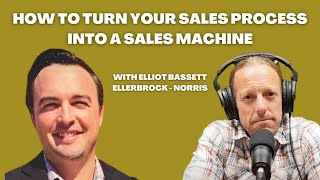
Elliot Bassett from Ellerbrock-Norris walks through a three-meeting sales process for brokers: intro, in-depth assessment with 10-15 open-ended questions, then proposal. Slowing down the sales cycle improves win rates and reduces buyer remorse. The firm built getLaunch IO to operationalize the process and surface opportunities beyond the core product.
Questions this video answers
Scheduled for 60 minutes but typically lasts ~45 minutes.
An even-numbered scale; Ellerbrock-Norris uses a 1-to-4 scale.
Encore.
getLaunch IO (getLaunch.io).
Chapters
So, Elliot, let's start here. We're going to talk about sales processes today and the place I want to jump off. And some of you have heard this before, but it's important to hear it again.
Let's talk about sales assessments. You and I are big believers of using some kind of evaluation.
Some kind of assessment to help make it very clear who your right prospect is. Talk about the importance if, if the people listening into today's webinar going, okay, I don't even know where to start. First of all, what are you talking about, Andy, with a sales assessment? Let's talk about why they're important. And how can brokers use evaluations to make their sales process more effective?
Yeah, 100%. And I think back to the. The slides you were showing, too. Having a process is a differentiator in and of itself. You can use that process to sell. You can use that as a differentiator. And trust me, most of our competition does not have a process they go through. And so we branded ours, it's called Encore. And a big piece of that is the assessment piece. And so that does not include, you know, diving into the policies. That's a piece of it. We do that on our own. But what we're talking about is what is the meat behind that? Clients. What are they really concerned about? What matters to them? Right. That's the stuff we want to uncover. We all know how to put together insurance policies and packages and benefits platforms and all the stuff it's all about, though, how is that going to impact the client situation? What's going to be impactful to them? So that's really what we're trying to uncover in that evaluation. And that's really where you're going to be able to set yourself apart, because you're. You're also in there. Just by asking different questions than what your competition is, the client can see that you have a different mentality, a different philosophy. They're not going to be used to it. That sets you apart as well, just. Just by going through this part of the process.
Yeah, I think that's important, too, because when I look at what I see a lot of agencies doing, I heard, I had a client say this once, and I thought it was so apropos. A broker's value is placed on a quote. A consultant's value is placed on a process.
Bingo.
And that's, I think, important for everybody to hear. Not that we're saying you're going to have to use quotes sometimes. Yes, you will. But the point is, guys, you want to be getting paid for your process. And so Elliot, talk if you don't mind sharing if there's anything I ask you like I don't want to share, go this deep, feel free. But open book man, when you guys go out and meet with a prospect for the first time. So let's start, let's talk about the beginning of this process. You guys call those, I believe executive briefings, correct?
Yep.
What is the goal when you guys go out and meet with a prospect for the first time?
Yep. So what we're trying to figure out in that first meeting is more of like the psychographic, we'd call it characteristics of the client. And then if we can, we're going to try to pull out any problems, risks, concerns that they may have at a high level. So that's really the get to know you, we get to know or you get to know us kind of conversation. And then we're going to lay out which is this is a very important step. So assuming we go through that and we like, okay, this could be a good, this client could be a good fit for us, we're meshing well kind of thing, we lay out the whole process. That's very important because again, especially if you have a process that you're going to go through that they're not used to, you want to coach them on what they're going to experience through this process. You can also use that to front run objections to, you know, pitch some differentiating factors that you want them to focus on through this process. Because like one of the things that we found over time is our clients prospects have been so trained by our industry to expect things one way that we have to almost go so far the other way to teach them a different way to go about it. Because otherwise they're expecting in that meeting you could say whatever you want. They're just expecting you to come in and quote their health insurance. That's what they're expecting. And so you have to lay out, this is what you're going to experience. We're going to come in and we're going to do a full blown assessment of your entire program and this is what that's going to look like. Then I'm going to take all that information back, I'm going to get with our team, we're going to analyze it all and then we're going to come back and present what we think the best solutions are for you.
I love that. How long does that meeting typically last?
45 minutes probably. Can we usually schedule them for an hour, try to get them done. 45.
So now let's talk with that. Let's pair that now. So that's a good first meeting, you guys. Again, guys, Everybody else, call it discovery meeting, call it intro meeting, executive briefing, whatever you want to call it. I, I heard you say, I think one of the most important factors of that first meeting in a sales process is you establishing the expectations and the sales process with the prospect.
Correct.
Lean it. Laying that out, guys, at the beginning is so important because too many of us don't do that.
Leave.
We leave the first meeting all fired up, like we hit it out of the park and then we're like, wait, where did they go? Why aren't they returning our calls? We have to be clear about what our process is. All right, so Elliot, now we talk about the sales assessment.
Yep.
You guys have encore. Let's go a couple places with this. Number one.
How do you guys use it and what do you think are the key? If somebody were to build a sales assessment today.
What are the key components that assessment has to have?
Yeah, so key components. Well, to take a step back because a lot of people get, you know, overwhelmed by building the actual assessment. Don't let it overwhelm you. Number one, if you've been in this industry for a while, probably know the main pain points that your clients have. So build it around those. If you don't go out and interview five target market prospects and just say, hey, what are you dealing with? What do you hate about the health insurance industry? What would, what would make you want to make a switch? You know, go out and interview them and then build your assessment around that. But then key components of the actual assessment. Number one, you want to lean more into open ended questions than you do closed ended questions. Closed ended questions have their place. Meaning, you know, do you do this? That's a closed ended question. That's going to generate a yes or no answer. Those have their place, but they're typically for clarification or data gathering or things like that in the assessment. When we're in front of somebody, we want to be generating conversation. We want them to go deep. Right. So we want to say, how are you handling xyz, you know, what goes into your process of evaluating insurance brokers, whatever it is. But those, those, those questions being very open ended, are going to allow you to generate a conversation with the client about that particular topic. That also creates the ability to not have a 90 question assessment because, you know, you can have 10 to 15 really well written open Ended questions and you're going to get all the information you need from that prospect.
So that's, that's the best way to do it is the best assessments are created around open ended questions that are conversational. It feels like a conversation with the prospect. They don't feel like they're being interrogated. Closed ended questions will feel like an interrogation more than an open ended conversational based question is. So that, that's probably the biggest thing. But then, you know, like I said, the topics and the things you ask about, don't let that overwhelm you. Don't, you know, don't think that that has to be bigger than it is because again, all you're trying to do is go in and even if you just ask questions around, hey, what keeps you up at night? You know, tell me about what you're concerned about right now. Those are just gold. When you, when you figure out what the client's thinking about you also, I.
Know you guys also use what I will call braided questions where you walk through a prospect through. I think you guys use a scale 1 to 5, right?
1 to 4. Yep.
1 to 4. And I know some others use scale 1 to 10 type stuff.
Yep.
Talk about that. Why, why are those types of questions included in an assessment and what is the importance of that? The scores, you know, whether they're giving themselves a one or a four as you go through those questions in your assessment, why would someone want to have questions that also have again, I call it the graded component to it?
Yeah, well, the first thing in there that we've learned is always do an even numbered scale. If you do an odd numbered scale, say one to five, you're going to get 95% of your prospects will pick three. Almost like it's comical how common it is because that's average. Right. So we want them to always have to select above or below average. So 4, 6, 10, you know, think about that. They can't be average. Right. So that's the first component. But we, the way that we've done it is on a one to four is we write four, what we call template responses for each question. And that's just reminding us, hey, here's what a bad answer a one sounds like when they answer this. Here's what an okay answer sounds like. And that just gives us more nuance in the answers and in the scoring that we do. You wouldn't have to do that. If you're seasoned enough and you kind of know what a 1 or a 10 sounds like, then just make it a 1 to 10 scale and grade it after that.
Cool. I love the, the graded.
Part of an assessment for one reason and it kind of goes back to what you said about the closed ended questions and why they're not effective.
If you ask the prospect whether or not they're happy with their broker, so there you basically gave them the choice to say yes or no. Right. And they say yes, you're going to assume they're happy with their broker. However, if you said hey, on a scale of 1 to 10, I would love to know, like rate your level of satisfaction with your broker. And they gave it a six. Well guess what guys, that's still on the yes side of a scale. But it's a very weak yes. And that's, that's why those types of questions are so impactful because you get a lot of gold coming out of the back end of why they gave the score they gave. Yeah.
What would make it a 10 after that? You know, there's a lot of room there and that's, that's where the gold is.
So talk about for. With that being said, Elliot, so with your process, when you guys do the sales assessment, the, the encore and I know this comes up a lot as a question that I get. Is it best to do that in person with the prospect or, or is that something a prospect can fill out before or after a meeting has to.
Be done in person with the prospect hands down. Okay, now that there is a fit for pre meeting questions and you know, things like that that you can send to a client and have them fill out to get information. But, and when I say in person, that's the best. Virtual works as well. We all know, you know, but we, I like to build relationships, people be across the table. But certainly having the conversation directly with the client because you want to be able to. There's so much nuance when you're talking to somebody about these areas. You know, even if I say hey, tell me about that question we were on. You know, how, how happy are they with their broker? It's a six. Tell me why. Well, if they're typing in an answer, you can't hear inflection, you can't see body language, you can't, you can't ask them a further question. Things like that that are hard when you're pre sending the questionnaires. And again there is a level of. You could send some questions and things to gather data that I do 100% agree with and we do that as well. But the actual meat of the assessment I think is best in person or virtual.
And I believe you guys actually schedule a second appointment where you come back out and do the assessment. Correct?
Correct. Oh, yeah, yeah.
And then at that point that data and any other information you guys use is coming is being used to come back and provide a proposal of some kind of.
Bingo.
Yep. So let's talk about that because remember the, the name of the, the, the webinar here is scale your sales. Right. That process you guys deploy, executive briefing, assessment followed by a proposal. How is that allowed you? What's the importance in your opinion of having something like this to help scale somebody's business? Where have you seen it be become the biggest advantage for you guys?
Yeah, so this is going to sound like a bit of an oxymoron, but we, we have the data to show it. Slowing down your sales process will speed up your results 100%, allow you to scale faster and meaning, you know, some people like, well, I don't have time to meet three times with a prospect. I want to get them in, get them in, get them in and get them out. And, and that's, that's great if you can do that. But what we found is we have this multi meeting process and we're only going through that with people that we have a high likelihood of winning the business with. Right. So if at any point in time through that process, we're not getting the right read, we don't feel like this is a fit. You know, we don't have anything that we can really show value to this client. We're going to pivot, we're going to pause, we're going to say, hey, this maybe, maybe isn't the best fit and we're going to move on to the next one. And so by slowing down, you're giving yourself the best opportunity to win those deals that you're actually going to present on. And you know, it sounds like an oxymoron, but we have, it seems like every time now that we shortcut the process, we end up losing the deal. It's, it's just hands because they, the, the prospect starts to put you back in the bucket of being a health insurance advisor or, or what, or producer, you know, salesperson, and you just get lumped back into that. And what you're trying to do is remember you're differentiating yourself by going through this process. So it, it leads to scale just through that you're not wasting your time on opportunities that are never going to get anywhere. And it's hard to do Though it is very difficult to do because you're going to get an opportunity and you're going to say, oh, I can just get this one out. They're all on board, you know, and man, that first meeting went great. I can just shoot something over to them and they'll, you know, they'll sign it. And when you do that, then you're like, you know, all of the skeletons come out of the closet and they're like, how? Well, this and that, I can't do it now. And you know, and so we found that that's the best way to scale. And it sounds backwards, but it absolutely plays out.
So a question popped up. I'll answer real quick, Elliot. Is the question was, is the executive briefing, the assessment the same meeting? No, it's not.
Nope.
Those are actually two separate meetings, Brian. So.
And an executive briefing, you know, doesn't have to be overly complex. We could be a 15 minute phone call, introductory phone call could be. All you're trying to do there is learn, like, is this a prospect that I'm going to be able to bring through this process?
Awesome.
And they meet my target market.
And I think something you said there, I would love for your opinion, your thoughts on this too. When you create a process like you guys have, let's call it a three meeting process, which includes a really good in depth sales assessment. Have you noticed how your prospects have kind of viewed you as being different just because of that process? I know you said that a few minutes earlier. Have you guys actually seen those results where they're like, wow, this is much different than we expected?
Absolutely. And I'll take it a step further too. We've had situations where we tell the client how we're different. Right. And then we shortcut the assessment and we go to present because they, they really bought into our model and what we were telling them, but they didn't experience it. They didn't experience the assessment and how deep we go in the questions and what we're asking them is different and we don't end up winning the business. But when those clients get taken through that process and they experience and they hear how we ask questions and they hear what we're interested in learning about them, that's where they flip the switch and they're like, wow, this is quite a bit different. Like it's not just words that they're telling me. It's, I felt it going through this process. So it a hundred percent is, is the only way you're going to shift that model. In my Opinion is to have them go through that assessment.
Awesome. Well, and that's what I, I think that's where we're going to transition from pillar one to pillar two. One way to scale your business, guys, have a good process process that you can rinse and repeat and bring your prospects through. And I put it in the, in the, in the chat box. Slow down your sales process to speed it up. I know it sounds like you said, Elliot, like an oxymoron, but you got to walk people through the process. I know, guys, we've seen it in our own business. We have a process. The second we go too fast because we think somebody's eating out of our hands, it's the, it's the, it's exactly the moment when that person ghosts us or somehow we get some objection that comes up and all of a sudden what we thought was a no brainer just turned into an opportunity that we're, we, we didn't get any opportunity from. So I love that you said that, Elliot. So let's transition quickly to. Not quickly, but the pillar two. We talked about how to turn missed opportunities into opportunities you can't miss. I think one area where a lot of firms struggle is they're so hell bent on selling one thing that they might be missing opportunities where they could grow revenue. Talk to us about what you guys have done to help solve that problem. How are you guys turning what used to be missed opportunities into? Man, there's so much here we could be leveraging.
Yeah. So this, we could go deep probably on this one. The first thing I would say is be genuinely curious with your prospects. So don't have an agenda when you go into some of these meetings. Necessarily if a conversation opens up that a client is super concerned about this other area or they're having troubles in this area. Explore it, you know, ask them about it, even if it's not your expert area of expertise. Because again, you're trying, you're not trying to be a salesperson, you're trying to be a consultant, an advisor and help them work through these different areas. Even if you don't particularly have the solution.
You can always go and help them find a solution. So we've had situations in the past where, you know, we don't have expertise in an area, say legal. Right. And they have a very specific need and it's stressing them out and, and whatnot. And we'll just say, hey, we'll build that into our plan. We have, we have several relationships with attorneys. We don't know if Those will be best. But let's help you search out a solution to this because it's keeping you up at night. That's all a client needs is hand holding in some of these cases. So we've turned that some of those things just by identifying the risk into areas that we can provide value even if we're not delivering the ultimate solution. But then I think the, the big thing there is having the consistent assessment to go through that you're building over time as you do these more often. That's how you're going to know that, you know, you, you're going to see natural patterns in these conversations, right? You tweak your questions, you add questions, you remove so that you're making sure you're not missing those consistent themes and opportunities in each of your, you know, prospects that you're taking this through. I think that's the best way is because consistency is key around a lot of this.
You're muted. Andy.
Question may not, may not, may not be applied to everybody on this webinar because I know we have a mix of people on the webinar that are maybe a hybrid commercial benefits firm. I know we have some people who sell financial products like life insurance, disability. We have some benefits only firms. But actually it applies to a question Joe put in the chat box about. Are the questions you're asking in your set in your executive briefing different from questions you had asked in the assessment? But where I think we could take this, Elliot, is talk to us quickly about what you're talking about in the executive briefing.
Having it more be a business conversation than just a specific product conversation, which is allowing you to uncover other opportunities someone might miss.
Yeah, yeah, absolutely. It is more of a business conversation. The questions reflect that they're going to be higher level, give you some examples, but with the caveat that you're going to get information in that conversation that applies to your assessment questions. Right, because they're going to naturally talk about something in their benefits program or how they're currently doing employee education is really frustrating to like that stuff's going to come up if you do it right. So you take those notes. Don't dive, you don't necessarily have to dive it down in that executive briefing, but take those notes so you've got them when you go to the assessment. You know that those are areas of concern. But just to, I mean, some examples around the questions that we'll ask around that. We love to start it out with questions about where's the company going? What do the next Three to five years look like for your business? That's super important around the benefits. Phase two, because what happens if they want to grow by 25% their employee force? They want it, they need to attract 25 new people or whatever.
You want to know that because that could be part of your strategy, you know, and you want to hit on how can the benefits platform support your main goal of growing your company? That's gold.
So it's questions like that, hey, what you know, what areas of concern do you see? What areas of opportunity are upcoming? You know, what things as you've engaged other advisors in the past do you like? What things do you not like? It's, it's conversations like that. So pretty high level that you're trying to figure out, you know, how does this person think? What's important to them? What do they care about, what do they not care about? Those types of things are going to be really, really impactful when you go through that. Like how much do you need to shift their mentality? You know, if they're as our industry, you know, like to train people, if they're trained on price and whatnot, you're going to have to shift that perspective. So it's good to know that in that first meeting when you're asking those questions, your, your then assessment questions are going to just take a deeper level down. You're going to focus them around benefits. Tell me about your benefits platform. You know, how are you handling this? How are you handling that?
Yeah, actually that's the one thing I wanted to add to that was somebody had asked, what questions do you ask in these meetings? I think the best place to go in an executive briefing type meeting is more of the high level business. Right. And I think four good questions everybody should always ask is what's your current goal right now as a business? By the way, it may have nothing to do with your benefits or your.
Commercial insurance, which is sometimes better than it does well.
And here's where the gold comes in. The next question is what would it mean to you if you could achieve it?
Followed by what's your current problem keeping you from it.
And how is that impacting you right now? Because if you get those four questions, what you got is what their goal is, what success would look like, what the problem is and what failure looks like today.
And Andy, can I jump in there? If you can attach your solution to those things, you will win all day long.
And that's the goal.
A lot of times we expect the client to make that connection. And I'm telling you, 90% of the time they just won't in their brain for whatever reason, we have to lead them to water. We have to directly make that correlation that if we implement this solution that I'm recommending to you, which could be the solution you recommend to everybody, could be a, you know, solid health insurance platform. But the way that you implement it is going to help them achieve what Andy just walked through. You're winning that sucker 95% of the time.
And that is the golden sauce right there guys, is let's imagine you sell nothing more than a captive. Whether it's commercial benefits, you sell cap. That's it. If you're able to pivot that solution to every single prospect given their goal and their problem, because every single prospect could have a different goal and, and a different problem, you will strike gold with it. It is being able to pivot your product, your solution to their story. So I wanted to say that because what questions do you ask? Elliot, I think you said it very well. Executive briefing is more the high level business. An assessment goes deeper into your area of specialty.
Yep. And Lisa, I'm happy to get with you or we can send something out Andy, on more examples or specific questions or things like that too.
So. Okay, so let's, let's land on the last part of this discussion around scaling your sales. Obvious answer. If we can get every producer to do this right, if you have multiple producers, guess what, we're selling a lot of business talk about. Here's what I want you to go a little specific for a second. You guys have actually developed your own solution to help every per try to turn every producer into a super producer. So when it comes to running your process, comes to finding missed opportunities, will you mind talk to us a little bit about what you guys have literally built at Ellerbrock Norris to try to help every producer maximize their opportunities.
Yeah, totally. I mean we as we've talked like we know that our growth and our success has been due to this process. And so what Andy's referencing is we actually built our own internal software platform that helps our producers walk through this process consistently. Gives them the questions to ask, does the scoring mechanism for them. We do it on a zero to a thousand scale. Allows them to graphically present these things to the prospect so that they can show.
Where they're at today and where we want to get them to. And then we build client plans that lay this out very specifically. You know, what are we going to implement to help you achieve these things that you told us in this process, and so we did that, and, and we're, we're out taking that to market. If anybody's interested in learning about that, I can certainly walk you through it. But the big thing is you don't have to have anything complex. I mean, you can do these things on Excel docs, you can do them on Word docs, you can do them in PowerPoint presentations I've seen before. I mean, there's a lot of different ways to. To do this that are not complex solutions.
That you can build into your process. And I'm telling you, just by.
Walking through some of these simple concepts will differentiate you from your competition for sure.
Yeah, I, I think that's important that I wanted people to hear that is you guys have actually built your own solution to solve the problem. Going back to where we started this entire webinar, which was too often teammates are all doing different things. There's no clear process within the organization. I will tell everybody who's on the webinar. The smaller you are, meaning the less people you have, especially if you're the only producer, I believe the more important a process is because you have got to be able to maximize output with the minimum amount of hours you have. And so the more you can leverage a process, leverage eni's process or whatever you want to do and ask the right questions. Elliot's been willing to share maybe, you know, some of the questions they're willing to even ask more. More importantly, I wanted to also share. Is there a place Elliot people could go, like, you guys have your program you call launch. Is there a place, a public website or something people could go look at if they wanted to check this out?
Yeah, I can pop it in the. It's just getLaunch IO.
I'll put it in the chat box, guys, if you want to go check it out. Yep. But this is a resource they are now bringing to the market. So if you are that team right now that could use a little help on creating a process and literally having a software platform that helps you run this process. I will tell you guys, we've taken a look at it. I know others, other agencies who are using it. It's a game changer, guys. So if you want to take a look at it, please take a few minutes and go check out getlaunch IO if you want to set up a conversation with Elliot. I'll put Elliot's email address in the chat box as well. But it's well worth your time and it's not even that big. Of an investment to really help you guys lock in on a sales process. I normally don't sit here and pitch other people's things, but I've seen what this thing can do and I've seen what it's done for their agency. This is why I wanted to have Elliott on, and it's pretty impressive. So let's, let's wrap up here before we go into some, any, any other Q and A, Elliot. So when you guys look at the success you've had over the last four or five years, and we've talked about a process, we've talked about uncovering missed opportunities, I'm going to ask the question this way. Knowing what you know now, president of your agency, what advice would you give Elliot Bassett In 2017 18, knowing what you know now, because you guys were probably not in the position you are today back then.
Yeah, absolutely. I think it's a good, it's a good question. And probably it would be consistency, forcing ourselves to go through the process. Don't shortcut it.
I mean, it's everything that we've talked about. But the, it's very easy to get an opportunity and fall back into old habits and think that we can win this by, you know, going out and getting quotes or something like that. And we have, you know, we have lost more business doing that than I care to think about. As we've learned this, you know, how to implement this particular process. So it's just having a deep belief in knowing that you have confidence in the process you're building, that when you take a prospect through it, you're going to have a much higher likelihood of winning that business and then forcing yourself to do it because you're going to get a lot of, of most, I would say, of your prospects are going to want you to shortcut the process. That's what they're used to, right? So they're going to tell you things like, well, why can't you just give me Annie? This sounds great. I love your philosophy, but you know what? I just want to make sure that before we go down that road and spend all that time, I just want to make sure that you're, you know, competitive with my current, current person. You know, you're going to hear that type of stuff all the time and just be, be cognizant that, you know, you're, you're telling the, the prospect that, hey, the, the differentiator we have is going through this process, helping you understand how we're different. Then you'll be able to understand if we're different or better than your current, current agent or whomever they use. And then I'll give everybody a quick exercise that you could do that we put to our team. You don't always have the best solution. Right. So challenge yourself to say, if I'm 10%, 5%, 20% higher in cost than the current program, how would I win that deal if I had to? You start to think that way versus because now you got to show 10%, 20%, however much more value, and you can't do it every time. Obviously, price is a very key factor in everything, but you start to think that way and say, every time I walk into one of these, I want to show 30% more value just in. Just in me, just in what I do so that the price ideally is irrelevant. It's a good exercise to go through because it forces you to think, like, what am I going to show that's different throughout this whole thing?
That's awesome. What would I have to do to win the business even if I was 20 to 30% higher? I love that. All right, guys, we got about two, three minutes left.
What questions. Other questions do you guys have other than Elliot? Send me all the questions you ask in your executive briefing and your assessment. What questions come up around sales processes in general?
I got one.
Yep. Go ahead, Craig.
Hey, I'll just back to.
Back to the Slow down to go fast. Just. I mean, it seems like it'd be common sense to be patient and let the buyer mold more, evolve more into what you're showing. But can you actually say that you've got numbers or you have seen where the times you've tried to speed it up, buyer's remorse really kicked in, and the times you slowed down, buyers, remorse lessened?
I mean, it's. We're doing a better job over the last probably year of tracking a lot of those numbers. I wish we had done a good job over the last six or seven of really tracking a lot of that, but I don't have great data on. On that piece. It's more of. I just. I know the amount of opportunities we've done that on, and it has caused us to make it harder to win the deal. Let's say that.
Yep.
All right. Yeah. 100%.
Yeah. And I can. I can back that up real quick, guys. We run our own sales process here at Complete Game, and it typically starts with a intro meeting, discovery, strategy call, intro meeting, strategy call, proposal. Whenever we go right into strategy call proposal, without that extra step, hands down, we rarely move forward with that person.
I'll give an example from yesterday, Craig, of our team, that great perfect process or prospect. And we went, they went in, presented, and I don't think that they fully went through the entire process like we would like, but they thought, you know, this is a, we've got this right where we want it. And they find out that the guy really doesn't want to move in the middle of a three year term with Cincinnati. He can, he has no reason not to, but he's just like, I don't know, I kind of feel like I made a commitment to these guys for three years and they're like, that never came up. And I, I can, I bet I could go back to. If we looked into how they went through that process that we didn't, we just didn't go deep enough in the questions, you know, we didn't spend enough time with it. We would have found that out if it's their biggest objection through that process, had we done it. So it's things like that that, you know, that that's a tough one to overcome when you're presenting and you didn't know about it, you know. Yeah.
Thanks, Elliot.
Absolutely.
And I fall into that. I fall into going back in the habits of, well, let me throw your.
Price out there first.
Or the habits of he relationship is solid. So I can shortcut this a little bit.
Yeah, it's easy to do. Elliot, how often does the client, the prospect, the person that tries to speed things up and skip some steps is that they're usually the ones that are gonna con you into doing it for sure. Because again, remember what they're used to. Remember what they've been trained to do for however long they've been doing it. Right. Your job is to say there's a better way to do it and they don't want to give up more time. Yep. They just want to get to your answer and compare.
Go ahead, Elliot.
Also, keep in mind, people will put time into where they see value. Right. So in your introductory meeting, that's part of when you're laying out the process and part of why really good questions is key there. Because if you start to say, you know, connecting back to something that they want to accomplish in their business and how going through your process, they're going to have a better understanding of how health insurance or PNC or whatever your program is is going to fit into helping them do that. Ideally, you show them enough potential value there that they're willing to spend the time and then you have something to go back to too. You can say, hey, you know what? We haven't gone through all the, I don't have all the information I need right now to show you if I can help you or not or to show you if we can get you from A to B.
Yeah, it's the toughest thing, I think prospect we have as producers is when we get an opportunity, we, we inherently let the prospect control the process because we just want to win the dang business. Right. And it's so hard to walk away from something that you, in, in your gut, you know, you should probably walk away from. And I'll tell you, I go back to, I said this to my academy yesterday. The more you have in the pipeline, the easier it is to walk away. You know, if you're staring at two opportunities and you're like hanging on to it because I need these two opportunities, it's going to be so hard to walk away. But if you have a nice pipeline, it's easier to run the process and it's easier to walk away when you feel like you have to walk away.
Yep. And keep in mind, in the back of your mind too, that we're all competitive. We wouldn't be in this business if we weren't. We're all optimistic. We think we can win every deal. We can turn this one around. If I just get this, I can get there. That's all natural and those, those inner conversations are going to happen. But, you know, that's why we've gone just so far to say it does not matter where you think you are. If you haven't gotten through the process, slow it down and go through the process. Because if you don't, there's just going to be things you don't know today that are going to come up.
Yeah. Let's get one final question. Anybody have one more question they want to ask?
I will read a comment somebody put in here and I want to thank Stacy said I really needed to hear this. I went through a one hour meeting and the group wants to look at something that follows their philosophy, AKA psychographic, which I didn't find out in the front end. And so that is, that is so well said. It's, you know, guys taking the time, as Elliot said, to slow it down and really find out what they're trying to accomplish, not just with their benefits or their commercial insurance, but their business and figuring out how you can play a role in that with what you do. And sometimes you won't be able to play a role, but if you can and figure out how you fit into their story. It is an epic game changer, I can promise you that.
Yeah. And one more thing, I'll add to just that piece. Andy, I know we're over time, but the minute we present. Think about it this way. The minute we present, we lose any control we have. Right? Because that's how they view us. So if we learn something in that presentation or we don't get it because we didn't understand something, it is very difficult to get another opportunity for another 1, 2, 3, 4 years or however long it is. So that presentation meeting is so valuable, it is so important that don't do it. Push it off as long as you can until you know with 98% certainty that you're going to win this deal. Otherwise, don't present if you can. I understand that, you know, prospects control that, timing controls that, all those things. But just drag that discovery out as long as possible to give yourself the most ammo you can when you go in there. And be confident in that solution. Because the minute we present, that's what they're going to remember and that's what they, they think. So it's kind of like in that, in that situation, you might have the solution, exact solution that they need and you just didn't show it to them because you didn't know that that's what they wanted. Right. Well, that's going to be hard to come back from.
Well, Elliot, I want to thank you for your time. Everybody else, I put Elliot's email address and I did put the get launch website URL in the chat. So if you want to grab that, you're also going to be getting an email later today with the recording. We'll put Elliot's contact information there as well. So if you want to learn more about the launch program they built, because again, I've seen it, I've tested it, it's really cool. Or if you have any other questions, feel free to reach out to him. But this has been great, guys. This is one of those little nuances of sales nobody talks about. We always think it's about the right product, the right pitch. No, no, no, no. The process is the key and everything.
Is going to efficiency.
Yes.
Differentiate yourself by being an advisor.
Yep. Remember, brokers, values placed on their quote. Consultants, values placed on their process. So thank you guys. Have a great day. Make sure you apply to that email if you want help. Otherwise, go make this happen. Take what you learned from Elliot today and put it into action.
Awesome. Thank you. Thanks, everybody.
You guys.
More from Andy




If you want producers to succeed faster, help them create a sales message that creates confidence.

Sales isn't a zero-sum game! You can have tough competition and still grab a beer after



Option 1: Meditation, a fast walk, a podcast, and protein. The ultimate morning routine!

How you do one thing is how you do everything. Ill elite producers fuel their body.


Stop living in the gray of maybe! Your job in sales is to get a clear yes or no