How to Win More Insurance Business Before the First Sales Meeting with Tom Sutter
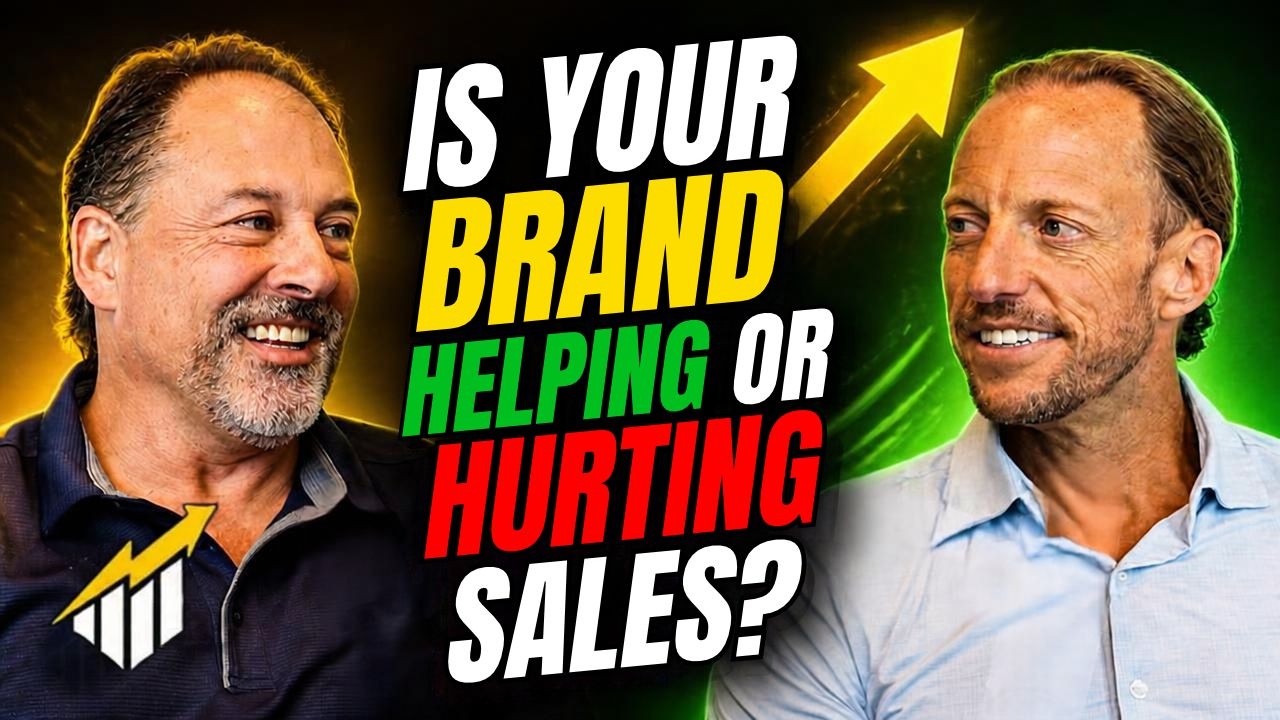
Tom Sutter of OneDigital built Cal's Angels, a nonprofit that's raised over $35 million for pediatric cancer after his son Cal was diagnosed with leukemia in 2005. His authentic LinkedIn content, from quirky videos to baseball obsessions, has become a lead-generation engine for his insurance business, with strangers becoming clients after seeing his posts about helping kids with cancer.
Chapters
Overall, what I'm proud of is when anyone says thank you. It makes me proud that I've done something. Yeah. Where somebody tells me thank you for what? They're like, you do this Cal's Angels, you helped our family so much. They go, this stuff, just thank you for doing that. They go, we know, we found out that you don't even get paid to do it. I go, you know what, I do get paid.
Yeah, right there, 100%. You should do things without wanting anything in return, right? But there's nothing that does— makes you feel better than just a thank you. I don't want anything else, but just if I, if I go out of my way to help you, a simple, hey man, thanks.
Yeah.
Hey, hey, welcome back to the Accelerate Your Insurance Sales podcast. Andy Neary here, CEO and founder of Complete Game Consulting. I am excited to be joined today by Tom Sutter with OneDigital. Tom, welcome to the show.
Hey, thanks, Andy.
This is a part 2. We had you on what, last summer?
Yeah, it was right when we started doing business together. Yeah, like within a month.
We're going to get to a lot of topics today. In fact, I asked Tom what he wanted to talk about today, and he even brought up that He wants to talk about the influence Pompeian culture has had on current modern-day society. We can talk about that too.
We can talk about it because, like I was telling you, I go, a lot of people are like, why? How does that stuff hit? I go, I don't know. It just sometimes crazy things hit my head, so it comes out before I think.
Yeah, I— it is not uncommon in our house. I'll say something and Amy will say, you know, that's a minute I'll never get back. And I'm now dumber because you said that.
It's kind of what my wife says too. She'll be like, what? She goes, stop it, man. She goes, the kids, they might believe some of that stuff. Well, let's talk.
If anybody saw the episode last summer, we definitely spent time talking about Cal's Angels. So let's do, if you don't mind, a little level set for the folks who might be tuning in for the first time. Talk a little bit about what led you down the path to founding Cal's Angels. Obviously, the story of Cal, your son, behind it. And then I definitely want to dive in. I got a chance this year to participate in the golf outing, which was awesome. But for the folks again who are meeting you for the first time, what is Cal's Angels and how did it come to be?
I'll give you a shorter version because, you know, I always tell everyone, if you start getting me talking about something that's exciting, I go for it.
We'll be here 45 minutes from now. Yeah, which is okay, by the way.
Just on that topic. Yeah, but Cal's Angels is— so our oldest boy Cal, um, when he was 12, so June of '05, he was diagnosed with acute myelogenous leukemia, AML, as a child. So that's the adult form of leukemia. He was diagnosed as a child, and back then we didn't know what we didn't know, you know. That was basically A child getting diagnosed with that was basically a death sentence. And so, you know, you didn't— doctors didn't know what they didn't know. They kind of lumped them all into, it's a blood cancer, 80% remission rate, success rates 10 years down the road. But, you know, as we went on through it, as the years go on, you know, we learned that that was incorrect. But you're going back to that. So he was diagnosed in June of '05. And, you know, that just threw us into— I call it the pediatric cancer family life. It's awful. I mean, I— you can't— nobody can imagine what those hospitals are like. You have kids, you know, tubes sticking out of their heads, you know, and just, you know, you're sitting there, your kid has— you know, you have to learn how to give, you know, the PICC lines, give them the meds through the PICC lines, and you're wearing a mask and You know, you have to become like a nurse.
Yeah.
And you're administering meds to your kid. And, and so when Cal was diagnosed, like I said, we got thrown into that, that pediatric cancer life. He fought it for 14 months. He made it a lot longer than most do. Most on that— now there's a lot of different things, and we can— I'll tell you real quick about that later on. But back then it was 14 months. Most kids made it 3 to 6. He made it 14 months and he was inpatient 11 and a half months out of 14. So we spent a lot of time in the hospital.
And where, where was he inpatient?
Well, we started at Children's Memorial in Chicago. That was where— and I'll tell you when we— I'll tell you the first story because Cal's a big baseball kid.
Yeah.
And so if you go back to—
By the way, you're telling me the White Sox story?
I'm going to say the White Sox.
Because this is the first year in how many the White Sox are actually having a good year again. So this is a time-appropriate story.
It is time-appropriate, right? Because they weren't supposed to be that good this year. But back then, so he gets diagnosed and it was one of those where, I mean, it came out of nowhere. I remember the day when we found out, he— the first phone call today, the All-Star coach called me. He goes, hey, I want to tell you, Cal made the All-Star team again. This is awesome. You know, he's on my team. I mean, everyone loved the kid. He was just a great kid. I mean, he He cared about other people and before he cared about anything about himself. So we find that out. Second call of the day, his mom calls and says, hey, you know how he had strep throat 3 times over the last 2 months? It was going around the area, so they didn't know, but they gave him meds, the antibiotics to go away, come back, go away. Third time it came back, they said, we need to do a blood test because that's just— something's wrong. And when they did the blood test, The white blood cell count was so high. They said, you know, this could be leukemia, or some form of something with the blood going on. And we need to do a bone marrow biopsy. And I don't know if you've ever seen a bone marrow biopsy. It's like a 16-penny nail, and they stick it in your hip bone. And he's laying on the table. Now they twilighted him. And I just remember they put that thing in, and the sound it made, it was awful. Because they have to go through the bone into the marrow and pull that out. And so they leave, they come in, and the doctor comes back in the room. And at the time, it's his mom, his stepmom, grandma. We're all sitting in a room and the doctor comes in and he says, hey, Cal, I need you to hang out with grandma and your stepmom and that because I need to talk to mom and dad alone. And I go, oh no. Oh no. And so we walk out of that room and I remember walking down, it was only 3 doors down in the hospital, and she's looking at me and I'm looking at her. I go, this is not good because, you know, and I just remember in the room the doctor breaks the news to us.
Yep.
And I go, okay, this can't be right. Right? Yeah.
I mean, you just don't believe it. You've heard other people have it, but not my kid.
Right. Yeah. Well, and a big baseball player. I go, how do you have cancer when you made the All-Star team at You know, it's just not computing.
Yeah.
And but I mean, it was real. We had at that point, that was a different hospital. My dad's golfing buddy was the CEO of Children's Memorial in Chicago. We were at one in Oak Lawn. So I get a hold of my mom, instantly gets a hold of him. He sends an ambulance down and says, okay, we're going to get him second tested. We're going to bring him down to Children's. And we get there and they did all the testing and it was what it was. I mean, there was no going around it. But the White Sox story. So I remember he comes in the room, the CEO comes in and goes, hey, Cal, who's your favorite baseball team? And I go, I'm thinking he's going to say, because I'm, I'm a Braves fan, number one, Yankees fan, number two, because I always played on the Yankees. I was not a Chicago fan.
And even though you grew up in Chicago.
Even though I grew up in Chicago. And that was more along the lines of because I grew up in a Cubs family. So it was kind of like just doing it to irritate my parents. Yeah, I, I tend to do things like that sometimes.
Yeah, but I, I, I say all— okay, I follow you, and I think we're— you're a little older than me, but if you're growing up saying, I'm gonna like the Braves, that's when they were terrible.
Uh, well, yes and no. I more or less gravitated to the Braves in the '90s when they traded Maddux.
Okay, okay.
I was more—
Which makes sense. Maddux from the Cubs to the Braves.
Okay. I was more Yankees.
Now I'm tracking.
Yeah. When they got rid of Maddux, Yeah. Is when I said, okay, I'm a Braves fan. Everyone could go, what? That's Atlanta. Yeah.
You remember where you live, man?
Right. That's a long way to go. I go, no, I'll go to games when they come in town. Right. But anyway, I digress on that. So anyway, he goes, and I'm thinking it's gonna be one of those— Cal played on the Angels, which is—
Is that partly by the— behind the name?
Yeah.
I didn't know that.
Okay. I see a lot of people don't—
they think Angels because obviously, yeah.
the Angels and kids passing away from cancer and Cal passed away. But no, it's because of the Angels he played on.
Okay.
I remember. So he asked Cal that. He goes, White Sox. And I go, what? I go, hang on a second. I go, he's not competing with me, man. And I go, I go, White Sox? He goes, yeah, they're going to win the World Series. And I go, I just remember I look at the CEO and I go, man, I go, you guys gave him way too much chemo, man. I go, this kid has no idea what he's talking about. The White Sox are going to win the World Series. I go, Chicago team is the White Sox? I go, it's been, I don't know, 98 years or something since they've been in it. And Cal goes, no, you're just— you'll see, you'll see. And so as the season went on, I remember sitting there in the hospital room with Cal and I'm going, oh, good God, like, this season is, is unbelievable. And, and then—
Yeah, White Sox came out of nowhere.
Yeah. And you mean you had good players, but they were not supposed to do that, just like this year.
Yeah.
They're not supposed to be where they are looking at the playoffs this year. And I remember, um, when that last pitch with Brzezinski, the catcher, hits the mitt, tags it. I go, this is crazy, man. I go, I should have in early June gone and put $1,000 somewhere on the White Sox saying the White Sox are going to win the World Series. I guarantee even the guy that you're taking a bet goes, yeah, okay, give me your money, right? I'll take your money. I don't know what the odds would have been on that, but there had to be a moment when you—
when that last out was made, you kind of looked at Kel like, you got to be shitting me.
Well, that's exactly what I said. I'm like, you're going to be shitting me, dude. He looks at me, he goes, what'd I tell you? I go, I go, dude, you're 13 years old. You don't know a whole lot right now, right? What do you know about betting? Yeah. Anyway, but yeah, he picked it. So, but then That was, what, October of '05 when they won. So he ended up— he went into remission, back into it, remission again, relapsed. I mean, he relapsed 3 times. And on the 3rd time, I remember we had now gone to an experimental program up in Minnesota. And a really cool thing though. I mean, it's sad, but it's cool because him being— his favorite player was John Garland.
Hmm. And which, Again, now that's—
I go, I had no idea who that guy was either, right? I'm like, I don't know who John Garland is. I'm like, okay, pitcher, good guy, whatever. And the Friday— so Cal passed away on Monday, August 28th. And on that Friday, we're up in Minnesota and they all— we had never told Cal, you know, what was going to— the predicament. He, he knew it. And but what was interesting is the White Sox were playing the Twins. And someone knew John Garland's PR person and they said, hey, we got a hold of John Garland. We know he's Cal's favorite player. He sent Cal stuff and he's going to call Cal from the dugout.
Oh.
On his cell phone. From his cell phone to Cal's cell phone. He's going to call him from the dugout and he's starting pitching tonight. I go, okay, what a cool guy, because Especially if you're starting that night. You're starting that night and you have that whole superstition stuff. I know, I know a lot.
I'm a former pitcher, dude. I get it. Yeah, you're in a zone for quite a while.
You're in the zone. Half hour before the game starts, he calls Cal and— okay, I'm gonna cry.
Yeah.
First question, he goes, Cal, what pitch should I throw? Cal goes, throw a curveball. And he did.
Yeah, that's all that.
Yeah. So, but But on that Monday, that's when we flew him home and he ended up over the weekend. We flew him home and unfortunately, you know, it was— I mean, we knew it was coming at that point. And I mean, it's a hard thing, you know. I mean, we were there with him and I remember when the coroner— I mean, there's things in my head I wish I could get out and I can't.
Yeah.
But that's probably why I'm so passionate about helping people, these families, to get through the cancer battle. Because when he passed away and the funeral home came to pick him up, I go, no, here's the deal. I go, I'm going to carry him down. And then I carried him and it was down his mom's driveway. It was about, I don't know, 150 feet long at most. And it felt like a mile.
Yeah.
And I remember I put him in and I go, this is something that no parent should ever have to do.
No, no.
And like I said, it was at that point I mean, Cal passed away and people tell me now, they go, they go, all I remember is at Cal's funeral when you stood up and you thanked everybody that helped you guys and you said you're going to make it a goal to pay it forward and help other people.
Yep.
They're like, oh, good God, dude, you took that. Too bad you didn't take school that seriously, right?
Well, but let's talk about that, what you guys have done with Cal's Angels, because I got a chance to participate in You not only had one but two golf outings this year because it's so popular.
Right.
I participated in the second one and just, I'll be honest, sitting, you know, in that room afterward doing the dinner and you guys were doing the raffle and the, just the awards and everything. And then I forget the name of the guy. You had a father come up and talk.
Graham.
Graham, about his experience with his daughter and just watching, you know, as he's speaking, there's slides being shown up on the screen of her And it's like one day she's a normal kid and then the next day she's not. And just looking around that room, the impact you have had on how many people with Cal's Angels, and I'll be honest, man, I think it's even more impressive that you run it with your ex-wife.
Yeah.
Right. It's, you two have been able to put whatever you've had behind you to build this foundation. Like when you're in that room looking around, what does that mean to you?
It's overwhelming. And that's why a lot of people are like, why don't you get up and talk more? I go, you know, I can talk all day long, but I get up there and I look around because we have families there.
Yep.
CALS families. We have people supporting us and would do anything to help us help these kids. It gets overwhelming. I mean, if you saw me talk, I mean, I can get up and speak, but it takes a little bit sometimes. And I always tell everyone, they're like, how do you do all that without drinking at these things? I go, well, I don't. I don't. And then a couple reasons why I go, because I've been to those charity events where the person up there speaking is hammered.
Yep.
People go, oh my God, you know, that guy's slurring his words. Yeah. And I go, I go, because here's the thing, everyone knows I don't. And so if I slur my words, they go, oh, Callis' dad has a speech impediment. Let me donate more money, right? People go, you're killing me with that. I go, no. I go, it's not. I go, no, I just I don't. But it is standing up there is very difficult sometimes.
Yeah.
Because you look around and you see all these families and you see like Graham got up and spoke. But in that crowd, there were 8 of the dads. You know, I created a dads group. We have a dads group where whether kids are battling, kids are in remission, kids passed away, there's about 100 and something of us in the group. And anyone, any dad's welcome. But we do stuff that's outside of Cal's Angels, not sanctioned, because we get together and do guy stuff.
Yeah.
You know, we don't sit around and commiserate. Yes, guys will talk about it, but we don't— we do guy stuff. Big bonfires, burning furniture in a fire pit, hitting golf balls into the forest preserve, uh, shooting guns. Just things that are not condoned by a—
Well, things to release stress.
Right. So we get together and do all that. And, um, but I remember when, when he had first— and it brings it all back when you're sitting there and you see the, the stories of these families still going through it. Because when Cal passed away, and then, and, and the funeral, I mean, I went off the deep end. And I, I'm not embarrassed. I mean, I'm embarrassed, but I'm not embarrassed. I went off the deep end for 6 months. I mean, it was a deep end where ketos was my friend.
Yep.
And I don't ever do that, but it became my friend. And I have tried to not think about stuff and not remember things. But I remember one day, because I had said when Cal was going through it, And I saw families because, you know, being in the insurance business, you know, we can do our jobs. Back then, you need a laptop and a phone. That's all you need. Nowadays, all you need is a phone for most things.
Yeah.
But, but back then, but most families don't have that. You know, dad might be a car salesman. He's got to go sell cars. He has to be there. You know, mom might be in the service industry. Someone's in manufacturing. People lose their homes, they lose their cars. And I said, you know what, at that point, I want to do something. I don't know what, whether Cal makes it or not. Because at that point, we started seeing that he might not. I said, well, we're going to do something. So I finally woke up one day and I go, look, I remember when I talked about this. And I was telling my wife at the time, Stacy, who I run Cal's Angels with, that's Cal's stepmom. I go, she goes, what do you want to do? And I go, I don't know. I'll figure it out. But I want to help these families. Pay bills, you know, grant wishes for kids. And I just want to do something. So I remember back then Googling stuff, figuring out things. How do you run a 501? How do you start a 501? What does it take to do that? We sent an email out to all our friends and family. About 30 people showed up in our living room and they said, okay, what can we do to help you achieve what you want to do? Came up with a golf outing idea. And so we used to have the golf outing and the gala on the same day. So we'd have the golf outing during the day, gala at night. We had 270-some people show up throughout the day for the different events. And our first event, I remember people said, hey, be happy if you raise 5 to 10 grand. I remember going, I'm going to do all this, raise 5 to 10 grand. They go, no, no, we got to knock it out of the park. So insurance companies really— the insurance companies have— they do a lot of community support and all that. And so I reached out to everyone I knew, all the insurance carriers, all my fraternity brothers, all our friends and neighbors, all our family. And we ended up raising $70,000. It was like $73,000 at one event. And all of us sat there and said, you know, I think we're on to something.
Yeah.
And that's kind of how Cal started. And we just went from financial assistance and wishes to also creating awareness because a lot of people don't understand pediatric cancer. Of federal funding, 4% goes to pediatrics, 96% to adults. That's why our golf outing, we call it, is kind of It's called More Than Fore, F-O-R-E, but More Than Fore meaning the kids need more than 4%. Now, I'm not saying that adults don't need any help, but you're talking about the future of our, of our, you know, country, and you're going to help, you know, at 4%?
Is there any explanation as to why only 4%? Do they just don't feel the need for pediatric cancer treatment or research or awareness? Is that important?
Yeah, we don't know exactly. But you look at the drug companies, you know, they'll, they'll put, you know, for pediatrics, there's 27, 28 drugs in the cancer treatment realm, and there's almost 1,000 for adults.
Wow.
And, and now, a lot of people say, oh, that's, that's just wrong. I mean, it is, but there are reasons because with the kids, their bodies change so fast. And they're going through puberty and they're growing, that one drug that works today may not work tomorrow. And so trying to nail that down. So part of what we're doing, we started doing research, and it's not the research where you throw the dollars down the black hole. It's research, clinical trial research, and trying to reformulate drugs for pediatrics and trying to, you know, and what we came out with too is at Lurie Children's Hospital downtown Chicago is— so remember when I went back and I said Cal had you know, the AML, the adult form. It's high-risk leukemia, basically, as we just call it high-risk leukemia. And they started figuring out that this needs a totally different protocol. So if you look at the US, they started creating these centers across the US to help treat this and along other things too, but kind of getting into the whole, the advanced leukemia research and care centers. And so you had— it was Boston, Philadelphia, Atlanta, Houston, and Seattle. Nothing in the Midwest. So when families would get this or kids were diagnosed with this, they would have to basically move. So you either move or you try and maintain 2 households when you're from the Midwest. Well, Lurie Children's came to us. It's getting close to a year and a half, 2 years ago. And they said, look, we're creating one here in Chicago. And we really wanted to be the Cal's Angels Center. Wow. Cal's Angels Advanced Leukemia Clinical Research Center here in Chicago. It was a $4 million commitment. And to date, you know, we've raised over $35 million since we started this in '07.
I mean, the golf outing alone raised what?
It was over $100 million just at the golf outing. And we have our gala is the big event we always do. This year we did $1. $1.4 million this year at one event. And so each golf outing was over $100 grand. But then you have different— you have marathon runners for the Chicago Marathon, you have other people do golf outings to benefit Cal's Angels. So throughout the year, last year was our biggest year. We did over $5 million last year alone. Yeah.
So you said $35 million since the inception?
Yep.
Wow.
$35 million since inception. So when Lurie's came to us and said, you know, it's a $4 million commitment, I said right away, I go, I'm in. They're like, okay, well, let's vet this out a little bit. And because we had a couple board members are like, we researched this. I go, we don't really need to, but we did. I mean, yeah, you have to agree, but it was just recreating what was already built throughout the US and bringing it here to Chicago. So that opened up last October.
And with the Hells Angels name on it?
With the Hells Angels name on it down at Lurie Children's. And, you know, a lot of people said, they go, you know, one thing you've done You made sure no one's ever going to forget your kid.
Yeah, no shit.
So, and now the first kid, child, has come out of Lurie Children's in remission through that program. And we're hoping because some of these other centers, there's one kid 2 or 3 years in now in remission that had the same thing as Cal. And I mean, she's 2 or 3 years out now already, where 10 years ago Wouldn't have made it. Yeah. So, yeah, so that, that was the one that, that's a crowning achievement. Everyone goes—
I was just going to say, to have the name behind that, it's got to make you feel good.
Oh, I mean, it's totally cool to know that you had a part of it and that some kid and other kids are going to make it. Yeah. Because of what we went through and the awfulness that's stuck in my head and I can't get out of my head. And putting all that effort into it while I'm still doing the insurance career.
Yeah.
You know, so I was doing— now we have a great team, you know, at CALS. But back then it was we're working out of the house, put in the full day at the insurance gig, put in a full night at the nonprofit gig, 2 completely different things. And I've never taken any paycheck out of CALS because to me, CALS is CALS. I mean, we have a paid staff now. You know, there's 8, 7, 8 individuals on the team. And talk about great people, passion for what we're doing. And I, and I tell everyone, people are like, oh, and I go, here's the deal. I, all I do is show up now at events because everyone on the team does such an awesome job.
Yeah.
That I was able to go back into insurance and not worry about cows, knowing that I'm just going to show up, talk to everybody, and be able to enjoy it. And look, like you said, look in that room and look out over the room and see people that we've helped. And people are there to help us help these people.
Yeah, I think something that really hit me at the golf outing again, the dinner afterwards, was there was a there was a kid, a child sitting up front who's maybe twelve, thirteen years old in his fifth remission.
Yeah, isn't that crazy?
Five times. I just couldn't even imagine at that age. No child should have to go through that.
No, five times, and I believe he's in treatment. Actually, it might be the fifth relapse. I believe now.
But anyway, since the golf outing, it relapsed already.
Yeah, something's going on with treatment. He has some treatment going on again. I go, I don't— ah, yeah, those are some of the stories. Like, you know, the team knows the ins and outs and all that. Yeah, I hear them, but I try not to think about it. Yeah, because it's another story of somebody's child that— I mean, it shouldn't happen. No, this cancer stuff with kids, and I, and I, I don't get it. I don't understand it. You know, I don't know, you know, environmental, whatever it is. But when you have, especially when you have a kid born with cancer, you're like, okay, what happened there? You know, there's no history of family. There's no, no family history of cancer. There's no exposure to anything. But yet you have a child born with cancer. I don't know.
Talk to me. You made a post a couple of weeks ago. You went to New York City.
Yeah.
And were you by yourself? Well, you went to a Yankees game one day.
Yep.
And then a Mets game the next.
Yeah.
Talk about why you did that.
So with Cal being a big ballplayer, baseball player, I made it a goal along the way. I came up with an idea. I'm going to hit every MLB ballpark. Okay. And I'm going to get myself a batting helmet from each MLB ballpark.
Like an actual batting helmet?
Well, the ones you buy in the gift shop.
Okay. Okay.
And so what I started out doing was it was the natural helmets. But most of them don't do the nacho helmets anymore.
Yeah.
They would be like, I'm going to get a nacho helmet and a picture of me eating out of the nacho helmet and drinking a Miller Lite. That was my goal. And then I'm like, what do you mean you don't have nacho helmets anymore? They're like, oh, you got to go buy them. So I started buying them in the gift shop, right? But I wanted to hit every MLB park. And I was looking at the schedule and I go, you know what? I have not been to a Yankees game. I have not been to a Mets game. And, and it's hard when you have 2 teams from the same city that they're both playing at home on the same weekend.
Yeah. Rarely you get that.
Yeah. And Friday the 28th is the date Cal passed away, was August 28th. And this was the 20th year mark of him passing away. And I looked at it and I go, there's a home game, Yankees home game on August 28th. And there's a Mets home game on Saturday the 29th. So I was going to go by myself. And it's what I did is I have Yankees gear because like I said, I like the Yankees, but I did not have any Mets gear. And I was, I was joking with people. I go, so I bought a Mets hat and I bought a Mets shirt and they were already on clearance when I bought them in July.
New York Mets. Oh yeah.
Oh yeah. So I got at least got a discount. You know, something I'm probably never going to wear again, but I do save it. I put it up.
I would say most Mets gear, even at their own stadium, is probably on clearance at this point.
Right. They didn't even have like a normal refrigerator magnet because everywhere I go, I get refrigerator magnets too. They didn't even have a normal one. I go and the one on sale, it was like a clearance one was what's his name? Leadoff batter. I'm drawing a blank anyway.
Yeah. For the Mets? Yeah, I don't know who that is. I can't remember who it is. It's not Soto.
No, it wasn't Juan Soto. It was the other guy who's probably gonna end up being in the Hall of Fame. Anyway, I got his—
Lindor?
Yeah.
Okay.
Yeah, Lindor. And I got— so I got his magnet on my refrigerator instead of like a Mets field magnet. But— and I was gonna— I was gonna go myself. And so I was on one of the insurance company trips, and there's a guy, this guy and his wife, my wife and I, we somehow we ended up on a lot of the same trips and they're from New York. So I was telling him, I'm like, yeah, I'm going to go. I'm just going to fly in on Friday. I'm going to go to both games. I'm going to fly out on Sunday. And he goes, by yourself? Because, you know, I mean, I get it. I understand the significance of it.
Yeah.
He goes, but if you really don't want to go by yourself, he goes, tell you what, he goes, I'll get the insurance companies to buy us tickets because he's in insurance business. He goes, I'll get them to buy our tickets. He goes, I'll pick you up at the airport. You come stay with us. He goes, I'll cut the price of your trip by 3/4. And I go, okay, I'm in.
Let me think.
Yes. Yeah, I'm in. So we went to the games and it was cool. Yeah, it was, you know, being able to do that and the significance of the day. And what's interesting, because that cemented— so I have a streak going to where I wear whatever shirt I wear the team shirt I wear to the game, they win.
And what's the streak at?
13.
Dang.
13 now. And it was where— and it's funny, my wife's a diehard Cubs fan, but when the Cubs played the White Sox Crosstown Classic at Wrigley, I had to wear— because of Cal, I had to wear White Sox. And that was the one game of this series the White Sox won. They lost 2 out of 3. First series they won 2 out of 3. Second series they lost. But that was the one game the White Sox won. And then when the Yankees came and played— when the Yankees played the Cubs, I wore Yankees. The Yankees won that game. But then every other game I wore Cubs, and every one we've gone to, the Cubs have won. And then the White Sox, when I went to the White Sox game, I wore White Sox, obviously, and the White Sox won. And then the Yankees won when I was in New York. The Mets won when I was in New York. The Mets lost every other game that weekend except that one.
No surprise, right?
And so, so my buddy looks, he goes, This is crazy that he goes, can you come? Because he's a Mets fan. Yeah. He goes, can you come live out here and go to Mets games all the time?
Mets may need you to come to every game, man.
Right. He goes, come to every— anyway, that, that was— so the whole thing with that is— so now that was ball fields number 6 and 7.
That's cool. Yeah. I mean, wrap up the baseball conversation. It's going to be a cool fall in Chicago because we were just talking offline. I mean, I'd be, I'd be curious to know the last time both the White Sox and the Cubs were in the playoffs. Yeah, I don't, uh, in fact, I am, uh, I'm gonna, I'm gonna ChatGPT this right away. We got to do this on the air, see what it comes. When was the last time the White Sox and the Cubs were in the playoffs at the same time?
I'm interested too. Now you say that.
Oh, interesting. It was 2020, the shortened year. I didn't even realize that. White Sox said they were 35-25, earning their first playoff berth since 2008. I didn't remember that. Interesting. But before that? Oh, 2008. Okay. Maybe it was more recent than I realized.
I don't remember that at all.
Well, let's talk about this. You know, you've had, I feel like since we've worked together and I've known you, I mean, definitely you've built an online brand, right? It's been a very recognizable brand that I think people love. And I think one of the reasons they love it is you're just authentic, man. You're you. And I think even from anywhere from the fact you keep, is it true you keep the Christmas tree in the conference room up all year long?
Actually, my office.
Or your office. So you have a Christmas tree in your office all year long?
All year long.
But if people haven't watched your videos, like they'll tell right away you're just authentic. If you screw up, you don't give a shit. Like, this is what I love about you. For anybody listening in, we're going to start here because I'm going to talk about awareness and recognition because we got some other things to talk about with recognition. But like, what have you noticed because you're putting yourself out there every day? What, how has that impacted your, you and your business?
I mean, it's impacted it a lot. And, and it's interesting because when you look at, like you said, people go, they notice that what you said about being authentic and real.
Yep.
And they go, and so I did that one video. I don't know if we posted it yet on how I create the video content. Most of my, I just go out, it's in the conference room using a whiteboard.
100%.
And I have some notes that I read before I do it, and I throw the notes away and I do one take. Because if it doesn't work in one take, I go, well, you guys edit it for me. But there's not a whole lot of editing that goes on. I just, I just start talking and it gets up here. And it's funny. So when I bring in team members to talk with me about whether it's the employee benefits, specialty property, where they come in with notes, they're like, okay, where I put them, I go, give me those. They go, how long you been doing this? 15, 10, 15. I go, you know what you're doing? Give me the notes. They're like, oh, and by the time we're done, they go, oh, wow. Yeah, I know. That's what I was telling you, man. It's like, it's not bad. You just start talking about it. And it's very— and people mention that. But what's interesting is the number of people that watch your videos but don't say— they don't respond, they don't like it, they don't, they don't do anything.
Yeah.
But you go to— I go to events I've been in, you know, I went out with a bunch of fraternity brothers and went to a sports bar in Chicago. And there was a guy, don't know who he was. He kept looking at me and he looked again. I go, this is weird. This guy's looking at me.
Am I going to have to start something here?
Finally, he comes over. He goes, I know you from LinkedIn. I know it. I know it. He goes, I kept sitting there looking at you going, that guy is familiar. I go, who are you? He goes, we're connected. You don't know all your connections. You got 9,000-some connections. He goes, yeah, we're connected. And we talked about it and he goes, I just see your content all the time. He goes, and he goes, I love it. He goes, because you talk about— he goes, you don't just talk about insurance.
Yeah.
He goes, you talk about insurance, you talk about Cal's Angels. He goes, and then you throw in these things. He goes, the one that really stuck out was the one when you talked about bringing your hangers back to the dry cleaners. He goes, who, who would ever thought of that? I go, well, I was at the dry cleaners and the guy thanked me for bringing back my hangers. And I said, oh, don't most people do that? And he said, no, I don't.
I admit it. When you said that, I'm like, no, I don't.
He goes, no, they don't. I go, really? I go, you know what? I'm going to put something out there on that because any hanger, granted, it's $0.10, whatever they pay for a hanger. I don't know what they pay for a hanger, but if it's $0.10 and I have on average probably 3 hangers a week throughout the year, and then you have 100 people do that, adds up. Adds up. So that's why I do it. And it's the content. And, and, you know, then we also do the bloopers. We have a blooper reel that we did too. That was fun.
Now wait, I want to go back to the guy. So this guy came up to you at the bar and said, hey, I saw that. I really love that specific video. And it's like, okay, great. So somebody, somebody who you happen to be connecting with that really doesn't know who you are saw it, commented on it. But that video actually generated some business.
Oh, yeah.
Talk about that.
Well, that was— so that was one where I went in and there was a couple of video, a couple of different ones where guys did it. And the one was where we were down to 3. It was 3 finalists. Yep. Normally people say, oh, you know, oh, you're finalists with 2 other big brokers, you know, I'm out. I was like, you know, there was something on this one. I really liked the account. I really liked the people.
Yep.
I had not met the CEO. He was not involved. And that was one thing where you're kind of questionable. Is the CEO not involved? But he's making the final decision. Yeah.
Yep.
And so most people would—
may walk away at that point.
Right. And I just— I'm like, okay, I've already went this far. I have this much time invested in it. I liked the HR staff. I like the CFO. And so I, I did it. And at the end of the day, we got the business. And the CEO says, you know, he goes, it came down to a couple of different things. He goes, the main thing was I went on LinkedIn. One of them had no— had like that little ghost-looking figure, like he had no picture. So wherever they put that gray person on there, you know what I'm talking about? And he go— and the other one talked about how great they are because they're big, bad, and, you know, I'm a big broker, you should go with us. He goes, yours— he goes, you— your content— he goes, you talked about bringing hangers back to a dry cleaner. He goes, I was like, who does that?
He goes, you're—
you're more concerned about The guy, the small business owner. Yeah. Making an extra $250 a year if 100 people bring their hangers back. He goes, that's who I want to do business with. He goes, no, we're probably not going to hang out a whole lot because I have way too much going on. He goes, but I told them all, go, go with Tom, because if he is concerned about that, he's going to be concerned about our business.
Amen.
Yeah. Yeah. And it's— so we've had a couple, you know, different ones on that where You hit something where it resonates 100%.
And I think your point's well made, like the guy at the bar who was looking at you. Too many people with content get focused on likes, not looks. And there's plenty of people out there that are lookers. They're not likers, they're not going to like, they're not going to comment, but they see it. And I just actually, you made me think when you shared that, how that actually won a piece of business. Content allows you to influence decision makers, even if they're not going to be in the room. You still can have an influence on them because of that.
Oh yeah. Oh, we picked up a couple BORs along over the last year just because of content. And, you know, one of them was— there was a Cal family. They own a business and they didn't even know I was in the insurance business. And then— but we got connected and he's like, oh, I saw you on, you know, I saw your thing. And I said, oh, I know this guy from Cal. Didn't know me at all. Yeah. Sent me a connection request, and I accept every connection request unless it's questionable. But it was a guy here in, you know, in the Chicago area sent me a connection request, and I'm like, okay, I accepted it. But a couple weeks later, I get a message saying, hey, I really need help. We have a family business. We're one of the families you've helped, and the broker sold to one of the big boys, you know, I— and everybody got fired. I don't have any contact anymore. Can you help me out? I mean, it's $5,000, $6,000 revenue account. But, but it was, it was because of the content and because you're out there.
Yep.
And he goes, you seem like you know what you're talking about based on your contact. Trust me, I do know. I do seem like it. Yes, but I do know. And we picked up a BOR on the account and, you know, and it's a great customer.
Yeah.
You know, we've had several of those and You know, I always reach out on LinkedIn, everyone like birthdays, work anniversaries. I always send those messages. There's one that we're going to start working on next month and we're working on the P&C, working on the benefits, working on the 401. And it's because of all the content. He and I have been connected forever. So when I wished him, you know, congrats on 2 years at that company being the CFO, he sent me a response. He goes, hey, thank you very much for doing that. He goes, I really need to talk to you about our insurance. They've got 500 employees. I mean, it's a large account. Yeah. He goes, we're having trouble. I go— he goes, we're having trouble on our commercial insurance. And I said, only the commercial? I said, because being at OneDigital, we have every— you know, you have your benefits, you have your 401. He goes, oh, we need to talk about everything. I go, okay. So I got the team. I go, here's the deal. Here's what's going on. So hopefully it comes through, right?
Yeah. That's awesome. Well, I think a, a point I want everybody to hear in that is, you know, we get a lot of people who want to use LinkedIn to grow their business, and the piece they miss is the content. So they send out a bunch of invites, nobody accepts 'em. They send out a bunch of DMs, nobody replies. What happens, in my opinion, is the more content you put out there, it actually enhances the people accepting an invite because of the awareness you've built. It enhances the people's ability, your opportunity to get people to reply to DMs because of the content you're putting out there. And it's because you're actually committed to delivering value to people without wanting anything in return. I believe that energy, universe, God, whatever you wanna call it, rewards you with people accepting your invites more, replying to your DMs more. And I believe the more content you put out there, the more right you have earned to ask. So like, even with you wishing this guy a happy anniversary, it's that kind of outreach that gets people to say, because I see your content, thank you for acknowledging the anniversary, but I actually want to talk to you, right? That wouldn't happen if all you did is send out invites and DMs.
Oh no, I've had people— what's interesting, as we're going on, when you're talking about content and building the content and building it out, I have people thanking me For sending them a connection request. Yeah. I go, wait, what?
It's their honor to be connected to you.
Right.
Yeah.
I've got lately, I've received these messages like, hey, thank you for sending me that connection request.
Yeah.
They go, I went on when you sent it to me. The last one was a guy actually yesterday morning. He goes, when you sent it to me, he goes, I don't accept requests of people I don't know. He goes, I went on your LinkedIn profile and I said, oh, wow, this guy can actually help me. Because he's, he's an HR director at a company now. It's not a big 50-employee company, but, but he thanked me for sending him that. And he goes, we're going to need to talk next year when this all comes up. He goes, I went through your content and I said, oh, wow, this, this is a worthwhile connection.
And I want everybody to hear what you just— what he said. I went on his profile and I said, huh, this guy can help me. Why? Because your profile is clear, your content's on there. Within minutes, he can tell whether or not you can help him.
Well, exactly. And, and when I send out the connection request, all I say is I want to add you to my professional network. I don't say anything about insurance. I say nothing about nonprofit. I want to add you to my professional network.
Yep.
And that's where— and I've talked to a few people that are connected now. We've had conversations and they say, you know, that was the intriguing part because you sent that and they go, so of course I look and I saw and it says right in your Headline, I help, you know, kids fighting cancer and businesses find the best insurance solution.
Yep.
And they said, okay, what? Hold on a second. What's he talking about?
I need to know more.
They go, what is he talking about helping kids with cancer? And then especially if it's someone whose family has been touched by cancer, they're very intrigued by that. And that's what a lot of them have said. They go, you know, I would not have accepted that. But I saw that in your headline. And it intrigued me to go, hey, who is this guy? And then I look at it and they go, oh, okay, he's helping kids with cancer, but he's helping businesses with insurance. And they— and your content, they go, you stand up there like you're not doing this whole big production. You're in front of a whiteboard. And they go, what's funny is you talk about— because I say it in some videos when you write on the whiteboard, I say it, I go, the hardest part about this is making that line of letters look straight.
Yep. I write it and I do it and I erase it.
I write it, I erase it. And I go, that's the hardest part of content for me is trying to make it look straight.
I had a teacher in Spanish in high school, a Spanish teacher who could literally go to the— there weren't whiteboards yet. There were only chalkboards, right? As he's writing his shit in Spanish, he's erasing behind him. That's literally how he used it. I'm like, that, that was a skill. It was. And he would write in straight lines. And as he's writing, he's erasing what he's writing.
Oh, it's funny. It's, um, I don't know if you saw last Friday, I did one of the videos was content with my daughter, the second youngest, who's a psych major, psychology major at Iowa State. So she came by before she went back to school. We did— I go, hey, you know, I've never had any of my kids on. Oh, you want to do it? She's like, yeah, I'm in. So she's by the office, we're doing it. And I'm telling her, she goes, why don't you just take a ruler and draw a line Above and beyond, and then fit your letters between the two lines. I go, oh wow, that's genius. I go, I go, it took you a I go at least what I'm paying for in college is paying off.
Yeah, yeah, yeah. My college investment is working.
My college investment is paying off, and I is funny. So, and she goes, yeah, and it was funny. Some of the comments you look on that post, people are like, oh, you better watch out for that one. She's she's got you.
Dude, if if they know you, just knowing she's your daughter, look out.
Yeah, she's the one— it's funny, of all the kids, she's the one that's most like me in every aspect and actually looks like me.
That's even scarier.
Yeah, it kind of looks like me. People go, they go, oh, we know Mama didn't have, you know, anything going on when she had that one. It's pretty funny, dude. You actually said— I'm not even going to say what some people say.
Well, well, let's, let's switch over. You know, recognition. You've gotten a lot of recognition on LinkedIn. It's led to revenue, which is awesome.
Yeah.
You also had another very— was it this year? Was it already last year? Big recognition from your own college days. So you went to Northern Illinois, you were a Husky, you were a fraternity brother.
Yep.
Remind me the name of the fraternity.
Sigma Chi.
Sigma Chi. You got honored with the Distinguished Significant Sig Award.
Yeah.
I was not a fraternity brother, so I don't know that world. But talk to me about— that was a big deal. That was a big honor.
Oh, it was. It's— and it goes to It is a big honor. I mean, 1% of all Sigma Chis ever have gotten this award. And it goes to what you've done after college.
Okay.
It doesn't have anything to do with college. And thank God sometimes. But it has nothing to do what you did in college. It has to do what you did after. And it has to be something that it says it brings honor to the fraternity organization. And something that not, you know, you can go out and have a job and excel at sales and, you know, I mean, and that's not— there's nothing downplaying that.
Yeah.
But to be able to do something and it's centered around Cal's Angels with going that and especially having the research center down at Lurie Children's now. And we had worked on it for a couple of years and you cannot nominate yourself. It has to be your other brothers and they have to come up with the idea. They have to do the submission. And they have to figure it out on their own. You cannot have any part in it. I mean, they can talk to you about it and you can give them stuff to talk about and put in writing, but it's a big submission. You have to get recommendation letters from your employer, from others in the, in the, you know, only 3 recommendation letters. And, you know, so I had a recommendation letter from the CEO of OneDigital. I had a recommendation letter from a senator from the state of Illinois who— I don't want to go off track on that one, but there's actually in Illinois, it's called Calz Law. On the books in Illinois, where prior to him, so think about it, he's a Republican. It was his freshman year in the state of Illinois, which is so Democratic, you know, with all the Democrats. I mean, everyone goes, oh, you're gonna have a real rough time. And so he found out that the insurance carriers, there's genome and DNA sequencing you can do to figure out what chemotherapy drugs will work best. for each individual. And they were only— they would not cover it for anyone under 18, only 18 and over in the state of Illinois. And a lot of states are like that. They don't have— there was no law on the books saying it. And when he found out about it, he goes, hold on a sec. He came to us, he goes, look, I found this out. He goes, this is wrong. He goes, the insurance companies, he goes, I get it. They're big, the big lobbyist groups, everything else, they're probably going to be upset. Because they're gonna have to spend more money. He goes, but this is just wrong. And he went down to Springfield and brought it up to Speaker of the House, who's a Democrat. And he looked, he goes, Tom, he looked at me and he goes, you just passed a law without passing a law yet. He goes, there is no one's gonna say no to this. He goes, congratulations, being a freshman Republican, you're gonna pass the law. And it did. Within a year, it was passed and signed by Governor Pritzker. And now there's Cal's Law on the books that insurance companies have to cover that cost. Wow.
That's awesome. That's so cool.
Yeah. So, he wrote a recommendation letter. The CEO wrote a recommendation letter. And then, we had a mayor, one of the mayors too. And so, we had— it goes in and worked on it for 3 years. First year, it got rejected because it wasn't done correctly. There was too many whatever, this, that, and the other. Second year, it got rejected. 3rd year when the email came in, because I'm on the email copied, and it said blah, blah, blah. I read through, I go, here we go, it's another one. And I go, hold on a second, that said something about congratulations in there. And, and, and it was. So, I mean, it's a big deal, less than 1%. So you're alongside of names— Luke Bryan, Cole Swindell, the country singers are Sigma Chis and significant sigs, Tom Selleck, uh, John Wayne.
Wow.
You know, Brad Pitt. Yeah, I'm trying. Bill Buckner from the Cubs. I mean, you're talking about there's a lot of people are significant cigs. I didn't even know they were. Yeah. And so when you look at that, it's rarefied air. Yeah. And they say John Wayne. Oh, and Tom Sutter. I go, it's still kind of surreal. Yeah, yeah, yeah. It's still kind of surreal that your name is alongside of people. Everyone's heard their names, right? And they go, okay, who's this Tom Sutter guy from Chicago? Right.
Well, yeah, but if you put it— if you, if you think about it, if your name was caught in between all those guys and they're reading Luke Bryan and Cole Swindell and John Wayne and Bill Buckner and Tom Sutter and Brad Pitt, they'd be like, Tom Sutter, was he in a movie? Like, was he like an actor?
I didn't even think about that. And they're like, oh, let's see what movies he was in. I didn't even think about that. That's pretty funny. But yeah, it's a very— it's, it's an honor to—
You said so 1% of all Sigma Chis ever get that. And I'll be honest, let's be honest, the names you just referenced, let's— being a movie star, professional athlete, musician is probably one of the big things that got them the nomination, right?
Oh yeah. Drew Brees. He's another one. I mean, you can go on with so many people and it is— it's the sports, it's the actors. And then there's a bunch of— I call us the commoners. But, but other guys, and you look at what they've done and there's a lot of guys that have done a lot that you would not know.
Yeah, but that means that tells me they're— yeah, they're not the same names that you see there, no less the impact though. Look at the impact you've had on people in your community, man.
Well, it's, it's just an honor. And like I said, I actually welled up on it when I first realized what happened. And to say— and so that's on LinkedIn because I have that now in my thing, Significant Sig. It says right on there within the different variables. And I'll get people reaching out, Sig Mckays from other—
That's cool.
And they're like, hey, I saw you're a significant Sig. They're like, you know, I got that, you know. And so we connect and had a couple of prospects developed out of it just because of—
Well, I'd say that being behind your name is as important, if not more, than having CPCU and CIC, right? That's a designation that is going to resonate with the right people.
Oh, it's funny. So my daughter, the one at Iowa State, is a Delta Zeta. And as soon as I got it, she went over to Sigma Chi house and goes, hey, so my dad is now a significant sig. They go, when's he coming up?
You're now the cool kid on the block. Yeah. So when can we tailgate with dad?
Right. So yeah, they are. I'm going there. Dad's week, Greek Row Dad's Weekend is the 25th, 26th and all that. So she goes, yeah, I already told them you're coming. So they said, Is your— are we tailgating with your dad? Like, that's pretty funny. I go, of course they are. They're brothers, younger brothers, but they're brothers.
Well, let's, let's start to bring this thing back on, round this thing up here. Thinking about everything you've done, man, you know, with Cal's Angels, honored the designation Significant Sig. Like, how does that impact what you do from an insurance standpoint? Like, you think about, obviously you're helping people, you're helping businesses. How do you think doing all this work outside of business has impacted you inside the lines of business?
You know, a lot of it, and I thought about a lot about it, is several aspects. Leadership is— I have, because prior to all this with Cal, uh, I always told everyone I wanted to be the insurance king of the world. I want to just take over. I want to be an insurance king. I want to take over it all. I want to be, you know, I'm in control and I got this big organization and then you get whacked down at the knees. Talk about humbling experience. And then you start doing this stuff and I started looking at people differently. And it's more of— and it's not leadership, not an empath, but as leadership, you start with empathy. You learn who each person is. Everybody ticks differently. Yep. And someone wants to come into the agency role, they want to be a CSR forever. Okay, that's fine. We'll set you up. You can be a CSR and that's your role. But then others want to know, what's my career path? I'm going to be a CSR. I want to go account manager, account executive, producer. We have that set up too. But you also need to understand those individuals because what makes Susie tick, John doesn't tick the same way. Producers don't react the same way as an account manager does, but an account executive will act differently than an account manager. And it's all figuring out what it is that drives each individual and then making it a career path. And I say when it's an empath and it's empathy, but it's not rolling over and letting, you know, a situation get out of control. Because when they come in, you say, look, here's, here's the whole situation. We have a program here That you can go, you can do whatever you want. You know, especially now at One Digital, there are aspects from a commercial insurance to personal lines, employee benefits to being account manager, executives, producers, 401, payroll. I mean, you name it, there is. And whatever you want to do, we have it now for you and we can bring you along the way. But here's what here's what the expectations are. So you want to get from A to B to C. You have to do there. Here's what we expect. You know, we're going to treat you the best, we're going to pay you the best, we're going to be— everything is going to be great for you at One Digital, but we're going to also expect the best. And you want to succeed? All of this, here's what to expect, here's what you do, and it, and it, and it's going to be the greatest environment you're ever going to be in. And that's, and that, that's really been the leadership part. And then taking care of customers, the same thing is I really look at each one like it's my own. Business, because these people have spent sometimes generations building what they have, you know. So you have a company has been there for 5 generations, and you screw something up with an uncovered $5 million claim, you just unravel what that, what that family built over the last 5, 10, 15, 20, whatever years, you just unravel the whole thing on them. So you really need to look at each part of it as it's your own. And what can happen, what can possibly happen to cause them to lose on the back end, whether it's an uncovered claim or paying too much in premium. Because, you know, and insurance companies don't like when I say this, but insurance companies have too much money.
Yeah.
And if I can squeeze—
They may not like it, but it's a fact.
Right. I can squeeze out of them certain amounts to get a better deal. And granted, you're gonna have situations where people have claims and they're gonna have a hard time with premiums. But You know, and that's the other thing with a claim situation. Now, I learned this stuff along the way is like, look, insurance companies are there to make money. And, and they're going to try and not all of them, but, you know, they might try and deny a claim. And within that denial letter is where we start fighting. You know, I say, let's submit it, see what comes back, because within there, there's usually a way that they're basically telling you there's still coverage, but they're denying it on the, on the, on the surface. You just got to dig in and get to the crux of it. And I'm not saying every time it happens, but a good 75% of the time you can get that claim overturned.
Yeah.
But that's how it's changed is my mindset, looking at individuals, looking at customers. I mean, and looking at insurance companies, you know, and I'm not saying I love the reps we have, you know, I hang out with these people all the time. I go on trips with them all the time. And I understand it. They're a business. They need to make money.
Yeah.
Just like we're a business, we need to make money. You know, customers are business. They need to make money. It's trying to get the best possible deal and really fighting for it for everybody to get.
Well, and it goes back to what you said. If you look at it like you're spending your own money, you are going to fight for it.
Oh yeah.
And I'd be curious to know, 2-part question, you know, the content you're doing, obviously you have your own book of business, but you still serve in a leadership role For one digital within the Chicago market, how do you think the content, the online presence, has impacted you as a leader, either with team or with clients? And what would be your advice to another leader out there? Because I think one thing I try to push, but I still get a lot of resistance, is I think there's a big opportunity for leaders and executives in this industry to have an online presence because it is a form of leading by example, but it can become a recruiting tool and you know. Employees are proud they work for you. One, how is it— how have you seen that impact, if anything? And 2, what would be your advice to another executive out there who doesn't feel they need that?
Yeah, I had— so I've had, you know, even from OneDigital, it's interesting. I've had producers and other leaders from across the nation. They'll go, hey, you know what? I saw your segment on whether it's contingent business income, whatever it is. They go, I never even thought of it that way. Just so you know, I learned something from you. Thank you.
Yeah.
And so that builds the credibility within the organization, but also outside the organization.
Because if you're—
I'm not on the recruiting side, but when I was, you know, with Crum Hallstead on the recruiting side, I didn't have the LinkedIn presence. But that does— when you have that presence, when people search you out, they go, oh, this— they know what they're talking about. And it's not just Tom knows what he's talking about when people are looking for it. They'll look and say, oh, this is what the One Digital people know. Not what Tom just knows.
It says something about the company.
Yeah, it does say something about the company. And it's interesting because our marketing teams, they're always— what'd they say? The last town hall, I was featured on the town hall with my LinkedIn content. And the leader of all the marketing goes, to know Tom is to love Tom and his whiteboard.
She goes, but brand, baby.
Oh yeah. She goes, it's so— she goes, everybody knows you. She goes, it's funny. She goes, oh, Tom said this. And I go, really? I go, what did I say? She goes, I don't— she goes, it's just funny. People go, well, Tom said.
Yeah.
She goes, how do you know Tom? Well, he's on LinkedIn. She goes, you ever meet him? No, never met him. But that's what Tom said.
They should start handing out bracelets that say WWTS, what would Tom say?
I said it's a pretty good one. What would Tom say? So I've had, yeah, I've had people reach out.
So what would be your advice to an executive out there who doesn't do that? Do you feel like they're missing an opportunity?
I think they are. I think it's a missed opportunity, not just on sales, because now I've more gone back into sales. Yeah. You know, the first guy, producer I ever recruited into the business is now leading our sales team for the whole central region on commercial insurance. So I feel like that to me, and I'm proud of him, And I'm proud of the guys that have come along with us. And to see that and to know when we went to One Digital, I said, look, he's your guy. And I go, I was along the way with him and I'm going to tell you what I go and he's killing it by our production. We are over our goal already for the year for Central Region. And it's a lot because of him, because of what he does. And it's funny because the other day I was asking him, I go, well, now that I'm doing more production, technically you're My leader, when we having our one-on-one annual review? He goes, never. I go, what do you mean we're never having a? I go, come on, man. He goes, what am I going to say? Oh, I'm going to ask you questions that you told me ask me all the time. I go, yeah, you should. He's like, no, it's not happening.
Can you go to? Can you go to corporate with that? I demand a one an annual review.
I demand a review. This is not right. This is not right.
Well, what do you? Tom, like, just looking back at like this year alone, like the significant sig, everything, building the business, significant sig, what you've done with Cal's Angels, like, what are you most proud of? There's so much to be proud of.
You know, overall, it's what I'm proud of is when anyone says thank you. It makes me proud that I've done something. Yeah. Where somebody tells me thank you for what They're like, you do this, Cal's Angels, and you help all— you helped our family so much. And the organization, they go, Tom, you know, from Anna to Megan to Sherry to Stacy to all— I mean, they go, this stuff, just like, thank you for doing that. And they go, we know, we found out that you don't even get paid to do it. I go, you know what? I do get paid. Yeah, right there.
100%.
And so that Thank yous from there. Thank yous in business because, you know, so any producer ever needs help with anything, I go, look, you need help, let me know. I'm not taking part of it.
We were just— I was just having that conversation with a client this morning about that. You know, you should do things without wanting anything in return, right? But there's nothing that does— makes you feel better than just a thank you.
Yeah. When I get—
I don't want anything else, but just if I, if I go out of my way to help you, a simple, hey man, thanks.
Yeah.
Go so far.
Right. And the one comment when I'll do stuff for people, they say, you didn't have to. I go, I know I didn't. I go, but I wanted to. I wanted to do it because— and I don't go into it. And I said it when we were talking earlier. I said, you know, it changed my whole outlook on life going through this with Cal.
Yeah.
And to be knocked down at the knees where, you know, I went from being this guy that wanted to control the insurance world and be the king of the world, you know, that kind of stuff. and thinking about when I'm going to make the next sale.
Yep.
To go, and you know what, I'll make that sale, but John needs help. So I'll help John and then I'm going to go back to do this. You know, that, that's where, you know, and people are like, oh, you could have had a much bigger book of business than you. I go, I know I probably could have.
But yeah. But I think there's a lesson there. I mean, you obviously had a tragic situation that brought you to your knees to bring you to that point. But what you said right there that I think so many people need to hear is To be successful in sales is not to have a sales mindset. It's to have a servant mindset, and the sales will follow. You lead with service. How can I help? This guy needs help. She needs help. Then the sales will follow. If you go at it with a sales mindset, what do I need to do here to get a sale for me? Those people don't tend to win long-term.
Yeah, no, you're right. It is a completely different— it's a different mindset. It's a different—
Simple. How can I help? Ironically, is what often leads to the most success.
Yeah, I mean, that's how I start when I go on a new prospect. I go, so I go, how can I help you? Yeah, I mean, what's going on here that prompted you to take a meeting and what can I do to help you?
Yeah. Well, Tom, man, it was fun to have you on again. I'm sure there's people who are just meeting you for the first time that are— you're going to have a lot of profile views, dude. Just get ready. You're going to have a ton of profile views. If somebody was inspired and wanted to reach out, to you, learn more about Cal's Angels, how they could support? What's the easiest way to get a hold of you?
I mean, I'm on every social media channel.
Okay.
And we're building out the YouTube channel, so we're going to have that coming out.
I think we're going to have some Tom's gardening tips.
Is that true?
Yeah.
So my— that goes back to growing up. My mom taught us how to garden. And, and so my brother went this way doing— he's a fisherman, he's on the Pro Bass Tour and all that. He's not on the top level yet. Yeah, because he has a job. But when he retires, he wants to.
Okay.
And so he did that way. He's a big outdoorsman. And, and I remember growing up, we'd go out fishing. I go, okay, it's been a half hour, man. I got to go.
I'm bored.
Yeah, I got to do something else. And we didn't have cell phones back then, so he's like, just go. I'll just stay here by myself. I'm like, okay. I'll come pick you up. And then he goes, make it 4. I go, 4 hours? I go, what if nothing bites in 4 hours? He goes, I'm outdoors. I go, okay, I get it. But yeah, the gardening, it goes— and I went the gardening route. And so I took it to the level where I grow everything on my own. Like, I start all the seeds in the basement. I have the growing lights, I have, you know, the hydroponics I have, and I start them all in the basement. And then I move them outdoors. It's a 500-square-foot garden. And so when you see it on there— and I— a lot of people have been asking me for gardening tips. And I said, you know, why don't I start a YouTube channel on gardening and help people? And it's funny, so when we put it out there that the YouTube channel is coming, the number of people that started inquiring, they're like, hey, Tom, so my cucumber plants, they're like, the leaves are yellowing down at the bottom. I go, that's a nitrogen They go, how'd you know that? I go, I've been doing this so long. I go, I know that's a nitrogen problem. I go, you got magnesium issues with the tomato plants. And I go, Epsom salt is good for that. I go, anyway, I know that stuff off the top of my head. I've actually created— like, I play around with different plants. You know, I grow probably 8 different varieties of tomatoes, 8 different— 6, 7, 8 different varieties of peppers going from jalapeño to ghost to Reaper pepper. And then I dehydrate those. I make my own spices. And then peas and green beans and cucumbers and and eggplant and strawberry pat onion. And then my wife, she loves cooking everything because it's funny when people first meet us and they're like, "Oh, I love your wife's garden." I go, "Here's the deal. Here's the deal. So if it was my if it was Melissa's garden, it'd be about this big, and it'd all be dead because she has no patience. She has patience for cooking." But she had no patience for growing. And so I was gone last week for a week. And so she was out in the garden doing all the picking and all that. She goes, you actually like all this? She goes, that takes a while. I go, you know what? The biggest thing about gardening, it clears the mind up here. All the noise between the ears is where, is where it clears that out. But yeah, so there's going to be the YouTube channel for that. I'm on Facebook and Facebook will be more personal stuff and Cal's Angels on Facebook. The LinkedIn, there's Cal's Angels and there's insurance stuff. So I'm on LinkedIn. So any one of those, I mean, and you send me a message, just send me a message, you know, connect with me, send me a message. I respond to everything. I love having conversations with people and I love helping people.
I see a show in your future from the whiteboard. It's called What Would Tom Say? And you come with your insurance or gardening questions.
There you go, right?
Even though those two have nothing to do with each other, you either come with your insurance or gardening questions. What would Tom say?
Right. I like that one too. What? The WWTS?
All right, everybody, be good. This is the end of the conversation. Tom, thank you, man.
All right. Thanks, Andy. It's, uh, it's been cool. I love your studio.
More from Andy




If you want producers to succeed faster, help them create a sales message that creates confidence.

Sales isn't a zero-sum game! You can have tough competition and still grab a beer after



Option 1: Meditation, a fast walk, a podcast, and protein. The ultimate morning routine!

How you do one thing is how you do everything. Ill elite producers fuel their body.


Stop living in the gray of maybe! Your job in sales is to get a clear yes or no