If You CONFUSE, You LOSE with Joey Speers [Bullpen Sessions Episode 29]
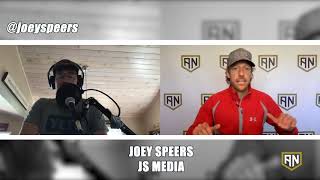
Andy Neary talks with Joey Speers about why clarity in your message kills confusion in your business. Joey shares how he built his brand by focusing on internal work first, and why Gen Z entrepreneurs need to stop overthinking and start communicating what they actually do.
Chapters
All right. Joey Spears. How are you doing, my man? It's been far too long.
Way too long, brother. How are you? I'm doing great.
Awesome. Awesome. Joey, I can't tell you how excited I am to have you on bullpen sessions.
I think the audience that's listening into this right now is gonna be blown away, not only by your wisdom, by what you've already done in business, but then when they're gonna realize how old you are, they're gonna go, holy crap, what's my excuse?
Yeah, but before we get there, let's. Let's start here. Where do you live?
From Midhurst, Ontario, Canada. Just a couple hours north of Toronto.
So you are. You are. Well, north of most people in the states here?
Most people in the states, yes. However, there's the. The Pacific Northwest is actually more north than where I am considered or not, because. Yeah, because of the way that we were in this peninsula of Ontario that comes down by all the Great Lakes. So that's where I am. So if you're in, like, upper. Upper states northwest, there's. There's a couple places that are.
I guess I didn't realize it. How's. Being that we. You and I are talking mid May right now, how's the weather up there right now?
It's beautiful, actually. It's been all over the place. We had snow, I think a week ago. It just. It just goes back and forth, back and forth, back and forth. And then today is probably going to be 80, 85 degrees. It's beautiful out there. Yeah, we just got hit with a hot spell, so believe it or not, but my forehead is actually extremely burnt because I took all my zoom calls yesterday from. From the dock on the water, and I got fried. So, yeah, classic Canadian.
We're going to talk about your passion of the outdoors a little bit, so I'm excited to get into that. But let's. Let's get into. Let's take us back to the early Joe H. Spears. And honestly, we don't have to go back that very far. You're 21 years old right now. And so again, for your listening, if you're 30, 40, 50 years old, you're gonna be blown away by what this guy has already done. But your focus, JS Media. You're the founder of JS Media. It's really helping organizations bring clarity to their brand and their brand identity. So let's go back to your early years in grade school. You were a creative kid. You knew that early on. And it also led the education system to Kind of mislabel your brand identity. You wanna talk about that?
Yeah. So just for brand identity, for anyone who's wondering what that term even means, brand identity is just simply the internal characteristics of who you are. And so we call it a brand identity and we're referring to business. It's generally talking about the internal characteristics of a business. If your business was a person, who would it be? That type of thing. However. Yeah, totally misidentified as a kid. And I wouldn't actually say that I was that super creative kid, to be honest. I was a problem solver for sure. So I was creative when it came to problem solving. Very, very outspoken, extremely self confident and, and learned a different way. And when you mix those things together and you're in an education system that fits, you know, 12% of the people it serves. Yeah you get, you get misguided with things. So you know, I grew up not enjoying the education system at all. Not feeling as education really served me. Adhd, diagnosed ADHD diagnosed learning disabilities, diagnosed processing issues, all the, all the above. And so I from a very young age just remember being cast these labels on myself and from, from teachers, from, from doctors, whatever is going to be family, friends, different people I went to school with. You know, he's not going to do this, he's not going to do that, he's not going to do this. And just like you said, I, I felt incredibly misidentified just like as you said. And I think that's probably one of the reasons why I'm so passionate about helping people really, really identify and clarify who they are so they're understood. Because when somebody understands you, they can take action on you and you can take action on yourself, which is, is really important I think in every aspect of life. But yeah, I was a troubled little kid all the way from the beginning and I'm only 21 right now, but it does seem like forever ago if I'm completely honest. I think there's been a lot of life for me in between then, but troubled little kid and just really ended up living my first couple years just. And I would say exactly. Misidentified passion. They were misidentifying my passion, my creativity, my problem solving, my, my confidence and all that together led to a little bit of a couple issues.
Well, what do you think? You know, you grew up in the Canadian education system and whether it's, it's in Canada or United States.
Where do you think today's educational system misfires when it's trying to educate, you know, somebody like you, who feels they don't fit in the system. Where do you think education today goes?
Yeah, that's a great question. And I'm not the educational expert. No one's got a solution that really makes, you know, makes 100% sense in every situation. But what I do know is that my life was radically changed by more inner work. So as a younger kid, because I hit so many problems at such a young age when it comes to how people saw me and, oh, your track record this and track record that, and I felt like I couldn't out. I couldn't outrun these labels that were burning me, and I couldn't do whatever I wanted to do. I could not step into potential in different areas of my life other than like, on the sports field or on the. On the rink or whatever it was going to be. That's the only area where people I think saw the potential of me were like, oh, he's the leader. He's a this, he's a that. But outside of that, it was different. But I think because of all that and all the weight of that, I had to dive inward a little bit more at a younger age than maybe most people did. And it radically changed everything for me because it allowed me to go, okay, who am I? How do I learn?
And.
And what am I passionate about? Do I have adhd? And I'm going to see that as a. As a massive curse, and then I can't focus on anything, or am I going to say, you know what? I'm actually naturally incredibly good at multitasking compared to the average person, because that's what ADHD is. It's focusing on a couple different things at once. Right? How can I use that and leverage that?
Right?
How can I use these things that I'm being told are burdening me and just turn them around and learn how to learn how to leverage them for good? So I think that internal work really, really, really changed everything for me. And it's now taken me to go on to, like you said, running two different businesses and making much more money than I could have ever thought I was gonna need at this age. Beautiful relationships like, just like us, like, getting to meet guys like you, you know, traveling the world, all that stuff came from, I think, the ability for myself to look inward. And I'm really thankful for it. And I'll tell you a quick story on how this kind of happened, but pretty much the gist of this is I think the education system focused people on looking a little bit more inward and less okay, let's just spread everybody thin across the board and work on these general skills. I think if it was, okay, let's focus inward and let's really, really get down to how do you learn because then you can self educate. Why do they not teach us how to self educate? Right? So. But I had a guy, grade eight teacher, first day, grade eight, those are my worst years. Grade six, seven, eight were my worst years. I was just, I was just having so much fun. And I remember we got split off first day, grade eight, new teacher. And they split us off and said, yeah, if you're, If I just called your name, get up. It was most of the bad kids. They called the names of my buddies. They said, get up and you're going to walk down the hall and go outside and go to a portable. And I was like, it's interesting. I've never been to a portable before. Small school, like, we didn't have that many kids. So everyone's in the school. And portables also suck when it's minus 35 outside in the winter. So no one enjoys a portable, right? So, so I walk into this portable, I walk in and there's this guy and he's sitting there and he's like, hey, I'm your new teacher. And everyone's just like walking in and he's like, find a seat. And we're like, what the heck? So we totally just got segregated from the rest of our normal class, who we've spent the last multiple years with. And he says, my name is Mr. Norris. And he had no control of the class. It was all the bad kids. It was like the island of misfits, literally out in the back of the playground here in this portable. And.
It was interesting because he had no control of the class from what I perceived. And I might be wrong, but from what I remember, he was just patiently sitting and waiting and looking through papers and just sitting there as we all stumbled into this class. And we were all kind of rowdy and stuff. And I remember he was calling people up one by one to meet them and introduce himself and get to talk with them a little bit. I remember he called me up and I had a massive desire to love people. I've always been a really people person. But in the education system I had this label on me that I was always going to, to piss teachers off and I was always going to cause trouble. And so I looked at this guy and I said, well, that's the label that's on me. I don't know how to get out of that. So this is unfortunate, but this is just going to have to be another guy that I frustrate for another year. And he's not going to serve me, I'm not going to serve him. I'm just going to put in my time. I'm going to get out of here and move on to high school, right? And he called me up and he introduced himself and he was very stern, very strong spoken and confident. And he said he was looking, he held up a book, like a pamphlet of papers and he said, you know what this is? I said, yeah, those are my. That's my iep, my individual education plan. So deeming me on what I can't do right, telling me all the things I have wrong with me and how I cannot do things right. And he held him up and he said, hey, he said, I know, I know you don't know me and you know I don't know you, but I just want to tell you I was just in a staff meeting with everybody. Like school wide. They're talking about like first day of school, right? Normal staff meeting. And everyone was telling me what to expect because they knew that I had you and they're all complaining and the past stories. And he said, hey look, I'm brand new and I just want to let you know that everything in here, none of this is a wall. These are just hurdles. And I'm going to teach you how to run and jump and dude, my life was changed forever. That guy over that course of the year, that teacher, his name is Mr. Norris, phenomenal guy. He's now gone on to be a principal and all this stuff, which is amazing because he's changing mass now in the, in the education system. But he looked at me and just said, hey, we're going to teach you how to self educate. These people don't understand you. I don't even know you. But from what I've heard of you, you sound like my type of guy. You're really fired up, you're passionate, you're confident, you're a leader and everything's just misguided right now. So let's, let's hone in on who you are. I'm not gonna care about teaching you math, I'm not gonna care about teaching you English. I'm gonna do those things, but I'm not gonna prioritize that over teaching you how to inwardly look at yourself, Joe, and understand what you're really good at. And again, learn how all these things that you've been taught are walls in your life really aren't walls. They're just hurdles. And you've just got to learn how to run and pop.
You're good.
You'll get over them. And, dude, I was just, like, fascinated by this. I was. So.
I'm an enneagram8, if anyone's an Enneagram person. So I'm either incredibly for authority and I will be your biggest fan, or I am like your worst nightmare. Just a very naturally confident and I love challenging people. So I was. I was on this guy's side and we went through a year and he changed my life. And I was completely different person after a couple months with him. And yeah, I think the school system needs more of that. They need more people, more teachers, being willing to see kids less as an interruption and more as an appointment.
I don't know where you are today. I know you're probably not listening to this podcast interview.
Hey, I'll send it to him.
We're talking how many years later the kind of impact he has had on you.
That is.
Absolutely. And one last question about that, Joey, I love your perspective because I think a lot of things have shifted in parenting. You know, it used to be growing up for me. Get. Get off those video games and go outside. Well, guess what? Kids can actually make millions playing video games.
Millions.
Yeah. And the education system, I think so many parents see their kids, if they don't like school, they're not doing well. Immediately they try to figure out what's wrong with their kid, and they look at that as failure. So if there's a parent listening in that has that kid in that situation today, what advice would you give them?
Yeah, I. Oh, it's tough because I'm not a parent. I think my parents have done a beautiful job of this. I'm so thankful for them. They're amazing. And they really stuck with me. I think it just comes down to sticking with them. You got to stick with your people, man. You got to stick with your kids.
If they're not fitting into the education system, I can tell you for free, the world is not what the education system makes it out to be. And so if your kid doesn't fit the education system does not mean they don't fit the. The world. I'm a perfect example of that. And.
I think you gotta. If I could just speak to parents for a second. I think you gotta remove the pride around what's going on when your kid doesn't fit in. Because I think if parents. And I think my parents were able to do This I know they took flack. My parents took flak from other people. Why is your kid so bad? Why is he this? And I think they did to the best of their abilities. I think a pretty good job of sticking with me and removing the pride around what it means to be a good parent versus a bad parent. And they removed that. And I think they focused on, okay, I'm not going to attach whatever expectations I had onto him because obviously he's not fitting the system that we thought he was gonna fit. And removing the pride from that, I think opens up a ton of different options on how again, you can invest in your kid, in your friend, whoever it's gonna be, and allow them. Again, I would encourage you help them look inwardly more than externally. Don't look at their external issues. Help them look inwardly. Because until they get power and control of what's inside of them and understand who they are, what they're passionate about, the external things will always, will always outweigh that until you focus on it.
So like I say, quit taking so much pride that you're going to get to put the My kids in honor student at insert middle school car sticker.
Yeah.
Have as much impact on their health as you might think it will. Yeah. So, Joey, I mean, this led you to start your own business at age 14. And I don't know if I've ever shared this with you, but, you know, you remind me of somebody who's done pretty well himself. A guy by the name of Gary Vaynerchuk. You know, you listen to his story, right? He didn't fit into the school system. He knew it. And by age 14, he was working for his father in the liquor store. So I watch you and I look at your story and it's. To me, it's eerily similar. So I'm super excited for the things that are ahead of your future.
I appreciate that, man.
You did something that no kids just don't do in high school. You started working on personal development. Let's face it, 16, 17 year old male in a high school is not thinking about his own personal development. You've had a big influence in your life. Your dad. You want to tell. Do you mind telling the listeners a little bit about the influence your father's had on you?
Yeah, like I said, my parents, both of them, they've both had. My mom's name is Deb. Bob and Deb, they're, they're both phenomenal. He huge leaders in what they do. Amazing people. Amazing, amazing people. Put people first, love others more than themselves. And I think they've just always been a great example for me in terms of what it looks like to be a good human and be someone who is for people. And so I think the personal development side, I think it actually started before I was 14. I think it started earlier than that in grade eight when I was challenged by this guy, Mr. Norris, my teacher. I think that was my first. I think that was the first person that ever said, hey, you need to stop looking externally because these external issues aren't going to go away. You need to look internally. And so I think that was probably my first taste of what personally developing myself looked like. And so I got addicted to that. And it wasn't like I was like, oh, I'm just crash courseing all these books and all that stuff, because again, I had massive trigger issues around stuff like books I wouldn't read because I associated it with the education system. The education system told me I couldn't do it. So personal development for me was much more a social thing. I'm very extroverted. I've always been someone who socially can fit into groups much, much above my age. And so at a younger age, I think that's how I would get my personal development. I would spend time around people I desire to be like, whether it was pro skiers, snowboarders, different types of pro athletes, whatever it was going to be, you know, different business executives, different family members that are, that are doing some really cool things, whatever it was going to be. I think I focused my time and energy on social personal development.
Which was really cool. And then I think as I got more comfortable with that and I got more of a grasp on who I was and how much potential I really had. And I was never that kid who thought I was potential less and drowned out. I was always going, nuh, you don't understand me. Like, I know what's in me. I had always had a lot of confidence, but as I got older and as I stepped into high school, yeah, that's when, that's when I got into, you know, what does it look like to actually read a book? Can I read a book? I remember I read my first book and I read it in like a day or two. I got hooked on it and I just read cover to cover and I was like, this is fascinating. I just processed this information out of this book and it's personally developing me to somebody better than I am right now. And I've always thought that I couldn't read because that's what I was told, you know, so I got really into that stuff. And because of that, just like you said, I think I had a little bit of a different perspective in high school. I didn't. I wasn't really someone who enjoyed going to parties. I didn't enjoy doing that stuff because I was at home working on a business. And I started my business at 14, and it was great for me. I know, you know, Gary talks about this. Just to speak about Gary. I know you touched on him. Gary talks about it, too. He's like, just, I made some sacrifices because I saw the bigger picture. And I think that was myself as well. I was so focused on, okay, I'm not going to college, I'm not going to university, I am going to. And I always knew I'm going to have to make something for myself. And so starting a business wasn't felt like my only option, to be honest. And. But it was a great option. I loved it, and I was really excited about that. And so, yeah, I just put all my eggs in that basket and focused on it. And it's crazy. Crazy.
Seeing how it really hit home for me, Joey, is, you know, that mentality of when other people doubt you.
Inside, you're kind of like, oh, yeah, just wait.
Totally. I'm sure you got 100 stories like that, too.
High school. I love myself in high school. When you're. Your dad's the high school baseball coach and you play, you get brought up early, and people don't think you should have been brought up and promoted. And it led to a lot of kids, you know, saying things behind my back, behind my dad's back, and my. Drove me to go, oh, yeah, you watch.
Totally.
And so I can definitely resonate with that. Well, let's. Let's fast forward a little bit. Here you are, 21 years old. JS Media is thriving, you know, and you've got. I wanted to mention this, too. You had mentioned earlier how Mr. Norris had taught you that walls aren't walls, they're just hurdles, which is now led to you. You have your podcast, Walls to Hurdles podcast.
Yeah.
If you want to listen to an awesome podcast out there, check out Walls to Hurdles Podcast. Go subscribe. You will not be disappointed in any which way. I know Amy loves it.
So good. So good.
So now with JS Media, you help companies, and you've worked with companies like Uber, Ford, Yeti, bring clarity to their brand identity, create revenue. And so we talk about today being a game of attention for business. Right. Where would you say, Joey, in business today? Organizations where gaps might exist, that organizations don't have clarity on their brand or they're just not grabbing enough attention to grow business. Where do you see gaps today?
Yeah, totally. It's such a great question, and this is a question, honestly, my answer might be different two months from now. It's constantly evolving. I think the world of business is moving so much faster than most people realize it is in terms of what business is going to look like in 10 years and how people are experiencing it. As myself, you know, I'm a Gen Z, 21 years old. We are going to be in the next 10 years, probably the larger mass of, or 15 years, the larger mass of the consumer market in many different ways. And so I don't know if people are ready for that because we're different. And we're different not because we're trying to be different. We're different because we've been raised differently. We're one of the first generations that has been fully, fully raised on pretty much technology and having instant access to different things. And when you have instant access to different things, you also have instant access to 30,000 pieces of marketing collateral a day. We are so numb to getting messages slid across the front face of our brain. Slid across the front face of our brain. If I was asking you this, Andy, I mean, stats show us that you probably saw, if you lived an average day yesterday, you could have seen up to 30,000 pieces of marketing collateral yesterday. How many, how many do you remember exactly?
Maybe two, maybe three.
Exactly right. So that's a massive issue. That's a massive issue in business up until this point. And I mean, I don't know. I can't really define the point, but for business, forever has been about the more money you spend, the more money you're gonna get back. The bigger your system, the bigger it's gonna give you a return. All this different stuff and what we're seeing now is that's just not true. There is too much content in the market. There is too much to be experienced in the market. And so the businesses that are going to thrive in the next 10 years, 15 years, are gonna be the people that simply can do three things. Clarify who they are, clarify why they do what they do, and clarify how they're experienced. And those three things are really, really crucial because when you can nail those three things, people can really, really emotionally attach to whatever the messaging you're putting out is, if you're putting it out properly now, those three things are a massive, massive digestion. There's a Hundred different pieces that break down into each of those things. But the moral of story is, as we go forward, I think people are missing out on how crucial it is going to be to make sure they have a clear message. You know, one of the things I always say.
Is that most businesses fail to create brands the world understands. And the kicker of that is the answer to confusion is always no. And we're gonna see that more than ever. The more you confuse somebody, the more people do not understand when they look at your business, look at what you do, how they can take action on it. And the keyword is how it's gonna help them survive. The more we continue to go down that road, the more money people are gonna lose out on. Because the answer to confusion is always no. And so I think, yeah, the next phase of businesses that are really going to thrive. And I know, again, go back to Gary. Gary talks about this all the time. He says brand over everything. The best companies in the world do not sell. They brand because selling creates a hamster wheel of routine. And you've got it. The second you turn off the sales, it stops. Where brand creates loyalty.
Right.
And loyalty will sell forever. So I think the people just need to focus more on that. Whether you're a small business, you're making 50k, whether you're making $500 million, it does not matter because you're dealing human behavior. It's the same thing from the top down.
And a phrase or a comment that has changed my business immensely is no matter what size you are, believe it or not, today you're a media company. You have to share your brand far and wide.
Great quote.
You have to. If you're not putting yourself out there today, you're to your point. There are 30,000 pieces of marketing content a day. You're irrelevant.
So I want to, I want to just sidestep one quick second because you're running a successful business right now. You're Gen Z and you talked about how it won't be very long before Gen Z is the majority of those in the workforce. And I think it's so easy right now for even my generation, Gen X baby boomers, to poo poo Gen Z and even millennials. What are a couple misconceptions you think the older generations have about Gen Z today?
Well, you know what? I'll start with one thing. And this might peak a little bit of a conversation. I'll start with. Most people I feel like who are my age would get on here and say, well, you think we're entitled and we're not entitled. I would say we're absolutely entitled. And I think this is a misconception on the Gen Z perspective. I think everyone misconceived this. But we are so entitled. I'm an incredibly entitled guy now. You know, irrational or negative way, but I'm incredibly entitled because this is what people have got to understand. We are the first generation that can be sitting in our mom's basement making 200 grand a year, barely doing anything because we have an online business. So don't tell me that I am entitled or that you shouldn't be so entitled when I, you know, you're complaining that I don't want to go and work a job for $15 an hour or not enjoying my early step into this new career that's giving me $60,000 and I'm going to build on this and build on this and I'm complaining that there's not enough beanbags in the office. Well, quite frankly, people are so entitled. And again, I'm saying we are totally entitled because we have more at our fingertips at a younger age and in a way that the older generation doesn't know how to grasp it. So we have so much more leverage on that than anyone's ever been before. So I think number one is we are entitled now. Not always in a bad way, but there's reasons for that, right? Like the fact that I can be sitting here having. I'm 21 and I've had two back to back six figure months in the last two months and I have been wakeboarding every day, I've been skiing every day, I've been hiking, I've been, you know, staying distanced from people. But you know, out in the bush I just live up, you know, on the lake. I love doing what I do. I do not grind and work myself to the ground. The fact that I can be making that type of money at this age in a way doing exactly what I love doing is just ridiculous. And so I think the older generation has got to realize that one of the misconceptions is that we are entitled for no reason. I guess that's the misconception that we are entitled for no reason. And the reality is we are entitled for a reason. And so that's a whole conversation. But I think that's number one. Number two is that people.
I'm trying.
To think of like misconceptions, I can only think of like conceptions and like.
Truths about us that I think I want to hit upon quickly is yeah, go for it. It just made me. It gave. Put an image in my head. The fact that yes, you're entitled, but the fact you can be sitting in your parents basement making six figures when this pandemic hit and everybody was forced online and let's face it, Gen X gen baby boomers, a lot of them were caught off guard because they didn't know what it meant to have an online presence.
Yep.
What you just said immediately made. I literally picture a Gen Z sitting there going, ha.
Exactly. Exactly.
And that's exactly what it is today. No one has an excuse anymore because of this.
Exactly.
If you're sitting there saying, I can't grow a business, I don't have enough opportunities, on and on and on. Bs like you said, be entitled with a purpose.
Everyone has an at bat. There's never been a time where everyone has had an at bat. Everyone has an at bat right now. Everyone does.
You had to have the resources, you had to have the scale, you had.
To have the people, the family name, all that.
Yeah.
Yep. You could literally be homeless. You could literally be homeless. Most homeless people have a cell phone, funny enough. You'd literally be homeless. Download TikTok today. Put up one video about your homeless story. Get people following because it's interesting if you're telling the real story of what it looks like and if you were talking about some of the misconceptions of the conceptions, you can literally put up videos about that. Start a patreon. As people start seeing traction on these and be getting paid $10 a month from a thousand people and all of a sudden you're living in a, in a, in a condo up in, up in Toronto, you know, wherever you want to be. It's. There's. Everyone has an ad bat. Everyone.
Yeah. And I've said too, with this pandemic, because we all were forced online, the playing field got leveled. Your ability to connect people you probably thought were out of your reach has gotten smaller than it ever has been.
100%.
So let's go back to the business quickly. Joey, you know, if you are. If somebody's sitting in listening on this and they've just started their business, it may not be growing the way they want it to. What are some simple steps they could take to really start getting clear about their brand and then how to start sharing and marketing that brand to their target audience?
Yeah, this is such a great question.
Branding is not marketing and marketing is not branding. However, they go hand in hand perfectly. And it's something that I think a lot of People confuse. And when you confuse again, the answer to confusion is always no for yourself and for your customers, right? So clarity creates action. And I think that rings true. Again, no matter the size of your business, clarity creates action. When you internally have clarity, you'll do the right things every day. You know, you need to be doing for your business. When your customers have clarity, they're buying, right? And they're sharing and they're promoting you. So I think for someone who's sitting here and I have this conversation all the time, all the time with people who reach out and even people that we're all friends with, right? You and I have been in a mastermind together and we know a lot of the same business owners, a lot of awesome people. They'll reach out and say, hey, I saw you just, you know, had that launch or you just did this, or you released this new service and you sold out immediately. Like how did you do that? Because I tried to do the same thing and it didn't work. And what's important to realize here, to paint the picture of how important what I'm about to say is, is that they put in the same amount of effort, if not more, same amount of time. They might have spent the same amount of money on hiring people, on doing things, on maybe ad spent, whatever it's going to be, but the return isn't the same. And if we can all agree that we put in the same amount of time, same amount of energy, same amount of expertise, the products are just as valuable. Yet one of us gets a massive return and one of us doesn't. It means that however the market is experiencing, that person that didn't get the return, they're not liking. And the reason for that is probably the answer to confusion is no. So they're probably in some way, there's many different ways that people can be confused about who you are, what you do or how to buy. But you've got to clarify again, I don't care if you're a $5 business or a 500 million dollar business, you've got to clarify three. I think there's three main things that really, really drive home, you know, who you are and how the market's gonna interact with you. And this has been game changing for me. The more I've dug into this, you know, the better it gets. And this is a part of, like I was telling you what we do with brands and it's just phenomenal getting to do this and we do this entrepreneurs and stuff. But there's three main Questions? I think a lot of businesses actually fail to clarify, and because they fail to clarify this, they can't then execute on telling the world about it. So branding is creating how someone's going to feel about you. Marketing is the process of telling the world about how people feel about you. Right. And so in the branding perspective, there's the three questions. The first one is, what are you counterattacking? So if you're sitting here and you're an entrepreneur, you got an online business or you got a mom, paw shop, whatever it's going to be, you got a restaurant, the number one question is, what are you counter attacking?
You.
Your business will never, ever be successful if you cannot associate. Actually, here's a quick little example of this. Andy rhyme off a brand for me right now. What's the first brand thing comes to mind?
Uber. Uber.
Okay. Why did you think of Uber? What do you think, Sparks? You know, Uber just sticks in my head. It's such a, such an easy thing.
To think of because of the pain in the butt of dealing with the taxi system. Boom.
So I was just gonna say, us as humans, we do not remember brands unless we can associate them with a problem. You just proved my point perfectly. You just said Uber is solving a massive problem because there's a massive problem with the taxi world. That proves my point perfectly. And what's I think important about that is most businesses fail to create a brand that isolates a problem. It's a storyline, right? There cannot be light if there's not dark. And so the first part of, I think something that brands need to clarify, whether you're a personal brand, whatever it's gonna be, is what are you counter attacking? What is the problem you see in the world, and how are you taking a stab at it? And then the second part of that is the methodology to the counter attack. So it's very simple. It's not a complex question. Again, the answer to confusion is always no. Although when I run people through this process, sometimes, sometimes we do this for big brands. We do a big workshop. It takes like seven hours to land on these three questions because they're constantly trying to make it complicated and unique and quirky. And the answer, confusion is not. The more you can do that, the worse it gets. So the second part of that is, what is the methodology to what we just answered above? So what's the problem? And now what's your methodology? What's the how of what you do? Or what's the what of what you do? Right, because we want to show the problem and then we want to tell them how we fixed that problem. And then the last part of this, which is really crucial, this is what 90% of people forget to do and forget to tell the world is what is the result experienced when someone works with you? What is the result experience when someone listens to bullpen session, what's the result experience when someone you know jumps into one of your masterminds, Andy, and gets to come to Fort Collins and do these incredible things, what's that result experience when someone gets to work with you as you're consulting on something? Right. What's the result experience when someone goes through one of my online business coaching, creative business coaching platform, six week stints or six month stints, what's the result? And so when you tie those three things together, we call those brand stories and people remember stories. People associate themselves with stories. People can get their emotions tied to stories. And so that's what I would say for anyone who is like, I'm just not landing where I need to be. Whether I'm at a mill and I'm trying to hit two mil, whether I'm at a hundred thousand trying to hit 200 grand, whether I'm at 10,000, trying to hit my first 50. Focus on what is the problem. You are counter attacking the world. What problem do you see? Because you've got to set up the problem, you've got to throw it up in the air. It's a setup pass. And then you've got to paint what you do to counter that problem. And then you've got to paint what the result is. And if you can get really clear on those three things, not only internally, is that going to help you because you're going to be able to wake up every day and go, I don't know what to do. Well, I just have to check my brand story and see is this task going to align with these three pieces. Does it fit into that? And then even more, how do I make sure every single thing comes out of my mouth? Every single thing that people experience of me is coming from the root of that tree.
Dude, that was gold. Like, I just got a one, not even a 101. I just got a 401. Clarifying your brand. I hope you, if you're listening, I hope you took notes. That was.
Can I, can I tell you what mine is just, by the way, just, just, just to wrap it up.
I know work on mine, man, so well.
And this, it needs to be refined, but it needs to be simple. And so I've Got the two different businesses. So I'll speak for the JS Media side of what we do, which is my branding, my creative agency is what it is. It's a creative agency. But here's the power of this. When I'm in an elevator with somebody, if I was to meet you in an elevator and you said, hi, you know, nice to meet you. Where are you going? I'm all about this conference. You're at this conference. And you said, yeah. What do you do? I said, you know what? Most businesses around the world fail to create a brand, you know, that the market understands. And the. Unfortunately, the answer to confusion is always no. At JS Media, we build brands the world falls in love with, resulting in massive drives of revenue and fulfillment. And I love it. You would walk away from that going, you're the most interesting person I've met all week. And that makes so much sense. It's fascinating, you know.
Yeah, I got this creative agency called JS Media and we were.
I started in 2014. Yeah, exactly right.
People, websites say, of course, of course. We were founded in 1985 and no one cares.
That means you're outdated, actually. So I don't want, I want, I want someone who's been. You just started their business recently anyways. But yeah, so that's the power of a brand story, right? It comes in in a thousand different ways. It comes in internally and how you show up every day. It comes in your marketing material, but it allows you to have a statement, call it a mission statement, if you will, that is so fundamentally simple and hits the three parts of a story, which is the only reason someone will take action on you. No one's going to buy your products. You cannot show them that you're counter attacking a problem they have and it's going to help them survive. Then they want to know how you do that. So JS Media, we build brands the world falls in love with. Again, very simple. I'm not complicating it. And then what does it do? Well, it drives more revenue and fulfillment for you. Right? So simple. But those three steps have been the difference between success for myself and failure. Success, massive success for our clients and failure, whatever it's going to be. And I truly believe, to go back to one of your first questions, your ability to facilitate that internally and externally and get clear on that as a business going forward in the next 10 years is gonna be the most important thing you do. I guarantee it. Because the best companies in the world do not sell their brand.
Right?
I have nothing Else, man. No. That was absolutely phenomenal, Joey. Again, for me, for anybody listening, that was game changing. Let's wrap it up here. Two questions I want to ask you. Number one, you said earlier you and I met in a mastermind, right? Got a mentor, similar mentor that's been extremely impactful in both extremely lives. You also now have your own the Creative Rise. Do you mind taking a minute or two, just tell us a little bit about your mastermind. Who is it for, who would be a great fit for it and what is the Mastermind about?
Yeah, totally. So it's called the Creative Rise Mastermind. I work with creatives and I'll give you my brand story instead of just mumbling about what I do and not really landing it. Well, the fact is most creatives fail to ever create a business of their dreams. Creative Rise Mastermind, it is a community based coaching platform that allows creatives to step into what they need to the right way and when they need to do it so they can achieve financial and creative freedom. That's what we do. It's a community based platform and we just allow people to come in. It's for creative so not. Not someone who's like, oh, I'm creative and stuff. It is for like traditional creatives. So photographers, web developers, social media strategists, videographers, design artists, whatever. It's gonna be the creative, creative, creative, foundational, creative stuff. And the reason for it is because I'm a creative and I started my business before I got into a lot of brand stuff that is the outcome, the branding stuff and the people behavior stuff is the outcome of doing video and photo and social for years and learning people behavior and learning what works and what not. So I have a massive heart for creatives because I truly believe every creative deserves to live a life of creative and financial freedom. However, most of them never get to the financial part. I know the steps to get to a financial part. It's actually a system. It's not, it's not years of experience, it's not this, it's not that. And so I just want to provide people with that. It's been, it's been amazing, man. We've run 65 people through it in the last year.
More from Andy




If you want producers to succeed faster, help them create a sales message that creates confidence.

Sales isn't a zero-sum game! You can have tough competition and still grab a beer after



Option 1: Meditation, a fast walk, a podcast, and protein. The ultimate morning routine!

How you do one thing is how you do everything. Ill elite producers fuel their body.


Stop living in the gray of maybe! Your job in sales is to get a clear yes or no