Larry Linne - CEO, Incite Performance Group [The Broker's Voice - Episode 1]
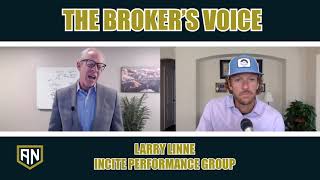
A recorded interview (July 22, 2020) in which Andy Neary interviews Larry Linne, founder and CEO of Insight Performance Group. Linne recounts his career (Ryder, construction, consulting), explains Insight Performance Group’s coaching/services model (executive development, sales training, operations, captives), and argues agencies must transition from product-selling brokers to high-value risk advisors as consolidation and InsurTech reshape the industry.
Questions this video answers
July 22, 2020.
Larry Linne.
Eleven employees.
Close to 100 clients.
Chapters
All right, welcome to Broker's Voice. This is our first ever episode, and I'm excited to have a gentleman on that I would call a mentor. So, without further ado, Larry Linney, welcome aboard, man.
Thanks, Andy. Good to be here. And I didn't realize it was the first. I feel more than honored.
And Larry is the CEO founder of the Insight Performance Group. And our goal today is to share insight not only on Larry. Who is Larry? Larry's story. But if you're an insurance agency out there, we want to give you some insight and some tools to help you thrive moving forward. Because let's face it, we all got punched in the face about three, four months ago. And it's time. We have time. We move forward, but we've got to move forward effectively. So, Larry, for people who have no idea who the heck you are, why don't you tell us your story a little bit?
You got it. So I'm, I'm a guy that got in this industry, unlike many, you know, most people get in the industry young age. I got in it and it, I mean, I guess it was relative young age, but I'd been through a few things. I'd played professional sports. Then I went to work for a company that we've all heard of, Ryder Commercial Leasing and Services. It was the. Was the big over the road trucks logistics company. And I got in the business and I'm a peddler. I mean, I'm a peddler from. From the go. The starting point. I love to sell. I love to understand buyers and understand people. And so I was selling a lot. I had a great sales career at Rider. And quickly they decided to, you know, what do you do when you sell a lot? They move you up and move you out of sales. And so I became sales manager and then as a sales manager got into general management. And the organization felt like that they needed to find a perpetuation solution for Ryder. So they picked seven people in the company and to go to go to Florida and assess them to see if they could potentially become the future president CEO of Rider Commercial Leasing and Services. This was the most extensive training program I've ever been in my Life. It was four full days, 7am to 10pm microscope, looking at everything about your life, everything you do tested you on finance, marketing, sales, client retention, operations, HR issues, everything you could imagine. And at the end of that, they put you on a training program. So for the next three years, I went through some of the. It was mastery to doctorate level in finance, operations, sales. Everything you could imagine. Got great opportunities to work with some of the senior HR people in the world, some of the best marketing people in the world. I was on the team that helped rebrand Rider commercial leasing and services to be not no longer yellow trucks. So that training then became the foundation of really who I am today. Because I ended up leaving the company. I didn't like corporate America. I didn't enjoy the terminating people for the name of a stock price. Went into another industry, heavy construction equipment. Played around there applying principles and had great success and then decided I was going to be a consultant. There was so much knowledge that these people had given me and it was a blessing and that I was going to go and start applying that in other places. So I was working with about a dozen clients and one of them was an insurance agency. And every time I went over to their agency and would work with them, I just loved what they did. I loved the financial services side of the business. I had actually been through a program when I played in the NFL. Steve Garvey had a program for identifying future skills and they assess you and then they try to partner you up in the off season and. And he assessed me as financial services and I actually worked the off season as a financial planner. So I loved this insurance game. I loved what they did. And it didn't take me very long to come to an agreement with the owner that I could come in and work in his company and provide my consulting services to the world out there. And it was actually a breakthrough of thought leadership in the insurance industry. Because what we realized is that.
Human development, executive training, a lot of the things that I was consulting on were actually huge risks in the businesses that we were serving. And you know, whether it's in today's world solving exit planning strategies or exit issues for employers, dealing with the me Too movement, dealing with the black lives matters or racial equality or diversity and inclusion, all of these things are risks. And so I came into this industry from a perspective of looking at risk. And because of that, I never really started with the insurance products. I always started with risk being the potential of gain or loss. And so I would spend time with prospects talking about what decisions are you making, what things are happening in the environment, what are you doing out there and how's that going to affect the potential of a gain or a loss? Oh, by the way, we're going to work our way all the back, all the way back after prevention and mitigation and all the advice and we're going to find the least expensive way to finance that and that becomes the insurance product. And by going that route, I had a phenomenal early career in selling insurance. I sold a lot and I helped my producers. I became sales manager very quick in the organization. I helped my producers sell a lot and we did, we produced a lot of business and was surrounded by some brilliant people in the organization. So I have never taken the credit myself, but was able to close a lot of business and benefits, property, casualty, surety, bonding, personal lines, doesn't matter. I was able to close a lot of business or be a part of teams that closed a lot of business by taking this unique approach. Since then, I moved on and decided that I really loved the consulting business. I didn't really want to have a book of business, no offense to that, but it just was not my passion. And so I got into the business of teaching insurance agents all over North America. I also had more of a passion around the business side. So I wanted to get back into coaching CEOs and executives and operations. The things I learned at Rider under that program, I wanted to bring that value to the business world inside the insurance industry. So inside Performance Group was a company that actually bought out a prior consulting firm. Now what we do is we provide coaching and development from business planning to finance to perpetuation, strategic support and organizations, Executive development, sales training, sales coaching, operational training, lean systems, captive training. We're pretty much holistic. The bottom line is we help people grow their insurance agency. So that's Insight Performance Group. Eleven employees and a pretty substantial amount of clients. Over close to 100 clients across North America.
Gone are the days when professional athletes had to have a part time job at the off season. Yeah, right.
You know, it's funny, my father played the NFL and he did. He signed an $18,000 a year contract and he got to work. Work another job.
That's awesome. Well, Insight Group, I have to be honest, Larry, I think it's one of the most masterful programs out there today for insurance agencies. And that's one reason I wanted to have you on, is the tools you bring your clients I think is second to none in the insurance industry, whether it's property casualty or benefits. With everything that's happened right now, Larry, the lockdown, the Black Lives Matter, the pandemic, what big changes, if any, on the horizon do you see in the insurance world?
You know, there's a lot of changes. I mean, we're going to see continued consolidation just because there are a lot of really good financial reasons for people to want to own insurance businesses. Mainly the cash flow is the primary objective that is valuable to any owner. So venture capital is going to continue to come in. We just saw another hit today with Bain and Keystone. So the consolidation is going to continue to happen through acquisition and big money coming in through venture capital, private equity. I think we're also going to see more complexity that is going to be brought into the sale and the complexities of the things you just talked about. I mean when you start looking at risk, risks are going to become more and more evolving, emerging and complex. And so people trying to figure out HR solutions right now, who knows what the laws are gonna bring in the next six months. Who knows what's gonna happen with COVID and Medical Systems? Who knows what's gonna happen.
In a lot of the areas of risk, legal, political. It's just changing. And our political environment is probably gonna drive the insurance world crazier than anything.
Yep.
Because it just brings constant uncertainty and the polarization that's taking place out there. So I think what's going to happen and you know, some of it is I'm a little bit self fulfilling prophecy by driving a lot of the bigger firms in North America. Maybe I can help agencies become this. But the complexity of understanding risk, having to provide more risk solutions for clients, but not being a solution selling organization, but somebody that can help identify risk and give a lot of ideas on how to prevent and mitigate risk issues versus just paying more insurance to finance it. You know, I followed the financial institutions and I think the insurance industry is trailing about 10 years behind them. And if you look at what happened in the financial institutions 30 years ago, they started separating out the product and the advisors. And in the way that that played out was, you know, you saw some of these online trading platforms that allowed people to go buy on their own. So the technical products became things that you could buy through technology and digital platforms but you still needed advice. And so they got lower and lower cost of understanding and acquiring a product, but more and more value and price paid for high level advice. Now you can also pay for low level advice in that world too and get low level advice and low level products or you can go and get the highest level products and price. And that I believe is what we're trailing. You know, what we're seeing is Fintech stepped in for the last 20 years and was advanced in the financial world. We're seeing that now in the, in the insurance world that InsurTech is stepping in, it's slow to be received, it's going to take Time to get there. But these insurtech products are going to make the products more accessible, easier to analyze, easier to make decisions around and easier to buy and lower cost because they're going to eliminate a lot of the backstage costs. And I think even insurance companies are going to be more at risk than insurance agencies because insurance companies are going to get replaced by these digital products that have easy access to financial platforms now. So what does that mean for the advisor? Well, that means people that give great high end, complex advice around hr, around trending emerging, evolving risks, around strategy, around understanding how to be creative in the way that you finance, they're going to get paid a lot of money for their advice. And then there'll be the lower level, if you use that terminology. But people that don't want to learn as much, they don't want to invest as much time in it, that they just want to be able to help people choose products they'll get paid as well, they just won't get paid as much. And I believe we are truly following, I've been saying this for the last 15 years and if you watch you'll just see that trailing positioning of insurance agents to what were they called stockbrokers doesn't exist anymore, does it? Now we have financial advisors and wealth planners, etc. Some are licensed, some are not. And I believe we're going to get to a place where people are going to be risk advisors to clients and they only have to be insurance licensed because they can go to a broker dealer and get the products managed. I think we're headed down a long path.
You just said. I think we've been using the words like consultant, advisor, broker cliche that I'm not a broker, I'm a consultant. Those two gaps are going to get bigger moving forward because you, like you said, you will have to become an advisor or a consultant. If you just want to be a broker you can, you can get paid, but it's going to be a rough going.
That's right.
Last question. Larry, I know you're a busy man. One thing Insite does such a great job is working with agencies that offer both property casualty services as well as benefits and even financial services. But really honing in on the property casualty and benefits. One of the challenges I see with agencies I work with is often it'll be really strong in property casualty and not so strong in benefits. And it's kind of like the benefits department comes along for a ride. What would be advice you might throw out to an agency in that position? Call it the hybrid that they can maximize both sides of the house.
You know, it's one of the first lessons I learned when I got into this industry and was selling insurance is I found that every time I tried to sell a product and every time I tried to stay narrow in a line of business, the competition was tougher, the sale was tougher, convincing somebody to change was tougher. And when I, when I, when I came to a place of recognizing my job was to sell my agency, our processes, the way we worked and our value, it was the sale became much quicker, it became easier. And so the way you get there though is the first thing you have to do is recognize a new look at defining risk. You know, I have so many people in the benefits world out there, when I talk about risk, they go, oh, he's talking pnc, I'm not interested. What are you talking about? The risk. If risk is potential of gain or loss.
If I have the risk of attracting and retaining some of the best people and having them healthy and being at work every day or my building's going to burn down, which one's a bigger risk? Well, I would say my people being at work, being healthy and being attracted to stay there is the biggest risk I have. So how can you say risk is about P and C? If we can redefine risk and understand that in every business out there, every decision the CEO, the executive team is making, especially around people are the biggest risks that they have. Now you can change the dialogue around. Look, we're here to help you manage those risks. Whether it be something that we help with, with attracting and retaining employees, good HR systems and safe environments from COVID and healthy environments, getting to people work every day lean or making sure that we have fire suppression systems when the building burns down, whatever it might be. If I become more of an advisor to the whole I now have been a different conversation. I'm no longer competing against the benefits producer. I'm not competing against a property and casualty or a property producer. I'm bringing solutions to a client as an advisor. When you do that and you sell your firm and the way you work and the value you bring, people will hire you and you can bring all the products you want because the products aren't what you were selling. Sold yourself and you sold the process.
Humans buy from humans. And I think you said it right. If you focus on risk, it becomes easy to sell the entire tire service. So Larry, I want to thank you for your time. This was awesome. If you're an advisor, a consultant, a broker, an agency owner out there listening in. Heed Larry's advice. This is a new day, new world. We're never going back. We're not even going back to February of 2020. So you better start adapting, evolving, and preparing your agency for the future, because we want to help prevent you from being that next acquisition. So take Larry's advice. Take action today and go make it happen.
And listen to this guy. He's pretty smart.
More from Andy




If you want producers to succeed faster, help them create a sales message that creates confidence.

Sales isn't a zero-sum game! You can have tough competition and still grab a beer after



Option 1: Meditation, a fast walk, a podcast, and protein. The ultimate morning routine!

How you do one thing is how you do everything. Ill elite producers fuel their body.


Stop living in the gray of maybe! Your job in sales is to get a clear yes or no