Leading in a 2-Dimensional World WEBINAR_4.23.2020
Andy Neary and Gerry Sandusky share tools for remote work: the "game frame" for prioritization, "24 Hours of Power" for daily structure with 90-minute blocks, and how to run tighter virtual meetings. They announce a workshop launching May 7 for leaders managing distributed teams.
Questions this video answers
May 7, 2020.
Three 2-hour modules delivered over the course of three weeks.
Three.
Entering his 15th season.
Chapters
Alright guys, we are going to crank this thing off. For those that have jumped on already, we first, thank you for being here. Jerry and I are very, very excited about this. This was something that started as a conversation, what, Jerry, two, three weeks ago?
Yeah.
And here we are putting this webinar on. So we're really excited. So quick background guys. As you can see, the name of the webinar is leading. In a two dimensional world. Jerry has had a chance, as have I, to talk to a lot of business leaders in the last two years, three weeks. And what we're hearing more than ever is that teams are struggling with productivity. Leaders are struggling with effectively communicating with their teams, especially in this two dimensional platform. And it's also now weighing on the attitudes of teams. I'm hearing a lot of business leaders, sales leaders, talk about how their teams are, their people are struggling with staying positive, having the right mindset. So Jerry, what I, what Jerry and I want to do today is give you a couple tools in this 30 minute webinar. We're going to keep it the 30 minutes to respect your time and give you two, three tools that you can walk away with and implement immediately. And so one quick house rule before I throw it over to Jerry, if you have any questions, if you guys look at the bottom of your screen, you'll see the chat box. Simply just go in the chat box, type me, you can send me a private comment and just ask the question. Jerry and I will make sure we address them at the end. So, Jerry, all yours.
So a couple of years ago, I took my family on this great vacation in the Caribbean. We were down in the Bahamas and we arrived and there was tiki bars and pools everywhere and tennis courts and there was a workout facility and the beach was right there obviously. And I noticed within a span of about 5 minutes, everybody in my family was overwhelmed because they all wanted to do everything at once. Let's go play tennis, let's go surf, let's go scuba diving, let's go hit the conch shack. And within about 10 minutes we were actually in an argument. And it took the better part of that day for everybody to settle down because there was so much we could do and we had no sense of priority. And all of a sudden we were frazzled. It wasn't until about Friday that we finally got to the point where we had a sense of priorities, pace and rhythm. And unfortunately, the vacation ended on Saturday. It would have been a lot better if we had a feel for those things early on and made the most of the time. And I bring that up because I sense that same situation right now is what business leaders are all experiencing. The sense of overwhelm, the sense of an unusual setting, you're plunked down someplace different. You have all of these things you can be doing, should be doing mixed in with the fact that you're at home and you've got the demands at home and there's a complete sense of overwhelm and people are feeling off track. And that's because you have been sandwiched from the three dimensional world down into the two dimensional world. The good news is I've made my background my living in the two dimensional world. I've spent three plus decades now working in broadcast television and I'm going to share with you a couple of tools and insights that I've learned from that over the years. I'm the broadcast voice of the Ravens. I'll be coming into my 15th season. Please, let's have some football in the fall. I think we all need that. I'm a New York Times best selling author. My book Forgotten Sundays came out a couple of years ago. It's about growing up in the world of the media and Sports. And about 25 years ago I started my own consulting company designed to help professionals like you shine in front of the room, in front of the camera, the two places people are most uncomfortable. And the camera now is one place where suddenly everybody finds that that's where they have to work. Here's Andy.
So Jerry has spent a good chunk of his career announcing action that involves professional athletes. I myself was a professional athlete. So go back 20 years. I spent a few seasons in pitching in the Milwaukee brewers organization. And some of you know my story. I am the definition of average. If you look up the average height of a male in the United States, it is five, nine. That is me. And so as an undersized pitcher, I had to develop a lot of tools off the field so I could excel habits and rituals so I could excel on the field. I have spent most of my career.
In sales in the insurance industry. And now I work with business professionals helping them improve their personal and professional performance by gaining mindset clarity on mindset shifts. And now I have a podcast, Bullpen Sessions with Andy Neary. And I'm also pretty active on social media for as some of you probably know.
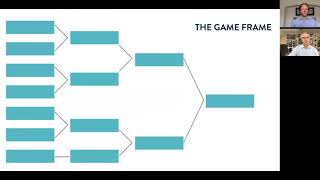
So here's what we want to accomplish with you in our half hour today. Today's webinar. There's three major things we want to touch on. We want to show you a Tool that will immediately help you improve your focus and productivity. You'll be able to prioritize anything for the rest of your life. With this one tool, we're going to give you a daily approach to normalizing remote work. And let's face it, it's not like we're going to suddenly go back to the office. We might gradually go back to the way things used to be, but remote work is going of our new reality. And finally, I want to show you how to maximize your virtual meetings now that we've discovered zoom. Even after the coronavirus, you're going to see more people do meetings this way in the two dimensional world than jump in their car, fight traffic, and go sit in the beltway to get to Washington dc. So let's start with the tool. This is a prioritization tool. And in order for you to fully understand the power of this tool, I like to give a very fun, easy, simple example that's not business related. For those of us who missed March Madness, you're going to like the layout of this tool because it looks like a basketball tournament. But there's a twist to this that you won't see coming. So the example I'm going to give you is all of the activities that I want to engage in after the coronavirus finally passes. Here's the list. I want to go to the gym, hit the movies, a dinner date with my wife. I want to visit my kids who live out of town, have drinks with friends, see a Broadway play and go on a beach vacation. That's, you know, a list of potential things that I want to do. Here's how the game frame works. And again, I want you to watch this so you understand it will prioritize any list of activities for you.
You start with this one simple question. If I could only choose one of these two options, which one would I choose? And you break the list down into two by two pairings. So after coronavirus, if I could only go to the gym or the movies, which would I choose? Dinner date with my wife or visit my kids? My wife's kind of tired of seeing me. I think I'll take a trip to the kids, drinks with friends, or a Broadway play. I love Broadway, but New York crowds. I think I'll do drinks with friends. And you'll notice at the bottom there's an odd number. Anytime you have an odd number in the game, it just gets an automatic buy. Doesn't mean it's gonna win, it just gets a buy to the next round. Second round, you play it out the same way. Gym or kids. I want to see my kids. Drinks or beach vacation. Just want to get together, see some friends, visit my kids, or drinks with my friends. Visit my kids is my number one priority after coronavirus. Now, here's where it's different than a March Madness office pool bracket. What you do is when something wins that round, visit the kids. In this case, you take it off the board all the way back to the first column, which I call the Brainstorm column. What it beat in that first round, Dinner date. Now advances. And you just play it out from there. Gym or dinner date. Dinner date or drinks with friends. I want to take my wife out to a restaurant. That's my number two priority. Again, we take it off the board all the way back to the Brainstorm column. Now, in this one, you'll notice the first two are both gone because they became the top two priorities, which shows you it doesn't matter what order you put them into the Brainstorm column. The tool, the game frame, will automatically prioritize them. So here, Jim has nothing to compete with until the third round. Gym or drinks with friends. I miss the gym. Comes off all the way back to the Brainstorm column. Movies or drinks with friends. Drinks with friends. And that easily. I just took a whole long list of potential activities and turned it into a priority list that I can act on one at a time, knowing that at any time, I'm always acting on my top priority. It reduces the clutter, it reduces the chaos, and let's face it, you're not getting to everything anyway, so why not always be on your top priority? Let me show you a business application for this. See if this doesn't look familiar. The game frame.
Here's a list of things that might be staring at you at the start of any day right now. What are we on, a Thursday? A Thursday in isolation? This could be your list. Prep for a budget meeting, employee evaluation, sales calls, follow up on the PPP with your bank, write the blog post, write a staff email update, and a coaching session you have scheduled. It's overwhelming. So let's prioritize it using the game frame. And again, step one is to ask the clarifying question. If I could only choose one of these two. You break everything down and just two by two. And it doesn't matter the order that they're in the Brainstorm column. If I could only choose one, which one would I choose? Because here's the thing. They're all important. They all matter. But you don't have time to do Everything. Right now you have to prioritize. Budget meeting or employee evaluation. You want to prep the budget meeting. The PPP with the bank is going to be important. You decide you want to write the staff email and coaching session had nothing to compete with. It gets a buy. Second round, same thing. Budget meeting or ppp? Staff email or coaching session. PPP or staff email. There's your number one priority. And again, here's the magic of this tool. It's not a single elimination tournament. Whatever wins that round comes off all the way back to the brainstorm column. The first column on the left. What it beat in that first round now, Advances sale, make your sales calls or do your budget meeting preps. You choose budget meeting, budget meeting or staff email. You want to prep the budget meeting. There's your number two priority. Take it off the frame all the way back to the brainstorm column. Run it again. Employee evaluations will automatically advance and that competes now one on one with sales calls. You choose sales calls, Sales calls or write the staff email update. Sales calls. And now you see the cadence and the rhythm. Employee evaluations advances to the third round and it competes with writing the staff update email. If I could only choose one of these two, which would I choose? We're going to choose write the email update. And there in that little bit of time, you took a long list of potential activities, the cumbersome to do list, and you turned it into a prioritized list that you can act on one at a time with the comfort and the assurance of knowing you are always on your top priority priority. That's the game frame. And now Andy's going to show you how the game frame fits within what he calls his 24 hours of power.
Now, now you've got to take your priorities and I'm going to show you how you can put this into the perfect day. Now, there's a trick question or a trick part to the perfect day. Because the perfect day, the 24 hours of power, actually starts the night before. You see, if you're going to have a perfect day, if you're going to have a massively productive day, your planning for that day has to start the night before. The first thing you want to do is actually look back at the day you just had. Celebrate your wins, especially right now. Right? There's a lot to be upset about, a lot to be fearful of. Anxious about. Celebrate your small wins each and every day, especially if you're in the process of building a business and you're just taking little steps of progress. Celebrate Those wins because it's going to put you in the right mindset. The second thing is review your focus 4. As you just saw Jerry go through, what did that take? 10 minutes. So if you can do that every single night, you're going to give yourself the ability to see what your four priorities are each and every day for the following day. Then the next thing you're going to do is you're going to time block. I'm going to show you a little bit what I mean when I talk about time blocking. But there's so many leaders, there's so many teams out there right now that are working 8, 9, 10 hours a day. But because of all the other distractions going on from home, the wife, the husband, the kids, the pets, they're not really getting anything done. So I'm going to show you how to be ultra productive. And then you're going to start the next day focused on your first priority. So let's dig in a little bit. What do I mean? Well, celebrating three wins, that's really easy. Take the time. If you've got a journal, use your journal. But just jot down three wins from the day you just finished. Maybe you had a great sales meeting. Then you're going to review your focus 4. So after playing the game frame, you now have narrowed your list down to those four most important items that you need to take care of the following day. Once you know what those four are, now you're gonna start time blocking. So let me show you an example of what time blocking might look like. If you start your day at seven in the morning, my advice would be to time block the first 90 minutes of that day to get your first priority done. Now, why did I say 90 minutes? Your brain can't focus on anything for longer than 90 minutes. So if you're trying to sit down, whether you're in an office, and especially now working from home, trying to knock out two to three hours of consistent work, after 90 minutes, your focus, your productivity starts to fade. So time block, 90 minutes. Now here's the key, guys. Given your current environment, if you are at home with your spouse, your kids, you'll notice there's about a half hour block in there between the first and the second time block. Give yourself the space right now to enjoy that time with your children. Maybe go outside and take a quick walk because you need to recharge and refocus so you can get back to your second time block. So your second time block might be 9 to 10:30 in the morning. And then you knock out a third time block from 11 to 12:30. Now, you'll notice by 12:30 you have already put in four and a half hours of absolute focus. And if you're sitting out there right now putting in 9, 10, 11 hours and you don't feel real focused, it's because you're not time blocking. I promise you that if you use the time blocks you see illustrated here, you're going to get more done in four and a half hours than you are in eight, nine, ten hours right now. Now, you'll notice there's three priorities. You could knock out a fourth time block in the afternoon if you really wanted to. And now you are just taking your productivity to the next level. Now, here's the key. I want to explain something quickly. There's a reason you put priority number one first. There is that chance throughout the day that you get thrown off your kilter. A client calls and you've got to handle a fire that has arose. As long as you spent that first 90 minutes on your first time on your number one priority, the rest of the day could go sideways and you still got your number one priority done. That is why this is so important. And once you start with priority number one again, you're going to head towards your goals much, much quicker. So let's dive in and take a look at what the perfect 24 hours might look like. First, you got to start with morning success habits. Because if you're going to bring your best to your team as a leader, you yourself have to be your best. So here's a morning routine that has worked for me. I advise you to try it. Number one, start your day by reading. If you get up in the morning, you put a pot of coffee on, sit down and read 10 pages. Read a book about mindset. Read a book about personal development. Then spend a few minutes calming the mind. Some of you might do meditation, some may not believe in meditation, but you might visualize what the perfect day will look like. Take time to visualize. Put your mindset in the right frame of mind so you can do your best work. Next, journal.
I told you about how you look back and celebrate your three wins. You take time in the morning to journal what you're grateful for. Journal the perfect day and then get some exercise in. Now, you may be finding yourself doing that throughout the day, which is fine. But make sure you are taking care of your mind and your body every single day. Especially right now. You need to be your best so you can bring your best to the team. Now here's extra credit. If you need energy right now, jump in an ice cold shower. I challenge everybody that's on this webinar right now to give it a chance. Jump in for 20 seconds. I promise you, your energy will jump off the map. That's your great morning routine, guys, to have so you can jump start your day. So I call this the three by three by three formula. You got your morning routine. While you're journaling in the morning, I want you to find three things you're grateful for that day. We have so much to be grateful for right now. Given the situation and given the environment we're in right now, find three things to be grateful for. Then when you get in your business day, focus on your three priorities or four priorities if you can bang out a fourth time block. And then when you finish the day again, take a look back and celebrate three wins that you had that day. And then at the end, it just becomes a matter of rinsing and repeating this daily. One of the best quotes I have ever heard came from one of my all time favorite books, the one thing most people cannot handle, the monotony of success. If you just rinse and repeat this process each and every day, you look back a month now, three months, a year from now, and be blown away by how far you have come as a leader and by how far you have taken your team.
So now that you see the game frame, the tool within the 24 hours of power, the framework, and let's face it, every day is nothing more than that framework of 24 hours of power, let's go back and put them to use in something you're going to come up with a lot now. Virtual meetings. Here's the big thing with virtual meetings. They are very much different than in person meetings for a couple of reasons. One, when you are in an in person meeting, if you're in the boardroom, if you're in a conference room, your body takes up only about 1 or 2% of the space that is available in that room. The second we get into a zoom meeting, whoever's speaking, they're speaking literally within a frame. We each have a frame around us, and so our physical presence takes up 60% of that frame. So everything we do has a dramatically bigger effect. Even when what we're doing is checking out. When you're in a zoom meeting and you're not paying attention, you're looking off to the side wondering what your wife's doing or your spouse is doing or why did the kids leave that over there or you're answering a couple emails, people can see that you're checked out, but because you're within a frame, you are so much bigger. You look like you're 25 times more checked out than you did just three months ago when you were together in a meeting. Sean Payton, the head coach of the New Orleans Saints, canceled all of the virtual off season activities for his team because he did a team zoom meeting and so many guys were completely checked out, he knew he had no shot at getting to them. Now I think that is a mistake. I think you can have success in the virtual space, but you have to understand that two dimensional meetings are very different than three dimensional meetings. That's why we did this in a half hour time block because the camera also has an energy field. If you're not used to being on camera, you may have noticed this. When you're done zoom meetings, you're a little bit more drained because the camera requires a level of attention and a level of attentiveness that an in person meeting does not. Which means as the leader who's running these meetings, you have to be very focused in what you're trying to get accomplished and you have to know exactly what your priorities are. By the way, you don't need any fancy software to do this. I'm going to show you how to do this with pen and paper. Step one, Brainstorm all of the potential agenda items you might have for your zoom meeting so that list could look like this. Go over the new HR policies, talk about some pricing changes, website updates, a case study you wanted to share, promotions in the organization, some tardiness issues that you wanted to raise awareness for. New Google Ads you're going to be running and a CRM change that you're going to be implementing later in the week. You're going to be shifting from HubSpot to Salesforce. So that's a lot to get done. It's too much to get done. If you try to get it all done in one virtual meeting, you're going to lose everybody pretty quickly. What you can get done is focus on the key three, the three key things you want to build your agenda around. So you use the game frame to do it. You ask the clarifying question, if I could only cover one of these topics, which one would I choose? And then you play it out two by two in the game frame Again, you can do this with pen and pencil and paper. You'll see how it works out in the first round. Pricing or CRM? You decide. Going over the pricing changes is the most important thing. So that is agenda item number one. All you do again, you don't need fancy software. Just scratch out pricing changes. All the way back to the Brainstorm column. That first column what it beat the new HR policy.
Will advance. And now HR policy or website, which is more important? If you could only cover one of these two, which would you choose? You want to talk about the website changes, website changes or the new CRM you're going to implement? The new CRM is way more important. That's agenda item number two. Again, you should know this by now. You can kind of feel where I'm going with this scratch out CRM all the way back to the Brainstorm column. That first column on the left, what it beats now advances new Google Ads. As I show you how this plays out, people get panicky sometimes in the Brainstorm column because they know that Google Ads and CRM change are really important. They think they might want to get to both of them, but they're not really sure. And when Google Ads loses in the first round, they oh that. It doesn't matter the order you stack the Brainstorm column in. As you're going to see, the game frame will automatically prioritize things. So Google Ads lost in the first round. But after CRM change is eliminated, it advances that you discern it is more important than tardiness issue. You determine that's more important than the website issue and that's your third priority. So I want you to look for a second over on the left hand side at the Brainstorm column. All those things that are important that you wanted to get done that are tugging at your attention. And using the game frame, you have now delivered total clarity and priority to this meeting. And because you're clear and you have priorities, your zoom meetings are going to be much tighter. People are going to give you their attention, you're going to develop the reputation as being on point, not wasting their time and energy. And all of a sudden people start to get more done faster. And literally all you have to do is take a piece of paper, a pencil, five minutes before your meeting and make sure you have total clarity. I do this all the time. Some of the ways I use the game frame, I do my week planning with the game frame, I do project planning with the game frame. If I, if one of the companies I'm involved with, we had a big marketing rebrand back in January and I literally broke the whole thing down using the game frame as to what to do first, what to do next. All the way down to what to do last. And once you get that level of clarity on priority and focus, that feeling of being pulled in 27 different directions dissipates. And the other thing that happens is when you're clear on what you should be doing and you apply that with andy's time blocking now, you get deep dive attention, which is where all the gold is anyway. And as you reach the end of your day, you're not going to have that feeling of, I was just busy, busy, busy putting out fires. You will still be putting out fires as leaders, but each day you're going to build those blocks of, I got the important things done, and I got them done at the right time in the right order. That's the game frame. That's the tool you use to improve your focus and your productivity. I recommend at some point today, you take five minutes and do a simple game frame. Don't make it about business. Make it something really fun and simple. Your opinion of the best movies of all time. Just write down nine movies that you've seen over the course of your life, Run a game frame, and rank them one through three in the top three movies.
And then I challenge you to put the 24 hours of power into action tonight. Take time to look back at your day Today. I want you to celebrate the three wins. And then I want you to use the game frame to. To look at what your priorities are going to be tomorrow. Pick out those top four priorities and then go to work. Time blocking your day. And then tomorrow, I want you waking up and taking care of the mind, the body, visualizing, writing out your perfect day. And then go to work to be.
Ultra productive and start carrying your key three into all of your virtual meetings. When you use the forced discipline of building your agendas only around your key three, you're going to spend a lot less time in these virtual meetings. You're going to get a lot more out of the virtual meetings. And people will start to understand that you have the reputation of somebody who gets more done in less time. And when people know you respect their time, amazing things happen. They start to surrender their focus to you. They start to willingly show up because they know you're not going to waste their time talking about your cat, Talking about odds and ends, Talking about too many things. You're going to be focused. You're going to be on point, and things will get done. All right, so Andy and I wanted to let you know that this is part of a program that has emerged from talking to leaders like you about their pain points, about their challenges, about working in the two dimensional world and the shift from the three dimensional world to the two dimensional world. Yes, it is temporary in terms of how long coronavirus lasts, but no, it is not temporary after coronavirus passes because we're all discovering there is a new way to work out here. A lot of businesses are going to go back and say, why are we spending $100,000 a month on rent? When we started to figure out we can do this in a more remote world. To have success in a remote work world, you're going to have to be able to operate as a leader in a two dimensional world. So we've got a program that we're putting together. It launches on May 7 and there are two different facets to it. There's the public program where you can sign up individually, and there's the private program where you can sign up as a team. And I'll let Andy take you through the program.
And this program, this workshop is specifically for leaders and managers who are working remotely. What Jerry said was so important though, though the playing field has changed, the principles remain the same. Even if we go back to an office setting, your team needs to be productive. You have to have effective communication amongst your team. And that morale, the attitude of the team, is paramount. So if you're out there right now and you're going, yeah, I'm struggling a little bit with my own productivity and I know my team is, yes, I know I need to be a better communicator on and off the camera. And you want to help your team up, level that morale and your team's attitude, this workshop is going to be for you.
It's going to help you lead with certainty in a very uncertain time. These are unique times. None of us studied what life in coronavirus isolation was going to be like when we were in college. None of us knew about this at the start of the year. None of us had this on our calendar. This too will pass. But there are going to be other things that show up in your leadership, lifestyle and life that are not on your calendar right now. So you might as well learn how to be more adaptive, more flexible in an unpredictable world. Because just like we didn't see the isolation of coronavirus coming, we don't see what's around the next corner either. But we do know a couple of things we're going to need. No matter what is waiting for us around that corner, we, we're going to need to be focused. We're going to need to Have a sense of priority. We're going to have to take care of ourselves first. Self care is crucial if we're going to lead others effectively. And we have to be able to respect their time so that they continue to volunteer their attention and we don't merely demand it. On the topic of respecting time, we have two minutes left. And I want to get to some of the questions you may have shared with Andy. Andy, anything in the question?
Yeah, really the only question that came through, Jerry, was going back to the game frame. In a meeting setting, is there an optimal number of agenda items that a team should be hitting upon in a meeting?
Three.
Three, okay.
Three is the absolute optimal for a meeting. And the reason for that is as a leader, you might have more bandwidth. You might be able to handle four or five. And that's fine as a leader because you probably have more bandwidth. But if you start to expand it out into your whole team, you have to normalize for the average. And the average is 3. 3. And there's power of triad in our society. Whether you look at religion, Father, Son and Holy Spirit networks, NBC, ABC and CBS books, beginning, middle and end, we tend to have a rhythm of threes. And people feel comfortable in threes. If you go beyond threes, they don't know when it's going to end and they start to pull back on their attention. If you stick to that rhythm of threes, it's forced discipline. Here's what's going to happen. You will always have that gnawing feeling of, oh, but I wanted to get to items five, six and seven. It's okay. You got to the three most important while you still have their attention. Do that on Andy's rinse and repeat cycle and you will get so much more done over the period of a week, a month and a year, no matter where your people are.
And one last question, Jerry, before you close it out, Question came up with some details about the workshop. Whether you join the public option, which is you with other business leaders, or the private option, you want to bring it to your own team. It's going to consist of three two hour modules that will be taken care of over the course of three weeks. So you're actually going to get an email in your inboxes, probably even right after we're done with this. So be on the lookout for the email, Jerry. Close it out.
And on that email you'll get my personal email and Andy's personal email. If you have any questions or if you just want to talk about the pain points that you're dealing with. We'd love to have that conversation. Send us an email. We'll be happy to continue the conversation. So I want to take you back to where we began in the Bahamas. If my family had had that sense of purpose, priority and organization, we would have opened up right out of the gate on that first Saturday, having that comfortable sense of knowing we were going to get to all the important things as the week unfolded, and we would have eliminated that feeling of anxiety, that feeling of being pulled in too many directions, that feeling of not getting the right things done. You see, we deal with all those same feelings whether we are in paradise or whether we are in isolation. It's not about the location. It's not about whether you're working in your office or you're working remotely. It's about, do you know what's important? Can you communicate that to your team, and can you do it in a style that they are able to engage in, buy into, and not feel drained by or have their attention deflected by? We promised you half an hour. It's time for us to wrap it up. Here's hoping we all get to meet up in the Bahamas for a seminar down the line. But until then, we hope you'll join us in May, but really appreciate you taking the time to join us today.
Have an awesome day, everybody.
More from Andy




If you want producers to succeed faster, help them create a sales message that creates confidence.

Sales isn't a zero-sum game! You can have tough competition and still grab a beer after



Option 1: Meditation, a fast walk, a podcast, and protein. The ultimate morning routine!

How you do one thing is how you do everything. Ill elite producers fuel their body.


Stop living in the gray of maybe! Your job in sales is to get a clear yes or no