Leading in a 2-Dimensional World WEBINAR_4.30.2020
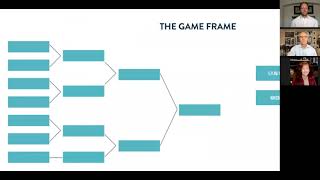
Andy Neary and Gerry Sandusky teach two tools for remote work: the Game Frame, a prioritization method that narrows ideas to a top 3-4, and 24 Hours of Power, a daily routine using 90-minute work blocks and a 3x3x3 practice (three wins, three priorities, three gratitudes). They also cover running shorter virtual meetings with three-item agendas.
Chapters
Alright guys, we're get cranking here. We want to respect your time. Jerry and I are excited. We're going to keep this right to 30 minutes. If you guys could do me a favor, if you are jumping on, if you could turn your camera off, it would be extremely helpful. It just the more people we have on camera, the more it kind of messes with Internet speed and stuff like that. So thank you. So yeah, we're excited. We are going to walk you through what we call leading in a two dimensional workshop or two dimensional world, I should say. And Jerry and I have had a lot of discussion with business leaders, leaders of teams, organizations over the past two to three weeks and a lot of common struggles are coming up. Number one, leaders are being pulled in so many different directions right now. It's hard to keep that structure that you're normally used to. Number two, it's obvious we're finding teams aren't as productive as they have been in the past. And number three, when it comes to communication.
We are now all communicating in a different world. So we are excited to do this. We are excited to give you guys two simple but yet extremely effective tools today that I think you guys are going to find super impactful.
Jerry. All right, so a couple of years ago I took my family on this beautiful vacation to the Bahamas. And we arrived at this resort and there were multiple pools and tiki bars and tennis courts and movie theaters, obviously the beach and a conch shack. There were so many things to do. And within a short period of time, this trip that we had designed for rest and relaxation became a trip of overwhelm. We were actually arguing over what we should do first. Everybody had this anxiety of wait a second, should we be over here? Should we do this? What do we do next? And within a very short period of time we were at each other's throats. It was unbelievable. And it took us almost until that Friday to settle into. Here's the priorities. Let's do this today, we'll do that tomorrow. And settled in. Unfortunately, the vacation ended on Saturday and we missed most of it feeling overwhelmed in paradise. We find ourselves right now in a very similar situation in isolation. See, it's not about the setting, it's about that feeling of so many things to do. Not sure what you should do first, what you should do next, what's most important, what, what's urgent, what deserves your attention that keeps us feeling pulled apart, less productive than we should be, and uncertain as to where we are. So don't worry about the fact that we're in isolation. These principles apply whether you are in paradise or whether you are in your basement. And what we're going to share with you today are a couple of simple tools that help you to understand what matters, how to handle it, and as we've gotten flattened out in our communication into a two dimensional world of zoom and how to communicate more effectively in that two dimensional world. For those of you who don't know me, my name is Jerry Sandusky. As I like to say, Jerry with a G. No relation to the former Penn State coach. Don't you all feel better now? Some of you probably signed up just to hear that. I've spent three plus decades as a television broadcaster, so I'm pretty acquainted with the two dimensional world of communication. I'm also the play by play voice to the Baltimore Ravens. Hopefully you enjoyed the NFL draft that was done in the two dimensional world, the virtual draft last weekend. And it will be something to see if we get sports back in the fall because I think we could all use some entertainment. I'm a New York Times bestselling author of the book Forgotten Sundays and I am a presentation and communications coach. I started a company about a quarter of a century ago to help professionals just like you bring your excellence to the front of the room and the front of the camera. Two places where people usually feel quite uncomfortable. For those of you who don't know my friend and colleague Andy Neary, I'll let Andy give you a quick background.
Yeah, absolutely. Thanks, Jerry. My story, my tie to Jerry is twofold. Number one, Jerry and I have been friends. He's been a mentor of mine. But number two, it's athletics. I was fortunate enough to spend a couple years in the Milwaukee brewers organization as a professional athlete, as a professional baseball player. My story is a little unique. I am a very undersized pitcher. I was a very undersized pitcher. I'm five foot nine. I don't weigh all that much. I didn't throw all that hard. But I leveraged a lot of habits and rituals off the field that allowed me to excel on it. And that's what I'm going to be working with you guys today as part of this workshop. I spent 17 years in the insurance industry, mainly health insurance sales. So I've done a lot of work in working on your sales message, the marketing around your message, as well as the habits and rituals to help you achieve your goals. And today I'm a business and productivity coach. So I'm excited to share a lot of the Habits and rituals that go into what I call the perfect day and can help you and your team excel on the field. And now I'm happy to say I'm a podcast host. I have a podcast that airs every Friday and soon to be every Tuesday called Bullpen Sessions, and I'd love to have you go check it out when you get a chance. So, looking forward to providing some great content today.
And here's what we want to accomplish. We have three specific goals that we want to deliver for you. We want to share with you a tool that will help you improve your focus and your productivity at a time where our focus feels fractured and our productivity, it feels diminished. This tool, which we will introduce to you in a minute, will help you improve in both areas. We want to give you a daily approach to normalize remote work. We don't know when we're going to go back to air quotes normal. And I suspect that the future normal won't look like the past normal and what we're learning in isolation. We're going to take those same principles with us no matter what the future holds. And I'm going to show you how to maximize virtual meetings. Suddenly everybody's on tv. Everybody has to be on camera now. And it's a little different world than the three dimensional world of the meeting room, the boardroom. We're going to show you some ways to make that more effective, maximize your time and help people feel positively charged instead of negatively drained. So let's start with the first tool. And this is the prioritization tool and I call it the game frame. For those of you who missed March Madness, you'll love the way this looks, even the way it works, though it doesn't work exactly like the March Madness brackets. The way it works is you take a topic and this works for any topic. To teach you the tool, I'm going to start with a very simple topic. The topic of the things that I want to do when we get to the other side of isolation. So on the left hand side will be the brainstorm list. These are some of the things that I want to do. I want to go back to the gym. I want to go to the movies. I want to take my wife on a dinner date. I want to visit my kids who live in other cities. I want to go out and just have drinks with friends and be able to sit at the same table with my friends. I'd love to see a Broadway play again in New York and would seriously love to go on a beach vacation with my family. That's just kind of a brainstorm list. This I call the brainstorm category. Now, just with that list alone, you can feel overwhelmed because you want to do all of them. You're not sure what you should do first. What's the priority? This tool will help you determine that. You use what I call the clarifying question. You break the competition down into twos in the brainstorm category, take the top two and you ask the question, if I could only choose one of these two options, which one would I choose? Gym or movies? I've watched plenty of movies in isolation. I really want to go to the gym. So in that competition, those two gym would advance. Then I go to the next two. Do I want to go on a dinner date or do I want to visit the kids? I want to do both. But if I could only choose one, which one would I choose? I really want to visit the kids. I think my wife's probably seen enough of me lately. Drinks with friends or a Broadway play? Love both. They're both important to me. But right now, New York doesn't seem like a great idea. I really want to see my friends. That one would win that mini competition. You'll notice the bottom, beach vacation is the odd number in the brainstorm category. It has nothing to compete with, so it gets a buy. Don't worry. Doesn't mean it's going to win. It's just part of the flow of the game. Now in the second column, you play it out the same way in pairings of two. Do I want to go to the gym or visit the kids? Again, the key is the clarifying question. If I could only do one of these, which would I choose? I want to see my kids. Drinks with friends or beach vacation? The beach can wait. I miss my friends. And finally visit the kids or drinks with my friends. I'll be able to have drinks with my friends. I really miss my kids. So that's my number one choice. Now here's where it changes from March Madness. In your typical tournament, what you do is what wins that round. In this case, visit kids comes off the board all the way back to the left hand side to brainstorm column. What it beat in that first round. In this case, dinner date automatically advances to the second round. And now it competes with gin. If I could only do one of these two things, which would I choose? Choosing dinner date, dinner date or drinks with friends? Dinner date is the second choice. Dinner date comes off the board all the way back to the left hand column. The brainstorm column. And now you'll notice in that Brainstorm column there's nothing in those two blocks. So Jim has nothing to compete with in the second category. So Jim gets an automatic buy and advances to the third round where it will compete with Drinks with Friends. Again, both things I want to do. If I could only choose one, which would I choose?
There's my choice and it comes off the board all the way back to the Brainstorm column. Movies will advance. Movies has nothing to compete with in the second round, advances to the third round. Movies or Drinks with Friends. And I want to see my friends more than I want to see another movie. And there are my four priorities, the four things I want to do in order of priority on the other side of isolation, I took that Brainstorm column which can make you feel overwhelmed and gave it a clear sense of prioritization using this tool. I like to use a simple example to teach the tool because the tool will work for anything. Let's give you a business setting for it in business, in isolation or in the office.
That's a pretty typical to do list. All of it important, all of it pulling at you, all of it tugging at you. And you can feel overwhelmed or you can make the mistake of five minutes here, ten minutes here, two minutes there, halfway down there, nothing really gets done, you feel frazzled and you come away pulled because you're unfocused. If you run this to do list for your day through the game frame using the clarifying question if I could only choose one of these two options, which would I choose? Would I focus on preparing for the budget meeting or do employee evaluations? Both important, but you choose off of that question. In that mini competition budget meeting, do I make my sales calls or do I follow up the PPP with the bank? The bank might be more important. If your PPP hasn't come through yet, write the blog post or write the staff emails. You choose the staff update email coaching session at the bottom. Nothing to compete with odd number it gets a buy second round. Same thing to a head to head competition. Of these two, if I could only choose one, I would choose following up with the bank on the PPP staff email or that coaching session. You choose staff email because you feel that's more important. Of those two, if you could only today do one of these two things, follow up with the bank or write the staff email. You choose to follow up with the bank and that's your number one. And you saw from the way the game works. Now it comes off the board all the way back to the Left hand side, the brainstorm column. What it beat in that first round, in this case, sales calls gets a buy into the second round and it competes. Now head to head with budget meeting. If you could only choose one, prepping for your budget meeting is more important. Budget meeting or the staff email, the budget meeting is more important. That's your number two choice. Comes off the board all the way back to the left hand column. Employee evaluations advances, and now again you're just focusing on of those two, if I could only choose one, which would I choose? Sales calls, Sales calls or staff email? Sales calls is the more important. That's your third choice. By now you see how it works. It comes off the board and again in that first column, the brainstorm column, you. There's nothing in those two boxes. So employee evaluations will advance to the third round where it competes with writing the staff email update. And writing that update is your fourth choice. So we just took a category of important things. Some are urgent, some are less urgent, all tugging at you, ran them through the game frame and it automatically prioritizes those activities. You can run this all the way through to 1012, however long you want. But I like to stop it at 4 because in a typical day you're not going to get more than four at most important things done. And you can ping pong through that category on the left and try to get a little bit done of everything and leave frustrated. Or you can go through the game frame, prioritize your activities and now focus your energy on that first priority. When that's done, you move to the second. When that's done, you move to the third. When you run out of time, you run the game frame for tomorrow. And, and that way you are always working on the most important thing, even though whether in isolation, you have a million things tugging at you, including home issues. This gives you your focus point for work so you know what's most important. What do I work on right now while we make our way through this unusual world of isolation? And because isolation has many different factors pulling on us home factors than the office does, Andy's going to take you through what he calls the 24 hours of power so that you can use this tool in a way that your schedule starts to have a much greater, higher level of productivity.
Andy, I hope you found what Jerry just showed you to be super impactful because it can help you prioritize your personal life, it can help you prioritize your professional life. And based on the environment we are all in right now, you could do a hybrid of the two. And so what's interesting about this time period in our working lives is a lot of people, a lot of business leaders are finding certain things getting exposed. Maybe something, you know, they weren't a life balance issue. They weren't addressing or trying to balance having the kids, the pets, the spouses at home. My argument there is those weaknesses always existed. You're just now getting really exposed because we're all working from home right now. So what, what I want to show you is how you take your priorities, your focus for, and now put them into the 24 hours of power. Planning the perfect day. Here's the trick part of this. Planning the perfect day actually starts the night before. And so what you want to be doing every single night before you end the day and the evening is I want you to pause and look back at the day and I want you to celebrate three wins no matter how small they are. Because it's so important right now that as leaders, we keep ourselves in an optimistic and positive mindset. So we have to start planning the night before and we have to start celebrating all the victories throughout the day. Then you're going to look at your focus 4. Jerry just showed you the tools. Sit down, look at what your focus4 is based on what your next day looks like. Then the next step is easy. You're going to take that focus for and you're going to time block the next day.
So here's what and then the biggest and most important thing you need to be doing every single day right now, no matter when you start your day, some of you might start as early as 6am, 7:30, 8:30. Focus on your number one priority. So here's what an effective day would look like. You sit down, celebrate your three wins. Literally. Write out whether you use your phone or a piece of paper, write out your three wins. Review your focus four from the game frame. Then you're going to take your Focus 4 and you're going to plop them into time blocks. Now, when you look at the time blocks on the screen, you're going to notice a couple things. Number one, they're scheduled for 90 minutes. Our brains cannot focus on one activity for longer than 90 minutes. I see people time blocking two, three hour periods of time. Right now, you and your team cannot remain focused for that long. So your time block should be no more than 90 minutes. And look what goes in. Time block number one, your first priority. And then you need to give your space and give your teams the space to recharge especially if they're spending that time block on zoom. There's an energy that's draining them right now. So they need to take time to recharge. Maybe go play with their kids for 20, 30 minutes. And then you come back to time block number two and you work on priority number two and then followed by another recharge, reset, get to time block number three and then you run another time block in the afternoon. You will be getting more done in six hours than you normally are in 9, 10, 11 hours of unstructured activity right now. So in order for you to be an effective leader today, you have to be at your best so you can bring your best. What does that look like? Morning success Habits. These are the habits and rituals. I don't care what your goals are right now. If you don't have the habits and rituals in place, odds are you're not going to hit them. So let's talk about morning habits. Things I do, things I suggest. Read 10 pages. Probably something around personal development. Get your mind in the right framework for the day. Number two, calm the mind down. Some of you might meditate, some of you may just use visualization. But put your mindset in the right frame of mind. Picture the perfect day. What is it going to look like then? Journal. Take some time to write down what you are grateful for. Take some time to write out the perfect day. What would the day feel like if it came to you easily and freely? And then now you go to work taking care of your body. Now is the time to get the right habits in place. And one of them has to be taking care of your body even if it's walking around the block. Get out and get some exercise before you start your day. Some of you might do that in the afternoon. That's great. Now here's my extra credit for you. A lot of people are struggling with energy right now. You want to start your day on an energetic way. Jump into an ice cold shower. And then since most of you are working from home, repeat the process in the afternoon. When you hit those mid afternoon lulls. Hitting that ice cold shower guys will energize you instantly. It'll stop you from drinking those seven, eight cups of coffee that you're drinking right now. Now throughout the day you focus on the 3x3x3. Focus on your three or four priorities. So it starts though with finding out what you are grateful for. I call this the 3x3x3. Before you start your day, sit down, think about three things you are grateful for. I hope number one of them, if you and your family are healthy, that should be number one. But start with gratitude. Then the second thing, as you jump into the day, focus on those three priorities, or in some cases those four priorities get structured. Now here's the key, guys. The reason you want to put priority number one first is there is the chance that the rest of your day could go sideways. You have a client who has an urgent need. If you at least get that number one priority done at the beginning of the day, you have made the appropriate progress throughout the day. So at least work on that first priority. And then the last thing, I talked about this earlier, end your day by looking back at it and celebrating the wins. And then it just becomes a process of rinse and repeat. Here is a quote I want to share that from one of my all time favorite books, and that's this. The one thing, if you've never read the book, the one thing most people cannot handle, the monotony of success. Guys, being successful, especially as a leader right now, is getting up and doing the small things every single day. And then you just rinse and repeat and you will look back one month, three months, five months from now and be blown away by the progress you and your team made. Now let's talk about how you can actually structure virtual meetings right now to be super effective.
All right, so the game frame is a really handy tool for getting yourself ready for meetings. Because if you think about now, meetings are all done the way we're doing them right now. Zoom, GoToMeeting, WebEx, whatever the case might be, we're all dealing with this two dimensional world. And this is where my background in television is a real asset. Because there are some things about two dimensional on camera meetings you might not be aware of. And Andy touched on this. The first is the sense of energy when you're on camera. And I learned this years ago. In television, there's an actual energy that the camera is putting towards you and you have to meet that with your own level of energy. If you come out with too much energy, you'll kind of wear out the audience. If you let the camera wear you out and you're too mousy, it'll wear you out and you don't connect with the audience. So you've got to kind of find that sweet spot in the middle, that middle ground. But unlike an in person meeting, having that energy from the camera on you, being on camera is draining. And so a 90 minute in person meeting, while that might be draining a little bit, is far Less draining than a 90 minute on camera zoom meeting. You may have noticed that you leave some of these zoom meetings exhausted and you're not really sure why. And that's because zoom meetings should not go as long as in person meetings. They should go about half as half the length of because they require twice as much energy and they drain you of twice as much energy. So as a leader, the way you pull that off is to be very focused in what you're doing. And I say have what I call the key three, which is the ability to focus your agenda around three items and no more. And the way you find your key 3 is the game frame. You brainstorm all of the potential meeting agenda items you might have. And that's over on the brainstorm level. And you'll notice the way I set this one up is there's no fancy software. You can do this with pen and paper. I do this all the time in my journal. You just write down your brainstorm list. Here's all the things I might want to cover in this meeting. The new HR policy, pricing changes, website updates, case study, promotions, tardiness issue, the new Google Ads you're running, and the CRM change that you're proposing that your organization initiate at the end of the month. All of those are important. All of those are drawing on your attention. And if you try to dump all of those in a zoom meeting, you're going to see people checked out left and right. They'll turn the camera off, they'll be on their email, they'll be half listening. And all of a sudden productivity is going down, communications breaking down, and you're not getting through. So let's take this list. Let's use a pen and paper version of the game frame. Ask the clarifying question. If I can only cover one of these. And here's the easiest way to figure that out.
If five minutes into the meeting, suddenly there was an alarm and everybody had to leave, what's the one thing you would want to make sure you got done? That's how you do this. If I could only do one of these things, which one would I choose? And you play out the game frame. In this case, you get to your second column, get to your third column, you play it out and you choose price changes. You want to go over price changes? That's your first one. Well, you know from the game frame how it works. Now it comes off the board. If you're doing this with pen and paper, you just scratch it out all the way back to the brainstorm column. What it beat? The new HR policy now advances HR policy or website. The website changes are more important in your mind. You want to cover that. You want to cover the website changes or the CRM change that you're proposing. You choose the CRM change. That's the second item in your agenda. It comes off the board all the way to the left hand side column. The new Google Ads will advance Google Ads or website the new Google Ads is the third item on your agenda. And that's how easy it is to take an overwhelming list of important things that you want to cover and whittle it down to what I call the key 3. Which are the three agenda items that you're going to build your virtual meetings around. If you have the discipline, and this is nothing more than forced discipline, if you have the discipline to just stick with a three agenda item meeting on Zoom. In the two dimensional world, you'll find your meetings get done faster. They double in productivity. You'll get the reputation of somebody who's not wasting people's time and energy. So they will bring their attention to your meetings. And that's how you get your productivity to go up. Your focus increases, your communication increases, and while all of those other things are important, you weren't going to get to them anyway because people weren't going to give you that much attention and they don't have the energy. The game frame into the key 3 whittles it down to a very focused point of priorities. And the people who work with you and for you will quickly get the sense that you don't waste their time. You do have a clear sense of priority and they will respect that immensely, especially when they start to recognize your meetings are shorter than everybody else's. There's never been a meeting in person, in three dimension, in virtual, in two dimension that anybody left and said, wow, that meeting was too short. The game frame will help keep you focused, it'll help keep your people energized, and it will build the reputation. So when you call for that next meeting, they're going to show up with their attention because they know it's not going to drone on for 90 minutes of soul sucking and energy sucking nonsense that doesn't produce the results you were looking for in the first place. So as we went through today's webinar, I want to share a quick little personal story that these are not theories that Andy and I are just lobbing your way. These are real tools and real approaches that we use. I taught Andy the game frame. He taught me the 24 hours of power. And I just yesterday used his approach of making sure I time blocked and making sure that I did the first thing first. And the reason for that was my wife was brave enough to go out and venture into the isolation world to go do shopping. Shopping is a very stressful thing to do these days. The number one priority I had on my agenda yesterday was prepping for today's webinar. Well, just as I got finished that number one priority, my wife got back from the grocery store and she was in need of some assistance. She did not want to bring in all the bags. She didn't want to unpack everything. She had been out there dealing with the public, wearing the mask, and was very stressed. Understandably, if I had looked at my wife and said, honey, I'm busy right now, I have to do some things, it would have created tremendous stress because it's just she and I in our house in isolation, and those are the realities we're dealing with. But because I got my number one done, it was okay that I didn't get to my number two and my number three yesterday, because making sure that my relationship with my wife in that moment was strong was more important than anything else. So this is not just theoretical, this is not textbook. These are tools that we have found actually help us in isolation. And because they're based on principles, they're going to help us a lot when we get back to whatever the new normal is, which I suspect is going to be a hybrid between the old world of in office work and the current world of home office work. So I hope you like the game frame. What I'd like to encourage you to do is use pen and paper and do a game frame at some point in the day. Today, just do something fun and simple. What you think are the best movies of all time, your favorite desserts, the places you want to travel to after isolation. Pick a simple topic, run through the game frame. Because once you learn that process, you can use it over and over and.
Over and then tie the game frame right into your 24 hours of power. Like I said, as a leader, you have to be at your best every day to bring your best to your team. And if you think you're struggling right now, your team is struggling a lot worse than you are. So use the 24 hours of power and then rinse and pre. Remember, enjoy the monotony of success.
And key three is going to make you far more effective as the leader running your meetings, both in the virtual world and eventually when we Return to the three dimensional world. Most meetings, like most presentations, have too much content and too little impact. The forced discipline of using the game frame to whittle your content down to the key three will keep everybody on point. It will save you time, it will increase your productivity. So before we go, Andy and I would like to invite you to join us for a live online three module seminar that we've put together. This is a little taste of what we've been working on. We want to help as many leaders as possible navigate these unusual times and come out of them stronger than ever. We call the program the Leadership Playbook for the new normal. It is a three module, once a week program, two hours we'll be working on it. Module one is about building the right personal brand. Who you are as a leader, who you want to be perceived as, how you create that and how you use perception in your favor instead of perception that is diluting your impact. Module two is about maximizing performance. And this is raising your game, but also raising your team's game and making sure as we come out of isolation, we're a stronger team, we're stronger leaders than we were when we went into isolation. And module three is mastering the message effective communication skills in the two dimensional world. Working on Zoom is a new thing, I get that. But it's no different than working in television. And there are some mechanics, there are a lot of techniques, there are a lot of insights that can help you stand out. If you've ever gone to a small market TV town on one of your business trips and you see the young people behind the news desk and they look frazzled and you feel uncomfortable, that's because they just haven't learned the tricks of the trade yet. And that's how a lot of people are feeling now in Zoom meetings. When you learn how to communicate and operate in the two dimensional world, you elevate your game. You elevate everybody around you and you calm everybody down so that they're not feeling frazzled, they're not all over the map, and it's much easier for them to follow a leader who's in control, who's smooth, who feels confident, who looks confident. We'll show you how to accomplish all that and a whole lot more. You'll leave with a clearly defined brand of who you are as a leader. You'll tap into the power of perception, which has way more power than most people realize. You'll gain clarity around your personal and your professional priorities, both in the short term, the day to day, as well. As the long term, you'll master the mechanics of two dimensional virtual communication. You'll maximize virtual meetings. You'll be able to run virtual meetings that will run circles around the competition. And you'll leave with the digital tools and the videos that will enhance your productivity for days, weeks, months and years to come. There's two options. There's a public program for individuals. You just sign up individually and you'll be part of that group. Or we also have a team program that companies can come in and we optimize and customize it to fit the needs of that company. You'll have an email waiting for you as soon as you get done this webinar and it will have the link that you can see a lot more about this program. You can look at it up. Andy's emails in there. My email is in there. You can lob questions our way. You can sign up for it. It's a quick link and it's just waiting for you. So as we leave, I want to kind of take you out the same way we came in.
When we arrived as a family in paradise a couple of years ago in the Bahamas, we found ourselves quickly overwhelmed, frazzled, pulled in too many directions and feeling like we weren't getting the most out of this opportunity.
I would like to present isolation as an opportunity every bit as big and bold as the Bahamas was back then. It's not about the setting, it's about the focus. It's about your ability to be focused on what's most important, to be able to determine what's most important, to structure your day, that you are getting to what's most important in a logical sequence. Because whether you are in paradise or in isolation, you're not going to get to everything. But if you get to the most important things, if you take care of yourself, if you keep your poise, by the end of that journey, whether it's vacation or isolation, others will see that you have found a way to raise your game, to elevate your productivity and to make them more productive and make them feel better as well. And at the end of the day, isn't that what we're trying to do as leaders? We're trying to show people here, here's a better way to do things so that we elevate everybody's lifestyle, everybody's performance, and we diminish everybody's anxiety. Andy, I'll let you close out, but before you do, I just want to thank you for taking the time to be with us. I know you've got a lot of things you can do. We hope you found this to be a very useful webinar. And we hope you'll join us for the leadership Playbook, which gets underway next week.
Yeah. I just want to say thank you, guys. This is your chance. Right now, everybody's on a level playing field. It is time for a clean slate. Is a time to rewrite your future and your team's future right now. These are principles that have applied in history and are going to keep applying well after we are all quarantined. The quarantine is over. So we hope you found the tips valuable and go out and help your team far exceed expectations.
Thank you all.
Thank guys.
More from Andy




If you want producers to succeed faster, help them create a sales message that creates confidence.

Sales isn't a zero-sum game! You can have tough competition and still grab a beer after



Option 1: Meditation, a fast walk, a podcast, and protein. The ultimate morning routine!

How you do one thing is how you do everything. Ill elite producers fuel their body.


Stop living in the gray of maybe! Your job in sales is to get a clear yes or no