Lessons Learned From The Family Restaurant | with Justin Burgess
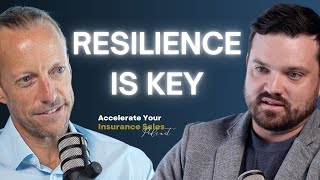
Justin Burgess grew up in his family's New Orleans seafood restaurant, Sid Mars, which was destroyed by Hurricane Katrina. After 12 years in health insurance, he built a niche serving RV dealers across 50 locations and launched a podcast six months ago. He credits the restaurant's lessons in customer service and adaptability to his success.
Questions this video answers
April 4, 2025
About 12 years
Sid Mars Restaurant
About 50 pounds over roughly two years
About six months before this interview
Chapters
The one thing I liked about my father, he always did well, is he closed on a Monday to kind of reset and focus on the business of cleaning up things, fixing up the place.
It's no different here, right? In this industry, especially insurance, even the folks at the top get caught constantly working in the business and they never give themselves time to work on the business.
Justin, welcome to the podcast, man.
Thank you, sir. Appreciate it.
I'm excited to have a conversation with you today. We're going to talk about your upbringing, going to talk about your path into the insurance industry weight loss journey. There's just a lot of cool things we can talk about today. You are growing a brand in this industry, which is awesome. People are getting to know who you are. So for the few people who don't know who Justin is, why don't you take a second and introduce yourself?
Yeah. So Justin Burgess, born and raised in New Orleans. Been in the health insurance business for coming up on 12 years. Started off in a family business, eventually found my way into insurance. And right now, the past two years, I've been focused on building my personal brand, which is really important to me. I feel like the insurance, insurance business is flooded with.
A wide range, range of people and build. Building yourself as a unique person in this business is something that is very important to me.
Yeah, I agree. It's very hard to stand out in this industry. A lot of people are saying the same things. We all have access to the same products, same solutions. So it's getting harder to stand out. We're going to definitely talk about that. Let's go back to your upbringing in New Orleans. Now, I wasn't intending to ask you this, but I do have to ask you because, you know, you kid grew up in New Orleans, but you're a fan of hockey. Let's start there. How the heck does a kid from New Orleans grow up a fan of hockey?
Yeah, so I always start with, I wasn't good at football or soccer. Baseball was kind of my, my niche. But back in the 90s when the inline scene was kind of popping off, I remember going to a kid's birthday party and I saw hockey sticks in the corner. And it was just kind of one of those things, like, what's that? Then they had a little poster like, come play on Wednesday nights. And next thing you know, we just started doing that. And I remember signing up for football like everybody else and like, oh, you can't play two sports. I'm like, I like hockey better than football. And it just stuck with us. And I've actually built a really good community and friendship throughout that.
Playing hockey, what is the presence like in the state of Louisiana? Like high school hockey? Is it a thing?
We actually started our own club hockey team. But we have a lot of transplants from outside the state with big oil companies and now tech companies. You get a lot of people from Canada or outside the area that's coming here for jobs and they want to play hockey. It's pretty non existent now, but eight years ago we could drive an hour for an ice rink, which was pretty fun.
And you had said offline, you were telling me New Orleans did have a minor league team, right? The New Orleans brass. Yep. But when you don't, when you're a fan of the sport without an NHL team in town, who did you root for in the NHL?
We, we only got the Dallas Stars and Boston Bruins on tv.
Really? Boston?
Yeah. When they would play, we get that on tv. But there's a, there's a bar in the city that's actually became the hockey bar. It's got some hockey bar stools. So that's kind of like when the Stanley Cup's going on, we would all go there and, and watch the game. So it's pretty, pretty fun.
Cool. That's awesome. Let's talk about your upbringing. You had said that you had a family restaurant and I think any kid that grows up with a family restaurant understands work ethic because you probably were working in the kitchen, doing the dishes, whatever it could be at a young age. How did that shape. Talk a little bit about the restaurant and then how did that shape your work ethic today?
Yeah, so Sid Mars Restaurant. So the name came from my grandpa Sydney and grandma Marion. Both have since passed away, but we were 30 years in the business and early on, when I was between the age of 12 and 16, it was exactly that story of like, hey, the dishwasher didn't show up and we need somebody to dishwash. And.
You know, I didn't really get to spend a lot of time with my family growing up either. So that was the time that you got to spend with your family. And also like I was a little heavier set guy, so I liked shrimp po boys. So it was kind of a two for one, like get to eat. But the school I went to was literally three blocks away from the restaurant. So literally go get picked up at 3 o', clock, eat at 5 o', clock, kind of work a little bit. But from a perspective standpoint, my dad always taught me the picking up the trash mentality and that's what I always stuck with. I always would see him going around the restaurant and picking up the trash. So to kind of correlate that to my insurance career is like, yes, I'm a consultant. That's my core job. But there's these little tasks that I don't mind doing because that's just how my father was. Yeah.
What kind of restaurant was it?
Seafood? Yep. On the lakefront. Beautiful. Unfortunately, Hurricane Katrina ended up wiping us down to the pylons. But. And not say. I look at it like a blessing, but the restaurant business is tough.
Yeah. You show me some pictures of what the restaurant looked like before Katrina, what it looked like after Katrina, and I mean down to the foundation. It's gone. We had talked about offline. I don't want you to go. You don't have to go deep into that. But being a kid growing up in that city during the time Katrina hit, how did that shape you? Because I gotta believe it had an impact on anybody who grew up and was born and raised in New Orleans.
Yeah, it was, it was awkward because we had such a great culture then after Katrina, the culture just kind of went flatline because everybody's dealing with their houses. And I lived in Metairie in the time, and we got water, but we didn't get water like New Orleans. So my house got like 2ft of water. My wife's house got like 10ft of water.
Wow.
So you had people.
She had New Orleans more than New Orleans proper.
So we were actually dating at the time. Still talk. And you couldn't even get cell reception to talk to people. So it was just like you kind of. This was the age before Internet kind of was a thing. So you didn't know where people were at, didn't know if they were okay. And you had some people that had no house living in FEMA trailers and some people living in their house because we had a two story. So we could still live and renovate our. Our house at the time. But it was a, you know, we're resilient people. At the end of the day, that's what I think about it is, you know, just got to get through it.
You know, I remember having conversations with people, whether it's Katrina, so people who live on a coast, people who live, you know, we lived in Colorado, so there was always that wildfire threat. When you lose everything, especially in a place where it happens multiple times, you kind of wonder, why do you go back? But that's to your point. When you're born and raised there. It's who you are. And no matter how many catastrophes hit, you're going to rebuild and you're always going to come back. Is that. Is that a good way to describe New Orleans?
Yeah. And we just had the Super Bowl. It was a good. I think one of the NFL announcers said this is the top five city to host a Super bowl because of the culture. And that was. That kind of stuck with me because, like, yeah, Vegas is awesome. Miami's great. But we had a purple carpet on Bourbon street, and people loved it. It was amazing. Like, everybody said they had a great time, so that's what kind of keeps me going back. And obviously, we have French Quarter Fest, Jazz Fest.
All these music just got done.
What just came through.
Oh, the Super Bowl. Yeah. Mardi Gras. Mardi Grasu. We have the Taylor Swift concert. Like, we're hosting these big events, and people love coming to the city just like they love going to Vegas. But I don't think Vegas has the culture.
Well, and I think the thing that's cool about New Orleans is you can go anywhere. Obviously, different parts of the country have different cultures, but.
New Orleans is that one unique culture in this entire country that has the French and that Haitian voodoo culture. That's what makes it so unique. I love it. I think it's really.
And you can get the best food from a gas station, and you wouldn't think twice about it.
Yeah. That's awesome. So, you guys. Your dad could have easily said, we're done. Katrina wiped us out. Time to do something else. But he didn't. You guys rebuilt. What was that experience?
Like, four years later, he had the itch to kind of get back in the business. And we bought. We renovated an existing restaurant that was already established. That kind of went under. And this was right in the time and where it was like people were asking us to come back. And unfortunately, right when we came back, I think a year later, the BP oil spill hit. So I got to kind of always see my family at the top of the mountain and eventually kind of flatline. But it was all a learning experience. The ironic part of that is some of my clients came to my restaurant, and I was bartending and serving them. And now. Now when they're my clients, I'm like, oh, hey, you remember me when I was a bartender at 22 years old? But I just posted this on LinkedIn the other day. I think everybody should bartender serve in their life because it has a direct correlation to every other business out there.
Yeah, I never did but I have plenty of friends who did and they all say the same thing. It was the greatest way. It's the greatest way to become a good salesperson. Greatest way to become a good conversationalist. Read people all that stuff. Yeah, yeah, yeah. You know you bring up a good point with the oil spill. When you told me that the oil spill knocked the restaurant out, my first reaction was like okay, that was offshore. How did that impact. But you explained, you know, it just absolutely inflated all the prices of the seafood nor and yet people just didn't want to eat the seafood for the fear of what was in it because of the oil spill. You don't think about the impacts and oil spill offshore has on on the.
Local area and we deal with this just for our core business is that profit margins are already tight. So when you have external factors coming in on your bottom line, there's, it's not a lot of profit to be had. And this was back in the day where you couldn't really charge people $10 more for oyster po boy. Now I think businesses have to do that because otherwise they're just going to go under. We made the decision not to really increase prices a whole lot because we didn't want to lose our customers and obviously, you know, it just kind of spired. The whole industry was kind of getting. It's a trickle down effect.
Yeah. Yeah. This episode is brought to you by Trucaptive Insurance. What if you could take full control of your healthcare strategy without the financial burdens of traditional insurance? At True Captive insurance they make that possible. As the only captive in the nation that puts up the majority of collateral on your behalf, they provide financial flexibility from day one, making them an advocating partner for their customer success. True Captives fully customizable plans and cost saving strategies ensure you never have to choose between affordability and quality care. It's time to break free from the limitations of conventional insurance. Take the next step today. Visit trucaptive.com and discover a smarter way to manage health care that is true captive.com how has that impacted you then? You know, going back to growing up in the business, I think one of the things about running a restaurant, again, never been part of one that that the family that has one. But your dad, even having the business for decades, he's there every day I'm sure still is there every day working. What have those lessons taught you today as a benefit consultant or how do you apply what you learned in the family restaurant to what you're doing today?
I think it's Customer service is the biggest thing. You kind of get to know your customers over a period of time and you have to be there when they need you.
Two, I would probably say just being adaptable. Like things go wrong in the insurance or in the, in the restaurant business as well, in the insurance business. But you were talking about hurricanes. Like, you know, our food is generated by the freezer with power. Well, if the power goes out, how do we keep our food? So like we would go there at 12 o' clock at night with generators to make sure the food doesn't go to waste because we didn't have the money to replace a whole freezer. So, you know, there were some late nights. And the one thing I liked about my father, he always did well is he closed on a Monday. He did that for two reasons. One for himself, for family time. That was our day that we always went out to, to dinner as a family and to kind of reset and focus on the business of cleaning up things, fixing up the, the place. And you know, I think in the insurance business we focus a lot on.
Everything has to get done very quickly. But you kind of do need some time to reset and relax and, you know, take a break. But ultimately your customers are going to tell you. Like, we would do a lot of private parties on Mondays for law firms that wanted to crawfish boil. We would make exceptions for those kind of things. But, you know, it was, it was fun. I had a good time. And I'm still friends with a lot of people that I know from the restaurant days, including vendors, employees. Now they're all doing cool things in different careers, but it's nice staying in touch with people.
Well, I think there's two important points there that you make. Your dad shut the restaurant down every Monday to fix, you know, work on the restaurant. It's no different here, right?
Yeah.
Where in your week are you putting everything else aside so you can work on the business? You know, a lot in this industry, especially insurance, even the folks at the top get caught constantly working in the business and they never give themselves time to work on the business. I think that's a very relevant point.
Yeah. And I think that's the brand side of what I do for a living. Obviously the prospect you can only do when people are at work. But like, focusing on your brand outside of the traditional 9 to 5 is kind of what I know. It's not a healthy relationship for me and my family, but I'm generally up early, I stay up late. Ish. And that's when I think of ideas of videos or LinkedIn posts, and if I get an idea in the car, just voice note it to myself. It's just, you know, we're in the age of like, yes, I sell insurance, but I'm treating myself as a marketing person right now that I want to get my message out. And this is the message that I want to get out to people. And if I get a weird idea at 7 o' clock in the morning, I'll write it down. So I remember to post that throughout the day. Yeah, but kind of planning my content has been a big game changer.
We're going to talk about that, the point you're making, and it's very relevant today. I heard Gary Vee say this back in 2017, and it changed my career. You have to think of yourself like a media company that happens to sell what you sell. And that's when I, what I heard was, okay, I'm going to become a media company that happens to sell health insurance.
Correct.
You have to, you have to think that way. One other thing I did want to say about the restaurant, though, and I love your thoughts on this. You know, when you run a restaurant, you talk about customer service. Odds are things are going to go wrong. Right. A customer is going to complain that I wanted medium rare when you made it. Well done, whatever it is. And I realize even in this business, running my own now, it's not that people get upset that you made a mistake. It's if you, if you take care of it in a timely fashion, they're going to be happy. And I think I share that because I've had it with my own team. That fear of messing up, it's like, guys, things are going to break. It's how we react to when they break and how quickly we rectify it that will leave the lasting impression on the customer. Do you think? What's your thoughts about that?
Yeah, I would say, unfortunately, our errors in this business is like someone can't get their drug at the Walgreens or cvs. And that's unfortunate. So it's like, yes, we can do things quickly, but we can't get people their drug. Obviously, in a restaurant business, you forgot to put in their dinner, get them a soup or salad to fix it. So a lot of things, I have the sunset rule. I think you've obviously heard of it before. It's kind of respond quickly as possible, say you're on it, then make sure it gets done. I think that's the biggest thing for me is that and Obviously, I have a lot. Most of my clients text me, which I'm okay with. Like, I like that better than like, clogging on my inbox. So, like, people need to realize that, like, emails, you get flooded. But if it's like SOS texts, call this person.
It's a text, you know, it's serious.
Yeah, I know it's serious. Like the guys at the drugstore.
Yep. So, yeah, you bring up. You know, it's funny. I think if I could give one tip on customer service in this industry, that would change more agencies fortunes. It's when somebody sends you a request, you know they need help with something, acknowledge the message, whether or not you have an answer yet.
100%.
It amazes me how many agencies, how many account execs don't wait to reply until they have an answer? And then in their head they're going, well, why should I reply? I don't have an answer yet. But what they don't realize is that client sitting there for two or three days going, where the hell are you? If you just would acknowledge. Got your email. I'm on it. When do you need a response by or, hey, it may take me a couple days. They would mitigate so many issues that customers have with them. Just acknowledge receipt of the message.
I think it's awkward for me as a producer because I grew up in the account executive. I called myself the Taysom Hill of my office previously. So I did a little bit of everything.
Little Norlin Saint call out there because.
I didn't manage accounts. I was kind of like a problem child account manager. Ish. And that was my thing. I would always try to respond quickly because I wasn't like doing a renewal meeting or doing spreadsheets. And I think the fear of most account executives that they're so bogged down, like I have to get the spreadsheet done that I can't check my emails.
Yeah.
So it's. I'm glad I grew up in that channel to keep. Become a producer, because I know what clients want, and they want fast response times. Obviously, it's hard to give it to them when you're traveling or in meetings, but. Yeah.
Well, just that grit of growing up in a family business, especially a restaurant, that. That gives you that tenacity and that grit in insurance, you're willing to take out the garbage for your clients. Right. And so let's talk about your insurance career. So running a family restaurant, obviously that didn't last forever. I'm always curious as to how people found their way into the business because I like to say the business typically found them. What was your path into the insurance industry?
Like, I got into banking fresh out of college. I only got into banking because they paid a little bit for my school and at the time and I got free parking on campus, so it was a win. Looking for jobs outside of college, I kind of saw an account associate position just randomly applied to it. Didn't hear anything for weeks. And I was actually heading to go to hockey at like 5:30. I get a phone call and like, hey, can we interview you real quick? I'm like, sure. I'm in a car with three other guys and I bombed. The interview went terribly.
My producer at the time saw my resume and he's like, oh, you went to this high school? That's where I went. I knew your family business. And his theory was like, if there's a family business, there's one or two kids. It's the hard worker or the lazy one. And he's like, I'm gonna assume you were this way and brought me in for an interview. Didn't even know what the business was. He's like, I don't even know what you're going to do here, but we just need somebody to kind of help out around here. And this was before technology was a thing. We were doing things on paper and I kind of got to see the business evolve from technology to doing more advanced things. So it was a fun. I'm glad I. Glad I did it. I didn't think I would find this career exciting or enjoyable, but here I am.
Yeah. Let's talk about what you're doing today. I think it's. It's been fun to watch. You know, your brand is growing, the awareness you're building within the industry is growing. And I love. If you don't mind sharing, you know, one thing you've done a great job with is finding a kind of a unique niche, right? The RV space. What led you to start targeting the RV space as a. As a specialized niche for yourself?
Yeah, so one of my clients and good friends telecom company works with a lot of people throughout the United States and he's got a little niche in the RV space. And we got one mutual client together and saw what we did for them and it kind of just snowballed. And what I like about that industry is they had a massive boom during COVID and people bought RVs and now they're slowing the dip. And I think I like working with employers that care about their money and want to see it go a long way. And that's a business where they really care about their bottom line and they care about their employees as well. So finding that balance of. They realize they had a lot of success during COVID and it's slowly starting to level off a little bit. And that extra savings can mean they don't have to let go employees or reduce comp plans, et cetera. So.
Yeah, and I think one of the things you're doing a great job being a specialist, having that niche, you know, there's a tendency when I, when I do my workshops, one of the messages I want to get across is, if you're the agency today that's trying to be the jack of all trades, we do medical, we do commercial, we do dental, we do life, we do blah, blah, blah, you do it all. You're the agency that's confined to a geographical market. You're kind of stuck here. But when you decide to become known for one thing, you become a specialist, you can go wherever you want. And I think you're living proof of that because you're in Louisiana and you have RV clients in California.
Yeah, I have two in California. So I have five RV dealers with probably 50 locations. Close to a thousand lives across all of them. And it's pretty fun. I mean, but they're all in the same, like, regardless of where you're located, the problems still exist in California, Louisiana or Texas. It's just different population, different employee mindset, but it's the same end result problem.
I'd love your opinion on this, though. There are people, myself included in the past, that would say, why have a niche in benefits? Because regardless of the industry, white collar, blue collar, doesn't matter. You have employees who are unhealthy, who need help. What are your thoughts about. Okay, that's great, you could be agnostic, but where do you see it being a benefit to have a niche even in the benefits space?
It's that name recognition too. I mean, people, that's why building a brand's first important, because people need. They're going to meet with you, they're going to Google you, and they're saying, okay, this guy's legit. He's got a picture on LinkedIn. We've talked about this. There's a lot of people that don't have updated pictures of LinkedIn and oh, if they're like, hey, you work with these RV dealers? Yeah, we're in a PR group with them. Like, we know them, we trust them, and that's what ultimately people want to feel comfortable about their decision. I think we all get spam texts or cold emails or cold calls and you're like that Spidey senses up of like not sure if this person's legit. But Google me, look at my YouTube, LinkedIn, TikTok, Instagram. You'll find that I'm a real person. I'm give you contacts of these locations if you want to meet. Let's. Let's do it. But that's why I like, I like the RV dealers because they're, they're real people. At the end of the day, my, my, my client, he wears a Columbia fishing shirt most of the days. He dresses fancy when he wants to, but he Columbia fishing shirt.
Well, I got to believe. Do you think there's almost a tie there between hey, I grew up in a restaurant, Grit blue collar, right. And R dealers.
No different because most of them started off at one location and grew. Grew over 20, 30 years into 15 plus. And that takes grit because you like certain areas are better than others. And that's what problem the restaurant business. If your restaurant's in a good location, you're going to succeed just like your RV business. If it's in a great location, great market, you're going to succeed.
Yeah. Well, I got to tell you, man, you've done a fantastic job taking your brand and just running with the content. You know, it's not common that people will start off as quickly and consistently as you have, and I'm sure it wasn't easy. But when you made the decision, I'm going to start building my brand via content on social media. What was that experience like? Were there any hesitations at first?
Awkward. I. My wife listens to my YouTube videos and in bed and TikTok and I don't like hearing myself talking. And I went to my high school reunion and you know, they're like, oh, I see you look so successful. And I'm like, no, it's not there yet. But thank you for seeing. But we've talked about this is they've seen it, but I didn't see that they were liking it because I look at everybody who likes my stuff and I'm thankful that they do it every time. But it's the, oh, they saw it, but they didn't like it. That's how I know it's working. So that's what kind of got me excited early on. It was that imposter syndrome. Not comfortable.
And now I'm just like, I don't care. I love it. I'm having Fun. I'm getting to show my side of myself and it's going to attract that type of employer that is okay with that.
Is your wife provided any good coaching?
She bought me some shirts and.
That'S been the. The. Because, like, I lost 50 pounds over two years.
We're going to talk about that.
So, you know, my wardrobe has been very stale for the past year and a half. So.
Yeah. What is. Any examples? I got a couple questions around the content. One, to your point, just because somebody didn't like or commented doesn't mean they're not watching, you know, And I tell our clients, the first time you get a prospect who says, hey, I really like your content, and that ultimately plays into them hiring you, you'll be shocked because you'll be like, how did you. You never liked or commented on anything. Have you had any of those experiences yet? Content has led to a prospecting opportunity.
I had my first DM probably about a month and a half ago where it was because of LinkedIn. And that kind of gave me some goosebumps a little bit. Still talking with that employer right now, actually. But that, that kind of. I'm not going to generate a ton of inbound leads just purely.
Which is not the point. The point's awareness. Awareness.
Yeah. And I'm okay with that. But once you get that first inbound lead, it's like, great. Then we talked about this. I went to a conference where I walk in the room and some people came up to me that I didn't know before, but they're like, hey, I want to meet you.
Yeah.
That kind of is weird for me, but it just means it's working.
Yeah. People know you exist, you know, And I think when you look at the sales cycle today, it used to be suspect prospect sale. Take a suspect, make them a prospect as quickly as you can with cold calls, cold emails, and then sell them in between. There now is. We have to build awareness with suspects. They gotta get. They gotta have to know who we are before they turn into prospects. And that's what you're doing. When people know you exist, it makes them much higher quality prospects.
And when I reach out to them, they may be just done their renewal and it's not a problem. But when their renewal comes up next year and they get a 30% rate increase and they'll say like, okay, I remember seeing a post from Justin that he saved a half a million dollars. How did he do that? Like, see if he can do that for us. So that's. I know that's gonna come is when people are gonna call you when it's a problem. They're not gonna call you when they get an 8% increase because they think that's good. We know that's not good. They're going to call you when it's bad. And the current broker didn't bring them any solutions that were viable. So that's the. It's a long game strategy. But I'm fine playing long game.
Yeah.
With the level of content you're doing. I was doing the same type of content when I was selling and I actually turned it into a fun game. I was the guy who used to put so much pressure on every opportunity, Right. You get an appointment, you're like, I got to win this, I got to win this. I got. And all that does is lead to a ton of stress. When I started pumping out a lot of content, I turned it into a fun game. I would go into the meetings with the mindset that they're probably not ready to buy yet. That's just the truth. But I'm going to use my content to literally guilt them into doing business with me. And so when I don't go meet with prospects, what that did is took the stress out of trying to sell them. Now.
Let the conversation go where it will and then I'd let my content shift their perspective to make me the ultimate choice. And what that did for me is take the stress out of selling and ultimately lead to more wins. And I think they actually respected it because they're so used to people in our industry just coming and just puking on them. Right. And just trying to do absorb them and just absolutely get aggressive with the sale. The ones that come in confident, non aggressive, say, hey, you know what, I put out a lot of content. Make sure you follow it. I'm gonna send it your way. Those are the ones who are having a ton of success right now.
Yeah. And I had a lot of people on Instagram or Facebook too. And they're gonna eventually see my stuff. That's my kind of thought process on it is like a lot of the, you know about the LinkedIn pitches instantly once you add someone on. Like, I don't wanna do that.
Yep.
If I cold call them, it's probably not gonna be a great time. But if I cold call them, send them an email and connect with them on all the platforms, they're eventually gonna see my stuff. And the next time I cold call, they, it's not going to be a cold, it's going to be a semi Warm.
Yeah.
So that's my thought process.
Talk to us a little bit about the podcast.
Yeah, so I just started doing the podcast probably about six months ago. Made some rebrand into it, but started off with interviewing some carrier partners of mine. Got a couple CEOs just to hear their life story. And that's been fun because, you know, everybody wants to hear about a business that was 10 years ago, like in telecom, start from zero and now doing close to $50 million in 15 years.
Talk about what you're doing with the podcast. I like your strategy because I think what a lot of people in our industry do is they'll start a podcast and they'll talk about health insurance. You're actually taking a different route, which I actually love.
Yeah. So I want to. I don't, I want to. I don't want to make it about myself or about the industry. I think I want to make it more about businesses and how they are going to succeed in this next chapter of their life. But every business is getting kind of a wrench thrown at them right now where they have to pivot and adapt. I just interviewed the guy from Gator Coolers and his biggest competition is obviously the Yetis, the Stanley's of the world, but he's a successful business in Louisiana and that's a cool story. Once I shared that podcast, I got probably 50 people from his network looking at my profile. And I was just doing it because he had a really cool story and it resonates with a lot of people. But his connections are starting to follow me and see the next things that I post. But I think everybody wants to see the little guy succeed in business and people like those stories well.
And you're also winning because you're making it about them. That's the key. You're making it about the person you're interviewing. And I think that's where people make a mistake. They want to have the microphone in their hand and make it all about themselves. You're bringing on people and letting them tell their story.
Yeah. And everything has a correlation to employee benefits or hr.
Absolutely.
So there's challenges that we face. We have an employee challenges in our business of finding the right talent and employee burnout. Same as every other business, you know.
So there's business principles to be learned for sure. Yeah, absolutely. What's name of the podcast again? So everybody hears it.
The Justin Burgess Podcast.
Justin Burgess Podcast. So make sure you go listen to the Justin Burgess Podcast. He's doing a great job interviewing business owners, telling their journey. Use it as a model of how you should be doing a podcast if you are an insurance advisor because you're doing it the right way. Justin. So, so let's talk about the fun stuff here. This is, this is the what I'm really passionate about, health journeys. Earlier in the episode you said you lost 50 pounds. When did that journey begin?
Yeah, so my son was born during COVID and I'll start with this too. I feel like early on in your insurance career you tend to go out to lunch and dinner a lot. So unfortunately you gain a lot of weight from easy to do, easy to do. So I call it the insurance 30, which turned into 50 but just kind of had a life epiphany. Once my son was born and went to my father just like, hey, you know what's. How is having your first child make you feel? And he's like, just go get your blood work checked out. Realized a lot of stuff was wrong with me. Kind of got my life in order. But then once I started losing weight I got into fitness and that kind of like doubled down the weight loss and joined a CrossFit gym. Found a community there of like minded people. And I think that's what I like about you is like you're in the insurance business but you have this passion for fitness and we connect off of that. And that's part of my brand.
100 I, you know, one of the reasons I actually wanted to start this business, it sounds funny to hear, but I was so sick and tired of going to these industry events where there'd be 300 people at a conference, three people in the gym in the morning from those 300 dinners at 8, 9 o' clock at night, eating like crap, drinking too much alcohol and it was just a rinse and repeat. And I'd watch these people do this time and time again and I'm like, I want to start something where it's more about balance, health. How are you taking care of you as much as you're taking care of the business. And you and I have actually talked about that. Putting together some live events down the road where guys like you and I and others in the industry get together. And it's not just business, it's let's get together.
It's that grit mindset.
100%. Yeah. 100. So CrossFit, why, why did you gravitate towards CrossFit?
My buddy owns a gym and I just reached out to him, I was like, hey, I'm getting fitter and I want you to check my form on Some pull ups and stuff. And he's like, you're doing good, but like just come here on a Saturday and we'll like get you to do better. So I went to a Saturday morning class. I was like the little kid in like grammar school, like sitting on the bench, not knowing anybody and obviously everybody comes up to you and shakes your hand like hey, welcome, nice to meet you. And I hated it. It was the toughest thing I've ever done. But I'm like, oh man, I need this in my life. I need that like rigid structure. And I just stuck with it. And now I'm that guy that like goes up to people like, hey, I'm Justin, nice to meet you. Obviously everybody knows me as the insurance guy now cause I've made that my thing. But it's kind of cool being around like minded people. And the ironic part is I got two clients from CrossFit, bunch of guys in there, business owners, CPAs, CFOs. So it's, and it's, it's fun kind of getting to hang out with people that if you're doing something hard together, you know, you're a good person, you know, so that's, that's what I like about it.
Now you shoot a lot of content around CrossFit and I think a lot of people would be afraid to do that. Right? And I, I love that you let people get an inside peek of what you're doing. How has that experience been like? Because a lot of people in our industry, a lot of advisors would be a little, I don't know if I should be showing this much. What would be your advice to that?
I'm uncomfortable with it too, but I think that a lot of your prospects and your CFOs were that type of person that was early on when they're juggling their business. They were maybe going to the gym at 6, 7 o' clock in the morning. One of my largest clients, he was a bodybuilder for five plus years. He was bringing meal prep to, if you invited him to lunch or dinner, he was bringing his own food. That kind of committed. So I think a lot of business owners resonate with that mindset of like growing a business is hard. So is changing your body. And I equate it to health plans. If you want change in your health plans, you have to put in work. If you want change in your body, you have to put in work. I eat healthy or go to the gym. So it's that mindset of like if you can do anything hard Good things will happen.
Yeah, I agree that I love what the. The prepping his own food. Yes, I've started doing that if I have to be at a conference and there's a planned dinner but I can tell the reservations for 7:30, I'll say guys, I'll meet you there. I'm happy to hang out. I'm eating dinner before that because I am not eating dinner at 8:00 at night. So I love that preparation, I think. But I think you have to have that level of commitment if you are going to be committed to your health.
Yeah. Or just anything in life. You know, having two young kids under four is like you want to run and play with them. And two years ago like I wasn't that person that was like Gunko about that.
How do you do that, man? I mean you've got kids two and four, you're into CrossFit. Obviously health's a big important part of your journey. You're in the thralls of growing your business. How do you balance all that?
I just made a post about that on. I found a little cool meal prep idea that I saw on TikTok and I was like I eat clean 75% of the time and that's good enough for me. Obviously the other 25% were at Chick Fil A or you know, making Mac and cheese for the kids and you know, sometimes it's difficult just with their diets. But from a plan in my day perspective I try to, I try to go to the gym at least once a day. I Normally go at 12 o'. Clock. Ironically they have a nice little sofa that I have access to in the Internet so I kind of get some work done there. But I just kind of plan it in my day. If like I've had a bunch of meetings, I'm like okay, well now I can go to the five o' clock class. If I don't have any meetings and it's just sales stuff, I can go to the 12 o' clock class. So just coordinate your day of like this is a non negotiable for me and it's just like cold calling. Like if I'm gonna stick to cold call, I'm doing it Every day at 9 o'.
Clock.
This is my non negotiable and it's just something that I have to do or I don't feel right.
I think the phrase non negotiable is the key. I think when you get to a point with certain habits in your life, health, business, whatever and people say how do you do that every day? And you go, I don't know. I just do it. That's when it's become a non negotiable. You don't even have to think about it anymore.
I brush my teeth and I brush my hair every day. That's how I equate to it. It's just. That's my equivalent of that.
All right, So I got CrossFit questions for you. Favorite workout?
Oh, I just started getting good at like muscle ups. So that's fun to me. But I like the weird stuff like wall walks. We're doing that this week and like, that's something I would never do. And I'm like, oh, I can do a wall walk. Like, that's weird. But you do 25. I'm like, oh, that's hard. So I like the workouts where it's like rowing. A mix of body weight movement. It looks stupidly easy on a, on a, on the screen, but then you do it. You're like, oh, my God, that was the toughest thing I've ever done. So that's what I like about is like, I used to be into going to the gym and dumbbell curls and doing standard stuff. But like having someone tell you you're going to do this today, it changes your mindset of like.
It's a good point. I've actually started doing hyrox workouts. Yes. Which I think is just a hybrid version of CrossFit. Right. And cardio. But it is different. I'm doing them on my own versus being in a class where you're a little competitive. Right. You got somebody who's kind of holding you accountable. And I think I'm going to. You're. I'm probably going to get back into some kind of class format for that reason, whether it be CrossFit or something, just to get that you need. Sometimes when you have other people you're doing it with, oh, 100. It's a harder workout because your, your competitive side just comes out.
Three o'.
Clock.
I did the three o' clock class two days ago and it was a guy from a. He owns a auto dealership. Guy owns Jimmy John's and they're like my competition. I was like, well, I'm going hard today.
One guy was sick, so he didn't push his normal 100. But it's fun. You definitely, your mind shift switches when you're with your friends that you've built up over years. I remember early on, like, these guys, like, are very like cautious to like get to know because some people join, they leave. So. Yeah, but if you stick for over a year, they go like, once they start messing with you, you know, you're in the club.
You're in the club.
Yeah.
Yeah. What's the one workout or exercise you see on the, the today, the day's agenda? And you go.
Yeah, it's like overhead squats. That's tough. It's just stuff that I'm not comfortable with. That's the biggest one. Just that comfort level. But then we have a gymnastic girl that she's probably a buck 20 and she could overhead squat more than anybody in there, but she's just that comfortable. But she's been doing it for 20 plus years.
I'm only two years into this journey.
Yeah, well, I, I remember when I got into CrossFit, I, I did CrossFit back in probably 13, 14. And I'll never forget my first class. I, I go and the rope climbs and the butterfly sit ups were two of the workouts on the plan for the day. And I didn't have any of the right equipment. I didn't have my socks pulled up right. I didn't have gloves. And I come home and I jump in the shower and I remember Amy going, what in the hell happened to you? Because, you know the butterfly sit ups, we were on a rubber floor and your butt kind of comes up and it's rubbing. My entire backside was just one big rash.
My wife came to her first class and that happened to her. And I just learned how to rope climb like maybe a month ago and ripped my hands totally. But it's kind of that, like if you shake someone's hand and their hands are rough, you're like, okay, what do they do? What do they do for a living? I'm not in construction, but I, there's calluses there.
They're at the gym. 100. What? So how long has your journey been to losing 50 pounds?
About two years.
Dang. What is that? Going back? What are the lessons learned in that?
Oh, it's the mental stuff. It's not the clothes fitting better or going from a certain pant size or shirt size. It's the mental aspect. For me, I feel like I'm, I'm dialed in a little bit more than I've ever have been in my whole life.
There's some areas I need to improve on. It's one, being the attention to my family is probably the biggest one. But resilient in business, resilient in life. Not saying I'm like Superman, but it makes you feel when you're in college again, that kind of, like, you can do anything mindset, and it's like something you're proud of, like, just like, growing a business. I'm proud of what I've done in two years, but I'm equally as proud of that. And just like, when you're having kids, it's like, oh, man, I'm proud to have a son and daughter now. Like, that's cool. It's like that whole aspect of everything in one.
More from Andy




If you want producers to succeed faster, help them create a sales message that creates confidence.

Sales isn't a zero-sum game! You can have tough competition and still grab a beer after



Option 1: Meditation, a fast walk, a podcast, and protein. The ultimate morning routine!

How you do one thing is how you do everything. Ill elite producers fuel their body.


Stop living in the gray of maybe! Your job in sales is to get a clear yes or no