LinkedIn Live: Building Your Personal Brand on LinkedIn with Jake Rushton
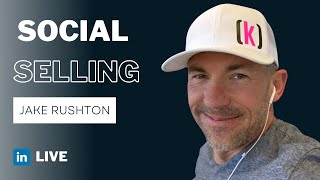
Jake Rushton shares how he built a personal brand on LinkedIn through weekly video posts, starting with his phone camera and prioritizing speed over perfection. He advises financial-services professionals to pick a niche, give value instead of selling, and mix business content with personal interests like mountain biking to build real connection.
Chapters
All right, we are back on LinkedIn Live World, welcome. If you can hear my dog, I apologize. She's going crazy in the background for whatever reason. We're on today to talk about social selling and how to create good social media content, especially here on LinkedIn. And I am excited to have the man behind the 401 Jake brand join me today live from Salt Lake City, actually, South Jordan, right?
Yeah, yeah, it's part of Salt Lake. That's close enough.
Jake Rushton, man. Welcome aboard.
Thanks, Andy. So fun to be here with you. You're, you know, you're a star on LinkedIn, so this is an honor for me.
Well, that's why I'm. I'm on. I'm on to have you as the star today because I'm wearing my 401 Jake gear today in honor of this. This conversation. No, Jake, what I want to talk about today is so creating social media content for LinkedIn. And I want you to share your journey into doing that. You've built an awesome brand.
Especially in the financial services industry, which is an industry that is very heavily regulated when it comes to content. And so let's just start there. You know, when did you decide, or actually maybe what caused you to really lean into building your brand and saying, I got to go all in on social media and creating a lot of content?
You know, it wasn't an easy start at all. I think that's where a lot of advisors, a lot of brokers and people, you know, in sales struggle just to start. Right. It's just really scary. A lot of times we blame compliance and have all sorts of excuses. I don't have the right equipment, whatever it might be. But it all comes down to, I think, is the fear, right? And that was really hard for me to get over. And I was going through some things. This is a few years back, probably, I don't know, four years. Four years ago, when I did my first LinkedIn video, and I was kind of going through some company changes unexpected, and found myself just listening to a ton of Gary Vee and just getting that, I don't know, just that urgency that I needed to do something. And so I started just with a simple video, and I made it this habit of every Thursday, put my thoughts out there. And so it just started with that one video, which was really hard to push the post button because I was, you know, scared of what other people would say.
You know, it's funny, Jake, when you go back, number one, when you talk about social media content.
The name Gary Vee always pops up. Right. That's how I did two, three years ago. I started watching him on YouTube and all he did was tell me every day, content, content, content, content.
If you were to go back to watch your first video, compared to what you, how you do video today, would it be pretty laughable?
Oh, it'd be, it'd be terrible. Yeah, I need to do that because you, you don't realize how gradual the process is to get better. And you will never know if you don't start right. So you have to get it out there and if you go back, it's just going to be hilarious to see, you know, how nervous, how many ums, how many pauses. I mean it just trying to get it perfect. And I learned early on that that's not possible. You're never going to have a perfect video. And speed is going to be way more important getting things out there. And so editing was a big problem for me for a long time and I finally just got over it and became like, I got to do one shot, get it out. And video was my medium. I don't write a lot, I don't enjoy writing. It's a task that I just struggle with. And so video was one way I could just get it out and move on to the next thing I had to do.
Yeah, no, I agree. You know, I think a lot of people struggle with video one because they're afraid of it, right? It's, it's, they have this fear when they turn that play button on that they turn, you know, they freeze and they get nervous. But at the same time, I believe it's the best way to get somebody to know you and like you. Right. Because they can see your personality. You still can bring them a ton of value and it's the fastest way they can get to know you. You know, what would you tell? Because again, you come from the 401k world, which is a very regulated industry, especially when it does come to advertising content, stuff like that. If there was a financial advisor listening in, what would you tell him or her on how to get started today?
Well, that's usually the number one thing I ask advisors what's stopping you? And they'll usually blame compliance. That's usually the go to. And what I struggle with is you're in sales. Most of most advisors, that's your job. Like you have to go and convince people to manage their money. That's a hard thing to do. That's really tough. There's a reason I do 401ks. It's much easier to work with business owners about the company's 400, 401k plan than a personal individual's giving me money. That's a harder thing to do. If you can do that, you definitely can convince compliance that you need to be using social media and you need to work through a process to do that. Right. They're saying no right up front because they have a lot of people to supervise. So figure out what the process is. Work your magic. Get them to know like, and trust you and understand why you need to use it and how you're going to do it. And you're not going to go on there and tell people things that you shouldn't be doing. But you have to start. Like if you just let them say no and you just give up, then you wouldn't even be an advisor.
Right.
Because you'd hear no all the time and you just give up. No, you have to fight through that and figure out how to get through it.
So what's your advice? You know, I talk to my clients about this all the time. With video, for example, you convince somebody, okay, I need to get on video and the first place they go with me is, what do I say? But before I even get to what do I say?
What are some tips you would give that advisor out there about getting started when they're going to shoot their first video? What are some simple tips they could leverage to again, knowing they're probably going to suck the first time. Right.
Yeah.
But what can they do to get started just to take that. Yeah. Tacticals, like go back to your first video four years ago. I can remember mine three, four years ago. Right. We were terrible, but we just hit that play button. Is there any tips you would give somebody who's just trying out video for the time first? First time. Just to make it easy to step into.
Yeah. I mean, two things I would say. First, the actual tactical. As far as shooting the video, don't overthink it. Your phone has everything it needs. You don't need a big fancy microphone and all this stuff. Like, my first videos weren't the greatest angles, but it was just me holding my phone and that's still going to be good enough. And then as far as the content goes, I think everybody get stuck on trying to make an offer and holding back anything that's really valuable because I think that should only be for those that pay for them, for them to give them that value. Give away your best information, like, just give it away and you'll realize that you'll soon become someone that is valuable to those that are listening and they'll want to come back for more because ultimately what you do is complex in whatever industry you're working on as advisor, as a broker, whatever it might be. Like if you become the go to resource and you're constantly providing something that would be useful instead of just this high level fluff and offer. Well, let us know if you want us to look at your plan or look at your. Like that doesn't provide value, so bring value. And your phone is awesome. So just make sure you just get your angles right, have the lighting right and you'll be far and above everybody else.
Yeah, I agree. I mean the iPhone 1112 Pros these days are probably higher quality than a lot of video recording tools out there.
I don't even use my big camera anymore. Like I've given, I've. It just doesn't make any sense to me because my phone is a better camera. So you don't need to go spend a thousand dollars on all this equipment. Just, just get shooting with your phone and work on your message. And it's going to be changing, but you're going to get content thrown at you all day long by clients going to ask you questions. There, there's a question. If they have it, other people will have it.
What about lighting? What about lighting? Jake, you know when you talk about the quality of video, right? Like right now you've built a cool little studio for your like your office background. It's, it's a really cool space to shoot video with. But when it comes to things like lighting and the setting, what do you recommend?
Don't have the light behind you. I see a lot of people shoot video in front of a window and it's like, no, no, turn around so the light from the window is on you. You know, I have like $40Amazon box lights here. Like they're nothing fancy, they're big and annoying. Actually I'd like to get better ones, but I just don't want to spend the money. So like you can use the light, natural light and if you don't have that, go outside, like go find a quiet park. You're a good example of that. You're constantly moving places in different locations and I think that's really valuable. A lot of people stick with the same spot and it gets a little boring so people don't stop as often. I think it's a little more engaging to see. Oh, you're out and about. Like where are you at today? And it's it's going to get them to at least pause for a second and then start to listen. And if you've got that, that grab that, you know that whatever that hook is going to be at the beginning of your video, they're hopefully going to stay a little longer than a couple seconds.
Yeah, we're going to die. We're going to dive into that. What do you say? How do you hook your audience into paying attention to your video? But going back to the logistics, like, it's funny. We're doing this interview right now. I am literally at our dining room table and I, I got my own box light sitting here behind me, right. Because the light coming from the window just isn't bright enough. So. And so it's leverage. It's leveraging sunlight, leveraging the windows. I, you know, I was taught the trifecta of creating video content. Light source laptop. You light source camera. You. As long as you keep it the light source behind the camera, your lighting's always going to be good.
One trick, one trick I've found that I've used a lot now is this app called Camo and it will use your, your iPhone camera in any, like, zoom in what we're in Streamyard, like, whatever. You're on teams. And it is. The quality is so much better than if I was using the. Just the camera on my MacBook.
Right.
So little stuff like that is. It makes a lot of difference and it does stand out. It blows my mind when you stick it on Zoom meetings and people don't turn on the video or their, Their camera is like looking straight up their nose. Like, come on, you need to get over this. Like, we've been doing this for two years. Get your angles right.
Well, and that's, that's. But that's an important thing, Jake, because what do I want to call this? The. The psycho. The psychology behind some videos. People don't always understand what the angles. You know, if you're shooting a video but looking down at the camera, what you're telling your audience who's watching is that you are more important than them. And if you shoot it like this, where you're looking up and I see people on Zoom do this all the time, looking up at the camera, you're actually telling the audience you're weak, you're subservient. That camera, that angle's got to be right here, eye level. Look right into the camera. And I get so, you know, it's funny, so many people, if I were to have coffee with somebody, right? And Sit across the table from them and ask them questions about maybe what they do. Have them teach me about what they do. They could just rattle stuff off.
Yeah.
Then I say, okay, now do that on camera.
Right.
And they freeze and they get mechanical and they start talking like this, and.
They stop in the middle and say, let's start over. You don't get. You don't have to have that problem when you're just having a conversation.
So just. Just have a conversation with the dot IN the camera. And, you know, you talk about equipment. You don't have to start with anything expensive. I've upgraded since to your point. I've got the Logitech Brio sitting on top of my laptop because it is a higher quality image.
Yeah.
We've got, you know, I've got my shure microphone. You've got microphones? Yeah. You upgrade over that with that stuff over time. But when you get started, you just need your dang phone.
Yeah. And I like to be mobile, too. I mean, that's. That's the thing as well. Like, I'm always out meeting with clients. I'm always, you know, traveling to Idaho or wherever. And I need to be able to not let that stop me from creating content because maybe I'll get something great I want to share. And so you always got to be ready. And that was hard to do. When I had a lot of equipment, I was, you know, looking around, and I've just found that, you know, simplifying it will help you do more of it. And higher volume is going to be better than perfection.
Yeah. So let's talk a little bit. I want to talk about your brand a little bit. Like I said, I'm wearing the 401 Jake gear. So, number one, you've understood merchandise. You have done, by the way, a fabulous job with merch. Hats, shirts, bike kits, everything. I love it. How did you come up with 401 Jake?
You know, it kind of was born, like, in the early part of COVID where I was trying to figure out what could I do with this free time. I wanted to. Just wanted to have a brand of some kind. I wanted to wear my own stuff. It's just something I always wanted to do. And I was just messing around on Canva, trying to figure out, like, a logo of some kind. And I had a bunch of different ones. You know, I kept throwing on a different J and stuff. And then I was like, okay with parentheses. Like it's kind of this hidden message. Like if you're informed K, you know what that is if you're not, you're going to wonder what it is. And it just led to a simple, you know, I think it's Antonio. I mean, it's just a simple font in Canva. Like I didn't pay anyone to make this. I did it myself. And then I just figured out how to get merchandise made. I had a neighbor that helped me. Like, it was just figured out as I go and it kind of just grew. And I think it's helped a lot of advisors start conversations that they probably wouldn't have had.
Yeah, no, I, you know, you brought up camp, you brought up Canva. Right. For those listening in who don't know what Canva is, I mean it's, it's the easiest way to create graphics logos. You name it and it's free. But even if you want the pro edition, which I use now just for some graph graphic added graphic tools, it's 110 bucks a year and it is the easiest way to create content. So if you're not using Canva, I suggest you get on it today.
I use it for everything. I literally live on it every day, like messages to clients, like, like our intro packets. I mean, everything I provide to a client, I build on Canva.
I do all my presentations at my, my academy workbook. It has all been created on, on Canva. I couldn't agree more. It's better in PowerPoint. And by the way, when you create it there, you can turn it into a PowerPoint if you need to. Right. And so, so talking about adding to it.
So if you don't use it, get on it now.
Exactly. And, and, and honestly, if you, once you learn how to use allows you to create content as good as marketing agencies.
Yeah. You look like you have a graphic designer team and it's just you. Yes. It's unreal.
So you're in the financial services industry. When you officially launched publicly 401 Jake, the personal brand, what kind of reaction did you get?
For the most part, it was pretty positive. I mean a lot of people were stuck at home and in 2020 and we had a few meetings that started to happen weekly and.
But I definitely heard here and there, you know, people talking trash and you know, different people at record keepers and things saying stuff like why isn't he making videos and stuff. So I heard the negative too, so. But for the most part it was just a good thing because it just brought people together that didn't really have anyone else to turn. It's a very interesting 401k industry because there's not a lot of sharing.
Going on there. Just wasn't like you couldn't go to lunch anymore. And that was about the only time that people would talk. And it was usually with product salespeople, wholesalers, rather than your peers in another city doing the same exact thing, having the same struggles. You are alone. So it really kind of grew from that.
Yeah, I agree. I mean, you, you and I alike. I am in the insurance industry, you're in the 401k business. Let's admit it's pretty old school when it comes to marketing, and I think a lot of people still believe it's about the logo, not a brand.
Yeah.
And a buddy of mine just shared a statistic a few weeks ago that, you know, our, the vast majority of our buyers moving forward will be millennials. Right. And 77% of them in this, this survey want a personal brand behind the company. And they won't, they won't buy any services, accounting, attorneys, you name it, without a personal brand behind it. And so you and I are both in industries where that still is. People look at you cross eyed, like, wait, what you are, are you doing? That's egotistical.
Why would you do that? Right. I think it's about you. And it's like, well, you should bet on yourself. Like, like you're not gonna maybe be at the same firm forever, even if it is your firm. Like, you're the one that gets a deal done, so why wouldn't you put your effort into that? Right, Exactly.
Humans buy from you. Yep. So talk to me a little. Let's go, let's go into a little bit of the what to say what, what, what kind of content you can create. I want, I want to keep this maybe specific to the financial services industry because, right. You got a lot of people who are afraid to the regulations. You can't be selling. Right. You can't be recommending things. How does somebody in the financial services get started knowing what kind of content could they be creating? Knowing there are regulations?
You know, it depends firm to firm.
Right.
Like, I've done a ton of training and help for independent advisors that are, you know, available. They can do more than maybe someone at a big name, a big wirehouse or, you know, one of the big brokers. And so it depends on your firm. But what I'm finding is that even the bigger firms are starting to come around and realize that they've got to pay attention, that the world is changing too quick. And now with travel being kind of hit and miss, it depends on what's in the news at the time they're realizing they've got to do something. So I'm finding that most of them will give you some sort of direction as to what you can and can't share. And worst case scenario, you have to just go through a process to get it approved. So for me, it's not so much about following the trends of everybody else, it's about who's my target. And that's kind of where I start when I coach. Advisors, help advisors, is you can't help everybody. You can't be everything to everyone. So you have to pick a niche, you gotta pick an industry, you gotta pick who your focus is so you know who you're talking to. Because it's gonna be impossible to make any content if you don't know who you're talking to. That's where they get stuck is what do I say? Well, if you picture that one ideal person and talk to them, it'll be very easy. So start there. And you really have to dig deep as to why you want to do this and commit because most people will make a couple videos or post a couple blogs or whatever it might be and then no one's engaging and they just give up. And it's because they're just sitting around waiting for someone to come find them. So it's got to go both ways. You've got to go engage with them after you've made content and they're in turn going to hopefully see what you're doing and then it's valuable enough that they're going to pay attention.
Yeah. And I think you said something earlier that's very relevant when you do this. When you step into a brand and you start putting yourself out there, you're going to get the naysayers, you're going to get the people trash talking you. Right. But really at the end of the, at the end of the day, it's, you're forcing them to look in the mirror and that's really where their pain's coming from. And I know when I really started digging into building this brand back in 1415 in the insurance industry, people looked at me like, what the hell are you doing? Yeah. And it was so different at the time. And I did, I had a lot of people, you know, reach out or send me, you know, send Barry Schneide comments to me as I, I tried to do this, but you gotta, you can't, you can't that comparison or that judgment stop you. And as you said, it Takes time. You're not gonna post two things on LinkedIn and all of a sudden business is going to explode for you. Talk to me.
So it's a machine. Yeah. You have to build it and if you don't continually feed it and, and keep maintenance on it, it's just, it's not going to go anywhere. Yeah. So it's a long process.
Talk to me a little bit about, you know, again, digging into the, how to do it, what to say, you know, if we think on LinkedIn, we're LinkedIn Live on LinkedIn right now.
If somebody's getting started in the financial services industry with content we've sold them that they need to do this. How often should they be posting?
There's not too much. So I will say that like you can't post too much. I would say figure out what you can consistently continue. If that's weekly, great. If I think weekly is a good starting point.
Daily is probably going to be too much for people. Even though that's probably what you should be doing. I know it's what you do. So, but, but weekly we'll, we'll keep things going. And there's a lot of algorithms and all this sorts of fluff of like trying to keep up with what LinkedIn will share. And if you're chasing that, like it's going to be a never ending battle to try and figure it out. So I don't worry too much about that. I just put it out there and I think starting is the key part. And if you can tie some sort of, I don't know, you can go as far as having your own hashtag and sticking with that and like become like everything is attached to that. Like that works for some people, but you really gotta stick with it. So everybody's gonna have their own style and you won't really know it until you get started. The key, I think fundamental way to look at any kind of video is you've gotta have that hook story offer. And that's, you know, that's like a Russell Brunson, you know, thing that he started was like, and it's probably not him starting it, but that's kind of the format I think a lot of people should take. And the offer, I think we get stuck thinking it's some sort of offer to hire you. It doesn't need to be that. It can be as offer is like, go and do this for yourself. Go and take this challenge. It doesn't have to be a sales offer. So stories will drop people in to remember what's going on. And you've got to have some way to catch them because they're going to just keep scrolling. You have to understand the context of the room. And LinkedIn mentality is different when you're on Facebook or Instagram or Twitter, it's just not the same. People come there to be educated for the most part. They want to learn stuff and they want to network. It's not really this big entertainment platform, but if you have some, some entertainment value to it, I think those stand out even more. I've seen some great advisors. Chris Wise actually is one of my favorite posts. LinkedIn influencers. He puts stuff out. He's a. He's got a firm down in. I think he's in Houston and he is. So it's awesome. It's. It's super done. It's done well, it's produced well. He has a good friend that does the video, but his content's great and it's memorable and it sticks out. And I think he probably has clients that see it and feel like happy that they're with him, you know, and that. That's just where you have to find your own voice. Yeah.
No, I agree. I think, I think so many people get caught up in the. What, what to say. And I hear it all the time too, from insurance advisors. You know, they believe every post they put out there has to be original. If they say anything that somebody else has already said on a platform on LinkedIn, that it's not worth it. And I to going back to what you said, there's so much noise on the platform that you, even if you, if you, if you say something that's already been said by somebody else, people don't remember that. Just get on and you give good content. As you said way back at the beginning of this conversation, you have to go on with the attitude of giving. If you go to LinkedIn with the goal of I am creating content just to take meaning, to buy, you know, to have people buy my product, you're never gonna win.
Right? It's not sell. You can't sell on social. You connect with people. The selling comes at a different time. The social part is to get them to know, like, and trust you. Because there's millions of people on there all day long that have no idea who you are or what you do. So if they can come across you, and maybe they're in a place where they want to look at their 401k or their benefits or whatever, maybe they're not. But hopefully you've done something valuable enough that it caught their attention and that maybe they'll like it and maybe you'll show up a little more on their feed and maybe they'll start to dig a little deeper when that issue comes up in their company because they caught some piece of content. Right. And so if you don't do anything, they'll never know you, they'll never have met you or heard of you or know what you do. So there's great things going on all day long all across the world in different businesses with different products being sold to them. But if you don't share it, then how is anyone else going to find you these days?
Yeah, I mean, I'll tell you Right now, Jake, 75 to 80% of my business comes from LinkedIn. And my whole goal when I go on LinkedIn is to continue building my community, aka my connections with people who can end up doing business with me. But when I add them to my network, I don't ask for their business. My goal is just to build this community bigger, bigger, bigger because they're going to see my content. Right. And when they're ready and they're, they need the service that I offer, I'm the guy they're going to remember hands down. And that that strategy works for anybody no matter what product you sell. Right. Top of mind awareness is the key to winning business in a noisy market like we're in today.
Exactly. You're not, it's not like you're trying to be a big influencer. You're not trying to be Logan Paul or Gary Vee. You're, you're just simply trying to put yourself out there so that your target client hopefully will come across you and, and find what you give valuable. So that when they're ready to dive a little deeper with you, you're the one they call like that's, that's all it is. And, and people think, you know, social, they don't have the time for it. Whatever. You got time, right? Look at, look at the time you spend your day. It's not a lot. If you took my challenge I give Advisors is like 2% of your day, which is 30 minutes. Right. So if you can 10 minutes here, 10 minutes there, whatever in the bathroom, I don't care where it is. If you use that time rather than just scroll but actually just go engage with people, make comments, do more than just liking a post or just looking and be a lurker, make a contribution to someone else's content and then they'll probably follow you or look back at what you're doing and, and that's where you're going to get engagement. Don't just.
I think that's, I think that's the ninja move on social media is you want to get somebody's attention, start leaving comments on their content because they're going to be like, who the heck is this person? Right? Who is this? Who is this person? And then they're going to come check you out and then eventually they're going to connect with you and before you know it, they're commenting on your stuff and then before you know it, then you guys are having a conversation. I couldn't agree more.
And to your point.
It goes back to that giving before you ask for anything. You know, Gary Vee, one of the things I heard him say a few years ago that just stuck in my head is if you just focus on using your social media to give as much value as you can without wanting every, anything in return, you will literally guilt people into doing business with you. And here's actually a real life example, Jake. I was in the hospital in August with my leg infection.
And I was on YouTube all the time, trying to pass the time, and I came upon this guy, Nick Baer, owns BPN Fitness down in Austin, Texas. It's a supplement company. And he has really good videos, he vlogs, he shares his life, you know, what he's eating every day, how he's training his company how to run a business. It's good content. And so I've been following it ever since. And come November, here when he had his Black Friday sale, guess what? I bought, I bought some of his product because I wanted to support him. Yeah, he guilted me into doing business.
Yeah, I'm the same way. Like I, I'm mad that my Gary Vee book isn't here yet. Supposed to be here this week. And it's not like I'm the same way.
Like, get that. By the way, thank you for reminding me.
I heard it a long time ago. But that's the point. Like, I know that it's going to be good, even though I don't know if I have time right now to read a book. But like, I know I want to listen to it. And the same thing with any other person putting content out if they're going to offer something and it's valuable. That's the part where I think there's a lot of negativity towards social media where it's tracking you, it knows what you do. It kind of, you know, cookies are tracking which websites you're looking at, you're shopping on. And so now all of a sudden your Instagram feed has something that you just looked at. You're like, what? I think that's awesome. There's a lot of negativity around that, thinking they know too much. If I'm looking to buy my wife a gift, like, I want to know the best deal possible for the best possible product. And if Instagram is going to tell me that, great. Save me time. Time is the ultimate thing I want. So look at it that way. Like, if someone needs help with a 401k, do you think they want to spend time going through five or six different meetings with different advisors and waste a day of their life trying to figure it out? Or do they want to go to who they know knows it all and will help them because they saw some videos about it?
Yeah, you're absolutely right. I mean, it's funny, we all get upset about the. What? I don't even. I forget what they call that where they're geo tracking you. Right. Like if you've been on this website, all of a sudden you're seeing advertisements from that website, we all get mad about it. But if we realize we can all use it for our own business, we'd love it. Right. If I could, if I could literally track the people that I know are probably interested in me and I could create a content, even advertising, that is put right in front of them, you would leverage that all day long.
Yeah. How many salespeople are cold calling trying to convince someone, you need to change your benefits, you need to switch to me, and they're completely happy. Why are you even wasting their time and your time trying to convince them move on to someone that's actually unhappy and frustrated and has a broker that's not focused. Right. There's way more opportunity than you think and you're wasting time on where it's not at.
I'm working with an advisor right now who in the insurance industry whose management has given her a revenue goal next year of a half million dollars, which Pretty bold in the health insurance space.
Yeah.
Large national organization she works for. Their number one strategy for her next year to hit that goal is to track her cold calling. And if she makes so many calls a week, she'll hit it. So she's gonna spend her time calling people who have no clue who the hell she is and she's going to convince them to take a meeting. That's going to be her strategy to hit a half A million. And so we went to work building social media, speaking, podcasting strategies, because what we're talking about here, guys, if you're listening in LinkedIn, is a way to create exponential awareness. You can get one message in front of a hundred, if not thousands of people at once. So, Jake, I want you to talk to me quick, because you. You create some cool content, you know, kind of letting us into your life. You might have a video of you out mountain biking, and it's easy for people to look at that content. I know they do it with me and go, why would you share that? What does that have to do with your business? Why do you share a video of you out mountain biking? What. What is the purpose of that?
Because I know mountain biking is the new golf, and there's more people that'll probably connect with that than not. And I'd rather work with somebody that wants to go mountain biking with me as a. As a client, as a friend, than, you know, someone that hates biking. Right. So it's just. It's connecting hobbies because we're all people. We all like to do things. Why not work with people we like that? Like the same things we do? That's. That's where I'd want to be.
Let's play this out in real life. You and I are both cycling fans, right?
Yep.
But when you and I first started to get to know each other, and I still remember when we actually met in Park City, was it two years ago now, we, by the way. By the way, Jake decided to take me out for a run in Park City at. At elevation and absolutely kicked my ass.
I was just pumped he responded. I was like, I can't believe any near is in town. Like, I gotta figure out if I can. If I can meet him.
But. But let's say before he even knew me, and I put a post out there of me riding in the foothills here in Fort Collins, and it had a life lesson. Did that resonate with you?
Absolutely.
Why? Because you're a cyclist, right?
Yeah, that's what I like to do. So it's going to cause me to pause and wait, hold on. What's this? Because I like that, right? So. And it doesn't have to be just sports. I mean, it can be a variety of different things, but you want to work with people that are similar to you, so it just makes that relationship that much stronger. You know, when I go visit clients and they want to go biking or they want to do run or whatever, great. We do that. We're getting Exercise. We're, we're getting closer. Like, the chances of them going and hunting for somebody else, even if something goes wrong with the plan are pretty low.
Yeah, and I think that's, that's the important message I wanted you to share is I think the best content on LinkedIn is when you're able to share parts of your life, but not in a way that's the Facebook see me or the Instagram see me. It's, yeah, I'm sharing a piece of my life. I'm sharing a piece of my life with you. But it has an important business or life lesson, because those are the posts, I'll tell you, hands down, that get a broker to reach out to me for my services because whatever I shared with them resonated. They'll say, I felt like you were talking right to me. But they're also getting to know me. And as you said way back at the beginning, humans buy from humans, not your damn logo. And so I love the content you're sharing with that too. You're doing such a great job of that because again, a space like financial services, which, let's be honest, is pretty old school when it comes to marketing and branding, you're starting to break, you're breaking the mold and I absolutely love that. And I want you to talk a little bit too, because I've seen a lot of pictures from you and videos in the last few months. You're speaking all over the place in the financial services industry. How has building the 401 Jake brand helped elevate the speaking opportunities you now have?
I mean, it wouldn't exist without it. I mean, and I did it in a short amount of time too. That's why people understand, like there are conferences and events all the time that need more valuable content. They don't just, it has to come somewhere. Right? And so why can't that be you? And how much more credible will you be and how much better will you be, knowing that you have to get up and speak to a crowd of your peers and you gotta have your A game going. So it improves your business, improves your skills. And it's just, you got that opportunity right in front of you, but most of us just never take it. And so I love it because one like there was, I went to the event in Nashville, this, you know, big event, wealth of work, huge 401k conference. And there was a time one night where I came out and we're in the lobby coming out of the hotel. And like every in LinkedIn, 401k influencer was all there at one time and it was like the funnest little, like just get together and that wouldn't exist without LinkedIn.
Right?
And that was what was so cool about it. These people are all head down, working hard in their own regions, completely spread across the country, and yet we have this common connection because of LinkedIn. Super fun, super powerful. We learn from each other, we push each other. It's great. So if you're just, you know, being quiet like, you're never gonna know what friendships are out there if you just engage.
That's why I, I, anybody who tells me that they don't have enough opportunities right now and they're kind of whining about it, they have no excuse. LinkedIn is the world's largest networking event and it's free. And a boatload of your prospects are there. So if you would just take time to go there, create good value, add value to that networking event.
You will end up doing business from it. I use this analogy all the time, Jake. Imagine you're at a networking party, right? We all used to do networking before the pandemic. And people go, okay, what do I say? What do I share? You talked about commenting on other stuff. Well, cool, what do I say? Okay, imagine you're at a networking event and you're in a circle of people and somebody's telling you about their business or whatever. What would you say? Would you ask more questions to learn more about it? If they shared a win that they had in their business, like a lot of people share on social media, what would you say to them? That's exactly what you put in the comments. Just feel, imagine you're at that networking event live and that's how you should be engaging with people on LinkedIn.
It's even easier. Like, I mean, I think those happy hours and those kind of things are kind of intimidating. You got little circles of people all over and you have to kind of wedge your way into a conversation. You don't have that awkwardness on LinkedIn or any other social platform. You can just jump right in. You can even have some time to think about what you want to say and respond if someone asks a question back. So that's the great thing about it. It's a happy hour 24 7. You can be laying in your bed watching Netflix and make a good thoughtful comment and create a friendship. Like it's that easy.
So let's wrap up this live here. I want you to go a little into the 401Jake brand. This is your chance to do a little promotional.
Stint for the brand. What are you doing in the community, the 401J community? What are all the tools, the value adds that you're bringing to the financial advisors who have decided to become part of the 401J community?
Yeah, so, I mean, I kind of converted it to the 401 Club.
More from Andy




If you want producers to succeed faster, help them create a sales message that creates confidence.

Sales isn't a zero-sum game! You can have tough competition and still grab a beer after



Option 1: Meditation, a fast walk, a podcast, and protein. The ultimate morning routine!

How you do one thing is how you do everything. Ill elite producers fuel their body.


Stop living in the gray of maybe! Your job in sales is to get a clear yes or no