Major League Mindset Episode 10: Interview with Ben Light, Ultrarunner
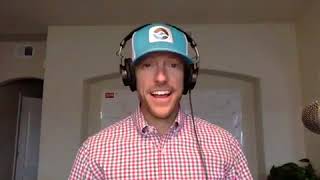
Ben Light started running in his early 30s to lose weight after back issues and progressed to ultrarunning. He's completed The Legends, a 268-mile race in the UK, and paced runners at the Tahoe 200 covering 93 miles. He breaks extreme races into small goals, aid station to aid station, to manage the mental weight.
Chapters
Welcome back to Major League Mindset. This is episode 10 and I am excited to have Ben Light on. Ben is an Ultra Runner. Now some of you who have been watching my podcast or my interviews for the last few weeks, you've seen a theme with a lot of former professional baseball players, former professional football players. So this one is going to be extremely fun for me to interview an Ultra Runner. Guys, when you hear what Ben does to compete in Ultra Racing, it's going to blow your mind. Now, outside of being an Ultra racer, Ben is also founder of Adventure youe Potential. He's a brand ambassador, a brand consultant to many of the brands in the running industry, as well as a keynote motivational speaker. Ben, welcome to Major League Mindset, man.
Thank you so much, Andy, for having me on.
Awesome. Well, Brent, let's level set quick. For the audience who doesn't know who Ben Light is, tell us about a little bit about your childhood. Where are you from? Where'd you grow up? What was child, what was life like as a kid?
Okay, so I basically grew up in Reno, Nevada and my dad is ex military and 27 years and so four boys with a dad in the military. We were always outside doing adventurous things, backpacking, you know, anything with deal with water, mountains and everything. So I have a huge background in outdoor adventuring and then fitness. My second passion is definitely fitness.
Awesome. Now here's the interesting thing. For a lot of people listening who hear that you are an Ultra Runner, they would just assume that your entire upbringing was running. You were in track, you were probably in cross country. But that wasn't the case in high school.
What sports did you actually play in high school? I was a ski team. I played football and did a little bit of soccer and baseball. So just a little bit of everything but never, never great at just one thing. Awesome.
Awesome. So you didn't pick up Ultra Racing in your teens, early 20s, or even your late 20s. It wasn't until you were in your early 30s that you decided to get into this crazy sport they call Ultra Endurance racing. Now fill us in how you got started. I think it's a really cool story that you shared with me. It didn't start with running. There was actually a different purpose for you to really start getting back into physical shape. Why don't you dive deep into that story for us?
So like I said, I always have a passion for fitness and I, you know, when you're in your 20s, you just want to get bigger and badder and, and have that, that muscly body and Everything like that. So one thing I didn't count on is, like, during my ski days, I actually screwed up my. My lower back and just got degenerative arthritis in my back. And so every time I started to get real heavy on the weights, I'd end up throwing out my back and slip a disc or something like that. Soon I started to. My metabolism started to slow down. Just like, you know, most everybody's, as they get older, started putting on the weight. So between lifting heavy and then a little bit extra weight on me, I started noticing my back having a lot more issues than normal. And so I knew I needed to kind of change up. I needed to create something different. So I started moving more towards the.
Endurance. Basically, I needed to lose weight. And so I tried to go out and run. It hurt too bad. I couldn't even get really a mile with the. With my back trying to spasm and stuff like that. So I got into swimming, was able to start utilizing swimming for cardio, lost some weight, then started to venture back out onto the track. Just trying to figure out how to. How to run without. Without hurting my body. And, you know, it's just a process of just refining the motions on how to learn, find out what shoes to wear, find out, you know, insoles. Just a whole different process of just. But I never gave up. Even through all the different pains of trying to figure it out, I never gave up. And I slowly got leaner and leaner, and as I got leaner, my back got stronger and worked core. And before I knew it, you know, I was running, you know, more than six miles. I remember the first time I ran six miles, I thought that this was really stupid. I was like, who does this? Like, why. Why would you ever want to run six miles?
Well, and I think it's such an interesting point that we can't miss. Ben, is when you decided again, how old were you when you really made the decision, I need to start losing.
Weight between 30 and 32. Right in there was my journey in trying to get more running involved.
And so that was your why it's so interesting to go back and think what your original why was for doing what you do today. And it was truly just to lose weight, right? To get in better shape and start losing weight. Would you say today, now here you are, are, and we'll get into the type of races you're doing which are just going to blow people away. Would you say that foundational why still drives you what you're doing today?
Oh, yeah, yeah. I mean, I'm we're always bettering ourselves, you know, or you want to better yourself, you know, physically, mentally, spiritually. You're trying to grow. And so I'm always still trying to. I mean, I still have a love for fitness. I still go to the gym. I lift. I'm actually, if you saw me, you know, as I toe the line against some other ultra athletes, I'm actually a lot bigger than some of the others. A little bit more body weight, muscle mass, just because it's kind of residual from the powerlifting days, but I enjoy it. And so my why is still like the core of me of that fitness and then that adventure. Like, I tell people, I'm like, I'm not in love with running. And a person that's in love with running will run on the road, will run on a treadmill, will run on a track, will run anywhere they can. They will not miss a day of running. It's just their passion. Like me. I have to actually still convince myself to, you know, to go out and run when it's cold or run when it's rainy if I need to, or, you know, try not to take the easy way out and just go to the gym, you know, because my first indignation is like, ah, I'll just switch it up and do. Do weights today instead of. Instead of running and just change my schedule around.
So, you know, so at the end of the day.
Running isn't what you're ultimately passionate about, but, you know, to achieve the goals you have some days you just have to get up and do it.
Yep.
And. And no matter how much you may want not want to do it, I'm looking outside today. I live here in Colorado. You're in Utah. It's snowing as I look outside. So easy to go. I'm just going to take today off. You know, to ultimately achieve your goals, you have to get your butt out there and run.
Oh, yeah, yeah. Yep.
You can't take a day off. Get up, be consistent. Now, here's what's interesting. Ben, I want to ask you this. I hope you don't mind me asking this question. You got into the.
Back into shape, really focused on getting physically fit in your early 30s. How old are you today?
42.
You're 42. You and I are. I just turned 42 two weeks ago. So would you say at age 42 that you're probably in better shape today than you were even in your late teens?
Oh, yeah. Oh, by far. And it's just getting better.
The reason I asked that Question is, I just made a post about this on social media a few weeks ago and it was, every time you get older, you celebrate your birthday. It's so easy to look at your age as your birthdays. It's just another year, right? But it's so important to sit and reflect and ask yourself, every year your age is getting greater, are you doing the same thing? And I love what you say there because from a physical standpoint, from a conditioning standpoint, so few people in society today could sit at age 42 and go, I'm healthier today than I was when I was probably 19, 20 years old.
And so I'm glad you brought. I wanted to ask that question because you are a beacon for what it means to get better each and every year. So thank you for sharing that.
I appreciate that. Thank you for the compliment.
Okay, so now you started out, started lifting weights again, started swimming. At what point did you really take a liking to this thing called ultra racing?
So when I moved here to Utah, I knew about ultra racing before. I thought it was crazy. I actually read a book from Dean Kernazes. I met him at a New York marathon, New York marathon expo, bought his book, read it, and it planted a seed with me, within me. And it just, basically, the underlying basis of it is like, you can do it, anyone can. I'm not just an exception. And it was, I learned that it, you know, you know, looking back, it was me putting on my personal barriers. You know, I just didn't know how it was the unknown, like, how do I push past? At the time, at that time, when I read the book, I think like about 8 to 10 miles was my farthest still. Even though I was still, I was venturing and I was dabbling in a little bit of like sprint triathlons and stuff like that. I still haven't ran like very far. And so it's my own personal barriers that put up, that I put up myself. And my aha moment came. I started to, I moved to Utah, started to run with a group here, a local trail running group. And they were always talking about their 50 mile that they have come up or their hundred miler. And I just did. I felt like a little bit like I didn't belong in a way or like I just, I felt, but I wanted to belong. I wanted to like, I wanted to would. It felt like to push myself to actually accomplish that because I felt that that was not impossible but just beyond my current circumstances of ability. And.
So I ended up, you know, taking a leap of Faith and going out and running my first 50k, which is 32 miles, is like the shortest distance of what they consider an ultramarathon. And I completed it. It was rough, it was tough, it was, you know, it, it pushed me, it, it tore me down and stuff like that. But I got through it and I came out the other side. But what really broke down my personal barriers was the next year I volunteered to pace a girl that I did not even know, met her through mutual friends on social media and she was running the Tahoe 200, 200 miles around Lake Tahoe and through the mountains. And it blew my mind. And I knew another gentleman that was going there, one of my good friends. And I just thought that was just insane. And like, not just insane, just almost like unlike impossible in my mind. Like I just did not have the understanding of how that could be possible. And so I went out there to pacer. And when I showed up, she was, I was the only pacer that showed up out of like other people that volunteered. It was just me. And she looked at me and she goes, how far have you paced or how long have you ever ran? I said, 30 miles is my farthest. Here she is 200 miles. And I was her only pacer. I went out there to help her out and ended up running 93 miles with her, almost my first hundred miler. And I did that because I was so concentrated and so concerned on her and not on me. And that's, that was the first, like it broke down those barriers, like it made that the potential of success a reality. And two weeks later I paced another friend 50 miles. And then a week later I went around my first 50 miler. And at that point I learned that it's really, I mean, obviously.
The physical performance. What I always say is like physical performance will actually determine how fast you run, but it's the mental performance, the mental strength which will determine if you continue to run and finish. And so.
It'S just, you know, I just started eating it up and I started to sign up for every race I could. I started asking people and I just started to increase my own personal knowledge. And as your knowledge increases, those barriers or the potential of failure.
Disintegrate because your experience, you know, increases and then you can, you can, you know, work your way through situations because in 100 mile race, 200 mile race, it's, you know, you have potentials of failure that's just existing between, you know, nutrition, hydration, sleep, everything. But the more experience that you gain and the more understanding that you have, you can eliminate those and your potential of success increases.
Ben, I'm not sure if you realize the gold you're dropping in this conversation right now. These nuggets you're giving first and foremost. When you move to Utah and you live right now just outside of Park.
City.
Would you say that surrounding yourself with other ultra runners is what really got you motivated to do this?
Oh, yeah. It's who you surround yourself with.
It's surrounding yourself with the right tribe. That's number one. Number two.
When you went to pace that girl, she had a 200 mile race around Lake Tahoe. At that point, the farthest you had run is roughly 30 miles. 32 miles.
Correct.
You were staring at her goal, which to you at the time was astronomical. But at the end of the day, in your first attempt, you still ran 93 miles, three times farther than you had ever gone before.
Yeah.
And it's. You always hear the phrase, when you shoot for the stars, you may end up with the moon. Or shoot for the moon, you may end up hanging with the stars.
Yep.
That's what you did. Right. I mean, you were. She was shooting for 200. You're like, there's no way. But because you were hanging around somebody with that kind of goal, you ended up 3xing what you were able to do in running your own distances. And that's such a good point. I wanted everybody to hear.
Yeah. And I knew when I finished that I could have kept running. That's the, that's what that barrier broke down is like. Yeah, I'm tired. Yeah, my feet hurt. Yeah, things are. But I'm still going. So, you know, the thought of that you wouldn't be able to keep going was just. It's an illusion. It's. It's. It's something that you created within you is your own thought process. And once you're able to control that, that thought process, once you. And you understand the reality of it that you start to, you know, you start to break down those barriers and the sky's the limit. You know, your potential is limitless. Absolutely.
You know, I was watching one of your videos. You have several videos online when you just google the name Ben Light. A lot of. A lot of cool interviews, a lot of cool racing videos pop up. But in one, in the one video I was watching, they were talking about the. The wasach. Wasatch Tahoe 300. Yeah. And it's. If I have it correct, it's a hundred mile race in the Wasatch mountain region. It's a 200 mile race then around Lake Tahoe and you have 105 hours to complete the race. Now you're talking to a guy that has done three Ironmans in his past and that's 140 mile race of swimming, biking and running.
Right?
So I'm looking at what you have doing here as absolute insanity.
It was unique. It was definitely unique. It's something I created.
So here's what I want to ask. When you're about number one, let's start with people. See how insane the actual race itself is. Could you go into some depth around what you have to do just to get prepared to put yourself through this?
So you can't like people ask me all the time, so let's just take a marathon. And everybody knows about a marathon schedule. And you increase slowly in miles and that's for a 26.2 mile run. And you're, you're, you're working, you know, really hard to get up to this 26 mile run. And they go 300 miles. How do you work up to that? How do you work up to that? And what the, what people don't realize is my training leading into a hundred miles or most people's trainings leading into hundred miles is very similar to a marathon. It have some different terrain and everything like that and some different workouts. However, it just comes down to the mindset, it's coming down that when you get to 26.2, you just still go, you just keep going. And when you get down to 31 miles you keep going. And then 50 miles you keep going. And then 100 miles you keep going. So the training is really the same. So it is consistency, it is listening to the body, it is small goals. And this is probably the most important lesson. And I will even go into the race, the breakdown of the race because you, you don't run 300 miles and start going 300, 299, 298, you would go insane. It's just like watching a clock, you know, it would start going the opposite direction. You'd be like, it would take forever. And it's not the, it's not the best mental way to do it. So in training you just take one day at a time to one week at a time, to one month at a time. And you set increments of goals, you adjust it to according to life. And when I say according to life is.
Running is important to me, it's part of my career. However, it doesn't, doesn't take place in my family. My family, if I, if I'm not, if my family's not in it, if I'm not in a good place with my family, then my why, my true why, which is still my true why, is my family.
Is kind of shatters. And then that's something that is not going to help you push through those hard times when you're faced with it.
So you need to balance your time, you need a balanced life. And it's that consistency now going into the race, like I was saying, it's just from. We have what we call aid stations in a hundred mile and two hundred mile races and they're, they're all different lengths of mileage apart from each other. And all I, all I'm doing is running from where my presence situation is or where I'm at to that aid station. That's all I'm thinking about. I'm not thinking about the rest of the race. I'm thinking about just to that aid station. And when I get there, all I'm thinking about is just the next aid station. And it just builds on each other. Before you know it, you got 50 miles done. Next thing you know, you got a hundred miles done, then you got 200 miles done, and then you're down, you know, and you're finishing and before. And if you focus on those small increment of goals, you can accomplish, you know, massive things. But if you look at the 300, it just might be too, too much and you get overwhelmed and the anxiety hits and then, you know, it's a mind game. And so just break it down. So in sales or in lot, in a career, break it down. What do you need to do today in order to be successful this week? In order to be successful this month? You know, don't worry. I mean, you are worried about the overall goal, but you're only concentrating and focusing on today.
I love that you said this, Ben, because in the insurance industry, with a lot of the sales producers that I work with, so many of them right now look up at this annual goal and they're like, oh, my Lord, a million dollars is so big. And they're not breaking it down into daily tasks, weekly tasks and setting benchmarks along the way. And so what I love about what you said was, whether it's the training for the race.
Or the race itself, your goal is 300. But at the end of the day, the success in the race comes down to running aid station. To aid station.
Yes.
And so if your goal in sales is a half million or A million dollars. Throughout the year, your goal is to set metrics that you can hit each and every, let's call it quarter. So that throughout the year you're running aid station to aid station.
I love that.
So thank you for saying that because that's such an important piece that I wanted people to is so many people set these big goals and then they don't have a plan to get there. Whether you were training or you were in the race itself, you have to have that game plan of what's next. What's next and not be staring up at that huge, lofty goal.
Yeah.
So thank you for sharing that. So just out of curiosity, what race is ahead of you? What's next?
So I have two right now. I mean I have a couple more than two, but two main goals. In February.
I've been invited to some, some crazy, astronomical, you know, just crazy race in Belgium. It's 310 miles in the.
Andories. I don't know if I'm pronouncing it right, but it's, it's right on the border. It's where the Battle of the Bulge took place in World War II and right on the border of Germany, France and Belgium. And it's going to be, if you want to think of grit and determination, this, this is not a. This, it's a speed race. I mean obviously you're going for time, but this race is, is more about.
Establishing that why and pushing through some of the worst weather conditions.
Imaginable. A lot it has to do with rain, snow, mud. So I did a race in the, in the UK. 268 miles long. It's one of labeled, one of the five hardest races over the 200 mile distance. And I did it in, in some of the worst weather Britain has ever seen in 30 years. And with that, with that finish, it was such a low finish rate. With that finish I received an invite to this race. Right now there's only like 40, 40 people signed up and if I go, I'll be the only American to actually participate that's in this February. The next one that I'm really have my eye on is, it's called California Untamed. It's a brand new race out of California. It's 330 miles in length. It goes from Arcata, California to Mount Shasta and goes through three different national forests. You get to summit a variety of different summits and it looks pretty, pretty fun actually.
So let's go back. So what was the name of the race again in England?
Oh, that one's called the Legends.
Okay.
One of the worst conditions, some of the worst conditions you've ever faced in a race, some of the worst weather that England itself had in decades. You were one of the few finishers.
Yeah.
So was there a point during the race you wanted to give up?
Yeah.
So take us to that moment and kind of talk about what was going on and then maybe expound on what was it maybe your mindset, what mindset perspectives you had that allowed you to just keep pushing forward.
Okay. So first, I have done this race twice. The first year I went completely blind. You know, I just finished what I've been running, 200 mile races. I was told about this race. It looked awful. I was like, sign me up. And I went and I learned a lot. I mean, you go into a different environment, you know, different conditions, you need different gear. And So I got 200 out of the 268 miles before I had to pull the plug some from some physical and deep conditions. It was hard. And I, you know, and like I tell people, failure is not. It's not how many times you fall down, it's how many times you get back up. And so I just went ahead and signed right back up for the race right after it and went back and that's when this thing. So one of my whys in the initial beginning was obviously to complete something that I, that I set out to finish and didn't finish the first time. And so I went in with more experience and more prepared and more determination. When this snow came in, it was before I even hit 100 miles of a 268 mile race. And we knew about the storm coming in. And it was, it was, it was like, I mean, it'd be just like running across Wyoming in the dead of winter from, you know, North Dakota to Idaho. You know, that's how far in the distance it is. And, and the conditions with the snow, I, I was roughly a little bit halfway and they had. It was so bad weather, if you can imagine this. I was following trail that really wasn't even there. I was going through snow deeper than my knees postholing. The wind is howling. It's dark, you know, up in England, you know, it's. It's dark probably like 14 to 16 hours of the day versus it. You know, how light it is. And.
The wind's just howling. I'm staring, I can't see anything. I have ski goggles on. You're required to wear ski goggles in those conditions, and they're fogging us. You can barely see. I'm looking at my GPS.
Garmin handheld to follow the line, my GPX file basically to follow the route because the route isn't marked, it's you have to follow it from mapping compass and GPS and with zero visibility of the fog and the snow and the wind you're just staring at this little, you know, two inch screen following the arrow on the line and you kind of get to this point where you've been up for about three days now. It's a seven day race continuous but you determine where you sleep. You're into day three, you've only slept for about 45 minutes. I think at that time I was just over an hour of sleep. So you're sleep deprived and you're pushing forward in your pack at this time now is collecting.
With your safety gear. It's 20 pounds, about 15 to 20 pounds and then with the water weight of the snow and ice that's freezing to it, it's up to £30.
More from Andy




If you want producers to succeed faster, help them create a sales message that creates confidence.

Sales isn't a zero-sum game! You can have tough competition and still grab a beer after



Option 1: Meditation, a fast walk, a podcast, and protein. The ultimate morning routine!

How you do one thing is how you do everything. Ill elite producers fuel their body.


Stop living in the gray of maybe! Your job in sales is to get a clear yes or no