Major League Mindset Episode 9: Interview with ERIC KING, Former Pro Baseball Player
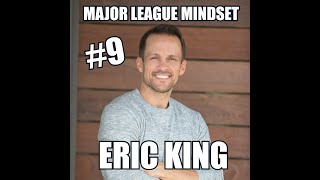
Eric King grew up in Antioch, California, played shortstop at Tennessee and the 2005 College World Series, then was drafted by the Houston Astros in the 13th round. He now coaches professionals on habits and mindset, focusing on micro-habits that compound into results and the importance of saying no to reduce complexity.
Questions this video answers
Antioch, California.
Los Medanos Community College.
University of Tennessee — shortstop.
Drafted in 2005 in the 13th round by the Houston Astros.
He climbed to Double-A in the minor leagues.
Chapters
Welcome back to Major League Mindset. I am excited to have this gentleman on today. Anytime I can have somebody from my love baseball on to talk about baseball, talk about mindset, talk about business. It is a good day. So, Eric, welcome aboard.
Thanks, Andy. Yeah, I'm glad to be here. Excited.
Awesome. Eric King, former professional baseball player, now a wellness habits coach. Helping business professionals optimize their mind and their body to optimize their performance and success. So, Eric, thank you for being on. Let's start and level set with your childhood. For the audience members who have no idea who Eric King is right now, take us back to your childhood in California. Tell us a little bit about growing up and maybe kind of some of the influences you had as a child that has allowed you to become the man you are today.
Yeah, yeah, definitely. So, yeah, Again, Andy, thanks for having me on today. Really excited. But yeah, going back, it's been a long time to have to think back that far. But yeah, I grew up, yeah, like you said, in Antioch, California, small town in the East Bay. And I grew up for probably like the first seven, eight years primarily with my mom. So when you talk about right away, like the influence that somebody has in your life. I was really close to my mom and she was even at an early age with sports, was pushing me to play football, play baseball, play soccer. And it's interesting because I really haven't shared this part, but I think because of the influence and the nurturing that my mom provided me, I was the type of baseball player, especially at an early age where it's like I didn't really want to get dirty when I played and, you know, if I got a scrape or something, I was always worried about like getting, you know, getting it cleaned off and getting the band aid on after. So I think my mom was very influential from a, you know, a nurturing standpoint with her son. But then also, you know, really pushed me and did motivate me at an early age to start playing sports and getting more involved. I do feel like I had a natural, you know, instinct to want to play sports and be involved. But she did a really great job. And I just, I would say she more than anybody has really guided me through, you know, the process at an early age, even through high school and really into college as well. Just helping me stay on track and keeping me, you know, motivated.
Love of a mother.
Absolutely.
Every young man needs that. Right?
Right. Absolutely.
That's awesome. And I'm just going to be candid with you. I failed to make the proper Introduction to you. So again, Eric King, owner now of Coach Eric King, which we'll talk about in a little bit. But again, for those who don't know about Eric, Eric played college baseball. A shortstop at the University of Tennessee. He was drafted in 2005 in the 13th round by the Houston Astros, was able to climb his way up to Double A, which is for those folks not familiar with baseball, just two steps away from making it to the major leagues. And now he's been able to take his success in baseball and turned it into success in business. That's why I'm excited to have Eric on. So going back to that childhood, Eric, your mother was a big influence for you.
It probably became obvious at some point whether it was middle school, high school, that baseball was going to be become. Was going to become your sport right? Now, let's maybe you could answer this question for us. You came from California, you grew up in California, which, for those who know baseball, know California is an extremely competitive baseball landscape. In high school.
Did that impact you at all playing Little League, middle school, high school baseball because there were so many talented players playing locally in your state, in your hometown?
Yeah, you know, it did. And it started at an early age, too. Like when I was in Little League.
I was fortunate enough to.
I would say I was one of the more competitive and I would say one of the overall better baseball players in my leagues. However, I was always one of the smaller ones. I was not always the fastest. And a lot of guys, whether it was like, you know, you're 12, 13, you're going through this growth spurt a lot bigger than me. So they had power, too. So even when I was playing in my regular season or we had All Stars and even going into high school as well, I was always kind of seen as the smaller guy. I would say, probably like more scrappy as well. But I just did not have, like, that prototypical look and feel of a baseball player. So I did struggle with that a little bit more, I would say, internally for myself. But it did become more, I think, obvious, and it became more impactful when I was in high school because as a freshman in high school, I was selected to play for the varsity team. So as a freshman, I'm like 5 8, and I'm like 130, and I'm playing with guys that are juniors and seniors. And that was really intimidating for me. So it took me a few years to really just even, you know, adapt and change to that. And to your point, there's a lot of great Sports and athletes in California and places like Texas and Florida with nice weather. So it was challenging, especially during that time, because I, you know, to be honest, I felt like there were times where I didn't feel as confident, although I may have been putting up good numbers and I was, you know, selected, like the all star teams and like the conference, you know, the conference, Valley teams and everything locally within your community. I still felt like, can I really do more with this? Can I really take this to another level? Because I did have some of those, you know, internal conflicts with like my size and my ability versus some of the other people. So a lot of it was I was giving too much power and perceiving other people as so much better than I was, especially at a young age.
Might we call that comparison?
Yeah, absolutely.
So I think it's important to talk about this because you did play, grew up playing baseball in California. You mentioned Texas and Florida, three, two other states where baseball talent at that level, all sports talent, you know, football, basketball, whatever, is so vast. You look at a lot of kids growing up today, and if they're the best athlete in that given sport in their town by a wide margin, sometimes that actually can inhibit their growth. Do you think because California is such a competitive landscape with baseball and there were so many good athletes on so many different teams that had an impact on how quickly you got better in the sport of baseball because you are constantly playing against better competition?
Yeah, yeah, that's a great question. And I do think it did have an impact, for sure. You know, there, there are, you know, where I grew up, there was a lot of great talent. And even in our league, specifically, just that alone, there was really great talent. And, and even to your point, at one point I considered going from my high school, where I went to Deer Valley, to another local really powerhouse, mostly known for football, but De La Salle High School. And it was for baseball. But I was trying, to your point, put myself in front of the right type of people and have the opportunities to. But at the same time, I was a sophomore and I felt kind of restricted that if I go to a school that has even better talent than where I'm at now, I'm going to gain even less visibility from a baseball standpoint. So I stayed at Deer Valley. But yeah, I definitely feel like with so much great talent there, it is hard to stand out. And it's not just California, so many places. But I experienced that. And I will say that it did help near my junior and senior year of high school that one of My teammates and friends, he was a great pitcher, one of the top pitchers in the area. And he was selected his senior year of high school in the first round, 17th overall pick by the Cleveland Indians. So, you know, I would say I kind of got a little bit of luck there because people were coming out to see him in college and professionally that otherwise would not have seen me. So I think in some ways that talent actually helped me near the end of high school.
Absolutely. You bring up a great point with that is I always talk about surrounding yourself with the right tribe. And in sports, I would use the analogy of, hey, even if you're not the best athlete on your specific team, if your team is filled with good quality athletes, stars, you're naturally going to get more exposure and naturally have better opportunities moving forward. So whether it's on the field or in the corporate conference room, surrounding yourself with the right people, with the right teammates is so, so important. Now, you talked about in high school, you were doing well, very statistically, very well. Your batting average was great, everything was going well, but you didn't feel like you were getting the recognition that a lot of your teammates or other players in the area were getting. How did that feel as a high school kid? You know, let's face it, as young men were not fully mature yet, especially mentally. How did that feel, knowing that, hey, I'm playing well, I'm doing well, but you know what? I feel like others are getting more recognition than I am.
Yeah, it was for me, it was a struggle at first because to your point, my junior and senior season of high school, I was putting up some really good numbers. And yeah, I was like all conference and all those accolades and our team was pretty good and we did have a good, you know, surrounding cast of great athletes and good talent. But I definitely was not getting the type of exposure, or I would say even more so the recognition or the attention that I was hoping for based on the numbers. So it's interesting because, you know, statistics and doing well, you think that that alone can take care of everything. So maybe even when it comes to sales, you know, having the most revenue or the most pipeline and what you're doing as a sales professional, but there's so much more to it. And you make a great point about the team you're surrounded by and as well. So I struggled a little bit because it was a situation for me where I felt like I was doing the best that I could and I was at a point where you're not really getting the recognition. So what naturally is going to be the next step for you, or what do you need to do? And that's where I really had.
This. Not a breaking point, but this awareness in my own mindset of, okay, you're finishing high school, you're having a great season, you're not really getting looked at by colleges or professionally, so what do you do now? And that's where, you know, I made the transition from finishing high school, not getting a lot of, you know, recognition from colleges or major universities or even professionally to taking the path of community college. And that was.
That did two things for me. It really motivated me in a lot of ways to do more because I felt like I could achieve so much more. And I wanted to put myself out there to really take my game to the next level. But it also was a very humbling experience because I desperately did not want to go there. I did not want to go to community college. And I felt like everyone who, you know, who was not lucky enough to go to a major college or get signed at a high school, that was kind of their natural progression. So there was this internal, like, fire and competitiveness inside of me that said, I'm going to do this, and this is going to be a great experience. I'm going to make the best of it. But it also is very humbling to feel like you can do well sometimes, but there's more that you need to really focus on to get to that next level.
You just hit upon something I think is so important for whether you're a young athlete or young in your career, sales, whatever. It was so easy for you when the recognition wasn't coming. The D1 offers, the Division 1 offers weren't coming, and all your only option you had was community college. At that time, it was so easy for you to say, I'm done. Screw it, I'm not going to do it. But you were willing to take that step. I call it eating dirt, if you want to call it that, because you didn't take the big jump that a lot of people write. People want instant gratification today, let's face it, right? You were willing to take that step to a community college, knowing that that step, which a lot of people would not want to take, might give you the chance to really take then the next step to your ultimate destination, which is Division 1 baseball, the possibility to play at the major league level. And so what I love about what you said is that move from high school to. To the community college is what lit your fire to get better every single day.
Absolutely. No, I couldn't agree with you more. And you make a really strong point when it comes to.
Instant gratification, because so many of us in everything we do, it's like we do something right, we change a habit, we start exercising, we're an athlete, or maybe we're in sales, whatever it might be. That's our profession. We do something for maybe a few days or a week or maybe a month, and we expect the instant gratification from it. And oftentimes in all areas of life, athletes or, you know, or other, we tend to give up so quickly because to your point, we're not getting that instant gratification. So for me, I did have the fight inside of me, of I really, really don't want to be here. And I've seen people, you know, friends and other teammates go through the same path, fall off because they don't feel like they're making the progress and they're not getting to that next level. So for me, it really took, you know, a huge change and shift in my life, in my mind and my body and my mindset, just to be able to take the community college experience and really change everything. Because in high school, one thing that I was not passionate about, believe it or not, was my work ethic. I did not have a passionate work ethic yet. My results were still there. But to really get to the next level, I think in any part of life, you can't just focus on just, I think, numbers alone. You can't just focus on some of the talent you have alone. There's so much more for longevity and sustainability that goes into your work ethic. And that's where everything changed for me. I became passionate not about baseball, but. But I became passionate about my habits and my mind and my body and what I needed to do to get to the next level. So, oddly enough, it was less for me about what I can do as a baseball player and more so how can I change myself in my daily routine to reach a goal?
You know.
This next question is going to be obvious then. You got to the community college, you got to the Los Angeles. I'm going to say this wrong. Los Medanos Community College.
Perfect.
Just outside of Antioch. And you learned what hard work was. You learned what. What it meant to be. Have. Be passionate about your habits. I always talk about it being the work you put in when no one's watching.
Yes.
And that led you to the opportunity to play at the University of Tennessee. Here you are. You go from a small community college right outside your Hometown to the pinnacle of college baseball, SEC baseball.
What impact, if any, do you think that step to community college had on your success at Tennessee at the Division 1 level?
I mean, it had all. It had all. I mean, I owe that community college experience, believe it or not. It's like you go through an experience in your life that you may not. That's humbling, or you may not feel excited about, or like you said, it's like you're eating dirt and you're going through something that otherwise you would not want to be doing. That experience is one of those where it is like a fight or flight type of feeling, where it's like, you know what? I could just bail on this. I'm done. I don't want to experience this anymore. I'm over it. I'm going to go do something else. I'm going to go to college or get a job or you can stay and fight. And that I think, for me, having challenging experience, and this is for every part of life, I feel like it's in relationships, it's personally, it's professionally. But when you are faced with a challenge or you're faced with. You're in a position of high anxiety, stress, maybe fear, doubt, worry, that's typically where you can fall flat or you take the most action is when you're coming from a place of maybe fear, anger, frustration. So for me, a lot of it was driven from that. But the experience alone, to go to community college and go through that struggle and like you said, putting in the work that nobody is seeing because nobody was coming out to see us play, nobody was coming to our practices. It was like we're out doing our own thing here. Nobody sees anything that we're doing in terms of our work ethic. But for me, it became so much more about what I need to do to feel good about myself, regardless of the outcome. So a big part of my experience from community college to the University of Tennessee was detaching myself from the outcome. And what I mean by that is I was going to show up the best way that I possibly could in baseball with my work ethic, with my discipline, with my habits, be consistent at it, and I would no longer attach myself to, okay, you do this and you should be at this university or you should be going to this school or you should be getting drafted. I no longer was tied to an outcome. And when I did that, there was less pressure on the final result, which allowed me to really settle into improving my mind and my body and my habits. And I think that changed everything for me.
That's, that's such a good point to make, is I think if you do detach yourself from the outcome and just focus on what you can do each and every day, the things you can control, the outcome will eventually take care of itself. Right. And you're speaking my language, man. You're talking to a 5:9 pitcher who weighed 165 pounds in college. So I know what it meant to be undersized. No one looking at you. So I love hearing your story, man. I love hearing your story. So if you had any advice or thoughts on this, and this is going to come from an angle of mindset, when you get to Division 1 baseball and you are again at the pinnacle, SEC baseball, I think a lot of things, a lot of times college athletes struggle with the fact that they come from their hometown where they might have been the hometown hero.
Right.
And now they're on a team where everybody was an all star.
What do you think, again, coming from the angle of mindset, what do you think separates those guys on the baseball field that fizzled out versus those that were able to still take it to the next level?
Yeah.
Yeah.
So I think, and I use this all the time in conversation and when I speak to clients as well, I think the biggest thing is a phrase I use that is called microhabits lead to macro results. And what I mean by that is when I went from community college to Tennessee, I was blown away and I was intimidated, not necessarily by the talent, but when you're going, and I remember playing teams like Auburn, Florida, lsu, and you've seen these teams growing up on television and the College World Series powerhouses like you mentioned in the sec, and, you know, really just the best, I guess, division for or conference for baseball, that was intimidating. But I think the biggest difference, even when I played at that higher level with better competition, and not just for me, but also the people that excelled around me was it was their habits. And it's not just their habits at Tennessee, but the habits that they developed long before coming there. So when I say microhabits equal macro results, it's the little habits that you implement and continue to focus on consistently, you know, month after month, year after year after year, that makes a difference because you are going up against great competition, you are going to feel some, you know, intimidation being at a major, you know, college, going up against great teams. But the habits that you have instilled and have, you know, have been wired into you and have become part of your, you know, your Routine, your patterns, your beliefs, your rituals, everything. When it comes down to it, at the end of the day, those habits show up at the end. So I feel like the people that really did well in community college and at Tennessee and went to the next level were the ones that just had really great habits consistently for many years.
Here's the thing, Eric.
You may have more resources, you being a general term, you may have more talent, but I truly believe the ones with the habit and the habits and the consistency of incorporating the habits each and every day will win long term, hands down. Hands down. So. And not to mention, you talked about the College World Series, you and the University of Tennessee got a chance to play in the College World series in 2005, which, again, for those who don't follow baseball, that is the pinnacle of playing college baseball. So trust me, from one college player to another, I'm a little jealous of you, man.
Yeah, that was, you know, that was a great experience, and we talked about it earlier, but I don't even know how many Division 1 teams there are now. There's over 250. And to be in that eight, like, I mean, there's just. There's no better experience. And I think if you talk to people who are ex college athletes or even professional athletes, many of them will still say that the college experience is the greatest experience that you can have. And I'm talking about not just our team and the franchise, friendships that I could have individually and collectively with a team. And, you know, I was surrounded by some really good players again, that I think also helped me as well. So to your point earlier, and probably to some of, you know, your viewers and following, it doesn't matter if it's sports. It doesn't matter. You know, corporate jobs or sales or, you know, business owners, entrepreneurs, you all more than likely have a team. And if you have a strong team around you, that's going to elevate your game, but also I think it's going to give you more opportunities as well to, you know, really take. It is, you know, take your passion and take what you're focusing on to the next level.
You know, let's talk about team, because at the end, when your career at Tennessee was over, you had the very, very awesome fortunate opportunity to be drafted in the 13th round by the Houston Astros. And as somebody who has played in the. In the minor leagues as well, one thing I found so interesting about the concept of the team in the minor leagues was technically, everybody on the field was competition, right? Everybody is trying to get promoted Your teammates are trying to get promoted. You may have another shortstop on your team trying to get promoted over you. Umpires are trying to get promoted on the field, coaches are trying to get promoted on the field. Playing college baseball, which is such a team sport, did you see that shift, that mindset shift from. From the concept of team at the college level and then how it portrayed itself out or played itself out at the minor league level?
Yeah, and I know you can speak to this just as much, but I mean, you make a really good point and I think it's very valuable. Cause a lot of people don't really know. Again, going back to the behind the scenes and the work you put in, everyone thinks college, to professional sports in baseball specifically, is glamour. And it really couldn't be any further from the truth. And again, I think that's why people talk about their college experience as being so fulfilling, because it is about team. And it's also not so much about money either. You know, it becomes more of a business when you go to the next level. And I think that's where the biggest difference is, is that people in all areas of life, over time, money can potentially cause them to lose their passion. And when you're in a team environment and everyone's fighting for the same thing and you just love being around, you know, your teammates, guys and girls, it's a great feeling. And you do feel passionate. There's a lot of love for what it is that you're doing. But when it becomes more about things that you know are not aligned with, like your passion, your core values, and, you know, your love, for lack of a better term is it really does take away from the experience. And for me, I absolutely felt that it became more about.
Competing against other people. Individualism versus collective team sports. And that was really hard. But that was something. Again, over time with focusing on my own mindset or my own mindset was detaching from the outcomes, is I couldn't do anything about it. So there was no longer a point where I was going to let that distract me. And eventually, you know, we talked about it. I, after three years, decided when my season ended just to, you know, say, this is enough, and I stopped playing.
So, you know, I give you credit. A lot of athletes don't have that opportunity to call it quits on their own. Right. And we're often given the. We're often told we're no longer good enough to play that specific sport. But you bring up a really good point that I want to hit home for everybody listening In I have a friend who's a good friend of mine, is a former professional golfer, and she talked about this. You know, her passion was golf. Your passion was baseball. But at some point you get to the level where it's now business, and all of a sudden it's no longer maybe about golf or baseball. For her, it was, you know, now she was chasing the money, she was chasing the adoration, the atta girls, the golf claps. And all of a sudden, over time, she lost passion for what it is she was doing in the first place, which was playing golf. And I think a lot of people forget that, that you see the people on tv, whether it's in the NFL and Major League Baseball, in the NBA one, it's a grind. What you see on the court, on the field, is not the only thing they have to do every single day or the thing they go through. But again, unfortunately for a lot of those athletes, that passion, that fire for that sport has gone away because many of them lose sight on what it is they love to do. They focus on the wrong things.
Right.
And so let's take. So your professional baseball career was over, you decided now it is time to get into business. And so tell us a little bit about coach Eric King and what you are doing today to help professionals improve their body and their mind.
Yeah, so at a high level we talked about earlier, I am a wellness and habits coach. So I help people optimize their mind and body from the inside out. Because the way that I look at my experiences, life and the people I've worked with is everything that we do starts from within us. So in our mind, in our body, our heart, our spirit will be our passion as well. So I help people really optimize mostly their daily routine. So there's a lot of restructuring, reprogramming, rewiring of their patterns, their habits, their beliefs, self sabotage. Because I feel like no matter where we're at in life, if we do feel stuck and we feel like we're not making progress and we don't live a life that has the energy we're looking for, we don't have focus that we want, we're not feeling productive or feeling purposeful, which I think is following passion work or your life's work, then there's things that we have to do to work together, to restructure and reprogram that. And that's what I've spent, you know, several years now focusing on, is helping people in business, entrepreneurs, stay at home, mom and dads. I used to be in it, software sales as well. So it really, it's something that I think it knows no barrier. Every one of us, if we feel stuck, need to change things. But oftentimes it's harder to see that within ourselves unless we have the consciousness or the awareness. And we spoke earlier about this. But also ego is a big part of what can keep us from really making changes that ultimately will elevate our life.
And that's going to lead us to our final two questions. We're going to come back to what you just said about ego because we need to hit home with it. That's going to be the bow that wraps this thing up. So now that you're in business, you're a wellness and habits coach. Eric, what would you say is the one mindset that you've taken from your time in professional sports that has helped you the most in the business world, in the coaching world?
Yeah, I would say the biggest thing is, and I'll start by saying this, increase simplicity and remove complexity.
Common sense is not common practice. And as simple as this might sound, and I'll get more into this, we learn to do things by doing things. And what I mean by that is we have to take some type of action in our life. Whether it's business, it's sports, it's our profession, whatever it is it might be, we have to take action. And where I was going with that is I am a big, I guess, a big proponent and a big fan of saying no to more things and yes to less things in life. And what I mean by that is.
So often in life, whether it's working in a corporate job or being a business owner or being a parent or being an athlete, or being around people, friends and family, we all want to be liked. Naturally, as humans, we want to be liked and appreciated and valued by other people. So what do we do? Sometimes we try to please everybody else by saying yes to everything. And what that ultimately does is, yes, the people around you are going to feel great, they're going to love you. You're amazing. You know, I love you, Andy. I love you, Eric. Whoever it might be, they're going to love it. But what ultimately it's doing is it's taking away your genius, it's taking away your creative power, it's taken away your passion, it's taken away your energy, your focus, productivity, your purpose, by saying yes to so many things. So what I tell people all the time is focus on saying no more. Because at first it's going to be difficult and it's going to be challenging and uncomfortable and you might feel guilty, but over time you're going to actually gain more respect. But more importantly, individually, you're going to feel more accomplished and you're going to feel like you have more value and you feel like you're contributing more in life and more purpose. And I think all of us as human beings, you know, collectively on this whole planet, we want to have a great life and have a life filled with purpose. And I feel like that's probably one of the biggest things that I've learned is you just have to say no to more things and focus on what's going to be essential to you, what's going to be something that's going to really drive your passion, your fire, your mind and body, and also be something that is a high priority to you where you can have a high positive outcome associated with that. So I would say if you're, you know, if you're listening and you're watching that a big, I think a big thing for me is focus more on saying no to more things and yes to less. And you're going to remove brain fog and decision fatigue and you're going to be more available in mind and body to be able to connect and do the things that you really love.
That's awesome, Eric. Thank you for sharing that. I hope everybody heard what he just said. That is so important to be able to say no. Because every time you say no, you're opening the door to another opportunity. Every time you lose, it's easy to look at that as a loss, but that only you have to look at it as that. Know that loss from somebody else is only making the space for another opportunity for you. So take this one home, Eric. Whether it's an athlete, whether it's one of your clients or somebody who's maybe new in their sales career, what would be the one piece of advice you would give them when it comes to trying to up level who they are and the results are getting?
Yeah, I would say the one piece of advice I would give to anybody starting out playing sports or starting out in their business career.
You really have to focus on yourself. And what I mean by that is in focusing on yourself, it's just having the consciousness and the awareness of where you are and ultimately where you want to be. And the way to get there is by taking a goal that you have, but reverse engineering it to focus on the daily habits and routines that are going to get you there. So I would say this. If you're a business Professional, or you're starting out in maybe sales or marketing, or maybe you're in sports. Think of somebody in your profession who you want to be like, who you aspire to be like, or you want to get the results and have the success that they're having. Think of them and then think of your daily routine and what you do each day and tell yourself, is what I'm doing right now? Is that something that that person who I aspire to be like, are they doing the same thing? And oftentimes the answer is no. So I think if you could have the awareness of where you're at and where you ultimately want to be, that's going to give you so much more clarity and direction in your life now. And ultimately you know what you're working towards. So again, find somebody who inspires you, who motivates you, who you want to be like in your profession, in your field, and, and just think throughout your day, things that you're doing. Would that person be doing this? Would that person be, you know, waking up at 09:00'? Clock, would that person be, you know, I'm not exercising today, I'm not going to do this. Are they not eating right? Like, think of the things that that person would be doing and put yourself there. And if it doesn't serve your purpose and it's not serving that higher value in your life of where you want to be, then you have to remove that out of your life.
That's awesome, Eric. I appreciate that so much. I hope again, every. Just like his last comment, I hope everybody heard that.
You mentioned it earlier and I probably didn't give you a chance to finish the statement. I think out of all of that, something that's so important is to be coachable. Drop your ego. If you want to get better, put the ego aside, be coachable, listen to others, model others, as you just said, and trust me, you will get the results that you want. So Eric, if somebody wanted to reach out to you, somebody who's looking to improve their habits, their wellness, their mind, their body, what's the best way to reach out to you?
Yeah, yeah, definitely. So they could go to my website@coachericking.com and that just really goes over what we talked about today. My program and really the, you know, the course material and more of how I can help people through a training program, one on one, but also if people are looking, and I always tell people this too. When you go to like an event, like even a sporting event or like a conference and you're live like there's no better feeling than being live and in person with people and networking and connecting. So there's also going to be in France in August a wellness retreat that I'm hosting and the website for that is optimizefrance.com and if people are really looking to take that experience and one on one experience to another level, then that is also something that I am sharing with people today is the coaching but also to go next level to come out and spend some time a week all inclusive, one on one with me and also other coaches and like minded individuals. We talked about that today and surrounding yourself with the right type of people in what you do and there is going to be great people there and it is going to be a really great experience.
Body, mind and wine. I don't know if it gets better than that. So well. Hey guys. Eric, I want to thank you for being on major league mindset. If you're out there listening right now and you are an athlete, you're new in your career or you're having success in your career and you're trying to take it to the next level, I hope you took notes. I mean, Eric, hit it on the head. It's about surrounding yourself with the right tribe because when you do, you're only going to give yourself more opportunities. Be passionate about your habits. Detach yourself from the outcomes. If you just focus on the habits, the outcomes will take care of themselves and then continue to know what your purpose and your passion is. Don't focus on the wrong things. If you're focused on the money, you may make all the money in the world but trust me, you're never going to be happy. So with that being said, Eric, thank you once again.
Yes, thank you, Andy. I appreciate it.
And if you're out there, whether you're new in business, having success in business or trying to take it to the next level, remember, you're only one mindset. Shift away from greatness. Have a great day, guys. We'll chat soon.
More from Andy




If you want producers to succeed faster, help them create a sales message that creates confidence.

Sales isn't a zero-sum game! You can have tough competition and still grab a beer after



Option 1: Meditation, a fast walk, a podcast, and protein. The ultimate morning routine!

How you do one thing is how you do everything. Ill elite producers fuel their body.


Stop living in the gray of maybe! Your job in sales is to get a clear yes or no