Marketing Secrets From An 8-Figure Insurance Agency with Tony DaRe
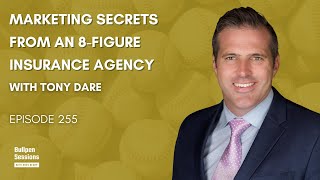
A recorded interview (YouTube) where Andy Neary interviews Tony DaRe (founder/leader of BSI Corporate Benefits, based in Bethlehem, PA). Tony recounts his upbringing in Miffleville, athletic background (high school basketball and college football at Wilkes University), and participation in rugby — drawing parallels between team sports and leadership. The conversation emphasizes BSI’s community-first marketing approach (heavy local involvement, brand-building over time), a higher-than-average marketing spend (~7% vs typical 1–2%), a culture that celebrates employees publicly, and content strategies including LinkedIn and Tony’s podcast 'Stretching on Tuesdays.'
Chapters
Hey, hey. Welcome back to the Bullpen sessions. I'm excited today because whenever I get somebody to get the opportunity to have somebody on the show that is doing some, quite frankly, some amazing things in the insurance industry, it's an honor to have them on. And today this gentleman is no different. Tony deray with BSI corporate benefits out of Bethlehem, Pennsylvania. Tony, welcome to the show, man.
Danny, thanks for having me.
Yeah, no, this is going to be a fun conversation because you and I have connected, you know, probably within what, last six, seven months.
Sure.
And I was blown away by what you guys are doing. But before we get into the business, st. I, I love to start with the athletic side because that's a typical theme in our, in our podcast here. But for the people who have no clue who you are, where are you from? I know you're from Bethlehem, but let's talk about upbringing here. Where were you born and raised?
So I was born and raised in a town called Miffelville, Pennsylvania, which if anybody knows Route 80, which pretty much runs right across the country. Miffleville is an exit not quite halfway, but middle Earth, Pennsylvania, population about 1800, where I was raised. So my dad was a teacher coach in high school. I actually played high school basketball for him. Although football, you know, which I'm sure we'll get to, is definitely where I landed after that. But that's where I was born and raised. And now where we're at in the, in the Lehigh Valley. I mean, obviously I had some travel, started the business in, in Michigan, outside of Detroit. We still have an office there. But yeah, had some travels along the way. But Pennsylvania's home and where we're at in the Lehigh Valley is where when we had our first, my wife and I, who's now 14, which is having a 14 year old daughter, is a whole other. That's a different podcast.
I'll go find a subject matter expert on that topic.
Recognition for that, I'm happy to take it. But when she was one, that's when we transitioned back from the Midwest, my wife and I, and landed back here where, you know, where we have lots of grandparents and grandparents.
Yeah, yeah, that's it. We just moved back to Wisconsin for that very reason. Yeah. Congratulations. We don't have kids, but to be back by family was really important to us. So question. Father was a teacher and a coach? Exactly what my father was. What, what subject did he teach?
He was history, high school history. And he has a professed, which is interesting in today's day, but he had a Russian history buff. So, you know, if he. If he only had 35 minutes for your podcast, you could. He couldn't even get you through the Romanovs. Like, the guy loves it so much, you know, he has no problem if anybody ever asks him.
So that's. I knew. I knew. I like you for a reason. And my father was a history teacher.
Come on.
And a baseball coach. I know your dad was basketball. My dad. But very, very similar backgrounds because I think that's very important. Because, you know, as I've observed how you have built your team, you know, just from the time we spent together, I got to believe how your father coached you, had a big impact on how you lead your team. Because here's. Here was a gift I think I received. And I'm sure you got the same as having a father as a coach. You just didn't get coached by him at basketball practice and in the games. You basically got 24 hour coaching from him.
Without a doubt. Yeah. There's a story I tell quite a bit. It's called the story of two TVs. So my dad was my high school basketball coach. So, you know, back in the day, obviously every game you have game film, right? So we would get done, you know, from a basketball game and we would come home and we had two TVs, and neither one of them were very big, but we'll come home. And I would say, you know, should I come upstairs and watch the game? He's like, well, you know, if you want to. If you want to feel good about yourself, go downstairs and watch it with your mom. If you want to get better, watch with me.
I love that. So I'm going to. I'm going to ask a question because I wanted to ask this totally off the subject. So when you spell your name, it looks like dare, right? But it's capital D, A, capital R, E. What nationality is that?
It's Italian.
Italian, okay.
Yeah, yeah. Where the Family's from a. 1911, immigrated to the United States.
Okay, that's cool.
Hold on a second. I just. I lost you for a second. I'm not sure why.
We can still hear you on this end.
Okay. Yeah. I can't see you both. Sorry about that.
Yeah, you're good.
It's interesting. Stand by for a second. My apologies.
We could just cut this out. Yeah.
There we go.
Yeah, I'm not sure it actually. It acted like it acted like it was away from the screen, so.
No, you're good. I'll just make a note to cut that out at. Yeah, Let me go back and I'll ask the question again. So one thing I wanted to ask you, Tony, since we've met, the rape looks like dare. Capital D. Capital A, capital or capital D, Lowercase A, capital r. Lowercase E. What nationality is that?
Yeah, it's Italian. Northern Italy is the village that my family's from. 1911, my great grandfather immigrated and, you know, my wife and I've been married for 18 years, and, you know, I've made my peace with the name not being pronounced right. And technically, off the boat, it's the lowercase a space. You know, capital r. Accent, they goo e. But when my grandfather got off the boat, let's just put it all together and jam it together. And in modern times, you know, if you go to get a credit card or something, try to put a space between the letter. You know, I told my wife when we got married, and she didn't listen. And our ninth credit card and driver's license, she finally just gave up it. And, you know, so we just put them all together. Still capitalize the river.
That's awesome. Well, let's go back to your high school career. So you played basketball for your father, but you really excelled on the football field and when you played high school football, because I'd say outside of Texas, Pennsylvania is kind of a mecca of high school football. What was your position?
I was a linebacker.
Yeah.
Me and my brother have a younger brother three years behind me. But, yeah, I mean, I was. We always say that was the greatest gift that our dad, you know, always gave us is he didn't take football away from us, you know, so he was a basketball coach. Never played football in his life. But, you know, we love playing basketball. We grew up. We were gym rats. We went to camps with him, and he. When he ran camps in the summer to make extra money. But from a passion perspective and also talent perspective, my brother and I were both football players. To see us, you know, from a basketball perspective, you know, there's a limitation for us from a height and weight perspective, and we much fit the mold of linebacker. You know, 6 foot 2, 40 is much better roaming the middle than it is necessarily posting up.
I was just saying high school basketball, no one's getting in the lane on somebody. Six, two, two, forty.
That's for sure. Well, I like to shoot threes, so.
Oh, okay. That was a real problem.
Anyway, my dad. My dad always says that if he could just take me and my brother and combine us, if we made one good basketball player because he could play.
Defense, I like that. Well, you went on to play college football. Wilkes College.
Yeah, Wilkes University, Wilkesburg, Pennsylvania.
And, and for my. Anybody listening in who is tuning in from Wisconsin, it's actually the same college Beau Ryan went to. And, and Beau Ryan's from that area, I think, as well. What was that like to play, you know, linebacker? Because I look at linebacker like being a baseball guy. The catcher is the coach on the field. And I think the same is true in football. The, the linebacker is the coach of the defense. And so when you think about your position as a linebacker, what was that like to play that at the collegiate level?
It's amazing. I, you know, looks as a Division 3 school. Wisconsin has unbelievable Division 3 football teams, you know, by the way. But you know, what I always say about the divisions in athletics is division one, two, three. They're all the same. It's just bigger, faster, stronger, but from a commitment level. The commitment is the same. Right. It's, you know, you have full time classes, but you've also got a full time job as being an athlete. Right. And that involves, you know, all of the things. The off the off season preparation, the film study, it's all the same. It's just, you know, the different level of talent at that piece. But on the linebacker piece has certainly gravitated to that position because it's certainly the center, you know, and you get to see a lot, you know, the connection between the down linemen and then obviously the guys in the, you know, back of you so always just gravitated to that type of position because you're kind of involved in all that. When I played baseball, I was a high school baseball catcher, and for me, that was the only position from a baseball perspective because everything else for me was just not. There was enough action. So I needed to be, you know, in the center of attention. I don't know if I could have caught you, though.
That's why I was a pitcher, man. I. You hold the ball in your hand, you control the whole game.
Yeah, yeah, without a doubt. Yeah. So that's, that's, that's how I gravitated towards that position. You kind of.
So I'm curious, you know, a couple questions I have about that One is kind of off the subject because I need to ask somebody from Pennsylvania, if you go back and look at some of the greatest players in NFL history, especially the position of linebacker, like Penn State is, I think, still known as linebacker. You, of course, why have so many good defensive players come out of Pennsylvania?
Interesting question. Well, we're I know.
And we're.
I, we can. Well, Pennsylvania, typically, I've heard described as Philadelphia, Pittsburgh and Alabama in between.
And I was from Alabama portion of Pennsylvania, so you get a lot of cold region towns, a lot of dirt under your fingernail type human beings. So, you know, the, the. I mean, we've had our share of quarterbacks. Robbie. That come through, you know, obviously Pennsylvania. Nick. Dan Marino is Pennsylvania born and raised.
And you get your.
But, you know, I don't know if we're just generally, as a state known for pretty boys necessarily. I think we're more about that defensive mentality.
Yeah. That Grant.
Yeah.
Yeah. I like that because I think I, in fact, when I came back, we spent, you know, a day together with your team. I actually came back and I, I googled famous NFL players from Bethlehem and I didn't realize Chuck Bed Nerick.
I didn't come up.
I didn't realize Chuck Bed Nyrick, though, was from Pennsylvania.
Oh, absolutely. I remember just seeing him one time and he's one of those old school guys, but he's one of those guys where he holds up his hands.
Yeah.
Not one of the figures is going the right way. Like, it's, it was one of the most disturbing things I've ever seen. I mean, every one of them just going the opposite direction. He was a tough dude.
Yeah. If you don't know who he is, Google him. You'll see probably one of the greatest hits in NFL history.
Yeah.
I think it's Frank Gifford.
Yeah. You probably get thrown. You probably get jails for that.
Yes.
Today's. In today's NFL.
Let's talk about this. So, so we transitioned to today. You're. You're running a very successful insurance agency. And I've blown away by the growth you guys have sustained for the, you know, for, for, for the amount of time you have sustained it. In fact, you guys were just named recently. Marsh Barry, I think, was consultant. The best consultant on the East Coast.
Correct.
Which is amazing. Amazing honor. When you look back at your football career as you transitioned, you know. Question, first question I want to ask you because I think this is a big deal for college athletes. When you're in high school, you go to class, you know, let's say it could be 8 o' clock to 3 o'. Clock. It's all structured, right. One class to the next, to the next to the next, and then you go to practice. Where college differs a little bit is your schedule, isn't class all day and then practice. You kind of. I remember I Had some days, Fridays I had one class. And I think some guys, that's some men and women, that's where they go wrong is when they have a little more freedom, a little less discipline. You see the good ones start, some of the good athletes start to fizzle. Did you see that in college? Like when you look at your college career, was that discipline always there?
Well, let me just explain it to you this way. So I was eight semesters in and out, four years, boom, boom, boom, boom, you know, in and out. I made the dean's list four out of eight times. Take a guess whether those four were.
In season or off season. All four off seasons. Got it enough other way. Oh really? In season?
In season. I made the in season. So to your point about, you know, discipline and being dialed in, you know, I love life, I love the world, I love college. You know, my mom would probably say too much. But that discipline of being in season, even though a full time job and you have less time in theory, being more disciplined and being structured that way, it definitely led, you know, to me.
Well said. That's actually. Yeah, that's what it's worth.
That was.
No, that's very spot on. That's actually makes a lot of sense looking back now with what you have built today. Let's start with your father being a coach. Are there any lessons your father instilled in you as a father coach that you still apply today in your business?
Yeah, so that huge inspiration for my life, a mentor for my dad. And you know, there's a couple of sayings I still have that, that were big. His some his big sayings that are still up in my office, you know, and one of them is the will to win means nothing without the will to prepare. And my father and you know, I didn't really discover this until after you kind of retired or at least maybe my mom did. They've been married 52 years. But my dad's incredibly anal and you know, and meticulous. But his preparation, when I would see him from the classroom perspective as a teacher, but really as a coach. When I was in seventh grade, there was a basketball player, his name was Bob Sura, right. And he had a great 12 year NBA career. He played for Florida State, but he was a local kid. He's a Wilkesburg.
Oh, Bobby Sura.
Yeah, Right. So my dad had his best team when I was in seventh grade. And he knew that they were going to meet at some point, if he was going to, if they were going to get to where they needed to go. It went through Bob Sura and his team. I went with my dad and we scouted him four times in one year. Four times to watch, meticulously plan for a game. And my dad's team ended up losing in like the Eastern semifinal one game before they played them. Right. So never even played that game. But the idea that he was willing and that was always. He was always going. I mean, if you're from Pennsylvania and you can appreciate this, from Wisconsin, the northern tier in Pennsylvania, I mean, it's. It feels like it's north of Buffalo. It's not, but it does feel like that. But going in snowstorms to scout games at the. Mentally prepare. I always took that from him, you know, and I think that translated a lot to, you know, the way that we talk about. So in our, in our, you know, in our industry. Right. Busy season, fourth quarter. And I say to our team all the time, you know, it's. That's not where we win or lose. We win or lose in the other three quarters of the year, are we willing to put the effort and the commitment in to prepare to win in the fall? Right. And I think that's. That would definitely be, you know, an example that I would use that I've carried over from him.
I gotta tell you, man, the parallels are getting creepy. My. My parents celebrated their 52nd wedding anniversary in June.
I mean, you know, what?
Brother from another mother, right?
Now, if you, now if you tell me your mother was also a teacher, I'm done.
She was not. She. That's how I got my start in healthcare. She was the, you know, I, I say administrative assistant. She says, I was not an administrative assistant. I was a secretary and I was proud of it. She was the secretary for four CEOs of a regional health plan called Geisinger Health Plan.
Oh, yeah.
Pennsylvania. Very large recognized national Health Health System hospital. But that's how I got my start. My mommy got me my first.
Ah, I like that. Yeah, that's awesome. Well, you know, again, I'll say it, repeat it. You guys have sustained some pretty amazing growth over the last few years. And you've been able to actually take your business like you said, you started it outside of Detroit, where you still have an office, but have brought it back to the home front in Bethlehem. One thing I'm very impressed with what you guys have as far as a belief system is the power of marketing and listening into how often you guys are out meeting with the community. Let's start there. I mean, the number of events, events you guys either host or attend within the community, I think is unprecedented. How active you are, talk about how important that is for you and your team's growth to be a part of the local community.
Yeah, I think again, I would, I would credit my parents. I think that was just instilled in me at a young age, you know, kind of shirt off their back type of people and you know, as the business evolves, you know, first in Michigan, but really when we move the headquarters back to, to Bethlehem, that just seems second nature to me, you know, and it was always amazing to me along the way. When you meet other people, not just in our industry, but just in a for profit world where that's not automatic, you know, that you got to be able to give more than you take and you have to be a productive member of your community. Really, it still shocks me to this day when I run to people that just have to, they have a different DNA that way and it just doesn't. They don't see, they don't have that same set of values when it comes to, I mean, you see it all the time in big corporate business where profit is the first thing, that's it. And everything else falls in, you know, below that. And I just wasn't built that way. So I would say that I've been very fortunate because I think it's turned out well for us, but I wouldn't call it strategic. And I think that's why it really works for us, to be honest, because you can't fake that. You know, you can't, you know, everybody, you know, your world agency, you can't write a check and then just expect business like. And people try to do that all over the place. And it is a recipe for, for failure. You got to lead with your heart, you know.
Well, yeah, it's a good segue into the, the topic of marketing. Did you know the ideas shared on this show are things we actually specialize in helping you implement. If you're an insurance professional and you want to turn your credibility into consistent client acquisition, visit completegameconsulting.com and schedule a free strategy call. Again, that's complete game consulting.com to request your free strategy call. All right, let's jump back into today's podcast episode because I think in our industry a lot of people only want to do what I would call direct marketing. If I'm going to pay money for marketing, it better create an instant return. And what are your thoughts when you guys think about marketing? You know, I. One thing I remember somebody Said on the team was, you know, I think it was even Marsh Barry. You said Marsh Barry looked at how much you spend on marketing and you guys are way, way over the norm when it comes to marketing. Tony, what's your belief in the. How, how important is marketing to your business?
Yeah, I think, you know, in that point, you know, with the, you know, love Marshboard is a great organization to get what's the really top of the industry peers. But yeah, I think, you know, when you put side by side numbers together, I think they're. Everybody else is a 1, 2%. We're at like 7, you know, but you know, there's a couple of things going on there. I mean it's from a traditional marketing perspective, it's not really about billboards and you know, the, that type of marketing for us, you know, it's really more about investment marketing community, you know, so it's, it's the, it's the long game that way. But it's a, it's a branding message. So, you know, it's the idea. And you know, obviously I know that you practice this as well because it's how you and I met, which is, yeah, we maybe been working together for six or nine months. But I feel like the first time I get on the, you know, the screen with you, I already know you because I did, you know, because I followed you for a couple years and I think that that's really, you know, where that sped. Because this is, and you know that this is obviously something that as we transition as a firm more into the producer world, we have zero producers, we grow at 25% for half a decade straight when we don't have any producers, not one.
And if you knew their, if you knew their book size, you'd be shocked when you learned they really have never had a producer. Keep going.
Yeah, so. And because we crowd source it, you know, we have these amazing, you know, individuals and. But that's really how we've, we've built it and it's, it's through building the brand of bsi so to the point where we're at a point, especially regionally with our brand recognition because we've been out there for so long with a commitment to that community, nothing is really cold. So the idea that we can then when we do get to actually having the conversation about what we do for a living in the employee benefit space, we're much, much, much farther down the line with respect to establishing really relationships, you know, because I mean, look, I mean, think about your normal cfo how many years does it take and what does that meeting, which we've all been in look when you're just sitting on the other side of that person's desk and they know that you're there to go after their employee benefits business, you know, it's, it's, that meeting is not, is not hugs. It doesn't start with a hug and you don't walk right past the person in the front and go right to his or her office and sit down and hug and talk about kids. But if you've met that person for three, four, five years through interacting in the community, served on boards with that individual, just had a great opportunity to get to know that person and they get to know you and your firm when that right. Piece strikes, when they get that terrible renewal that hits their desk, or they're in a transition piece where they just need additional answers, then when they pick up the phone and call you, it's a whole different conversation, you know, and I think that patience, you know, I see it right behind you. Patient, you know, I think patience, my mom always said patience is a virtue. It can be, you know, tough at times, but I think building brand takes time. It takes time. And I think that's what we've done it, you know, from the right place and, and that's where we've been all experienced.
Well, and I think what you're saying too is, you know, the relationship must always precede the revenue. And, and knowing the type of groups you guys are going after, we're not talking small group stuff here. You guys are going after some pretty large cases, which means you're competing. You're, you're still very much an independent firm. You're competing with a lot of the large consulting houses. And that relationship is massive for somebody like you to be able to walk in that room because if you walk in and the prospect already feels like they know you, you got a leg up.
Sure.
And I think one of the things, you guys do a phenomenal job and I'd love to know if there's a strategy behind it. When I look at your content, specifically on LinkedIn, you do a great job of showing us BSI as a human, the team, the behind the scenes look. Is there any reason, is there a strategy behind that? Because you guys do a phenomenal job with that.
Well, I think, you know, I'm a LinkedIn, you know, type of person. I know our, from an agency perspective, we're across all the platforms. I think.
No.
Well, my marketing team has said, you know, nobody Needs you with a Twitter handle, Tony. So we don't. I don't need to spend half my week apologizing for what I said the day before on Twitter. So I stay in my lane from a LinkedIn perspective. But you know, the way I really pushed through there because I was, I had challenges, you know, I had that stage fright of, you know, putting something out there where if you put me in front of a microphone in a live event with 500 people, I'm going to say what I'm going to say. But somehow transitioning to that LinkedIn there's. Which I'm sure you deal with all the time, know people you interact with. That man, when I push send, this is out there, you know, so really pushing through that. But I think, you know, that, that authenticity, you know, so kind of thinking about, you know, what are the kind of things that I like to, you know, to read and interact with. So I have just pursued it where I want to be able to. And you have to train yourself a little bit along the way to spot opportunity or, or recognize a moment, you know. And I think, you know, I know that you said it, I think it comes from Gary Vee. But that document don't create, you know, so when you're just walking around in the world, you know, those interactions, some, it feels a little off sometimes to document, you know, those things. But to have that content and then, you know, when it's meaningful, go with it, you know. And I think our marketing team when it comes to BSI and where we're out there is more structured. You know, I would say that I personally in there, you know, constantly trying to be able to get that message out there about, about our brand, who we want to be, you know, in the community. If you want to get to know us, I think it's, that's a good place to go.
Yeah. And I'm looking at your, I'm actually looking at your LinkedIn profile right now and what I love about it is, you know, as I scroll, I see a picture, nice black and white picture of your team celebrating the management team, followed by just a video of you hitting record. You're out on a hike or something. This is the stuff that lets people get to know you and this is the stuff, this is what gives you that leg up on the competition when you do go after that thousand life opportunity. And everybody else thinks it's a competition of logos and they're like, but we already know Tony and this team. Yeah, it's massive.
Yeah. No, and it's amazing too, where you come into these opportunities because, you know, I mean, you get to see people who are consistently liking posts and those types of things. But it's amazing to me still where I'll come into a conversation and I'll see a decision maker, you know, out at an event or in the community. And I know that maybe I'm connected with them, but I don't think twice about it because they never show up there. Like, you never see them, they don't interact, they don't like posts, etc. But then I'll get into a conversation with them and they'll start congratulating me on the success of our firm over the last six months. Congratulations on that marshberry work. Congratulations on the, you know, Community Partnership award. So they know as much as I do about our firm sometimes. And you would never know that they're even there. You would never know that they're even there in a lot of the cases.
Well, and there's that, there's that fear of sharing that stuff because I don't want it to sound like we're bragging. But at the end of the day, what that does is it lets, number one, it lets people know you're winning. That's important. Two, it lets, it actually gives your clients a sense of pride that they do business with you.
Yeah, no, without a doubt. I mean, I think that that's, that that's definitely, you know, occurred for us that, you know, especially with our non profit commitment.
Yep.
And those ties.
Well, and that goes back to your, your involvement with the community as well. Now one thing, you do an awesome job because I, I'll label you as somebody who gets it. You got a podcast called Stretching on Tuesdays and talk to it. Talk to us about why. Let's start with why did you start that? What was the idea behind Stretching on Tuesdays?
Well, you know, what for, for, you know, I, I guess I could be looked at as it's an interesting counterculture type of human. You know, I'm, I like to jump out of planes and you know, I'm an entrepreneur first before I'm a benefits, you know, a benefits company. And you know, I just, my risk tolerance is a little bit different than the rest of the world. So, you know, I've been pushed for a couple of years. Hey, you should start a podcast. And I said, well, a couple of things. I don't listen to them regularly, you know, so I don't really know. I don't know. And I wouldn't listen to a podcast about deductibles and co insurance, so.
Amen.
Not doing that. Right. So it just. I understand that the idea for the education piece, it just wasn't me. And, you know, when I finally decided to do it, I said, okay, I'm going to do it the way that it feels right to me, you know, that it would resonate something I would listen to. And that's kind of how I went down this road and started stretching on Tuesdays, which is essentially a play. I played competitive rugby after college football around the country. And that's, that's the story of stretching on Tuesdays, where you'd have the weekend that you play all over the country and the guys disperse and Tuesday would be the practice. Sit around in a circle. And then all these stories started to come out of, you know, the weekend and where everybody was. And I just think I've met so many amazing people that have made. Meant so much to me in my life. I want to bring them on. And not necessarily what your job is or your CEO of this company or wherever you achieve, but I want to get the other, the other stories, the behind the scenes stories. You know, those great stories that everybody has. You know, everybody has those great, you know, those stories when you find out. So I've had a lot of fun with it. It's been very cathartic for me, surprisingly. But, you know, it's enjoyable. I've had a lot of fun.
Yeah, I know. I think you. But the lesson here is what you understand that about the concept of podcasting is you made a point. I don't. The last thing I want to do is a podcast about deductibles. You do a podcast that has nothing to do with health insurance, which is your area of expertise. However, you're bringing people on to tell their stories. And Gary Vee says it, you're hosting the party. And there's an advantage, a benefit to hosting the party because you're letting people get to know you. And that's the whole point of having a podcast. And so I do have to ask, because rugby, like, I don't know if I've ever seen a sport where guys go and beat the living hell out of each other as much as rugby and then have beers with each other after it's over. Yeah, you talked about being an entrepreneur first, then running a health insurance agency, which, which includes that ability to take risk. But there's also a huge component I. There's a phrase I learned from a coach of mine is we do hard things, wake up every Day and say we do hard things. What's it like to play rugby? Because I me looking at it going, you got to have a screw loose in between your ears. But like what is. You are literally beating the crap out of each other.
Yeah. You know, it's an amazing game, you know and I would say that it, I love football, you know, I loved it and I certainly was done after college. I was done with contact sports. I was, I got shoulders hanging off me and you know, when I moved to Michigan, Ann Arbor, Michigan is where I moved to work for a health insurance company. And I was bored. I was running, you know, all the time. I lost my college linebacker slash beer weight and looked great and I was bored out of my mind. And a buddy of mine said just find a local rugby team, you know, and you'll immediately have 45 best friends, you know. And I just, I took to the sport. It's a gentleman's game, you know, I mean think about football. There's 22 guys on the field, there's six refs. Rugby, there's 15 on 15, that's 30 guys that there's one. So it's a, it's a self policing sport. So if you're going to violate any of the rules of rugby, you do it knowing that, that you reap what you sow. But I, I love rugby because of the mixture of human beings and there is no hierarchy. You know, I played with secret service agent for the FBI, played for a construction ditch digger or with them right on the same team because there's no level and I love that of a lot of life lessons I love. Our firm is made up of 50% of people that never had insurance industry experience ever. You know. So I love diversity, you know, amongst everything and rugby was certainly unequalized there because when you step onto that pitch from a rugby perspective, ego, you know, the ability to talk like none of that matters, you know. And I love the parallels from rugby to running a business because at the end of the day, you know, it all that stuff goes away. You can talk a good game but you got to be able to step onto that field and you got to compete. You got to compete and you know, and I, I love competition. I think in, it's like a four letter word sometimes out there in the world and I don't think so. I mean I love my competitors to the point about having beers with the massive game in rugby. I had lunch with a competitor earlier this week. We had great lunch and a great conversation about thoughts on the future and things like that. So I. I have just. I've always loved the competitive aspect where I don't mind getting knocked on my ass every once in a while.
Right.
I mean, I like tasting my own blood every once in a while. I mean, I hate to lose, but it's that exciting piece of it. It's that competitive piece. But you can still obviously have a tremendous amount of respect for your competitors, you know, And I always have had that.
Yeah, I agree. I think for me, when it hit me running this business, complete Game consulting with the day I realized I could do this was a day, you know, after. It was a day after I just got my ass kicked, Everything went wrong. Lost a couple opportunities I thought we'd get, and I woke up the next morning just as excited. I'm like, I can do this. Even though yesterday sucked, today's new day, and it's a day to go out and get after it again. And I'm like, okay, I can do this. That's how I'm waking up. Yeah.
Yeah. It keeps you alive, you know, that. The idea that. And, you know, because there is no peak, you know, we've had some success as a firm, and I tell. We crew all the time. And that goes for culture, too, you know, because we really put a lot. Big emphasis on culture, which I really think has been the primary driver of our. Over the last couple of years. Yeah, but, man, that's. It's fickle, you know, you don't get to the top of mountain, plant the culture flag, and say, hey, we won, you know, because the competitors are always right there, you know, and you always have to make sure you're paying attention to that stuff because you know, you'll get caught.
Yeah. And I think you talked about the parallels of rugby to a business. I think it's so true because you said there's no hierarchy. I mean, you. You're. You're at the top of bsi. But guess what? There's probably days you still take out the garbage, right? There's no hierarchy.
And.
And two, that whole analogy of you guys beat the crap out of each other and then have a beer after the game, it's kind of the same in business. A good business. There's gonna be tense moments, right? There's gonna be moments where you're maybe going at it with an employee, but at the end of the day, you want. You go home saying, you know what? I love you.
Yeah. No, because you're all. You're all in it together. You know, Again, I think that's a, that's a common bond, you know, and I always found that with, I went to college and I had some, you know, with football and basketball in high school, we had some rival, you know, schools, just like I'm sure every, you did, everybody else did. But I ended up going to state college and playing on the same team with guys that I absolutely despised when I was in high school. As competitors, there's some of my closest friends in the world for life because we shared that bond. Right. Because they hated me as much as I hated them. And we got together and, you know, we, we, we played on the same team and you know, those are just some great, you know, lasting.
You know what, Tony, though? I think that might be maybe the most important lesson of this entire episode. Because my, my goal was to talk to you about marketing and what you guys have done. But what you just said as far as it pertains to the insurance industry is massive. When I look at the most successful people in this industry, they're the people who love the competition but respect the hell out of the competition versus the people who come at it maybe with a lack mindset. They don't want to share anything. They view everybody as competition. There's no way in heck they go grab a beer with a competitor. Those are the people at the end of the day, I don't look at and view as having a successful career. The people who scale and grow the way you guys have are the ones who respect the competition.
Yeah, the way I describe it, it was a football related analogy. Game starts at one. You know, so like in college football, the field's right there. You watch the other team get off the bus. The game starts at 1. Everybody knows what's about to happen. You meet and you settle it, you know, and I think a lot of times in business people sneak around and sneak up on each other and I'm just. Game starts at one. Let's just, let's, let's do it and let's have an amazing competition, you know, in doing it and respect it. And I think I've evolved as a leader over the years and learned my gosh from mistakes. But I can remember from a social media perspective a conversation I was in probably five or six years ago when we were really starting to scale and kind of agreeing with one of the, some of the, one of my other eps was talking about, well, I don't know if we want to celebrate our team members on social media, you know, do spotlights on them and their achievements because then you Know our competitors are going to potentially poach them. And I remember five or six years ago and you know, you know, that makes sense. As if you can keep a lid on that.
Right?
And now like you look at where we're at, like I was screaming from the rafters at my team and their achievements because you know what, they're all getting pinged away. Like we joke about it now. You know, like we, I mean just like if you want, we want a client. You want a client, a CFO to tell you when a competitor just called them or hey, here's this presentation and I just wanted you to have this and you know, you, that's what you want. You don't want a non conversation because they're all getting pinged away with the accolades that we had as a firm. I say to them all the time, like, would I prefer to work with teammates who nobody wants? So I course know that the competition is after them and it's on us as an employer to be able to deliver for them. You know, there is, it's a two way street and that's changed quite a bit for us.
Well, it's funny you say that because I, we have clients who don't want to put out like client testimonials on, on the Internet because other brokers will hunt them down. And I'm like, are you kidding me? Yeah. If, if another broker tried to call one of your clients because you put their testimonial out, I would tell that broker, you're an idiot. You're wasting your time. Because they love their advisor. It's the same thing with your employees. Right? It's. Yeah, if you're, if you're highlighting them, they obviously love what they're doing and, and so.
Great point. And I, you know, another example I give you, you know, with the idea that we know, I mean we have certain competitors when we, you know, our next peaks, we're preparing for obviously, you know, busy season. So what's that next level of value that we're going to bring for our clients this year? Because we always have to, you know, outperform. But we go back and forth about that. But we know that there's some competitors, you know, what we're going to put out over the next two months about what we're thinking for 24 and beyond. We'll see that down the street in three months. That's fine. Because it's really about execution. It's not about, it's not just about, you know, the content, it's about execution of A game plan.
You know, I think this is the way to wrap. This is the perfect bow on this conversation. To your point, Tony, go back to. You made this. You shared the story about how you used to go recruit with your dad, Right? Go scout. You could go scout all you want. And know that team's offense and basketball, the team's offense or defense, inside and out. If they execute to perfection, you still have no chance.
Yeah. Bob, sir had 50 points in the state championship game, so we scored a four times. I don't know if it would have made a difference if my dad's team played. He would have.
He might have had 48, but that's the point. If you do your job, you can go share and tell people exactly what you're going to do. If you execute it perfectly, it doesn't matter. They have no chance. I. It makes me think in baseball, there's a pitcher, Zach Granke, weird dude, but he gets accused sometimes if you watch him pitch in a game, I think it just, he does it naturally. He'll literally give away his pitches before he throws. Like some, like there's. They show pictures of him like holding up the one finger for fastball, but if he still throws the fastball in the right spot, the batter's not going to do anything with it. Yeah, it's execution. I love that.
And confidence.
Right. And the ability to execute.
I'm sure, you know, you being on a bump, I'm sure playing a mental game with that batter, I mean, I can imagine, you know, that that kind of idea, like, listen, you just. I'll tell you what, I'm throwing it.
I think the greatest example of that is Mariano Rivera, hands down, the greatest pitcher of all time. Why? He had one pitch, you knew it was coming and you had no chance.
Yes.
Execution.
That's right. Yeah.
No. Well, Tony, this has been a phenomenal conversation. Thank you for taking the time to do this. If somebody was kind of, kind of was inspired by what you said, what would be the easiest way to get in touch with you?
Well, certainly you find me on LinkedIn, right. You know, I love to get messages from LinkedIn, from, you know, people in the industry, etc, so I think that's a great way to reach out and find me there. And certainly bsicorporate.com is our website. You know, check out any of the information there, plenty of links and know some valuable information.
Awesome. Well, man, it's been an honor to, to. To get to know you because you're one of the good ones in the industry. And what you've built is pretty impressive. And you've built it on the back of culture, marketing, doing the right things, being a part of your community and, and loving the competition from others. And so if you're an advisor listening in, take what Tony just said and, and model it, because this is how you win in business today. So, Tony, I want to thank you one more time. Everybody else, be good.
More from Andy




If you want producers to succeed faster, help them create a sales message that creates confidence.

Sales isn't a zero-sum game! You can have tough competition and still grab a beer after



Option 1: Meditation, a fast walk, a podcast, and protein. The ultimate morning routine!

How you do one thing is how you do everything. Ill elite producers fuel their body.


Stop living in the gray of maybe! Your job in sales is to get a clear yes or no