More Control / Less Risk: 3 Ways Captives Will Help You Control Health Insurance Costs! [Webinar]
Jonathan Sacco explains how captive insurance programs help employers cut health costs by spreading risk, returning dividends from pooled stop-loss, and giving you control over claims. Traditional fully insured plans lock you into rising premiums; captives let you keep what you don't spend.
Questions this video answers
Andy Neary (host) with guest Jonathan Sacco, VP of Sales at East Coast Underwriters.
Approximately 30 minutes.
aneary@theolsongroup.com
Common minimum ~50 employees; some captives accept 20–25. Less common for employers >≈250 employees to join captives.
Blue Ridge Captive (presented as an alternative, not employer-owned, with different features).
Chapters
All right, we're going to get this road, this show started here, guys. Thank you for joining today. We're going to keep the topic short and sweet. These are our Striking out the Status Quo webinar series. So thank you for joining again. As always, housekeeping rules. If you have any questions, there is the chat box here on the webinar. So feel free to type your question right into the chat box. We look forward to having any questions come in. Again, we're going to keep this to 30 minutes. Want to respect your time, but we have a slate full or chock full of good information here over the next 30 minutes. So what are we here to talk about today? We're here to talk about more control, less risk. Three ways Captives will help you finally build a better health plan for less money. But we need to level set before we get into captives. What are they, how they work? We need to level set and find out why we're even here having this conversation. So if you're on this webinar right now and you have employees, you're looking to grow your organization, you probably have some common goals. Number one, you're trying to grow revenue at your organization. Whether you're an HR director, a cfo, a coo, one of the goals of your organization is you've got to bring revenue in to keep the doors open. Number two, on the flip side, you're trying to control cost. So grow revenue, control cost. It's a great combination. And then third, of course, we're trying to attract, retain and keep great employees happy. That's the destination for most organizations. Now. What is holding you back from getting there? How is health insurance impacting your ability to achieve those goals? Well, number one, as costs continue to go up each and every year, that is obviously hindering your revenue growth as a company. Right? Your bottom line, the net revenue you have each and every year is being impacted. Every time health insurance costs increase, it increases your cost. That's an obvious one. And as your health insurance costs continue to increase, what happens is each and every year you find yourself slowly watering down the health insurance plan, which is making it harder and harder to attract good talent when you have watered down benefits. And last but not least, let's face it, in today's world, it's very common to have employees who will leave your organization for a dollar an hour increase elsewhere. So every year you've got to ask your employees to pay more for the health insurance. It's making it harder and harder for you to attract and retain those kind of Employees. Now, let's talk about why this is happening. When I talk to employers, they often ask that question, you know, why aren't we able to control our health insurance costs? And the stuff you're going to see here on the following slides, you might say, andy, talk about this all the time. And my answer is yes. Until I see employers start to do things differently, I am going to keep talking about this. So why is this happening? Well, number one, we have misaligned incentives all over the health insurance plan. You've probably seen this slide from me a time or two. What you're looking at here is the three biggest health insurance carriers in the United States. On the left hand side was the stock price of those three insurance companies the day the Affordable Care act came out. The stock price on the left hand side was the price at the end of day last Friday or a couple Fridays ago. It's obvious insurance companies are making money right now. They're happy. The Affordable Care act has been pretty good. So they're not so interested in helping organizations save money right now, truth be told. Second, misalignment is within the healthcare system. As your employees access the healthcare system, the challenge they face and what you're seeing on this graph here is the cost and quality of healthcare is all over the map. What you're looking at is data for a knee replacement done and performed in the Denver, Colorado market. And if you're looking at those red bars that go up and down all over the place, that is actually what each facility charges to provide that knee replacement. Then the heartbeat looking line is the quality and the outcomes coming out of each facility. So number one, when quality and cost do not align in the healthcare system, number two, your employees don't know about the cost and quality. It can be very tough to make good healthcare decisions, which makes it very hard for you, the employer, to control your health insurance cost. And last but certainly not least, and I think this is the biggest challenge every organization faces today is you're looking at an insurance card on this screen right now. But the problem today is this. Every year you hand out this card, whether it is Blue Cross, whether it's United Healthcare, Cigna, Aetna, whoever. Your employees are seeing this because as long as they stay in the PPO network you're providing them, they can go wherever they want and they can spend whatever they want. And this leads to the final result, which is usually negative for most organizations right now. You end up finding yourself shopping insurance carriers every year to try to save money. You raise deductibles and out of pocket limits on your employees to save money or you just simply ask your employees to pay more. And when you're trying to attract, retain and keep great employees happy, this becomes very difficult. And the most dangerous result today is this. If you look at the typical health plan right now, between what employees have to pay in deductible and out of pocket, plus what they have to pay for their premium, it is easily greater than 15 to 20% of most employees gross take home. So health insurance has no longer really become a benefit because of the cost and the financial exposure. So how do we fix this? How do we start sending this problem in the opposite, the positive direction? Well, that's what we're here to talk about today. And that's why I'm excited to be here to have and I have Jonathan Sacco, VP of Sales for East Coast Underwriters on the webinar with me today. Because guys, if you want to fix it, we have to start with a plan. And the plan I want to talk to you about before we bring Jonathan on is what I call ebitda. Now, some of you might know what EBITDA is inside an organization. Simply put, it's the value of your organization, right? The company you work for. Well, EBITDA here describing the value of your health plan. So let's quickly go through the acronym. Number one E is empathy. You have to understand that this health insurance situation today is having a huge impact on your workforce, right? Deductibles out of pockets go up, premiums are up. It is very hard for your employees to financially afford accessing and utilizing their health insurance plan today. Number 2B is belief. You have to believe there is a different way of doing this. You have to believe there's a better way to get better results. Instead of every year waiting for your health insurance renewal, trying to figure out what you're going to do with the increase and then making a reactive move which often ends up leaving employees unhappy and your organization and your organization's bottom line unhappy. Once you have empathy, once you have belief, now you can move to I which is insurance financing. We're going to talk about this in a second. How are you financing your health plan? And if you finance it correctly, now you have t transparency. You know how your health plan is performing, good and bad. And when you can see how your health plan is performing, it gives you the ability to make data driven healthcare decisions, helping your employees access the healthcare system effectively. And when we can do all of that, well, the end result is we actually eliminate the arbitrage within your health insurance plan. What do I mean? I mean that knee replacement you saw in Denver that they're charging 180,000 for, that should only really cost 30,000. We're going to eliminate that. We're going to get that knee replacement for $30,000. That medication that is billing your health insurance plan for 70, $80,000 a year. What if we could eliminate the arbitrage and buy it for 10 or 20,000? Those are all the things that are available to you today if you are looking for them. And so how we go about doing that is two areas of risk. Number one, healthcare purchasing risk.
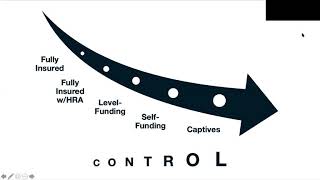
First, we have to understand how our employees are accessing the healthcare system today. The hospitals, the outpatient services, the drugs, the primary care services. And then we have to align ourselves with the right carrier, the right partner that gives us the ability to control the cost in those four buckets. The second area of risk, and it's what we're here to talk about today, is financing risk. How are we financing our health plan? If you're fully insured today, you don't have much control in controlling your cost in the future. Right. They give you a renewal. It is what it is. You don't get any money back. Then you have to figure out what you're going to do. Are you going to shop, you're going to tweak deductibles, pull, pay more. But as you start going down the spectrum towards level funding partially self funded plans and then captives, what's happening is you're giving yourself more control to control your cost and you're giving yourself greater ability to drive your actual insurance cost down. And so that's why I'm excited to have Jonathan Sacco on the webinar today. Jonathan is the VP of sales with East Coast Underwriters. Jonathan, welcome aboard.
Thank you, Andy. Great to be here.
You bet. You bet. So what we're going to talk about today is captives. Guys, I've got Jonathan on, he represents East Coast Underwriters. East Coast Underwriters works and partners with various captives around the country. So the goal today is this. We're going to share three ways captives can help your organization finally build a better health plan for less money. But let's, let's level set. Jonathan, let's start right here. Captives, what are they? How do they work? And why should an organization look at one?
Sure. So that's always the first question, right? What is a captive? It's become a bit of a buzzword in the self insurance industry, a lot of people have heard the term insurance captives but they may not know how they work really at their core a captive insurance company is a insurance company that's owned by those that are, that are seeking to funnel the risk through. So it pertains to medical stop loss insurance and self funding. The employers that are participating in a captive, they all own a small portion of the captives liabilities and they're kind of joining forces so that they can be looked at as one entity with an insurance carrier, in this case a stop loss insurance carrier. So rather than a single employer of 100 employees, just for example being kind of out on their own, they're now in a boat with 10, 15, 20, 50, 100 other employers of similar size scale that are seeking to have a spread of risk amongst each other so that they're not self funding off on their own. So generally the way it works is an employer will join a captive on a common renewal date with a bunch of other employers. So let's just say January 1st and now they're underwritten essentially as a unit. And that's not to say that they're joining a singular insurance contract like similar to a MEWA multiple employer welfare arrangement. This is not that. This is not one contract for 50 or 100 different employers. Each employer still maintains their own self insured plan. They're simply pulling their risk from the medical stop loss standpoint and spreading it amongst other employers that have like mindedness similar goals, that want to keep their self insured plan stable for the long haul, even though they may be a bit on the smaller side. Chances are if you have 50 employees to 200 employees and you are not currently self funded, you've at least entertained it in the past five to 10 years since the inception of ACA. But there's generally been some apprehension the unknown risk lasers things of that nature. So this generally helps to flatten out the dreaded five year bell curve that most employers would tend to see off on their own if they were self insuring. So last and not least by any stretch, why you should do it. As I just mentioned, it's kind of flattening out the bell curve over the next three, four, five years. If you're self insuring, you're not doing it alone, you're doing it with again 10, 15, 20, 50, 100 other employers that have the same goals that you have. They want to self insure, they want to save money, they want to implement industry best practices as far as cost containment, risk mitigation, et Cetera and it just helps spread that risk. So if you're a small to medium sized employer and ultimately you finally had it with the fully insured world, you want to self fund, but you're a little apprehensive to do it on your own. That's why you should do it because this largely takes a lot of the fear and anxiety out of self insuring if you're a small to medium sized employer.
So Jonathan, quick question for you. You talked about it's a great mechanism if you, you're a fully insured organization today and you're not sure you want to do this on your own. How about the flip side? What if you are already partially self funded? Is there an opportunity for you or a reason why you might want to look at a captive arrangement when you're already self funding on your own?
Sure, I think so. Most often employers that jump into captives are coming out of the darkness of the fully insured world. But simply put, yes, I would say absolutely. Again, self funding has become so common for that 50 employer to 200 employer space that there's a good chance that an employer that's in that size segment in the last 10 years may have been on some type of self funded or partially self funded arrangement and may still continue to be self funded. So this certainly could assist, especially if they've had some issues in the past with poor risk management that has eventually turned into large increases from their stop loss carrier setting of lasers, things of that nature. So absolutely, if you have a self funded employer that's been self funding for a year or two, I would say absolutely consider a captive as an option. It's certainly only going to.
Strengthen your position for the long haul.
Awesome. So let's do this. Let's dive into three strong areas or three big reasons why captives can help employers build a better health plan for less money. Jonathan, I know one you've definitely kind of touched upon a little bit a few minutes ago. But let's dive into the first reason why a captive can be extremely helpful to an organization spreading risk. Go into a little detail about that again.
So a couple minutes ago I mentioned sort of that bell curve that most employers and self insurer would typically see. So every three to five years, even the employer that has all the bells and whistles as far as cost mitigation, risk transfer strategies, risk management strategies, etc. You can't avoid everything. And that's why stop Loss insurance exists. You can't plan for folks that are on your plan to get cancer or be Diagnosed with some rare condition that warrants them needing to take an expensive specialty medication or having a mother on your plan, having a premature set of twins. Those are the types of things that are unavoidable. And typically it's only a matter of time. Now when you're off on your own. If you have one of these rare instances, chances are it's going to result in a large increase, maybe a laser on renewal, those sorts of things. So if you're an employer and you're self insuring, one of these things happens to you, next year your stop loss carrier may increase your premiums by 20, 30, 40%, not to mention potentially placing a laser on an individual that may have an ongoing condition. Now in a captive, you've got a group of employers that are all rowing in the same direction. They've all implemented similar cost mitigation tactics. They're all self funding, maybe they're working with a small subset of third party administrators. There's a common theme of like mindedness, if you will. So when the unavoidable happens, the carrier is now looking at this book of risk effectively as a unit. So in the first example I gave, you know, you get that really expensive medication, stoplos carrier increases your rates by 25% the next year. Perhaps you have no choice but to buy it. Now, if you're in a captive, perhaps you're receiving a single digit rate increase because largely you're kind of held up by the pool. Everybody's doing the right things. Generally the pool is helping stabilize that cost. So despite you having that large claim that would normally warrant a large increase in the open stop loss market, perhaps a laser within the captive, you're now looked at as a group.
You know, I think that's important that you brought that up because a lot of people ask the question like again, why should I go to a captive if I'm already looking at self funding? And you know, if you're out there listening right now and you have a really bad stop loss here, you can receive a stop loss insurance increase of 100% or more on a renewal if you've had a very bad year. To Jonathan's point, within a captive arrangement, often that renewal is capped at a certain percentage. And as you know, with their spreading of risk, the damage of you having a stop loss claim or two isn't as great as it might be if you're doing it by yourself. But I also think it's important, Jonathan Wright, to mention that captives aren't a place, they're a destination. They aren't a place to go hide if you're not a healthy company right now.
Yeah, and that's another good point. So kind of circling back to the common theme of like mindedness that an employer would have within a captive. It shouldn't be seek as a haven for okay, I'm going to go here and kind of figure out what I'm going to do next year and the year after that. Generally when you're, when you're self funding, you're trying to get out of the hamster wheel of okay, we're fully insured with Blue Cross and then we're going to, you know, my broker is going to take me out to bid and they're going to get quotes from Aetna fully insured and United Healthcare fully insured. And every two years, three years, you're jumping around. This is largely helping you get out of that hamster wheel. Trying to kind of bend back the curve on medical trend. It really should be, should be looked at as okay, I'm going to park myself within the captive. I'm going to take a concerted effort to control my risk by the way in self funding. The great thing is you can do that while making your benefits more attractive to your employees. But that's a great point and it shouldn't be seeked as or looked at as hey, I'm just seeking a one year option and you know, once I get cleaned up I'm going to jump out.
Yep, absolutely. Let's talk about the second opportunity capta provide where you actually can get money back if you're fully insured.
Right.
Now this word, this is a foreign phrase to you but talk about Jonathan, the ability to not only keep your fixed your insurance costs down, but within a capta there's actually the ability to get money back.
Sure, absolutely. So I think a lot of us should know that in self funding the beauty there is the variable cost that you don't spend, you retain. I mean it's pretty simple concept. Right. With stop loss captives, I mentioned early on that most stop loss captives are insurance entities that are owned by the employers that they're insuring. So the employers that are purchasing their stop loss through this captive, those employers own a certain portion of that insurance entity which means that they're entitled to a portion of the premiums that the captive generates on good years. If the captive has paid less in claims than they've collected in premium, they'll generally declare a dividend. And typically that means that the employer has the opportunity to retain a portion of the premiums back at the end of, at the end of the contract year. So it's a huge benefit. So you're kind of getting a double whammy, if you will. You're retaining what you don't spend on your variable cost, which is normal self funding. And then you also have the opportunity to retain some of your premiums. If the captive performs well, dividends are passed out to the employees. So absolutely, it's another huge advantage of stop loss captives.
Awesome. Awesome. Well, let's talk about the third and final one, which I think personally is the most important one and that's the ability to control claims. You know, if you go back to that financing spectrum that I talked, that I showed you guys a few slides back, the farther you go down, the greater ability you have to control cost. And no matter whether you're fully insured, level funded, self funded or in a captive, the greatest impact on your overall cost is your claim. So, Jonathan, talk about why captives give an employer such a good ability or such a great ability to control claims.
Sure, absolutely. So most captives will mandate to the employers that are joining that you need to include certain cost mitigation tools to join the captive in the first place. They're trying to avoid this wild west mentality of, okay, I'm just going to self fund and I'm just going to do the bare minimum and I'm going to use the captive to save me on a bad year. They generally seek to have the employees, I used this term before, but rowing in the same direction. Right. So using similar or the same cost mitigation tools and tactics, risk management strategies, that sort of thing. And there's a whole slew of programs out there. We could spend 30 minutes to an hour just talking about the different ways you can control your risk and your health plan, but that's really it. As they say, okay, to join the captive, even be permitted in. We want to make sure that you're, you're abiding by the rules that we've set up. And again, on a bad year, it'll insulate you from getting hammered on a really bad increase you would get if you were out on your own. But really seeking that commonality between all employers saying, okay, we need everybody to do X, Y and Z. If you do that, we permit it into the captive. That way you can kind of justify, hey, you know what, this group had a bad year, but they're still going to be permitted to participate within the captive because they have been using the same cost mitigation and Risk management strategies that all their counterparts have been using.
Yeah, absolutely. And I can tell you, as an advisor who likes to focus on cost containment as much as I can, I think one of the benefits with the captive is, you know, if you're out there right now, you have 80, 100, 150 employees. You may not have access to all of the tools that are out there to control cost. But once you join a captive, now you're talking about being part of a group with 2, 3, 5, 10,000 employees. And that often gives you the leverage or the ability to access many of the tools, say the Fortune 500 companies are accessing the control cost.
So, captiva, that's the beauty of group purchasing right there.
Yep, absolutely. So, Jonathan, a couple questions have popped in here.
If I'm looking, if I'm an organization right now and I'm looking at a captive.
Typically, how small can an organization be or how big do they have to be before they should be looking at a captive?
Sure. So that's a very common question, a great question. It could depend on the captives that you're looking at. Most captives generally have a floor of 50 employees or more. There are. There are captives out there that will take employer groups with as little as 20 to 25 employees. As far as the cap, I'd say it becomes a little bit less common to see employers that have an excess of about 250 employees and beyond. And that's not to say that an employer that has 300 or 400 employees couldn't benefit from a captive or shouldn't. It's just less common. Generally, the larger you get, the more stable you are. I mean, for example, if you're an employer and you have 500 employees and you just came out of fully insured a year or two ago, there's very little chance you're going to return to the fully insured world. It becomes increasingly less likely the larger you get. So hopefully that kind of helps answer your question.
Yeah, absolutely. That's great. Great points. Another question here. If I'm in a captive, I get in it. Can I be kicked out if my group's unhealthy or I've had a bad year of claims, Can I get kicked out of that captive?
No. Again, so with most captives, you are by definition an owner or a partial owner of this insurance entity. I personally don't think I've ever heard of a group getting kicked out, especially because of claims activity. That's kind of the whole, whole benefit of being in the captive in the first place. Is if you're. If you're abiding by the rules that the captive is set forth. Big benefit of being in a captive in the first place is, hey, if I have a bad claims here, I know I'm protected by the captive, and it's making me certain guarantees. And by joining this pool, you know, I'm agreeing to these rules and regulations to join this in the first place. So, no, I haven't heard of groups actually getting. Getting kicked out in the past. I mean, unless they're just not paying their premiums or something along those lines.
Cool. Awesome. Awesome. Great, Great answer. Thank you for sharing that. All right, last but not least, Jonathan, I know East Coast Underwriters, the organization you're with is tied to what I would say is a very successful captive called the Blue Ridge Captive. If somebody was interested in learning more, could you tell us in a minute or two just a little bit about that Blue Ridge captive that you are partnered with?
Sure. So Blue Ridge captive is a little bit different than the captives that I've been describing, which are typically owned by the employer. Blue Ridge Captive was. Was largely set up to kind of dip your toe into the water of the captive space while avoiding having to have a common renewal date. It's not owned by the employer, so it's a little less expensive generally, but it's a great alternative. We've got a number of products and services that we can deploy within the captive that do make it a little bit more flexible than maybe some of the other programs that are out there. It's just a unique alternative to the standard medical stop loss captives that you'll typically come across.
Okay, and if somebody wanted to learn more, what would be the next step they'd want to take?
I would say, you know, Andy, talk to you, right? I mean.
You'Ve got your pulse on what's going on. I know that there's, you know, there's a lot of captive programs out there, and it's kind of like flavors of ice cream, you know, I would never. I would never say that. Hey, you know, at East Coast Underwriters, we serve chocolate, mostly chocolate. Not everybody's gonna like chocolate. You know, that's why you've got vanilla and strawberry and Neapolitan and all that sort of thing. So definitely do your research. It doesn't hurt to gut out multiple captive programs. They're all a little bit different than each other. You know, a lot of us have been around for five, six, seven years, have stable programs. So one thing I'd say Hey, you know, look for a little bit of a track record, somebody that's been doing it for a while. Another big thing is who the issuing carrier on the program is. You know, make sure that they've got, make sure that they've got rated paper and that just means that they've got an AM Best rating of, you know, a minus A or higher.
That's really it. But I'd say multiple, multiple options doesn't hurt to vet out, you know, two, three, four captives that are out there. Kind of similar to if you were to have your advisor shop stop loss carriers. If you're just entering self funding, doesn't hurt to check out multiple options and make sure they've got rated paper by a.m. best and Best of luck.
Awesome. Thank you Jonathan. Yeah, if you're out there right now, you got two choices. You can keep doing what you've always done and especially if you're fully insured, you're going to get those cost increases, you're going to have to react, you're going to have to shop, raise deductibles or this can be the year you do something different. Now the best advice I can give you guys is at the end of the day, whatever you do, focus on controlling claims. So even when looking at a captive, to Jonathan's point, there's a lot of flavors out there today. Some focus on just buying stop loss insurance as a group, some focus on claims. My advice, find those captive arrangements that are dedicated to controlling the cost of medical and pharmacy claims because those tend to be the captives that are doing the doing the best right now, having the lowest cost and helping organizations control those costs. So Jonathan, thank you for your time, man.
Thank you, Andy. This has been a lot of fun. Appreciate it.
Absolutely. And thank you for everybody else out there. If you have questions, you want to learn more, simply shoot me an email at a neary that's A and is in November E A R y@the OlsonGroup.com that's all I have. So I hope you guys have a great day and if you know anybody else who could benefit from these webinars, please invite them to the next one. Thank you.
More from Andy




If you want producers to succeed faster, help them create a sales message that creates confidence.

Sales isn't a zero-sum game! You can have tough competition and still grab a beer after



Option 1: Meditation, a fast walk, a podcast, and protein. The ultimate morning routine!

How you do one thing is how you do everything. Ill elite producers fuel their body.


Stop living in the gray of maybe! Your job in sales is to get a clear yes or no