Planning An Insanely Successful 2nd Half Of 2022
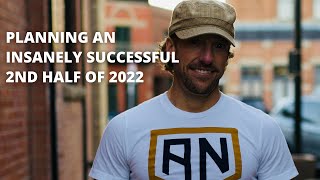
Andy Neary walks through setting two sales targets for the second half of 2022, then working backward from your closing ratio and average deal size to find how many proposals you need. He pushes advisors to use webinars, events, and social media instead of relying only on one-to-one meetings, and to block time for business development even when it feels uncomfortable.
Questions this video answers
The Power of One More by Ed Mylett.
Clever Fox (undated, full-year layout: four quarters, 12 months, 52 weeks).
Anchor.fm (free; used to publish to Spotify/Apple).
About one week.
Chapters
All right.
Fair warning on this. This at this webinar today.
I might tick some of you off.
I'm going to start with this statement. So today's topic, webinar webinar topic is planning an insanely productive second half of the year. And so if you've jumped on this webinar, I'm guessing you want to be more productive the second half of the year. And here's the thing. I don't know if anybody's felt this, but.
When we came out of COVID the pandemic, did anybody feel, and if you don't need to raise your hand, but did you feel like you got a little lazy?
Wade Shaking. No. Good. But a lot I've heard, I've heard this from a lot of advisors where they just felt like because everything's virtual, they're not out meeting people as much as they were. They just felt like they got a little lackadaisical. Maybe lazy is a bad word, but lackadaisical. Christy. Christine, you said out of sorts. Absolutely. And so what I'm seeing now is people are trying to get back in the groove.
And it's so interesting because I just made a post about this on LinkedIn.
On a weekly basis, I will get advisors who reach out to me looking for help. And there's typically two reasons they're looking for help. They're either stuck, right? They're not selling or doing what they want, they're not hitting the results they want, or some are doing well and they want to take it to the next level. And what's interesting, and I'm willing to admit this, the vast majority of my connections with advisors last one, phone.
Because they never, they never get back to me.
And when I think about why that's happening, there's a couple reasons. Maybe I'm annoying and they don't like me, which is fine because I'm not a fit for everybody. But two, here's what I think is happening. Most of the time when we jump on a call, I challenge them. I give them some ideas of things they can do with their prospecting, their messaging, their planning.
And that's inconvenient to them. Here's what I'm talking about. If anybody wants a good book to read, I'm reading this book right now called the Power of One More. Ed Mylett, if anybody wants to get a book, good book, super easy read, not a lot of like mind blowing things, but a lot of good reminders. One thing he says in here, and I absolutely love it, it's Successful people do inconvenient things.
Here's what I mean by that when I say inconvenient. These folks that don't get back to me, I'll check in with them five, six months later and when I get a chance to connect, I'll ask them like, okay, so did you implement any of the things we Talked about? And 99% of the time the answer is no.
They're still doing the same things they've always done that aren't working. Why? It's convenient.
Most people on this call, if I'm willing to bet, do not like cold call. Well, why do you do it? It's convenient. It's convenient to pick up the phone and dial 10 digits.
Even though you don't like it, it's not effective as it used. As effective as it used to be. You still do it because it's convenient.
So what I want to talk about today is for the folks here who are willing to admit that you're like, okay, I need to pick it up a little bit here. In the second half, I'm going to challenge you to start doing some inconvenient things.
And what I want to go through today is just some questions, questions I use with my own planning.
I'm about to do that here literally this weekend.
And questions I want to challenge you with if you want to kick some serious butt the second half of the year. Now, if anybody is interested and you're looking for a planning tool, if you are a planner yourself, I couldn't recommend this sucker. More than anything, if anybody wants a new planner, it's called Clever Fox.
This is an entire year in one book. So I started this one last year in July. I'm going to be starting the next one here this weekend. Guys, awesome book. Great way to hold yourself accountable and do become very productive. But here's the first question I want to ask you and I want you to ask yourself. Not that you have to spend 5, 10 minutes right now doing it, but these are questions I want you to write down so you can do the plan.
Number one. Before we start planning the second half of the year, I want you to look back at the first six months.
And I want you to write down your wins from the first half of the year.
It's interesting because when I work with my clients, whether they're in the academy, they're one on one. When we talk about Brian, you're in the academy, we always kick off every call with wins, right?
Advisors, for some reason always equate wins to new business.
But a win could be you moved a prospect one step forward or you open the door with a prospect, or heck, you got your marketing strategy down. So I want you to look back at the first half of the year and I want you to say, what were our wins? Whether it's me individually or my team or my agency, what were our wins? Come up with a good four or five. Because you got to create some positive momentum if you, if you feel like you don't have it right now. And the best way to do that is to look back and say, okay, we actually did some things well. Even if my sales aren't where I want them to be, we did some things well.
The second question, which is also a continued play on positivity and optimism, is I want you to look at the next six months and I want you to make a list of things you are excited about.
Now, for the sake of this webinar, I'm going to keep it to business goals, business planning, but you can do the same thing with your personal life because if, if we're killing it in business, but sucking personal, you're still not winning.
But what are you excited about? Do you have some big opportunities coming up? Maybe you have a speaking gig that you come. That's coming up in a month.
You got a lot of stuff in the pipeline right now. You're just, you're just trying to continue the flywheel of momentum here to move them across the finish line. What are you excited about?
Heck, you might even be excited about the insanity of Q4.
Anybody who actually is.
So what are you excited about the second half? Because you got to get excited. You got to look ahead and get excited. And I would challenge you guys to do the same things personally. Do you have a trip? Do you have.
A child with a birthday coming up? Whatever it is, these six hats, second half of the year, what are you freaking excited about? It's got to be stuff. There's enough negativity in this world right now. You got to create some excitement. Things you're working towards, things you're looking forward to.
Now. Now it's time to get into the big planning here. And since everybody on this call I'm willing to bet is in some way shape or form responsible for selling. We're going to start here.
I want you to write down what your sales goal is for the second half of the year.
And because I'm looking at names, I think everybody here comes from the insurance industry. This will be easy.
Whether that I want. There's two types of goals from sales that you're going to have. Either going to have a revenue number, right? But you could also have a number of sales goal. Maybe it's a lives goal, number of lives written.
Those are typically the three most common revenue number of accounts, or number of lives.
And here's what I want you to do with this number. I want you to actually set two numbers. I want you to set one goal that we are going to call realistic.
But I also want you to set a second number goal, sales goal that we're going to call your push goal.
So let's say you truly believe realistically you can hit 100,000 in sales in the second half of the year. Make that push goal 150.
Now, here's what I want you to do. And if anybody's got questions as we go through this, guys, please stop me. Feel free. I make these webinars collaborative.
Now that you have your goal, I want you to look at that push number, whether it's lives, revenue accounts.
Especially if you have revenue. What is the average.
Size of your win? If you are. If your number is a number of accounts, you can just hold tight for one second. But if it's a revenue or a lives goal, I want you to do this.
What is going to be the average revenue per win or average number of lives per win.
If you use lives?
So now you should have either average win for me is 50 lives, 100 lives, or average win is 20,000, 50,000. Everybody got that? So now that you have that number, I want you to go, okay, based on my push goal.
Knowing that my average win, again, if. If it's based off of accounts, hold tight. Knowing that my average win is either a revenue number or a lives number. How many wins do you need?
If anybody's stuck right there, please speak up. So we've got push realistic goal, push goal. We're looking at push goal going, okay, what's my average win going to be based on that? How many wins do I need?
Now we're going to come up with two more numbers.
Knowing you need a certain number of wins, I want you to ask yourself if I am pushing the right prospects. We're going to be very optimistic here. By pushing the right prospects to the finish line. What's going to be my proposal? Closing ratio.
Somebody who feels they can close a lot might say 50%. Yours might be 33%, 20%. What do you believe? Again, imagine you're pushing the right prospects to the finish line, not just any.
What do you feel confident is a realistic Closing ratio.
Now, the last number, I want you to look at the total number of wins you need.
I want you to look at that closing ratio. So to give you an example, if you need 10 wins and you have a 50% closing ratio, you need 20 proposals. So I want you to do the same math based on the number of wins you want and need.
Dividing it by your closing ratio. How many proposals? That means I am asking for the business. How many proposals do you need?
And if you're willing to share in the chat box, what I want you to do is just put that number in. If anybody's willing to throw in the chat box, how many proposals do they need?
Nobody. Everybody's holding this tight to their cuff. All right, we got a. We got a couple here. Kristen, you just need seven. Dang. All right. Awesome. 25. 23. Set. 12 to 18. Perfect. We got numbers flowing in. Awesome. All right, guys, here's the key. Now, this is where the inconvenient things come in. You now know how many proposals you need. 50. Melton, dude, time to get going. You need. You know the number of proposals you need. This is. This is the number of times you are going to ask for the business. Now, I want you to ask yourself these questions, and again, you don't need to answer them right now.
Knowing this is my goal. What is. What are my top three priorities this second half of the year?
If I'm going to hit this goal, what are the three things I have to spend the majority of my time doing?
Now, some of you on this webinar might be a business owner, right? So I break down a business owner's goal or roles within our industry three ways. You're a CEO, which means you got to run the business. You may have to manage some of the accounts if you still work with existing clients, and you got to develop new business.
Right? So you're focused on those three priorities. That might be your three, but what are your top three? Now.
I want you to really challenge yourself and go, cool. Here's my three priorities.
Of those three. For me to hit that sales number, what is my number one priority the second half of the year?
You see, what we did there is we broke it all the way down from this lofty goal. And the reason I'm having you do this based off of the push goal, guys, is you're going to bust your butt for the push goal. But guess what? Even if you fall short of the push goal, you're probably going to land at your realistic goal, which is the one you had in the first place.
But plan to hit the push goal.
Now you've broken it all the way back down to I know how many wins I need. Therefore, I need to focus on these three things the most. And of all of these three, which one is the most important thing I need to do? And I guarantee it should be something around prospecting.
And this is where the inconvenience comes in.
Because.
When you lack a plan.
You end up doing the convenient things, the things you know.
You show up at the office and shuffle some papers around to start the day. Maybe you reply to an email from a client and before you know it, it's 10am.
You haven't done anything to prospect.
And now it's time to prospect. And you're going, yeah, I don't have a plan. I don't know what I'm going to do. Oh, you know what I'll do? Yeah. I'll make about 25 cold calls. So pick up the phone, call. Some people get about 24 voicemails. But I hey, there was my prospecting for the day and it was completely ineffective. It was because you lacked a plan. So what I want to spend the rest of this time doing is now that you know your sales number, you know your priorities, one of them, I hope, is business development. Here's where I challenge you to go inconvenient the second half of the year. And if you're in my academy right now and you're one of my clients, you're hearing this a lot. You need to create exponential awareness. So I want you to think about when it comes time to develop business.
You have six months.
You need to figure out what you're going to do to get your message in front of as many people as possible.
As quickly as possible.
So, Jen McCarthy, you said you need 20 proposals.
You need. Now this is a race to 20 proposals for you.
And there's two ways you can get to 20 gang. In Jen's case, you can either create linear awareness.
Or you can create exponential awareness. If Jen needs 20 proposals picking up the phone every day, though, it should be part of the strategy is linear awareness. She can only call one prospect at a time. With a cold call.
She can only send one email at a time to a prospect if she's going to go one on one.
But exponential awareness is getting your message in front of a lot of people at one time. What are common channels of exponential awareness?
Number one, webinars.
Hosting webinars, gang is one of the most effective things you can do if you are Consistent.
I host mine every week. You don't need to go that frequent. But the point is, think about what you can do to bring value and bring prospects to you.
So you can get one message in front of a lot of prospects at one time. And a lot can even be five to ten. I don't care. It's more than one.
Who here wants to step up? Bob, I'm looking at you. You're doing a lot of speaking right now, right? You've been doing a lot of speaking last year. Or guys who's going to challenge themselves to try to find the. To get out, try to find themselves on stage, whether it's at a conference or hosting your own event where you can talk to a lot of your prospects at once. I have a client right now who's made it a goal. We are hosting three private dinners for prospects by the end of the year.
All that is is a form of public speaking because they're going to host a dinner and get up and talk.
And again, their goal is to only bring 12 per dinner, but that's 36 total over three dinners.
How about newsletters?
Use your newsletters to be super effective. Send an email out to all your prospects at a regular cadence. That isn't some copy and pasted stuff that you pulled off of some website. No, it's me listening to you, teaching me.
Because right now you've got a lot of prospects who may be aware of you, but not ready to buy quite yet. They may not quite know much about you yet. And when Q4 rolls around, because there's a very good chance they are a 1:1 renewal, you want to do everything you can to make them aware of who the heck you are and how you can help.
And a newsletter is a very consistent, powerful way to get one message in front of your entire list.
But again, make it different, make it intriguing. How about jumping on a video and teaching? Go to the whiteboard in your conference room and do some teaching.
Who here? I can't see everybody's hands. Who loves getting up in front of a prospect in an intro meeting. And do. And teach. Who loves teaching?
Guys, if you create videos that you send out to your whole email list, all it is is you teaching to 200, 500, 1000 people.
And then the one I've always talked about, social media. Yes, you can be using LinkedIn effectively. Brian, you were yesterday in the academy. You mentioned my posts got 3,000 views.
That's 3,000 eyeballs. It's awareness.
My point is this. Now that you know your Number, goal your revenue, the number of wins you've got to shoot for. You know what your priorities are. And the point of doing the prioritization was, I hope business development is one of them because you guys would be shocked how often I talk to advisors who have big, big revenue goals, yet when I look at their weeks, they're doing nothing to grow their business. It's not like they magically fall from the sky.
But if you know you've got a block time in your calendar every single week to go out and do business, to develop business.
Now it's just a race to that proposal number. And the best way you can race to that proposal number is to get your message in front of as many people as you can, as quickly as you can. And the best piece of advice I'm going to give you guys is do not judge how many people hear the message. If you do a webinar, five people show up. Who cares? It's five more than one.
If you track emails and you send out a newsletter and it got a 10% open rate, who cares? It's more than one person trying to open it. A message on LinkedIn speaking. Who here is even willing to take the challenging step of starting something like a podcast so you can get your message out?
It's all about exponential awareness. And that's the advice I want to give you guys. If there's one takeaway from this webinar today, it's when you block time to go develop business. Yes, still pick up the phone. Yes. Send that email to that prospect in hopes you schedule a meeting. But you can't overlook the power of exponential awareness using that hour that you've blocked for developing business to get a message out far, fast and wide. Because when you play the numbers game that way, one, it makes your short term linear awareness, the calls and the emails a lot more effective because they know who you are. But number two, you're getting more done in less time.
I talked about this on a previous webinar, compressing time. If I get one, if I spend one half hour doing a webinar for my business development today, that's compressing time. Because I've got 22 of you on this webinar. 40 of you signed up. Cool. I'm getting a message out to 40 people, you guys can do the same thing.
So summarizing the whole thing, what's your realistic goal? Push goal. Look for the push goal, shoot for the push goal, figure out how many wins you need and how many proposals you need, and then race to the proposal numbers you need.
And get after it every single day. Like I said, it's not about convenience, guys. This stuff isn't easy. But if you wake up every day between now and the end of the year just getting after it, leaving it all in the field and doing everything you can to get your message out to as many people as you can, you will hit your numbers. Your worst case, you're going to hit your realistic number.
So with that being said, we got four minutes left. Questions? Question. Yes, Bob, the clever fox that you referred to. Yes, sir, I was just looking on Amazon it says weekly, monthly. I mean, is it. You mentioned annual. I guess. Which one do you have? I am. What I will do for everybody. If anybody is interested. I'm going to put it in the chat box for you. I'll. I'll send you the. Or share the exact one that I use. Thank you. Yep, it's going to be a long URL, so I apologize. It's undated, right, Andy? So you can like start at any time. Yeah, everything's undated. But what it gives you is it gives you a full year, four quarters, 12 months and 52 weeks of planning. It's very self explanatory. Got it. Okay, thanks. And Andy, with the podcast you were mentioning, is LinkedIn a good place to get started on doing like a short podcast or do you recommend a book to learn how to get started doing a podcast? Great question. Yeah, great question, Joe. Think of it this way. Podcast. Nothing more than you talking, right? It's audio. I will tell. I actually, I'm probably gonna leverage this myself, but some of you may know I do a broker's voice podcast for interviewing people in our industry. I'm thinking about just going on LinkedIn live and starting them, doing them. That way, number one, people can watch it on LinkedIn. Number two, I can record it. And so yeah, Joe, I tell you, just think of it as whether you do LinkedIn Live or just record it yourself on Zoom. Starting a podcast is super easy. Anchor.fm, if anybody's interested, is a hosting site for podcasts that's free, very self explanatory to set it up. And it's a. You got to get approved by Spotify and Apple. It takes about a week to get approved. Once you're approved, you got a podcast.
And I tell everybody I put a post out a week or two ago about this because I very, I feel very strong about this. Guys, our industry does not need another podcast about health insurance. The only people that are going to Listen to that podcast. Are your peers.
Start interviewing clients about their business or just businesses in your market about their business, about their challenges. That's a podcast your prospects want to tune into.
Shout out to Ms. Allison on this webinar for the great job that she does. Absolutely. Allison's got Raising the Bar. Perfect example, guys. Go check out Allison DePauli on LinkedIn. She has raising the Bar podcast. She interviews businesses. It's a perfect example.
The lat. Yeah, absolutely, Bob. That was a great call out. Last thing I wanted to say with that. What is it I wanted to say with that? Oh, Kristen, Kristen, you said you love teaching. Guys.
The worst. The worst thing you could do. If you love teaching your prospects is waiting until they schedule a meeting with you to teach them. If you have a gift to teach, it's why I have my business. I love teaching. Do everything you can to teach as much as you can. And if that means you put out some videos to your prospects that you send in an email form, it's just you're giving yourself that space to teach, which is love, which is what you love to do.
And guess what, guys? Buyers are smarter than they've ever been. They want value before they buy. And if you take the time to start teaching now, when they're ready to buy, you're the one they're going to think of.
So, like I said, guys, a lot of this feels inconvenient because it's forcing you to think bigger and move the needle faster. But I tell you, if you just commit to this stuff on a weekly basis, you're going to hit your numbers as long as you stay consistent.
Andy, I think inconvenient is a very kind term.
Uncomfortable as heck.
Yes. And I'm stealing a word from this book, but you're right, it is very uncomfortable.
Yeah, but it's. I hear over and over what you're saying. We've got to get uncomfortable to get where we want to go. And I can at least share this from my experience.
That, you know, when I've taken a couple of the steps and done things that are incredibly uncomfortable for me, I realize that it's incredibly empowering. And I care less and less about any sort of comparison or what did I look like or what did I sound like. It's the fact that I did it. And if I can reach one person with that, that's one person I didn't reach yesterday.
I'm going to finish with what you just said, Christine. What you said cannot be overlooked. Guys, quit trying to change thousands of lives at a time. Change one.
Just change somebody's life every day with your content. Number two. Good point. Number two.
It's easy to feel like what you teach is boring.
Not that exciting. Here's why you think that. You're comparing it to what your peers are going to think about your content.
Doesn't matter. It's what your prospects think. So, perfect example, guys. If you love teaching, I want you to make that a huge piece of your prospecting this second half of the year. And even, especially if you imagine you. You focus on small group. Let's just go there for a second. Small group.
Do you realize what impact a video on how deductibles and out of pocket limits work would be for this group? Because guess what? You think that's boring. Yes, your peers on LinkedIn and other channels think it's boring because we all know it. But you know what? Teaching a business owner of a small group how their plan works or how to set up a plan is game changing for them.
So don't judge your content by your level of expertise or your peers.
All that matters is if you impact your prospects.
Whether that again, social media, newsletter, webinars, public speaking, all those channels to create exponential awareness. All that matters is are you impacting your prospects, not your peers.
Excellent.
All right, gang, any last questions before I let you go?
Thank you. All right, you got the link to Clever Fox guys if you want to check it out. Yep, you bet. Check out the link to Clever Fox. Recording will be coming out probably in about a half hour. Now it's time to kick ass. Thanks, Andy. Thank you. Yeah, thanks, Andy.
More from Andy




If you want producers to succeed faster, help them create a sales message that creates confidence.

Sales isn't a zero-sum game! You can have tough competition and still grab a beer after



Option 1: Meditation, a fast walk, a podcast, and protein. The ultimate morning routine!

How you do one thing is how you do everything. Ill elite producers fuel their body.


Stop living in the gray of maybe! Your job in sales is to get a clear yes or no