Revolutionizing Content Marketing In The Insurance Industry with Marcus Sheridan
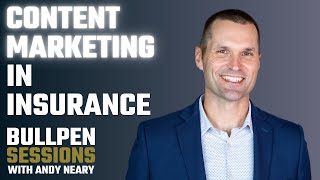
Podcast episode (Bullpen Sessions #307) in which Andy Neary interviews Marcus Sheridan about applying transparent, question-led content marketing to the insurance industry. Marcus recounts saving River Pools (circa 2009) by answering customer questions online, introduces the "Big Five" topics buyers search for (cost/pricing, problems/fears, comparisons, reviews, "best"), and argues that ~80% of the buyer's journey occurs online (citing a Gartner stat that 75% of buyers prefer a seller-free sales experience). He recommends four trust-building pillars—talk about what others won't, show via video, sell differently, and be more human—and prescribes self-service website tools (self-scheduling, self-configuration, self-selection, self-assessment, self-pricing). He also promotes Price Guide (an AI-powered pricing estimator) as a low-cost (<$20/month) embed that can generate significantly more leads (reported 5–10x increase). The episode stresses thinking of your business as a media company to win attention and trust.
Questions this video answers
307
October 11, 2024
Over 100,000 copies
2009
About 80% of the typical buyer's journey happens online (host/guest claim).
Chapters
Hey.
Hey.
Welcome back to Bullpen Sessions. My name is Andy Neary and this is episode 307. Today I am absolutely honored to have a man on who I have admired from afar for quite a while. Marcus Sheridan is the author of a book I absolutely love, they ask you answer. And Marcus is a highly recognized communication expert, best selling author and captivating keynote speaker specializ in transformational communication. With over two decades of industry experience, Marcus has mastered the art of connecting, engaging and influencing individuals and organizations. His expertise spans the topics of sales, leadership, marketing, AI, personal development and trust. Starting his journey after college, he is an entrepreneurial success story. Marcus founded a business that grew into the world's most trafficked swimming pool company, revolutionizing the effect of communication in the business landscape. He ignored united the they ask you answer movement, empowering businesses to embrace transparency in their marketing and communications. His best selling book, which I referenced, they ask you answer has sold over a hundred thousand copies and has been translated into several languages. As a dynamic speaker, Marcus engages audience worldwide and is known for his real time interactions that transcend norms, resulting in memorable presentations every time. I wanted to have Marcus on because he has been a mentor, somebody I've never met, but who has mentored the way we communicate and do our content here. In fact, it is not uncommon. When we coach our clients, we often reference they ask youkanswer principles. So I am absolutely excited to have him on today. The man who wrote the book we share with so many others. And so I think you're gonna absolutely love this episode. If you're looking to find more ways to grab attention from your prospects and stand out in a very crowded market, this is gonna be a game changing episode for you. So tune in, maybe grab a pen and a piece of paper, take some notes. You're absolutely going to episode. All right, here's Marcus Sheridan. They ask, you answer. All right. Welcome back to the bullpen sessions podcast. This episode is an honor. I've got Marcus Sheridan joining me today. Marcus is the author of a book that we reference constantly at Complete game Consulting. They ask, you answer. And so this is a book that had a profound impact on not only my career, our business, about three years ago when I read it. So, Marcus, I want to welcome you to the episode. Like I said, this is an honor to have you on.
Yeah, Andy, I'm happy to be here, man. And I'm sure we're gonna have a great conversation and deliver some value to the audience. That's always the goal.
Let's do it. Well, I shared A little offline. You know, I come from the insurance industry. We work with insurance agencies and producers. And you and I think both agree when it comes to marketing, the insurance industry undoubtedly is a little behind the times. And so I'm excited to have this conversation about how agents, agencies, can differentiate themselves with the right kind of marketing today. But before we get there, I want you to take us back in time. For the people who haven't read the book. You know, you have a company, River Pools in Virginia. Take us back to 2009, right after the recession impacted a bunch of most businesses in the US where was River Pools at that time?
Yeah, we were right there on. On the tinkering with bankruptcy, and I thought we were. I talked to some consultants. They all said, marcus, you should file bankruptcy. It just. Everybody was. You couldn't get loans for pools at the time because everybody was upside down with their home values and people were very afraid. And, you know, I always say, though, Andy's like, the good thing about pain and suffering in business is it forces you to do that, which you probably have known for a while you should have been doing. It just hadn't had enough of impetus or motivation to do the thing. And so it was during that time that I really just started to research and learn more about this thing that, you know, we call the Internet today. And I started reading a lot of fancy phrases like inbound marketing, content marketing, social media. But, you know, what I really heard when I read all that stuff was, you know, Marcus, if you just obsess over your customers, questions, worries, fears, concerns, and you're willing to address them online, especially on your website, you could save your business. And so I said, all right, well, here's what I'm going to do. I'm going to take all the questions I've ever been asked, in this case about fiberglass swimming pools, good, bad, or ugly, I'm going to address them on our website. I'm going to do it every single day, and we're going to see if this is enough to save the business. And make a long story short, it became the most traffic swimming pool website in the world. And we became a manufacturer, became a franchise. I mean, just really just took off. And I sold the manufacturing, franchising, but I still own the original company in Virginia, the original franchise, if you will. And it's been an amazing ride. And of course, now, because I took that experience, I started just writing about it. And then as I was writing about it, people started to say, man, can you teach me how to do that. And from that came an agency came, they ask, you answer the book. And of course that's changed my life and a whole lot of other companies lives too. So it's been a crazy, crazy journey since that time, 2009, 15 years ago. But it all started with pain. Pain leads to innovation. And here we are.
Yeah, you know, one thing that aligned me with you right away is my journey. I moved to Colorado in 2014 after spending 13 years in the insurance industry here in Wisconsin. We're back here now. And in 14, I went to a market where nobody knew me. And I said, all right, I gotta build a brand. And at the time, people in the insurance industry are like, what are you talking about? A personal brand, man, we don't do this in the industry. And so I decided, I said, I'm gonna give it a shot. And it worked. I was able to get a lot of attention quickly. And so that's when I read this. I'm like, this aligns with what we believe here. And something you said, online marketing. I know you're very passionate about what you do, which I love. Talk to us a little bit about online marketing. Cause I gotta be honest, I still talk with insurance professionals who kind of act like the Internet and social media don't exist. Talk to us about why you have to be online and why your marketing has to be online today.
Well, listen, I mean.
Let me just say, yes, there are some anomalies out there that have such extraordinary networks that they can get away with a whole bunch of face to face meetings. But that's not where the world is headed. And that is not a very sustainable business model for most people. And certainly it's not a way to scale a business. Okay. If you really want to scale and grow a business or grow your agency or whatever that is, you need to have a brand. And the best way to build a brand today is to do it online. Because we know that 80% of the typical buyer's journey happens online. It actually happens by them researching and vetting. And you know, they're researching and vetting companies to death and then they reach out, but they don't want to talk to someone until they're good and ready. In fact, Gartner recently did a study that said that 75% of buyers would prefer to have a seller free sales experience. Think about that for a second. 75% of buyers would prefer to have a seller free sales experience. And so this is like, this is, this is where we're going. Because how it works is we Want to feel like we're completely in control of our buyer's journey and that we're dictating the terms. And then as soon as we're comfortable, as soon as we're ready, as soon as we feel like we're not going to make a mistake, that's when we're willing to reach out to the company, reach out to the agency, whoever that is. And generally whoever's going to earn that call is the one that won the 80% that was giving them the answers to their questions, that was teaching them through text, through video, through audio, whatever that thing is. Because in a perfect world, somebody comes to you and they say, and I know you've experienced this, Andy. Somebody comes to you and says, I feel like I already know you. Right. That is the phrase. That's the phrase that you want to achieve. You know, worst thing they should say is, wow, you're taller than you look on camera, you're shorter than you look on camera, because it means they've been looking at you, they've been listening to you. They should know your voice, they should know your face, and they should feel like they have already learned from you before you shake their hand the first time in real life. And if you do that, you've done something really exceptional and you built relationships of trust on the front end. So that's the power brand. It happens mostly through the Internet, and it's a better time than ever to build one online because anybody can do it without a lot of money. You just got to be creative and you got to think a little bit different than everyone else.
Yeah. You talk about the buyer's journey. You know, in the insurance industry, especially when you're selling business to business. So commercial insurance, employee benefits. Today, the sales cycle is pretty long. And, you know, I tell people, if you're waiting to schedule that a first appointment to start educating a prospect, it's going to take a long time for you to win the business.
Yeah.
If you don't mind getting little tactical for a second, walk us through the buyer's journey. Cause I think a lot of advisors in our industry don't fully grasp what that journey looks like and how they could actually use content to start taking that buyer down the journey before they ever shake their hand.
Yeah, well, you know, for most of us, when we're. It's like we suddenly, we have a problem. Right. We know we have a problem, and sometimes that problem just builds over time. Sometimes it's just, boom, in the moment. But the moment we have a problem, we Go into solution mode, right? And generally when we go into solution mode, we start to ask questions. And this is where that the traditional buyer's journey that buyers funnel comes from. Top of funnel, middle, bottom of funnel. And I don't obsess so much over funnels as I do over the questions that people are asking and what they're thinking during this, during this journey. Like, for example, whenever we know we want to buy something, we just got to figure out what to solve our problem. Well, we search very specific things or we ask very specific things. Now, in the book, we talk about this, and this is very much applies to the insurance space, but we talk about these five subjects that every buyer wants to know before they reach out to a company called the Big five, called the Big five. And the Big Five runs the economy of search. It's what everybody wants to know. Yet most businesses aren't willing to talk about these things on the front end, which is problematic. So what are the Big five? Big five are cost, pricing, rates. Okay? That's what people want to know. We problems. In other words, what could go wrong if I make this decision? Right? Let me give you an example. In the insurance space, if I switch providers, how could this blow up my face? Or what's the transition look like? Or is this really difficult to do? Okay, so problems, fears. Third one is comparisons. We love to compare stuff online. We're obsessive about comparing anything. Right. Fourth one is reviews. We love reviews. We want to know though, the good, the bad and the ugly, not just the good. And then finally, best. We're constantly. I mean, think about how many times you go online and you search the word best plus another phrase or most or top or whatever that phrase is that you use. But we like to be able to lay things out and see how it all stacks together. And that's what we do online. So cost problems, comparisons, reviews, best. That's the big five. That's the economy of search. It's what buyers want to know. And that's what businesses tend not to talk about. And that's a problem. That's a problem. Let me give you an example. In the insurance space, every single buyer wants to understand rates before they talk to a provider. They just want to understand. They want to get a sense for rates. Most won't do that. Most will force them to have a phone conversation. Well, that's dumb. Now, that might have worked in the past and that might work for Geico, but if you want to, because they can throw a gabillion dollars at TV Commercials and tell you that you can get, you know, they almost did it to a degree because they said you can get a rate like really, really fast. Okay, like 10 minutes. We can give you, we can give you a rate. But what buyers want today is immediacy and we can't stand friction. So anything that gets in the way of us getting what we want in that moment, it just really, really bothers us. So we want to go to that site. We want to find what we're looking for, we want to find it quickly. That's how we've all evolved since this thing called Google started giving us answers so fast. And it's like the bar just keeps raising and raising and raising. And so with your website or with whatever online experience that you offer, this is what people are going to be searching for from you. So if you just take the world of insurance and you say, how many people in this space right now give the researcher the ability to get a range for what their rate might cost? Right. Well, that to me is an absolute no brainer. It's one of the first things I would do as an agency. If I had an agency, most would say, no, I can't do that, Marcus, because. No, no, no, no, no, don't even give me the because I already know you can. In fact, how it's worked for any insurance agent is that they'll, they'll talk to somebody on the phone and the person will say, listen, I need this such and such coverage. I know you don't know the exact numbers yet, but just give me a sense, like, what are we looking at here? You know, can you give me a feel for this? Like, what have you seen in the past? And like, I know you've heard that you know how many times, Andy, over the years, like, you've heard of a million times. Right? And so that's the type of thing, once you say, okay, I can't always give exact answers to questions online, but I can address everything online and I can address it as well as I possibly can. And so if you come from that mindset now, all of a sudden you can just cover so much.
Yeah.
We are in an industry, Marcus, where in fact, transparency is kind of being forced upon us right now for good reason, whether it's rates, commissions, you name it. And it is so interesting how agencies just haven't taken that and leveraged it to their advantage by being as transparent as they can possibly be in their content marketing. You know, to your point of. Here's even down to, here's how we get paid.
That's so powerful. And I, you know, I've told agents to do that because it actually works. Induces a ton of trust. I mean, I think the one thing that we all have in common as businesses is that we're in a battle for trust that's never going to go away. Okay? It doesn't matter what happens with AI, it doesn't matter what happens with technology. Like, trust is going to be fundamental to your business. Facebook won't, because that's a platform. It's going to come and go. Google won't, because it's a platform. It's going to come and go. Right? And so these things might have a period of time where they have great influence, but they are not built to last. A principle of trust. An agent who can literally build a bank, a brand upon trust. Can you become the most known and trusted agent in your market? That's the goal. That's the question. Can you do that? Now, if you're going to do that, you got to be willing to do four things, and this is just really, really fundamental. Four basic things. And the big five really helps set or is a framework for these four things. First thing you got to be willing to do is talk about what others in your space are not willing to talk about online. Okay? Second thing you got to do is you got to be willing to show what others in your space aren't willing to show specifically through video.
Three, you gotta be willing to sell in a way that others aren't willing to sell. And then four, you need to be more human than anyone in your space is willing to be. Gotta add soul. Okay? Those four things you gotta talk about, you gotta show, you gotta sell. You gotta be more human than anybody in your space. Those are like the four fundamental pillars of trust in this digital age that we're a part of. And so as you're listening to this right now, you should ask yourself, okay, how much am I really talking about online that my competitors are not? Most people would say, well, if I'm being really honest, we actually sound like most. That's not. Okay, all right. If I said to you, how much are you showing specifically through video, that at least 95% of your competitors, they don't show or haven't shown online before. How are you selling in a way that's different, you know? And so.
Let'S look at the insurance space for a second, right? So if I said, well, what do we mean by talking about what others aren't willing to talk about? So let's say we wanted to and talk about and show can be very similar, right? Because you could do a video that's talking and showing at the same time. But let's give you some examples.
If you said why XYZ insurance is a waste of money, okay? There's certain types of insurances that for a lot of people are a waste of money. That's a powerful, bold statement and that forces you to have an opinion on something and say, listen, you know, 1% of the world needs this, but the other 99% of you, you don't need this. And here's the reason why you don't need this. Now I'm telling you this, even though I sell this insurance now, all of a sudden you become the voice of trust because you're saying that which they least expect you to say, right? That's what, that's an example of talking about what others aren't willing to talk about. Another way is like if you talked about, you know, all the factors that drive rates up, all the factors that drive rates down, why some people get egregious rates, why some, you know, people or companies, you know, get much better rates, like really breaking down the science of rates and what it looks like. That's an example of it, right? That's, you know, that's, that's something that, that, you know, most don't really talk about. They certainly don't talk about it very well. You know, in terms of show and sell, like I said, if you had right now a pricing estimator, a rate estimator on your website, that would put you in a very different class. Another example, if I may go down a tangent for a Second with this, 75% buyers want to sell a free sales experience. Well, the key to that is offering self service opportunities online through your website especially, right? So when we talk about self service, we're really saying tools that allow them to. In the past they would have had to talk to a person like a salesperson, but now they can do some type of interaction on your website. They can get that answer before they are forced to talk to an agent or salesperson, whoever that is. And then they built the trust, they feel more prepared and then they reach out. So there's five main examples of this. I'll give you the real quick one is self scheduling tools on your site. So if somebody just wanted to schedule time with an agent without being forced to talk to an agent first, I'm not saying that you should have that, but that's an example of self scheduling you got self configuration doesn't really, you know, partially affects insurance space, but self configuration is whenever you build something for your design. So for example, if I, like I'm a pool guy, I might allow you to build your swimming pool on my site, right? That's an example of a self configuration tool. Or if I have sheds, I might allow you to build that shed. Or if I'm a remodeler, you might build it, right? So then you got that, Then you got self selection tools. Self selection tools. And this is really important. Insurance self selection is any type of interactive tool that allows the person to understand which thing they need. So for example, you might have a tool on your site that says, what type of commercial insurance do you need for your new business? And it's a tool that's meant for new business owners that are trying to consider, okay, I know I need insurance, I know it's commercial insurance. I just don't know exactly what type I need. And so then you ask a series of questions on the site and through that series of questions, then you're able to make essentially give a recommendation. And that recommendation is, hey, based on this, here's the type of insurance that you should be looking at getting based on your business, based on your needs, et cetera. Right? So that's a self selection tool. Then you got self assessment. Self assessment shows how ready someone is or scores someone. Right? So an example of self assessment in the insurance industry is it might be an interactive tool that says just how well covered is your business? Okay. And, or how well covered is your home? And what it does, it asks you a series of questions that talks about the different coverages you have and how much coverage. And this at the end, you're able to give them a score or a grade or something like this that says, so based on this, you're scoring, you know, a 70% out of 100 in terms of your, you know, preparedness score, whatever that, whatever that thing is. And then the final one is a self pricing tool or pricing calculator, pricing estimator tool, which I'm a huge proponent of, actually recently just developed one called Price Guide. AI uses AI in any, any industry in the world. You can go into Price Guide and you can create within 30 minutes or less a working calculator that you put on your website and start to immediately generate leads. It's a phenomenal tool. It's incredibly simple and it's so powerful the average company. And because now that I've actually put it out into the market, it's only been out for a couple months, but now a ton of people are starting to use it. The average company tends to generate 5 to 10x the leads they were getting before as soon as they have a pricing estimator on their website, if you can believe that, 5 to 10x as soon as you have a pricing estimator. And so that's why I'm such a big believer in self service because, you know, I use these tools for my business. I teach companies for it. It's what the market wants, it's what they're asking for. And if you did this like you could stop listening to this podcast right now and you could go do that and suddenly you would just say, oh my gosh, this is already just transforming my business.
And if I have it correctly, Price Guide is an app that can be integrated to a website, right?
Yeah, that's exactly right. You just, all you do is, it's really cool. It asks you what industry you're in and then you tell it, and then it says, okay, if you're in insurance, what type of insurance do you provide? And then you can even, you know, it gives you selections based on AI and then it says based on the AI. Okay, well here's the questions that you probably are going to ask them in order to give them a rate. And then you modify the questions, you modify the parameters, right? And then you're able to give them a range. It even like AI creates the, you know, the thank you page and all that stuff for you. So it's super simple, super cheap. It's less than $20 a month. And so, you know, usually in the first couple of days they pay for it with, for the next year because of the leads that they've gotten. And it's just phenomenal. Obviously it's affected by how much traffic you get to your website. But it's just like I said, I've seen 5-10x but immediately gives you a snippet of code that you put on your site. Just like a regular form, you know, like a form works on your site and all of a sudden you're, you're getting more leads than you've ever gotten before.
Well, I'm going to make sure at the end of this episode to ask you where people can go because I know I've got agency owners listening in that are probably going to want to look that up immediately. Yeah, that's, that's phenomenal. You know, sticking to the website and the content. You, you know, when you went all in on that, Marcus back in 2009, you definitely leaned into what I would call the volume game. Right. I think you were writing three blogs a week. So that's. That's volume. Right. And when I think about you, you mentioned earlier you want to be the most known advisor in your market. We're in an industry, I think, that often prides itself on tenure and knowledge. And my. My message to them is, at this point in the game, it doesn't matter if somebody's out. Somebody else is getting attention. And so when I kick off my workshops, I'll ask the audience, when you think of personal homeowners and auto insurance, who do you think of? And everybody says, state Farm, All State and geico, or Progressive. Why? Jake from State Farm, Mayhem and Flow, and the Gecko. I said, okay. Do they have the best products in the game? No, but it doesn't matter.
Talk to us a little bit about that, because I think there are a lot of people out there, too, who still think it's about knowledge. When today my. My pushback is. No, no, no, no. It's about attention. Are you the most known in your market?
Yeah, that's right. That's right. You know, there's. There's a few different answers to this. I really like what you just said about those brands. And again, those were brands. They've built a brand, you know, in this case, around an entity, right? And. And oftentimes when you build a brand, you want to build it around a person, and you can do this through your agency, too. This is why it's so important that you do so that they can start to develop a relationship with you. Just like we've developed a relationship with Colonel Sanders, who's been dead forever, right? And we still eat his chicken. We trust him, right, because he's Colonel Sanders. Right. Most people still remember Dave from Wendy's. Wendy's was doing a lot better when Dave was the show and then was his daughter, of course. Like, there's a symbol of a human, of a soul. So I said, you've got to be more human, right? This one of the four pillars of trust. You got to be more human. Now, my friend Sally Hogshead, she loves to say, different is better than better. And I love that phrase in a lot of ways, different is better than better. It makes me think of.
That water that you see called Liquid Death. Liquid Death really took over the water beverage industry, and they did it with a product that is literally exactly the same that you get out of your tap, right? You pay good money for it. But you know, it's the same thing that you have in your little thermostat. I was like, but what they do, like, how do they get. It's very difficult to get in that space because it's all about space on shelves. And for them to take on somebody like Liquid Death, they've got to remove someone else from those shelves. That's the name of the game when it comes to retail. And so in this case, they said, you know what, we're going to market this exactly like it's an energy drink. It's going to have that same type of vibe. So everything that was different about them had nothing to do with product, had everything to do with the messaging, the packaging around it. The problem with the insurance space, it is fundamentally the most boring marketers in the entire world. This is why you go to an insurance conference, which I've probably spoken at, I don't know, at least 50 to 60. I mean, I'm a full time speaker is what I do. I go to tons of conferences. I've spoken a lot of these. You know, most insurance folks look pretty dang similar. Right? You know what I'm saying? I mean, it's like. And so it's like they dress a certain way. It's like, you got to have a stinking personality. You got to have some soul. That's why I say you got to be willing to talk about what others are not willing to talk about. When was the last time you said anything controversial in your space online? If you want to stand out, you've got to be willing to do some of these things. I mean, I built an entire brand because, you know, we looked at the swimming pool industry and we said, these things aren't right about it. This should change. This isn't the way that it should be. There's things that happen in every industry that make you frustrated as an agent. You're like, man, this isn't right. This isn't the way it should be. Well, are you talking about those openly? You're going to get it. You're going to get people's eyeballs, you're going to get people's attention like that. But the problem is we hear things like what I'm saying and we say things like, you know, that might have worked for Marcus as a pool guy, but that's not going to work for me and my market. That is the laziest person's thinking possible. It is so easy and sit there and just say, that won't work for me because. Or we are different.
Anybody that says that, I always come back with the same thing. Is trust fundamental to your business? Like, if the answer is yes, well, then it's all psychology, right? Most known and trusted agent in your market. You can't do what everybody else is doing. You can't say what everybody else is saying. You gotta do something different, and now's your time to do it. One thing I like to tell folks is you gotta see yourself as a media company. It's like you're a media company that happens to sell insurance.
Amen.
You're not an insurance company that happens to do a little bit of media. And I was like, people are like, I don't know about. No, no, no, no, no. I'm really, really serious about that. It's like you. When I. My whole world change, when we went from just being a swimming pool company, people say, what do you do, Marcus? And I do pools. And to the point where say, what do you do, Marcus? This company, River Pools. Like, oh, that's a media company. We transform people's backyards. We do it through swimming pools. Right. You see, it's a completely different shift. Right? But we're telling and showing a story of backyard transformation. But we do it in this case by installing swimming pools. And so when you're a media company, you say, all right, well, I'm going to do whatever it takes to produce that content. Like you said, three pieces of content per week. That's a commitment. But that is actually, especially now, especially with AI, Especially with all that's possible. I don't think it's. I don't think that's a lot. But most companies still aren't coming close to thinking that way, you know, And I too, look at it like, I can create a video. I could create in the next hour. I could create 10 videos that I. That I put online. Takes an hour of my week. I can send it off to somebody to edit it. I don't have to do anything else beyond that. Most just aren't willing to get organized enough or commit enough to do that. But that's how you're going to set yourself apart. Part.
Yeah, you talk about. I mean, that right there, looking at yourself like a media company who happens to sell insurance. That's what changed my career. I actually heard Gary Vaynerchuk say that in 2017, and that's what changed it for me. I said, you know, I am going to pump out as much content as I can. And it just so happens I sell insurance, and that's what's going to ultimately drive my leads. And I will say, Marcus, that. That what you said right there is the reason Complete Game Consulting exists. It's because you have to think of yourself like a media company today, no matter what you sell.
Yeah, it's kind of like this. I tell you, it's a weird story, but it's. You know, you've heard stuff like this, too, I'm sure. I was at an event one time, and this lady. I had a different podcast at the time, but this lady comes to me, up to me, she says, marcus, you were in the shower with me this morning. And I was like, whoa, Whoa, Really? She said, yes, I listen to your podcast when I'm in the shower. And I had another person at a different time said, you know, Marcus, you were with me during my entire hike up a mountain the other day, and it was really helpful. So in their mind, I'm like, we're having a conversation, and that's the fourth wall. Like, that's the thing that is so powerful about content, when you deliver it the right way. And this is why, you know, it's like, do you. Do you want that trust to start with the handshake? I know. I don't. I'm not interested in that. And that's not where the future is headed anyway. And I think the future of insurance is, you know, if we're being really, really Honest, I think 90% of insurance is going to happen without a handshake ever happening in the future. And that's scary to people, and they don't really like it, and I don't think it's necessarily wonderful, But I think that's the truth. That's where we're headed. Everything that you and I think has to be sold in person is going to be sold online. Those that try to fight the trend are like, you know, it's no different than right now. I've got a place in the Outer Banks of North Carolina, and luckily, my place is a little bit more inland, but there's this huge swath of homes that are literally falling into the sea right now because of these huge tides that we've recently have had. Had. Now, they were a hundred yards off of the beach 10 years ago, but today they're falling into the ocean. All right? And that's because the ocean represents the market. The market's going to do what the market does. You can try to fight the market, but unless you get that house off its stilts and move back, you're going into the ocean. Right? And so this is what Happens with businesses over and over again. I learned a long time ago to not let my personal opinion screw up smart business decisions. You know, it doesn't matter if I like video. It doesn't matter if I like TikTok. The marketplace just doesn't give a rep. But the marketplace cares about is, can I find what I want, Can I find it quickly? It's no different than the person says, well, I'm just not good on. On video. Well, you force them to see your face and hear your voice when you meet with them in person. So what's the difference? Right? It doesn't. You can't tell me you're not good on video. I would ask you, are you good with people? Because the answer is you're going to say yes. And so if you're good with people, it means you're good on video. You just haven't learned the skill to be great on video yet. Which all you have to do really is stop seeing the camera as a camera and start seeing it as a potential customer, as a client. And then that's a total, you know, that's a total game changer. This is, this is the conversations we have to have. People say, I don't want to be judged. Well, guess what? If somebody comes to your website and they have a question, they want to see a video, but they can't find the video, newsflash, they're judging you. They're frustrated because they can't find the things like, I can't get what I want here. This place is not helpful. They just judged you. So guess what? You're going to be judged regardless of what you do. You're going to be judged for the better or for the worse. And so my sense is, my firm belief is give them what they want. Don't overcomplicate this. Follow the golden rule. Right. If you would want it, well, your customers would probably want it too. Would you want a price range early in the. In, early in that research phase? Of course you would. Right. So give it to them. You know, would you want them to call both sides, share both sides of the coin, tell you exactly who it's for, who it's not for? Yes. Right. And so these are types of things that we should be doing. Follow the golden rule. You're gonna be really, really effective with your marketing.
Yeah, I mean, I gotta share two epiphanies I had in my career that, that you kind of referenced earlier is.
Leveraging what I called the do you believe what I believe presentation. When I would go out and meet with a prospect. I would share what my thoughts were on the industry. I was selling employee benefits at the time and when I started doing that and there were a lot of my opinions were going against the grain, I was able to quickly qualify or disqualify a prospect because I could tell if they were aligning or not aligning with what I was saying. It was super helpful. And the second epiphany was when I realized, Marcus, I love educating my prospects. I love being in the conference room at the whiteboard. And I'm like, wait a second. Content is an opportunity to educate them whenever I want. And video happens to be a really effective tool to educate them. That's when I bought all in on content and have never looked back to your point. This is just another opportunity for you to do what you already like doing, which is educating the prospect.
Yeah. You know, people say, well, if I do all the education up front, well then what am I going to have to say when I, when I'm with them? And it's, to me, it's. That's coming from such a scarcity mindset. It just doesn't make any sense. Remember, they're going to find it from you or from someone else. So that's your choice. Do you want them to learn it from you or would you prefer that they learn it from a competitor? I mean, the idea that anyone is getting their answers from any of my competitors to me is just like, I'm not okay with that. That's very frustrating to me. I'm not interested in that at all. And so I want to be again that always that most known and trusted voice within my market. And so that's why I'm not going to leave it up to chance. And I'm not going to just say, okay, I'm going to wait till we're face to face. I think that's a dead business model. It's just not going to work any longer.
100%. Talk to us a little bit. You said competition a couple times there. I love your take on competition and how you've actually talked about your competition on your website. You've done some things I don't think most people would have gone the path.
More from Andy




If you want producers to succeed faster, help them create a sales message that creates confidence.

Sales isn't a zero-sum game! You can have tough competition and still grab a beer after



Option 1: Meditation, a fast walk, a podcast, and protein. The ultimate morning routine!

How you do one thing is how you do everything. Ill elite producers fuel their body.


Stop living in the gray of maybe! Your job in sales is to get a clear yes or no