Running A 2nd Generation Insurance Agency with Heather Bowers
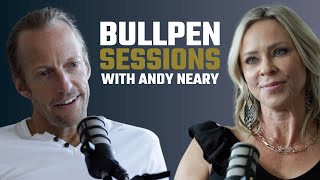
A Bullpen Sessions interview (YouTube/podcast) where Andy Neary interviews Heather Bowers, president of Lone Star Benefits (Frisco, TX). Heather describes joining her father's agency (now owner for ~4 years after ~24 years in the industry), how her husband Jason supports operations, the agency's client-service focus and daily habits (responsiveness, time-blocking, exercise), and her son Caleb's senior-year neck injury (C7 facet joint fracture) and subsequent recovery that led to a Division I commitment at the University of Tulsa. The conversation also covers advice for women in the male-dominated insurance industry, team-building, and a promotional CTA for a Social Media Sales Academy.
Chapters
Hey.
Hey. Welcome back to Bullpen Sessions. I am excited today to have Heather Bowers join me. Heather is the president of Lone Star Benefits in Frisco, Texas. She is a second generation insurance agency owner as she took it over from her father four years ago. I wanted to have Heather on because Heather has done an amazing job building a team here in Texas. But more importantly, I wanted to get behind the scenes and get to know the real Heather Bowers. You're going to learn how nutrition, diet, discipline are a big part of her business. You'll even get to learn about how her son Caleb is on his way to play Division 1 football at the University of Tulsa. So, as a woman in an industry that is not full of women, I wanted to have you hear from Heather and listen to her story, how she has built upon her father's success and continues to run a thriving agency in the health insurance industry. All right, let's dive in.
Hey.
Hey.
Welcome to the Bullpen Sessions podcast, a podcast for driven insurance professionals who are looking to reach their full potential in their insurance careers. This is the place where we help motivated insurance professionals build the right mindset and tools to create more credibility with their target prospects. I'm your host, Andy Neary, former professional athlete turned insurance advisor. Each week, you will learn tips and strategies to help you execute a clear prospecting game plan. Every single week. Clarity creates action. When you're clear, you're confident. When you're confident, you're consistent. When you're consistent, you are unstoppable. All right, let's dive into today's episode.
Well, Heather, welcome to Bullpen Sessions. I'm excited to have you on the show. This was an easy one for you. You're what, two blocks away? Two blocks. Which is nice. Well, let's start here. You know, most people in our industry do not get in this industry by design. Your dad had an insurance agency, the same Lone star that you have today. But I also know a lot of kids, second generation don't want to be a part of the business. What made you want to join the business? Growing up watching your dad run it.
So I wouldn't say I wanted to join the business. I was working for a client at the time, and they're actually still a client of ours, but this was years ago, So I guess 21, almost 24 years ago, and they went through some financial troubles and they were going to have to reduce my salary, so I decided to quit. And I was just hanging out, enjoying my summer, because a lot of my friends were teachers and so they were off for summer break and I realized, okay, I'm, you know, very young, no kids, I need to be doing something. I'm not a teacher. And so my dad's like, hey, just come work for the agency. Like in the interim, I'll keep you busy, gives you something for your resume while you find something new. And 24 years later, the rest is history. Yeah, I didn't choose to follow his steps, but once I got into it, I loved it and super close relationship with my dad, so I loved working with him and helping.
Remind me again, when did the transition take over? When did you become.
I bought the agency almost four years ago.
Okay.
Okay. And is your dad still involved?
He is, he still has a book.
Okay.
So he has clients that I guess his longest term client's been with him for 37 years. And so they kind of had the mindset until they officially are done, he can't officially be done yet. So he still has a book of clients and is still involved enough. But I run obviously all the day to day operations.
Well, here's what I'm interested about too. So your husband Jason's in the business as well now and he has a background in finance, working for some very large organizations.
Right.
Like Toyota and companies like, you know, Fortune 500. How has he been an asset to the business given his. His background?
Yeah. So it's been great having him. That was again, never our plan for him even to come over, but when I was going to purchase the agency, I just knew I need someone handle operations, back of house employees. That's definitely not my area. And so he was with Toyota doing corporate finance. And so he came in and it's been huge having him there just for a couple different things. One, his Excel brain is insane. Just the formulas he can write. So tons of time saving in our office, just as far as processes or if we need multiple worksheets to talk to each other, that he can do a lot more of the analysis for us. And then he has that finance brain.
Yes.
So especially when we're working with employers or working direct with the cfo, having, you know, Jason there is great because he, he sees their business from the way they do and so we can kind of structure things more that way. So it's been.
He's probably a secret weapon when you are sitting in front of a CFO because he can say, I'm one of you.
Oh yeah, it's great. And him and I are so different of people because that was the one thing we kept getting is like, you're going to work with a spouse. Like, how are you going to do that day in and day out? But his strengths and mine are totally different. And so, yeah, it's like a perfect blend when we're together, working perfect.
I'm going to get your advice because for the first time since we've been together and I never thought this day would come, my girlfriend Amy is asking what would it look like if I was in the business with you now, she has a very good. I hate details, sir. She's got a very good operations mindset. What's your advice? Bring in your spouse and. You got any advice for me?
So I think you'll love it. And again, it's how. Just how y' all are as a. As a couple is a lot of how it'll be at, I think, at work. So, like, you're like, strong partnership just in life in general, then that will, like, bleed into the company in a good way.
You know, I guess the only. The biggest negative. It's easier to talk about the negative. The biggest negative is you never get away from work.
That's what I was going to add because you and Jason, also. You guys. One thing I love about watching you guys from afar is you guys enjoy taking vacations. You do take that time off. Do you ever see that impact on that where. Where you're bringing the business to the vacation? Because you guys are in it together all the time.
For sure, we do. So even last this last year, we went to Anguilla for a week and, like, for a few days, we're like, okay, we're not even going to talk work. Like, we can both do our own things, like check emails and do whatever, but we're not going to verbally talk about it with each other. So we have to be very intentional at that, or it just gets to where, you know, you could be making dinner and, okay, let's talk about this client or this. And all of a sudden, all you're doing is talking about work, which, I mean, it's not that it's. There's good and bad to that. I think the biggest thing that I've loved is building something with your partner. So, you know, when, like, the blood, sweat, tears, when you both have that same goal in mind and, like, you're working together to achieve something, that, to me, is what I've loved the most, having him there.
Was there any dynamic shift when you took the business over from your father? So you worked for him for a while now Heather's the owner and dad still has the book. Did you see a shift in that relationship at all?
Not really. I mean, probably the hardest thing with my dad not being like, being there every day is not seeing my dad every day, which this will be a testament to, like, how close I am with my family. My parents literally live right next door to us in Frisco. And it still makes me sad that I don't see him in the office. And like, we share a lot lying in Frisco. So, you know, so that, that was a big adjustment, like him not being in there. But the last probably three years that he was there, he, he was starting a transition to letting me make decisions and kind of letting me take the lead on things because he knew, he knew what was coming. So a lot of the shift in the office had already taken place during those three years.
So I promise that this episode is not going to be all business insurance. But I am curious because a lot of our listeners are probably newer to the industry, maybe less than five years or so. They're trying to model other people who are having success in the business. One thing I think when I watch you, and especially you and Jason, is your discipline. You know, just how about how you go about your, your day to day activities? When you look at your typical daily routine, what are some of the rituals and habits you try to deploy every day to make sure you're staying successful?
A lot of that is going to fall under just kind of how we, how we serve our clients. We're very big in our office on just responsiveness. You know, even over the last few years, especially since COVID when we've picked up new clients, that's the consistent theme that we're hearing is just the lack of service they were getting from their prior broker or the slow response times. And so in our office, response times are huge. And so I would say, like kind of first and foremost in my day, it's just our clients being taken care of. Because when you run an agency, you always are going to have the operational stuff you need to work on the training, changing processes, or looking at new vendors, like, okay, we got to figure out our copier because that lease is coming up. You know, there's all those things that are always going to be there. But at the end of the day, our clients is what makes our business. So I would say kind of our, my focus each day or even, you know, our internal team is just clients being taken care of first and then knowing all the other things will get done. Now they may get done in the Evening after hours on the weekend. But a lot of it's just, I would say the goal to each of my day is making sure our clients are still getting that, that quick, responsive time service that they're used to.
So yeah, and I think that is something that's definitely defined. Lone Star Benefits is your commitment to go above and beyond in the customer service. What about you personally though, with habits and rituals like when you just look at how you show up every day, are there certain, certain things you make sure you practice every day to make sure you show up at your best?
Sure. I mean definitely like hitting the gym so exercise.
We're going to talk about that. Yes.
I would say my personal things are just like, you know, making sure I'm getting my protein and every day just those little things that they do impact.
But that's what I want to go, I want to go into those details because I think a lot of people in this industry are looking for those little things. I, I had Chris on, Chris Hamilton on. We were talking about that athlete mindset. What are you doing off the field when no one is watching? Right. So what, yeah, talk to me about a couple of what do you do on a daily basis to make sure you're taking care of yourself?
So I mean, first and foremost you have to take care of your first. You know, I'm a mom, I've got two kids, which of course I'm almost an empty nester. So almost through those years of raising kids. But if you're not taking care of yourself first and foremost, your everything else around you is going to crumble. So whether that's your marriage or your kids or your work life. And so, yeah, I mean, if I don't hit the gym, I'm, you know, I haven't hit the gym. So I've lifted now for about 30 years again. Jason and I go to the gym together every day. So you're always together. But going to the gym or just like making sure I'm getting like, you know, my kind of what I eat, like again, protein and check. Just some of those little things that I do to make sure I'm running my best will make everything else run better as well for sure with our kids. That's been probably my hardest balance is like the work life balance, you know, as I've been raising kids knowing, okay, gotta like put the work down and now now spend time with my kids because again, if my home life with my kids, it's a wreck, that's going to obviously impact my, you know, time at work and how I'm, you know, my attitude in my office. So.
I would just say, yeah, a lot of it's just that, again, that work.
I'm curious because you brought up, you know, I'm in the same situation. We don't work out together, but Amy and I are both into exercise, which I think does make it easier.
Sure.
To be able to get that stuff in every day. Do you. Would you say the same for you as far as, like, exercise goes, you know, it's something you've done for decades. But having a husband like Jason, who is also, if you've, guys, if you're listening and you haven't seen Jason, he's a badass. Like, having a husband who's into that too, does that make it a lot easier to make sure you make health a priority?
100%, you know, and again, I look at, I mean, just, you know, I'm middle aged. Look around, you know, so many people want to, like, start working out for the first time or start eating healthy. And that's the one thing they all say is my spouse doesn't, though. Yeah, my spouse doesn't care to eat healthy. My spouse doesn't care to go to the gym. And so if you don't, if you're not both, again, going towards that common goal, it's going to be hard for one person to keep going that way when their partner or their spouse isn't going that way. And so, yeah, I mean, I would say Jason is more my motivator than me. Like, he, he won't miss a workout for anything. I mean, he's there five days a week.
My kind of guy.
He goes to jiu jitsu one to two nights a week. I mean, that's his world. And so there's nights where I'm like, I cannot go. And he's like, okay, well, I'll just go without you. And then I'm like, okay, never mind. I'm going. I'm going with you.
The guilt, I love it because it's.
Really, I mean, like, everybody says, like, you're never going to regret a workout. I would rather go and have just kind of a, you know, somewhat crappy workout than not at all. And so, yeah, for sure, he, he keeps me going that way.
I remember there was a time in my life I've always been into exercise, but not even I'm more, I'm, I'm into it more now in my 40s than I was in my 20s. And I remember there were. I would let people make me Feel guilty that I wanted to do that. And people would make you feel selfish, like, oh, you're going to go to the gym versus hanging out with your, your family. But I got, I got to this point where I was like, well, wait, but if I go to the gym, I'm going to be a better version for you.
Oh, yeah, for sure.
And I think a lot of people allow themselves, especially like you said, if they have a spouse who isn't into it, maybe, and maybe tries to make them feel guilty because they are. You have to remember the reason you're doing it is actually for them, as odd as that sounds, because I told people, I finally said, if you want me to show up as the best version of me for you, yeah, you need to let me go do this.
Oh, yeah. Well, especially, like, try being a mom. I mean, it being a mom, especially a working mom is awful in that regards because I mean, I've had over the years, so many people say that, like, oh, you go to the gym instead of being with your kids and like, you know, they just say it kind of like obviously very passive aggressive or oh, it must be nice to have that much time to be able to go to the gym because, you know, I'm whatever with my kids. But like I always tell people, yeah, if I'm, if I've got my workout in and I'm happy, I'm a much better and much calmer mom than if I didn't. But for sure, with women, I mean, that, that definitely is, you know, especially with like your, you know, clients that are newer, trying to figure out how do you juggle like running an agency and being a mom specifically. I mean, it's hard because most of the time, especially as women, you're always going to put yourself on the back burner.
I was going to ask you that, being that you are a mom, you and Jason are both in the business. You have children who are. Your daughter an athlete too?
No, she's not an athlete. She raised pigs.
She raised.
She's an angel.
Did not know that. That is awesome.
So we have the athlete and then the daughter that's.
Please tell me you have pigs at home.
No, not doing Frisco. They were in the barn. But no, we've had four different pigs in our world all through her high school cruise career.
But you all, you have a son who is a high level football player, which we'll talk about here in a little bit. What advice would you give somebody who is having a hard time juggling that parent agency owner also A parent of child who's a very competitive sports. How have you and Jason been able. How do you guys ensure that you can be where your feet are at all times?
I would say the biggest. The first. Biggest piece of advice is get the guilt out of your. Out of your mind. I mean, you've got to work through the guilt that you're naturally going to have. Like, I've got to be this, and I've got to be this, you know, because you can't be everything to everybody, but again, you can be the best version of yourself, which is going to feed into the rest of your life. But a lot of it, I mean, it's. It's just your. It's your b. Your time, how you balance your time. You know, again, I have so many friends, like, oh, I don't have time to go to the gym. I'm like, girl, you're on your social media all night long. Or you're Netflixing or whatever. Netflix. Net. What?
I.
What am I trying to say? Netflix.
Netflix. You're right.
You got it.
Flexing. Netflixing all night long.
That's actually a new verb you just created. I think you're Netflixing, but, you know.
So again, people can make time. You just have to be very disciplined with your time. I mean, when, you know, we only get so many hours in the day, and so figuring out, okay, when can I get to the gym? Or if you can't even go to a gym, just, there's so many things you can do at your house that I think people think you have to have all this equipment. You don't.
I would believe, though, that you and Jason, knowing that because of all the balls you're juggling, you probably. You guys are probably pretty disciplined as far as planning a day goes. Like when you're waking up in the morning, I gotta believe you two know exactly what the plan is.
Oh, yeah. I mean, I live off my calendar. Everything from. I mean, everything, you know, professionals on my calendar, everything personal. If Jason and I need to have a conversation about something with a kid, like, I'll schedule it on our calendar just because, yeah, we. We are juggling a lot of things all the time. Especially in this last year with Caleb.
That's a really good point. You know, I had. I had. I've had a lot of people tell me in my career, teammates, like, your calendar is intimidating, and I think a lot of it is because it looks so full. But a lot of that is stuff I scheduled with myself, right? Workouts. Even if it was blocking time. Where I had to work on a project, people don't put that on the calendar. So therefore the calendar doesn't look busy. They forget to do things. And I think your points, your. Your calendar is what you live by. If you put everything on the calendar, all you have to do is wake up and just follow the calendar, Right?
Yeah. And I've picked up a lot of that from you. Like when you did your session on, like, just time blocking. I mean, I've, I've, I've brought you up so much in our office on that. And like Garrett, he's working on that right now. He has his whole calendar blocked out for just like prospecting time or this. And to treat whatever's on your calendar like any other appointment. And so I remember you shared a screenshot on one of our calls, and it was like you had your morning workouts, like back workout or bicep or whatever. And so if it's on your calendar and you treat it like any other appointment, then you're going to do it.
Yeah.
I think when things aren't on your calendar, you're always going to fill your day with all the other noise.
You'll fill it with noise or you'll let others fill it for you. Right. And all of a sudden, now everybody else's priorities just became yours. Now, I love that. I want to ask you, you brought up your son Caleb, who is going on to play college football at the D1 level, which is absolutely amazing. But I want to know, there's got to be a lesson that comes out of this. So talk, tell, talk to us about. He was going into his senior year here. What high school here?
He's a private school. Parish Episcopal.
Okay.
Here in Dallas.
And I'm assuming probably a really competitive football team.
Yes.
And your senior year, no matter what sport you're playing at, especially if you have an opportunity to play at the next level, is a big season.
Right.
And he suffered a setback early on. And so walk us through that, because I got to believe mentally what your son went through this last fall season had to be tough.
Yeah, it, it, it was crushing to the entire family. It was awful. It was like going through a death. So he definitely was on that D1 path. Had tons of big colleges looking at him, and you just have to get through your senior year. They wanted, you know, make sure they see that final, final senior film and he'd be, you know, good to go. So it was the second game of his senior season. He's a linebacker, went in for normal tackle but right when he went in for a tackle, one of his teammates came in too and they just hit helmets as parents in the stands. We couldn't even tell he got hurt. I mean, he bounced up, played the rest of the game, no issues. Went in the next morning to the team doctor, they sent him in for imaging. He ended up having to get a CAT scan and he, he broke his C7 facet joint. So basically a neck fracture. So thank the Lord he didn't have to have surgery. That was a, that was a huge part of his recovery. But I mean, his doctor said he'd be out 12 weeks. It's a 12 week injury. And so we knew your senior season just ended. It was, I mean, to say it was traumatic would be an understatement because, like, you know, especially with Caleb, I mean, he's played since five. That was his dream, to play, you know, into college, the last, well, his whole high school career. So, you know, the three years prior to that, especially with Jason, I mean, they traveled the U.S. they went to camps, they met with colleges, they talked to coaches. His Twitter would blow up all day long with coaches reaching out to him and then calling him. And it just instantly stops with a neck injury because, you know, college coaches don't know what's going to happen. They knew they couldn't see senior film to know if he'd even come back. So, I mean, yeah, we were like, okay, as a family, we're going to do everything we can do. So we researched treatments and therapies and he was doing red light therapy and he was doing bone growth, vitamins. I mean, anything at all that you could do, we were, we were doing it to, to, you know, prevent, promote healing. He had to wear one of those big, you know, neck things or whatever. But for a kid to go from being, you know, playing both sides of the ball, always being a star player to literally being on the sidelines, I mean, it was, it was tough for him, very tough mentally. But, you know, I mean, we just kept encouraging him and like letting him know that with everything in life, you know, we all think we know what our plan is and then sometimes things happen different, but it's how you recover after a setback. And so, so just really pushing Caleb on that. He's always been the type of kid, just as even his personality, where kids look up to him. And so, you know, we told him through that you have so many eyes on you right now, watching you, how you're going to handle this setback, whether it's you Know younger athletes or even your, your teammates of your same age or even people my age that were watching him. And so, yeah, just encouraging him through all of that. I mean it, it was still hard because again, I mean it's weird when that was his plan and all of a sudden you're like, yeah, you get to go to practice every day and sit on the sidelines and watch your teammates practice and go to every game, but you're sitting there. So fortunately his team did make it to semi state. And so that was the Friday after Thanksgiving. The Tuesday before Thanksgiving, his doctor released him. Um, now mind you, Caleb had not really conditioned or anything in 12 weeks. And so we're like, can you. And so they had one practice left Wednesday. Cause Thursday, Thanksgiving Day, they just did a walkthrough. So we're like in one day, can you get yourself ready to play a semi state game? And he was ready. And so of course we were nervous as can be that first tackle, but it was like a, you know, like a dog being chained up and he breaks off the chain. Yeah, Caleb was on fire that game and ended up played awesome, had 26 tackles. Dallas Morning News reached out to him. He made defensive player of the week. Did a, you know, great write up on him. And so then here comes recruiting calls all of a sudden like, oh, Bowers is back.
Which by the way, I'm blown away by how much recruiting goes on Twitter now.
Yeah, it, if, if you're not on Twitter and in a, especially football and an athlete's wanting to play at the next level, they've got to be on Twitter.
Wow.
I mean they have to be on Twitter. It's. The whole recruiting process is totally different than what we thought it would be anyways. I mean it's, it's a part time job even for parents. I mean just having to be involved and making sure your kids responding to all the, you know, coach messages and calling the coaches back and, and not that, I mean you would think a kid should do that naturally, but I mean there's still kids, so it's like making sure they're staying on top of it too. But, but, but yeah. So his team won semi state and then they went on to the, to play state the next weekend and one state for the fifth year in a row.
Oh wow.
He got to play that game and rocked that game. And so it had a, had a great ending in the last two and.
Well, I can tell you, you know, what's what I love about. So he's going on to Tulsa Set it at Tulsa, which I believe. I can't remember. Are they in the AAC conference?
Aac.
What's cool about this is where I actually do like the transfer portal. So had Caleb not gotten hurt, there's a chance he could have gone on to a bigger school.
Right?
Right.
But because of the, the injuries setback, he's going to Tulsa. But you know what? He could go on to have an amazing four year career at Tulsa. However, he could go on and have an amazing couple years and eventually transfer right to a Baylor or a tcu. Right. I mean, that's, that's where I think the transfer portal is such a good tool for an athlete like that. I will tell you. I didn't. I don't think I told you this. I actually, when I found out what his name was, I did start following him on Twitter.
Oh, yeah.
And one thing I, I was proud of him to, to observe him as an, as a former athlete myself is with his tweets, how much he promoted his teammates. Yeah, that's a sign of a mature kid.
Yeah, for sure. Especially the, the program he's in. It's. They're all in it together. I mean, they, they have some awesome athletes that have come out of that program and it's very much like the brotherhood or that teammate.
So you guys are going to be parents of a college athlete next year, which will be awesome.
We're excited. I'm not excited for him to, to be out of the house, though. So I'm sure I need the next eight weeks to go really, really slow because he's, he's our baby now.
You got to work on the Nil deals.
I know.
Well, that's what.
And it's funny. So I don't know if you saw the Tulsa coach, they're just entering into that, that world, but he had a, you know, his ESPN or one of the big things interviewed him, I don't know, maybe a couple months ago, and they were. He was talking about Nil, and so he pulled out his phone and he said, oh yeah, I get these players, they're just chasing Nil money. And so he's like, I'll actually read a text, you know, between him and another player, and it was a potential kid coming in and he said, hey, just talk to him about Nil. I only need like five or six grand a month. I have a. What do you say? I have a girlfriend and two dogs. Like, you know, do you think you, like, what could y' all do for that? And so the co. The Head coach at Tulsa, like, text back, of course, being like, goofy. But he said, okay, well, my recommendation would be to, like, get rid of the dogs. I don't know about the girlfriend, though. And then he said, like, with Tulsa, they are doing more academic stuff right now. So, like, you get recognized financially through academics, but they're. They're kind of entering that world.
So it's an amazing world. It's a world unfamiliar to me, especially.
With that transfer portal. I mean, you know, it's. It's kind of like with Caleb. I mean, that. I think that was part of it too, is when you have huge schools looking at him.
Yeah.
And then, you know, he ends up at Tulsa. I think that was kind of hard. But then at the same time, I mean, look at all these freshmen moving into these big schools. They're not playing.
Yeah.
They're literally sitting on the sidelines. They're not getting any kind of play time. And then if they go into the portal, a lot of them are getting stuck because they don't have any film. So, you know, with Caleb, you should be able to red shirt, get, you know, about four games in and.
Yeah.
Get film. And he may end up loving it and staying there.
He might have a great four year career there.
And then.
Yeah, absolutely.
Absolutely.
When I see a kid transfer down.
Yeah.
You know, they're at a school, like, I'm a Wisconsin fan. So you'll see a kid that start goes to Wisconsin and transfers after a couple years, but they transfer to a smaller school. That's another example where I think the portal is good, where the kid realizes, I'm not playing here, I'm going to go somewhere where I can play. I think that's a good use of it as well. Now, speaking of football, a lot of people don't know this. Your first cousin's Dan Campbell, head coach of the Lions. What was that like to watch him.
Take the Lions to the nfc?
I have to admit, I'm a Packer fan. I was actually rooting for him because it was a cool story.
Yeah. So it was fun. This past season was great. Of course, we were crushed that last game and just, you know, all the could have, would have, should have and, you know, should he have done this or should he have done that? So that's kind of hard, you know, to sit back as a family member and hear people take both sides. But it's awesome. What he's done in Detroit is amazing.
They could not have hired a better coach.
Oh, yeah.
For Detroit.
Yeah. And he's so that's him.
Yeah.
I mean he, you know, he played NFL for 10 years now he's coaching. Clearly he's made tons of money. He still drives like a big old Ford, of course, 350 or something.
I wouldn't expect anything different. Country, Texas boy.
Oh, for sure. And he's so genuine. And you know we've some of our closest friends, they're all from Detroit so all their family lives there and they've all talked about just how the city just, it's transformed the city and it's like, of course I'm so proud of him because he, it's, he's being who he is, you know, and he loves the people of Detroit. He's not trying to be anything different. You know, so many people are like, oh, he could go anywhere now to go coach. I'm like, but he loves it there and they love him and just what he's doing. And you know, to their, I mean of course the Lions, just their program in general, but then to the city, just that transformation, I mean 100 couldn't ask for a better coach for sure.
So absolutely no. I think what, it's one of the better hire NFL hires in a long time. Matching the coach with the, the coach's personality with the team.
Right.
Couldn't, couldn't find a better fit.
Oh yeah, for sure.
Hey. Hey. Quick announcement. If you are an insurance professional looking to optimize the way you prospect and generate leads and you find yourself intrigued by LinkedIn but just don't know where to start, I want to talk to you about the Social Media Sales Academy. Listen, the idea of diving into social media and putting yourself out there can be daunting and the fear of presenting your best self online is real. But let's face it, the traditional methods of prospecting are failing you and it is time for a change. Who is the Social Media Sales academy for? If you are a driven insurance professional looking to grow your revenue but strapped for time, you're looking for a more efficient way to prospect and you are just watching others have success on the platform and you want to have the same success. I want to talk to you over six weeks. You are going to learn directly from me the ins and outs of LinkedIn using our proprietary playbook, the LinkedIn Diamond Playbook. By joining the academy, you are going to learn how to create a prospect friendly LinkedIn profile, how to find your deal prospects and send connection requests that actually get accepted. You're going to learn how to post content that engages and attracts your ideal prospect.
You'll learn how to show up on.
Video with confidence, and you're going to learn how to send direct messages that turn connections into sales conversations. If this sounds like something you know, you need to do, I want you to go to completegameconsulting.com backslash academy. That is complete game game consulting.com academy. You'll jump on a call with us, see if it's a fit for you, and we'll get you enrolled. The next class starts on May 1st. I hope to talk to you soon.
Bringing it back to you and your career. I'm curious, you know, you've been in the industry how long now?
Almost 24 years.
24 years. You got me by two.
Okay.
When you look back, who are some of the mentors that you would say, you know, have had a huge impact on your insurance career? I'd assume your father being one of them.
Right.
Is there anybody else who has had a big impact on your career?
I don't know if I would have, like one in particular, but I do like looking at.
Especially young women for sure, that have done it well, like Nancy Giacoloni, perfect example. You know, someone that's been in the industry so long.
You know, she's obviously owns her agency. She's not with a huge agency and just learning from her, just seeing some of the things she's done, you know, she's not, you know, not a name that every single person would know, but she's. She definitely has a recognized name in the industry. So I would say her, but I mean, yeah, ultimately it'd be my dad. You know, again, obviously times are so different now than when I was a kid growing up with him and they didn't have emails and, you know, he came home at the end of the day, he was home. But I would just say watching him all those years just again, work, life, balance and just seeing that, yeah, you can have a very successful career in this industry, but still be very successful in other areas of your life, like your home life or just, you know, you're with your marriage or with your kids.
So that's awesome. That's. What advice would you give? You know, this is not an industry filled with a ton of females. We, you know, sure. What would you give another female agency owner? What advice would you give her? I think it's safe to say you could argue there's. There's this implied uphill battle for women in the industry. You've owned the agency now for four years. What advice would you give another female agency owner right now? Who feels like she's fighting that uphill battle.
She's just got to stay running with the dogs. That's my thing. Like it's very easy, especially when you're around a lot of men in this industry for them to. And I'm not saying they do it intentionally, I don't think most people have bad intentions in this industry, but to exclude women from a lot and it becomes just like the good old boys club. So I think with women it's like you've just got to keep pressing in. You've got to keep like making your presence known, staying plugged in. You know, the thing that's so funny in this industry is that women make most the financial decisions in a house, especially when it comes to like health care. Like, where do we bring our kids? Or where do I go for this care? And so it's always been funny to me how many men are in this industry because I'm like, even in your own house, you're not making these decisions. It's always women. And so, you know, a lot with women is just they've got to be confident at their seat at the table and know that yes, you're in a very male dominated industry. But again, most of them, most of the guys I've come across are not, you know, they're not bad guys. Yeah. Only one guy that I remember in all my years, I think maybe I've told you this story. I was at a conference quite a few years ago and he sat next to me. He's like, oh, like, who are you an account executive for? I'm like, oh, just because I'm a female, I'm an account executive. And so, I mean, I told him, I said, I'm actually a benefits consultant as well. And then I just said, I'm actually your worst nightmare. And then I just kind of like laughed and looked away. But other than him, and he was.
Old, running with the dogs. Just gotta run with the dogs. I like that. I like that. I remember with somebody referencing our industry as male, pale and stale.
It is though.
There's some truth to that.
Yeah, I went, yeah, last week I went, I was invited to the UnitedHealthcare Broker Summit. They do it once a year and they invited about 80 brokers from across the country. And yeah, even at that I end up connecting with three other female brokers. And so we kind of hung all week. But when you would look across the room, yeah, I said, well, we're definitely in the insurance industry when you look in this room. Because everyone kind of looks like the same.
Yeah, I, I, I, when I go out and give my keynote talks, I'm talking about the need to grab attention, social media, all that stuff. And I look at the room and I see a 73 year old advisor. I'm like, there's how, how is this message going to get across to him today?
It's so, well, it's so different. And again with my dad, you know, he's, he's not in, physically in the office every day and you know, it was funny, Jason, I were actually just talking about it this morning how different the agency is now, even like from five years ago. Just the pace we're at and like if compliance has become huge and just like where we're running at and it's like, okay, like we've totally just like outran like or outrun my dad. I mean, just, you know, just where the industry's gone, I mean it's changed so much.
I was gonna ask you that too. I got a couple more questions for you. When you look back, I could say on your whole career, but I really want to know, since you took over the business four years ago, what are you most proud of as an agency?
Building our team. That it's hard, it's hard to build a good team in a smaller agency because one, one person can, you know.
Capsize the whole agency. I mean one person could be a cancer. One person could, you know, drama could totally impact it. And so we've been very, very intentional at building a very good team. And I mean, love our entire team. Like I was walking out because it was to go to the, to the Broker summit and I was talking, I was saying it to Jason like, I love you. But I was like, oh, I love y'.
All.
It just came out and they all start cracking up and I'm like, no, okay. I really do love every single one of y'.
All.
I was saying it to Jason. But I do love y'.
All.
I mean really, like I love our team. Of course. We're a family agency, so I always say if you come work for us, you're going to become part of when.
Your office is literally a house. So it does feel like a family. Right?
But I would say that's probably what I'm most proud is just putting together and having such a great team and everyone has that same common goal, you know, of course as the owner, you're always more vested. I mean, you want to see your agency be successful, but all of our employees are the same way. I mean, you know they get. Obviously they get paid, but they're not financially invested the same way. But they have just as much passion for our clients and what we do as I do, and they're not even an owner of the agency, so.
Yeah, I couldn't agree more. I think you brought up a good point, too. I've seen too many agencies keep a cancer in the office because they have a lot of. They sell. They sell a lot of revenue.
Right.
And instead of realizing that person's not a good fit, they kind of go put them in the corner. We'll just let them work by themselves. And it has such a devastating impact on the culture that that agency. You got to hire the right people.
Yeah, we're trying to hire another account executive right now. And that's. That's the thing. I'm like, they've got to fit just perfect in our culture because, you know.
I always say it might not sound right, but hire the people, not the position. Meaning, like, sure. You don't need to find somebody who has the expert skill for that position. Find the right person and you can teach them.
Oh, absolutely.
The skill.
Yeah. Yeah, absolutely.
Last piece of. Last question, piece of advice. One more piece of advice. Most of our listeners are younger, again, newer the industry, looking for mentorship. What advice? Knowing what you know now about this industry, what would. What advice would you give somebody who may be at. Still at the early stages of their insurance career looking for that guidance or looking for something to model?
Yeah.
What advice would you give him or her?
Find worthwhile people in organizations to get involved in? And, I mean, you're a perfect example. And I'm not just saying this because I'm on the podcast with you, but, I mean, you're, you know, every other week, the league of their own group has been huge. And again, I've been in the industry, probably one of the longer ones in the industry, for all the women in that group, but just having those relationships, having, you know, the Slack channel, where there are questions, you can just throw them out there. So, I mean, mentors, yes, for sure, but just having the group of people to come around you that you can. Can go through this industry with, you can bounce. Bounce things off of, because it's. It's a rapidly changing industry. I mean, just the products are changing so much, but then the compliance, I mean, every time I turn around, the feds are like, okay, got to do this now. I got to do this now. You know, and if you're in a big agency, I mean, they've got all the Resources, and they've got the legal team and they've got that to. To guide them through that. But when you're in a smaller agency trying to break apart that and make sure you're guiding your clients the correct way, it can be hard, especially if you're newer in the industry. And so I would say, yeah, like, just surrounding yourself with the right people and the right organizations that you're going to learn from and you can also give back to. I mean, it'll. It's huge.
Yeah. I think one of the things I'm most proud about the League of Their Own is I'm about to put a satellite office in DFW just with as many people as we've worked with in this market. But how many women are in this market that are in the group? And you guys don't compete with. Like, you guys don't. You may actually compete sometimes, but you don't view it that way. Right. We are in an industry where, for whatever reason, everybody views each other as a competitor. But you guys don't see it that way.
No, in real. I mean, especially in Dallas, there. There's way more business to go.
There's enough to go around here.
So, I mean, I think of the Dallas, you know, benefit consultants and League of Their Own. I've never run into them. Ever. Yeah, like, out as far, like in a competitive situation. So, I mean, you know, yes, we're competitors, but we aren't at the end of the day. And I was at one of the neighbor events that Aaron spoke at, and I remember even in her. While she was speaking, she said, you know, it's great to have those relationships. Because she's like, if I get called on by one of Heather's clients, like, you know, I'm going to let Heather know, like, hey, just side note, like, this is what's going on. And. And I would do the same for her to where it's like, yes, you always want to pick up new business, but at the same time, you don't want to burn those industry relationships either, so.
Well, this has been awesome.
Yes.
Thank you for having me.
Yeah. Keep doing what you guys are doing. Like I said, I'm.
It's.
It's been fun to watch what Lone Star has done and the presence I've seen you guys start to have on social media and LinkedIn, and you got Garrett doing it. It's. It's been cool to watch. And, you know, you're one who has gotten me to realize that, you know, everybody can say customer service is table stakes. But I think you guys are somebody who's proven that is still very important and very viable. And you are growing a hell of a business because of your customer service.
We live and breathe by that for sure. Yeah.
So thank you. It's been an honor.
That's all we got for today's episode of the Bullpen Sessions podcast. One thing that would really help us both and other new potential listeners is for you to rate this show and leave a comment in itunes, stitcher, or wherever you tune in to listen to the show. Also, make sure to link up with us@completegameconsulting.com on social media. And please share this podcast with anyone who you think might enjoy it.
Until next time.
Remember, clarity creates confidence. Confidence creates consistency. Consistency makes you unstoppable.
More from Andy




If you want producers to succeed faster, help them create a sales message that creates confidence.

Sales isn't a zero-sum game! You can have tough competition and still grab a beer after



Option 1: Meditation, a fast walk, a podcast, and protein. The ultimate morning routine!

How you do one thing is how you do everything. Ill elite producers fuel their body.


Stop living in the gray of maybe! Your job in sales is to get a clear yes or no