Specialization 10X'd Their Growth | with Stephen Gingrich & Brandon Ernstes
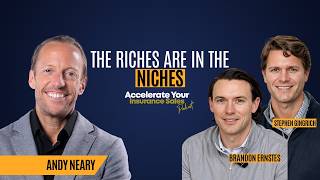
Stephen Gingrich and Brandon Ernstes of Houchins Insurance grew their business ten-fold by specializing in the ESOP market and pairing complementary skills on a team-selling model. They build trust through LinkedIn, YouTube, and podcasts, and focus young producers on identifying personal strengths, targeting larger accounts early, and controlling daily actions like calls and meetings.
Chapters
Hey, hey, welcome back to the Accelerate Your Insurance Sales podcast. We are going old school here. Apparently one of our mics isn't working, so Stephen and I are going to share a mic today. But I am joined by Stephen Gingrich and Brandon Ernstes with Hauchens Insurance.
Did I say that right, Brandon?
I always get the last name screwed up, but Hauchens Insurance. We're actually live here in Milwaukee.
I could say my hometown.
These guys are here for a conference, so we're doing an episode live in Milwaukee. Welcome to the show, guys.
Yeah, excited to be here.
Excited to be here.
Good to talk with you.
So it's going to be awkward here with us sharing a mic, but where I want to start, guys, is I always love to know how the heck people got in this industry because most of us did not get in by design. I know I didn't. So Stephen, I'll start with you since I have to hand the mic to you. How did you end up finding yourself selling health insurance?
So mine's a little bit different because mine is by design. In college, I worked at Northwestern Mutual. And I was selling whole life insurance and helping families with investments, cold calling individuals across the country. Loved it, had a lot of success and really enjoyed working with the people at Northwestern. They taught me a lot about sales, about focusing on impacting, and then how do you create regenerating stream of income where if you wanted to step away from work for a little bit, the business would still grow without you being there.
Yeah.
So they taught a lot about the values of that. And then an individual who started a stop loss consortium for healthcare plans. He called me and I knew him from my childhood and he heard about the success I was having at Northwestern Mutual. He was like, hey Steve, I want to tell you about the other side of insurance, healthcare and benefits. And so he explained what healthcare is and what a broker does. And so light bulb goes off in my head and I'm focused on impact.
Yep.
As a financial advisor, it could take a career to impact 1,000 lives. As a benefits broker, I could get one client, with 1,000 employees and family members, help them lower deductible, lower their plan costs, and I would just impact 1,000 lives with one client.
That's a really good way of thinking about that.
Yeah, I actually, Steve, Brian, I'm going to get to you in a second, but I wanted to just quickly add to that. So when I was in the financial planning industry, because I got started in, I started Northwestern Mutual summer internship in college, then I went to work for New England Financial. That was my first full-time gig. And I didn't think of it that way, but I can remember when I left, I made the decision to leave to go sell commercial and health insurance. And I remember the, the, the the office looked at me like, you're going to go sell insurance as if financial planning was looking down on insurance.
But I didn't think about it the way you just said it, where it could take a career to impact 1,000 people, but I can do it with one client benefits.
That's actually a really good way.
How about you, Brandon?
Yeah, so it's closer to the unexpected route. You know, my seat and I come from, you know, a world where the idea of, you know, healthcare benefits, working with business owners was just obsolete.
Yeah.
So, you know, having the idea of, of that and where we are today is really, it's just the fact that we're sitting here having this conversation is unlikely. And that started, you know, I was in college, had no idea what I was getting into, what I wanted to do, and ended up getting into the science space. And, you know, fast forward a couple years, I was finishing school, had an internship with a coal and mining company in Seton Island for a summer, working 60 hours Were you underground?
Alone.
I was not, but doing the data analysis side alone, looking at the science side of it and the math, you know, the math and putting it all together and realized really quickly that is not what I was designed to do. I was not designed to sit there and work alone. I was designed to work with people and help them accomplish different things that they want to do and help the lead teams. And fast forward, it's Andy, exactly what you said. Never planned on getting into this, but a, one of my best friends and a fraternity brother he actually interned with Hopkins Insurance Group. And I finished school and I knew I didn't want to be in Bowling Green. That's what I knew where I had Bowling Green, Kentucky is where we're headquartered and nothing against Bowling Green, Kentucky, but I knew that wasn't the spot for me to stay.
Yeah.
So whenever, you know, my good friend called me and said, hey, we're opening up a shop in Nashville. Uh, we're gonna, you know, transition that leadership. We're gonna focus on growing that. And I, I remember I was, you know, working with a, a different company on a national basis going around traveling. Focus on some marketing growth efforts. And, you know, went to meet with the team in Bowling Green and, you know, it was the quintessential start in the insurance business that everyone hears and thinks about. It is, hey, good luck. Here's a list of contacts. Get to calling. There's no strategy. There's no, there's no real growth plan for, you know, individuals. And that's changed a lot over the last 10 years. But that is where I started and that's how I got into this space. And, you know, when I remember in the conversation, like, hey, you're addressing P&C or employee benefits. I could have, it could have been a flip of a coin at that moment. But some of the key leaders at Halchins is why I ended up here. And it's, you know, why we're still here today. And it's why we are closely partners because those same people have extremely impacted not only me individually, but like Steve said, has allowed us to impact a lot of employees across the country.
You, did you go to Western Kentucky?
I did.
Okay.
Western Kentucky. That's where we're headquartered.
Yeah.
Yeah.
Still the best mascot in the country. No, no one knows what the hell that is. I still remember the ESPN commercial.
Oh yeah.
Where it's sitting between the men's bathroom and the women's and it's going, I don't know which one to do. Yeah. That's still one. Where'd you go to school? You can just—
Oh, University of Tennessee.
Oh, so you are a Vol. Okay.
Okay. One of the cockiest college baseball teams I've ever seen in my life or the last—
Well, especially the last coach and he left, but I got to see him speak extremely—
Yeah.
Extremely confident. But he's also, there's a side of him that he is focused on uplifting his players and helping them find their unique ability, not only in baseball, but in their personal lives as well. Which is why I think that confidence, but also that relational approach makes him so effective.
Yeah, I, I, I'll just go microphone. I'm just going to go without a mic here. I still remember an article. It was the 2022 year. They started like 25-1 and they just beat the piss out of people and, and, and trash talked them all the way. And I'll start, never remember, I found this article from the Knoxville Times or whatever, but it just started with, well, looks like Tennessee baseball's flipping the bird to the rest of the college baseball world this year. I'm like, that is the Best way to describe what they're doing right now.
Definitely.
So how do you guys, do you guys do a lot of team selling? Yeah. Right.
Only team selling. Steve and I are, you know, in partnership.
So talk about that. Why is, how do you, where have you guys found, because we have several clients who team sell, which I think is greatly overlooked in this industry. Why do you guys see it as an advantage?
So do you want to share just how different we are and then where we focus our sales?
Because you probably have different skill sets that make this work. Yeah. Go into that.
Exactly. And I, You know, I think it's two things, Andy. I think first it starts with identifying, really looking at yourself and saying, hey, where am I deficient and where am I skilled? And I always compare it to a starting five on a basketball team. You know, it, it, and I say it, it goes back to this. I'll connect the dots. Like no starting five has five point guards. They might go big, they might go small every now and then, but you gotta have five very different skill sets. And I think being a really good advisor also takes five very different skill sets. And there's, you could argue more, but you know, from prospecting to advising clients, to leading meetings, to being technical, to being relational, you, I, they're just, in my opinion, there's not many advisors in the country that are pros at all those things. So when you step back and you say, okay, if I'm going to build the strongest team, where do I, how do I start looking? And for me, it was very quickly going, hey, I'm not very good at X, Y, and Z. One, how can I find someone to complement that? And then two, you know, how do we start looking at the rest of the team and say, how do we plug those holes? Something, you know, with our agency we are very focused on is the team selling aspect. And I'm with you 100%. I think it's something that's really overlooked in the industry. And I, you know, if you look at the typical producer profile, you know, that has a massive book of business and has grown, you know, they get labeled big ego, super hardworking, you know, and all these kind of labels come with it. I think where we're seeing the highest performing producers, at least that we know, is they are fully bought into the team model, whether it's another producer that they run with, or maybe it's 3, 4, 5 producers in a team, or it's looking at the rest of their partners on the team as part of that team, whether it's account execs, account managers, underwriters, and they say, hey, how can I build a group around me to offset my deficiencies? And that's how, you know, Steve and I randomly met. He was in the business at another, you know, agency that—
so not at Halter.
Correct.
They got acquired, you know, and it just happened to be one of those timing things, you know, where we both got lucky. And it is, you know, I had an okay career in the employee benefits and the healthcare and insurance space. Once Steve and I partnered up, He offsets a lot of the things that I'm lacking in. I, you know, help bring a little more experience, a little more experience in meetings with leadership teams, a little bit more edge, not much, but putting those things together for us has been the rocket fuel for our business. It's allowed us to, I think, one, challenge each other on, you know, crazy ideas that we have, good or bad. Two, you know, Andy, our president, he always says something, you know, horses run faster against each other. It's helped us hold each other accountable for growth and for what the expectation is with our team. And 3, ultimately now it's, we've become best friends, you know, so not only from a business perspective, but from a life perspective. How are you keeping yourself and each other out of the ditch? You know, with friends, with marriage, being a father, you know, being a leader. You have those things in this business. I always say it's an integrated business. When you have someone you're doing it with, it's a whole lot more.
And Brandon married my wife and I. 6 months ago. We met 3 and a half years ago.
Yeah.
Partnered up.
That's a story I didn't know.
Partnered up as business partners. He met my wife. We became just great friends. I became friends with his wife and then he married us 6 months ago.
So I'd be curious to hear from you, Stephen.
So when you look at your different skill sets, I'd actually wanna know 2 things from you. When you look at your 2, your ability, 'cause I imagine, I gotta imagine you guys are probably the 2 out front when a sales opportunity is opening. So how do you guys utilize your different, because I'll just say it from my perspective, knowing you two now and hearing your story especially, I would pin you probably are very detail-oriented being the science background and, and reading data where you may not be as detail-oriented. And that's probably one reason why you guys do very well. But I'd love to hear from you two things. One, how do your skill sets offset each other really well? And two, you're still a young guy. I don't, if I can share, you're not, get 30. How do, how can a young producer like you have success in front of the C-suite when so many people have that fear of, do I look too young?
Good questions. And I'll start with the second. I think the, the easiest way to answer that is get them bought in on your success as a human being in your personal life, in your professional life. And you need to focus first on the value you're adding to that company. How are you helping them get from where they are today to where they want to be? You're not gonna win off relationship. I don't care if they're your uncle, if they're your friend, or if you somehow know a distant relative that knows them, you will never win on a relationship in business when you're in your 20s. You must focus on value first. So that's something I was taught in Northwestern at my first brokerage and at Houchins. How do you add value and impact employers regardless of age?
Exactly.
And then, so what Brandon, he struggled a little bit with was he's great in meetings. He's great at closing, and then he is an exceptional advisor and consultant once we're hired. What he didn't have was the bandwidth to be able to go out across the country and meet with 20 prospects a week. That's what I brought to the table. I have an ability to call someone and I don't know why it is, but they answer when I call. I'll call someone random and they'll answer and we'll talk, we'll get to know each other and they want to meet with us. And then Brandon brings in the experience. I a lot of times bring in the energy and they can just tell we're both convicted. As long as you're convicted about what you're trying to help a company with, an employer can feel that and age doesn't matter.
Talk about that real quick.
Sorry, we're sharing mics. Talk about that real quick because I think that's so important. People don't talk about that enough, which is, and both of you can chime in here, the energy and the conviction you bring to what you're selling to me is 80% of the battle. If they don't feel your energy, you're not gonna win. Talk about, 'cause I think that's important.
You guys have a, we're gonna get into your niche with the ESOPs and stuff like that, but your conviction behind it, I've gotta believe is one of your secret sauces, Mike. Yeah.
And I'll, I'll start first. We've kind of shifted, Andy. It's been a learning, I, I think even more recently over the last, I mean, very recent over the last 90 days, even looking at our process and saying like, hey, where are we missing? Where are we winning and why? and we're in that continual, you know, self-evaluation standpoint. And I think part of that though is looking at it and going, hey, everything from pauses to diction to what you're saying, the words specifically, what I think we're realizing, really doubling down on, it's why we're sitting here with you, is that that stuff matters. And I think for a very long time it's been very overlooked, especially, especially in the commercial insurance space, whether you're on the P&C or the benefit side. Is that when you are presenting to a leadership team, if you don't have the ability to educate, get that team bought in, and really help them understand why you're doing what you're doing and, and what it means to them, I think you're exactly right. I, I'm starting to believe it's maybe 80%, maybe more. And a lot of that weight comes in that deliverable, whatever that looks like, whether that's a proposal, whether that's a quote, I don't, I don't care what anybody does, but if you don't have the ability to walk into that room of a leadership team and really lay out where you're going, what you're gonna accomplish, how you're gonna do it, and be clear with that, I think people are missing the ball. And that's where we have seen even other producers on our team within our organization really start to lean in on their skills. Yeah, I've seen some of the best, most technical producers not be able to present. And they lose business. And I think that comes again, it's a combination of all those things. Diction, energy, you know, everything you say, your process, something to fall back on. And I think to Steve's point, that's where I think we're having a lot of fun is, you know, we are younger, but we're winning against people that have been doing this a lot longer than we have.
But that, to that point, that's what we should just do. You can just hold the mic up and I'll just scooch. To that point, I think so many people in our industry feel it's knowledge. So they come in thinking, I've got all the knowledge to share with this person, but lack the energy. And they wonder why they're losing opportunities. Give me an advisor who hasn't been around that long, but has a ton of conviction behind what they're selling or has a problem that pisses them off. I'll take that producer all day long because that energy and that conviction is going to get prospects to buy it.
Yeah. And if people aren't frustrated right now with what's happening with healthcare in America, like, you're asleep at the wheel.
Yeah.
And that's where I think Steve and I are having fun and, you know, constantly are asking the hard questions, not only of the people we trust in the industry, but also definitely the ones we don't necessarily trust. But you're proof it works.
You guys, again, are not all that old. Yeah. But you're having boatloads, you're killing it because of the energy and the conviction you bring behind what you're doing. Yeah. You guys built a brand around it. I mean, that's the cool part. You guys have taken the time to build a brand. Let's talk about this. You know, we're here in Milwaukee. You guys are at an ESOP conference. Steve, talk about this, like talk, you know, you guys have such a good niche with the ESOP market, but it's because it ties into who Halogens is. Talk about that a little bit where having a niche like that has really helped you guys scale. Cause I think a lot of people again, have that fear of, well, if I niche too much, I'm gonna pigeonhole myself. That's the whole point. So talk about that.
Yeah. So when you're a generalist, you think your net's wide and you can catch whoever, but you have everyone talking to everyone that says, I'm an expert in this, this, and that. And I'm a self-funded expert. I'm a captive expert. That's what employers are hearing across the country. Very few people are saying, I only work with ownership-minded and employee-owned companies. And then we get the question, what do employee-owned companies have with an advantage that a regular private or publicly traded company just doesn't? Is when you're employee-owned, every single employee has a vested interest in the success of the business. Expenses impact the growth of an organization. Healthcare is a top 3 line item on almost every employer's P&L across the country. When you take a group self-funded, put them in a captive, go RBP, Yes, those things can work, but what really makes an impact is when you get your employees to engage in the healthcare programs that you're implementing. You get them engaged with their health, preventative care, diabetes management. They're actually engaging with the TPA, the PBM. Those things impact cost, and ESOPs have an advantage that other companies don't, because when they communicate, hey, healthcare costs impacts everyone's retirement account, engage in the program. You get a group of employees who are fired up and ready to make an impact on healthcare that other companies just aren't able to leverage.
I was gonna say, with the ESOP model, are you guys able to find getting employees more engaged? It's easier because company wins, they win.
Yeah, definitely. And you know, it goes back to, we were going to lunch here, Andy, and it's the same reason why, you know, go through a line to go get a bike at a local shop. And if that individual has no stake in the business, like, and just could not care less of how your salad turned out. You know, unless they're just a good person and like, hey, I really want Andy to have a good day today. But when you have somebody who it's going to impact them, it's going to impact their peers. And we're not talking about limiting care to people. We want people to get, you know, the care they need. But when you're able to get everybody on the same page, rowing the boat in the same direction, understand the why, that is the core of this is why are we making the decisions we're making? Why are we implementing what we're implementing and where are we going? With so many things flooding the marketplace today, you know, and all these buzzwords, buzzwords like Steve just mentioned, those are inundating everybody in this industry and everyone rightfully so is trying to come up with a solution. But if the end user doesn't understand why they're doing what they're doing, we see it just kind of fall on deaf ears. And that's where employee-owned companies, we've seen them have a lot of success. But even going back to the broader niche conversation, yes, This is a focus with employer and companies, but an advisor in any business, I think there's a couple things that comes, comes with the niche aspect.
This episode is brought to you by True Captive Insurance. What if you could take full control of your healthcare strategy without the financial burdens of traditional insurance? At True Captive Insurance, they make that possible. As the only captive in the nation that puts up the majority of collateral on your behalf, they provide financial flexibility from day one, making them an advocating partner for their customer success. True Captive's fully customizable plans and cost-saving strategies ensure you never have to choose between affordability and quality care. It's time to break free from the limitations of conventional insurance. Take the next step today. Visit TrueCaptive.com and discover a smarter way to manage healthcare. That is TrueCaptive.com.
You start to know your client's business. You start to become familiar to them outside of just healthcare and health insurance. You start to become known, not just familiar, but you start to become known within that industry. And we often hear people go, hey, employee benefits, like, I don't know, the niche thing doesn't matter. Well, those 3 things I think really negate that. And then on the P&C side, you know, we, I've got producers that also we work with on P&C side. We're seeing our young producers that are niched get up to speed. I mean, it's over 100% faster than what it's been over the last 10 years because they're becoming pros. In the technical side, on the BNC side. So we're big believers in the verticalization, you know, externally from producer standpoint. And then what, you know, is really putting gas on that fire is seeing those entire teams start to verticalize.
Well, it's two— there's two— a couple of things there. One, I agree. I used to be the guy with benefits that said, why do we have to niche? Everybody's got employees and they're all unhealthy.
But the more—
the older I got, and especially doing what I do now, I'm like, yeah, no, there's still a reason to be niched. And I think with a niche, people immediately think industry. Actually, I believe niches could come in 3 ways. They can be a skillset you have, a niche industry, or a strategy. So you've got people who say we are the Cathode Agency, right? And so niching down, hands down, is the one thing that lets your market expand. For example, you guys are here, we're in Milwaukee, you're based out of Nashville. There's what, you said 2,000 people here? How many clients are, are all of your clients? In Nashville, Tennessee?
No, majority are not in Nashville, Tennessee.
Because you guys have a niche and once you, the more you niche down, the bigger your market gets.
Exactly right. I think that's something we're having a lot of fun with. We're also learning around it too. You know, just being completely transparent. I think there's also risks with niching to that degree. And I think, and who knows long term, I think, you know, we've seen other producers commit to niches. Over the last 10 years and specifically I think the last 5 years, all in. I'm really interested in something, you know, I'm looking at with us is, hey, from a retention and relationship standpoint, where does that head? And it's something we're focused on with our people.
Please let it go. I sent somebody walked right through the gate.
That's awesome.
I was like, no, but just from a, you know, the, the other side of that is focused on how do we continue to cultivate and own those relationships? Because at the end of the day, it is a relationship business. And people, you know, with everything coming to the market from an AI perspective, still building that trust. It has to happen in person. That's why we're sitting here in Milwaukee. That's why we're gonna go to Vegas in the fall. And then everything in between, we'll continue to be—
again, the point here, and Steven, I love your take on it. Again, two young guys here doing really well in a niche. And I think because you have niched, you've allowed yourself to expand your business faster earlier in your career.
Mm-hmm. I completely agree. Completely agree. When I wasn't niched in my prior agency, did well, had success, but it's been, we've written 10 times the amount of business that I did my prior agency as we're now writing at Notion.
So you'd say niching has been a big piece of that?
Teaming up with Brandon and niching has been the two main pieces.
Yeah. Talk to me a little bit now. Let's get into like, okay, so you, you're very clear on who you serve. You also now have been putting that out to the world through social media and things like that. And transparency, we help you guys with that. But where have you seen the benefits of taking what you do really well, amplifying it on a platform like social media to create more awareness?
I was really skeptical. I mean, I'll share one.
You were the skeptic. I was, I was very skeptical.
Which is very, very normal.
Yeah. That's why I talked to Steve about it. Skeptical on it. Skeptical.
And you know, that's, it's, again, that's the difference, right? Steve's more kind of the vision, visionary, if you will. I'm more the integrator. Hey, let's question everything first before formed it.
Yep.
And, you know, when we started down this path, you know, I said, hey, I get it, but I don't know, you know? And, and if you think like this is the way, like I will, let's try it.
And I was all in. I was like, no, we're doing this.
Yeah. Like we're, we are gonna do this.
I'll do it alone. And he was like, okay. He was like, okay, all right, let's do it. Let's do it.
But the things that we've seen, and it's really hard, and we've talked about this, Andy, it's hard to measure. Yep. But what I'd say, what you can measure and what we've seen and specifically flip my switch pretty quick is the things I didn't expect to come from it. Client testimony, client feedback, and then inbound appointments.
And you say client feedback, like on the content?
Client feedback on the content saying along the lines of, hey, you know, just want to say thanks, appreciate everything y'all do. And I couldn't feel more confident about where we're at because of what you all are putting out there.
When they see your content, they feel proud they're a client. Exactly.
And trust.
I mean, it's just building that level of trust, building expertise. So those are the things I didn't expect. And then the other things which I thought would never happen in this industry, and I think we're still trying to figure out how to build this engine, but inbound leads. And what I mean, a pure inbound, no touch, no call, nothing. We've both gotten them.
Yep.
And that's something I didn't expect and I don't think we ever expected, but we've had multiple now people see our content. Yep. And reach out and not just prospects.
Yep.
But people curious about the actual industry, specifically around healthcare, self-funded captives that are curious and looking at the industry from whatever seat they're in, which might not just be a, a end user buyer. And those are things I never remotely thought about when we went down this path. And it's been short, like we're just now getting going. So I'm excited to see how that snowballs. Cause I think we're set up. Obviously a long way to go there.
Yeah, I would be curious, you, you know, it's funny when we first started talking to you, this is exactly how it happens every time when, when you have teammates, one's like, ah man, let's go. And the other's the skeptic. So you're not the first we, we've had that, that, and that's how I actually knew you guys would be a good fit. I'm like, you always get the one who's in, the other's got, I'm not so sure. And then by the end, it's usually the one who's not sure that's more bought in. But talk to a little bit about, you said inbound. You know, I think one of the mistakes people make with social media is they think all I gotta do is create content and also I'm gonna get all these inbound leads. And, and, and you know, that's not, that's not the case.
If they, you get inbound, but you can't expect inbound.
But what I'm excited for you guys is this is just the beginning because you're just talking one, what we call top of the funnel channel, social media. You guys are now starting the podcast. We're gonna talk about that for a second. You guys are probably, you know, what's gonna happen is your content and your podcast is going to lead to speaking gigs. That is the quickest path to cash once you get on stage.
But talk about the podcast a little.
You guys have actually taken that step, which I love.
Have you—
talk about the fun, you know, why did you do it? Have you been having fun doing it? What do you see as its purpose and potentially helping drive business?
Yeah, and our goal was really to educate with the podcast and just cast a wide net in our vertical. So on LinkedIn, on YouTube, on social media, when an ideal company our prospect sees our videos, we want them to be impacted and educated and then be curious. We're not doing healthcare and benefits the way these guys are talking about it. I think I'd be interested in talking to them. Likely I'm not gonna call them, likely I'm not gonna email, likely I'm not gonna reach out, but by the off chance I receive a call from Brandon or Steve, or I meet them at a conference, or somehow we get connected one way or another, I'm gonna be familiar with who they are. And almost feel a little bit indebted to them because they've given a ton of free information away, haven't asked for anything in return, and they seem like great guys. So that's kind of been our goal, but we also have a lot of fun with it too.
Yeah, you guys do have one, you're good on camera. I want you guys to know that that's important. I think not everybody's meant for camera, but how about you, Brandon? Again, being skeptic, how's it been for you to get on camera and use that as an avenue to give away the good stuff? Yeah, and it's funny, it's, I've always been pretty comfortable with it.
You know, it's never really bothered me. I've always been open to speaking. I've, I've kind of always liked those opportunities. So doing this has given me the opportunity to do that more often. And I look at it and I get excited. There's not, I mean, you know, every time I get in front of a room of people, I definitely get nervous. Like even sitting down, that's because you care.
That's a good sign.
But even sitting down to do this, like I'm excited to do it.
Yeah.
You know, and this is, I think this stuff's fun. That's the same way I look at the podcast. It's like we get to do it. We're trying to figure out how to make it easier. For us to produce more. But exactly what Steve said, and I think, you know, there's a lot of great advisors today doing a lot of good things. It's not rocket science, and it comes down to who's going to execute on the things that everyone's talking about and who can help teams execute on those things. So in our seat, we feel confident about that. We've helped people execute those things.
We're seeing the results, we're seeing the impact, so we don't care to give it away.
And at the end of the day, I think the number one thing I've learned being in this business almost 10 years is you want to work with the right people and the right people are going to want to work with you. And if you chase, you're going to end up being frustrated or let down at times. But if you just give, the right people are going to come. There's plentiful, there's an abundance out there for everybody to go get. So there's no reason to hold stuff close to the chest.
Yeah, I think what you guys have nailed that a lot of people don't understand is what people want now is thought leadership. And to build thought leadership, you want to have to know what makes you different. 2, you have to have an audience, an ideal buyer, which you guys have clearly established through the ESOPs. 3, you gotta have a problem you own for them. And 4, you gotta have a framework you teach to help them solve it. But you guys have done all of those. Now, once you have that and you have a clear sales message, it's a game of amplifying that sales message at scale. You do that through social media or podcast or speaking, and your business will grow exponentially. My question to you, Andy, I'd be curious to hear both of your thoughts on this. So let's say there's somebody listening to this, maybe another advisor or an agency executive, because you said something, Brandon, I thought was really interesting. We've seen when our producers, our newer producers, niche faster, they grow 100% faster, which I couldn't agree with you more. So if you have maybe a sales leader or an agency leader out there who does train these young producers, what advice would you give them when they're trying to get these producers up to speed?
Yeah. And two things that, you know, we, we've got a group within the agency, young producers. That are just getting going in the business. And, you know, first thing we recommend everybody have a major and a minor. So to give you some sort of guidance around that, you know, I, and really don't care what it is, major and a minor, start taking that.
Okay.
Major, major and a minor. And it could be, you know, how you pick a niche. I always recommend, you know, Steve talks about this, pick something you're interested in. If you know, if you're really interested in boats, get in the marine space.
If you're really interested in, you know, coal and whatever, get in the mining space.
I, I think, you know, specific on the cleaning side, on the benefit side, I think your niches are easier to pick based off of what you're interested in, familiarity, et cetera. But it all comes down, I think, major to minor, and then to revenue size, target revenue size of accounts. I'm the biggest opposition to get reps.
I don't believe, I don't believe it.
I've lived it and everyone will always say, hey, working on a And there's nothing wrong with it if this is what you're focused on, but working on a $10,000 revenue account is the exact same amount, if not more work, of working on a $75,000 revenue account. And what we're seeing is that the younger producers that are willing to make the hard call first and start going upstream faster, they're the ones having success because they're getting real reps. Yeah. Just going out there, you know, you know, perfect practice makes perfect. Bad practice also makes really bad habits. And I think that's the number one thing with our younger team members that Steve and I are focused on helping them with is getting good reps. Yeah. And coming up with a major or minor.
And it's also knowing, knowing your numbers. So how many companies you wanna impact? How much revenue do you wanna generate? And backing in, okay, how many calls do I need to make every single day to hit that goal? So then you get out of focusing on the goal and you focus on the action, what you can actually control. In this business, you can't control much, but you can control the work you put into it. So that's what we're coaching up those younger producers on too. You can learn the whole industry. You can spend all your time educating yourself, but you gotta be taking the action. Control what you control every single day.
I agree.
I mean, I, I can teach anybody all they want to know about how to build a brand, identify their ideal buyer, great creative sales method. If you don't put in the work, none of that matters. We can't do the activity for you. Yeah.
And I think that goes back to what you're helping people too. Do as well when you're helping someone develop their content, post it online. That stuff is going to gain traction and create familiarity. But if they're not willing to go to the conferences, pick up the call, say yes to the speaking engagements, you're not going to get as much impact and as much success as you would be if you were taking those actions.
And I think the two things that the content can really do—
talked about energy.
If I can see your energy, especially video content, I can see your energy before I ever meet you. And I go, I want that energy in my room. You just now have credibility with a buyer you've never met.
Right?
Because they already are, they're already getting a feel for your energy. But I'm also a believer, the more content you put out there, the more right you have earned to ask. Yeah. So the fact you guys are out there every day now should give you the ability to call and pick up the phone and say, you should want a meeting with me. Now you're not saying that, but you're thinking that, like, we are giving you so much value, you should want to take it.
And that goes back to the conviction.
And that's that conviction. So I just, I love what you guys are doing. Again, at a, at a to the point where a lot of producers at your age would probably still be trying to figure out where the hell they're going. You guys have built something really cool that's only gonna exponentially grow from here, which is fun to watch. So we're gonna wrap this part. You're not prepared for this. This is to get to know Stephen and Brandon. I always end with this because I am a man who loves discipline, habits, and rituals. So we're gonna get to know you two. Are you guys cool with this?
Yeah, absolutely.
Stephen, I'm gonna— now I'm gonna go back and forth. So Stephen, you know, I love morning, my morning routine. What does the typical morning routine look like in your life?
Oh, this is a great question. So I wake up at 4:30, I take my dog out. So I'm trying to impact my family first. So for my, so my wife doesn't have to take my dog. Yeah.
So my dog. Yeah.
For now. And then I immediately sit down in my chair. I have either tea or coffee. It's like 4:45 at this point. I have my quiet time for 15 to 20 minutes. I think and do breathing exercises and get completely clear on what's happening, where I'm at, what I'm feeling. And what I want to impact and what I want to do that day. From there, I take the dog upstairs and I go to the gym. I work out, I cold plunge, sauna, and then I shower and I'm in the office before 8. That is my morning routine every single day. There's some journaling sometimes during my think time, but that sets me up for success every day versus rolling out of bed, getting to the office, being groggy. I'm clear and I'm ready to attack the day every single day.
Yeah.
Loaded question. 2 kids under.
A little bit different than me.
Yeah. But recently I've been on a really good roll and it's similar, not too far off, but 4:45 alarm, gym 5:15, back, shower, you know, bite, meet Sydney, my wife. She's got the kids up usually by then. Say hi to them, breakfast on, shower, take the kids daycare, in the office by 8.
What's your, uh, or the age of your kids?
My daughter, she just turned 2 and then my boy, he turns 1 in 2 weeks. Yep. Yeah.
Yep.
13 months apart. So it's a lot of fun right now. And you know, our life is full and we're really blessed.
Yeah. Guys like me and Steve, you got all the time in the world for now. So now you got 60 minutes to work out. What's your go-to workout?
Echo bike, 15 minutes, and then some type of arm upper body pump.
You're an upper body. You're not the guy with—
Well, echo bike, you're getting your legs, you're getting your, your breathing, and then upper body pump.
And then going, yeah, curls for the girls. Okay. Yeah.
How about you?
Good.
I've fallen in love with that 45.
What? Okay. So what is, I don't even know. I know if they haven't, but what's it called?
So In-N-Out, 45 minutes, typically, you know, some sort of high intensity interval workout, you know, group-based lap. And it's just, man, they, they do such, such a good job. It's Functional 45.
Exactly.
Functional 45. So it's just a little bit of everything. There's a competitive piece of it too. You're competing with yourself.
So you have stuff on like a scoreboard and stuff as you're doing the thing? You do.
You can do that up there, but it's just structured, right? So you show up every day, you don't have to think about it. It's one, probably two, maybe three clicks down from a CrossFit World, which I'm not built for that. I'm not saying I am. So the F45 is just perfect.
Yeah.
So for a tight schedule, in and out, same time every day, classes, you can travel with it too. So I've just fallen in love with that, especially recently. It'll be a piece of, you know, what I do moving forward.
That's cool.
All right.
So you guys got an afternoon to yourselves.
What do you do?
Hanging out with my wife and my dog.
No, no, no.
And chilling.
To yourself. Is there hobbies? What are you doing? If you had literally an afternoon, your wife said, hey, I'm taking the dog. We're going away for the afternoon. What are you doing?
This may sound crazy because I'm 27, but nothing. Probably taking a nap and just chilling.
How about you, Brandon? No kids, no wife, afternoon to yourself.
I'm a, I love being outside. I love being in the sun. You know, I am down to big music, any kind of music. You know, I really like country music, but that, that afternoon for me is probably going to consist of Being outside by the pool.
Yeah.
Having some music on, maybe a cold beverage in my hand, but relaxing.
You have a pool?
We do.
So when I come in July, because I, I'm going for my brand builder, Amy and I, that's our fair in the afternoon.
We're buying. Yeah. We're going to come over.
We'll come and do pool.
Yeah.
That's going to be that.
No, you're welcome.
You can come.
But that's, yeah, that's what, that's what we do. We, and we don't leave the house.
That's what we do. And you ask what do you do in your afternoons?
We love pool.
Yeah.
That's our thing.
We love vitamin D. We love our pool. Same.
What are you going to do with an afternoon?
That's it.
I'm going, I'm laying by the pool or going paddleboard.
Nice.
That's it. Love it.
I got to be in the sun somehow. Yeah. Same. All right. Last question. Podcasts or books that you've read or listened to recently that you really jive with? Anything you recommend?
Ruthless Elimination of Hurry by John Mark Comer.
We, it's been a while since I read it. 10X is easier than 2X.
We hand that book out at all our workshops now. Just to get people thinking.
Yep. Makes you think completely differently. You know, the who, not the how. Build with the right people, build wide, where you go up. It's impacted, you know, how we look at our business and continues to impact how we, you know, look where we're going.
That's awesome. Well, guys, I want to thank you. You guys are kicking ass and I love seeing it. And so if you're watching this, go check these guys out on LinkedIn. They have awesome content. Yes, we help edit it, but it's them doing the videos. You guys are doing a phenomenal job.
Keep it up.
Thanks, Andy. Appreciate it, man.
Stephen Gingrich, Van Ernstens, Outins Insurance. Make sure you follow these guys. Be good.
More from Andy




If you want producers to succeed faster, help them create a sales message that creates confidence.

Sales isn't a zero-sum game! You can have tough competition and still grab a beer after



Option 1: Meditation, a fast walk, a podcast, and protein. The ultimate morning routine!

How you do one thing is how you do everything. Ill elite producers fuel their body.


Stop living in the gray of maybe! Your job in sales is to get a clear yes or no