Striking Out the Healthcare Status Quo: A Discussion On Reference-Based Pricing with Omar Arif
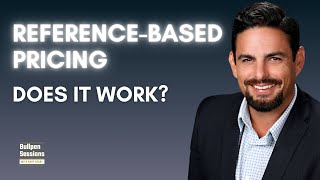
This is a podcast interview (Bullpen Sessions) hosted by Andy Neary with guest Omar Arif. In this chunk Omar describes his upbringing in Mesquite, Texas; early baseball from T-ball through varsity as a freshman; pitching highlights (opening-day no-hitter as a sophomore), challenges adapting from high school to Division 1 at TCU, sitting two years, then transferring to Long Beach State for a fresh start and being drafted by the Arizona Diamondbacks. He played short-season minor league ball (Yakima Bears) before leaving pro baseball. Omar also discusses pitcher routines, training evolution, and how some routines/superstitions carry into his business life.
Chapters
Hey. Hey. Andy Neary here. Before we dive into today's podcast episode, think back to how you came upon this podcast. Maybe it was through a post, a share, or one of your own peers shared this podcast with you. I don't take any ads. I don't take any sponsorships. The only way this podcast grows is through word of mouth. So if you would be so kind to share this with a peer, with a teammate, with a friend, a family member, I would be forever grateful to you. This is how we impact more business professionals and this is how this podcast grows. All right, let's dive into today's episode. Hey. Hey. Welcome back to Bullpen Sessions podcast. I am excited today to have Omar Arif join me to talk about alternative solutions and strategies for self funding. Omar, welcome to the Bullpen Sessions.
Hey, Andy, thanks for having me, man. I appreciate it.
You bet. It's rare, by the way, that I get to have a bullpen session with a former pitcher, especially a pitcher that pitched in professional baseball like you did. So I'm excited for this episode. A lot of people know who you are in the industry, especially if they've attended the conferences around benefits, pro and health, Rosetta, and things like that. But I think we're gonna have a fun episode today letting people get to know your background a little bit prior to your insurance career and then diving into, you know, alternative strategies that are out there for brokers who are looking to sell self funded solutions to their clients. So before we dive into the expertise stuff, my friend, where are you from?
I grew up in Mesquite, Texas, which is a suburb of Dallas, just on the east side of town. Born and raised.
Born and raised and growing up. Obviously.
You know, you grew up playing in Texas. You know, I remember growing up as a kid in the upper Midwest. Omar, a little jealous of guys like you because you got to play down in the south where it's warm all year. You got to play outside all year. Was baseball always a part of your life growing up?
It was starting with YMCA T ball at age 4.
Spring and summer every year until I was an adult. So yeah, I was every sport under the sun until about middle school. I got some bad grades in middle school, so my dad didn't let me play basketball, eighth grade. And then I was just baseball and football through my freshman year in high school. And I made the varsity as a freshman on the baseball team. So my, my varsity baseball coach said, hey, I'm not going to make you quit football, but you need, you need to quit playing football. Kind of how that went.
Yeah. What was it like? You know, I had a gentleman by the name of Chris Carter on the podcast a while back, and he owns an agency in Houston, but played high school football in Texas. What was it like playing high school baseball in Texas, just given the girth of talent that existed, you know, just like the state of California or Florida. What was that like playing high school baseball, especially as a freshman on a varsity team?
Yeah, I made the freshman as a varsity and, you know, I'm a 14, maybe a 15 year old kid playing with grown men. And we had five or six guys on that team when I was a freshman that went on to play college baseball. A couple of them I actually followed from, from Potee High School in Mesquite over to tcu. But I remember getting deep into the playoffs that year and seeing guys that were going to A and M, guys that were going to Texas, guys that were going to be in the Big 12, you know, in the fall, and thinking, wow, these guys are legitimate players. One guy even comes to mind, a guy named Jason Stokes from Coppell, Texas. He ended up being like a first or second round pick out of high school literally the week that we played his team in the playoffs. So that was as a, as a freshman. That was my first real experience to seeing the level of elite talent that was coming out of the DFW, specifically the DFW metroplex. I played at a 4A high school where every year we had two, three, four guys moving on to the next level. So it was, you know, it was nice prep for, for Division 1 sports.
I was going to ask you, standing on a mound as a freshman, pitching against seniors, because there is such a, a growth that occurs for males for boys between the ages of 14 to 18. Right. Can you go back and recall what it was like to stand on the mound as a freshman facing seniors?
Well, it's funny because I didn't really pitch. We had three or four really good seniors. Two of them were Division 1 scholarship guys. So as a freshman, I didn't hardly pitch at all. I played the outfield. So I, yeah, I did both in high school. My sophomore year was when I really started, when I became sort of one of the leaders on the team and a starting pitcher. And I do remember, I remember specific at bats from high school. I'll give you a prime example. I was the opening day starter my sophomore year in high school. This would have been 2001. We're facing Jesuit high school, who's always loaded with, with really good baseball teams. The first hitter I face is a guy named Michael Holloman, who's a senior and he's a big time prospect going to Texas the next year. He ended up playing in the big league. So he worked out. He had a great baseball career. But I remember I struck him out on a backdoor, three, two, breaking ball, first, first hitter of the game. And that was the moment I was like, all right, you know, I can do this. I'm on these guys level. And I actually, believe it or not, I threw a no hitter that game. My first varsity start as a sophomore on the mound. So, yeah, I remember weird things like that. I remember at bats from guys that I faced in high school and college.
Yeah, that's. That's interesting. That's one awesome. Unbelievable that your first true varsity start ended up with a no hitter. Yeah, that's kind of like Disney, like storylines there. But even again, doing it, playing against the talent you did play against in Texas is pretty amazing. Again, I look at growing up in Wisconsin. Right. Like we if back in 1996, when I graduated from high school, if we had one guy in the state go big time D1, it was a big deal. And by big time D1, I'm talking about like the Big Ten. Yeah. And so for you to play against teams every week that probably had two or three guys going D1, just. It sets the tone of what you expect of yourself because you went on to play college baseball at Texas Christian, tcu, and I, you know, playing at a high level like that, at a program that's been in the College World Series. What was that like for you? Did you see a big shift when you went from pitching at the high school level to pitching at Texas Christian, one of the top programs in the country?
Yeah. I mean, it doesn't matter how good a high school ball you play, there's a massive jump when you go from any, any level of varsity baseball to the Division 1 level. And it's. There are guys in high school that have that level of talent, but you might face one or two guys per team versus every guy on a college team has that level of talent. And so it's. It is a, it is a big jump. And it was a huge adjustment for me because I, I was, I was a hard worker in high school and I was more talented than most of the guys I came across. But then you step up to that next level and it's like, you're not special. Everybody's got this level of talent or more. So now what are you going to do to separate yourself? And it's, it's hard, it's, it's not just hard to get there physically, it's, it's harder to get over that mentally. It's like I don't have any advantage on any of these other guys. Guys on my own team that I'm competing for, playing time for and the guys on the other team who are trying to beat us.
Yeah, it's, it's different. And it was.
It was a shock to me because, you know, I, I had some struggles my first couple years in college. I, I got hurt my freshman year and then my second year, I'm trying to have a bounce back year as a sophomore and our coaches had, they brought in the top, I think we had like a top five recruiting class in the whole country that year. So there's some just studs coming in behind me that are now competing for time and I frankly just got buried behind some guys that were better than me as a sophomore. So I go two whole years in college without hardly seeing the playing field.
Yeah, that's a, that story resonates because that happened to me my sophomore year. Not so much having a stud class come in, but I definitely did not perform the way I wanted to my sophomore year. My sophomore year was by far my worst year at UW Milwaukee Wood. I actually thought about transferring or quitting after that. It was so bad that year. Walk us through though. Here's what I'd love for you to do because I think you and I are probably very aligned with this. A lot of people see a pitcher and for those who haven't seen you throw yourself, Paul.
They see the pitcher throwing on the mound, inside the lines during the game. But walk us through what you had to do outside the lines, off the field to make sure you are prepared to show up on the field for, for your start or even to be in the bullpen and be effective because I think a lot of casual fans overlook they see a pitcher. Oh, a pitcher doesn't really have to be an athlete. They can just get out and throw. No, there's a lot that goes into pitching off the field. Walk through, walk us through your routine a little bit.
Yeah, I was, I was always a runner. I, I forced myself to run in high school to get myself in cardiovascular shape. And so in college it was a little bit easier for me to get through some of the workouts that we did back then. But yeah, to pitch well, there's, there's really two paths. If you're a starter, you know when you're going to pitch and you pitch once a week and, and there's a whole protocol for what to do during your, your downtime when you're not pitching in a game versus being a reliever where you've got to be ready almost every night and you've got to be ready. You've got to make sure that your body is able to bounce back from, you know, pitching on Friday night to turning around and doing it again on Saturday afternoon, even if it's just for an inning. So, so for me, it was always just about taking care of my body, making sure I was icing after I was done pitching, making sure I was running to keep circulation going so I could repair my body quicker, and then just being smart about when I was hitting the weight room. And why I think that's one of the things that's changed so much in the game of baseball over the last 15 years is, you know, when I was in high school and college, our strength and conditioning coaches were football coaches and they didn't always have the best protocols for baseball specific movements. And nowadays you see very hyper specific training regimens for pitchers, which is to me, which is why a lot of guys are throwing harder than they've ever thrown. I mean you look at the game 15 years ago versus today, it's is completely different. Most pitchers are pitching away from contact, not to it, they're throwing harder and guys are STRONGER where like late 90s, early 2000s, you know, a lot of hitters were doing steroids so they could make the ball fly. Well now nobody's on steroids, but the ball flies farther. So you have these really strong guys that can hit the ball off the end of the bat and it'll still fly out of the yard. And so you have, you know, pitchers trying to throw 100 miles an hour with 88 mile an hour sliders so they can, they can miss bats.
Yeah, I've had. It amazes me how hard pitchers throw today. On average I feel like every reliever coming out of the bullpen is 96 to 100. They are.
I mean I, when I was, when I was in college, I was a mid-80s guy. If I was coming out of the pen and a little more max effort, I'd be in the upper 80s. I mean I, I, I never in my career threw a fastball harder than 91 miles an hour. And now nowadays 91 miles an hour is table stakes.
While you were at tcu, did you guys, did you get the chance to play in any college World Series.
We didn't. So we were. We made a regional every year that I was there. And we're knocked out of every regional we played in. So my freshman year, we went down to ut. Texas hosted a regional. They beat us. My sophomore year, we were at Baylor. They had a really strong team. In 05, they beat us. My junior year, we went to OU and got beat by OU in 06. And I actually transferred after my third season at TCU, I transferred to Long Beach State, California. And when I was at Long beach, we hosted a regional. I was a senior, and I thought, all right, cool. This is the year we make it. We had a solid team and we got knocked out by UCLA that year. So all four seasons we were out in the regional.
So I'm curious, I got two questions about that. Number one, what led you to transfer your senior year? Because transfers today are a lot more abundant. There's a lot more of them today than we've ever seen. So what. What caused you to go to Long Beach? And then for the people who don't know, Long Beach State is known as the Dirt Bags.
The Dirt Bags.
How did that name come about? And what was it like to play for the program? So what. Let's start with what led to the transfer.
So, yeah, I love my time at tcu. I have nothing bad to say about the program. I still root for them, still love horn frog football.
For me, I just needed a fresh start. Like I mentioned, I pretty much sat the bench for two straight years at TCU My junior year, I had an okay season, but I didn't get drafted. And that was my goal. My whole life, that was my goal, was to be a major league baseball player. And I got drafted out of high school by the Houston Astros. And I didn't. I.
Wanted to go to school. I wasn't willing to forego school because I was drafted late and I wanted to get the experience of college. So. But you're draft eligible again after your junior season, and I didn't get drafted. And I just felt like I needed a fresh start. It was nothing that, you know, anybody did wrong my me or the coaches or anybody. It just one of those things where I needed a fresh start. And at the time, you could transfer without any sort of having to sit out of here. So in football at the time, you had to sit out of here before you could play. That wasn't the case in baseball. So I could transfer and play right away. And so I played summer ball with the second baseman from Long Beach State, a guy named Matt Klein. And Matt was like, hey man, we, you know, we lost our entire weekend rotation to the draft. Why don't you transfer out to Long Beach State and play with us? So that's kind of how that move happened. And I took a visit out there that summer, really liked the coaches, really liked the campus and made the move and it worked out really well. I got exactly what I wanted. I had a great senior season. I got drafted by the Arizona Diamondbacks. So I got to continue my career and it all worked out for everybody.
I love that. You know, I'm curious. So again, the sports junkie and me once would love to know what's behind the name the Dirtbags. Because they have the nickname the Dirtbags.
Yeah. So the school is actually called the Long Beach State 49ers. So the dirtbags is like an unofficial name specific to the baseball team. And that came about in, in the 90s when there was a, there was a head coach at the time named Dave Snow. Pretty, pretty well known college baseball coach, took them to their first few World series in the 90s. And Dave was an old school guy, just stickler on playing hard and being tough. And that nickname just spawned from his attitude that he implemented on his team. They were just known as these, you know, gritty, tough, dirty guys. Not dirty players, but just, you know, these hard nosed type of guys, like think about your Pete Rose types that just play hard all the time and, and that's sort of how they got the unofficial nickname of the Dirtbag. And it stuck.
Yeah, and there's been some amazing players that have come out of Long Beach. Jason Giambi, Tulowitzki, Evan Longoria. I mean, yeah, it's, it's produced the Weaver. One of the Weavers. Yeah. It's.
Yeah.
Well, I'm curious. This is, I want to make this very valuable for our listeners. And you know something I see a lot these days in our industry is what I call it the Advisor Transfer portal.
They go work for an agency and they work for two years because they have a salary guarantee. And then when that salary is about to, you know, go away, they, they jump to the next agency to get the next salary guarantee. It's like this transfer port and I've always argued that's great. The problem is if you're not changing, nothing is going to change. You can't just change your agency and think things are going to change for you. When you made that transfer from TCU to Long beach to get that fresh start, I'm curious to know, was there anything you did to make sure you showed up differently with this fresh start?
That's a great question. And the answer is yes. For me, it was just a complete mental reset. I had always done all the things to make sure that I was physically prepared, but for me, it was, it was a mental reset to get me going. And I made a few mechanical adjustments in my delivery. And mentally, I just, I said, okay, this is, this is essentially it. This is your senior season. If this doesn't go well, your, your baseball career is over.
And it's, you know, it's. I still remember this vividly, but I. We had the number one strength of schedule in the country that year. Long Beach State did. So my first. I, and I had to fight just to get a starting job at Long beach, but my first five starts were usc, Texas, Rice.
Cal, Wichita State, Arizona State, Cal State, Fullerton, uc, Irvine.
I mean, one, those are the first.
Those are the first eight games of the season. And so, you know, I knew going in that it was going to be a challenge, and I, and I needed to challenge myself in that way. So, yeah, I think I was a completely different guy when I made that move. And I, and I needed to sort of evolve and become better.
That's awesome. I want people to hear that because, you know, if you're going to make a change, especially in our industry, the change is one thing, but you got to look in the mirror and say, okay, as I make this change, maybe it's a fresh start. What are you going to do to change? Because nothing is going. Your results will not change unless you make your own adjustments. So I love the fact you said that. So here you are. You're playing pro baseball. Here's what I'd love to know. You're in the Diamondbacks organization.
Was there a moment because you spent four years playing college baseball? Was there a moment in the minors where you're like.
You may have had this expectation that minor league baseball is this entirely different step up. But did you have the moment where you're like, man, playing college ball in some cases was as competitive as where I'm playing right now in minor league baseball, especially given where you were playing. Hi, it's Andy Neary, and thank you for listening to the Bullpen Sessions podcast. Did you know the ideas shared on this show are things we actually specialize in helping you implement? If you're an insurance professional and you want to turn your credibility into, into consistent client acquisition, visit completegameconsulting.com and schedule a free strategy call. Again, that's completegame consulting.com to request your free strategy call. All right, let's jump back into today's podcast episode.
Yeah, I mean.
You could see that to some extent in, in the lower ranks of, of the minor leagues, like where I was my first year, I was with the Yakima Bears in the Northwest League. It's a short season a ball league and you could tell.
There was, there was some guys in that league that were maybe 18, 19 year old guys who were just ridiculously talented but weren't the polished player that you might have seen in the college ranks. So and then you know, on the flip side of that, they were absolutely the college studs there too. So I'd say overall the talent level went, went up, but not by much. It wasn't like the jump from high school to college. The jump from college to minor league ball was a smaller jump.
But it was still, still a definite step up. For sure.
Yeah. I wanted to ask because I know I had that moment. I can remember when I played in short season ball in Montana. All of our catchers at that level were former high school catchers. They did not, they got drafted out of high school. And as a pitcher, one thing I noticed right away is like these guys don't want to call curveball the guy on third.
Yeah.
And you know, you're like, okay, but I, this is what I'm used to. And just that playing with guys who are still 18, 19 years old versus being used to playing with 21, 22 year old teammates in college, I think for me made a difference as well when it came to pitching.
Yeah, I mean we had a kid from the Dominican on my eight ball team named Johan Pimentel and he was, he didn't speak any English. He had just turned 18 years old. I mean, enormously talented, but maybe not quite ready to play with, you know, American kids who are 23 years old and played four years in Division 1 college. He, he didn't have, he didn't have the polish of managing a game at the catcher position. But they were going to throw him in there because he just had enormous talent and they knew that he would develop and that's, you know, that's why there is a minor league. You develop raw talent. And I saw that, I saw that in spring training. Really when you go to spring training.
And you're a left handed pitcher and you see a dozen other left handed pitchers and they're, you know, they're taller than you and their shoulders are this Wide. It's, yeah, it's the aha moment. Like, oh, God, if I'm gonna ever make it to the big leagues, I'm gonna have to grind it out at every single level and prove myself all the way up. And that's ultimately why I hung him up. Because I, you know, I frankly didn't like minor league baseball nearly as much as I like college ball. And I knew that just to have a chance at getting to the top, it was going to take me five or six years. And I just, I knew it was, it was time to do something else.
For the sake of not losing our listeners, we could, I could go on all baseball. But let's, let's transition now quick to your. Not quick, but transition to your professional career. But here's where I want to start. I want to connect the two baseball players are accused of being hyper superstitious and very routine driven people. I know I am. When you look back at your baseball career, Omar, from a routine standpoint, is there anything you applied in baseball from a routine that you still apply today in your business?
Interesting. I'd have to give that some thought because I'm sure there is that. I'm sure there's some things that I do.
Maybe subconsciously that I don't really think about. I do have some lucky socks that I like to wear.
But I, you know, I am a routine driven guy. I get up at the same time every day, I work out at the same time when I'm in town. I like to book my travel in the same manner over and over. I have the same talk tracks all the time. So yeah, I am very much a routine driven person. I don't know if that comes from baseball or if it's just my personality, but.
I'm definitely routine oriented and I'm definitely superstitious.
Yeah, I think that's not to be. That's where I was going. That's what I was getting at, was probably not the same routines. But if you go back to your starts in college at tcu, I bet you had a routine that superstitiously, you knew if you did, you were going to be the best frame of mind. You probably apply that same concept or mindset to how you prepare yourself for the field of play called work to make sure you're showing up at your best every day. I know I, I'm pretty regimented that way. And I bring it back to my starts at UW Milwaukee. Like I remember exactly what I did starting about an hour before the game.
More from Andy




If you want producers to succeed faster, help them create a sales message that creates confidence.

Sales isn't a zero-sum game! You can have tough competition and still grab a beer after



Option 1: Meditation, a fast walk, a podcast, and protein. The ultimate morning routine!

How you do one thing is how you do everything. Ill elite producers fuel their body.


Stop living in the gray of maybe! Your job in sales is to get a clear yes or no