Success Tips For Women Targeting A Male-Dominated Niche, with Rocio Luna
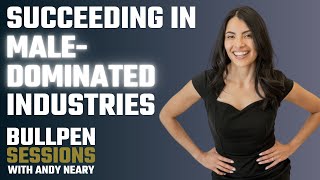
Rocio Luna spent six years managing workers' compensation claims before moving into commercial insurance production. She uses that claims background to specialize in workers' comp and construction, and talks through imposter syndrome, prospecting, and how to build credibility as a woman in a male-dominated field.
Chapters
Hey. Hey. Welcome back to the Bullpen Sessions podcast. My name is Andy Neary and this is episode 309. Today I have Rocio Luna joining me on the podcast. I'm excited to have her join to talk about what life is like being a female producer in the commercial insurance space. She is a former work comp claims manager turned producer, and she finds herself in a male dominated industry, targeting a male dominated industry, which is the construction industry. So I wanted to bring her on just to have a conversation about how she found herself in the industry, what life was like working in a claims management role, and then that transition from behind the desk to out opening doors as a producer, that is not an easy transition for a lot of people. And then we talk about the imposter syndrome that can often come when you are a female working in a male dominated industry, as the insurance industry is. So she has a lot of great advice on how to overcome imposter syndrome, what she's done to really set herself apart in a space like construction, and how she's leveraging her past skills and work comp to create a nice niche in the commercial space. So you're a new producer, you're a veteran, you want to stand out in the market. You're looking for ways to differentiate, ways to leverage your unique gifts. This is going to be a great episode for you. So here we go. Episode 309. Rocio Luna. Hey. Hey. Welcome back to Bullpen Sessions. All right, I am excited. Today I have Rocio Luna joining me, a female commercial producer in the state of California working for Insurex. I'm excited to have this conversation. Rocio, welcome aboard.
Thank you so much for having me, Andy. And I'm excited to explain my story.
Awesome. Awesome. So here's where we're kicking it off. Whenever I interview producers, I would love to know, I love to know how they got into the industry because most of us did not get in by design. And I've probably met on one hand people who went to college for risk management. So for the people who don't know who the heck Rocio Luna is, how the heck did you find yourself in the insurance industry?
Okay, so my story is one of those funny stories. I got into the insurance space at a really young age, right after College, at age 22. And I had originally gone to Cal State Fullerton for psychology. I got my bachelor's degree, but I was still. I felt that I was still immature to go into social services because I wasn't mentally prepared for that. So I wanted to Give myself at least four to five years to be, you know, a full adult. Because I didn't consider myself a full adult at 22, you know, so I wanted to know what it felt like to have a real job. So I applied at all entry level positions, sales, customer service, anything I could get my hands on. And the first interview that I had, it was for a claims assistant. They were looking for someone that was bilingual. They had said, no, no skills, no skills required. Entry level will train you. If you know, if you pass the 90 days, we'll provide you with courses. And I was like, oh, okay, you know, maybe this is something I could try out. So, you know, I went to the interview and the brokerage out, it was like, this is nine years ago out in Orange County. They needed a bilingual person. Really, they were really desperate for one. So they're like, hey, we like you. It's really hard to come across someone that speaks English and Spanish. So if we hire you on the Spanish spot, can you start next week? And I said, yeah, I mean, I need a job, so let's do it. But I had absolutely no idea what claims meant and I barely knew the definition of insurance. So I knew you had to carry, you know, commercial, auto, but I had no idea what workers comp meant, any of that. So for my department was just workers comp. And I had no idea what that meant or it entailed. So it was definitely. I felt like I was drinking water out of a fire hose for the next two years of my life. I didn't know that I was going to be sitting at a desk looking at lawsuits, workers comp, dealing with adjusters, insurance carriers, defense attorneys, employers that are pissed off that their premiums going up. But I, you know, I stuck it out.
Well, you know what's interesting is you said you went to college for psychology, right?
Yes.
Little did you know that years later, as a producer, because we'll talk about your transition as a producer. Psychology actually comes into play pretty well. I tell people, knowing what I know now, and having been in the insurance industry for 20 now, 23 years, I wish I would have had a psychology and a communication major in college based on what we do.
Interesting you found yourself. So, you know, here you are, you take a job as a claims manager, and it's funny, ironic you say, it kind of said not. There weren't that many skills required.
Did you hit that moment early like a lot of us did in the industry early on, where you're like, what the heck did I just get myself.
Into Yes, I was. I was.
Sticker shock is. I had no idea, you know, especially.
Being in that position. And, I mean, I had no training, so I had what my job was to be a claims. So there was a claims manager. And he would basically just tell me, like, okay, you need to do this, do this. But he didn't train because he was. So he was occupied also doing the marketing because it was a small brokerage, so he was assisting with the marketing side. And that's what I kind of learned a little bit, like, have the importance of SOPs, because I was like, oh, my God. Like, I don't know what to do. So, like, having SOPs in place. But yes, I did tell myself. I'm like, you know, what am I doing? I'm like, is this. Like, I even felt, as. You know, I talk about imposter syndrome. I had imposter syndrome, like, four years being in that claims manager role, because I was 20, you know, 23 years old when I started going out in the field. And people will look at me like, oh, you're my cleanse rep. You're. How old are you? You just. You look like you're 18. But, you know, as soon as I started to speak and talk about their claims, the litigation, and then I started to see, like, oh, wow, there's so much more to risk management. I mean, I didn't know what risk management meant. I was kind of getting the understanding. But there's so much more that goes behind the doors of workers comp. It's not just, here's your policy, but what goes behind closed doors when there's a claim. What is the process, who's in the communication? It's like, then you open that up and you have adjusters, you. You have defense attorneys, you have clinics. You have a bunch of different people around that arena.
Yeah. You know what's interesting with that, Rocio? We coach a lot of agencies that have producers on the commercial side who came from a risk adjuster role, an underwriting role, where they weren't born. They're not born salespeople. But what their gift is now is because they got to see behind the scenes on the other side, what goes on. That becomes their skill set in sales is they're a very good tactician, because in risk management, as an adjuster or an underwriter, they know exactly what buttons to be pushing in order for a client to look good to a carrier. What kind of risk management should you be doing? So I gotta believe spending. How many years did you spend in work comp.
Claims management, sitting at a desk for six years. But even in my sales role, I still manage claims for my clients.
So that's where I was going to go. I got to believe your six years sitting behind a desk in claims management has definitely had a profound impact on what, what you do today as a producer.
Yes. And you talk about that and it's very true because we do know the exact answer. We just don't know how to communicate that. So I know, like when I first started, my first year, there was a lot of like, like, like get to the point. Like there was a lot of talking, talking and why this is important, but it wasn't like, it wasn't, I wasn't communicating correctly to the insured or to the employer when I was speaking about it. So I had to know how to definitely adjust it. Because when you're sitting behind a desk and you're, you know, you're basically processing paper, sending emails, getting back, it's completely different than going out, knocking at someone's door or calling someone out of the blue and introducing yourself as to why. Why is it important that. Why do they need to take your call now? Because everybody's going to tell you I'm busy. And I think that's, that's definitely a skill that I'm still learning, but it's definitely a big mind, you know, a mind shift from being someone behind, you know, the desk and having people come to you for help versus going out there and finding it.
Yep. At a sitting behind a desk, the work comes to you. In a production role, you got to go find the work. Right. And so I talked about communication earlier, going back to the clients we work with that are, you know, producers now, former, you know, former risk adjusters, underwriters turned producers. One of their biggest risks is they love to tell you how the watch is made because they know everything about everything, Everything up behind the scenes. When your prospect and your client just wants to know, the watch tells time. And I think that's what you're getting at is because you knew you had so much technical skill, it's easy to over communicate to the point you completely lose a client or a prospect. So let's talk about that. So you spent six years in a claims management role and then went to the production role.
Yes.
What led you down that path? Because I love hearing these stories because I tell people all the time. Most people in our industry are not a born salesperson. They started out as an account manager, an account exec, a claims manager, and then one day their Boss said, or somebody said, hey, you should give this production thing a role. You can make a ton of money. How did you find yourself? Former claims manager turned producer.
Yes. So I think it did start with the prior agency called, erm, Insurance.
The old owner, he ended up selling the agency, but his name was Duncan Prince and he sold. He saw the tenacity in me because I would stay late, I would, you know, come in early. And he's like, you know, if you put that much work into learning how to sell, because he's like, you know it. And he's like, I see that you want to help people. He's like, very few people. There's a misconnection. Some people just want the commission. But he's like, you actually care and you go above and beyond that. So, you know, he was, you know, dropping the seeds in me. And the reason I didn't stay in Claims is because the next position that I had would be working at state funds. So in California, there's just carrier name, state fund, and neither the largest workers comp. Carrier, but it's pretty much like the dmv and pretty much they offered me a position there to be a claims manager and manage about. I think there was about like 50 people under my. Under my supervision. But I was, you know, I was 27 at that time. And I was like, there's no way, you know, people who are older than me are going to listen to me. And I still didn't. And I had definitely no skills on how to manage a team. Like, I was like, whoa, whoa, whoa, whoa. Like, all I've ever done was manage two people. Not, not 50 people and session at 50 people who are like, older than me. So I was like, okay, I don't want to stay because it's very. It's claims. I love claims. But it's definitely my hats go off to the people that stay in claims because you have to have so much peace in yourself and you have to be able to switch hats. And, you know, when there's a fire going on, a client's upset, the defense attorney's not getting paid, the clinic is mad at you, everything fires back at the insurance. So my hat, My hat goes off to the, to the claims people.
Yeah, it's. It's a thankless job often, right? The claims people, the people who are just managing, not making the decisions are often the, the, the. The baby getting thrown out with the bathwater. They get blamed for things that are out of their control. What advice? I'm curious. So you made the transition. And there might be another claims manager or risk adjuster or an account exec listening to this episode. What, what advice would you give that individual, knowing the move you made and some of the things you had to learn or where you had to get better to be, become an effective producer? I think one you already mentioned, you've got to care. But what advice would you give to somebody who is sitting there today maybe thinking about producing, but they haven't made that jump yet? What would your be. What would your advice be to them?
I think that if anyone feels they should try something, they should try it. You know, I think the worst thing you could do is sit, sit five more years or two more years at the same position and then be like, oh, well, if I would have started, you know, I could have been getting a head start. So I feel that because I know when I was working Claims, I kind of had that feeling of like, you know what, I kind of want to do something else. I, I already know the program. It's just me getting connected to the decision maker and building that relationship well. But I could still keep, you know, these relationships that I built over here so I could assist them. So definitely, if you are feeling and you want to take a chance, you know, a leap of faith, do it, but get coaching. So you mentioned earlier, Charles back. I use Charles Spec. So I think honestly that has been a huge help because if I didn't go out, reach out to someone to help me out with my coaching and it was just me and my claims skills and no sales skills or no sales training, oh man, I'm pretty sure I would have failed drastically. So definitely get a mentor or a consultant that could help you and guide you down that way. And another change it would be that instead of being the.
The receiver, you now have to go out and be kind of the taker in a sense. It's taking people's, because you are taking people's time. So you have to be able, but you have to make them see why it's valuable for them to give you five minutes of their time or less, but at least to be able to listen to you, to know why and deliver that importance. Because at the end of the day, everybody wants a peace of mind, everybody wants to save money and everybody wants to know that they're covered in case a claim happens.
Yeah, I think that's a good, really good piece of advice there because I have seen it with a lot of people who have gone from account management to producing. They're used to having the work come to them and even in some cases, referrals, inbound referrals come to them. And now they find themselves in a production role where it's like, no, you've actually got to go open the door. And they struggle with that because they're used to having things come to them. I think that's a good, really good way to put that. I'm curious. Here's where I want to take the conversation. Now that you are in a production role, how do you leverage your past role as far as let's call it niching goes? I'm a big believer that become known for one thing, because you have a history of or comp claims. For example, as a producer, do you often find yourself focusing on work comp as one of your strategies?
Yes, that's my leading indicator. I always walk in with the EMR analysis. You know, you'll be surprised. A lot of companies don't know what their, what their EMR worksheet is, their eczema worksheet. And that's definitely my, my lead indicator. I mean, if I hear someone saying, I've never seen that, never. I don't know what that is. It's like, bingo. Okay, let me show you. But I definitely always do lead in with the work comp because here in California, we'll actually. Work comp is very expensive and it's probably the most. Well, now it's commercial auto, but about six years ago it was workers comp. And now a commercial auto is actually the most expensive line. But workers comp is a big expense for companies.
Yeah, that's a good. I'm glad. I wanted, I wanted people to hear you say that because we, the people we coach, we tell them you want to become, you want to grow your brand awareness, become known for one thing. And I think a lot of people don't leverage their past gifts or skills enough where, you know, especially somebody like you who came from work comp claim management, why not make that your thing? So it's cool to hear that you did that because that, that's now a niche you can easily create thought leadership in because of your past. Now, let's talk about the elephant in the room. You and I had this conversation offline. You're a female producer in the commercial world. You and I were talking about somebody I've been able to work with before. And you, you follow Madison Baker.
Yes.
She's built a heck of a brand in the commercial insurance space. As a female, what was that like coming, you know, going into the production role As a female in the commercial market, which could be considered pretty male dominated.
Oh, it's absolutely male dominant. So when I first started, I was, quite frankly, I was very intimidated. I was very intimidated because I was, you know, 29 years old and there's these, you know, middle aged white men who are like, oh, I've been doing this, you know, for 40, you know, 20 years. And I come from Federated and I'm a chub and I'm Gallagher. And yeah, you know, they tell you, you know, they're golfing and it's like, oh, my. Oh, okay, well, where's the females? Oh, oh, they do manufacture or they do clothing, they do restaurants. And you know, when I first started, that's that, that's the group I was, you know, surrounded with. And it is a kind of, it was intimidating because I'm like, oh, man. Like these guys know how to talk. Because I would hear them talk. They're, you know, smooth talkers. They're great at what they do. So I told myself, my, okay, you know, everybody has a different skill set and good for them. You know, they were trained. I wasn't really trained on how to, you know, prospect and sell or have someone like sit next to me. So I told myself, like, okay, you know, I'm going to have to go in and, and show them what value I bring in. So my expertise, my expertise which is, you know, risk management, claims handling, and I'm going to lean in with, with building the relationship, you know, so when I go in there, I don't, I am a nosy, I'm a zero pressure person. I never go like, here's the bor. Because I remember, like, that's the old school way. They'd be like, you know, this is. You put the BOR in front of them before the meeting starts and you let them look at it. That's exactly what they told me. And I was like, I mean, it depends who the person is, but, you know, you just can't put the paper in front of someone without explaining who you are, what you do, or discover their pain points. So I think women, we have, you know, we have intuition, so we definitely are better at communicating and trying to get information out versus a more aggressive type of male.
Yeah, I think, you know, I think of Madison, for example. When I, she and I first started working together, her biggest thing was imposter syndrome. She said, andy, I get meetings, but then I get in there and I go, why are they talking to me? And one of the things we worked on with her and I would share it with you is I told her, expertise, thought leadership knows no boundaries when it comes to age, gender, race, sex, color, you name it. And if you're willing to put yourself out there, you can overcome any fears of imposter syndrome because people will view you as a thought leader. And that's really what I, you know, the advice I give people, you know, women in the industry right now in your position, you put yourself out there and every day show you have the knowledge of what it is you do. You're going to overcome any concerns there are about, well, you're a female or you look young or whatever because at the end of the day you will be viewed as an expert. I did a workshop about a year and a half ago with a buddy of mine who does video editing and something he said to the veterans on the webinar. Rosio I absolutely love. He said, hey guys, here's the deal. All of you think this industry is about tenure and knowledge, but here's what's going to happen in the next 10 years. We're going to have a bunch of young people come in the industry because they see the revenue, but they're going to understand what it means to build thought leadership through content. And you're going to be sitting back on your laurels that you've been around long enough, you don't need to do any of this and they're going to start taking your business and you're going to be upset because you think it's about all about 10 year knowledge and it doesn't matter. People are seeing them more than you and they are now becoming the perceived thought leaders. And I think that's, that's really, what you're talking about is you had an expertise as a work comp claims manager and despite the fact you're female, you're young, you have a ton of value to add when you get in the room.
And I want I said the way I said it to you because I want other women listening in to hear that despite the fact you look young, despite the fact you're a woman in a male dominated industry, you have a lot to add. You have a lot of value to add when you get in that room.
So let me ask you this, you took it a step further. Not only are you in a male dominated industry, you're targeting male dominated industries. You told me offline one of your niche industries is construction.
Yes.
So what's your advice there? If somebody else is listening, how, how do you overcome those obstacles now that you're targeting a male dominated industry, not only working for one, but targeting one.
So I am going to lean in on the door. With being in the construction space, it is easier to get your, as a female, the door is easier for you for it to be open versus a man. I will go on that lean because I think maybe.
Males are just being respectful. They're like, oh, I don't want to be mean or maybe, maybe they'll give you a chance. But I do think that being, it does give me an advantage advantage being a female in a construction space. But going in with the leading factor which with contractors, you know, it's time and money. All the, you know, project, you know, projects are always under budget, have to be on time and it's definitely, it has to be delivered well. So I think they look for someone that could, could deliver that same expertise. Now not every contractor has the same personality but you know, for the, for the, primarily speaking they just want to make sure that they have someone they can lean on when a claim happens that they're not overpaying and that you're going to answer the phone call. Because one, one thing that I get from, from you know, staffing agencies and contractors is that I have my, I have an agent but he never picked, he or she never picks up the phone. You know, I email them. I don't get a response. And that's one thing that I, I think.
If you're doing, if you're, if you're doing that you need to, you definitely pick, pick that skill up because you know, communicating is a big factor. You have to be to care, take care of your client. Customer service.
Yeah, it's at the end of the day to have success in the insurance industry and in any industry you got to have the soft skills. Right. I think going back to what I said earlier, a lot of people think it's knowledge, product knowledge, industry knowledge. I, I do construction, I'm the thought leader in construction, oil and gas, you name it. But at the end it's the soft skills that win or lose business, which is are you responsive? Can you communicate with your client appropriately and make them feel heard and cared for? They could give two craps about your knowledge if you don't pick up the phone when they call or you make them feel heard. And I think that goes back, correct me if I'm wrong, that goes back to as a female, female you tend to be more empathetic and you probably pick up on those cues better than maybe us males do. Right. Is making that client Feel appreciated and heard.
Yes.
And here's what I love. This is what I want everybody to hear. Rocio, whether you're a male or female, if you're a young producer in this industry, for example, and you find yourself in the room with a big prospect, it is so easy to have imposter syndrome set in. But what I want you to remember is I want you to lean back into what you know best. In your case, Rocio, it's work comp. Right. I guarantee, no matter what prospect you put yourself in front of, it could be the biggest contractor in Southern California. You know more about work comp than they do.
And that's what you have to remember. You know more about what you sell than the person sitting across the table. And you got to lean in with that confidence.
So I'm glad, I want. I'm glad you brought that up. What advice? Let me ask you this, and we're going to switch it up here in a minute. What advice would you give other women right now who either are in this industry, maybe considering the industry, but also considering a production role, or they already find themselves in a production role that could be struggling with imposter syndrome, maybe making it, Finding it difficult to find an industry niche, or finding, you know, fitting in? What advice would you give that woman who's struggling?
I think what holds back woman, because I've been there, is when you're like, oh, man, I don't want to sound like I'm being mean. And it's not a factor being mean, because there's a difference between being mean and being direct, being assertive and taking a stand. Right? Because I think sometimes as, especially when you're younger in the, in the space, you are like, oh, well, I'm gonna have them wait. I don't want to bug them. I don't want to follow up. But follow ups are huge in, you know, in insurance, if you don't follow up, you will miss out on the deal. And I think that sometimes females hold back on that because they just, they don't want to sound like, come off like they're being too assertive. So. So I think that is something that I would definitely say because I definitely did struggle with that in the beginning, especially with following up, because I know when I would follow up, I was like, oh, man, I'm gonna bug them. This is like the second time I call them this week. Oh, man. Or like, I'm busy, call me back. And I was like, oh, it's not gonna go through. But it's like in my head, right. Because I'm just like, oh, he's deals out. But one thing that I've learned is that you are on the time of your prospect. The prospect is not on your time, you are on the time of their prospect. So when they are ready, they will do it. There's no need.
You are there to serve them because.
As growing producers and trying to get the sell, you're kind of like eager, like, come on, come on, let's do this, let's go. But it's like, no, you need to be respectful and mindful that that person is running a business. You know, they are might be running a team of 50 people, they might be hiring someone new. And that's typically what happens. You know, they're training someone, they might have fired someone, they need more help. And I could definitely vouch on that, you know, because I started my own business and you know, I'll get different vendors who I am interested in. But just at the moment, it's not the right moment right now, but I am interested.
Yeah, I think that's, you threw out a couple of nuggets there. That, that I think are good advice. Number one, when you're selling insurance, they're going to buy on their time, not yours.
Yes, yes.
And so don't, don't pressure them into thinking that they have to buy on your timeline. I don't care if you have a validation date coming up in three weeks. Going back though, to, to the, the imposter syndrome. As a female, I worked with a female in the Midwest who, who also targeted a very male dominated industry, agriculture. And she got in the position, she was given the advice literally that you're one of the only female. So basically try to act like a man is what, is what the advice she was given. And my advice to women is, I think personally I've coached plenty of them. Some feel they got to step into that type A masculine to compete. But at the end of the day, just be you. Yeah, I told, I told this young producer, I said, you're in the ag business. It's easy as a female to try to be anything but a female. Right now I want you to do everything you can to just be you because you're going to be different just doing that.
Yes. And, and going on that point, I cannot act as a male because I'm not a male. I could think, you know, like, oh, this is what a male's thinking about. Hello, we are from, you know, females are from Venus, males are from Mars. Like males are very Basic and simple and that's it.
Be careful. I have a lot of male followers. You're going to get me in trouble here.
But females, you know, we have, we, we have a lot of different thoughts and it's just, it's just in our nature, you know?
Yeah, no, I think, I think the point being made is, you know, I try to. I've had the fortunate opportunity to work with a lot of females in my coaching business and, you know, have a few here. I need more on our podcast, and I probably have, if I'm willing to admit that. But it's that. Lean into who you are. Like I said, you don't. Don't try to be somebody you're not.
Mm.
And. And to your point, I can't be a man because I'm not a man. Exactly. I know that sounds simplistic, but that's the point. Just be. You show up as you and walk into the meeting as a. As a female knowing you have the knowledge and probably more knowledge in the prospect to help them and. Okay, so question for you. Let's have a little fun with this. With a few minutes we have left.
Yeah.
Let's let some people get to know Rocio outside of the work world. So when you're not working, what do you do? Like, what do you like to do to have fun?
Share with us what Rocio looks like outside of the insurance industry.
Okay. Rocio loves the insurance industry so much that she never leaves it.
That's all she does is work in the industry.
Got it.
Okay.
So I do a lot. I do social media, so I think I definitely do enjoy. I do enjoy editing my videos and doing that. But to start off my day, I work out. So that's definitely part of my routine. I've been falling back. I used to be able to work out six times a week, but now that I'm busy and getting older, I try to do at least four to five times a week.
Okay.
But most definitely, I wake up at around 3:45 in the morning and I try to get in my workout before.
6:00Am you said 3:45?
Yes.
Wow. I'm a 4:30 guy and I thought I was early. Dang. Nice.
Yeah. So 3:45, because I like, you know, getting my. My head start. Because those are 3:45. It's like there's not really that many people at the gym.
Okay. So here's what I'd love to know. So if you're getting up at 3:45, you're trying to get your workout in by 6. What are some other activities you do as part of your morning routine?
So my morning is actually, my morning routine is very simple. So I get up at 3:45. I try to be at the gym around anywhere from 4:10, 4:30. It has to be before, before 5 or else like my workouts to cut. But actually.
I don't have a morning routine. But. And I fallen back on this. But I did used to journal a lot at night. So for me it's more of like my night routine. I think my night routine helps me get more structured.
Talk. Let's talk about that. I'd love to hear that. What are, what are some of the part, what are some of the keys to your night routine that get you ready for a productive next day or, or an opportunity to wind down from the. The current day?
Yes. So.
I've been guilty of this where you know, you kind of just work until your, your brain is no longer able to work and you roll over to bed. I'm guilty of that. And I'm actually trying to fall back more. But I know when I have a good productive day is when I'm able to shut down the computer around 7, 7:30. And then I look organize all my emails and I make a list of what I need to do for the next day. And I, you know, I pack my gym clothes right next door. Like I put everything already so I could just grab it go. And then I do like my, my facial. So I do that. I guess maybe that's where I find my piece because I know if I do a good, you know, face mask or do something like that.
Okay.
Time. I just feel like I'm like, okay, I'm, I'm in peace and doing this.
And if I have a little meditation for some. It's meditation for you. It's a face mask.
Yeah.
Perfect.
Yeah.
And then if I have some time, I will go outside and walk my English bulldog. So because of the heat right now, it's summer. It's pretty hot over here in California. It's like 99 degrees. You know, English bulldogs can be walked during the day. So it's, I'll take my time to walk them tonight.
Awesome. So if you, if you journal, spend some time and just relaxing with the face mask. Get your stuff ready for the next day, including setting your clothes aside. Take the bulldog. What's your bulldog's name?
Spoinky.
Spoinky. Take him out for a walk. You're ready for a productive night of sleep and a great next day. I love hearing that.
Because I think yes. And you know what else helps me out is eating. So my eating habits have food, they have drastically changed and for the better.
Okay, so question for you. Let's have a little fun with this. With a few minutes we have left. Yeah, let's let some talk to me about this. I love eating habits. Let's go.
Oh my goodness. Okay, so I'm not, I'm, I'm a, I'm of 80, 20 person. So like you know, 80 just eating regular food and then I have, you know, if I want to eat some chips or have something on the side, I'm not going to be like oh no, that's carbs. No, I enjoy it. But the reason that I stick to whole foods and natural foods for inflammation. I could probably show you my. I mean I've never been.
Right now I just feel so much better than I felt when I was at the claims desk. At the claims desk I used to have a bunch of snacks and I used to have like chocolates and you know, just like just things to get me up at for the 3pm kicker. But man that, that led to.
Some gain weight because I was always been like a smaller frame but most definitely like mentally like that mental fog I had that and now that I'm changed my eating habits into, you know, eating whole foods and sticking to a routine, oh my God, it's so much easier. Just grab protein, grab some potatoes, have some, some veggies and fruit and that's kind of just what I stick to. Just very basic.
I love that. I think, I think the best routines are the simple routines. You know, people will ask me sometimes for diet advice and I say I keep it pretty simple. We eat whole foods, a lot of protein, try to get a gram per body weight of protein in every day. Keep, keep the carbs and the calories low. And I don't try to eat after 7pm same. I try to eat and I try not to eat breakfast for a good two to three hours after I wake up. So like simple tips like that I think go a long way because we're in an industry quite frankly. You go to a conference in our industry, guess what it is. It's late night steak dinners with a lot of alcohol. You sleep like crap, you get up and you play like crap. The next day, rinse and repeat and too many people are doing that. So I love that you have that routine. I love talking about this stuff. So I got a couple questions for you. Fat rapid fire here with this. Okay, what's your perfect Workout. If you had one workout your go to workout. What is it?
Okay, so perfect workout go to workout would probably be like a full body workout anywhere where I'm able to hit. So I like weights. I definitely would be able anywhere where I'm able to hit weights and maybe add like a 10 minute stairmaster, like maybe just depending how much I do. But I'm definitely, I stick to like the bro on the, on the bro schedule. So I do like legs one day and then do arms the other day just to keep it simple, you know, because I don't like overworking, overworking the muscles.
I love that. What about you reading any books right now? Any, any books you recommend?
Yes, so I'm actually read well, I'm listening to the Audible.
It'S called.
Business Secrets from the Bible. So I've been getting, I heard a really good review on it on YouTube and I always, I like, I like listening to everybody's viewpoints, but I think everything leads to you being a better person. And I was like very intrigued by this. I was like, oh, okay, the Bible and what, what does, what does the Bible have to say about, about business? You know, because I'm honestly like I wasn't raised religious or wasn't born in the religious space and I turned Christian about a year ago. So all this Bible thing is, it's new to me, so that's why I open this up.
But, but yeah, that's really cool. That's really cool. No, I'm glad you brought, I'm glad you shared that. Thank you. I, you know, with our, with my podcast, I, I'm a big glad you brought. I'm glad you shared that. Thank you. You know, with our, with my podcast, I, I'm a big believer. You know, if you feel good, you play good. If you play good, you get paid good. That's kind of a, stealing a phrase from Deion Sanders and the former NFL football player and that people I think in our industry are, are, don't, don't spend enough time taking care of themselves off the field, so they play well on it. So I love to hear believer. You know, if you feel good, you play good. If you play good, you get paid good. That's kind of stealing a phrase from Deion Sanders and the former NFL football player. And people I think in our industry are, don't, don't spend enough time taking care of themselves off the field so they play well on it. So I love to hear people's routines and we often have most people we have on the Podcast are very driven people. So I really love to hear that.
Last question for you before we wrap up. If there, you know, our audience is a range of people from the producer who's been in the industry for six months to a 40 year veteran for that producer, you know, either new to the industry who may be dealing with that imposter syndrome or even people's routines. And we often have. Most people we have on the podcast are very driven people. So veteran is just trying to get it going again. They feel stuck. What advice would you give them right now to have more joy or more fun in the career, in their career?
I would say step back and see where is it that you are.
Where you feel that you're dragging your feet. Are you dragging your feet to prospect? That's typically where people.
I really love to hear that.
Last question for you before we wrap up. If there, you know, our audience can. Is a range of people from the producer who's been in the industry for six months to a 40 year veteran for that producer, you know, either new to the industry who may be dealing with that imposter syndrome or even.
Right. You kind of like do a lot of client servicing, a lot of customer service, a lot of emails and the next thing you know it's 2pm you haven't made a phone call. I'm saying that because that's me.
I'll get yourself there.
Yeah, I'm talking to myself right here. So if you, you know, if you step back and look where you are and then if it's not that, is it, is it you keeping the client? Is it me, you, a veteran who's.
Just trying to get it going again. They feel stuck. What advice would you give them right now to have more joy or more fun in the career, in their career.
You, you know, in your team because maybe there's frustrations with the team, like oh, my team didn't go out and market or what it is. So I would definitely say take a step back. And you know, what better way to, to get help than having a third person from the outer view look at it like someone like you, you know, like someone like you to analyze like okay, I see where, where the mistake is because sometimes I would say step back and see where is it that you are.
Where you feel that you're dragging your feet. Are you dragging your feet to prospect? That's typically where people have. As people, we're just stuck in our head. So we think we have a whole idea of what's going on. But in reality that's not the issue. There's something else that we just are. Either we don't want to see it or we. We're just so focused on that one specific little problem and we're making it a big deal about it when it's not. When that. And Right. You kind of like do a lot of client servicing, a lot of customer service, a lot of emails. That is not the problem. And it's something else.
Yeah, well said. I think, you know, seeking out a mentor or a coach when you feel stuck or need to get going is important because to your point, it's hard to read the label when you're inside the bottle. And you need somebody who can take a look from the outside and go, here's what's going on. Here's what we need you need to do to change that. That's well said. Seek mentorship. Seek coaches. Elevate. It'll elevate your.
The next thing you know, it's 2pm you haven't made a phone call. I'm saying that because that's me.
I'll get yourself there.
Yeah, I'm talking about. I'm talking to myself right here. So if you, you know, if you step back and look where you career.
In many ways, Rocio, this was great. Thank you for your time. If somebody wanted to reach out and connect what is.
And then if it's not that, is it. Is it you keeping the client? Is it me?
What are the best ways to do that?
Yes. So you can reach out to me on LinkedIn. Rocio Luna. And I'm also on Instagram, which is Rocio underscore ins the word inside services. And then on my LinkedIn, I have a web you, you know, in your team because maybe there's some frustrations with the team. Like, oh, my team, I have a link to my website which kind of attaches all my social media, but I'm Primarily just on LinkedIn and Instagram.
Perfect. Well, this has been an honor. This has been awesome. Thank you for your time. I hope for everybody listening in, especially if you came from the world Rocia did, where you're a claims manager, former adjuster, account manager. You weren't in a production role and you find yourself in one today. I think she dropped some, didn't go.
Out and market or what it is. So I would definitely say take a step back and, you know, what better way to. To get help than having a third person from the outer view? Look at it like someone like.
Great advice for you. Leverage your tactical abilities and your skill set from where you came to you.
You know, like someone like you to analyze like. Okay, I see where. Where the mistake is because sometimes create.
A nice differentiator and a nice niche. Thank you, Rocia. Everybody else, be good. Have a good weekend.
Thank you, Andy.
That's all we got for today's episode of the Bullpen Sessions podcast. One thing that would really help us both and other new potential listeners is for you to rate this show and leave a comment in itunes.
Stitcher, or as people, we're just stuck in our head, so we think we have a whole idea of what's going on, but in reality, that's not the.
Or wherever you tune in to listen to the show. Also, make sure to link up with us@completegameconsulting.com on social media and please share this podcast with anyone who you think might enjoy it. Until next time. Remember, clarity creates confidence. Confidence creates consistency. Consistency makes you unstoppable.
Issue. There's something else that we just are. Either we don't want to see it, or we. We're just so focused on that one specific little problem, and we're making a big deal about it when it's not. When that is not the problem and it's something else.
Yeah, well said. I think, you know, seeking out a mentor or a coach when you feel stuck or need to get going is important because to your point, it's hard to read the label when you're inside the bottle. And you need somebody who can take a look from the outside and go, here's what's going on. Here's what we need you need to do to change that. That's well said. Seek mentorship, seek coaches. Elevate. It'll elevate your career in many ways. Rocio, this was great. Thank you for your time. If somebody wanted to reach out and connect, what is. What are the best ways to do that?
Yes. So you can reach out to me on LinkedIn, Rocio Luna. And I'm also on Instagram, which is Rocio.
Ins. The word inservices. And then on my LinkedIn, I have a web. I have a link to my website, which kind of attaches all my social media, but I'm Primarily just on LinkedIn and Instagram.
Perfect. Well, this has been an honor. This has been awesome. Thank you for your time. I hope for everybody listening in, especially if you came from the world Rocia did, where you're a claims manager, former adjuster, account manager, you weren't in a production role and you find yourself in one today. I think she dropped some great advice for you. Leverage your tactical abilities and your skill set from where you came to create a nice differentiator and a nice niche. Thank you Rocia. Everybody else, be good. Have a good weekend.
Thank you Andy.
That's all we got for today's episode of the Bullpen Sessions podcast. One thing that would really help us both and other new potential listeners is for you to rate this show and and leave a comment in itunes, stitcher or wherever you tune in to listen to the show. Also, make sure to link up with us@completegameconsulting.com on social media. And please share this podcast with anyone who you think might enjoy it. Until next time. Remember, clarity creates confidence. Confidence creates consistency. Consistency makes you unstoppable.
More from Andy




If you want producers to succeed faster, help them create a sales message that creates confidence.

Sales isn't a zero-sum game! You can have tough competition and still grab a beer after



Option 1: Meditation, a fast walk, a podcast, and protein. The ultimate morning routine!

How you do one thing is how you do everything. Ill elite producers fuel their body.


Stop living in the gray of maybe! Your job in sales is to get a clear yes or no