Take Less Opinions, Have More Confidence [MAJOR LEAGUE MINDSET EPISODE 6]
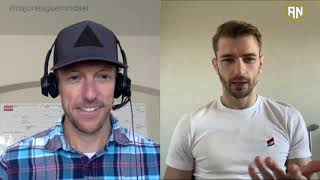
Ognjen Topic won the immigration lottery at age 9 and moved from Bosnia to New Jersey, where he hid a 15-20 fight amateur career from his parents before turning pro in Muay Thai. He talks about pursuing fighting despite family pushback and building confidence by trusting his own path.
Chapters
Welcome back to Major League Mindset. I am more than excited today to have the person I have on, I have on today, Onion topic, one of the top Muay Thai boxing fighters in the world. And I want to thank Ogden for the time of being on the interview. Ogden, you and I were both connected via a mutual connection of ours, a friend of ours, Steve Konka. Steve wearing the agency annex hat today. By the way, if you are in the insurance space and you want a better website, you know your company needs a better website with a better message that you need to take to the market. You do yourself a wise favor to get ahold of these guys at agencyanix. They build websites with the right creative marketing, the right creative message for the industry. So if you have any questions, want to know more about Steve and his agency, just shoot me a message in the comments below and I'll make sure to get you connected with Steve. But let's get back to today's interview. Little bit about Agnian's background or a little bit about him? Today I should say he is the number one ranked Muay Thai boxing fighter in North America. He is the current WKA North American champion. He is the current WBC North American champion. He is three time world champion, which includes the Grand Prix lightweight world champion, the former lion fighting world champion, as well as the IKF world champion. Welcome to the show, Agnyan.
Thank you, thank you for having me.
This is, this is going to be fun. All right. So cool. Want to level set Onion? If I can. You were born in Serbia, former Yugoslavia. You came over to the United states around age 9. Tell my listeners a little bit about what that was like to come over at that age, which is such an age of influence to be an immigrant coming from an Eastern European country over the United States.
Well, I was actually born in Bosnia, but I am considered a Serbian and just a little history before that. So people understand why, why I'm considered a Serbian instead of a Bosnian even though I was born in Bosnia. In Bosnia we have three different religious groups. We have Christian, Orthodox, Catholic Christian and then Muslim. So you're kind of.
You'Re kind of like decided on what you are based on your religion over there. So when the war started, we couldn't stay in Bosnia because Bosnia has.
A greater population of Muslim. So the war was, it was political, but it was also very religious too. So we had to leave Bosnia and then go to Serbia where it's mainly predominantly Christian Orthodox religion. And then the Catholic Christians are mainly in Croatia. So we moved to Serbia when the war began in Bosnia, and that was in 1993. So we lived there up until 1995. And I was nine at that, at that, at that point. And my father was here working on Ibiza with his brother in, in his construction company and.
He was playing the immigration lottery and he finally won it. And that's how we were able to come to America. And I was, yeah, nine, nine when I came here, which is going to.
Be an interesting segue to some future questions here. Ognian, because you're not the biggest proponent of luck, right?
Not at all.
However, you guys won the immigration lottery to get over here in the United States. So such an interesting perspective coming over. Let me ask you this at age nine, as you're coming over, going to an entirely new environment, entirely new country. Can you recall what that felt like from a mindset perspective as a nine year old boy?
I mean, it was one of the greatest, greatest feelings because everybody dreams about coming to America and New York. I mean, that's just, that's just how it was, you know, and this is where, this is where money grows from trees, you know, and, you know, from seeing America on movies and.
And I mean, it's, it's in your face constantly, especially in New York. And so for us, I mean, I remember as a kid, we would look up at the sky while we were in Serbia and we would see planes flying over and we would say, that's going to be us one day. That's going to be us one day. And finally that was us, you know, so we came to one of the.
Yeah, greatest countries in the world, you know, where there's so, so many opportunities. So, yeah, once we came here, I mean, for me it wasn't, it wasn't that difficult. Of course, I didn't speak the language at all. Me and my sister, we only spoke Serbian and so we had to learn how to speak English. And.
The kids were pretty welcoming. We didn't have many issues. Where we first moved to where it was a town called Hailed in, near, near Patterson. And it was a lot of a big mix of different cultures there. So, you know, there was a lot of Hispanics, blacks.
Palestinian people there, and then of course the East Eastern European bloc. So everybody, and everybody was kind of like an immigrant to begin with almost, you know, and everybody was very welcoming. When I moved to.
To Ringwood, which, you know, it was predominantly just mainly white, white class and white people. That's when I had some kind of a little bit of tensions and issues. People would make fun of me for my accent and things like that. But when I was in the other town, I never had any issues.
It's interesting for those of you who don't know Ognyon's story or where he is today. He trains, lives in New Jersey, where Onion, if I'm correct, that's where he grew up as well. Is in New Jersey.
Yeah.
Okay, good, good. For those of you unfamiliar where Patterson, New Jersey is. So let's now take it a little fast forward ahead. Here you are here at William Patterson University. If I recall, you're getting your graphics art degree.
And you didn't come out of college going right into the profession of Muay Thai boxing. You actually started like most of us watching this video today in the business world as a graphic artist, correct?
Yeah.
Cool. So tell me a little, tell me a little bit about topics creative and where that was when you were coming out of college. What was your goal at the time with the graphic arts degree?
Well, that didn't exist. That came out much later. But before, before I tell you that, I have to tell you my mentality behind becoming a graphic designer. I was always into art and I was constantly drawing everything. I was just a creative person as far as that goes. And so when I was in seventh, eighth grade, I was a very bad kid and I was just causing like havoc for no reason. No reason. My parents were great to me. I was just going through a stage as soon as I hit high school. That's when I knew I had to change. Because now I told myself that I'm becoming a grown up, you know, and I can't be messing around and fooling around anymore. Now I have to start taking things seriously. And I went to a tech school that offered a lot of art, different art classes. So I started with graphic design, but I really wanted to be a painter. Oil painting, that was my passion.
So by the time my fourth year came in high school, I had to decide what I wanted to do. I wanted to do painting, illustration, but I really didn't. I truly wasn't. I didn't want to work that hard at it. So I had to make a decision. I liked graphic design as well, and I was willing to work harder at that. And not only that, but the competition is very high at that level for, let's say a painter or illustrator and to be one of the best. I mean, there's so much talent out there, you know, and so you have to really work hard. But I didn't love it that much, even though it was my passion. I didn't love it that much where I wanted to work that hard for it. So I chose graphic design. And I wasn't, I mean, I was okay at it, but I wasn't great at it. And then during my college years, I, you know, I threw throughout following principles and stuff like that for design. I became very, very good at it. And I ended up winning a lot of awards as well. And then that's when I. That's where I came out with tovich creative.com which is my website for graphic design.
And then throughout, throughout doing that, I started training in Muay Thai. So that was in 2005 when I started training Muay Thai.
How old were you when you started training Muay Thai?
18. But prior to that, I started falling in love with combat sports at age 14. And so I wanted to become a boxer and do boxing. By. My parents said absolutely not, because their mentality was, we brought you to this country to go to college and, and go to school and be educated and, and make something of your life. For them, fighting it was like the lowest aspect of making money. You're. You're literally fighting to make money now, you know, and that didn't sit well with them either. And because I told you I was a wild kid as well, I had a lot of.
Issues with my head. I mean, I was like, had like stitches on my head three times, and they just didn't want me to get, you know, take any damage to the head. So I said, okay, fine, no, no boxing, but let me do karate or Taekwondo because there's no hits to the head. So they let me do Taekwondo. So I started at age 14, but throughout that whole time, I knew it was, it was, it wasn't the real thing, you know, because you can't call yourself a fighter or be ready to get into that type of situation if there's no hits to the head or other parts of the body besides just the body and using your kicks. So then finally I found Muay Thai and I was watching TV once, espn, and they were showing Muay Thai fights. And Muay Thai is a sport that, that's. That originates in Thailand. And it's similar to kickboxing, except you can use knees and elbows. So it's a very damaging sport. And I found that and I fell in love with it automatically and I started researching it online. I found the school, I went there, and that was it. I've been with the same gym ever since I was 18 and I'm 33 years old now, so.
Wow, that's awesome. So I hear two really important messages that came out of that story. Number one, when you left high school to go to college for graphics design, you weren't all that good at it. But through a lot of hard work, a lot of practice, practice, practice, working on the craft, you ended up becoming a very, very good graphic designer, which is why we have Topich Creative today. Number two, when you wanted to get into combat sports, you had a lot of opinions of people telling you, no, don't do that. That's the wrong way to go. You can't make money doing that. Yet you kept going after it. You kept going after that passion. And look where you are today. Three time world champ, number one ranked fighter in North America. I'd say you, you probably made the right decision and not taking so many opinions, right?
And then to go further on that, when I first became an amateur, I mean, when I first started doing Muay Thai, right, I knew my, my father and my mother, it wasn't going to sit well with them when I told him that I wanted to do Muay Thai. And then when I explained to them what it was, they knew, okay, this is like kickboxing. This kid's going, doing basically boxing. But now there's legs and leg kicks and, and knees and elbows involved. So that's even worse now than boxing to them. So they, they, they flipped out on me. They didn't want me to do it. And I said, don't worry, I'm not gonna fight. I just want to train. But in the back of my mind, of course I was gonna fight. There was no way that I was gonna do something and not try to do it at the highest level, which is fighting. I mean, that's like, you know, studying for something and never taking a test. You don't, you don't know where your true capabilities are if you don't do that. So after about a year, year and a half. No, after about a year and a half, two years, I started fighting as an amateur. And this was all behind, behind my parents back. They had no clue I was doing that. And, and you know, I had a, I had a good amateur career and I probably had like.
Yeah, I probably had like 15 fights without them knowing, right? And my sister knew, so she always kept the, kept it behind their back backs. So.
You know, if I would like have a fight and get like a bruise or something on my eye, I would just sleep over a friend's house and then go train the next day and then come back from training and tell Them, it was that training not to worry about. It's not, not, it's nothing. So they had no, no clue what was going on. And then finally my, my, one of my cousins who lives in England, he saw one of my fights and I was very, very, very cautious with having my fights on YouTube because that's when YouTube first started out, started up and you know, so my parents didn't find out. I never posted anything up on like social media or anything like that. And my, my cousin finds a fight, calls up my dad and he tells him about it.
And he stops talking to me for about four months because of that. Yeah, so I mean I was living with them at the time and we would just pass each other like we were ghosts. You know, I wouldn't talk to him, he wouldn't talk to me. And.
And yeah, so then I reached 20amateur fights. And then after that, after about that four month period, we never spoke about it. We just kind of went back to doing, having. We started conversing again because I think obviously he knew that I wasn't going to stop and it's better for them not to even ask any questions. Just let me do what I do and that's it. So we didn't even bring it up for the next, whatever, however many fights we had.
Again, I'm curious, was your, was your, the silence you got from your father and your parents, was that more the fact that you, you were, you were fighting and they didn't want you to, or that you had failed to tell them that you were fighting?
No, it was because they didn't want me to fight. Absolutely. And so.
And so before I go on, just, just to have your audience and understand the, the mentality behind this, you know, I love my parents. I would do anything for them. I would, I would die for them. And that's like I would just do that right off the bat. And, and with all that being said, there was no way that there was anyone that was going to stop me from doing what I wanted to do, which is be a fighter. So that's how passionate I was about this. So in other words, you can't let anybody come between you. And sometimes I would say your worst enemies is your family. Not that my parents didn't want me to succeed. They, they cared for me. They, they didn't want me to get hurt. So anybody that gets in your way, you got to move to the side. I don't care if it's your, if it's your. And I mean, I'm very cutthroat I don't care it's your brother, if it's your father, if it's your mother, you got to put them to the side and stay on your track because nobody, nobody can live your life for you besides you.
That's a great point. Again, I tell insurance advisors all the time, you first got to figure out who's in your tribe and who are you surrounding yourself. Are people lifting you up or dragging you down? And often the people dragging you down are family members. And that's a tough conversation for people to have. Tough thought process for people to go through is maybe I have to limit time with certain people in my family. If I am truly on this mission to achieve my passion and they're not believing in it or they want to take me away from it.
Correct.
Those are very tough decisions for people to make. So I'm glad you brought that up.
Yeah. Correct. And then friends for me is like, that's easy. I just cut them all out. No, no problem. There is if they're not, if they're not on the same level as me or they're trying to hold me back from something, they're out, they're gone.
So let me ask you this, Ogden. You were, you were out of college working as a graphic designer.
Yeah.
And fighting at the same time as an amateur. There came a point where you realize I'm really good at this.
Yeah.
And it's time to take this full time. It's time to maybe put the graphic design aside for a bit. And it's time to really pursue a professional career in Muay Thai boxing. Take us back to that moment where, where was your mindset? What made you realize it's time for me to take this to the next level?
Yeah. I had about two or three professional fights. So then finally I had to sit down, sit my parents down and tell them that, you know, obviously this is not, this isn't a joke for me. You know, this is now becoming my profession and, and you guys will either support me or this is the last time you're ever gonna see me. And I was dead serious. I wasn't joking about that. And like I said, I love my parents, I would do anything for them, but I was willing to make all these sacrifices. And I knew my, my mother was gonna, you know, I knew, I knew she wasn't gonna say no. I, I knew that she would support me, but I was, I was skeptical about my father because he could have went either way, you know, and, and because he's hard headed.
You know, I was, I was, I, I, I had thoughts in my mind that he would say no. And I was willing, willing to say depart with him for the rest of my life if I needed to. And luck happily, they both said, we'll support you. And they've been supporting me ever since then. But yeah, when I, when I turned pro, you know, obviously this was my life now. And at that time, I already had a graphic design job. I had one before I graduated college as well, and that was a full time job. As soon as I left college, that became my full time job. So I was doing.
More from Andy




If you want producers to succeed faster, help them create a sales message that creates confidence.

Sales isn't a zero-sum game! You can have tough competition and still grab a beer after



Option 1: Meditation, a fast walk, a podcast, and protein. The ultimate morning routine!

How you do one thing is how you do everything. Ill elite producers fuel their body.


Stop living in the gray of maybe! Your job in sales is to get a clear yes or no