The Broker's Voice: Ben Winfield
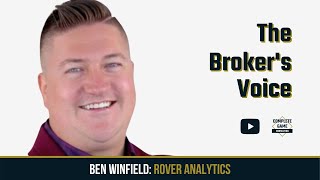
Ben Winfield, a former Marine and firefighter, runs Rover Analytics, which aggregates employee health claims data to give small employers and brokers real visibility into costs. The platform replaces guesswork with actual EOBs, lets employees shop smarter, and helps some groups move to self-funding. Winfield sees transparency forcing carriers to answer for their pricing.
Questions this video answers
Six years.
One tour in Iraq (Iraq War / Operation Iraqi Freedom, 2003).
About eight 24-hour days per month (roughly every third day schedule).
~83% of all small businesses have 100 employees or less.
RoverAnalytics.com
Chapters
Hey. Hey.
Welcome back to the Broker's Voice. I am excited this week to have Ben Winfield join me. But before I bring Ben on, I want to make a quick announcement for our sponsor, agencyanix. Listen, if you are an insurance agency, I have a very good hunch your website could use a little update. If I were to go to your website right now, I bet you it's talking about you and it's not talking to your prospect. If you know it's time to change up what you're saying on the site so it attracts the right prospects to you. You want to do yourself a favor and give Steve Konka and his team a chance to upscale your website. AgencyAnix has been designed, it's been created to build websites specifically for insurance agencies. I have put Steve's right here. Steve's email, Contact him, reach out to him right now. He built my website. It couldn't be happier. So agencyanix, they are the people you need when it's time to build your agency's website. So give Steve and his team a call today. All right, let's get into this week's episode of the Broker's Voice. I'm excited to bring on Mr. Ben Winfield. Ben, how are you?
I'm good, man. Thanks for having me. Andy, good to see you again, dude.
Awesome. No, thank you for joining. This is going to be fun episode because I already know you and I have never met in person, but I can already tell you're a damn good storyteller. So I like to set, I like to start at the same place. You have one hell of a story, my man. Take us back like, I don't know, seven, eight years. What was Ben Winfield doing at that time?
Well, if we go back only seven or eight years, I was a firefighter working full time as a firefighter, family man. I got four kids at home. About that time was right when I took on taking full time custody of all four kids. So they live with me and full time gigs. So just living that life. I mean, I love being a firefighter and helping people and it just was a natural progression to take on that role as it kind of became necessity in our lives. And also help from my mom. Couldn't have done it without my mom. Shout out to mom for that because with my 24 hour schedule, like somebody had to step in and help while they were younger. But yeah, that was it. Just being a firefighter, going through the days and yeah, loving what I'm doing.
So full time firefighter, full time dad of four. So thank God mom was around to help you make that all possible. Let's go back even farther because before you got into firefighting, you were in the Marines, right?
I was, yeah. So right out of high school, in fact, I actually joined officially while I was still in high school on a special program where I started training with the reservists for a year while I was still in high school. So my time in service, I spent six years in the Marines. And the first year was like, while I was still in high school, I'd go do the one weekend a month drill with them and everything. It was kind of a weird program, but it's really cool. Set me up for success. Almost everybody out of that program, we're all squad leaders and guides graduating from boot camp, so basically teaching us to be leaders in this like, you know, a type leadership world right off the bat. So yeah, I did that. Spent six years in the Marines. I was there in 03 when the war started in Iraq. I did one tour for Iraqi freedom and then got back and got out. Started my career as a fire service and kind of segued from one type of leadership into a completely different type of leadership. Right. Going to war to now, I'm like spending my life trying to help people, so completely different shift. But that was really my calling. I really love helping people, so.
Well, that's interesting. Number one, thank you. And I am sure anybody who's watching this can say thank you for your service to, to this country. That's, that's a huge honor. I'm curious, when you got out of the Marines, what led you into firefighting?
So honestly, like, I love the idea of giving back to my community, giving back to my country. That was really why I joined the Marines. Not for the go to war aspect of it. Right. I think nobody ever, I hope nobody ever actually wants that.
Right.
But you end up there. But it's just taught me to like, want to give back to people. So I thought, okay, I want to continue this public service. I want to be a cop or a firefighter. I interviewed both. I did ride alongs with both. I did my due diligence and I realized I really like being liked, so I'm going to go be a firefighter. And this is way back when, like now I'm like, thank goodness I made that choice because I can't imagine the hard position that police officer and I work alongside them. So I have a lot of respect for the police community, but I can't imagine what they go through, especially in today with Nice. Over every decision. And so. But you know, I like people that like me. You know, when I show up in uniform, they smile, they wave at me completely different. I like that. So that's me.
I like people liking me. I love, I love how you said that. So honestly. So now here's the real question. I think a lot of people are like, okay, because I know Ben today as the director channel partnerships at Rover analytics. And you're still a full time firefighter.
I am.
How in the world did you end up in this industry known as health insurance? Because most of us did not get here by design.
Yeah. You know, I've talked to like one other firefighter in this industry, same thing. And like one or two other guys from the Marines. But yeah, it's a weird progression. But honestly, even before I became a lieutenant on the fire department, like, I had focused on business. I mean, business. I have a business degree. I'd gone through that all through high school. I always had that Emmy. And so previously I had. I owned a real estate company before I went through a divorce. And so we sold it all liquidated, but I still had that inside me. Like, I want to do something, but I realized not only do I want a business, but I want to, like, continue to impact people. And so I actually approached one of my best friends, Benjamin Prinzing, who's my partner, and I approached him who has another company, and I was like, look, I'm ready to get back into this. We talked about doing something a couple of years back, like, is this a good time for us to do something? And I want to get into this, like health, healthcare, health insurance, something like, where I feel like I'm making an impact. And one of the first things I told him is that I have to do something that I believe in and, and it has to be something that if I'm going to transition away from eventually not being a firefighter, that I have to believe in it and feel good about myself doing it. And so it just so happened he had Rover analytics, he was rebranding out, and we talked at length about it and I was like, this, this is so awesome because I actually feel like I get to fight for the underdog and I can actually help impact people's lives. And maybe not directly. Like, as a firefighter, man, you save a life. You do a CPR save and you like, ride that emotional wave for months. Not going to lie. So to replace that directly, I'm not going to be able to do that. But what I can do is still know that I'm making an impact in people's lives. And that's. I do feel that. So I'm like, okay, I feel like I can get behind this. I can still make an impact with people. So that's kind of how the progression came. Just talking to him, wanted to do something and use that business side of me and still do some good in.
This world, you know, I know. You know, the schedule of a firefighter is kind of a 48 on 48 off or 48 on 72 off. Does that allow you to kind of dedicate your time to both fighting fires as well as helping the health insurance industry?
Yeah, I mean, absolutely. So I work every third day as ours, one day on two days off. But then we have a built in Kelly day and we have other things. So the reality is I work about eight days a month as a firefighter. So they're 24 hour days. We do sleep at night if there's not calls, which we're a busy crew. So we usually have calls in the night. But that means that I have on an average weekday, Monday through Friday, I work one or two shifts at the fire station, which means I'm working three to four days on Rover. Plus, you know how it is when you're a partner and startup. Like, I'm working weekends, we're making phone calls at night, we're still strategizing. So I'm definitely putting in 40 hours a week, you know, plus on Rover. But actual here, like today, I'm not at the fire station, so I'm here. I can do stuff like this. So absolutely.
And if you're not, if you're not sure where Ben's from, just take a look at what's behind him. He's got a beautiful shot of Portland with his Portland Timbers soccer scarf. So big, big supporter there. Okay, so if I heard you right, you sold houses, then you ran into burning houses, which you still do today, and now you help employers fix their house before it's burning down, which is called health insurance. Yeah. So talk about for the folks who are listening in that may have no clue who Rover analytics is, talk a little bit about what you guys are doing right now to bring, they call it transparency and an easy transition to so many groups that just have not had access before.
Yeah. So, I mean, the easiest thing to look at is, you know, 83% of, like, all small businesses have 100 employees or less. Right. So that's like the major market out there and nationwide. If you fit in that category, when it comes time for your renewal. It's this funny game the insurance carriers play. They say, okay, your renewal goes up because you're a high user. And then you as the employer are like okay, so why. And you're like well you're a high user. And you're like well show me the numbers. And like oh, you're too small for us to pull it out. And then they're over here like well then how do you know? Right? It's just this like dumb game that they play because they don't by law have to do it. So they don't do it. They just hold it back. So what we do is we have found a solution to get you that information and so we, we can actually get you your financials and your claims information to your advisor so you can actually call BS on what they're doing. Like we had groups that have gotten like a 30% renewal and could go back and say nuh and got maybe a 4 or 5% retool. And what it does even more than that is it allows groups to go self funded or into a captive or any of the other programs out there. It just gives them options when they actually see their usage and they can see what their pharmacy spend was and what it could be with the change. So really we, we open doors and opportunities for them and we call BS on the insurance carriers that are just you know, trying to hit them over the head with these heavy renewals without any information as to why that's it.
Well, and where my head went when you started talking about that is, you know those groups, like you said, most of corporate or not in corporate, most of of America is made up of businesses with 100 employees or less. And as far as controlling their health insurance costs go, historically they've been told there's not much they can do.
Yeah.
And so maybe take us there. You know those groups that for the longest time because of the carriers they work with, heck the broker they're working with, they've been told they can't do anything. Where is Rover analytics giving them that hope?
Oh man.
Of a better option.
Yeah. And that's really the conversation I have even with brokers to help them that go to their client is to help the brokers understand this is a new way of thinking. You have to change the way that you've been doing business and change the way of opportunities that you thought maybe weren't there. Because it is. We've been told this story in this mental self talk. There's just nothing we can do. And now oh, there is something we can do. We can get this information. With this information, we have not only options that will impact our premiums, whether we're going to go to self funded or a captive or set up a Merck TPA program or, you know, whatever these options are. But then even diving in deeper is normally, then you can, you don't get to see what's going on behind the scenes. But your broker can see, man, for steerage reasons. We can see here that they're going, everybody's going to this facility for their MRI and that's where they charge 5,000. But they could be going over here getting the MRI for 500. Right. So you can build a steerage program that still gives people option. We're not saying you can't go there, but hey, we'll give you a $200 gift card if you go over here for your MRIs. Right. You can see things in the plan because you see the facilities they're going to. So you can give them incentive to be wise and make better health choices. Because at the end of the day, I feel like most consumers, they just don't know. They don't know that they're paying, that the plan is paying 10 times here versus here. And so that opens it up that you can have that dialogue with the employees, you can have it with the employer, with everybody. So it really is just this new information that you've never had is that game changer to actually change your mindset and the story you tell yourself as well as what the options are. So you can just, you can change it up. You don't have to go down that same path if there's nothing we can do.
Yeah, there is stuff we can do well and quickly. If you don't mind. Share how Rover, Because I think, you know, with the brokers I work with and talk to, one of the challenges are, you know, those groups that they would like to take to a different financing arrangement. You know, the big, big hurdle that can awesome. Step in the way quite often is medical applications.
Yeah.
That need that requirement to do that and that stops so many. How is Rover actually helping solve that problem too?
Oh, man. We are on a mission to eradicate and remove and replace health questionnaires. Because that's the number one pain point I hear as well. Literally, I get people message me like, hey, how are you replacing health questionnaires? I've heard this rumor and it's like, yeah, that's true. So at the end of the day we're able to go in and access the employee's explanation of benefits. So by law, every time that somebody uses their insurance card, whether it's for medical prescription, whatever, it triggers an explanation of benefits. So those EOBs are held by the member portal. And so what we do is by access, by permission of the employee, we can go in and gather their EOBs, aggregate them together, and then hand that over to the advisor. So the employee engagement takes three steps in about one minute. Okay, so health questionnaires, you're filling it out. I have four children. One of them is a type 1 diabetic. We go to the doctor quarterly. We have lots of prescriptions, everything. Imagine me having to fill out two years worth of every doctor visit. Everything. I'm going to forget things, I'm going to miss things. Some people straight up lie on them. I mean, they're just whatever. So with our situation, it actually is safer for the employees because it's the actual factual data. There's no omission, there's no mistake, there's no misspelling of a drug. Everything's accurate. The information we can get, we were told we're like the Venmo of health care. You know the Venmo, the banking app, right? You give permission to them to access your bank, to pull out money to give to you on my behalf. Well, the employees give us access to their EOBs to go and pull them, hand them over to the advisor. So now you can shop the plan. And the message to the employees is really simple. Look, insurance carrier already sees every time you go to the doctor, okay? People know when you go to the doctor, but they hold it hostage so they don't have to compete for your business. So by sharing this data to your advisor, still never goes to your employer, but by sharing this to your advisor, they can now make companies compete for your business. So you're going to get better health care at better rates. I mean, that's a simple message. And that's why we gained the buy in.
I love that. You know, a couple more questions here before we wrap up. Now, taking it back to the consumer because you posted something, we're doing this interview actually on what, May 17th. You, you had a post this morning or over the weekend that I loved talk about because as a firefighter, right, you're not just dealing with burning houses, you're. You're giving first aid, you're helping people in the rest. Talk about some of the conversations you find yourself having with the consumers who need your help when it comes to now, hey, you need to go see a doctor, you need to go to a hospital, man.
I'm, I'm telling you that that post that I had was triggered from a memory I had not that long ago. So I got to be careful with HIPAA here to like, not give any specifics. But we'll just say in the not so long ago distant past, I dealt with someone who literally had a very serious medical need. They had been unconscious, they'd been out of it. Like, they're coming to, but they still like, you got to go get checked out. There's some serious things going on here. If you don't go, you could have some severe long term medical issues up into death. Right? And their statement is, I can't go. I can't afford to go to the doctor. I can't afford to go to the doctor. Now, these are the same people that oftentimes have been putting off seeing the doctor earlier for the same reasons, right? They're the doctor. The whole process is the unknown. You don't know how many hundreds you're going to end up paying for that doctor visit. You know, the, the bait and switch process of going in to see the doctor. You never know until later. So they're, they're not getting the preventative maintenance. And so now when it comes in to where like, okay, your, your car is broken down, your body's broken out, you need the help now. And their answer is, I can't afford it, so I'm going to choose to stay home. And you know, I love that in America we have a right to our own health care and people have the right to refuse. And oftentimes if somebody's like, I'm not feeling good, I'm going to stay home. Hey, that's your right. Go ahead. But I'm like, like, you really could die here. Like, this is some serious stuff that you should get checked out. And that's still the answer. And that just breaks my heart, man. Like, I see it on that end and it's just, it is heartbreaking to hear that as a reason. And that's just a reminder of our health care system. Like, it's just the whole system as a whole has so many flaws and problems to it.
Well, and the sad thing, Ben, is I wouldn't even be shocked if someone who says that I can't afford it is somebody who has coverage to their employer. Because of their employer's inability to control its cost, they now have a $5,000 deductible that they can't afford to actually use. We mean the whole phrase, what do they call that, functionally uninsured? I've got insurance, I just can't afford to actually use it because I can't pay that kind of deductible. And so, yeah, it's, it's a really, really, really sad state. And it's, that's why what I love what Rover's doing to try to fix and eradicate that. So, last question. Pull out your crystal ball.
Fast forward the industry two, three, maybe five years. Where do you see some big changes coming as far as how Rover can, what role Rover can play in helping moving the industry forward in the right direction?
Well, I mean, absolutely, I believe our impact is going to be through, and we say this word transparency a lot, but literally bringing the actual information to light. So we're going to bring and hold more carriers accountable. You're going to see a lot of these smaller groups that are going to go into different fundings, whether it's, you know, like I said, the captive program associations or going all the way to self funded, depending on their risk and their group type. Right. But you don't know until you actually see it. Maybe, maybe self funded doesn't make sense with your group, but you don't know until you can look at the info. So I see that for sure. You know, there's some great stuff coming out with the CARES act as well that's going to be hitting next year that's going to give us even greater access to information because it does require, at the request of employees, they can get even more information about each visits and notes. And so we see our role in that since the employees are giving us access to this is we're going to be an advocate for them to get more of that information, which is only going to help even more with programs like care advocacy and medical management, you know, helping people that should be taking certain prescriptions, getting them the right prescriptions, make sure they're refilling their prescriptions, make sure they're making it to the next doctor appointment. Because again, it's about prevention. We're not just talking about what do we deal with the heart attack claim, but how do we prevent that heart attack. And so we're going to have the opportunity through this information, which I love data and I love information, we're going to have the opportunity with that to actually prevent some things better. And that's the thing with these small groups that, you know, historically without this data, you couldn't use a care advocacy group or medical management because they had no information to go off of. And none of these groups were going self funded. And so this is an opportunity for more and more companies to use those tools, which are, financially, they're important, but they're also, on a human level, they're the right thing to do. They really are going to help prevent some of these major diseases and actually save lives. So I get to feel like I'm not directly saving lives, but I know that I'm making an impact. I know more people will be here because of what we're doing, and that makes me super excited. I get to keep feeling that feeling.
So if there's a broker listening in or an employer who's like, damn, we want this kind of transparency, want to have this kind of access to our data, how can they best get in touch with you?
I mean, Obviously our website, RoverAnalytics.com we obviously are all over LinkedIn. There's a few of us that are very active. I host a lot of live events and, and we're all connected there. But in the broker network, we primarily work through brokers. So if you're a client, like an employer that sees this, tell your broker to reach out to us or reach out to us, and we'll put you in touch with many of the brokers we have. That's the beauty of my job, is I get to know everybody on every level. So I have friends with brokers and TPAs, and MGUs, gas carriers, everybody. So I love making introductions. So if that's what I got to do, that's what I'll do. But, you know, the bottom line is we're here to help. We've gotten some amazing testimonials of groups like an 80 life group that's saving 235,000 on their premium after they got our data. Like, that's massive for them, just massive. But they never could have done it had they not come and got the data. So that's what we're here for, man.
Right here you'll see Ben's email address. So go check it out. Hit him up right now. Get some more information. If you're a broker, we listen. Things are changing. Even though you may have groups that you thought didn't have choices in the past, they do now. But it requires you to help them guide, help them take that action, to go down that right path. And so if you're listening in and your client's health plan is on fire, hell, if your house is on fire in Portland, you can give Ben a call. So, Ben, one more time, thank you for joining.
All right. Thanks, Danny. Always good to talk to you, man. Likewise.
This is a great episode of the Broker's Voice where we are. This is dedicated to shining the light on great people doing great things in the health insurance industry. And, Ben, you're absolutely one of them, so thank you. And again, you're listening in. When clarity and confidence, Clyde, you know what happens. Massive action happens. Go make it happen today.
Let's do it.
More from Andy




If you want producers to succeed faster, help them create a sales message that creates confidence.

Sales isn't a zero-sum game! You can have tough competition and still grab a beer after



Option 1: Meditation, a fast walk, a podcast, and protein. The ultimate morning routine!

How you do one thing is how you do everything. Ill elite producers fuel their body.


Stop living in the gray of maybe! Your job in sales is to get a clear yes or no