The Broker's Voice: Chris Hamilton, Partner - Hotchkiss Insurance
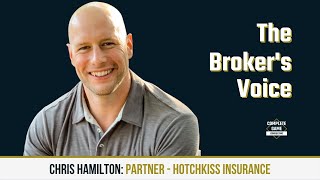
Chris Hamilton left 16 years in banking to start benefits consulting in 2015 after seeing employers confused by the ACA. He treats healthcare as a financed business expense, bringing finance and HR together, and built a separate website with case studies to reach CEOs and CFOs directly.
Chapters
Hey. Hey. Welcome back to the Broker's Voice. I am excited this week to have Chris Hamilton from Hotchkiss Insurance join us. Chris is one of my favorite people. I'm excited to. To dive into his story, what he's doing in the industry right now. He's doing some great things. So if you don't know Chris, you're gonna like him in the next. You're gonna. You're gonna really like him in the next 12 to 15 minutes. But before we dive into the episode, the interview, I do want to make a quick plug for our sponsor agency annex. Listen, if you. If you are an insurance agency, there's a really good chance your website right now is not up to date. It is not backing up what your mouth is saying when you are out in your sales meetings. And you have to make sure your website aligns with what you are selling. So if you know your website needs an upgrade, do yourself a Favor, check out AgencyAnx. I have put Steve Kanka's email right here. Get ahold of Steve. They do my website. I could not be happier. And they build websites specifically for the insurance industry. So get a hold of them today. You won't be disappointed. And your website will become the salesperson you never realize you have. So get a hold of them today. Here we go. All right, Chris, welcome aboard. Welcome to Broker's Voice.
Awesome, man. Well, hey, I appreciate you having me on.
You bet. So, as I mentioned, I didn't mean to wasn't blowing smoke up your butt, but you are one of my favorite people. You and I actually had a chance to do a VIP session right before COVID hit. You were my one and only VIP session here in Fort Collins before the pandemic hit.
But I. I want to start with your story. You know, you. You spent a. A long career in a. In a different industry, banking and finance, before you got in the insurance industry. So talk about that. Talk about what, what you were seeing when you were in finance and. And how that actually led you to joining the health insurance industry.
Yeah. Yeah. So, you know, as you mentioned, I spent 16 years in corporate finance and banking prior to getting into the benefits business. And in that time, you know, ACA was passed, and then it started being phased in. And I was working with companies, you know, back in the banking days, you gauge company size not based on the number of employees, but it was revenue and deal size that you were working on. But if I had to kind of go back and look through my book of business back then, most of the companies that I was working with definitely had over 100 employees. Most of them were well above that. My largest client probably had 10,000 employees. So everybody's subject to the ACA as it's being phased in. And I began asking questions of the CFOs and CEOs that I work with. Are you guys compliant with the aca? And I was really surprised at some of the answers. It was a lot of shoulder shrugs and we don't know, and somebody, you know, the department's taking care of that. And as you know, as a banker and finance person, I had access to multiple years of financial statements for these companies. I would look at it and think.
Your healthcare is one of your most expensive line items, how you manage that expense. And again, I was surprised at some of the responses I got. It was like, you know, it's whatever our broker brings to us, there's not really a way to control it.
And so what was interesting to me is these are really sophisticated and smart people. You know, they had the ability to do futures on some of their materials, and they were doing swaps on interest rates, and they were doing all sorts of interesting and sophisticated things to manage their other expenses in the business. But healthcare, they just kind of left. And it seemed like it was growing at an exponential rate. And so I just kind of began digging into, just as a curious person, how did it actually work? And I had some friends and actually a large client of mine that were in the business. And so I started asking, you know, how does healthcare business work? And what I realized very quickly is that it's a completely broken system. There's a lot of misaligned interests and people that you think are actually looking out for you, that actually you're not, they have the opposite interest that you do as a business owner and a plan sponsor. And so back in late 2014, early 2015, I made the jump into the benefits consulting business with the intent to try to figure out how to fix healthcare. And, you know, really, that's been the focus of our practice, is figuring out how we can go help companies manage their health care expenses the same way they do every other expense in their business, and at the same time, lower their costs, provide better benefits to their employees. So that's really been the focus of what we've done, how I got into the business.
Yeah, it's an interesting perspective. Talk. Talk to me, too, about, you know, in the finance and banking, you spent your career talking to CEOs and CFOs, right. Do you believe that really helped you Launch your career in the health insurance space because, you know, for far, for a long, long time, we spent our time talking to HR professionals right when it came to benefits. And let's be honest, talking to the C suite has become this new thing in the last five years for benefit advisors. But coming from a career, a background where you spent your time talking to CEOs and CFOs, do you think that gave you a nice advantage?
I would imagine so. If somebody's spending their time, you know, human resources, the HR departments are a very important voice and a very important piece of the decision making process. But when you think about transforming the way companies buy healthcare and the way that we do it, there's a difference between talking about benefits, which are important. That's where you're talking about network and deductibles and those sorts of things. That's one conversation that needs to be had. There's a different conversation that needs to be had which is about how do you finance, how do you pay for healthcare, how do you transfer and move around risks, how do you, how do you change the risk based on the tolerance of a company? And that's a different conversation. It really involves finance. And so what I found just over the years, the best way to do this is to bring both groups, finance and HR together. And so I think that just being able to have the conversation because really at the end of the day I have, you know, banker and finance friends that give me a hard time. Oh, you're in the insurance business now. But really what I do is, is I'm helping companies finance health care. It used to be I would help somebody finance the acquisition of a company or finance a building or finance equipment or their working capital. Really what I'm doing, I'm basically a banker for health care. I'm basically showing companies how they can lock in long term financing for their health care and manage that cost the same way they do everything else inside their business.
I love how you said that I'm a banker of their health insurance because that is exactly what it is. There is a secret, there is an art to being able to have a financial conversation with your clients when it comes to their health insurance cost. And that has been the number one chance. The challenge I present to every one of my clients, Chris, is you've got to stop having a benefits conversation and start having a financial conversation. Because at the end of the day, that is really what it is. And so I'm going to steal that from you. I'm a banker of health Insurance. Because that is such a great way of putting it, because that's really what we are today.
Well, let's talk about this. So you, you get in the business, you built a. A hell of a book, man, in a. In a very short amount of time, which is impressive. And when you and I got engaged, seems like, man, it's hard to believe. It's been almost two years.
One thing that was on your mind was building a brand. And it's something that, you know, that speaks to my heart. What, what has been your views of what it means and the importance of having a brand in our industry. What led you down that path? Say, hey, you know, it's time that I want to start building this, to create that awareness, to get more opportunities for my business.
Yeah. So one of the things that's interesting.
This is very similar in the insurance business and in the banking business is everybody views all banks the same. They loan money, they take deposits. And everybody seems to view the insurance brokerage space very similarly. That, well, I have a broker already and they're taking care of our business. Right. So it's very. Everybody's kind of painted with the same brush, and we all did the same thing. And the reality is everybody doesn't do the same thing. They're very different, distinct business models. And one piece of advice that you get from one broker is different than you would get from another. Perhaps if somebody was to talk to me and talk to the competitor next door, they're going to get very different viewpoints on the marketplace and options. And so, you know, our business, you know, we cover the state of Texas. We're in Fort Worth, Houston, San Antonio and Dallas. And I have a circle of influence here in my town, but we're not very well known for our benefits practice statewide. And being able to cast that net much further is really was an important goal for us as we go out into a marketplace where people don't know who we are and we're establishing who we are for the first time in their mind.
It's a great way of putting it, because especially when you're going into a new market, you have to look and you have to look different. And you can't just say, oh, we're another benefits agency that's going to be in this market. You have to come out of the gate looking different. And so, you know, when you think about that, talk about what you. The work you've done, if you don't mind about building the brand, the health plan behind it, you know, all the stuff you've been working on in creating that model you have today.
Yeah. So, you know, one of the things that I think that you really helped us with was identifying who the specific target market is for the product and the consulting services that we bring to the marketplace. But really, more importantly, it was figuring out how do you create a brand for what it is that you're doing.
So what helped us was actually creating a name for the process, creating a name for what we are going to do for somebody. And so beyond doing that, being able to like, specifically line out them out like, this is what we do, this is the process that we use. This is the name of that process. And then more importantly, we created a separate website from our main brokerage website dedicated specifically to the process that we use. And so we named our process the Healthcare Insider Approach. And what we explain to business owners, CEOs and CFOs is that as insiders to healthcare, we're gonna peel back that veil of secrecy that's kept you trapped in the status quo. And we're gonna show you as insiders how we've designed our own plan for our employees that provides better benefits and lower costs over multiple years. And if people that subscribe to our programming and our philosophies, they're going to save money, not just year one, but we can show them. And we've got enough case studies now. As far back as when I first got into the business, I'm lucky enough to still have clients from back then that have used these approaches and were guinea pigs for me. We have multiple years worth of data that show the impact that this has and how they can actually use their benefits. You know, you think about today's a tight labor market, and a lot of the companies that we work with, they're trying to attract talent from larger organizations. You know, Fortune 500 companies, we show them how to make their benefits better than Fortune 500 companies paying less than what they've paid in the past. And it really. It sounds too good to be true, which is really why we created the site so they could hear. And this is what I learned from you.
It's really a repository. How many times if there's a broker that's. Or an advisor that's listening to this, you go meet with somebody and they say, wow, that sounds really good. Can you send me more information? People send me information all the time. I delete it. I don't read it. I don't consume content that way. So what we do instead is we send a link to this gated website, we can see who's going in to view the information just so that we know who's accessing it. And it's a repository where it's got content videos that explains some of the concepts that we've talked about. It's got case studies that show real world examples of similar type companies that have adopted some of the strategies that we use. It has testimonial videos. Think of it as many podcasts. When a CFO goes into that site, they want to hear from another CFO that's used this approach and how they've actually beaten the system. And then there's a cost estimator. So based on our block of business that we've done this with, we can estimate based on a per employee per month or per employee per year, what this might actually mean to your bottom line. And they can go in and enter just two pieces of basic information and it'll tell them if you want to subscribe to this sort of methodology, what you might save. So really what it's become for us as a piece, it's more of a marketing and validation for clients and prospects that we work with to really see firsthand in a way that they want to consume media, whether it's PDF, case studies, videos or podcasts. So it's really been helpful. And you know, we're, we're, we're deploying it more and more to really establish ourselves versus somebody that's just going to leave a glossy folder behind that may or may not get read or thrown in the trash.
Yeah, I, I absolutely love this man. Because what you guys have done is become, you've created a little media company. Now it's housed on your website, Healthcare Insider, but it gives, it's bringing so much value to those target CEOs and CFOs you're trying to do business with. And let's be honest, a lot of it isn't asking for their business. You are starting by giving them value. So if you're listening brokers, industry partners, please make a note of that. It's about bringing value. It's about giving before taking. And you guys have done a masterful job with that using, using the Healthcare Insider site.
Yeah, yeah. So one thing I would add to that as far as giving value, because if there's advisors that are listening to this, you know, really our mission is fixing healthcare for companies. And what I have found over the years is that there are certain very large organizations out there that don't have that same interest. And so if they're regional or smaller advisors out there that are trying to figure out how to compete. It's by using some of these ideas and strategies. And what I people are always, I talk to other, we're part of some different groups of like minded advisors and there are groups of thought out there that are afraid to give value away at a fear that it's going to be given to a competitor to be implemented. And what I have found is that if you actually give the value upfront, even if somebody wants to take it to another group, another broker, I call them brokers, kind of a big national.
Somebody, they have to hire somebody to implement it because a lot of times those bigger groups aren't going to do what we do. They'll sell against it.
That's exactly it. And I, I, I was one that has, was doing that for, for many years and was guilty probably sometimes of giving him away information that was used against me. Right. They gave it to their broker to go implement. And I just had, I told myself, you know what, at the end of the day if I just keep giving, I can sleep at night. And yes, are people potentially going to use it for, to give to their own broker? I guess. But at the end of the day I know I'm going to have more people actually hire me because of it versus those that use the information to take it back to whoever they're working with today. So your mindset on that is, is exactly where it needs to be. And quite frankly, Chris, our industry still has too much of a limiting mindset of everything I do is going to be used against me. I can't give anything because someone's going to steal it. The ones that are winning today are the ones who've got the abundant mindset that I'm going to share. But if it gets used, great. But I know I'm going to win more than I'm going to lose because of it. So I want to ask you this question. This is actually a little off the branding and, and everything you're doing with Healthcare Insider, but in working with you, you know, you have a unique position where you not only are producing, you're managing your book, but you're also leading the benefits team at Hotchkiss for the broker listening in to this interview who is in the same spot where they're playing multiple roles with within one agency, which happens a lot. What's your advice on how to manage those roles effectively each week?
You know, it ebbs and flows the demands for producing and consulting on an existing blog, managing a team Depending on the time of year and where you are in your business cycle, you know, it ebbs and flows. I think the most important thing is figuring out. And this is something that you helped me with because I really view you more than just branding. You're kind of organizational coach as well for helping you structure your days, figure out what your most important things are and putting those on your calendar. And I find my to do list, I'm actually looking at it here is it's like 50 items long, but not all 50 of those have to get done today. And not all 50 of those are equally as important. Right. It's looking at that list and figuring out what are my three things that I have to win today to move the needle. And some days they're heavily focused on sales, some days they're heavily focused on management. But generally there's a mix. But it's really identifying. And somebody told me this one time, I don't know who it was, but it still resonates with me. All of us in this business, we're juggling so many balls, but some of the balls are made of plastic and some of the balls are made of glass. And it's figuring out which are the glass balls that you just can't let drop. And for each of us, that's going to be a little bit different. And making sure you catch those and letting the ones hit the floor that, you know what, I can pick that one back up tomorrow or next week or next month. But really, you know, in the past we can get tunnel vision and just focus on all these tasks that have to get done. And it's really being able to levitate and rise above and identify what's the most important thing today.
That's. Yeah, I couldn't agree more. I think too many look at a to do list and feel like the whole list has to get done, or they place equal priority on every single thing on that list. Which. The thing you have to do is look at the list to your point and say, if I could only get three things done today, what three things have to be done? What are those glass balls that I'm going to throw in the air, but I can't let drop? And it's about getting narrow on what you're focusing on, focusing on fewer things. And to your point, it's time blocking. Right? When you manage a book, you produce, you manage a team, you've got to block time for each one of those activities throughout a week so that you are just in the single frame of mind. Frame Mindset of I am the manager today, I am the producer right now. You can't be all three things all the time. You have to focus on different aspects of your job at different points of time throughout the week. So. That's right. I appreciate you sharing that. Well, Chris, you know, if most people don't know, you just recently got married. So congratulations, sir. So, so a new addition with the family. Last parting words of wisdom here. When you look at our industry right now and there's a broker sitting in, listening in, or an industry partner, as we look over the next year, two years, where do you see an area, an area of opportunity with brokers to really differentiate themselves?
Yeah, so that's an interesting question and I think it really ties into what, what an advisor believes is the future of our industry. Right. So I think people have to ask themselves and I think it's an important question for all of us because we probably, I get asked this question by clients all the time, like what's the future of this look like? We have clients that say, what's our strategy next year? What's our strategy going to be five years from now? So if you haven't thought of this, you need to think about it. What's the future of our industry look like? And then based on what you think the industry future of our industry looks like, then you build your business plan to adapt for that. Because if you're so many people, I find they're looking back to what the benefits industry looked like in 2015 and that business is gone. And so I'll give you an example, kind of what, what my philosophy is, and this is what I tell my client. The future of healthcare is one of two things, right? It's what politicians are talking about today, which is single payer, right? That's going to be Medicare for all. And there's a business model that we can adapt. I don't fear that at all. If that's what happens, we're going to adapt and we have a business model that's going to be able to leverage that and move forward with that. But I don't believe we're just there yet.
So I believe in the second alternative, which is going to be this grassroots effort that we're part of and advisors and like minded advisors around the country are gravitating to and latching hold of that are fixing health care one company at a time by using some of the strategies that we use. Because there is a reality out there where you can lower somebody's cost and provide better benefits. And wring out a ton of waste in the process.
And as that continues to catch fire and spreads around the country, there are going to be enough people that that's going to trickle up to larger companies. You saw it recently, in the last few years, Amazon, Berkshire and Chase, right? They called it the ABC of healthcare and they disbanded it. Why? Because they were trying to come up with a solution. Warren Buffett talks about this in one of the annual meeting meetings last year. I believe that it was just too difficult and there's too many powerful parties involved in the process of healthcare that they just couldn't do it nationally. But you know, where we can do it locally. And if everybody bands together and handles their local markets and really brings these solutions to bear, there's going to be a solution that trickles up. And so I'm a firm believer in fixing what we already have, because I think that's what's going to work. That's what we're using today, and it's working. And we're going to continue to do that until we see the tide shift to some sort of government solution, which that may end up happening. But the solution is going to come from one or two places, and I believe it's going to come from one of those.
Well, and you know what? I've been saying this a lot lately, Chris, Just help one employer. No one's disrupting this industry.
Berkshire Hathaway, Amazon and.
More from Andy




If you want producers to succeed faster, help them create a sales message that creates confidence.

Sales isn't a zero-sum game! You can have tough competition and still grab a beer after



Option 1: Meditation, a fast walk, a podcast, and protein. The ultimate morning routine!

How you do one thing is how you do everything. Ill elite producers fuel their body.


Stop living in the gray of maybe! Your job in sales is to get a clear yes or no