The Broker's Voice: Megan Chiarello - VP of Marketing, WellNet
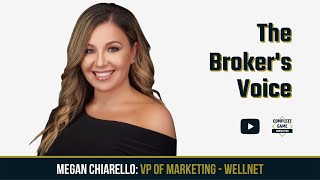
Megan Chiarello, VP of Marketing at WellNet, walks through how to stand out in employer health benefits. She recommends building a clear buyer persona, productizing your solution, and aligning marketing with sales. For channels, she emphasizes concise email templates, webinars with client stories, and polished LinkedIn content with measurable engagement metrics.
Questions this video answers
Vice President of Marketing, WellNet.
September 27, 2021.
wellnet.com (and LinkedIn messages to Megan or WellNet page).
"Live cast" (she said: 'I created the term live cast two years ago').
Chapters
And one. All right, welcome back to another episode of the Broker's Voice. I'm excited, you guys watching this. Probably recognize this lovely lady and you'll say, wait, she's not a broker. Exactly. We're actually going to have some fun. I have the one, the only Megan Chiarello joining me on the Broker's Voice. Megan, welcome aboard.
Hey, Eddie. Thank you.
And today you are the vice president of marketing for wellnet. And so that's what I want to talk about. Today is my favorite topic, two favorite topics, insurance and marketing. Because we are going to dispel some myths about how to market in our industry and actually how to do it the right way. So before we get there, though, I've got to ask the question I ask everybody. How did you end up in the industry? Because most of us did not get here by design.
Oh, yeah.
I am the most did not get in by design. But I have been doing it right out of college. So that's been kind of different too, is I haven't. I really stayed in this space because I did fall in love with it. I started working for a conference in this space. It was the employer Healthcare and benefits Congress. I was completely thrown in, and we hosted an event and educational programming for the health insurance space. Benefit brokers, HR professionals came. And so I had a front row seat to how everyone played together. The different vendors, what brokers cared about, why vendors wanted to sell to brokers, and the rest is history. I did some time in benefits technology.
I paid my dues and did my sentence there, but learned a lot in Ventech.
You sound like a lot of the advisors I talked to. I did my time as a carrier rep and now I'm here as an advisor. So let's just go right into it, Megan. I mean, today you're the vice president of marketing with wellnut. So you're doing all things marketing for an industry partner that a lot of people know these days. What intrigued you to get into marketing was that your major in college? What was the premise behind that?
No, it wasn't. But I always loved writing, and in college, I was a poli sci major. In hindsight, what I loved was campaign management. And that's what I kind of thought I was gonna do. And that's all marketing. So I loved segmentation, I loved looking at behavior, voting behavior, you know, what made people tick, how to influence others, and worked on a few campaigns. And so, you know, everything. Everything makes sense now. If I could do it again, I would totally major in marketing. So I've innately been a marketer and did not know it. And then when I worked for the conference, it was a lean and mean company. So I was selling. And then my boss realized that I could write, and he's like, can you do the email marketing? And then I was like, I don't want to sell anymore.
I want to help people sell, and I want to have more fun.
Well, it's interesting you bring that up because you obviously, in your time diving into it, got really good at it. And what I see with a lot of insurance agencies is they put somebody in the position of director of marketing, but they don't know what they're doing. It's like, oh, they know social media, so they run our market. And at the end of the day, it's not just, oh, I know how to make a post on Instagram or LinkedIn, it's the message, the story, the copy behind the marketing that go. That makes it stand out. And that's what I want to talk to you about today, is literally, if you and I, I think, have one thing we are on the same page with, it's if you want to. The way to win the marketing game today is you have to look, act, and be different. Everything about you has to be different. And when we look, let's face it, when we look at the insurance industry, it's anything but the truth. You see more insurance agencies wanting to be the vanilla cone versus that hot fudge sundae. That stands out. So if you looked at the industry at large right now, and you think about some of the marketing mistakes or some of the errors that that agencies or industry partners are making with their marketing, where are they going wrong?
Oh, great question.
I mean, I think right off the bat, that comes to my mind is not to your point of having somebody kind of jack of all trades do the marketing is there's not a very strategic, cohesive campaign planning, and there's not an overarching voice or narrative and positioning of what the firm is designed to do, what they care about and how they're different, and then reiterating that and incorporating it into what they're doing. So what I've historically seen with advisors, and this is not their fault, everything has just been so isolated, and they get into.
A period in a year where they're like, oh, forgive my friends. Oh, shit, we gotta start marketing. And then they start scrambling and doing very isolated efforts or something that maybe they heard someone else was doing, and so they, you know, they're putting all their eggs into that basket. And it. And then they're disappointed by the results.
Yeah. And I think what you just said is spot on. It's what I call spray marketing. Right. They try a campaign doesn't work. Spray another campaign, spray it and it's, it's, there's no cohesive message. It's just throwing a bunch of crap at the wall to see what would stick. And unfortunately nothing sticks. And you know, it's interesting, I actually want to go back quickly. You talked about being a political cam marketing campaign manager. I actually just heard a really fantastic interview between Donald Miller, the author of Building a Story Brand and Patrick Bet Davis where Donald Miller was talking about how he has some political aspirations and just how the Democrat, Democratic, Republican parties have either won or lost their campaigns depending on how good or bad marketing is. And often it's more bad than it is good. And so. Yeah, I couldn't agree with you more. You know, when you think about, let me ask you this. You know, you're at wellnet right now and you guys are a partner to the industry. You are a health plan that brokers can offer to their prospects and their clients. And in, when I say it that way, it's very easy to be commoditized. Right. Oh, you're a health plan I can offer to my prospects and clients another arrow I can put at my quiver. But how do you. Let's just talk about how what you're doing at wellnet. What are you doing to make wellnet stand out? You guys offer a level funded solution. What are you doing to make wellnet look different?
Yeah. Oh, I mean that's the, so just like a broker, that's the challenge that we're, you know, we had. When I stepped into the role, wellnet Historic really had a good strong brand and they could tell a story. So it was really taking it to the next level. And what I focused on was productizing the solution and giving it attributes and differentiators and making people feel like they could touch it, they could see it really talking about the byproduct, incorporating the success stories and how the features of the product would work in the results of it. And so we, we really hit it out of the park. We focused on content marketing but using the same language and everything that we were doing to productize the well net solution and differentiate it. And we, we relaunched our product. And I'm going to tell you, I mean it's really all about repositioning what your solution already does so it feels fresh.
Well, I think what, what I heard you Say is it's almost as if you took your product and gave it human qualities.
Exactly.
Yeah, I get, I gotta believe in that process too. You got pretty darn clear about who your ideal target broker is.
Absolutely. Yeah.
And I, I say that because again, when I think of the, the traditional insurance agency or industry partner, they're going far and wide and they think everybody is their prospect. And when you think everybody is your prospect, your message falls on deaf ears.
Oh my God. Exactly, Andy. And I love too how you've become a marketer over the course of your career and how dedicated. I mean, you are truly an expert and you get it. So defining that buyer Persona is so critical. And I think when brokers hear me say it that way, they're like, oh, that sounds complicated. I mean, no, it's really kind of putting pen to paper and kind of identifying, identifying who your target audience is, what that fire looks like, what they care about, what challenges are going on in their business. And that way you can speak to.
The specific audience of the person that you want your message to resonate with.
You know, thank you for the compliment. I don't consider myself an expert because I'm self taught. You know, I, I, when I moved out here in 2014 and I really was in a market, nobody knew who I was. I did build my own marketing plan and it was watching a lot of YouTube videos, a lot of Gary Vee, a lot of all that stuff. That's it' just literally trying things, seeing what works, what doesn't, and then keep moving forward. But you, you have definitely put the, the passion behind marketing in this industry, which is what I absolutely love. So let's do this. Let's just start creating some tips and tricks for agencies, advisors, partners who need the help. Here's where I want to start. If I'm an agency principal right now and I go, okay, I know our marketing sucks, where do we start? Megan, what would be your advice?
Yeah, so my, I'm gonna gotta go a little rogue. What, what I won't do is update the website. Let's update the website, let's rebrand. Which is what a lot of really expensive marketing firms will tell an agency. And they think, okay, I have to update that. Where I would start is building a bridge between sales and marketing and looking at the voids. You talk about this too, Andy. Looking at the sales process, looking at the pipeline, looking at historically, what business do we win and then creating content.
That will help move these prospects through the pipeline in order to hit sales goals.
And by Doing that, you create activities, marketing activities that are going to support the sales goal.
Okay, awesome. So now I know I need to develop the right message for the right audience. Right. That talks about what we said earlier. Actually know who you're trying to attract. Now let's talk about the distribution channels. This is where I think a lot of agencies, they, the mistakes they make is they go with the spray and pray method of. Well, let's try this because our peers doing this, maybe this will work. Yeah, let's think about a couple marketing channels and I want you to give just a tip or two in each one. So the first one I think of as emails. Right. A lot of advisors are just caught sending these blind cold emails which basically say, pardon my language, buy my shit, buy my shit, buy my shit.
Where can an agency start to leverage email campaigns or newsletters more effectively?
Oh yeah, I can totally give some tips there. This is my jam. So definitely creating a new template and a new style of formatting the copy. So it's very digestible and it's easy to read. Even as someone who's been writing copy for years, I am always adjusting that. So we talked about this too. Andy, in really kind of getting very to the point on why what I'm telling you matters, why it matters. Quick blurb, how the person is impacted, quick blurb and then what's that call to action, is it. Check out this case story, stories that come to this live cast, is it, you know, schedule a 15 minute consult, whatever that call to action is, you know, include that high up in the email marketing templates that are clean, that look polished and testing too because long form and short form, there's a lot of school of thought on that. But don't keep doing something because you've invested in it. You're like, well, you know, we've invested in having someone do long form content. If it's not working, just stop.
And refocus how you can position the same message. And then another tip really quickly too is make sure you're looking at your data, look at your opens, look at your clicks. And I've stressed this a lot, but it's so easy. And that way when you're, you're doing your follow ups, it's more effective and you're speaking to people who we call hand raisers, the ones that are that way, you know, you're talking to warm people. Don't worry about the people that aren't opening right now, you'll get to them. Move these through the pipeline.
So let's Remember, our industry can be caught being behind the times. Quickly explain what's long form, short form, because we may have. Some people don't even know what that means.
Totally, yes. So long form content is, it's just really what it says. It's a longer message. There's a little build up when you're writing the copy. You know, you're really trying to capture attention and paint a picture, which is effective, but it depends on how warm or cold your audience is. So if you're just getting started, that might not be the best route. A short form is quick, to the point, snippy, and there's a very direct call to action. So it's all about your intention and what your overall goal is and then you can choose the right content strategy.
Yeah. And thank you for sharing that because I think emails is where most agencies go to and what I see far too often is the same old stuff from every agency. It's a copy paste from some zywave update or things like that. And it's just, it's regurgitating the same stuff over and over. So that's awesome advice. Now how about another distribution channel? Webinars. A lot of agencies are doing webinars. How could they use webinars more effectively than they might be today?
Oh yeah, of course. I mean.
They'Re a commodity now. I mean, like everyone's doing them. So finding a way to make your webinar uniquely yours with a different spin on it. So getting creative, I mean, that's what I've had to do continuously over the last two years. How do we make this sexier? How do we make it.
Cut through the white noise of the million webinars that people are getting invited to? So quick, things to do. Call it something else.
I created the term live cast two years ago and it kind of implies something different or a digital experience or a digital summit, whatever the hell you want to call it, and then identify key takeaways. What are you going to get out of this? Because you're telling people, I respect your time and here are key things that you're going to learn.
Including diverse voices, adding your clients, maybe even adding an employee at your clients that's really benefited from the health plan that you've administered as an advisor. You've consulted for that company.
Yeah, just, just finding different ways to make it to bring more value for the time that somebody is investing.
Yeah, I, you know, and I, I talked to so many agencies about the, you know, running webinars. It's got to be Topics too, that are pertinent to the prospects, what they want. And I see a lot of agencies continuously choose topics that they think are important, but not, not so sure about whether or not they're actually pertinent to the people that are gonna, they're gonna draw in. Yeah. Now let's go to the. My favorite one, social media. You know, I'm not a fan of social media, but I know you got to be there, so I'm there. I'm doing my thing. LinkedIn specifically, because most advisors and industry partners are B2B. What is one or two tips that they could start using today just to up level their social media utilization?
Yeah, absolutely. Invest in good graphics. So invest in images that.
You can drive people to whatever you want them to go to.
And have a call to action in your social media posts. It doesn't always have to be like a super, super. It doesn't have to be registered for a webinar, but take people to something based on what you're talking about. And I mean, the big thing is being newsfeed worthy. I mean, Andy, you know, it is, it is so saturated. How do you know whatever it is, if it's a good graphic or something thematic where it's pictures of yourself, I mean, whatever it is you want to do, invest in having that polished because that is how you stand out and that is how you can differentiate yourself from the Hub post or the Gallagher posts that all kind of look and sound the same.
Well, let's face it, most of the posts are, here's why we're great and why our clients love us versus I'm just going to tell a story about you, my prospect that's going to draw you in. So as you are scrolling through LinkedIn, you stop right on mine and go, whoa, what's that? That's. This is different.
Oh, yeah. And then also leveraging the LinkedIn events, a lot of people are having a lot of success with that. We have two. I will say that it does require some time to invite people to the event, but then you kind of have a qualified list of people that you know are interested. You can see who's attending your event and then you can follow up with them after. So it's just using LinkedIn to be more strategic by driving people to one area that you can then actually see the fruit of your labor and who, who you're getting out of your LinkedIn and social media effort.
I love, I love to call it exponential awareness. Right. It's like I can get one message out there and get dozens, if not hundreds of eyeballs on it at one time. Why wouldn't I want to do that? Versus the traditional methods we've all been taught in the industry, which is pick up the phone, smile and dial one prospect at a time. And, and so I love what you're saying. Last question then I'll let you run. As we look forward, you know, moving forward, we know marketing is going to be a big part of standing out in any industry, especially the insurance industry, because there's more noise today than there's ever been. If you were to give like one maybe around the corner idea, one tip of like, what do you see marketing look like in the future? How does an agency or an industry partner leverage a futuristic marketing strategy to stand out? Is there any advice you'd give there?
Yeah, I, I mean, I think.
You know, obviously data. I mean, I hear a lot about using data to, you know, really.
Drive consumer behavior and to see how people are engaging with content, how, you know, how they're receiving it. I know that's a little out there for a smaller or mid sized agency, but that could be a really competitive edge to your marketing efforts. If you invest in some of these AI type experiences or leveraging this, this data and this behavior, that's just going to help you have a leg up to really understand where you should be placing your efforts too, so that you're not wasting a ton of money and then going back to the drawing board.
No, it's, it's so well said. Invest money in marketing. Invest money to get people to see you. I think most agencies invest all their money on keeping the clients they have in their CRM systems, which is very important. But you got to still invest money on getting seen. It's that simple in 2021. So, Megan, I want to thank you for being on here. This was exactly what I wanted the audience to hear. Last question. If a broker is listening in and he or she wants to get more involved with the Wellnet community, your live cast, what you guys are doing, maybe even selling your solution, what are the best ways to get in touch with you guys?
Yes. You know what, just contact us on LinkedIn. You can message me, you can go to our page. You know, I want to drive you guys there so you can see all the stuff that we're doing. Everything I'm talking about, I'm putting into practicality. So you can see all of our replays and we have it on our website too. So it's wellnet.com awesome.
Megan, I want to thank you. And if you're listening, in broker strategic partner of the industry. I know we know you're good. The problem is nobody is seeing you. And so take Megan's advice. Create a marketing plan that makes you look, act, and be different in everything you do. Because when you get that clarity and confidence, you know what happens next. Massive action happens. Go make it happen today.
Andy, you're the best. Thank you. Bye.
More from Andy




If you want producers to succeed faster, help them create a sales message that creates confidence.

Sales isn't a zero-sum game! You can have tough competition and still grab a beer after



Option 1: Meditation, a fast walk, a podcast, and protein. The ultimate morning routine!

How you do one thing is how you do everything. Ill elite producers fuel their body.


Stop living in the gray of maybe! Your job in sales is to get a clear yes or no