The Broker's Voice: Mike Pattengale - Sr. Account Executive, Springbuk
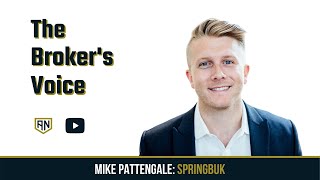
Transcript of a Broker's Voice interview (host Andy Neary) with Mike Pattengale, a Springbuk senior account executive. Covers Mike's past as a professional drummer and touring musician, his accidental transition into health-insurance sales at Springbuk, how he broke his company's 2020 sales record by improving organization and follow-up during COVID, and discussion of Springbuk's predictive health-data analytics and the industry's tech-driven future. The interview ends with contact information (LinkedIn, email).
Chapters
Hey. Hey.
Welcome back to Broker's Voice. Every week, I bring on a health insurance broker, a partner to the industry, to tell their story. The whole purpose of the Broker's Voice is to just shine the light on great people doing great things. But before I get there, I do want to make a quick plug for our sponsor, my guy Steve over at XY Web Solutions and Agency Annex. Listen, if you are a health insurance broker, right now, you got a website, you know, hey, my website could probably use a little upgrade. It could use a little tweaking. It could use a little bringing it into the 21st century, or in our case, the 20th century. You need to connect with Steve and his guys at the Agency Annex. They do my website. I couldn't be happier. Listen, when you've got a website that talks right to your prospect and it tells their story instead of you telling yours, your website becomes that extra salesperson you've never had. In fact, I have put over here, I have put Steve's email address. Steve Solutions. Get ahold of him today. Connect with his team, tweak, upgrade that website, because you need to have a website that talks right to your prospect. All right, get it done today. Okay, back to Broker's Voice.
I'm excited today to bring on a friend of mine, a guy that I've admired in the industry for several years, young man who is out just crushing it. What blows me away about Mike is in a year, 2020, in a year when it could have been so easy to just put all sales on hold, this dude went out and broke his company's sales record.
So.
So today I'm gonna ask him how he did it, amongst many other things about his story you're gonna absolutely love. So with that being said, I'm gonna bring on the one, the only, Mr. Mike Pattengale. Mike, how you doing, man?
I'm doing great. Thanks for having me, Andy.
Awesome. Awesome. Well, Mike, where I love to go right off the gate with the broker's Voice is this. Before you got into the health insurance industry, you had a rather interesting career, and it's one most health insurance advisors did not have before they got in the health insurance industry. Tell us a little bit about your music career.
Yeah, first, I. You know, no offense to Steve for not giving me a hat also. But that's fine. I won't get too far into that today. But, yeah, so I think first time I got a paid gig as a musician, I was 15 years old. Got a drum endorsement when I was 16. Hilariously enough, there are so many drummers out there better than I am. But I think just being relational and, you know, understanding the business side of it, I saw a lot of success and just getting gigs that probably were out of my league. But, yeah, I went to college originally for Applied Percussion. Quickly realized that that's probably a terrible degree for me to get switched over to business. But, yeah, was fortunate enough to tour most of the country for a number of years throughout high school and then college and after college and then, you know, continuously dropped out of college to pursue music and kept falling, falling back into college, realizing that it probably wouldn't hurt to get my degree. But I think I learned a lot about business and a lot about myself. Just living out of sprinter vans and out of other people's couches over the years and traveling the world playing music.
But at one time, if I'm correct, you were a professional musician, right?
Yeah, I was.
What was the name for all those listening in? What was the name of your band?
So, being a drummer, I got hired out for a number of different bands, but I think probably the ones with the most recognition would be a Christian crossover band called Everyday Sunday. I got to do a short stint in Europe with them, which is when I thought I had made it. Suns is another band that, you know, when our album had first come out in, man, my memory is not great. I think it's 2011. We were the number one Christian crossover album in the world. Our single was number seven of any crossover artist. We're one spot behind Switch Foot, if you're familiar with them.
So a couple questions quickly on that. Number one. If for. For the musicians listening in, like myself, that aren't hardcore, what does crossover mean?
Yeah, so like a Christian crossover band is a band that is. Maybe started out Christian, but then they cross over from being in the Christian realm, probably primarily playing for churches and conferences, over to playing in the secular world, but kind of making a. Maybe just like a verbal agreement that, hey, you're not going to find swear words, songs about sex and all of that sort of stuff in their lyrics. So Switch Foot is a great example of probably one of the most recognized Christian crossover bands. My good friends in Colony House, they're crushing it in the world today. They're a big Christian crossover band. So just to a band where it's, you know, maybe not singing about Christian thoughts or verses or anything like that, but you're. You can listen to it with your kids, you know.
Got it.
Yeah.
Is there anywhere we can still find your music today?
Yeah, absolutely. So.
I. I need to put them all in one space and I've been trying to do that. But I can share some links. I was fortunate enough the last band I had been in for a number of years is a band called Thomas T A M A S. And so there are a couple live performances that we had recorded two years ago, so those are all still out there. I can share some links though, for some of the different.
Yeah, that would be awesome, man. I'll put those in the show notes and Paul Wilson, Benefits Pro. Let's get some of Mike's links up on Benefits Pro. We need it. That's awesome. So, okay, Mike, music career is done.
Yep.
And like so many of us, we didn't get into the insurance industry by design. Tell us a little bit about how a man goes from professional musician to the health insurance industry.
Yeah. If you would have asked me when I was 18 what I'd be doing, I definitely would not have told you. Sales. I was running from it and kind of tripped into it, I guess. But yeah, how I got into it is before Springbok maybe five years ago, I was selling managed services for large enterprise employers here in the Indianapolis market. So working with some of the larger ones here to kind of help them as they roll out new projects. You know, I would hire and manage all of the talent. They would come on board. And kind of during that time, I was getting my feet wet into sales. I was wearing a suit and tie every day, which, you know me, that's not what I like to do. Suit and ties and myself don't go hand in hand. But through that, I started playing in a Wednesday morning basketball league with a couple guys that I knew and loved from. From college. And through that, I met two gentlemen that worked at Springbuck. And they kept telling me, like, hey, you don't have to hate your job. You're actually allowed to enjoy what you do for a living. Like, let's grab coffee. So I grabbed coffee, didn't know that was my first interview. And four days later, I had an offer from Springbok and was so excited. And really what got me is the founders just hearts are awesome here, but their mission of preventing disease with data.
Is so powerful and going from, you know, kind of just selling a corporate solution to being on this mission, this rocket ship of trying to prevent disease with data alongside of our partners, I think is. Is something that I was like, you know, if I have to be in sales, that's what I want to sell. So kind of tripped into it and I'm glad I did because I, I want to be in the health insurance industry as long as it'll have me. So.
Okay, so let me make sure I have this right. From drumming to driving the lane to data analytics.
Yes, exactly.
Well, okay. Sales is something you're doing pretty well, my friend. In fact, last year, 2020 a year when so many insurance agents just like forgot about sales and went into this prevention mode or preservation mode, you actually went out and broke your company's sales record in a year that was so hard for so many to sell. What would you say, Mike, if you had to put, finger, put, put your finger on a couple things you did last year that allowed you to have such a massive year?
Yeah, that's tough. And I shared on LinkedIn, I think this is actually one of the first posts that you had encouraged me to put out there at the beginning of COVID was I am a social being. I love being around people. I think that's why I loved the music side of things in my career is I was just around new people, getting to hear their stories all the time, being face to face. You know, now I'm in our office just stuck behind my computer all the time. And at first that brought out a ton of insecurities in myself. You know, I thought that people only worked with me because they enjoyed, you know, being around me and you know, the face to face things I was over or I was able to overcome, you know, maybe concerns about how young I am or new to the industry I am. And what I quickly realized, and my boss Cody Fair did a great job of explaining this to me is, is in many cases sales are won in between meetings. And that's what I didn't know before COVID Thankfully, people liked me, they trusted me. Springbok had a great product and that was good enough. But then when you take all of the entertainment, the coffee, the happy hours, all of that away and it truly comes down to a formal evaluation of a process and a product. I really had to level up my game from an organization standpoint. And so being on top of every follow up on a timely manner, having everything in a certain easy to view way so that I could lead people through a conversation. And honestly, there was a little bit of positive reinforcement for Springbuck because of COVID a global pandemic that for the first time ever, people were looking at data. I mean, my grandparents were calling me on a regular basis asking if I was looking at what the data that the CDC was putting out. And before COVID they never knew what I did for a living and now I was able to use that. And I think that kind of sparked some genuine interest. But overall, I think what I can attribute last year's success to is on top of Springboks product and some of the strides that they had made was the organization and time I put in place in between each of my meetings. My follow ups were immaculate. They were done in a timely manner and then, you know, just finding different ways to still make it personal even though we were in a remote world.
That's so well said, Mike, because it reminds me of somebody I follow a lot, Ryan Sirhan. If anybody's watched the Million Dollar Listing New York series, Ryan's one of the real estate agents there who has built a massive empire. And in his book Sell It Like Sirhan, he talks about his whole fortune was built in the follow up and the follow back. And he does, he makes sure he does that every single day. Follow up with new prospects or new buyers and always follow back with previous buyers or those who haven't bought yet. So you are absolutely right. The fortune is in the follow up. And it's also about getting creative on how you do follow up. You can't just send one email after another after another, one phone call after another. Got to get creative once in a while now. You know one thing I love too, your social media content. If anybody hasn't, you know, you're listening in. Check Mike Pattengale out. You don't, it's not, you don't post often, but when you post, it's usually a very thoughtful, well drafted piece of content. So thank you for doing that. Thank you for sharing that. That's awesome. Let's talk about data. My man. You said you had your grandparents calling you through the pandemic because their grandson has access to data. Everybody wanted health data at that time. And I think for so many health insurance brokers out there, they think if you're one data platform, you're like every other data platform out there. What would you say makes Springbok different and what should brokers be looking for when it comes to accessing good health insurance data? Analytics.
Yeah, great question.
My job is to go on and on for hours about, I think, what makes us different, but to kind of shorten that. I think historically and in the market, what folks have been doing is just looking in the rear view mirror. And so they're always being reactive to what's going on. They're saying, hey, we had a lot of folks who had a chronic condition and they were not compliant with that and they ended up costing our plan probably $400,000 more than they should have, but that's too late. And so you hope that maybe you could put plans in place and the exact same problem would happen again, but that's tough to do. So I think with Springbuck, and even where the market's going is using these predictive analytics and financial forecasts to understand, hey, this is what's happening now, but if we don't change anything, this is what's going to happen in the next 12 months. So how can we use this data and use the past as the best indicator of what's going to happen in the future? So one way we say it is is you can use the past to really interact and engage to prevent things in the future. So I think what separates us is there are these technologies out there that we're using everywhere, in the way we stream TV shows and movies, in the way that we listen to music, and it's suggesting what to listen to next or what movies we might like the most because we watch other movies. These technologies like machine learning and artificial intelligence have existed for years, but when it comes to healthcare, most of the technology we use hasn't been changed since 1988. People are in these massive legacy solutions. It's really complex to understand anything within the data. And so they just kind of leave that up to maybe the carriers or the TPAs to tell them what to do. Well, that just can't happen anymore. And I think employers of all sizes are starting to stand up for that. And so we're seeing, you know, Springbok become a lot more important and present in these groups that are maybe even 105 enrolled employees, whereas five years ago you would have had to be 10,000 enrolled employees to have access to this data. So Springboks not only coming down market to provide the access to data for these smaller groups, but we're also taking all of the timeliness that it would take to pull any sort of data out of a system, and we're serving that up to all of our partners. So, long story short, the first day you log into Springbok for each of your clients that you would have, or if you're an employer, the first time you log in for your group, you're going to see all of the areas of opportunity impacting your specific population. And that's based on the claims data that we're pulling in. So we're using these technologies that exist out there in every other industry, and we're just pulling it in to create massive operational efficiencies as well as, you know, hopefully helping to control and protect that bottom line.
That's awesome. I mean if I heard you correct, two things. Number one, too much data today is spent just regurgitating the past. You have to use the data to make decisions about the future. Use data kind of, I don't want to say predict the future but definitely give a clearer picture of the future. And then number two, data is more accessible to more employers today than it's ever been. Now I'm going to put you on the spot. You if you had to make a bold prediction about our industry going, you know, the next three to five years, where do you see the health insurance industry heading?
Yeah, that's a good question. I mean I hope I continue to see some of this innovation that we're seeing across the industry. There's obviously consolidation at every corner. We're seeing it in our space in the data analytics world, obviously in the broker consultant world that's happening on a daily basis. So I personally I don't know exactly what that will look like in the future but I'm interested to see, you know, I happen to sit in Indianapolis, Indiana where I think largely the regional broker kind of holds the key there. There are some good national firms represented here as well. But you know, I think what we've seen here and there are a lot more self funded groups here in Indianapolis than you probably see in other cities across the country. And kind of where I see it going is just far more sophistication is needed to take action. So I think relying on stuff to be brought to you from carriers or such like that, I think now in a post Covid world what we're going to see is more access to data, more innovative technology partners like telehealth, member engagement, maybe bundled payments. We're just going to start to see a lot more.
Players coming together to try to solve a problem for the industry. So I don't know exactly what it looks like but if I had to take a guess, I would say just significantly more technology involved and a lot more sophistication for groups than we're seeing right now.
And I think you brought up a word that's so important. Collaboration. Nothing's going to happen to move this industry forward unless more advisors, more partners come together and collaborate. So.
Well said.
Well Mike, to wrap this up, if there is an advisor listening in that has groups that they know they need better access to data to help them create the right strategies so they can contain costs. They can build better health plans. What is the best way to get ahold of you?
Yeah, absolutely. A couple ways. So LinkedIn. I monitor that probably too frequently, but you can always message me there. You can also email me@mpattengalepringbuck.com. um, so if you go to my. Oh, perfect. That's way easier than me.
His email's right there.
I would say those are probably the two best ways to get a hold of me.
Well, awesome. Well, Mike, I want to thank you for your time today, for jumping on. Love the story about the music, music world. Definitely send me those links. I want the links in the show notes so people can listen to your music. And if you're listening in what Mike just said, take to heart whether it's the fact he broke his company sales record in a year when nobody is selling. Listen to what he did. It's in the follow up, it's in the follow back. And then when it comes to health insurance data for your clients, not all data is the same. You need to be using data. Yes, look at the past, but you need to be spent using it so you can create a better future for your clients. So one last time, Mike, thank you.
Yeah, thanks for having me.
And if you're listening in, remember, when clarity and confidence collide, massive action happens. Go make it happen today.
More from Andy




If you want producers to succeed faster, help them create a sales message that creates confidence.

Sales isn't a zero-sum game! You can have tough competition and still grab a beer after



Option 1: Meditation, a fast walk, a podcast, and protein. The ultimate morning routine!

How you do one thing is how you do everything. Ill elite producers fuel their body.


Stop living in the gray of maybe! Your job in sales is to get a clear yes or no