The Broker's Voice: Nathan Gabhart, Founder & CEO - TrueScripts
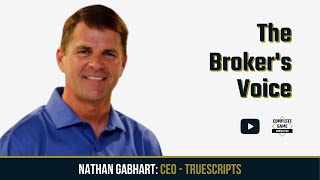
A recorded interview (The Broker's Voice) with Nathan Gabhart, founder & CEO of TrueScripts. Nathan discusses balancing high-level Ironman training (30-week plans, peak weeks up to ~19–20 hours including long rides and runs; pescatarian-style nutrition with occasional treats) with running a PBM built from a pharmacist's perspective. He explains why he and colleagues started TrueScripts (concerns about PBM conflicts of interest, vertical integration, and lack of transparency), gives practical advice for self-funded employers (ask how PBMs generate revenue; watch for PBMs that own pharmacies), critiques per-script commissions to brokers, and illustrates specialty-drug savings (example: an outpatient infusion billed at ~$79,000 that TrueScripts negotiated to contract prices of ~$9,000 and then to ~$2,700). He closes with contact info (truescripts.com) and company claims (60-day easy termination; ~97% client retention).
Chapters
Hey. Hey. Welcome back to the Broker's Voice. I am excited this week to have on Nathan Gabhart. He is the founder of truscripts. We're going to talk about some things all around pbm, but I'm actually as equally excited to talk to him about his, his hobby, his passion outside of running True Scripts, which is Iron Man Racing, which is something that's near and dear to my heart. But before we get there, one to make a quick announcement for our sponsor agency annex. Listen, if you run an insurance agency, both you and I agree you could probably use a little enhancement of your website. Well, agencyanx is a company designed and built to help insurance agencies build websites that attract the right prospects. They've built what? My website. I couldn't be happier with it. So do yourself a favor, go take a look at your website. Think about the fact that it could probably use a little enhancement, maybe an update to 2021. And if, you know, you need help to have somebody do that for you, don't go any farther than agencyanx. Reach out to Steve Konka and the guys at agencyanix. You will be extremely happy you did. I've got Steve's email right here. Connect with Steve today, connect with his team, get started before fourth quarter is upon us. All right, here we go. Let's dive into today's Broker's Voice. Nathan, welcome aboard.
Hi, Andy. Thanks for having me.
You bet, you bet.
All right.
I'm excited to introduce truscripts to a lot of people who may not know who it is, what it is, but before we get there, we got to talk about Nathan Gabhart outside of truscripts, because today you and I are talking. Tell the audience what you just did today and what you got after this interview.
Oh, sure. So, yeah, so I was on the bike a little bit this morning and hit some emails, some text messages, got off the bike and got some work stuff done, came here to get ready, came to the office, get ready for the podcast. I got my bag. I'll be hitting the pool here right after this and, and then, yeah, that should get me to about four o' clock and then I'm not sure what we're doing after four.
So you obviously are head deep into training for an upcoming Ironman, Ironman Chattanooga. Talk to people because it's hard for me sometimes to explain it since, you know, I've done a couple myself. What's that like right now?
To.
To be trained, full fledged training. And, and I, I have to imagine you're not just training, you're training to compete, not just to finish. What's that like to be in the thick of training and run a business at the same time?
Well, sure, I mean you have to be laser focused. I mean obviously time management. You wouldn't own a business or start a business if you didn't have good time management. So the good thing about having a race and having that immense responsibility on top of running a business is it makes you just laser focused. I think it makes it extremely super efficient. 30 minute meetings tr into 18 minute meetings. Half the meetings are eliminated because there's no longer a need. Because you can delegate you trust but verify you're so much more efficient. You get so many more hours out of the day. Your mental clarity, your acuity is just so much on a higher level. And then while you're training, when you're on that. When I was on the bike this morning for an hour and obviously I did this one at the local Y so some folks were stopping and talking. But, but you're, you're, you're, you're working through issues, you're working through problems you're working through, okay, how can we make our, our services even better? And then all of a sudd popping your head and then your text and you're like, hey, remind me about this idea. So you can integrate both of them. But I think it just makes you a better person. It makes you the best version of yourself when you push your physical limits.
I love what you just said because if somebody were to look at your schedule and we just go off of the number of hours, they could say, well, you're, you're putting in less hours than others running a business. But it's the effectiveness of those hours.
Yeah, it's actually I just had, we have custody of our nephew and he works two jobs and he was teasing me this morning saying, look, I bet I work more hours than you do this week. And I was like, you may work, actually may work more, but it's the quality. So it's basically the impact you're bringing to the hours you service. And also reminding me of my 60 and 80 hour weeks, you know, when you're growing the business, but now we have such a great team that obviously keeps this company at the level it is that it's easier to do other things. Yeah.
And we're going to get to the, the true skips the business side for sure. I want, I want you to fill people in though, especially for a guy. Like I said, you're not Just trying to finish a race. You're competing.
Sure.
At the peak, what is a week of training like for Ironman? Fill people in?
Yeah. So I mean it's usually a 30 week training plan and you have different phases, whether you're building, maintaining or in recovery. We can usually have about three of those phases during each training cycle. So it's a 30 week training plan. So, uh, during peak week, you're usually about 19, 20 hours of training. Um, on a Friday, I'll be on the bike for about six hours. So I may get up at three or four in the morning to start that. And then you go for maybe an hour and a half run after that. That's called a brick. Um, and then the next day you'll probably put about 20, 22 miles in on a run. Um, and then that's peak week. Um, so Fridays are Saturdays. We have, we always take Sundays off. We feel that's extremely important. But we start off with Mondays and we'll do three or four bikes a week. We'll do three or four runs a week and about three swims. A dream peak week. May do about 10,000 meters of swim. We might do 100 miles. 100, well, actually 180 miles of bike and then maybe 40, 50 miles of running. Dream peak.
So I'm curious because I can remember those days. What is your nutrition like when you're at. Because people probably believe, oh, you could just eat anything. What is, what is, what is your nutrition like? There's truth, a little truth to it. But what's your nutrition like, especially when you're putting those 20 to 30 hours a week in.
So yeah, so you're definitely, you know, you're definitely building. We don't do a lot of carb loading or anything like that. My wife and I, we're both pescatarians, which means we do seafood and then mostly just a vegetarian diet now. My brother and I, we used to raise Black Angus cattle. I have nothing against eating meat or anything, anything. Like, I'm a conservative Midwestern. So saying you're a pescatarian too loud here sometimes is dangerous. But, but you are what you eat. And obviously we try to eat very healthy. I mean, but we, we're normal people. So. So obviously hydration's the key, as you know, before, before a long ride, the hydration is the key. So we want to make sure there's plenty of water intake a day or two before. But you know, I love, I love my Twizzlers, you know, I love my diet. Mountain Dew. So Saturdays when we got the long ride in and Sundays is an off day. You know, we'll head to the movies and get some Twizzlers and popcorn and diet Mountain Dew and then get. Hit it, hit it all again on, on, on a Monday.
You're bringing back memories, man. I can remember those long Saturdays of my. My reward was a root beer. I love the taste of a cold root beer after, after those rides. So by the way, if you're listening into this episode and you know he just went out for an hour ride today, he's running a business and he's going to get an hour swimming. My question is, what did you do today?
That's time management to the max. So let's. Nathan, let's talk about the business side.
Truscripts.
But I want you to take us back before you actually started truscripts, as we like to say, most of us didn't get into this industry by design. You definitely had a very.
Direct career path from what you're doing today to where you were before. Tell us about Nathan Gabbard before truscripts.
Sure. So I was a pharmacist. I graduated from Purdue and I worked for a small independent pharmacy in my hometown and became a partner in that company. And we grew that company, we grew up from two locations to about 13 or 14 by the time I left. So we had retail pharmacies, long term care, compounding, home infusion. So we were, we were pharmacists. So we were, we were the middleman. So we were the ones telling our patients what the PBMs were telling us. Because the way the relationship set, the PBM sits right in the middle. Clients on one side, patients are on the other side, pharmacies right in the middle. So we're basically, we were the mouthpiece. We're also the ones actually buying the drugs when the manufacturers put them on our shelves. And we know what's in these drugs. We know the clinical effectiveness of them, we know the cost, we know the ROI. And when we started seeing PBMs require one drug over another and the required drug was 10 times more expensive, we knew something was up. And then when these PBMs started to buy their own pharmacies and started to buy the supply chain, we knew that was the writing on the wall. The conflicts of interest were just immense. The lawsuits at that time were even staggered, staggering at that time. Today, I think there's maybe 102,000 lawsuits. If you Google it, if you put in the year 2020, it might knock it down to 65,000. But it's the only industry in the world that defies the laws of mathematics. They charge your clients zero admin fees and they generate $180 billion of revenue each, or at least the larger ones do. And no clients ask themselves, how does my vendor do that? And they do that by working for the pharmacies and working for the drug manufacturers. So we got sick and tired of being sick and tired. My neighbor said, hey, look, I hate my pbm. If you guys start your own, I'll be your first client. So we jumped into it back in 2006 and actually we knew such so little about PBM, I thought it's good for Prescription Benefit Manager, not pharmacy. And today in our mission statement, we left the word prescription there. One, as a reminder to us on how little we knew when we started. We want that humility. And then two, to remind our clients that we manage this on a prescription by prescription basis. So it actually wasn't a mistake after all.
Well, and I think it's interesting, I like to say you guys are a PBM built by a pharmacist, which, you know, I don't think all PBMs can say that for sure. And I think you bring up such a important topic, which is pbms and the smoke and mirrors. And even for an advisor to understand truly what how a PBM works is, can be very convoluted.
When it comes to truscripts. Because now you go, okay, we're going to start a pbm. What led you, I'm curious, what led you to finally say, okay, I've kind of, I'm done being a pharmacist. It's now time to actually take this on by starting a pbm.
So, yeah, when CVS Care Mark created their maintenance choice program, and their maintenance choice program was their members could use any pharmacy twice. And then your choice was cvs. So that was the choice. And so we knew that was the beginning of the end and we, we had to do something locally. And so we were just more concerned with our pharmacies that we owned at the time. And so therefore, once we looked into it and with the Internet, you can find out any answer to any questions. So once we jumped into it, I mean, my goal was to have the same number of lives as my local hometown. And that was 10,000. And yeah, I thought I could be successful with that as a sister company if we could get 10,000 lives. And now we're, you know, obviously well above that.
So that's awesome. When I, when this goes public and this posts out on social media, we often probably have as many employers listening to this as brokers. And knowing the PBM world is such a convoluted world for anybody to understand. If I'm an employer right now.
And I'm self funded, what are some, what's one or two very simple things I can start looking for or understanding about my pbm?
So I think first, I mean we got to start with just 5th grade math and common sense. And as business owners I think we have to ask ourselves with every vendor that we hire, what's one of the first questions that we ask? And it's the cost of your product. Right? Yet in the PBM world that question is never asked. And not only is the PBM services for free, some PBMs actually pay the employer to use their services. And somehow employers feel that for profit companies could actually generate revenue by giving money away. So it's important for the employers to start asking the same questions that they ask to their copy repair person or their coffee supplier or any other suppliers or what products do you provide and how do you generate your revenue? And just start there because if you spreadsheet it out, you will never ever use a transparent PBM if you spreadsheet it because 9 is always less than 10 and you're always going to go with 9. Yet your per member per month cost increase. So basically first question is how do you generate your revenue? And then if you're negotiating on my behalf with pharmacies, do you own any pharmacies? If the answer is yes, then how can you negotiate with your sister company on my behalf? And if you feel that they can do that inherently with your good faith, then you get what you deserve.
I like that. That's well said. I want you to talk if you wouldn't mind. I know I might be poking a finger at some sides when I asked this question. In the advisor world one of the things that often isn't brought up when it comes to compensation, whether it's how PBMs get paid or how brokers get paid by PBMs is this per script compensation. Talk about that a little bit if you wouldn't mind. Because I think that's a topic many, many advisors don't understand that the con, the conflict of interest when we the advisor community are getting paid a per script compensation from the pbm.
Oh sure, sure. So I, I actually I, I could argue it both ways and I always like to call balls and strikes and actually that I'm not very in tune in the world. I understand you. You know a lot about balls and strikes, hopefully more about strikes as a pitcher. But basically in our world, what we have experienced is the larger the brokerage firm, the more preferred relationships those brokerage firms have with PBMs. And now we work with all brokerage firms for not throwing stones. We've been presented with different offers where it's $1.50 to $2.50 per script that we have to pay the brokerage firm in order for them to be in order for us to be a preferred pbm. And our question is, where does that money come from? And obviously the employer, the plan sponsor and the member is the only two participating parties in this healthcare system. Who puts money into the system? Providers, doctors, hospitals, PBMs, pharmacies, brokers, me. We don't put any money in, we take money out. So the plan in our admin fees. So basically it's all about why are they taking the commission? Because we, we could have some relationships where we charge 625 per script as our admin fee. Now if I choose to take that 625 that's clearly disclosed to the client and I choose to give a piece of it to a broker and it's not costing the client anymore in return from not having to hire a BD person on the west coast, then that's my rationale. Now if that broker is using me and I'm actually increasing the cost of the client, then that broker needs to be fired. So theoretically, if the broker is using the best farm, the best PBM possible, and he or she's getting disclosed revenue paid back to them that the client knows about, then I think that system can actually work. Ideally, I think the best system is the broker charges their fee to their client on hey, here's my value and here's why I charge more, because I bring more value. The PBM charges theirs and everything's disclosed. There's no money going left or right. It's all transactional across the table. And that's probably how 95% of all of our relationships are. But we do have a handful where they've brought on so much business in certain geographical areas we couldn't have done it on our own and we just feel obligated and we tell the client, look, a piece of our admin fee is going to them. If it didn't, it would just go to me. So therefore you're not getting a lower admin fee if we don't do this.
Yeah, well, but it is, it is.
A pay to play environment out there, it seems.
I want you to put your crystal, put your crystal ball glasses on for a second as we look forward, you know, I think we can all agree pharmacy is going to continue to become a bigger, bigger issue. Right. As we look at health plan spending and let's talk about that, you know, as we go forward. Specialty drugs is, you look at the numbers. If you want to share some stats that you have that would obviously blow people away, feel free. But as we look at the next three to five years and the impact specialty drugs are going to have on health plans around this country, talk about that impact and what employers can actually start doing to, to have a positive effect on the cost of those medications.
Yeah, I mean, I'll give you for instance today, I mean we, with one of our specialty or our specialty care program, which there's a lot of lookalike programs out there, but ours we built back in 2009 was really one of the first in the marketplaces and it's fully integrated in our plan parameters. There's no outside step that needs to happen. So I mean we had a Avastin, 400 milligrams I believe was the drug. And it was $79,000 that the hospital was providing. It was an outpatient infusion. I think this may was an infusion, yeah, $79,000. And so we got involved and our just normal contract price was 9000. And then after our specialty care program was 2700. So we took as a 1.3 million dollar laser. And this was a laser. So this would bankrupt any company under, I don't know, 100 employees. It'd be bankrupt with 1.3 million in additional spend. Some of the larger employers, you could maybe get away with that. So it's 1.3 million. Now think about this. If I work for the drug companies and I, and I, and I generate all of my revenue, or 52% I think is the average that PBMs generate off of their, off of manufacturers of what they retain. If I, if I generated revenue off the manufacturer and I had a $1.3 million claim, am I going to reduce that down to $9,000 a year or am I going to reduce that down to $600,000 a year? Because 600,000 still have, you know, that's still 700,000 in savings. That's a ton. Well, then I got to keep the other 600. Well, we work solely on behalf of the client, so we reduce it down to 9,000. So the point of the point of it is he's got to follow the revenue. If your PBMs are working for the drug manufacturers or pharmacies, that's who they're going to be working for. And it's only going to get worse and worse with the gene therapies and some of these other drugs that are currently in the market place. And don't forget, this is only half of your total cost, which half is a lot. But what's going to happen is as you're distracted with specialty drugs, they're going to start playing their single source and multi source generic games back on the generics and on the other 99% of all your claims, they're going to start playing games over there as well and then that's going to start increasing. So you want an across the board approach that every drug is processed at the lowest possible cost every single day and that the member has access to care.
That sounds pretty simple, doesn't it? It's how to avoid this shell game we always talk about. Where, where is that, that ball under the hat? Nope, it's over here. It's over here. And, and there's always a way to hide revenue one way, shape or form inside pbm. So. Well, Nathan, this was awesome. If somebody wanted to reach out, whether it's an advisor, an employer, learn more about truscripts, get a hold of you, say, hey, we would love to talk about having truscripts potentially be our pbm. What are, what's the most effective, effective, simplest way to get a hold of you?
Sure. Our website's the easiest. Truescripts.com we have the easiest contract to terminate 60 days out, no questions asked. We have a 97% client retention rate. We've got clients from LA to Savannah. So that's really what we hang our hat on. Howie's were the easiest to fire yet we have a 97% lifetime client retention rate which is just unheard of.
That's kind of putting your mouth, your money where your mouth is. When you're saying we don't have an opt out clause like you can, you can let us go pretty quickly because we're that confident in what we do. I like that, that.
Thank you. Yeah, it's the only way the product really works. If you don't like the product then you should be able to get rid of it.
Yeah. Well, last question. I've got an advisor or an employer listening in trying to do their first triathlon or, or thinking about doing an ironman. Where do they. Where, where do they start?
So anybody can do it. Literally anybody can do it. 100. So you start with basically a 3K, 1.8 miles, and then do a 5K and then a 10K and then a half marathon, and then you do a sprint. Try an Olympic try, and then you do a half marathon or half ironman. You start low, but you have the eye on the prize. And when you cross that finish line, I mean, you get emotional just talking about it. Yet today you've passed several of the finish lines. The ability to do the impossible allows you to do the impossible on a daily basis. And it's just an amazing feeling that no one can ever take away.
Yeah. Yeah. And I love how you said that because I tell advisors the same thing. Quit going after home runs. Hit some singles and doubles first, and then the home runs will come. Yep. Do the sprints, do the Olympics first, and then the ironman will come.
Well, it's just like the foundation of life, you know? Make that next right decision.
Yeah.
And you'll get there.
Well, Nathan, I put your email right here. That's okay. If somebody wanted to reach out and get ahold of you guys, right there you've got Nathan's email. Nathan, this was great. Really appreciate your time. If you're a broker or an employer, listening in PBM is a convoluted world. There's smoke, there is mirrors everywhere. And so you got to break it down into a simple, simplest form to find the solution. And you know what happens when you get that clarity and you mix it with confidence? Massive action happens. Go make it happen today.
More from Andy




If you want producers to succeed faster, help them create a sales message that creates confidence.

Sales isn't a zero-sum game! You can have tough competition and still grab a beer after



Option 1: Meditation, a fast walk, a podcast, and protein. The ultimate morning routine!

How you do one thing is how you do everything. Ill elite producers fuel their body.


Stop living in the gray of maybe! Your job in sales is to get a clear yes or no