The Broker's Voice: Ron Linneman - Employee Benefits Consultant, WA Group
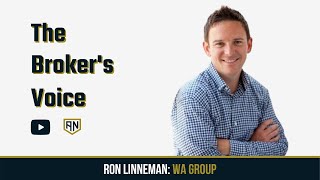
YouTube interview (Broker's Voice) hosted by Andy Neary with guest Ron Linneman (WA Group). Ron, based in White Bear Lake, MN, describes his 14-year insurance-career journey from ADP payroll sales into benefits brokerage, building a strong small-group (2–50 lives) practice and recently moving upstream to serve larger employer groups. Key themes: transparency in claims and fees, brokers needing to evolve beyond commission-on-premium, confidence/education to compete with larger brokers, and asking peers for help. Ron reports 43 new accounts acquired in 2020. Contact info (cell) shared in closing.
Questions this video answers
White Bear Lake, Minnesota (about 15 minutes north of St. Paul).
14 years.
Two children, ages 11 and 6.
612-396-0265.
43 new accounts.
Chapters
Hey, welcome back to the Broker's Voice. I'm excited this week to have a gentleman on today that is out kicking ass, doing great things in the industry. So I'm excited to introduce him to you. But before we get there, I want to make a quick plug for our sponsor Agency Annex. Listen, if you're an insurance agency right now, my guess is your website's outdated. In fact, there's probably a chance it still says today what it said five years ago. And the what we say and how we say it on websites has completely changed. And if you need that upgrade your website, there is no better team to connect to than Agency Annex. In fact, I am putting Steve konka's email below stevey websolutions.com Steve and his team at Agency Annex build websites specifically designed for the insurance industry. They built mine, and I couldn't be happier. So do yourself a favor, reach out to Steve right now, get a spot on his calendar and figure out how they can help you, because I will tell you, you will not be disappointed and you will have that extra salesperson you have always dreamed about. So get it done. Today. I. All right, let's dive into this week's Broker's Voice episode. I'm excited to bring on Ron Linneman with the WA Group out of Winona, Minnesota and the Twin Cities. Ron, welcome aboard.
Hey, Andy, how you doing?
Good, man. Ron. Okay. For the people out there, the few people in this world who have no clue who Ron Linneman is, tell us a little bit about yourself. Where do you live? What do you do? What do you enjoy?
Well, I live in White Bear Lake, Minnesota, about 15 minutes north of St. Paul. Grew up in, in the same area all my life. So been here for quite a long time. 40 years to be exact.
Married, two kids, 11 and six. And yeah, now been at WA Group or at least in the insurance business now for 14 years.
What do you, I'm curious because I know you're a pretty active guy. What do you like to do when you're not playing insurance advisor, husband or dad?
Ultimately, the, the, the seasons of the year are going to dictate that in Minnesota, but I would say in when it's warm out, it's, it's year round, it's a lot of family time, but it's when it's warm out, it's a lot of boating, a lot of cabin time. Golf keeps me busy during the wintertime, skiing, trying to spend as much time outdoors, snowmobiling.
So those would be the. And then traveling you know, obviously with the COVID issue, we've kind of been limited on traveling, but me, my wife and my family like to travel quite a bit.
Awesome. You guys have a cabin in Minnesota?
We don't have. We don't own a cabin. Our. Our cabin weekends consist of friends, family.
Vrbo, which I think is probably the better way to do the cabin.
Awesome. I have a good friend that lives up just outside of Rapids, or wait, Park Rapids, Minnesota. And I'm hoping to go see him in June because I think northern Minnesota in the summertime is one of the most beautiful places you can go to. You know, Ron, most of us did not get in the industry by design. I know I sure as hell did not. How did you find yourself in the insurance industry?
Sure, I started my career right out of college, where I went, Minnesota State, Mankato. So spent college here in Minnesota. But after College I joined ADP Automatic Data Processing, which is a payroll HRIS company. And I sold payroll to the 2 to 50 market from 03 to 07. So I did that for four years. And during that time I met a insurance company consultants in the benefits world.
We were at that point in time ADP was not in the business like they are today. And so it was to our benefit to partner with individuals like benefit brokers, CPAs, bankers, to get business from and refer business to. So I met a gentleman in that industry about a year later. He had wanted to start his own agency and he had asked me to jump ship. So in 2007, we started a health insurance agency. Did that for five years. Unfortunately, at the end of that time, him and I didn't get along anymore. And so we parted ways.
I was introduced actually by my sister, who at the time worked for ADP as well, by a gentleman. She was trying to sell payroll services too. He happened to be somewhat of a family friend as well. So he was in the insurance business. He had asked me to call him. I called him within 15 minutes of my sister ending that meeting. And we were able to make it work. So we transitioned my book over to his agency. I spent 2007 to 2000 or 2012 to 2017 there. And then that's when we merged with WA Group.
Yeah, yeah, I just, I love hearing those journeys because I thought you were going to go somewhere else. Typically when you talk to somebody who started on the payroll side or the carrier side, it often is. You know, I saw these brokers making all this money and I'm like, hell, I can do this myself. And then they jump. They Want to jump on that side too. I want to go somewhere though that I think you could really share, shed a good perspective on. Because now that you've gone onto the broker side for the last decade or so, you've built one hell of a business in that 2 to 50 market and that's what you were serving at ADP. But recently you have now started going upstream and I think that's a place a lot of brokers find themselves is, hey, you build a hell of a practice, you know, maybe in that small to mid size. Now it's time to go have some conversations with large organizations if you're willing to share. When, when that thought came up, were there some initial hesitations or some, maybe some thoughts you had about that larger group space?
No question. Yeah.
Where would you see the biggest, where did you, where did you experience maybe the biggest mental barriers?
I mean number one, it was the. I don't know what, I don't know, fear. What if I'm meeting with an employer and they asked me a question I don't know how to answer.
And then it was the competition. You know, all of my competitors are in that space too and very few of them are competing at that 2 to 50 market. So it was low hanging fruit, it was easy.
That's a great point because I couldn't agree with you more. I think there's also this perception that if I switch from focusing here and I'm going to go to talk groups now that have 200 or 500 lives inherently, the brokers must be better. Right. And competition is going to be bigger. But what I think you have done a great job is you've one, realized it often is a very similar conversation. But two, if you can stand out and have something unique, you can win against the big boys. And that's what I love, I love about what you're working on right now. Right. You know Ron, if you look at the industry and I think this will probably align with your trajectory of the career, the career path you've taken, you know, over the next three to five years. Like what are some things employers need to start looking at today that maybe they didn't look at five to 10 years ago.
I think there's two areas. The first area is really peeling back the onion of where their money is going. From a premium standpoint.
Most employers are getting claim data.
In that larger group space, but a lot of times it's not transparent, it's not clear. It's very hard to know where every single dollar of your premium is Going. So trying to peel that back a little bit right now in the Minnesota market anyway, it's still very.
Very much non transparent. And I think where it's going is.
Talking that way, being more transparent not only from a, from a claim standpoint but also from an education standpoint. Helping the employer have a better understanding of where their money is going and what they could be missing out on, but then also being transparent on what the agent or what the consultant is making in their fees. So really transparency is kind of the direction it is.
I agree. I think, I think it's going to force brokers to play a different game because let's be honest, when we all got in the industry, we were mostly making a commission based on a percentage of premium, right. So as our clients rates went off, we got a pay raise which now we look back and go makes no sense. And I think it is going to require brokers to get a lot more innovative. Which I want to ask you this go back to. You know, we talked about, you served the, the small group market for a long, long time and you've transitioned successfully now having conversations in a much larger space.
One thing I admire about you is as uncomfortable as it was you did, you just put yourself in those uncomfortable situations.
Tell us what it feels like if you will. Like when you sit down, if for, for that broker listening in, who's never sat down at the table with that CFO representing a 250 life group.
What differences did you notice or mindset shifts maybe you had to make to really feel confident to sit at that table, that proverbial table.
I think the first one is knowing that nine times out of ten you're going to know more than the person that you're sitting down with. You know, regardless of how long they've been doing it or how many renewals they've been through.
So having the level of confidence, knowing that chances are you're going to know more than the person that you're talking to, to. But I would say the other item is continuously trying to better myself through education.
Understanding where there are areas that we can be more transparent, where we can provide more support, more solutions and address the cost of care.
If you're able to talk that talk versus.
The beating up of the carriers and the costs are the costs and there's really nothing we can do about it, you're able to capture their attention.
You know, let's kind of wrap it up or bring it home here. You talked about, you know, one knowing you, knowing that you know more than the person sitting across the table from you. I think that's, that's so important for brokers to list. Hear that? Because I've said that for a long time. You can take a CFO with all the designations behind his or her name when it comes to insurance, they often don't know more than the employees that they're making those decisions for. Sometimes they're as bad of a consumer as every single one of their employees. Number two, I bet you you noticed too when you went upstream and started having large conversation or conversation with larger employers. It's really the same conversations. We're just often talking about more zeros in the budget, right?
Yep.
Yeah. So with that being said, if there's a broker in here listening in that does need that encouragement, what advice would you give that a broker who's made a damn good living servicing a certain segment of the market, but they've had this itch to maybe I should go after larger business or maybe I should start selling more self funding. What advice would you give him or her?
I mean, my eyes opened up when I realized that there are so many people out there in the industry like yourself that are willing to help people like me.
And so having conversations on a daily, weekly, monthly basis with these individuals who have done it, if they've gone down that path and they're more than willing to help you and they're more than willing to spend the time or at least find resources and other people that can help you, that right there is the game changer. It's finding other people in the industry that are wanting to help.
Very simple advice. Just ask.
Yeah, just ask.
There's people out there and for some you got to park that ego at the door. Just ask. And, and I think for you that's what's been so impressive to watch is you've asked, you've sought, and most importantly, Ron, you've taken action. As uncomfortable as it is, you just kept taking one action after another. And to now see the model you've built at Wall compared to, I don't know, two years ago, it's pretty impressive. So I want to congratulate you for that. If there is a younger advisor, I'm always about giving back. If there's a younger advisor that is does see this and wants to reach out to you. What's, what are the easiest ways to get a hold of you?
So cell phone number is the easiest. 612-396-0265.
Okay, I'm also going to put, whoa, wrong one here folks. I'M also going to put that one up. Ron. There you go. At WI agency. So I've got Ron's email right here. Ron, like I said, man, you've done a fabulous job of. Of taking. Asking for help, taking action and. And now you're reaping the rewards. By the way, I wouldn't want to. I wouldn't be able to end this episode without you stating one number that we need to share with the audience. If you wouldn't mind doing me this favor. Ron, in 2020, a year when so many brokers struggled, can you just share how many new accounts you want?
It was 43 new accounts.
You have it, folks. No more excuses. Even a year like 2020 didn't stop this, man. So, Ron, awesome. Keep crushing it. My man. Thank you for taking the time to be on broker's voice.
Thanks, Andy.
And for those listening in, you know what happens when clarity and confidence collide. I hope Ron just gave you some clarity and confidence because massive action happens. Go make it happen today.
More from Andy




If you want producers to succeed faster, help them create a sales message that creates confidence.

Sales isn't a zero-sum game! You can have tough competition and still grab a beer after



Option 1: Meditation, a fast walk, a podcast, and protein. The ultimate morning routine!

How you do one thing is how you do everything. Ill elite producers fuel their body.


Stop living in the gray of maybe! Your job in sales is to get a clear yes or no