The Broker's Voice: Spencer Smith - SVP of Sales, Plansight
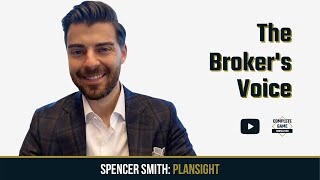
Spencer Smith, SVP of Sales at PlanSite, fell into insurance by accident and built a following with 25 stop-loss whiteboard videos on LinkedIn and YouTube. He launched the podcast Self Funded with Spencer to expand the conversation around self-funding, and now runs PlanSite, an RFP platform designed to bring transparency and efficiency to employee-benefits purchasing.
Questions this video answers
YouTube (The Broker's Voice interview).
Spencer Smith — SVP of Sales at PlanSite.
plansite.com
Chapters
Hey. Hey. Welcome back to the Broker's Voice. I'm excited. This week I am joined by Spencer Smith with plan site. But really where I want to go with Spencer this week is his. I want to talk about his ability of taking a subject like stop loss insurance, which, let's be honest, many of us could feel is pretty boring. And he's actually built a really cool brand about it, which we're going to talk about. So I'm excited to have Spencer on. But before I bring him on, I want to make one quick advertisement for the sponsor of the show, Agency Annex. Listen, if you are an insurance agency and you're looking at your website right now and it still looks like it did 15 years ago, might be time for you to have an upgrade. And I can recommend nobody more than Steve Conka and his team over at Agency Annex. They built my website. I couldn't be happier. In fact, I have put Steve's email address right here. Get a hold of them today. It's time for you to upgrade your website because it's time for you to use your website as that extra salesperson you never knew you had. So get ahold of Steve today. They will build a website that's beautiful. They will build a website that's gorgeous. But most importantly, they are going to build a website that actually talks to your prospect. So get ahold of them today. All right, let's get on with the episode. I'm excited to bring the one, the, the only Spencer Smith on to the Broker's Voice. Spencer, welcome.
Andy. Thanks for having me. Good to see you.
How, how are things down in Dallas Day. How hot are things down in Dallas today?
Well, actually, funny enough, I checked this morning because Steve Overton, you know, our CEO up in Utah, he sent me a screenshot. It's 100 or going to be 100 plus in Utah. So I checked. We're not going to be quite as hot today, but we started the day at like 85 and are going to venture up to 95. So we've got the. I didn't know. Not every location has this but we always have the temperature. Then it also feels like, you know, because of our humidity. So it's going to feel like 100 plus today. I think that's going to be the rest of the summer and it's. It's brutal down here.
Well, it's supposed to be 98 here today and we don't have the same issue as you do down south with the feels like in humidity. But yeah, because we're at 5,000ft, when it is 98, it feels like that sun is on your back.
It just gets hot. Anyways, let's talk about Spencer Smith and all things health insurance and the industry itself. Let's. A question I love to start with, Spencer, is.
Yeah.
How in the world did you get yourself in the health insurance industry?
Well, I think I hear a common theme amongst insurance folks is that it was accidental. Right. I was post graduate, had a little bit of graduate school, but spent extra time in college because of soccer and didn't know what I wanted to do. So I just started applying to jobs. Right. I think it was early stages, I think, I don't think LinkedIn was around 15 years ago. So I was just applying to job boards and those sorts of things and found a job with Liberty Mutual as an insurance adjuster. So they hire kids straight out of school, don't have to have any experience. They'll train you for 10 days in Boston and then let you run. And so I accidentally started there as an insurance adjuster and of course figured out pretty quickly I don't like arguing with lawyers over settlements for questionable claims, as you can imagine. So made my way over to Benefit Mall after that and that's really what opened me up to the world of, I guess, insurance quote unquote. And 15 years later, man, I haven't left. It's kind of crazy.
That's interesting, you know. So your path into the insurance did not start in the world of stop loss.
No.
Where a lot of people probably recognize you. Today I want to take a pause because one thing I love about this show is I often get to interview advisors and partners who, who played, who were athletes, played college sports. Now you played soccer at Drury University, which is up in Springfield, Missouri, right?
That's correct.
Okay, I did have to look that up. I'm not that smart, trust me.
Well, there's like 1200 kids there, so nobody, nobody outside of the Midwest has ever really heard of, heard of Drury.
Thinking back to you playing soccer in college, you know, often we are applying things we learned on the field in our business world today. When you look at the sport of soccer and what you. The lessons you learned, I know you were a captain on the team as well. Any lessons back then that you still use today in your. In how you go about on a day to day basis?
Yeah, I think there's two big things that I drew from soccer. One was actually earlier than college and high school was demoted. As a sophomore, I was demoted from varsity back down to jv Because I wasn't playing much, I don't think physically I was there yet to be playing regularly at that level. So coach brought me in and sat me down and said, hey Spencer, I want you to go back to jv. And after, you know, driving home and pretty distraught as a 16 year old kid would be hearing that news and thinking everything was over, my soccer career is done, I, I actually realized I was a little bit of a fork in the road. And so I accepted my fate. Yet I doubled down on my effort, which was kind of crazy because I think my friends had a similar path. Some of them ended up venturing away from the sport for one reason or another. And I kind of said, you know what if I put forth the effort now, I'm not going to let this be the end of it for me. So I would train an hour after every single practice on my own. And the next year I was varsity captain. So it was like one of those things that I always look back, there was a clear, I would say fork in the possibility of what could have happened. And so looking back and then the trajectory of going to college and playing Division 1 soccer and being the captain there, that was like a pivotal moment, an eye opening moment for me that you get out as much as you put in. So that was, that was the biggest thing for me from a life lesson learned there. The other thing I think that I've really discovered over time is confidence. I struggled in certain times in my life where one game to the next or one practice to the next, I was just, you know, the confidence would fluctuate so, so violently that it almost looked like a different player. And so the physical part never changed it, it was the mental part that I struggled with. And so I've realized over time, as you know, getting older as well is helpful that how you approach things, the confidence that you bring into a situation, you'll usually perform at the level that you think you're going to perform at going into it. And so that's been the biggest thing that I've like self realization is that without that confidence, man, you're going to struggle mightily in this world.
I love what you said about that fork in the road, like when you fail.
Yeah.
Think about advisors in our industry. You lose a piece of business, you lose an opportunity. It would be easy to say, oh, I guess I'm not meant for this industry or I'm not meant to do this or make excuses of why you lost. You said no, I actually said I'm going to double down on my effort.
Yep.
And I think, please, if you are listening in right now, write that down. When you hit those moments where you're not, where you've had a loss with it, whether it's an existing client, a new piece of business, instead of complaining and whining, say, how can I double down on my efforts? That is, that is such good advice. Well, let's talk about branding. You know, that thing is near and dear to my heart. And you have done something with again, for many a topic that's just not that interesting. Right. Stop Loss insurance. We need it. If you sell self funding, you know, you have to have it. But actually talking about it in a way that's entertaining and, and has made it really easy for a lot of people to understand. Talk to us about what you've done. It started with video, the whiteboard videos. Why did you start creating those? And what would you tell other people, advisors listening in, who are thinking about doing something similar?
Sure, man. I reflected on this question a lot. I think almost everybody that I talked to that's seen those videos ask, ask the why. I don't know if I still have the exact reason, the exact motivation. I think when you look at the timing of it, it was last year, around June, July, you know, kind of fully entrenched in the COVID shutdowns and the pandemic. And you know, we also were coming off the heels of a loss of a client with plan site. And so we were just scrambling right to go, all right, how do we pivot? How do we, how do we right the ship? And so I just, I think, I realize and you've been a big, a big advocate of doing this for a long time. I've watched from afar with your stuff long. You and I never ever connected. So I think I just said screw it. Anybody else is going to stop us Video. I know Stop loss really well. I love to talk about it. I used to train folks, you know, when I was selling Stop Loss directly. I do CE courses and go train my brokers and prospects. So I just said, you know what, let's try it. It seems to be a medium that works. Who knows what's going to happen, had no expectation of the outcome. And then after that first video, man, I don't know if it was just, you know, captured lightning in a bottle or what, but it got reshared a number of times. It was like a top trending on LinkedIn. Like two or three times I showed up in the top trending like list for Stop Loss and I'M like, whoa, like, what is this? What do I do about this? And so I figured, well, at least I'm on to something. I don't know if there really is a market for this information, but I discovered, hey, there's a lot of subtopics after I did stop loss 101 that, hey, I could talk about ag, I could talk about spec, I could talk about corridors. You know, there's all these things that I could do in little bite sized nuggets to compartmentalize the training so that maybe I can capture people's attention. For three or five or six minutes. It just kept going, man. And then 25 videos later, I, I kind of put that to bed because I felt like, at least for the time I exhausted the subject matter. But like you said, it's, I found a little bit of a niche and stop loss education and lots of people were gravitating towards it and reaching out and saying, I love your videos. I share them, I have my team trained with them. And I, it's, it's weird to hear that when you started almost a whim.
You know, well, and you're, if you're watching this right now and you were to go to YouTube and look up Spencer Smith, look up these videos, dude, you're the only person I know that can talk about stop loss and get like 3,000 views.
Yeah, well, it's weird. I think Dr. Bricker even said that if you Google or if you search stop loss insurance specifically because there's stop losses in like market trading, stock trading. But if you search stop loss insurance, I'm the top video that shows up.
Which, boom, that brand right there.
Number one, baby, in stop loss insurance.
Think quickly about an advisor industry partner listening in right now going, okay, take, take the stop loss the topic out of the equation. Just the fact you started doing video which gave people that facial recognition, you were educating them. What advice would you give an advisor partner who's right at that point where you were last July, who for whatever reason is hesitant to do it? What advice would you give?
I think the best piece of advice I ever listened to was just simply do it the first time. There's so many reasons in your head that you'll convince yourself not to, you know, talk yourself out of it. I'm embarrassed to be on camera. What if I over share? I mean there's, there's a thousand reasons not to, but I just figured, screw it, man. I mean it's, it's part of the brand, it's part of, you know, it's related to my company. And so that's the other thing I would say is beyond that, I sometimes personally just cringe when people sell too hard on their own company and their own videos. It's more what are you offering? What sort of area of expertise do you have that you can share with the marketplace freely and openly? That's the other thing I would advocate after just taking that initial step and just there's got to be a leap of faith initially is just find something that you are an expert on or find something that you think is interesting and share that. But don't oversell or don't heavily push your own product because eventually I think your market and your prospects will find you.
I love that. And.
I think a great case studies. If I asked you, Spencer, compare video 25 to video one.
Probably a night and day difference.
Night and day and comfort level in front of camera, like having even the slightest bit of idea of lighting and framing and sound and then understanding the medium. I got into editing a little bit with imovie on my MacBook. And you figured out, oh, I can put some music in or I can cut some little clips and oh, don't forget to take a picture. You know, there's certain that are just tips and tricks that I think a lot of people will explain to you on YouTube if you look it up. I just discovered it over time. So yeah, my first one from every perspective outside of, I guess good delivery on the subject matter was pretty terrible and I'd be frank about that. But it's still the number one performing video I have to this day. So I guess the audience didn't really care too much.
That's awesome. Well, now you've taken the whole Stop Loss education conversation to a whole new level by starting Self Stop Loss with Spencer. The podcast, the audio version of that and the video version. Why that? What was your, your motivation for starting the podcast?
Well, I think it's something that I've always wanted to do and I feel like there's a lot of saturation in the space now. There's a lot of podcasts, you know, so we're all sort of fighting for attention effectively. But self funded with Spencer allowed me to expand the subject matter, still stay somewhat in the genre that I'm comfortable in and I'm interested in. But you know, Stop Loss, like I said, kind of ran its course to a degree. And so now I can talk to brokers, I can talk to vendors and carriers and tech companies. Stop Loss still can be part of the Subject matter, but it's a broader audience as well, a broader guest list that I can invite on. So the podcast medium is just one of the things that seems to be the obvious medium to exploit in this industry. You can do video like you said, you can do audio only. Your audience can find it where they want to at the time that they want to find it. And so I think it just offers, I don't know, offers the listener a lot of choice. But I still get to talk about the thing that I'm interested in and want to advocate for, which is self funding. So it's just, I don't know, I almost stumbled into it too with the venturex studio, which you obviously got to experience a couple of weeks ago. Yeah, brilliant. It's amazing value proposition have here.
Yeah, no, you have a beautiful podcast studio there at your ready. And you know, the thing I love about it too is, you know, you, you're running sales at Plan site. You're often talking, you know, you're using the podcast some, in some ways, maybe this is not even a, a motivator for you, but often you're interviewing people who could definitely become very good clients for Plan. And all you're doing is you're hosting the party, as I love to refer it. I heard that from Gary Vee, Host the party and you're making the podcast all about them.
Yeah, it's an interesting dynamic because I get to step back, right? I get to be the one interviewing people. I'm not the center of attention. It's my podcast, but I get to allow folks like yourself, experts in certain fields, people I respect, people that are interesting. You have your own table. I used to think I wanted a seat at the table. Now I've discovered when you have your own table, like Gary Vee says, host your own party. You know, I get to invite people to my table and allow them to, you know, run the conversation. I just got to do my job, which is to make those folks look good and sound good and interesting. And it's pretty easy, man. I kind of like taking that step back somewhat.
So let's transition here as we kind of head towards the end of the conversation. You have built a brand, you know, as the gentleman kind of at the head of sales for Plan Site. You've done it with video, you've done it with podcasts, all two very, very big platforms that have helped me so I couldn't be a bigger advocate for them. But now let's talk about Plan site for the folks who are listening, who may have zero clue today what who or Plan Site is. Give us a little feel for what you guys are doing to help kind of transition and create transparency in the health insurance industry.
Yeah, absolutely, man. I appreciate that and I feel fortunate that I have leadership at Plan Site that understand this medium and understand what I'm doing it for from a sales perspective. But as far as what PlanSight is, we're in this new emerging category of RFP technology. I mean we consider ourselves a platform in the sense that we can manage the entire process for employee benefits brokers across about 20 different lines of coverage. Of course Stop Loss is included in that and that's how I came into the folder. But it doesn't matter group size, it doesn't matter funding type, doesn't matter lines of coverage. There's a space that's been recognized by, we have some competitors in the space as well, but people have recognized the manual process around RFPs, especially employee benefits RFPs. It's a nightmare, it's labor intensive, it's error prone spreadsheeting till your fingers hurt and it's also kind of mind numbing work. We've targeted applying technology to help create efficiencies and some transparency for the carriers as well. That we want to foster like a healthy competitive environment and really help both sides gain efficiencies and a better experience for that entire RFP or transaction process.
That's awesome. That's awesome. Yeah, I know. I love what you guys are doing because I think what you are bringing to the table is, is an equalizer.
Yes.
Right. It's, it's. There are so many games that are being played today around the world. Quoting RFP process of reasons why a broker tries to keep the business with a certain carrier or certain carriers jostling with each other to try to earn the business or buy the business as we often like to refer to it. You're just saying, no guys, we're equalizing everything. This is completely transparent. The client at the end of the day is getting the best look and that's what we want them to have.
Exactly. And we don't want to make it an auction environment, which it's not. You know, there are some systems out there that race to the bottom and so we still are sensitive to the carrier as well to not commoditize what they do. And so that's why we're trying to. Like I said, we think we've done a good job of creating a fair yet transparent environment with at the end of the day, the client is supposed to Win. And that's, that's what everybody's job should be.
So let me ask you a last question. Put your wizard hat on, have your crystal ball ready. Okay. As we move forward, we've been through a crazy 12, 14 months.
As we look ahead specifically inside the health insurance industry, what big transition or two do you see coming down the road that brokers need to get ready for?
Well, you know, I've heard a lot of rumblings from the folks not only in the fully insured space, but the self funded space as well, that, you know, the COVID downturn in claims was nice, but also expect a reckoning probably in a year or two on the other side of that, because a delay of care, people not going to the doctor, people avoiding medications and those sorts of things because they didn't want to go and access care, well, there's going to be a residual effect of that. And I think the right, I think the other side of that is we're finally seeing technology entering into this space and broadly doing so. I've definitely noticed an uptick in conversations we've had and prospect calls we've had over the last few people come out of the COVID coma and starting to think about what they're going to do next to make their business more efficient and they're, you know, their company more profitable. And so I think we're going to play or participate in that evolution and the generational shift that's also happening where the younger generation is much more receptive to technology being applied to solve problems as well. So, you know, expect some claims to tick up, I think, and expect technology to continue to saturate this space as well.
Yeah, I couldn't agree. I think it was easy for the last year or so to make an excuse for the lack of activity, but that's gone. Like we're back, we're starting to come back here. People are starting to want to have conversations again. And to your point, you can't. If there's one thing the last 12 months has taught us, you cannot hold on to the past. Technology.
Shifts younger generation, both in our clients and in our industry. It's coming and if you're not willing to adapt to that, you're going to be in trouble. So I'm glad you brought that up. Well, Spencer, if somebody wanted to get a hold of you to learn more about plan site, what you guys can do to help their agency create more efficiency, bring more transparency and just really bring a damn good service to their clients, what are the best ways to get ahold of you.
Yeah, well, so get ahold of me specifically, obviously on LinkedIn, just Spencer Smith and I have CFS designation on the back end of my name as well. I'm at Plan site, which is P L A N S I G h t. So plansite.com is a good way to find us. And if you want to get in touch with me specifically, it's just s.smithansite.com so we'd love to have a conversation about what you guys are doing and see if we might be able to help.
I've got Spencer's email right here, so if you want to, if you want to reach out, definitely shoot him a note today. Maybe, maybe you might even find yourself on his podcast. So Spencer, thank you for this time. What you're doing right now, man, is really cool. What you're doing for the self funded industry, what you're doing for your brand. Just by making that step to get uncomfortable and start doing videos and the podcast, it's fun to watch man. You're building one little hell of a brand for yourself that at the end of the day is going to do nothing but help Plan site win. So keep up the great work man.
Thanks man. And thank you for being an advocate for this space. I wouldn't be doing the video stuff without you man. So definitely understand you're making an impact.
All I can do is share my thoughts. It's you guys who are taking the action and you're one of those guys taking the action. If you're advisor listening in, I hope this episode got your butt ready to take some action. Because you know what happens when confidence and clarity collide. Massive action happens. Go make it happen today.
Awesome.
More from Andy




If you want producers to succeed faster, help them create a sales message that creates confidence.

Sales isn't a zero-sum game! You can have tough competition and still grab a beer after



Option 1: Meditation, a fast walk, a podcast, and protein. The ultimate morning routine!

How you do one thing is how you do everything. Ill elite producers fuel their body.


Stop living in the gray of maybe! Your job in sales is to get a clear yes or no