The Broker's Voice: Steve Overton, Founder/CEO - Plansight
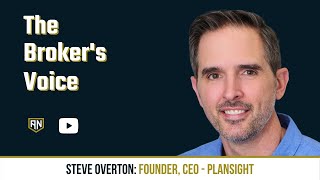
This is a recorded interview (Broker's Voice) with Steve Overton, co-founder and CEO of PlanSight. Overton describes his background as an insurance broker, the industry reliance on Excel and manual RFP workflows, and the resulting time/burnout issues. He presents PlanSight as a platform that automates RFPs across 20+ benefit types, improves transparency between brokers and carriers, and returns time for brokers to act as strategic consultants amid upcoming transparency-driven regulatory changes.
Chapters
Alright, welcome back to Broker's Voice. I am excited this week to have on Steve Overton, co founder, CEO of plan site. Well, before we get into this interview with Steve, I just want to make a quick pitch or a quick shout out to the sponsor of today's episode, agencyanix. They do my website, they also can do yours. If you are an insurance agency, a partner to the industry and you want your website to become that extra salesperson you've never had, you want to get a hold of Steve and his team at AgencyAnix, I'm going to put their contact information in the notes. It's time to uplevel your website up level your prospecting and up level the way you connect with your prospects. All right, Steve Overton, welcome to the Broker's Voice.
Thanks Andy.
Now I'm excited to have you, Steve, because yes, you're now co founder, CEO of PlanSite, a solution to the insurance industry. But you weren't always a solution to the industry. You were of the industry. You were an advisor at one time. Tell us a little bit about that.
You know, it's funny, you know my background, I started doing this in the early 90s and I actually joined with a family agency. I started early, I was in college and I used to do RFPs over fax machines and many times I'd go and I pick up the literal materials and it's funny, my dad got me into the business. He thinks he's the first guy whoever spreadsheet benefits. He was doing it in the 70s. But you know, I started out in college, had a young family and it was a great way to support myself. You know, by the time I was done with school, I was like, this is fantastic. I have freedom, I have flexibility, I have an income, I don't need a boss. And I just kept going and that's all I ever did until I started Plansite.
So you, you spent a while advising in. You're in the state of Utah.
Mm.
And take us back because, you know, here you are now, having built a solution for brokers to bring to their clients, really changing the way spreadsheeting is done. What led you down that path? Where was the gap that you saw that needed to be solved?
It's a few things. I mean, you know what our platform does is it really almost like to think about it as a time machine, you know, and I've heard a few people refer to it and that, I mean, we're just giving back people some other time and we're giving people more time. I Don't know how many times I, you know, it's like fourth quarter. I've got meeting after meeting after meeting. We're all doing our business at the end of the year and we're all trying to grow our business too, but there's only so many hours in the day where we can kind of sift through all these quotes and basically do right by our clients and make sure we're representing them in the marketplace and representing the marketplace to them. So, I mean, that was really, you know, part of the goal is to bring in this efficiency because we've been in this industry that's been pretty stale for a long time. I mean, it went from, I went from working on fax machines to, you know, building Excel spreadsheets and nobody's using fax machines anymore, but everybody's still doing everything in Excel, but it's all data and we're just modernizing it, bringing it into, you know, the modern age and helping brokers do things a lot more efficient, efficiently. Another thing, you know, one of the tenets of why we started PlanSight was the transparency. I knew, you know, I dealt with these, my reps all the time, from this carrier to that carrier, they all wanted a fair chance. And you know, usually to get my best, my client the best offer, I was showing, you know, one bid or the competitors bid to this carrier and that carrier. And it was amazing. The negotiating power that we had and that's what we wanted to do with plan side is kind of leveling the field, giving everybody insight to kind of the whole equation. So at the end of the day, we can get the best results for our clients in the most time efficient manner.
Well, I love what you said about buying time back. I think that's, you know, a lot of people think they sell a solution. You're giving time back to the industry because let's face it, fourth quarter is the season of burnout for so many, especially those agencies that don't have a game plan. You hear all the time those account managers that by December either have hate their job, they've left that company they're with, or they're just flat out burned out and they don't know how they're going to go through another season like that. You also brought up transparency, Steve. That's a very cliche word in our industry.
Whether it's broker pay, transparency in the healthcare system, transparency of why I'm getting the rate increases I'm getting. Where do you, if there's a spot that there one or two spots where you need to, you, you think there needs to be the most improvement in transparency. Where do you see those opportunities?
Well, I mean, in what we're doing, you know, you can go to plantsight.com and look at, look at what we're doing with transparency. I'm not going to get too far into it, but I think in any industry, when there's transparency, when people know the score of the game, the cream rises to the top and people do better with better information. You get better results when you know what you're doing. I mean, how many times, I mean, Andy, you've been, you've been a broker. You know how it goes. There's, there's tons of those carrier reps that are, they're spinning their wheels and they have no idea that they were out of the race from the beginning. Now they're working with knowledge. Now they know, hey, what do I need to do to compete? Am I even in the ballpark? And at the same time, you know, we hear from our broker partners, they're saying this is a huge time saver because when we're trying to sell groups or renew groups, we've got our reps calling us left and right saying, where am I, where am I, where am I? Now with client side, all they have to do is log in and check it out. And it's just knowledge is power. So transparency in the cost and the value of benefits is big to help people compete on a level playing field. I mean, getting into transparency and how everything else is priced, that's a whole different conversation that we probably don't have time for today. But I think transparency is a big deal in every aspect. I mean, think about it, the way our lives work now. I mean, you wonder about anything and you can go out and get the answer in two seconds. My mom thinks I'm amazing because I can Google things, But just transparency is, it's the name of the game. We all want the information that we want. We want it now. And, and we're used to having it at our fingertips. Why shouldn't we have it in this.
Equation, you know, and there's gonna be a lot of changes coming up with transparency, right? With the laws that have recently passed and pushed through that brokers having to disclose pay bonuses, overrides, carriers have to disclose the fees from providers. Like the game is about to change. I don't know how we're gonna get there. It's gonna be a rough, rough ride, I think, to get everybody on board with that. But with that being said, I Also go back to the transparency just around the renewal process. Ste. You know, when you look at the way brokers spreadsheet today, where do you see the gaps, like the mistakes or the problems that exist today with the way brokers are putting together their renewals for their current clients?
You know, I think the biggest gaps are. It's just, it's the fourth quarter rush and they're just pulling everything in and they're building spreadsheets before they can really analyze anything within our platform. All that work is done for you, so you have the opportunity to rather to review things than build things, then review. So you save the time so you can really become the true consultant. And so you have, you know, more opportunity to see the information rather than, you know, data entry. Does that make sense?
Yeah, no, it makes absolute sense because I heard a colleague of mine say this in an interview I did with him a while back that those brokers that want to. You said, you know, it gives you back time to be consultative, to be strategic. Those brokers that want to remain quoting spreadsheeting transactional, they can keep doing that in the future, but the biggest change will be they'll just continue to make less money doing that because things are becoming more and more automated. Right. And the quoting process, the spreadsheeting process is becoming easier and quicker. You guys are helping solve that so you can continue being that transactional broker. But at the end of the day, you're going to continue seeing your pay go down.
You have to be able to do more in less time.
Absolutely. And that's, that's buying back that time concept that you talked about. Now, one thing I do want to go back to on the personal side. You said your dad was believes he's the first person that ever used spreadsheets in the industry. Now here you are building a technology to solve it. And if I'm correct, isn't he involved with the company?
He's not technically.
Okay.
He's not.
Okay.
He likes to stay really involved, though. He was over to my house last night and it's kind of all he wants to talk about.
Yeah, no, that's, that's exciting. That's exciting. So let's leave it here. Steve, if a broker is watching this interview, right now we're at the beginning of 2021. We're looking out, where do you see the biggest changes occurring in the industry for the next, I don't know, 12, 24 months?
Oh, my gosh. What a broad question.
I'll let you paint the canvas.
I think it's it. It's about technology right now. I think there's there a rush for people needing technology into the industry to save time to do more. You're exactly right. With all that transparency coming in, I mean, overrides are going to be exposed. I mean, for a lot of agencies, those are the biggest profit centers and those are the things that are all of a sudden going to be disclosed if you're doing it right. So you have to be able to do more in less time. And I know, you know, from my own perspective as a broker for so many years yet you want to do right by your client, but you also want to grow. And it takes me just as much time to do an RFP for my current client as it does for my competitor's client. And I'd rather do it for my competitor's client, keep the status quo for my own client. But that's not the way that the world works. So being able to have technology to move faster and have more ideas at your fingertips, I mean, that's another thing that we're really trying to do. I mean we're, we're bringing in all the, all the competitive options, but bringing in new ideas, different things to quote that you might not have thought about seeing where the gaps are in coverage than putting it all together in a budget.
No, I think that's so important. Scale today has to be faster than it's ever been. I remember being an account manager in 2011, working for an agency that was pretty forward thinking at that time and we were still using Excel spreadsheets we had created to do our renewals and it was literally a copy paste the spreadsheet into the next year and just switch out the rates and the numbers and hopefully all the formulas still work. And man, you know, you can't do that anymore. And I think with the agencies that I see that are trying to grow these days, it is up. It's about outsourcing. I think the philosophy used to be in our industry, you everything internally, right? You hire more people, you build the renewal spreadsheets yourself. And it's so easy today to outsource, which makes it so easy to scale without having to add all that internal overhead. So let's finish here. Steve Plansight. You know, I've had a chance to get to know Plansight pretty deeply in a snippet or two here. Kind of share with the audience what PlanSight is doing to really help advisors buy back time, especially in the fourth quarter when it's so chaotic.
Well, I mean, at the Moment we have 20 plus benefit types, you can build an RFP in just a few minutes, launch that RFP, it distributes out to all of our carrier partners, anybody not in the ecosystem. It's just as easy to get a quote into the system from them as well. And then our system does all the mixing and matching, comparing, and actually will, based on your own preferences, export a client ready presentation for you. I mean you could do a 10 page or a 200 page presentation in the same amount of time and you don't have to worry about a single Excel formula breaking.
That's awesome. That's awesome. I think that's key time. So Steve, with that being said, I want to appreciate your time because I know you're a busy man. But guys, advisors, if you're listening in right now watching this interview, the game has changed. And you can't just get by with the old school spreadsheets that you have used for the last 10 to 15 years. Because as Steve said so beautifully, it takes the same amount of time to do that for a 10 life group as it does for 150 life groups. So why not automate, scale that process so you can use more of your time to do what you love to do the most, which is consult, go out and talk about strategy and you don't have to spend so much time putting numbers into an Excel spreadsheet. So Steve, one last time, just want to thank you for your time.
Thank you Andy.
And brokers, you know when clarity and connection collide, or clarity and confidence collide, I should say that massive action happens. Go make it happen today.
More from Andy




If you want producers to succeed faster, help them create a sales message that creates confidence.

Sales isn't a zero-sum game! You can have tough competition and still grab a beer after



Option 1: Meditation, a fast walk, a podcast, and protein. The ultimate morning routine!

How you do one thing is how you do everything. Ill elite producers fuel their body.


Stop living in the gray of maybe! Your job in sales is to get a clear yes or no