The Broker's Voice: Vince Lewis - VP of Sales, Partners MGU
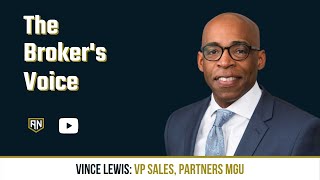
YouTube interview (Feb 25, 2021) of Vince Lewis (VP Sales, Partners MGU) by Andy Neary. Vince describes his Detroit roots and the influence of his father (a tailor) on his value-driven approach. He explains Partners MGU’s stop loss offering: emphasis on underwriting experience, case management, medical risk management, specialty networks, and a partnership model that shares future sale proceeds with producer partners. He calls out common misconceptions about self-funding/stop loss—over-focus on stop loss premium (a small portion of total healthcare spend), treating stop loss as a commodity, and treating self-funding as a simple price comparison to fully insured plans rather than a concept sale. He predicts continued growth in self-funding (especially smaller groups), potential hardening of stop loss pricing, and increased cost-consciousness post-COVID. Contact: partnersmgu.com.
Questions this video answers
February 25, 2021.
www.partnersmgu.com.
Five to ten business days.
About 20 years of experience on average.
Chapters
Hey. Hey. Welcome back to the Broker's Voice. This week, I'm excited to have Vince Lewis of Partners MGU on today. We're going to talk things, all things, little things. Stop loss about where Vince sees the industry going. But you're most importantly, going to get to learn a little bit about Vince. Before I get there, though, I do want to make a quick plug for our sponsor agency, annec. Yep, that's the logo on my hat. If you need a website, you're in the insurance industry and you ha. You know, your website needs to have a better message, needs to have a better look, and you want to use your website as that extra salesperson you never thought you had. Do yourself a favor. Get a hold of Steve Konka and his team at the agency annex. They specifically build websites for the insurance industry. So frustrating to work with marketing teams sometimes that don't understand the industry language. Steve and his team do. So get ahold of them today. All right, dive into this week's episode of the Broker's Voice. Vince, welcome aboard, man.
Andy, thank you, my friend. Thank you for inviting me. This is awesome. I appreciate. Appreciate you looking out.
Absolutely. You know, you and I have got a chance to get to know each other over the last couple years, and where I love kicking these interviews off is letting the eyes and ears of our industry get to know you a little bit. So, Vince, where'd you grow up?
Well, I grew up in Detroit, Michigan. Been there up until recently. Lived there for the majority of my life. You know, college and high school in the whole nine yards. But, yeah, native Detroiter, as you can see behind me on the wall, I just relocated to Pittsburgh not too long ago, but Detroit is never too far away from me. So you got the skyline here behind you. And then I've got the. What's the. What's known as the Spirit of Detroit statue, which sits in downtown Detroit with a Michigan State jersey on, which is where I went to school. So, like I said, I always try to keep Michigan close.
Well, man, being a big Ten guy myself, I would rather have you be a sparty than a Go Blue. So we'll. We'll take the Michigan State.
Agree, agree. We have a mutual. A mutual dislike there. I guess they say the enemy of my enemy is my friend.
There you go. Yes. Keep and keep and keep them as close as possible. I love your story. I would love for you to share this a little bit. The story of your dad and what he did for a living and how that's impacted kind of what you do@partners MGU, if you don't mind sharing that.
Sure. Well, my. My. Both my parents, my mother and father were both born and raised in a city called Galveston, Texas, which is just south of Houston.
During. They took part in what's known as the Great migration of the 1950s, right after the Second World War, where families, you know, black families, moved from the south to the north in order to find better opportunities. My father, in turn, you know, in his trying to decide a vocation for his life, decided he wanted to be a tailor. And he wanted to do that for a few reasons. One, he realized that, you know, and especially if, you know, the culture of the time, you know, people dressed up a lot, a whole lot, way more than they do today, right. So you had, you know, he felt people needed to, you know, wanted to look good. We're going to need clothes, so. And we're going to need those clothes altered. So, you know, he felt like it was a great fit. The other part of it too, was that, you know, when people have issues with their clothing, whether they get too big, too small, they need to adjust something here or there, tweak something new or tweak something they already have. You know, they're always going to, you know, have alterations done, which for the most part is done for what the simple need to create. He felt like he could create value. He could create value for those customers of his by, you know, first giving them, you know, giving them what they want and then creating value from the standpoint of being able to, you know, tailor their clothes to their. To their liking. So they got. They had intrinsic value because they look good. And, you know, the adage I've always heard, I think Dion Satter said it, if you look good, play good, play good, pay good, right? So if you take all those into consideration, you feel good, right? And also you're creating a value for the customer intrinsically and outwardly as well. So that was kind of the premise of what, you know, what he tried to do or what he wanted to do. And he did that for most of his life.
In terms of partners, we feel like we can create that same value.
I think from the standpoint of as a company, we try to create value on different levels, right. We try to create value, obviously, in the sale of medical stop loss insurance, but also we have a lot of different value adds that we call. I mean, in terms of our underwriting prowess, we've got case management services, medical risk management services that we offer, as well as a pretty unique value proposition which Basically we try to, we're gonna, we try to grow our, we're going to grow our company and eventually the out the idea is to sell it at some point in the future and then split the proceeds with our producer partners and then manage the company afterwards. So we give you the product provides value as well as the value proposition, also creates significant value for our producer partners.
Well, and quickly go back to what your dad did for a living. Hands down. His job was to make people look good, right?
Exactly.
And if anybody has seen Vince out and about at conferences. I know we haven't been at conferences very much in the last year or so. This one sharp dressed dude. So your father has definitely rubbed off on the way you dress and show up to the world. So you know what you said about, about partners Vince is you guys are very unique in the approach you're taking. Right. With Stop Loss.
You'Re not looking for every broker to partner with which some part Stop Loss partners may look look for. Want to go down this path? If I may ask you this question being that you are tied to Stop Loss, which means you're tied to self funded health plans. Right. If you had to say, you know, give me a misconception or two of about self funded plans that you often hear, whether it's from an employer or from a broker, what are those one or two misconceptions or misperceptions on self funded health insurance?
I'd say the first misconception a lot of times relates to, to stop loss insurance in general. Many times I hear when I'm in negotiations with a producer on a particular case and the focus always tends to be on the, the, the stop loss premium itself.
Right.
You know, we may, you know, we may be given, say it's a renewal and we're giving an increase or whatever and they're comparing the price to the, you know, to the income whoever, the incumbent carrier, other carriers that they're bidding one, it's part as a percentage of the overall healthcare spend as a percentage of the overall self funded spend. It's a very small piece, maybe like less than 5% if that of the total healthcare spend. So you got that element in there, right. The second misconception, and I think this is where, which I think creates the biggest challenge as an industry is that we are all kind of as carriers, as stop loss providers, we're all lumped in the same potential. So we're all kind of looked as. And I, it's, I've had, I've had brokers in meetings Tell me. We just view you as a commodity. We just view you as a commodity product. You know, we can just go from one carrier to the next carrier to the next carrier. No difference. Trust me, you get what you pay for. And, and not all carriers, not all stop loss providers are alike. I mean, more than anything else, you, you want, you want sound underwriting, right? That's the first thing you want. You want your claims paid in an expedient manner with minimal disruption and you want some creativity and innovation. I believe that partners, we can provide all three of those things. You know, our underwriters average like 20 years of experience. So and you have direct underwriter, underwriter attention and contact with them. So it's not like you got to go through the sales guy every time you want to talk to them. We have, you know, our claims turnaround time average is anywhere from five to 10 business days. And we've got tools to help brokers in their managing their overall healthcare spend. So they kind of have some tie in and we can be what I call kind of the wingman on that process and the whole healthcare supply chain. And you know, like I said, we've got, we've got great solutions to help in a pinch. You know, we've got availability and access to transplant networks and specialty drug programs and the like. So like I said to kind of be that wingman for the producer to help them assist them along with the things that they're doing to help control overall spend. So the two misconceptions, I think, well.
And I think you bring something up that's so important. We often, a lot of times we often hear the objection of it's too risky, right to self fund. And I think often that risk is as a result of the broker misplacing the business together. So your point, commoditizing stop loss or commoditizing TPAs and thinking that we're just going to go with the lowest price option is what often leads to a claim being mishandled or worse yet, a claim not being paid at all. And now you've got a huge problem. And to your point, it is that constant drive to focus on the fixed cost versus how are we attacking the actual biggest piece of the pie, which is the claims itself. And so I'm glad you brought that up, that you're not always going to be the cheapest.
Right.
But when it comes to how are you going to help me solve and attack the big piece of the pie, my claims, I think that's important as well. And making sure that the claims are always going to be paid and handled because at the end of the day it's the stop loss that's handling the big ones, right?
Oh, exactly. If I could add one more thing to that, I think the misconception too is that it tends to be a self funding is a concept sale. It's not, it's not. You can't, I mean, yeah, you, you know, obviously you got to be aware of the bottom line, but it's a concept sale. You can't sell a self funded program and then compare it to fully insured and if the costs are slightly higher or whatever and say, oh, this is going to cost me too much money because you're going to, because of the advantages that it creates, the tax flow advantages and the like, you know, the flexibility and plan design and all those things, you're getting so much more. So you got to sell the concept obviously. And I'm sure folks like yourself and experienced brokers out there know this, but I think we tend to get in this trap of trying to compare it to a fully insured program and then it gets kind of, it ends up taking a life of its own, so to speak.
I've often heard those kind of brokers phrased as the max cost brokers. So they take a fully insured premium and they look at the max cost worst case scenario of a health, self funded health plan and if that maximum cost of the self funded plan is any is a dollar higher than that fully insured premium, they won't do it. They only sell if the self funded option worst case is cheaper and you just can't do it that way. You're never going to sell a self funded plan that way. To your point, it's a concept, it's not just a bunch of numbers on paper. So let's kind of wrap it up here, Vince. You know, with self funding over the last five, 10 years we've seen definitely an evolution, right? We've seen smaller companies being able to access self funded programs, whether it's captives or level funding options. If we look, if we were to look out the next three to five years kind of where, if you had to make a guess, where do you see self funding maybe evolving in the industry as we move forward?
Good question.
Honestly, I think it's going to continue to grow. I think you're going to still, I don't see it plateauing anytime soon. I think you're going to continue to see growth in the smaller sector with smaller live smaller cases. I think that you will probably I think especially now that we're going through Covid and everything, I think folks are going to even be more cost conscious than ever before because, you know, I mean we've seen the impact even in the last, I know as a company we've seen it in the last year like companies having to downsize or do things differently. So they're going to be looking for ways to address that bottom line. We already know that healthcare is probably the number two bottom line item that's going to make, could potentially make a difference between a company, you know, being profitable or potentially going into bankruptcy. So, so to me, the growth is in the smaller, smaller group space. I believe that as an industry, I think especially the next couple years, I think we're going to start to see some, some, a little bit of tightening in the market, in the stop loss market in particular in terms of, of pricing. You know, some people tend to, you know, disagree and we haven't seen the manifestation of that fully depends on who you talk to. But I think there will be some hardening of the stop loss market which hopefully will create some rate stability and honestly. And which is needed, I think, which is well needed right now because like I said, we don't know this, this next tsunami, this next wave of claims that are going to come through based on what's happened in 2020 with COVID So I think it's prudent for.
Folks in our industry to exercise caution and to exercise just common sense in underwriting.
Well, and yeah, that's so well said because I think with, you know, here you are, you and I are having a conversation February 2021, right. Claims were unnaturally low last year because of COVID In some cases people just couldn't have surgeries, they couldn't get in. So we are definitely going to see an uptick on claim activity this year. But at the same time I think you're going to have more companies who are definitely in cost control need because of the economics we are facing here in this country right now. And so I Hope the, there's CEOs, CFOs, HR professionals out there who are definitely pursuing this option of self funding because let's be totally honest, being fully insured and remaining fully insured is a very hard way to control your cost unless you're constantly changing the plan, the design, the on your employees and making it difficult on your employees each and every year. So Vince, let's wrap it up here. If somebody wanted to get a hold of you, a broker in the industry or they Want to get a hold of you to learn more about Partners mgu. What are the best modes of getting in touch with you?
Best Mode, our website, www.partnersmgu.com if you want to get a hold of me directly, email us. Vince Lewis, partnersmgu.com We're nationwide so we can work with any broker. Like you said earlier, our scope is somewhat limited. It's somewhat of a limited opportunity for brokers out there in that we're not open to the public, we don't go to everybody on the street. So if there's some interest and you're looking to partner with us, so to speak, in terms of being able to grow your stop loss business and see some value come from that, feel free to reach out to us. Let's have a conversation.
Awesome. Well, Vince, thank you for your time. I really appreciate today.
Thank you, Andy. Thanks again, man. Thanks again. I appreciate it.
Yeah, you bet this. And for the folks listening in, if you're an advisor right now and you want to learn more about partners MGU definitely get ahold of Vince. It's a unique way to provide the right good stop loss policy for your employers as well as build a long term growth strategy for your agency. So guys, you know what happens? We're never going back to the way it was where industry has changed forever. The way you strategize, the way you bring results to your client has to change as well. And these broker voice interviews is to help shine great things and great people doing great things. So Vince Lewis is just another one of those folks. And when you listen in, you're taking notes and you get that clarity and confidence you need. You know what happens? Massive action happens. So go make it happen today.
All right. Thank you.
More from Andy




If you want producers to succeed faster, help them create a sales message that creates confidence.

Sales isn't a zero-sum game! You can have tough competition and still grab a beer after



Option 1: Meditation, a fast walk, a podcast, and protein. The ultimate morning routine!

How you do one thing is how you do everything. Ill elite producers fuel their body.


Stop living in the gray of maybe! Your job in sales is to get a clear yes or no