The Daily Habits Of A Successful Insurance Advisor with Chris Hamilton
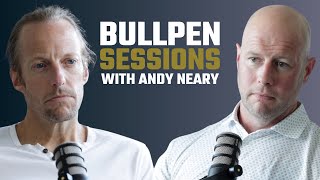
This is a podcast-style interview (Bullpen Sessions) where host Andy Neary interviews Chris Hamilton, an employee benefits practice leader. Hamilton explains his move from corporate finance into health brokerage after observing how the Affordable Care Act reshaped demand and exposed compensation-driven misalignment between brokers and clients. The conversation also covers Hamilton's daily habits (nutrition plan, daily workouts, cold plunges), his competitive mindset (self-competition, humility), and perspectives on continuous improvement despite career wins.
Chapters
Welcome back to Bullpen Sessions. I'm excited today to have Chris Hamilton join me. If you have been on LinkedIn for any period of time and do not know who Chris Hamilton is, I'm pretty sure you are not looking at LinkedIn. This man is everywhere. He is the employee benefits practice leader of Hotchkiss Insurance in Fort Worth, Texas, and I was excited to have him on the episode because we get to know Chris in a way that you may have not seen him before. We don't actually spend a whole lot of time talking about health insurance. I wanted to get inside the man that everybody knows today, what makes him tick, his drive, his discipline, his passions, his hobbies. So get ready. You're going to love this episode. Chris Hamilton is a man on a mission in the health insurance industry. He's got an amazing story, and you're going to hear it today on this episode.
Hey.
Hey. Welcome to the Bullpen Sessions podcast, a podcast for driven insurance professionals who are looking to reach their full potential in their insurance careers. This is the place where we help motivated insurance professionals build. Build the right mindset and tools to create more credibility with their target prospects. I'm your host, Andy Neary, former professional athlete turned insurance advisor. Each week, you will learn tips and strategies to help you execute a clear prospecting game plan every single week. Clarity creates action. When you're clear, you're confident. When you're confident, you're consistent. When you're consistent, you are unstoppable. All right, let's dive into today's episode. Chris Hamilton, man, welcome to Bullpen Sessions. It's good to have you.
Yeah, thanks for having me.
Now, people are probably like, wasn't that dude already on Bullpen Sessions? No, that was the broker's voice that I used to. To run. And when I had you on the broker's voice, I think we focused a lot of content around social media and what you're doing on LinkedIn, because everybody, everybody sees what you're doing on LinkedIn now. But what I want to use this episode for is just to get. Get behind the man. Everybody knows the myth, the legend. So let's start with.
A lot of people see you out on LinkedIn right now, see what you're doing. They're impressed. But before we all knew that, Chris Hamilton, what got you into the insurance business in the first place?
Good question. So my background's in corporate finance and banking, and I had a client that was a brokerage, and they were going around the the country buying up other agencies. And so I Saw how the brokerage business, brokers made money. And I just got really interested in it when the ACA was passed because I knew it was going to affect a lot of the clients I did business with. It was going to affect their business. There was a time when the, the broader market thought that the Affordable Care act was going to put brokerages, health brokerages out of business. It was going to really impact the business. And just hearing their viewpoints on this is actually going to be a boon to our business. It's one of the best things that could happen. And if you think about it right, it requires companies to not only now they have to buy something legally, they have to buy a certain amount of it. You have to, there's only, there's limits on the coverage prior, now you have to provide unlimited coverage. And so it was all these dynamics are going to force people to buy it and it was going to go up. But really the way they made money, it was the thing that was really interesting to me, seeing how they made money on the bonuses and how it drove their decisions. And so I say bonuses, bonuses from carriers. And what I realized really quickly is that the brokerage industry just at large works for the carriers, not the clients. And when I, when I noticed that, I started asking all of my business clients, as a banker, how do you guys deal with this health insurance deal? And the answers that I got were almost consistently the same, which was, you can't really do anything about it. Costs continue to rise. It's just whatever the broker and the carrier tell us our costs are going to be. We just budgeted increase every single year, which was baffling to me because I had some really sophisticated clients that had really good ways of managing other costs in their businesses. And they could tell me what input costs for their manufacturing were going to be two or three years out because they had a way to manage that cost and it was critical to their business. But they didn't have a way to manage health insurance. And that just led me down this research path. And I just had decided there was a way that you really could affect the cost of health insurance. I saw that the market really wasn't doing that and it was an opportunity for me to do something, create value for businesses. But what I realized in that process, not only creating value for businesses, I'm creating value for people inside of those businesses. Because if you think about health insurance and health care, it's one of the most expensive things people buy every single day. It's more expensive than most people's car payments or house payments. And in some cases, which is the weirdest thing, we buy insurance to protect us from catastrophe. But it's one of those things. If you look at medical debt and bankruptcy, it's one of the leading causes of bankruptcy in America. And, and most of the people that file bankruptcy have medical bills and most of those people had health insurance. It's like this isn't working. There's a. It's just completely broken across the system. So I saw that as an opportunity to make change.
Well, you bring up a good point. I was just having a conversation with somebody recently about what's going on in the real estate business with all these readjustments of broker comp. Because housing has increased so much over time, they're starting to reset real estate broker commissions because they're like when the house average house price used to be 200,000, now it's 450. Yet real estate brokers are making the same percentage. That's a lot of money they're making. And it's interesting how our industry really hasn't adjusted commissions all that much even though premiums have skyrocketed over the last 10 to 12 years.
Yeah, not only have premiums skyrocketed.
But the way brokers can make money has skyrocketed. So I took over a client, got to pick up a new client this year when I started digging through how that broker was getting paid, they were making commission on stop loss, charging a fee to the client. They were making money on admin, they had prescription fees that were built in. There were other vendors that were part of the health plan that they were taking a buck here, two bucks there. And the commissions that were making on some of the other policies were higher than industry average. And yeah, those features things were disclosed to the, to the client. The client didn't know any different. They didn't have a way to benchmark it. But there were other fees and comp that weren't disclosed which. That's a little bit more troubling.
Yeah. So let's get away from selling insurance for a second. One thing I think I've watched you do that I am so impressed with is when I met you the first time. What now? Three or four years ago. Just the drive and the discipline you had and, and it's such a cliche question what makes you tick. But talk to us a little bit about, you know, your, your level of consistency, especially what people see with social media is very impressive.
But when you look at your day, what are some habits and rituals you deploy every day to make sure you're showing up at your best.
So I try to follow a nutrition plan. I stick to that. I work out every day, seven days a week, very rarely, I would think in the last month there's maybe one day. And so some people might think that's not a healthy habit because it might be too much. I adjust the volumes as needed, but I want to make sure, because I'm going to show up, I'm going to hold myself accountable to that, and I think that's important. And there's some rituals that I have in the morning, whether you're talking about cold plunging and that sort of thing. People kind of laugh sometimes about that. I don't do it because it's like part of the grind culture. I do it, I think, because it helps reset my nervous system and it helps.
Do you have a plunge at home?
I do, yeah.
What kind?
It's not a fancy one. It's just one I bought on Amazon and I throw ice in it. Ice bottles. So I'm actually thinking about buying because it's important enough to me now. In the wintertime, it was easy to keep it cold because it's cold at night. The water stays cold. Right. But now that we're moving into the summer, I'm going to need something a little bit more robust. But that's something that I really took on this last year. And so those are some of the basic habits that I have just to make myself feel better.
And.
And I'm not a professional athlete. Right. But this is what I try to tell my teammates and people on my team is that we don't get paid to shoot a jump shot. We don't get paid to hit a baseball or throw a football. But make no mistake, you're a professional at what we do. And if you think about the sports teams, they have trainers and nutritionists and therapists and all those sorts of. They even have psychologists now, because it's not just a mental game, it's a physical game. And people will say, well, you sell insurance for a living, you work out of an office, it's not physical. Are totally mistaken there. Because if you could take somebody that's in shape, works out every day, has high energy, and put them against somebody that is overweight, doesn't have a good diet, it doesn't have high endurance, and you put them through a gauntlet of stress and then ask them to go make a pitch, which one do you think is going to show up better?
Exactly.
And when we are in high pressure, high intensity, fast paced life. And people don't realize the grind that that puts on your nervous system, on your ability to think on your feet. The better you feel, the more energy you have, the higher capacity you're going to be in, the better mindset you're going to have when you're going into a big meeting.
I remember years ago, somebody asked me, you know, Andy, why is it that there's so many athletes in the insurance industry? And why do most athletes do really well? And my answer was, because they know how to put in the work off the field when no one's watching. And I think that's what you're getting at is you can't just show up and sell insurance. It's what are you doing to put your mind and your body in a position off the field to make sure you're showing up every day? Diet, exercise is all part of it. And I saw a meme the other day speaking to what you said, and it said, if you want to become a billionaire today, you need to plunge and sauna. It's starting to becoming mock now because all you see is these influencers out there, these millionaires and billionaires. Oh, you got a plunge and you got a sauna and I love both of them. But it is funny how, how everybody feels like that's what it takes now to be successful. Just cold plunge and just sauna and you're gonna make it.
Yeah, there's a benefit to doing those things because I think it helps for me, it, it gives if I plunge. And I notice this when I don't plunge. If I plunge in the morning, I feel like my nervous system is reset. At least for eight hours. I'm a lot calmer. It helps me in that regard. But the thing I would tell you, I think it's interesting about athletes in particular is, is they know how to put in work when people aren't watching. And I think the driver behind that is their competitiveness. People who are competitive are going to be drawn to sports, they're going to become athletes. And I am highly competitive. It drives my wife crazy. I will compete on everything. And my biggest competitor. This sounds so cliche, but I'm going to be honest with you. My biggest competitor is myself. And people will say like, well, you compete with Andy or you compete with whoever. Right? Whatever sense. You could say we compete on social media or we compete against another broker or across town. I'm not competing against anybody, I'm competing against myself because that's the person that matters. Most like what's happening right here inside of my head. And I know, did I do my best or did I not? And if I didn't do my best, I'm probably going to kick my own butt a little bit in my head. And that's, I want to, I, I know myself if I competed that day or not.
I agree. I, I think it is, it could be seen as cliche to be, you know, just be better than who you were yesterday. Right. But another good way of looking at it is will the person, the version of you ten years from now be happy with the actions you're taking today? Will the older version of you be happy with what you're doing today? And if the answer is yes, you're probably doing the right things. Right. And I think that, I totally agree with that. I think as an athlete, you know, I just got done reading Nick Saba, one of Nick Saban's books, leadership book. And one of the things his former players used to talked about in the book consistently was how even after they won a national title, 24 hours later he's like, season's over, guys. Look ahead. Remember Jordan? He'd be in the weight room the day after they won the NBA title. Right. And I think that's also part of it. It's, athletes are really good at making sure the highs are never too high, the lows are never too low, and they're not sitting relishing yesterday's victory. They're always focused on what's next. And you might say that's a bad thing, but I also think that's what makes athletes continue to strive for more. Do you agree with that?
I do. And you know, I had a similar experience this year. I closed one of the biggest deals I've ever done. And I remember our, one of my C level partners in our firm, he looked at me and he said, are you okay? And I was like, yeah, things are great. And he's like, I just, I thought you would be more excited to close it. This is like a career achievement account that you close. I just thought you'd be more excited. And I thought to myself, I was like, well, one, it was a grueling process to go through to win the account, and now is when the real work starts. But it's just another day in the office. It's another, it's another day and. Right. I'm gonna have to, we're moving forward. Just keep going. And I, I, I think you're right. There's something to that. Not feeling like you've ever made it. I don't feel like I've made it and I feel like I'm working towards that. And you know, a lot of people might look at the size of my book or our team or you know, the accounts that we have and say, oh man, you've made it. But it certainly doesn't feel that way. It feels like I'm still entry level into the business in my own mind.
You said something though. I remember I had Dominic Frankini on the podcast. You were going to meet him. Had you been able to go to the event in Indiana? And I had him on and he's had tremendous success in this industry and he's got a multi seven figure book of business. And he said, even after 19 years I don't feel like I've made it. Yeah, I'm like, that's it right there.
You know, I think there's a lot of people that don't have that same mindset because you'll find people who've attained a decent level of success and they're just content and they just coast. And I think the difference between people that do that and the people that don't is how they measure. This may sound the wrong sound, wrong. I don't know another way to say it, but how they measure the value of what they do. And to me it's not how many accounts, it's not how much money, because I mean that stuff doesn't really matter. Once you hit a certain level you're like, okay, it doesn't really matter if I write another account. You don't need any more accounts. It's the competitive drive. How many people can I help?
But I think that's what separates you and others from everybody else. It's, it's your drive, but your mix of drive with remaining humble. Right. I can't tell you how many times I've talked to you where I'm like, dude, be more excited. But it's because you're so humble, you're never going to let yourself get too high on your own supply. And I think that's a dangerous slope. A lot of people in this industry can go down as they start to have some kind of level of success and then they become their own biggest fan. And that, that's a slippery slope.
Well, that's another thing that I think athletics and life and business will teach you. You'll get humbled at some point. The best get humbled. I've been humbled in football. When I played in college. I was humbled a number of times in work, in business. I've been humbled in this industry.
Yeah, I know.
More from Andy




If you want producers to succeed faster, help them create a sales message that creates confidence.

Sales isn't a zero-sum game! You can have tough competition and still grab a beer after



Option 1: Meditation, a fast walk, a podcast, and protein. The ultimate morning routine!

How you do one thing is how you do everything. Ill elite producers fuel their body.


Stop living in the gray of maybe! Your job in sales is to get a clear yes or no