The Evolution of the Modern Insurance Agency | with Billy Potter
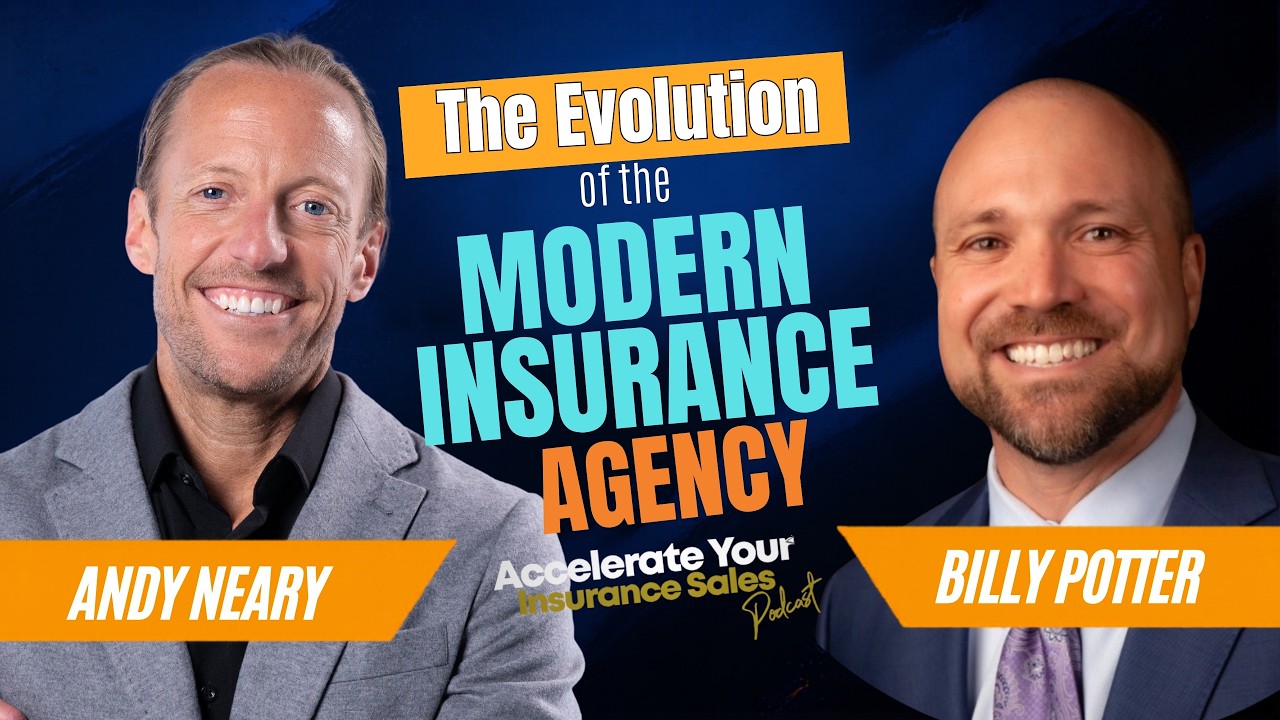
Billy Potter, CEO of Snelling Walters, argues that introverts can excel in insurance sales when they play to their strengths, not the industry's extroversion bias. He was diagnosed with dyslexia late in life, an experience that shaped his leadership philosophy around resilience and authenticity. Potter advocates for developing talent through coaching and data-driven programs rather than acquisitions.
Chapters
Hey, hey, welcome back to the Accelerate Your Insurance Sales podcast. Andy Neary here, CEO and founder of Complete Game Consulting, where we help you craft a sales message and turn that into confidence and conviction so you can increase your sales. But today I am excited. I am joined by the one and only Billy Potter, CEO of Snelling Walters. Let me tell you a little bit about this guy. Why does Billy do what he does? One, he does it to pursue truth, instill trust, and inspire personal and professional growth. With a career spanning more than two decades in the insurance industry, Billy has built a foundation for success through experience, character, and passion. As chief executive officer, he continues to build on Snelling Walters, uh, legacy and create a new generation of leaders who are bold and innovative. Uh, Billy, I love how you wanted me to introduce you. As a friend, student of sales, and a colleague in the industry. Welcome aboard, man.
It's my pleasure to be here. And I just want to say before I forget, first of all, I'm humbled to be on your show. I, I love what you're doing for our industry, Andy. You're doing great work. Appreciate it, man. You're bringing biblical truth to a lot of people that I think that need to hear it. And I'm just honored to be invited. So thanks for having me.
Yeah, no, I love that. I appreciate you saying that. You know, I'm excited to have the conversation because most agencies today, I think, are still trying to figure it out, Billy. Especially with all the adjustments going on. The, you know, we got a new competitor in town called AI and just with everything that's in place, you're, I feel like your consistency throughout your career is what has landed where you are today. And I'm excited for others to hear your story. So, let's start right at the beginning. You know, I know I didn't get in this industry by design. Yeah. How did you find yourself in the insurance industry?
Yeah. I, first of all, I remember walking out I went to a small school in Maryland called Mount St. Mary's College. And I remember leaving to get in my dad's car. I picked up my last paycheck. I was paid, you know, $5.15 an hour. And I was just so excited to go into the world thinking, this is the least amount of money I'll ever make again. And I didn't know what I wanted to do. I had never heard of insurance. I just wanted to believe in what I did. And so I couldn't get a job for a while. And then enough was enough. I asked my best friend in the world. His name is Kenny Powers. I usually pretty good. I get some pretty good jokes about that.
I'll say, what movie is that?
Where's that from? That's from HBO. Eastbound and Down. Yes. Kenny Powers. So, but we've been best friends since we were babies. And I asked for his ID to go to the University of Georgia career fair. And I studied 11 different businesses that was going to be there. Sun Life Financial was the one I was really intrigued with. Simply because it seemed like they invested a lot in the people they hired. And my rationale was, if they're investing this much money that I succeed, it's probably going to be a good, good ride for me. That's what drew me to insurance. I didn't know insurance. It wasn't a very attractive— I never thought I want to be in insurance when I grow up. And it's a blessing, man, like on so many levels. Working for Sun Life for about a decade was one of the smartest choices of my career.. And I learned a lot being there. I learned a lot about product. I learned a lot about people. That's a misstep, I think, leaving college that I didn't know how to interact in a professional setting. So something as basic and simple as that. And I'm just so grateful for Sun Life because the managers I had, the grace they extended me. I hope they're listening right now because I'm just forever grateful for them. By name, they go through my head on a weekly basis.
Yeah, I'd tell you the same story for me. I started with Federated Insurance.
Yeah.
Which is a captive, right? You're selling commercial health, disability, life, but it was the training.
Yeah.
You know, their training program was absolutely phenomenal and I didn't even take full advantage of it. The full training was a 9-month program where you live in Owatonna, Minnesota at their headquarters. And yeah, I don't think my insurance career probably would be where it ended up being without that training.
Yeah, I don't know if it was true for you. You know, I was— I still have my notes from when I came on as a salesperson, and it was just such rich— it's rich to study, like, the feedback they were giving me. And I was noted as a bulldog and I need to relax, which honestly is still true today. But the education they gave me was profound, especially about reinsurance and stop loss and all the ancillary benefits. But I think that many of those big companies, they teach you to sell as an extrovert.
Yeah.
And I'm not an extrovert. And if there's something that I wish I could have changed in that time, it's learning to sell how God made me to sell. You know, Tom Brady doesn't go to the Hall of Fame as a tight end. He goes to the Hall of Fame as a quarterback. And there's a style to sell for introverts as well, which honestly, might be superior than just being a very strong relational seller. So that's something that I've had to undo on the next chapter. And that's one of the reasons I came to Snellings is because they really wanted to invest in me and see who I could become.
Billy, I mean, you just nailed why Complete Game Consulting exists. When I moved out to Colorado a decade ago and I found myself in a market nobody knew me.
Hmm.
I had to build a sales process for me as an introvert. And I agree with you. I think we train people in this industry in sales as if everybody's an extrovert, but it's just not the case. And to your point, I think introverts, if trained correctly, can be even more impactful as salespeople. So, I love that you said that. By the way, big shout out to Mount St. Mary's.
You know Mount St. Mary's?
They've made a couple NCAA—
Of course.
Absolutely.
They have. Yeah. I believe for that school, man. I love it. I played rugby there for 4 years. I go on a trip every January with a bunch of guys that we played rugby together. And it's just a special spot. It's in the middle of nowhere. Nobody—
I think it's one of the smallest D1 programs.
Yes, that's exactly right. It's on the mountain range. It's like a mile from Camp David.
Yeah. Okay.
So it was a wonderful experience for a number of reasons.
But, hey, man, shout out to the mid-majors. I went to U of O.
So that's fantastic.
By the way, shout out to UW-Milwaukee. They just made it to the NCAA. Baseball tournament with a walk-off home run.
So, wow, that's so exciting.
Um, yeah, I'm curious, going back to the training you had at Sun Life, because you said you still have the notes.
Yeah.
A lot has changed in sales, right, in the last 20, 25 years. But thinking about how you were trained at Sun Life, is there anything that sticks out? You're like, it is still as true in 2026 as it was back then?
Yeah, I, I think, um, it was introduced to me back then, but it wasn't emphasized as much, is know thyself. We started with Myers-Briggs, and it was so fantastic. Like, for the first time in my life, because you think about it, you're like, what, 22, 21 or something when you start. But for the first time in my life, understanding objectively who I am, and that was given to me within the first couple weeks of being there. The training school was phenomenal. They've changed it a dozen times over since then, but I was so impressed. I still am to this day impressed. And when I look back at my notes, I'm still impressed. But you kind of get away from that a little bit. And it's, I think it's a big mistake because it's like your golf swing. You know, people that try and have a Tiger Woods golf swing, it's like, dude, you're, you're not Tiger Woods. You know, find your swing. That's why Jim Furyk is my hero. Find your swing and own it. Don't try and be Tom Brady, be you. And, you know, I think that if you're good in sales, you have a lot of self-doubt. And some of those spots, the business doesn't— it shouldn't warrant you getting to that low when you're in that valley. And when you know yourself, you won't get that low. But if you're not doing your job well, you are doing your job well if you have self-doubt. I mean, this is a job of failure, candidly. And that's why introverts are so resilient. They won't personalize the failure as much as an extrovert would. And you have to train them differently. And so that is still, I think, true today. They brought in a corporate psychologist to do that. It was really a fascinating week. They started off with— this is another truth today. You could have this debate between sales and service. They started off with, I'm guessing, 15 brand new underwriters and 15 brand new salespeople. Nobody knows a thing.
Okay?
And she said, "I'm going to be back in about an hour or 2 hours. And I want one answer when I come back. Who's got the most important job in the company?" And man, it was a free-for-all. It was just unfiltered, ignorant debate as to who's got the most important job. You think about that dynamic in our insurance agencies today, it still exists. You know, you could put in service there, you could put in sales there. In the end, we have to find a way to work like a team. And I think the best teams start with the players knowing who they are and who they aren't.
So I am curious, what was the answer she wanted?
Well, I don't know if it's what she wanted. She was a great poker player, but nothing happens till the sale is made.
Yeah, I think the answer could also be yes and, right? Because I think Yeah, nothing happens till sales made. And I see that a lot, Billy. We, you know, we work with some agencies today that, that try to preach almost an anti-sales culture. Yeah. Because they, they pride themselves on the service. But to your point, guys, growth doesn't happen unless stuff comes through the front door.
Yeah. In the end, what she wanted is sales having a respect for service or underwriting and underwriting having a respect for sales. And that's where we miss it. But in the end, I'm a big believer. I'm a salesperson at heart. You don't have a business until you have a sale.—
and you brought up an interesting dynamic there. I see a lot where sometimes there is a divide between sales and service, and service only gets more frustrated as more sales come in. Yes, that's right. And then it leaves sales defeated, not wanting to bring in sales for fear of disrupting the service, and it just creates this energy where it's a stagnant energy.
Yeah. And look, we, we try and position it here is that we, we both have equally important seats in the boat. Yep. Um, neither is more important than the other. This, this business is about retention. So if you don't have solid service, um, then the purpose of this business goes away, which is the residual, you know. And that's what you really want. That's what's special about our industry. Um, I'll never forget early on in my career, I was having a debate with a service person, and, um, she, she didn't think I was grateful for what she was doing. I was like, What? You're crazy. I said, thank you. Here, I emailed it to you. And let's be honest, you're sending out the renewal. I mean, that's your job. So, but I'm grateful for it. And she's like, okay. And I said, well, did you thank me for selling it? Because that's my job. And it was just a wonderful moment. And I'll tell you, there's somebody here that was in service for a long time that would thank me every time I sold a deal. And I'd take a bullet for this person. She's now in sales, but it just was such a wonderful, refreshing trust and respect that she helped me foster because she was a, you know, a fly on the wall for that conversation way back when in like 2012, 2013. And, and that's where we should be going back to the corporate psychologist's point. I love you. Do you love me? I respect you. Do you respect me? I'll row for you. Will you row for me? That's an unbeatable team.
Yeah, I've had a— I've had— I've said this quite often lately with a few teams we've had a chance to work with, which is, guys, you have to get back to your analogy, rowing in the right direction. Yeah. Whether that is a players-only meeting with no leadership, you guys need to figure out what you're going to do to get back on the right track with each other, because I think your point's well made. That I think sometimes there is a little resentment from service to— I think there's a lot of time there's a resentment with anybody in sales because people know how much they make and can make. But at the same point, it is recognizing, but I don't have a job or a paycheck if money— if sales don't come in. And likewise, I think there's a lot of sales reps who could stand to treat their service team better. And you've got to have that cohesion, that cohesive unit. You can create a cohesive unit. You become an unstoppable team.
It's a blessing, you know, you saying that because I'm reminded again in gratitude for Sun Life Financial. I was on my way up to the headquarters, which is like, oh my gosh, I'm going to the show. I remember I like I bought a special shirt and I was just super excited and I was meeting with Michael Shoney. He was running all of Sun Life at that time.. And I sat down, I was nervous, my hands were probably sweating. He says, how do you feel? I go, super nervous and a little judged. He goes, judged? And I was like, yeah, you got to walk by all underwriting and you're wearing your best suit. And it's just an ignorant statement. They were wonderful people that I had great relationships with for a decade, but we have our insecurities, right? And, and he said what he said, just calmed my nerves. He goes, look, you You have a hard job. And I would welcome any of them to put on a suit and do the job. I think it would make a better business if they tried. And I loved him saying that. That was so simple and just so rewarding that he shared that with me. And that's where we need to be. We need to have respect and appreciation for one another's job. Servicing a book would kill me. I don't have the ability or the demeanor to do it. So I'm so grateful for that work and our service. And they do it with such pride.
Yeah, I think you've talked about that, that fear, self-doubt. I think if you sat down with a lot of other producers today, if they were willing to admit it, most of them struggle with a, I'll call it violent fear of failure. They have a big fear of failure and I think they all also deal with imposter syndrome.
Yeah.
And believe it or not, those two things are what actually drive them. And I work with a guy right now, Billy, that's got an $8, $9 million book. He still has imposter syndrome at $8 to $9 million. He still feels like he hasn't arrived.
You know, I was just speaking this morning to somebody I really care for. The most repeated verse in the Bible is, do not be afraid. And at what point in my career was I ready to let go? Of, well, last year was just lucky, you know? At what point can I, can I trust the process? That's what the pro golfers do. They don't sweat the shot. They go through their routine. And, and that is next level of, I think, of engagement is like, let go of that fear. That's, that's the devil talking, man. You know, you are made uniquely and you are gifted and you need to start believing that. The same is true with dating. If you think you're undateable, your date's going to see that. And, you know, you need to have confidence that you're a good person, that you have good objectives and you want to have a happy life. And, you know, that fear— I think the most important thing, Andy, is that what you're doing for that person is you're talking about it. Yeah, because Seth Godin says the problem you can't talk about is now two problems. And so you kind of got to get released from that, that doubt. It just doesn't have a place here.
Yeah, but you just— again, another, another good point. I hope everybody heard. I know I'm I'm terrible at this, but I'm sure there's a lot of good salespeople out there downplaying your success. You know, when people give you the kudos and the adulation, well, last year was a lucky year. Or, you know, I, I got that $100,000 win because of this. Right. Downplaying those wins instead of saying, thank you. You're right. I earned that.
Yeah.
And I think more of us could stand to do that. Not that that's arrogant or cocky in any way, but let go of that. Downplaying your success and actually be grateful and proud of yourself that you've earned it.
Amen. I could not agree more. That is a wonderful habit to develop. And how we speak of ourselves matters. It really does. Your brain doesn't know the difference.
Yeah.
Doesn't know the difference between criticism and praise.
Yeah. Well, let me— let's just go right to it. I'm curious to hear from you. What do you think separates elite benefit consultants from from, let's call it, the average broker in our industry?
Yeah, so I would, you know, obviously this is my bias because how I'm made, but I feel that sharing truth is challenging sometimes. And what I found is the only thing that business owners like more than their relationships is their business. And so if you can be a consultant that most of us can identify issues, We can see them. Sometimes we hesitate to say them because of fear of losing the deal or having the relationship suffer. And I believe the best of the best share it. And if you haven't been one that can let it rip, you're never going to be able to share it in a manner that's acceptable if you don't start trying. The analogy I give sometimes is like when you learn to dance, you step on toes. Neo didn't make the jump The Matrix, and he was still the one. But you have to try, and we usually don't develop that, especially in the South. To, to criticize is like a, is like a cardinal sin. Uh, so there's a lot of, um, politeness and, and honestly sometimes, uh, passive aggressiveness. And I think that if you can find that, that happy medium of being caring and direct that's next level. It's helping people find their part. If they're not a part of the problem, they'll never be a part of the solution. And I think good consultants can help bring that to the attention and not have it polarize people. Necessary, kind, and true. That's kind of the three rules. But the true part sometimes doesn't get embraced in fear of repercussions.
Well, and I think at a time where trust is probably harder to build than it's ever been, truth and transparency are more important than they've ever been.
Yeah. So, you know, I, you know, you're never going to out-relationship their current relationship, especially if they've been there for a decade or 15 years. But I think that if you let go of trying to get the deal and just like, can I commit to being truthful and honest, you'll attract more business than you'll get through promotion.
Well said. I actually didn't intend to ask you this, but I'd love your take. So you went to Mount St. Mary's, right? You're in Atlanta today.
Yeah.
Are you from the Mid-Atlantic?
No. Born and raised here.
And okay, you are. I was going to ask if you were born in the Mid-Atlantic and came to Atlanta. I'd be curious about did you have to make a cultural adjustment?
Oh my gosh.
South.
There was.
But born and raised in Georgia.
Okay.
Okay.
Yeah. And there still was a huge cultural adjustment. I mean, Philadelphia, Long Island, New Jersey.
Very different.
Totally different.
Yeah.
I pray for those people every day. I'm just kidding. I hope you're listening.
Well, so you spent your entire career in benefits, right? Yeah. Here you are today, CEO of Snelling's Walters, elevating from benefit advisor to the position today. How have you had to elevate your habits, ways of thinking to allow yourself to become an effective CEO of a good-sized agency?
Awesome. It ties so beautifully to what you opened with a little while ago. It starts with me. And I had a lot of help meeting with people, learning more about myself, massive imposter syndrome, tons of insecurity. I'm a very emotional person. And, you know, for most of my life, it's been a blessing. There are moments where I wasn't— I wish I wasn't as emotional. But in order to level up as a leader, you can't afford to be as emotional sometimes.. And so there's been a lot of work on myself between my coach, coincidentally, which was kind of like a God thing. My son and I both got diagnosed with dyslexia in 2020. I didn't think I was this sick. I mean, I was 40 years old and that had a lot of work through, you know, an adult psychologist where I'm unpacking a lot of stuff in my life, which I've held onto. So, so from a development perspective, I had to acknowledge where I didn't feel worthy. And I was thankful to enter that danger with a lot of people that I care for. In the end, the same things that served me at Sun Life have served me here. And it's the people you work with. And I love them. You know, it's not a job because I look forward to working with the people I work with. The number of people I'm grateful for at Sun Life, the number of people I'm grateful for with I Work Here, the growth I've experienced with them in my life, both personally and professionally. Having 4 kids here, it's such a gift to be in an environment that I want to grow in, in the hardest ways, like individually, not revenue. I mean, like maturity and taking that hard look. So that's been the biggest challenge for me, not only acknowledging the elephant in the room, sharing it with other people, committing to what am I going to start, what am I going to stop, what am I going to continue? And, and having that level of accountability has been a blessing for me.. But I'm just thankful to have a team of people that I'm willing to be vulnerable with. Because it's just a, it's a compounding effect when you have that. I mean, you can't beat that team. Yep.
Well, I'm actually, a couple things I want to unpack on that. You know, you said that you and your son were diagnosed with dyslexia in 2020. I'd be curious, cuz when you read about a lot of the, the greats in our, in, in business in America historically, I think an extraordinary amount of those entrepreneurs actually had dys— they have dyslexia. And, and it's just a strange tie that how did a lot of these folks become so successful? Was that diagnosis a part of their success? This episode is brought to you by True Captive Insurance. What if you could take full control of your healthcare strategy without the financial burdens of traditional insurance? At True Captive Insurance, they make that possible. As the only captive in the nation that puts up the majority of collateral on your behalf, they provide financial flexibility from day one, making them an advocating partner for their customer success. TruCaptive's fully customizable plans and cost-saving strategies ensure you never have to choose between affordability and quality care. It's time to break free from the limitations of conventional insurance. Take the next step today. Visit trucaptive.com and discover a smarter way to manage healthcare. That is truecaptive.com.
The whole dyslexia thing kind of fumbled into it. I think God had a plan and I was lucky enough to follow it in this regard. My son was afraid to have the test. My, my wife is brilliant. She, she has a master's degree in early childhood education. And when he was home for COVID and God wastes nothing, you know, she realized he can't read. I'm like, but he's going in third grade. What do you mean? And she was right. And so he didn't want to have the test taken. So I was like, we'll do it together. I had no idea what I was signing up for. It's an 8-hour exam. It was done over 2 days. And bro, I cried so hard because I'm having flashbacks of being a dumb kid in elementary school and in middle school. And I've carried that insecurity until I was 40. It's cost me so much. So the diagnosis was precious. My wife read the book because I haven't been a big reader most of my life. Audiobooks have been a saving grace, but I understand why now. There's this book called The Dyslexic Advantage. And, and you're right, there's unbelievable amount of people that are wildly successful and they're dyslexic. And the book talks about you have one of these two paths to go through. You don't fit in any of the boxes. There's no box that fits the dyslexic mind. And so you have one path that's like, I give up and I just don't want to try anymore. Then you have this other path where they're so frustrated with not getting what they wanted, they become overachievers. And, uh, I think one of the proudest achievements of my life is I got an F in, um, 7th grade in math. And when they diagnosed why, it's because I basically didn't go to school from 3rd to 5th grade. None of those skills I learned. And so after football, every day my mom would take me to a tutor, and I never got below like a 90 ever again on any math course for the rest of my life. And, um, I was so thankful. I hated it at the time, but I was so thankful for being challenged to grow. And it just created this muscle that it's like, well, let's try, let's do the hard thing. And I think that that's, that's what the path is for some people, because most of the time, especially if you go to Catholic school, you don't fit in with the way that you think. And what literally happens— sometimes people think dyslexic is you read backwards. That's not what happens. The signal that's going to your brain goes up the wrong side of the brain. So when I read on the SAT, Tom's cat goes up Andy's tree. Where's Tom's cat? Well, it goes up the wrong side, this, this other side of my brain. I'm like, well, how do we know it's Tom's cat? That's what I think. And it's like Maybe it's not a tree, maybe it's a bush, you know? Why do they assume it's a tree? And then when I find out it's an Andy's tree, like that's the answer, I'm like, what? That's it? So you think things are much more complicated than they are. And that's the beauty of a dyslexic mind. But there are a lot of advantages to it.
Yeah.
I regret being 40 years old and figuring that out. And I'm thankful, like I'll pay that price so that my son today doesn't wait that long. But it's an absolute blessing and allows me to have more grace with how I live my life and with others.
Well, I think, yeah, the victory there is, though it sucked to find out at 40, you gave your son a chance to find out at what, age 9, 10?
Yeah, that's right. And he's got Dean's List and he's got executive functioning skills, which again, which is a huge problem. Dyslexic people typically don't have executive functioning. I stink at it. And so that's been like something I've been focusing on tremendously just in my job for 5 years. It sounds simple and it is to so many people like they see it clearly. I don't. I'm like, what do I do with this email now?
I think there's an advantage. I know when I look back at my education, I was somebody who things did not just come naturally to. Yeah, I know a lot of people that way who can just show up for class and things just come naturally. And I think there's an advantage when you had to work hard to get good grades versus it coming naturally to you. I think later on in life, the people who had to work, um, to get the grades or to get the success often have success more frequently later on in life.
Yeah, I would, I would agree with that. Yeah. Absolutely.
You said something else I want to talk about, cause I don't think I've ever talked about this on a, on a show. You're an emotional guy. Yes. So, I, I'd love to, to talk about that, 'cause what you got me thinking about, I've never shared this with anybody, dude, I am a quick crier.
Mm.
Like, and it's not for like tough situations. Oh, Andy's gonna start sobbing. Dude, I shed a tear like when I watch a great sports moment. Like give me Mariano Rivera, the clip of Mariano Rivera pitching his last game at Yankee Stadium, and I'm gonna start crying.
Yes.
Are you that kind of emotion?
Oh my gosh. The entire company when they listen to this is going to start dying laughing. Yeah, I'm a crier and I'm a bold crier.
I love it.
It's a deeper explanation than I think most people think. It's not because we're sissies.
Yeah.
Is that there's a connection. And when you see something, you can pull that drawer open and know exactly how Mariano felt when he threw that last pitch. It's like you're living it in the moment. And yeah, you know, I cry all the time, man. It's not just crying too. I think people see that. It's like, why is he crying? And it's because of beauty. It's because of sorrow. It's because of grief. But that's been something that's been with me all my life. And I do want to learn to control it because that's the problem with being an emotional person is that you could be controlled by everybody else. As soon as they do something to trigger you, now they own you and you kind of go into a blackout. You go into an emotional blackout. So I've worked hard at making sure that it's more intentional. My emotions.
Well, but I'd also say now, you know, CEO of Snelling Walters, those moments where you might have some hardship or, you know, a tough situation as CEO, you also have to come through as the calm amidst the chaos.
Totally.
You can't be the emotional guy that your employees are looking up to. You know, I'm sure there's a piece of that. There's a fine balance there.
Couldn't agree more. And I'll tell you where it's served me well in my life. Not everybody likes me. You know, there's plenty of people that probably don't like you. But because I show my feelings rather quickly, it's easy to trust. They don't have to ask. There's usually not a hidden agenda. Unfortunately, I wear the emotions sometimes, and that serves well from a leadership perspective because there's an authenticity to that. And I'm grateful for that. That's a blessing from the emotions. It's way more a blessing than it is a curse. But there have been absolute moments in my life where it's been a curse.
Yeah, I think that what you said, though, I want everybody to hear. It's actually in one of my newest keynote talks, which is, you know, when you walk into a room and insert the word room for a prospect list, anything, there's 20% in that room that already love you. No matter what you do, they love you. But what happens for most people is they don't realize there's another 20% that will never like you. No matter what. Maybe they don't like the way you look. Maybe you remind them of somebody they used to work with they don't trust. Whatever it is, they don't like you. And we spend so much time trying to win over that 20%. That's where all the imposter syndrome comes from. That's where all the fear comes from. And if you just recognize, dude, they're never going to like you, it's easier to let it go.
Let it go. I was just gonna start singing that Frozen song. You know? And it costs us so much. If you take a second, and you're able to compile all of the self-doubt over X amount of years, it's like, is it worth it? You know, it's not worth it. You're made pretty great.
Well, let's bring it back to putting your thought leadership cap on and CEO cap here for a little bit, and then we'll bring this thing on home. We're gonna let people get to know Billy a little bit at the end of the show. Great. Billy, as you look ahead over the next 5 years, in your opinion, where should agency leaders be investing right now? If they want to remain competitive? And I'll probably say independent over the next 5 years.
Yeah, I think, um, we have such an incredible industry, um, for so many reasons. Uh, when you measure the return on investment on your people, um, I really think organizations need to be developing and manufacturing more professionals in our industry, and there's not enough of that. You see a very acquisitive environment across the country. And it's like a drug. You start buying businesses and it's like, well, it's an easy way to grow. It's hard work to develop John Doe and bring them up. It's hard work. It's so rewarding, though, on so many levels. Yes, the revenue is rewarding, too, but having people achieve milestones and conquer self-doubt and imposter syndrome and then start families and grow families and buy bigger houses and and be charitable, you know, like, and all these incredible blessings are just overwhelming. But even financially speaking, it's a better investment for the company. And you think about baseball, Andy, you could be the best in the country in college. You're still going to go to the minor leagues and then hopefully one day you're going to get called up. And we don't have those barriers in our industry. And most of the professionals can make more money. Than a professional athlete. So why we're not manufacturing that and making that, you know, our mission blows my mind. Like, having very robust programs— and I'll know if you have a robust program if you tell me all the ways it's failed when you've tried to establish it. So that's on the front end. And then on second, you know, sometimes the most talented people in the organization are older, they've got the biggest books, and they don't have the same commitment to growth. And I think that that's a big miss. Our organization, our most senior professionals have had by a landslide the greatest growth. And I think that's pretty special. So if you're a well-established insurance agency, I think you should start mapping that out tomorrow. If you're a smaller shop asking the question, how do I onboard a salesperson? That's a great place to start. And I think it'll lead to a beautiful place because this is a really special industry. So special that I don't have enough time to go into why all the reasons this industry is so rich.
Yeah. I think, you know, to your point, you can, you can make professional athlete money in this business. Right. And I couldn't agree with you more. I think one of the biggest gaps I see, um, in the industry is when you have those all-star producers, those veterans who've built a book to a certain point. What can we do to support them continuing to scale? Yeah, a lot of, a lot of producers hit that point and there's not a lot of support. So met needs don't motivate, right? If my financial needs are met, maybe I take my foot off the gas and now I just sit here and manage a book. But as an, as a leader of that agency, you need to be figuring out what I can do to support that man or woman to keep scaling.
Have you ever seen Moneyball, the movie Moneyball? Oh yeah.
Great.
So that's our, that's our name. For our sales development program, Moneyball. And watching the movie of, is it Billy Beane?
Yep.
Yeah, Billy Beane. Watching that movie and what they do with Dave Justice. And Dave Justice is on his back nine. He's like, you're gonna owe me this money no matter what. And then Dave Justice leans in and he's like, how can I be a leader in the organization? How can I lift up? All boats get lifted, man, with high tide. And so, That's what I mean. Like, they can set the example. And we've had producers that are now, you know, in their 60s that have tripled their production for 30 years. They've tripled it in the last 5.
Wow.
And that is special. It's like you bring in a 25-year-old kid, it's like, give me some of that. How do I run the race like him? And you know what I love is that that guy's saying, good luck, you know, come get it, 25-year-old. That's a special environment.
Yeah, no, I love that you said that. Actually, this is a great place to kind of wrap up the conversation. Let's shift it now to younger producers.
Yeah.
You know, as you look at recruiting and retaining good producers today, you know, I do hear a lot of sales leaders and agency executives talk about how hard it is to find good talent. What do younger producers want today that maybe the previous generations in this industry don't necessarily understand?
I think there's a thirst for growth. That's what we found. And community. You know, I think they're going to be the ones that put an end to like the remote workplace because they love the community so much and they, they jiha so well together. It's enriched the entire environment. So I think that they want a team. I think they want accountability. I think they want a game plan. They want a path forward. It's like, How do I get to X? How do I get to Y? How do I get to Z? They're actually quite aggressive in their growth and their goals. And our goal, our goal is just flame the fire, you know, fan the fire rather. We want to make sure that we're providing enough resources for them to scale and see where they'll take us. But I think as something as simple as a community and a structure where they can feed themselves, whether it be product knowledge or sales engagement, or growing up, like here's how to dress. Like those things matter. Nobody teaches you that in college, like when to use a dry cleaner and all aspects of life. They're in the most precious years of their life. And far too often we lose our coach. You know, you have a teacher all your life, you have a parent all your life, then you have a, maybe a sport coach all your life. You get into the most critical years of your life and it's like, good luck. I hope you make it. You got to validate in 3 years. It's like, What? That's a terrible recipe. Don't do that.
Well, oh, sorry, Bill. I didn't mean to cut you.
No, I was just going to say, here's your community. Let's learn together. You'll grow faster in that environment.
Well, and I think something you just said there nailed it on the head. You talked about your coach. You've been at this for how many years?
Oh my gosh. Yeah, since 2001, 2002.
And you still have a coach today?
Yeah.
I think we recruit a lot of former athletes into the business, right? And you didn't play a sport without having a coach.
No.
And I think to succeed, you got to understand business is just another sport. It needs coaches. You need coaches if you want to have success. And I think that's where it often falls short is I see the best producers, the elite, don't wait for their company to invest in them. They invest in themselves. And I think that is a trait I see amongst producers, young and old. That tells me they know what it takes to win. When they're not waiting for the handout, they're already going, what do I need to have to do to succeed here? Yeah.
Einstein says you can't solve your problem with the same thinking that created it. And that's the blessing of a coach. You have a fresh perspective on your part in your problem. And it's not just that, Andy. It's not just your career. It's like the family you're going to start, the woman you're going to propose to, you know, Whatever you're facing at your life, tell me at what phase in your life it's worthy to stop growing and developing. It's like, I'd love to argue with you about it because you need to level up on your coach and your counsel. I think when you start a career, when you graduate college, that's a great time to start, but that community needs to be fostered by the environment as well that you're going to work for.
Well, Billy, this has been a phenomenal conversation, man.
I really enjoyed it.
The few minutes we have left, we're going to get to know Billy a little bit. You ready for this? I did not prepare you for this whatsoever.
Okay. What are we doing?
So, I'm a big man of a big, big believer in habits, rituals, discipline, all that good stuff. So, I'm going to ask you a few questions here so we can get to know Billy a little bit.
Go for it.
I'm a big morning routine guy. What does Billy Potter's morning routine look like? Yeah.
So, it's been scatterbrained throughout the years. It starts at nighttime now. Making sure I'm in bed by about 9:15, 9:30. And I just want to make sure I sleep. That's my number one objective. I need to get in a minimum of 7 to 8 hours. And I've tweaked that all throughout the years, and diet plays a role and all this other stuff, but it starts with that. And then I haven't started working out. Really, my objective has been rest and proper food and nourishment. I read the Bible in the morning. I actually just finished— the goal was Bible in a year, and it took me about 2 and a half years. I go at my pace, but, you know, it was a big— it was a big win every morning having that, that avenue into the world and seeing that there's really nothing new in the world that's not documented in the Bible. All my problems have been addressed in what I've read, and it's lifted me up through the journey I was going on in that day, and the timing of it is always perfect. But that routine serves me well, just keeping it simple. I do want to get in a habit of working out. I don't have that in my life today. I used to be an athlete at one point in my life. Not anymore. Golf is my, my greatest athletic outlet. So I crave that. And now that I have some of those basics kind of down pat of sleeping and eating, I think that the The path is open to have a more robust routine in the morning because that's precious time. That's when I get a lot of work done, a lot of reflection done. It's great.
I think I might know the answer to this. So if you had an afternoon to yourself, no kids, no wife, what's Billy doing?
I'm definitely golfing. And by myself, fine. With people, even better. But I love it so much. It's— this is getting a little bit too deep. It's something I share with my dad. I lost my dad in 2012. Golf is just a special place for me. And it's such a perfect game for a highly competitive person because you can never win and you're always learning about yourself. There's no such thing as a perfect golf game. You're always playing against yourself and it's a problem you can never fix. And I love solving problems, but I love it so much. I love being outside. And it's just a safe haven for me.
I love that. Yeah, it is definitely a game of mindset too. You told me offline in getting ready for this episode that one thing most people don't know about you is you have a challenge with small expenses.
I do.
Tell us about it.
Exactly right. My wife will get so mad at me that, you know, we'll go on a nice vacation. I'm like, that muffin's $7. Are you really going to buy that? Like, my kids feel that ordering a movie on Comcast or something like that is one of the most egregious requests you could ever make. And that's 100% me. I don't know why I'm neurotic like that, but I am. I think it goes back to like 4th grade. Our house was foreclosed on and I'd hear my mom complain about expenses all the time. And so I think that's where that nervousness— I just feel like the The small expenses will make us broke. And I don't know, it's uncanny. I'll tell you, I asked my brother and I shared with him one day, I'm the youngest of 5. I said, bro, I really struggle on spending small expenses. Do you have anything uncanny that's weird, like a weird idiosyncrasy? He goes, yeah, I transfer the toothpaste into a travel-size toothpaste to make sure that I maximize all the toothpaste out of the tube. Thank you. I feel so much more normal now.
I bet you that all goes back to what you said there, hearing your mom talk about that as you guys were— for the house was being foreclosed on. That's that conditioning. People don't give enough credit to how that conditions somebody.
It's true. And it matters. I don't want to be wasteful. I, I want to make sure that I'm a good resource of expense, you know? But I'll tell you, I struggle with it.
Well, last question, man, then we'll roll. Why do you do what you do?
You know, um, I really respect how you run your program, Andy. I, I like that you ask, you know, why do I do what I do? And that why statement, which is what you opened with, um, took me a lot of time to come to that, and I love it. I found out who I am. Um, it is to pursue truth, and specifically his truth, but also inspire growth both personally and professionally in others. I think God has instilled unique gifts for me to do that. The fact that I get I get to do it in the insurance agency or industry is awesome. But I wake up out of bed trying to do his will, trying to pursue his will. And when I pursue the truth, I am pursuing his will. So that's why I do it. And God willing, maybe have some light bulbs go on for me and for my neighbor along the way. But if it's a prospect, a client, a coworker, a child, my wife, just being in that commitment of finding the truth and, and working towards a greater good is why I do what I do.
Billy Potter, everyone. Dude, that was awesome. Thank you for being here.
I'm so appreciative of the invitation. Thank you so much, Andy.
Be good, everybody.
More from Andy




If you want producers to succeed faster, help them create a sales message that creates confidence.

Sales isn't a zero-sum game! You can have tough competition and still grab a beer after



Option 1: Meditation, a fast walk, a podcast, and protein. The ultimate morning routine!

How you do one thing is how you do everything. Ill elite producers fuel their body.


Stop living in the gray of maybe! Your job in sales is to get a clear yes or no